On Thursday, the list of nominations for Japan’s Buzzword of 2026 was announced. Here are the 30 words and phrases in contention. The winner will be announced on December 1.

Society, Lifestyle and Changing Attitudes
NISA貧乏 (NISA binbo): Putting so much money into tax-free investment accounts that everyday household finances suffer, as people prioritize long-term wealth building over current spending and disposable income.
ギルティ (Giruti): This year, Japanese consumers increasingly embraced indulgent, high-calorie foods over guilt-free alternatives, reflecting a growing appetite for rich, satisfying treats without worrying about the calories.
言語化 (Gengoka): A valued skill that goes beyond simply speaking. It refers to the process of taking vague, abstract thoughts or ideas and structuring them into clear, articulate language.
ドパガキ (Dopagaki): Combining part of the word dopamine and gaki, dopagaki is slang for people addicted to quick dopamine hits from social media, short videos and games.
フレネミー (Furenemi): From the English portmanteau frenemy, it describes someone who acts like a friend but secretly harbors distrust or feelings of rivalry.

Technology, AI and the Digital World
AI暴走 (AI boso): Roughly translated as “rogue AI,” fears of artificial intelligence behaving uncontrollably, escaping testing environments and enabling increasingly sophisticated cyberattacks have continued to grow worldwide.
声の権利 (Koe no kenri): Recognition of voice rights as legal protection against unauthorized AI-generated voice imitations gained attention following voice actor Kenjiro Tsuda’s lawsuit against TikTok over AI-generated voice clips.
スマホ農場 (Sumaho nojo): The term refers to an underground facility where physical smartphones (or stripped-down smartphone motherboards) are hooked up to automated software to artificially inflate social media engagement.
データセンター (Deta senta): Growing AI demand has increased attention on data centers and their environmental impact, particularly their enormous electricity and water consumption and the pressure they place on local infrastructure.
フィジカルAI (Physical AI): AI applied to real-world tasks such as manufacturing, logistics, drones and transportation, enabling machines and robots to perceive their surroundings, make decisions and perform physical actions autonomously.

Business, Economics and Consumer Trends
キオクシア (Kioxia): The semiconductor company’s stock soared — briefly overtaking Toyota as Japan’s most valuable company — due to AI demand before falling, raising concerns about an AI bubble.
消費税1% (Shohizei 1%): Earlier this year, Prime Minister Sanae Takaichi announced plans to cut Japan’s consumption tax on food and beverages from 8% to 1% starting the next fiscal year.
ナフサ (Nafusa): Rising instability in naphtha supplies increased costs and disrupted Japan’s plastic and packaging industries, such as potato chipmaker Calbee, which started selling some of its products in black-and-white.
だけ弁当 (Dake bento): In September, Lawson announced ¥297 bento boxes featuring rice and just one topping, such as grilled corn, salted salmon or spicy keema curry, aimed at budget-conscious shoppers.
ピックルボール (Pikkuru-booru): The fast-growing popularity of pickleball in Japan. According to industry estimations by Pickleball One, the number of players jumped from about 9,000 in 2024 to roughly 330,000 players in 2026.
Japanese Pop Culture and Viral Entertainment
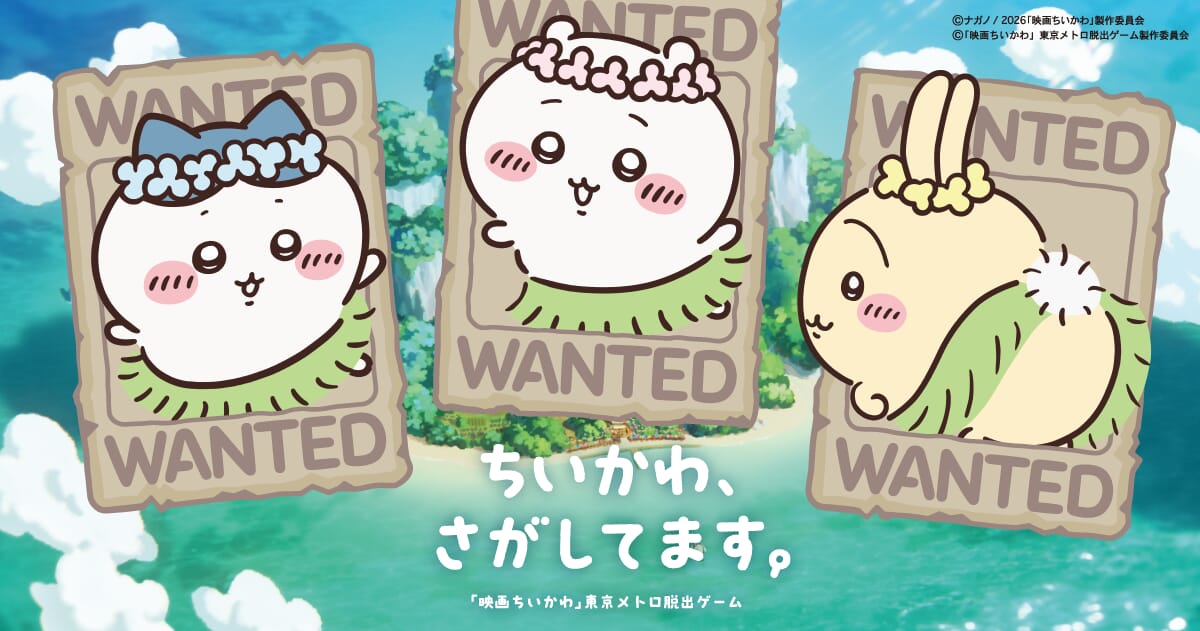
ちいかわ 現象 (Chiikawa gensho) The popularity of the manga Chiikawa, created by illustrator Nagano, has expanded into books, collaborations and a 2026 film, attracting fans of all ages.
なんとかなれーッ (Nantoka nare): A famous catchphrase popularized by Hachiware, a popular character from the mega-hit Japanese manga and anime series Chiikawa that translates roughly to, “it will work out somehow.”
あかり、信じてるからな (Akari, shinjiterukara na): A popular phrase roughly translated as: “Akari, I’m trusting you on this,” became popular on social media in reference to cook and registered dietitian Akari Hasegawa.
好きすぎて滅! (Suki sugite metsu!): The title of a hugely popular song by Japanese boy band M!LK that translates roughly to “I love you so much I could perish!”
夜の踊り子 (Yoru no odoriko): Sakanaction’s 2012 hit regained popularity through viral social media dance videos, introducing the song to a new generation of listeners more than a decade after its original release.
モナキ (Monaki): A hugely popular four-member Japanese vocal chorus group that made its debut in April with the single “Honmayade Nandeyanen Shirankedo,” quickly attracting attention and building a dedicated fanbase.

Punch the baby macaque with his stuffed orangutan toy | Screengrab via Youtube @zoo-at-home
Internet Sensations, Hobbies and Social Media
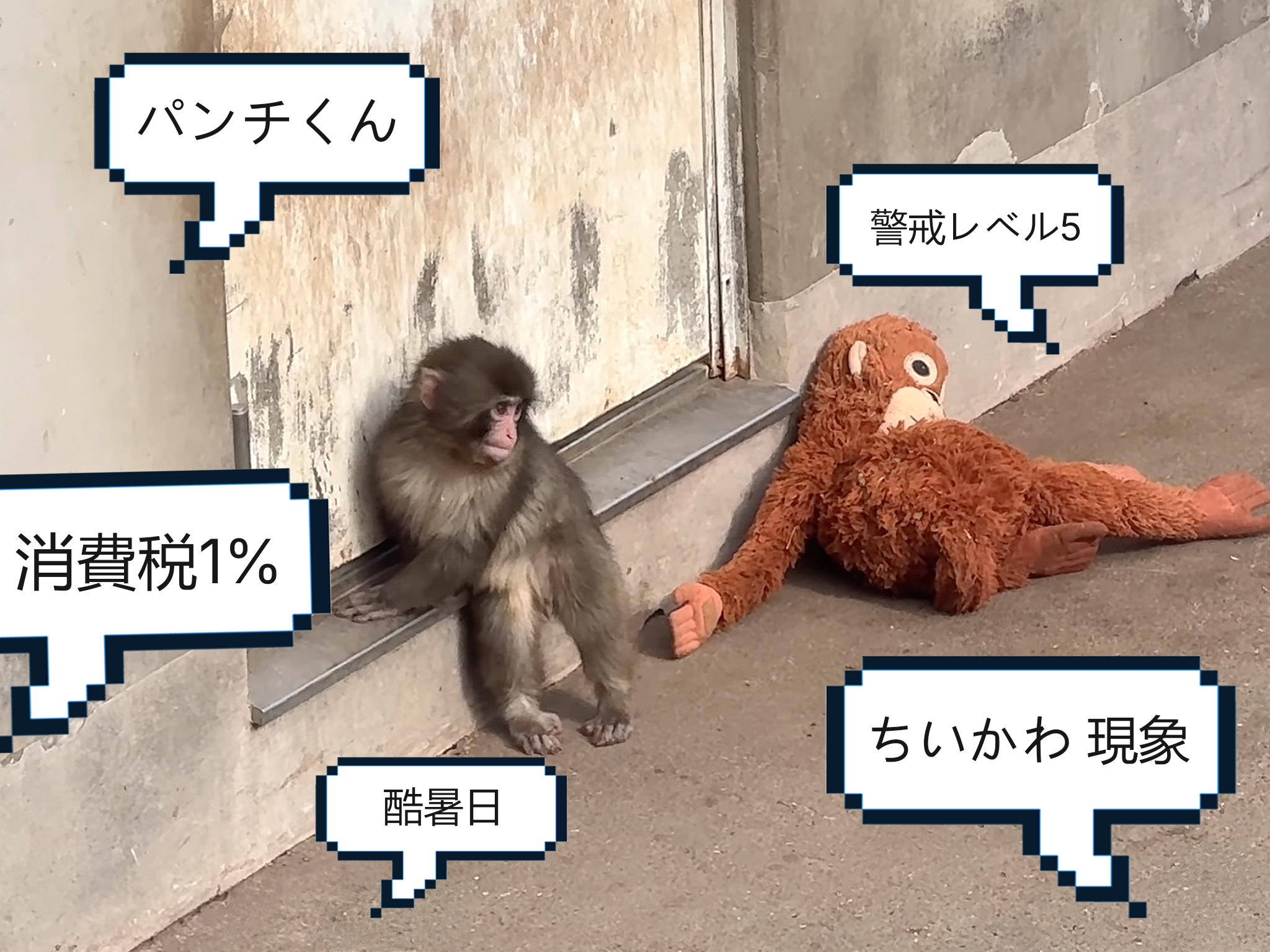
パンチくん (Punch-kun): A baby monkey became an internet sensation after various people shared videos and photos of him clinging to a stuffed orangutan plushie for comfort following his mother’s rejection.
ボンボンドロップシール (Bondoro): These popular thick, decorative stickers, collected by children and adults alike, have become a nostalgic, screen-free hobby, with enthusiasts enjoying decorating notebooks, trading designs and building extensive collections.
スクイーズ (Sukuizu): The Japanese name for squishes, these soft, squeezable toys have regained popularity with new, entertaining designs, including ones that crackle when squeezed, offering a satisfying sensory experience.
Setlog: A popular social media and vlog app where users share 2-to-3-second clips of everyday life, sometimes inadvertently revealing personal details or confidential information to a wider audience.
ホビ垢 (Hobi aka): Meaning “hobby account,” this is separate from a hon-aka “main account” on social media. It is dedicated to sharing and supporting personal hobbies and favorite fandoms.
Sports, Weather and Public Safety
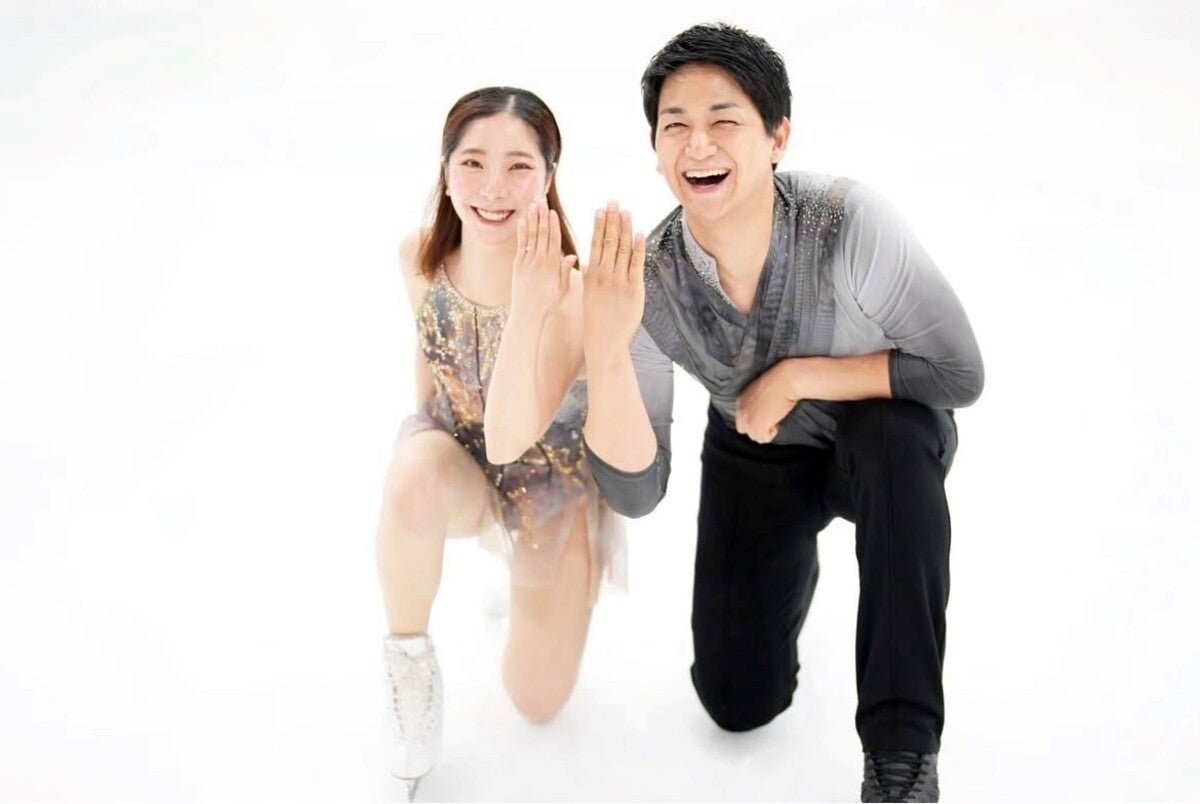
りくりゅう (Riku-Ryu): Japanese figure-skating pair Riku Miura and Ryuichi Kihara, collectively known as RikuRyu, won gold at the Milano Cortina 2026 Winter Games and later announced their engagement.
青切符 (Ao kippu): In April, Japan introduced a blue-ticket system allowing police to issue fines to cyclists aged 16 and over for minor traffic violations. The system covers 113 offenses.
警戒レベル5 (Keikai reberu 5): Japan introduced a new disaster alert system warning of flooding, heavy rain, landslides and storm surges, with Level 5 signaling immediate danger and the need for self-protection.
酷暑日 (Kokushobi): In April, the Japan Meteorological Agency (JMA) introduced a new term for days reaching 40 degrees Celsius or above. Kokushobi, meaning “brutally hot,” was chosen by public vote.
Related Posts
- Japan’s Nominees for Buzzword of the Year Announced
- Japan’s Top Four Buzzwords of the Year — 2013
- What Were Japan’s Top Buzzwords for 2020?
Updated On November 6, 2026