Netflix’s latest retro addition invites viewers into a special corner of Japan’s yankii genre, where the rough-and-tumble world of huge pompadours, modified uniforms and farcical high jinks is defined by kids being kids rather than kids being criminal.
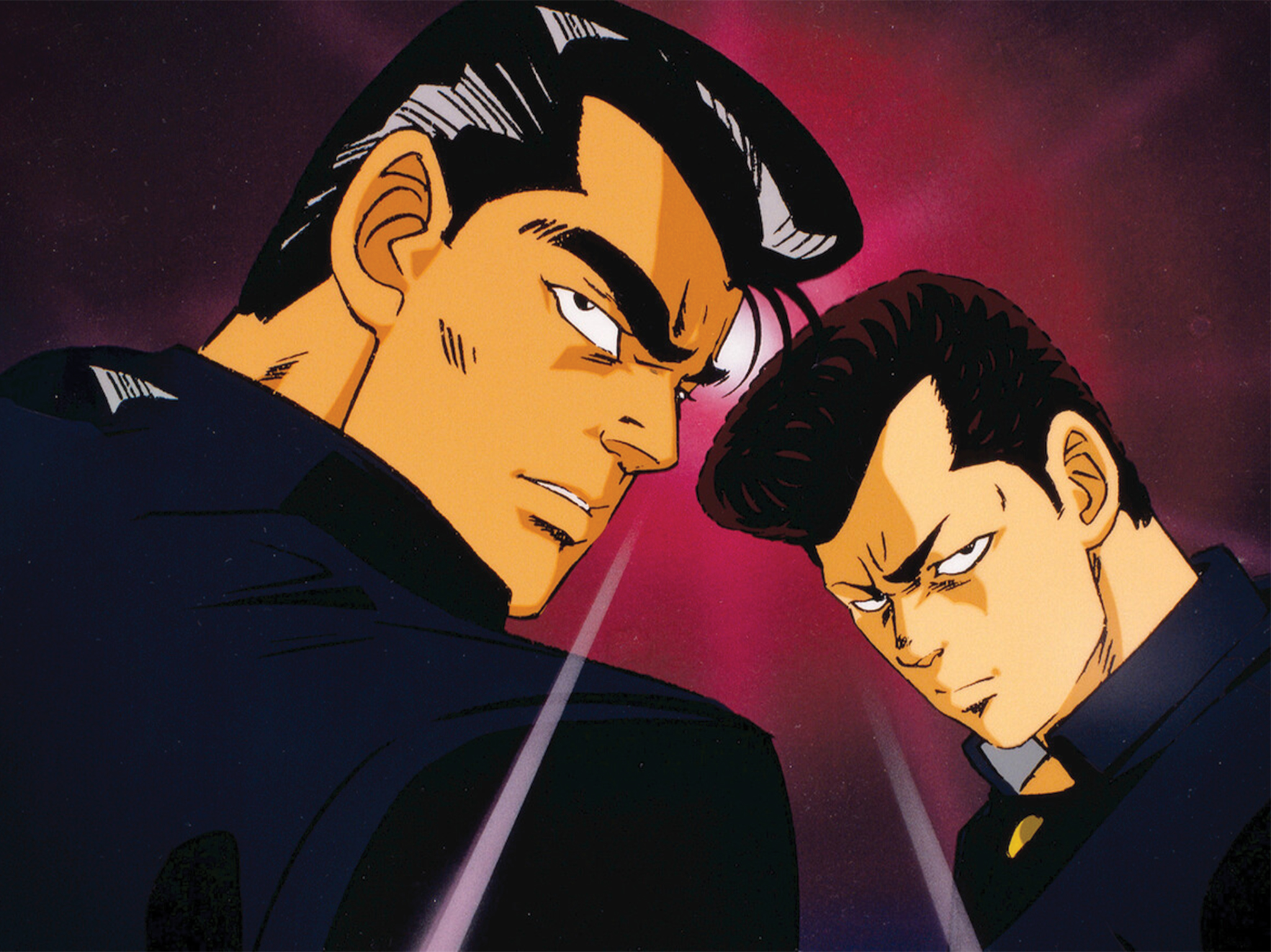
Before Sunrise studio’s now-world-famous sci-fi Western about space bounty hunters, the only “bebop” game in the anime world was the 1990–1998 adaptation of Kazuhiro Kiuchi’s Be-Bop High School. Part of Japan’s yankii genre, Be-Bop High School remains a giant among stories of juvenile delinquents with ridiculous haircuts and goofy gaits, succeeding where a lot of others came and went because it portrayed yankii culture accurately and lovingly, hilarious warts and all. Thanks to Netflix recently adding the anime to its lineup, new generations of fans can now learn what youth rebellion used to look like in Japan.
Here’s what you can expect.
The Mundanities of Life and Poop Jokes Over Glorifying Violence
Be-Bop High School follows two high school brawlers, Hiroshi Kato and Toru Nakama. In the opening of Episode 1, when the two are stopped by wannabe tough guys who clearly don’t know whom they’re dealing with, the first words out of Hiroshi’s mouth are a simple “Robbery or challenge?” He and Toru then proceed to kick the stuffing out of the attackers, but that’s about as far as the anime sticks to yankii conventions.
In typical Japanese tales of juvenile delinquents and youth gangs — which go as far back as the Edo period (1603–1867) — violence is a constant part of life, a way to maintain honor and protect the innocent or your found family. Kazuhiro Kiuchi, on the other hand, refuses to make Hiroshi and Toru look that noble and cool beyond the opening. In the following scenes, it turns out that when not fighting, the two protagonists are just two big silly goobers. Their hobbies are trying to pick up girls with varying degrees of success, sulking when they get dumped and challenging each other to extreme eating contests.
In many a yankii story, the life of a delinquent is intense. Every situation is life-and-death, every stranger is a potential enemy and every day could be your last, so you have to live it with total freedom. That kind of lofty rhetoric would never work in Be-Bop High School, where Hiroshi and Toru live blessedly low-stakes lives. In each episode, a powerful challenger appears and has to be dealt with using violence, but the fights, though energetic and fun, are typically very short and underpinned by a lot of comedy. The first big action sequence that Episode 1 builds up to is postponed by Hiroshi and Toru having terrible diarrhea from one of their eating challenges.
After something like that, it doesn’t matter how “badass” the action sequences are — it’s no longer possible to think of the world of juvenile delinquents as cool. Stories like Tokyo Revengers try to achieve the same effect by showing the long-term consequences of a life of violence. Be-Bop High School does so by showing that yankii characters are, ultimately, dumb kids.
Demythologizing the Yankii
Typical yankii fiction represents rebellion against conformity, with the delinquents forging their own identity through distinct fashion, cliques and authority-defying behavior framed as social protest. Found families and strong interpersonal bonds are a big part of their aesthetic, with stories often emphasizing the importance of staying loyal to your friends and maintaining close-knit relationships. Even franchises like Tokyo Revengers, which have been hailed as rejections or deconstructions of yankii cliches, still extol those qualities.
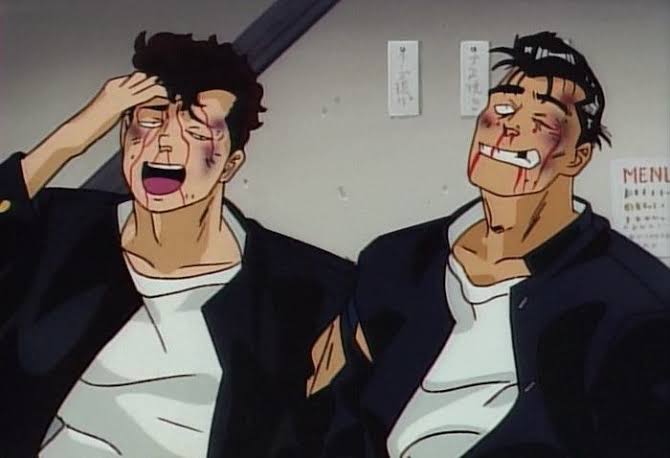
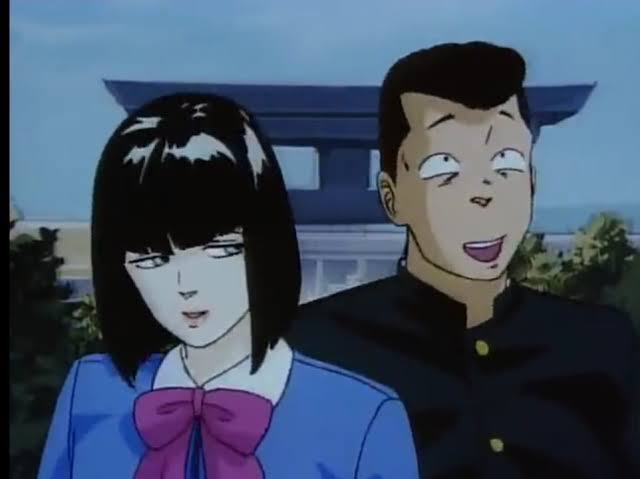
Be-Bop High School has similar messages, but they’re all wrapped up in a good laugh at how ridiculous it is for high schoolers to be acting like samurai warlords with retainers and fiefs to protect. For all the posturing of Hiroshi, Toru, their friends and their enemies, every delinquent character ultimately comes off as a kid playing dress-up, part modern-warrior or gangster, part circus clown with big, baggy clothes and physics-defying hairstyles.
Their appearance is just one part of it. There’s also everyone’s comedic immaturity, which lends itself to some good jokes, especially when the characters are thinking about or trying to have sex. When everyone is clearly out of their depth but keeps trying to keep up the facade of big, strong men (despite barely being past their mid-teens), it becomes instant comedy gold. Essentially, the anime boils yankii culture down to a kitschy performance art and, in doing so, takes all the surface glamour off it.
A Refusal To Demonize Young People, Even Delinquents
Hiroshi, Toru and their friends are boneheads. They bother girls on the street, they disrupt classes, they litter, they don’t respect the rules — but the anime ultimately says that it’s all OK because when are people supposed to be boneheads if not when they’re young? Being obnoxious and terrible is a kind of rite of passage, and it’s best to get it over with around high school, when people are still willing to cut you some slack because they remember what it was like to be that age. Kazuhiro Kiuchi clearly does.
There are clearly bad kids in Be-Bop High School, some of whom have graduated from mere boneheads to straight-up criminals, and neither the manga nor the anime is defending them. Most of them get their faces rearranged by Hiroshi or Toru anyway. Illegal and immoral behavior has cathartic consequences in the anime. But simply being a dumb kid does not.
There is a kind of begrudging affection for the freeing irresponsibility of youth running throughout Be-Bop High School. Even characters who routinely get into fights and whose primary motivation is sex at all costs are ultimately shown to be good people. It’s just that when you’re young, you feel everything so much more intensely, and that can make you a little bit stupid. But it’s OK because you will grow out of it one day.
A lot of yankii fiction focuses on juvenile delinquents as this unstoppable force that’s going to destroy Japanese society, either to usher in an era of chaos or to rebuild it in their image. Be-Bop High School seems to think that’s giving young people too much credit. Yeah, some of them can be dangerous, but most are just trying to deal with the raging hormonal storm in their brains and have a good time with friends. That’s basically what real-life yankii culture boils down to. Everything else is window dressing. In an era when Japanese society was panicking about young people coming to kill them all, Be-Bop High School came out and defiantly said “Nah.” Check out the show on Netflix for more details.