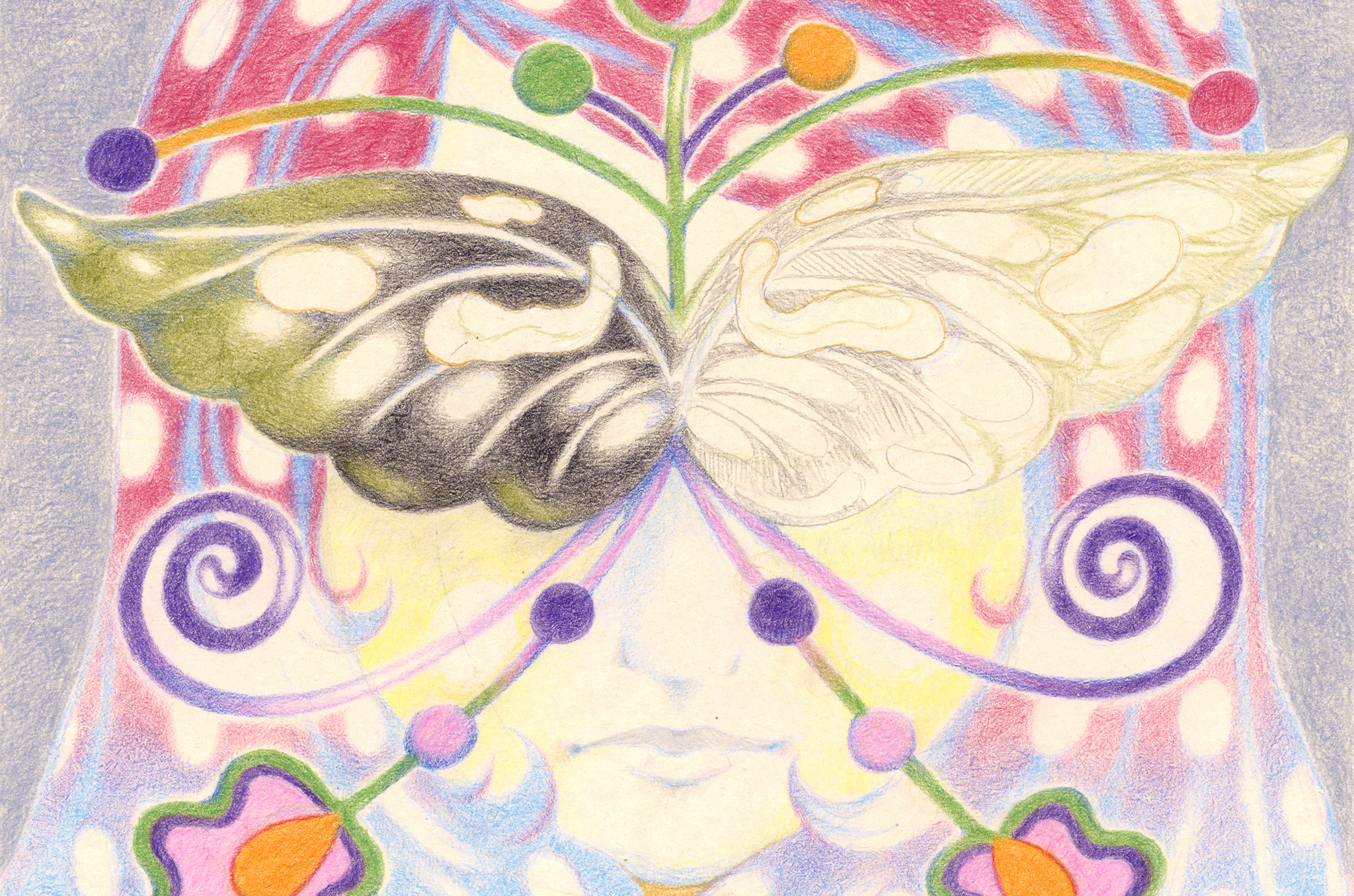
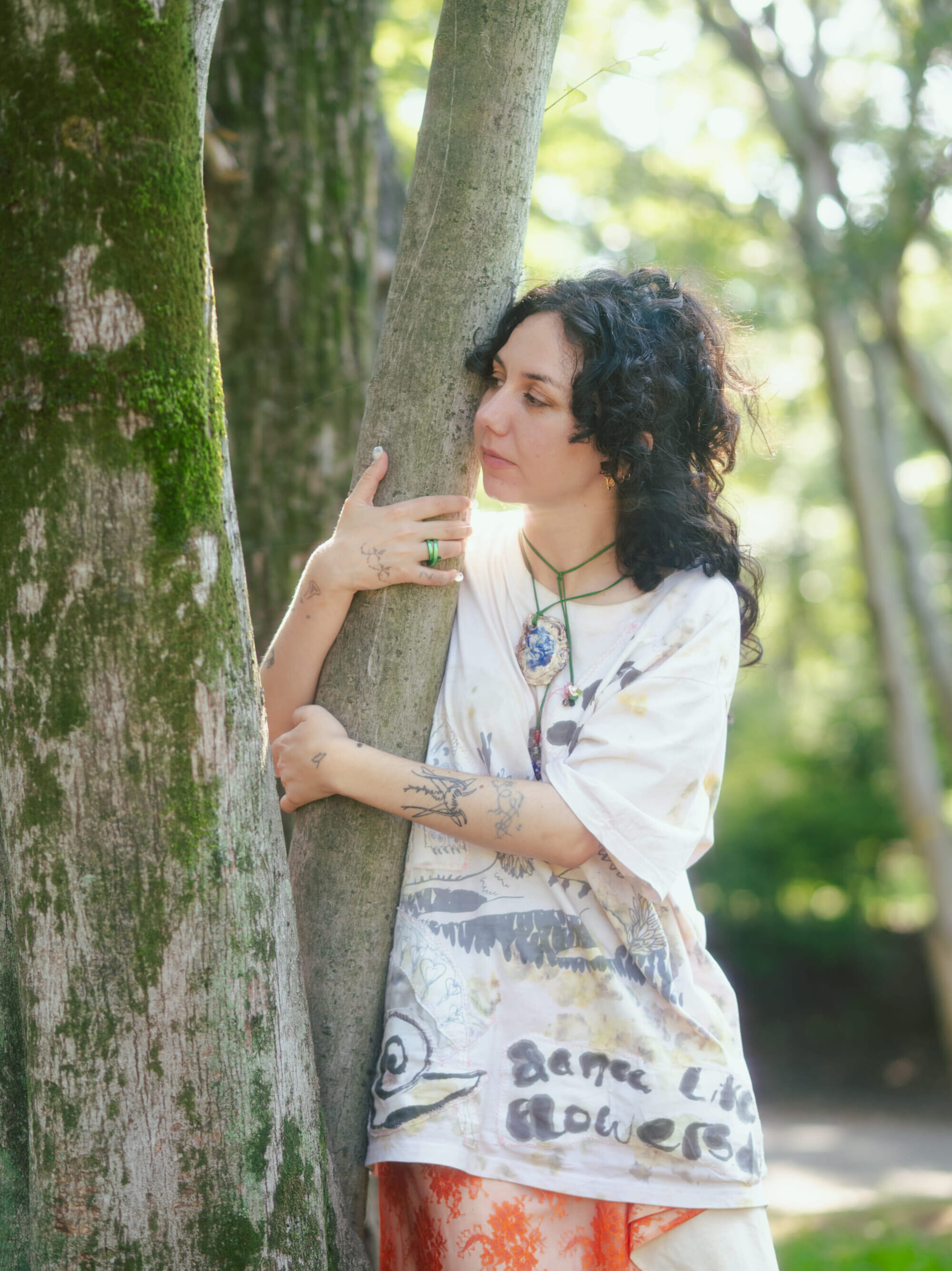
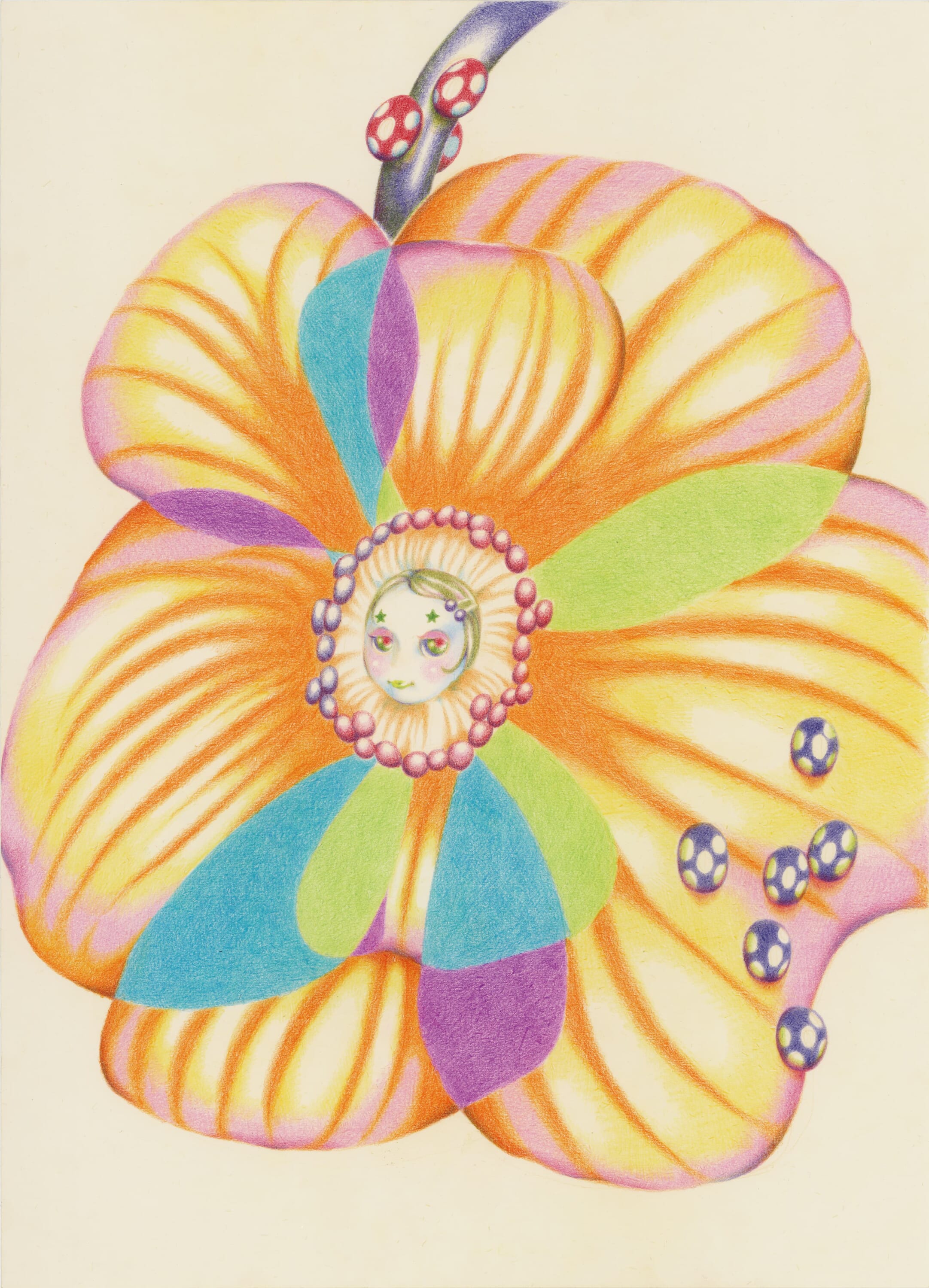
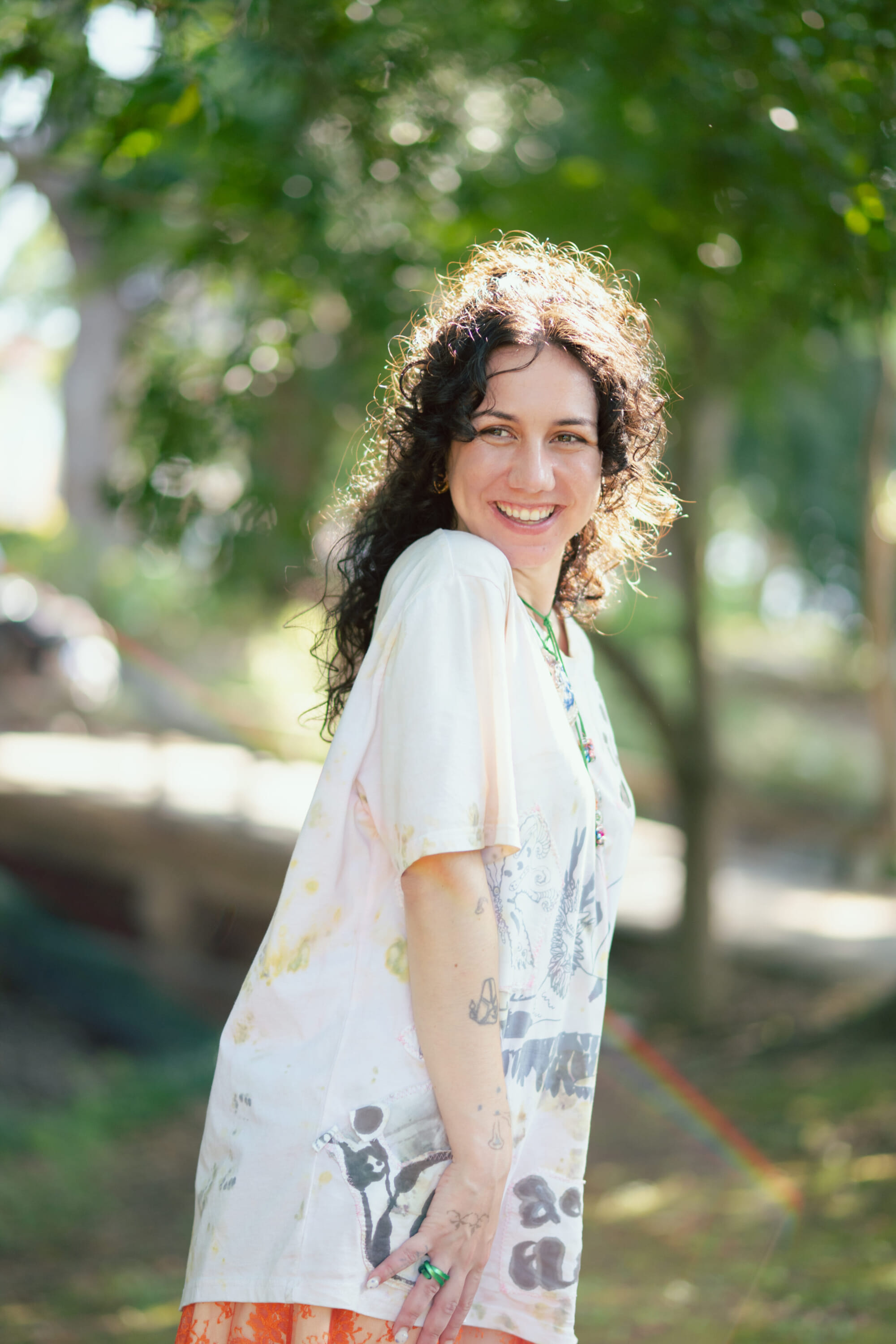
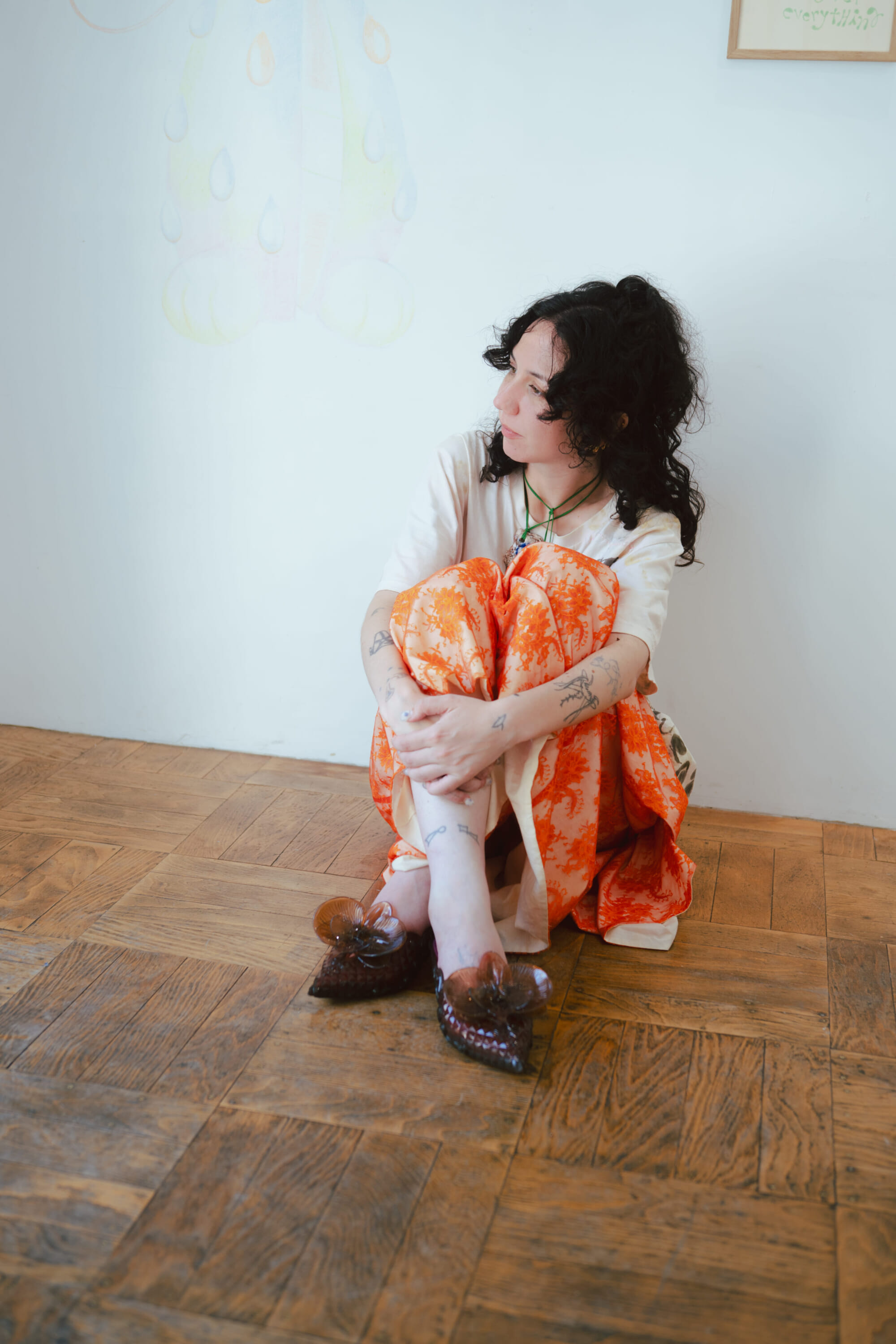
On a sun-drenched summer afternoon, I accompany Ema Gaspar to one of her go-to studios: Kiyosumi Park. It’s an unassuming local green space, one that most people would walk right past, but in her eyes, it’s an enchanted forest teeming with characters waiting to be brought to life. Sitting on a wooden bench, she pulls out a sketchbook and a couple of colored pencils from a tote bag and begins sketching without much ceremony — faint, downy patches of purple and green that slowly form a wide-eyed creature with a butterfly’s coiling mouth and leaves for ears.
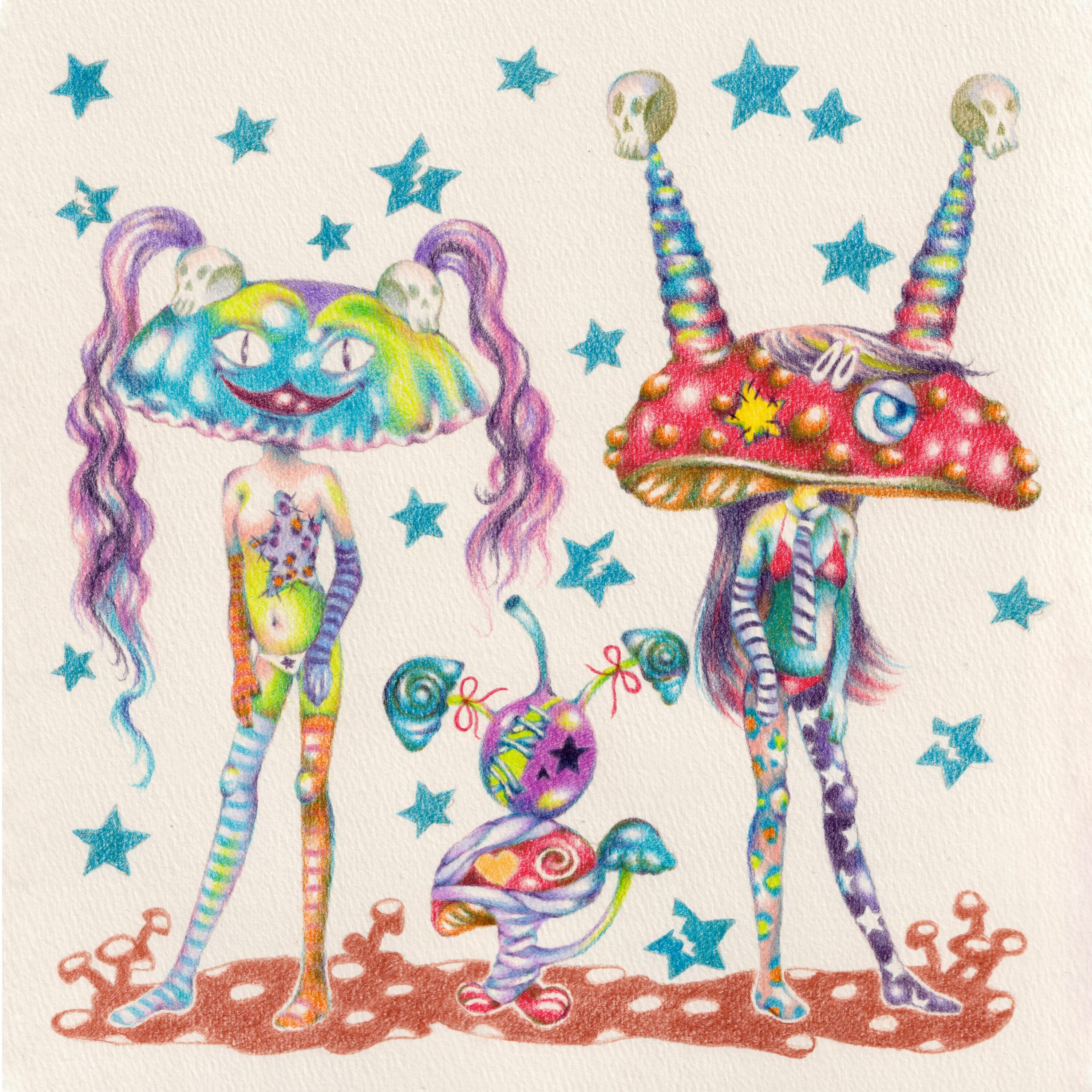
“I like to understand the personality of plants and flowers, and then create their own fashion sense,” the illustrator explains. “I think to myself, ‘What kind of clothes would this flower like? What kind of brand would this flower like?’” Her plant spirits are often clad in girly-grunge silhouettes and groovy patterns, captured with a combination of childlike whimsy and sleek hyperpop maximalism. Gaspar’s style calls to mind a range of influences — 60s psychedelia, the anime series Digimon, Y2K Harajuku fashion as chronicled in the pages of Fruits magazine — which explains its strong resonance with Zillennials rediscovering their analog childhoods.
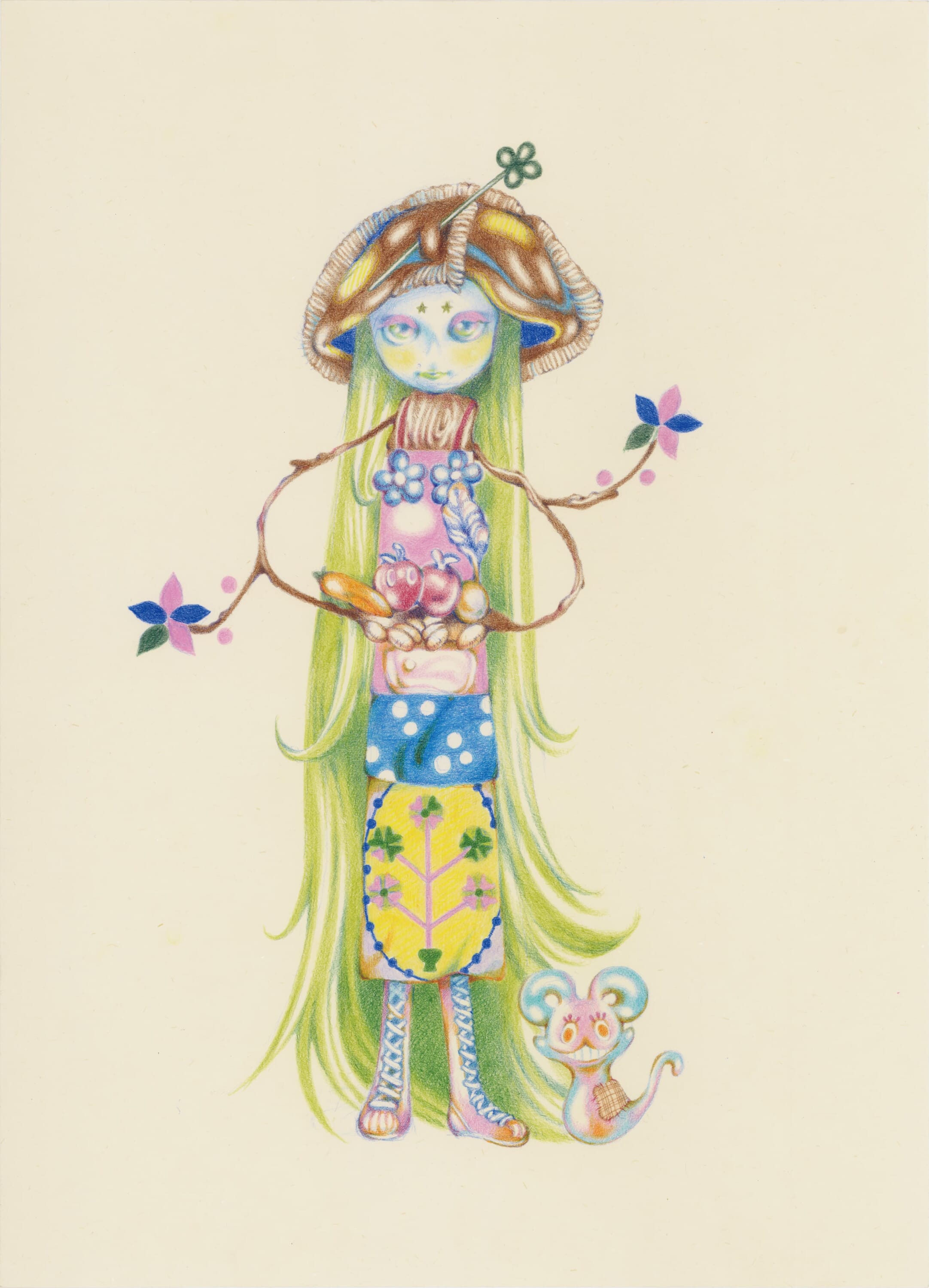
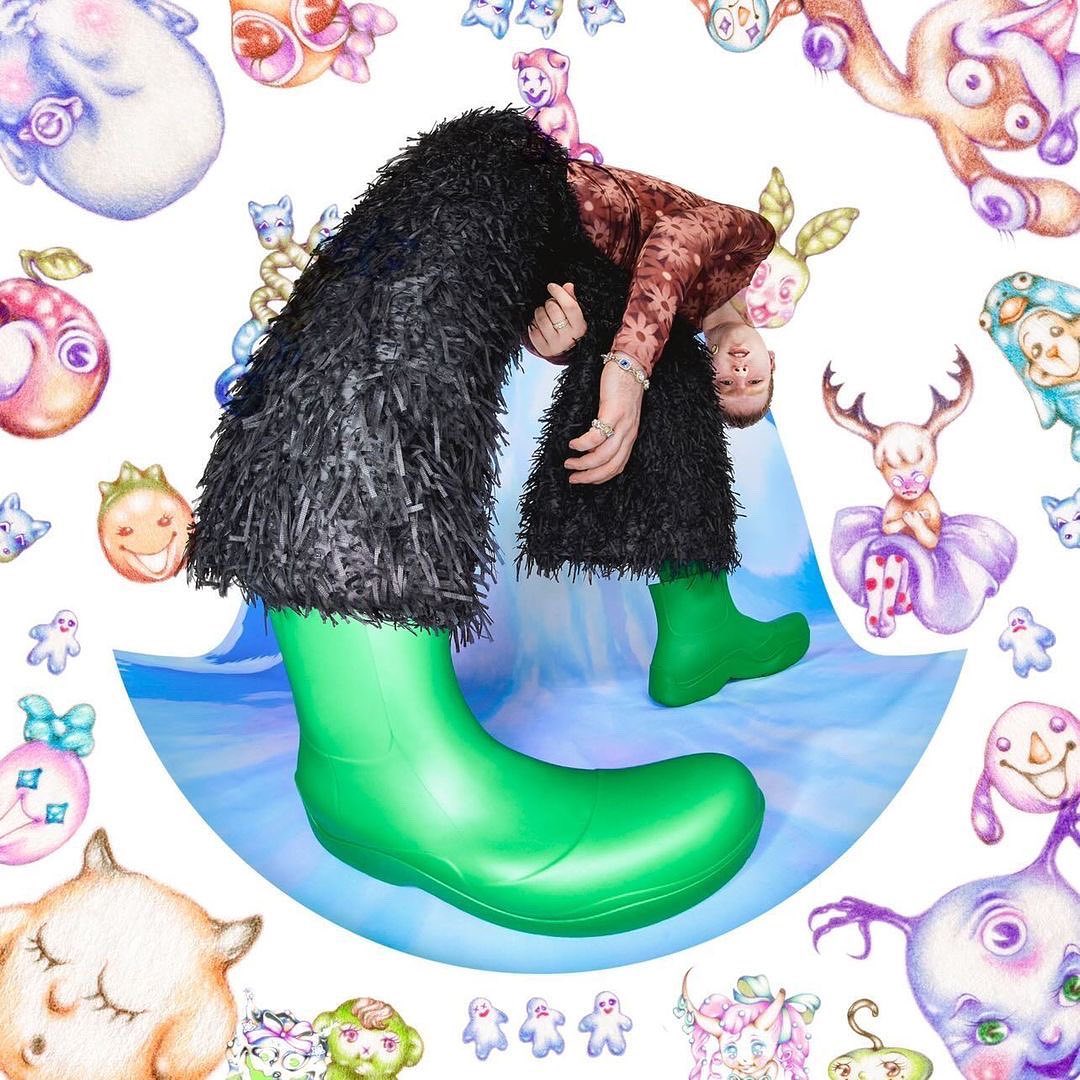
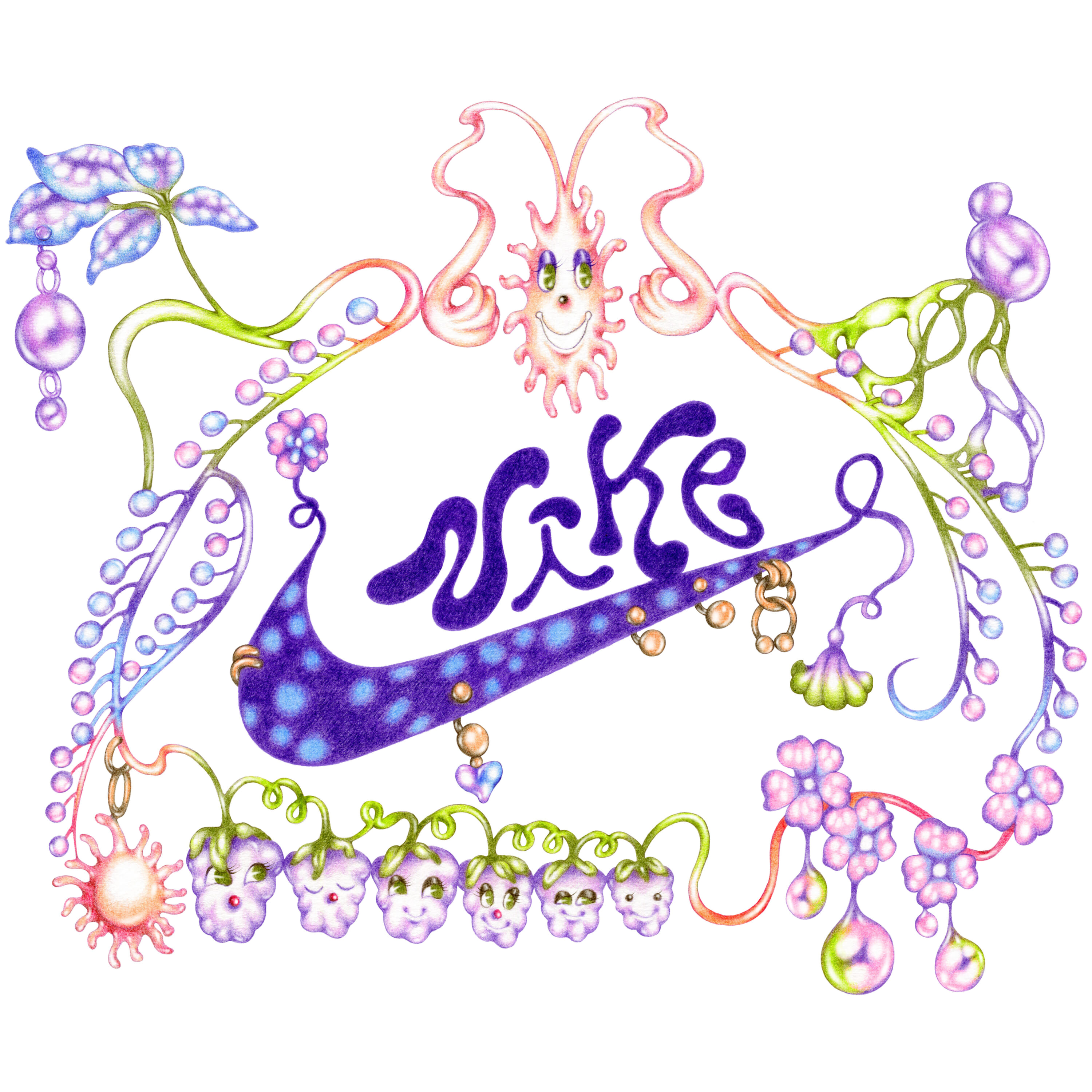
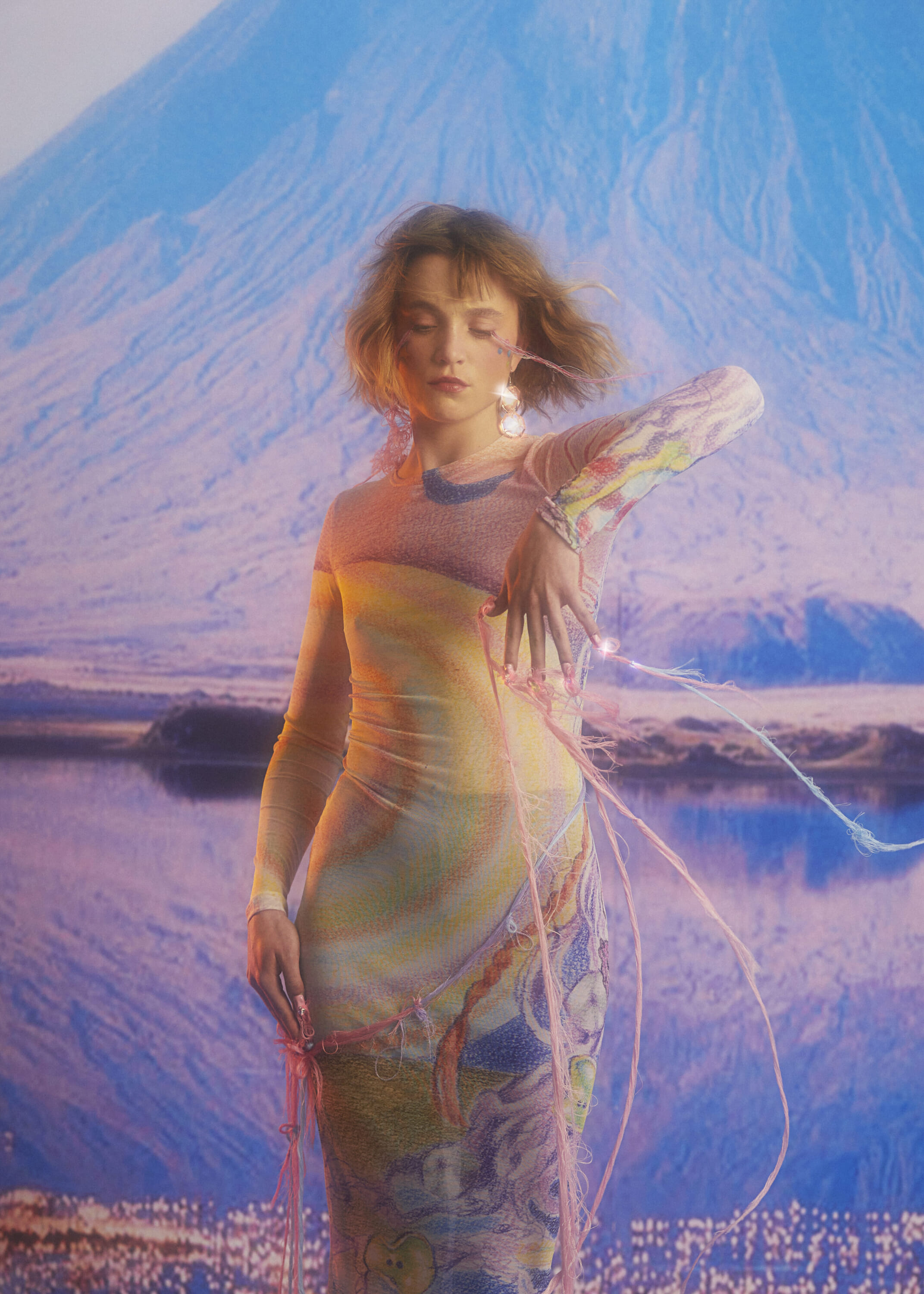
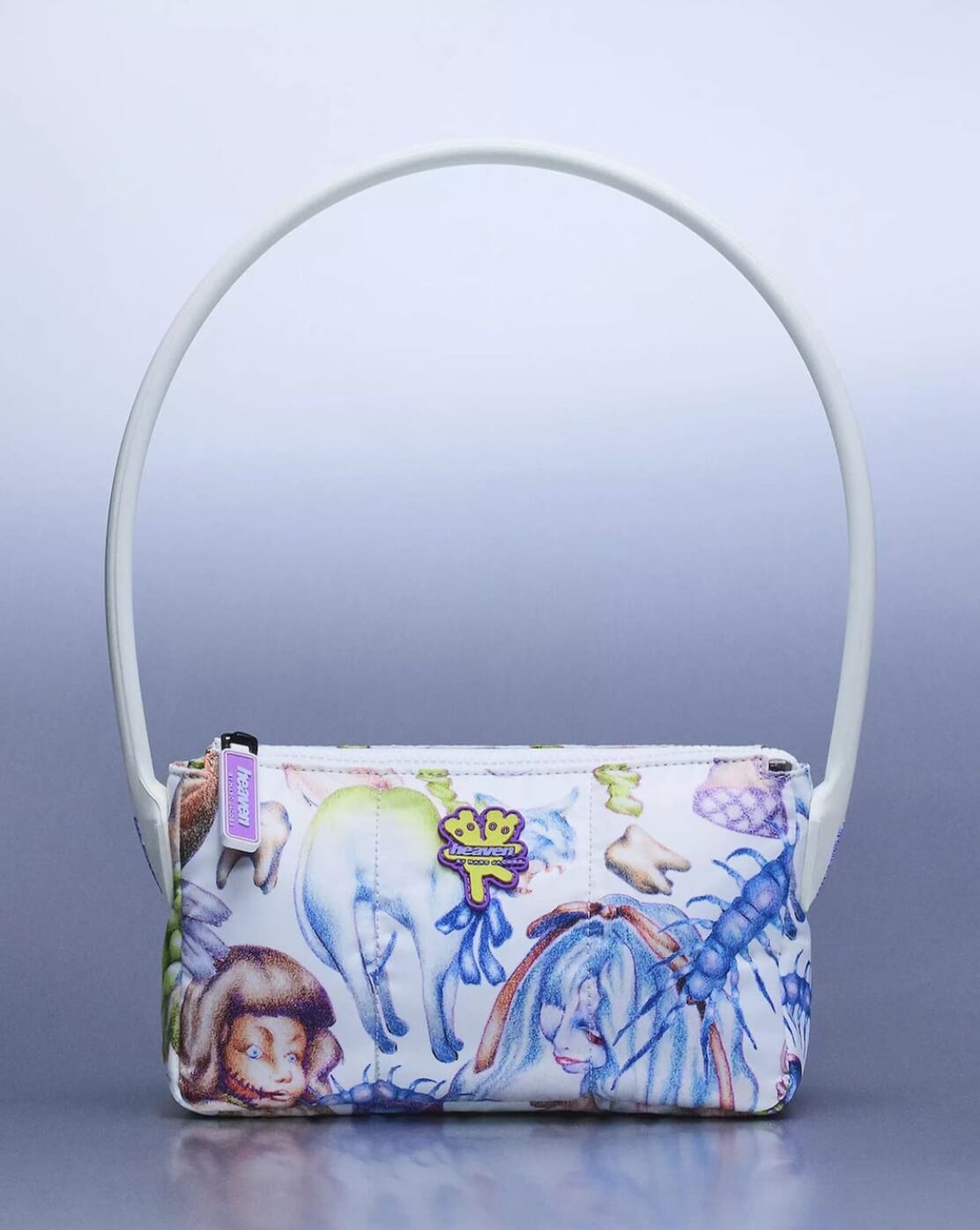
The distinct charm of her illustrated world has reached an impressive roster of clients and fans over the years. In addition to creating cover art and visuals for musicians — Gracie Abrams, Mura Masa and Mei Semones, to name a few — she’s done high-profile collaborations with brands like Hysteric Glamour, Coyseio and Heaven by Marc Jacobs, designing merchandise worn by the likes of Bella Hadid, Blackpink’s Jennie and members of NewJeans. Recently, Gaspar took one of the most reproduced symbols of all time — the Nike swoosh — and revamped it with her signature swirling florals for a kidswear line.
Her rise also coincides with something bigger. More and more luxury brands — Hermès, Loewe, Dior Beauty — have been courting independent illustrators and animators for campaigns that might have gone to, say, a photographer or a design studio a few years back. Why? Because, against a never-ending current of AI slop, connotations of originality, effort and slowness have become increasingly scarce (and therefore lucrative). Gaspar isn’t naive to the reasons behind this new demand for handmade art, but is disinclined to overthink it; she’s mostly just amazed and grateful to have achieved her dream job.
Conversations With Plants
Gaspar is Portuguese and did all her schooling in Lisbon, studying painting at university. One of her earliest memories, she says, is sitting in her grandparents’ garden with a pen and paper. “I used to go there and talk with plants,” she recalls. “My childhood wasn’t that easy, so drawing helped me a lot through stuff.”
She did “a lot of random jobs” before her work took off around 2020, during the pandemic, which gave her the time to really focus on her illustrations. Moving to Tokyo in 2023 was partially career-motivated: She had done an artist residency at Studio Kura in Itoshima a few years back and built relationships in Tokyo, even holding a brief solo exhibition. It was also a childhood dream, based on her love of Japanese pop culture and her grandfather’s stories of travel.
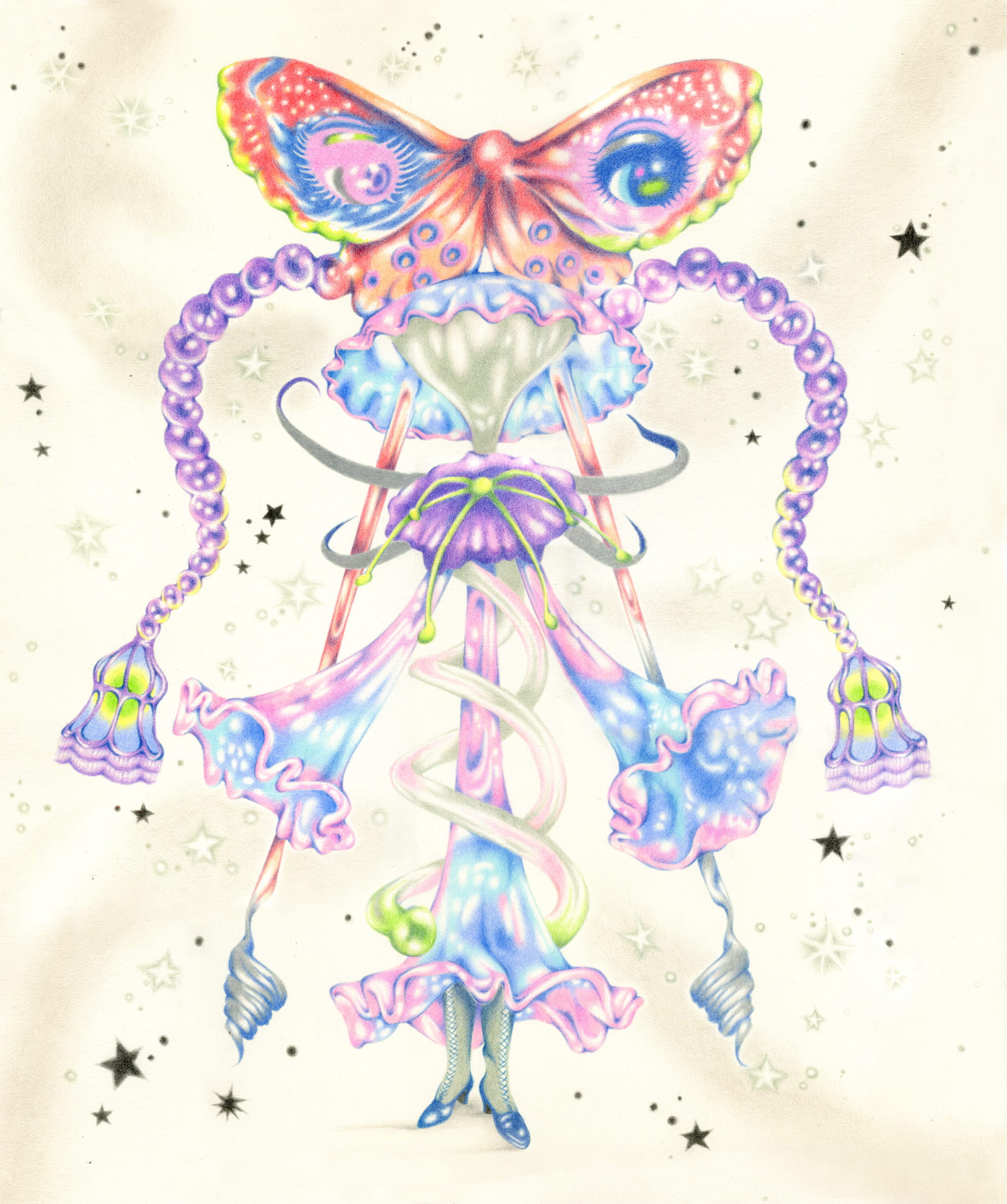
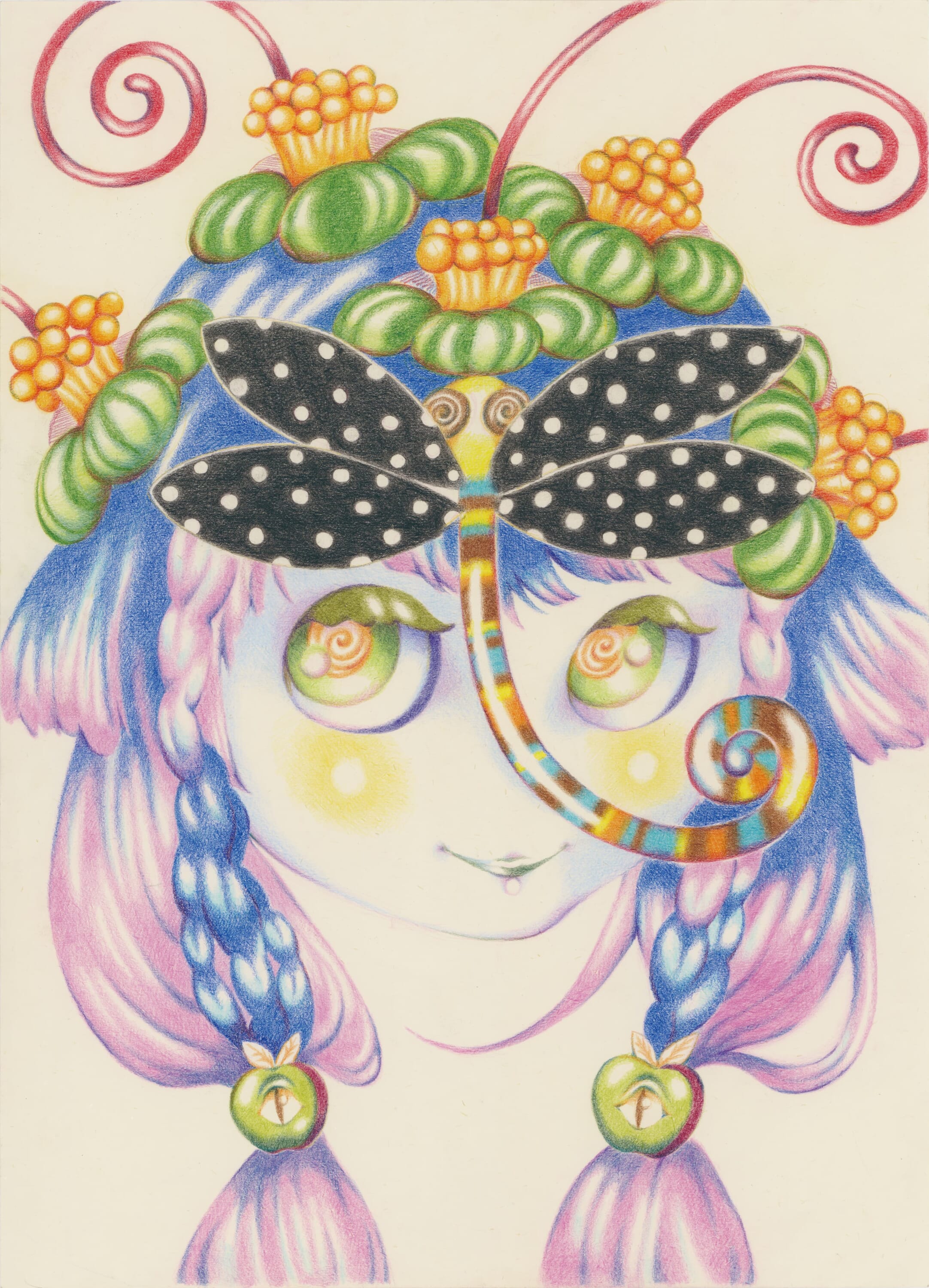
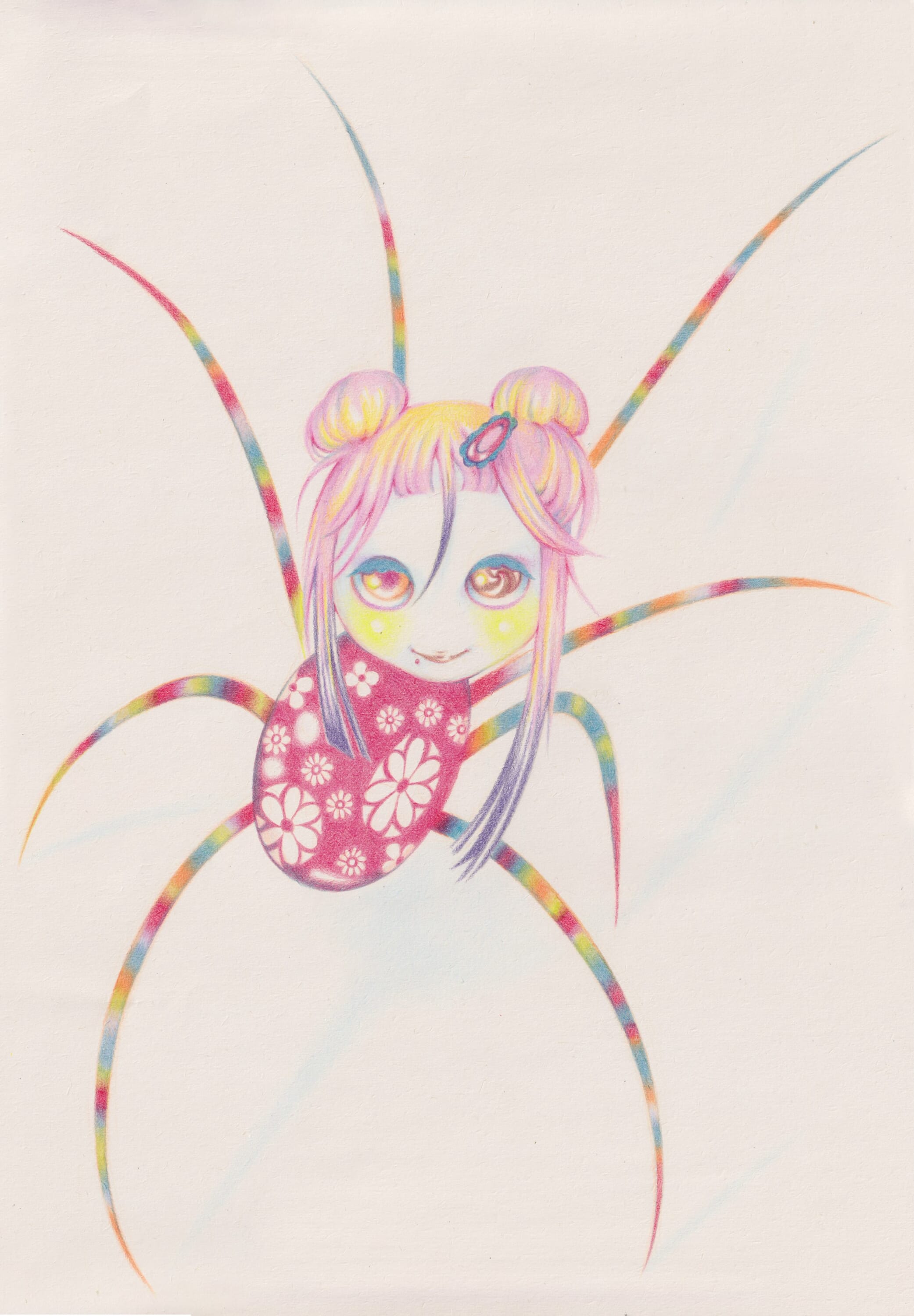
“It was a big change because Lisbon, and Portugal in general, are very chill places — which is good for me,” Gaspar notes. “It took a little bit of time to like being in a city where everything is so quick.”
To maintain her peace, she goes to parks around her home every day, listens to ambient music, cooks regularly and tries to have dinners with friends as often as possible. Gaspar’s most recent solo exhibition, titled “Paku Paku” (a Japanese onomatopoeia for gobbling up food), reflects the inspiration she derives from these dinners. “When we’re eating and talking about our life problems, I feel healed from within,” she explains.
As an illustrator, Gaspar aims to create this “safe space of inspiration” for others. It’s why she launched Plant Drawing Club, a free workshop in which she draws and colors with friends and fans. “It’s a bit therapeutic — people have even cried during the workshops! But in a good way,” she says. “We get so focused on our routines and working that we forget about how we feel, what we like, connecting with ourselves and others. It’s very important nowadays to do that.”
The Human Touch
Gaspar’s earnest dedication to vulnerability and connection is at the core of her ethos; these values are particularly important to her as an artist in an increasingly AI-driven world. “When you see artwork made by an illustrator, you can see the whole process when they show the final piece,” she suggests. “It’s very fragile — that fragility is what makes us human.”
She also understands that this elusive “human” quality is what makes illustrators so attractive to brands and consumers right now. “Art is always connected with society itself and society’s needs,” she says. “Brands want the client to feel connected on a personal level, and independent illustrators can bring that — a sense of personality, a sense of human touch.”
Luckily, the eternal artist’s dilemma — how much of your style to water down for a client — is rarely an issue for Gaspar. “Usually, when brands reach out to me, they already know my style and are prepared for [the final product] to be a bit crazy,” she explains, laughing. Transporting her characters into a client’s vision is usually a fun challenge: discovering new ways to cast her whimsical, pastel-toned lens on the emotions of a song, the mood of a runway collection, a brand’s aesthetic codes.
“Every job I have with brands feels like a gift to me,” Gaspar says. “I always wanted illustration to be my job, but coming from Portugal, it’s hard for that to happen. It wasn’t something that I believed 100%; it was just a hope.”
It’s possible that corporations are commissioning illustrators like Gaspar for optics; the sudden demand for a decidedly human touch may not necessarily coincide with a genuine desire to prioritize substance over efficiency. (The same Nike that commissioned Gaspar, for example, recently caught flak for recruiting a “generative AI lead designer” for its footwear.) Still, the phenomenon feels like a net positive. Artists are getting paid, and audiences are encountering talent they might not have found on their own. Like so many things that felt obsolete a decade ago — print magazines, dinner parties, wired headphones shared with a friend — illustration is having a renaissance that suggests that physical presence is more precious than ever amid an endless quest for convenience and optimization.
As we part ways at the park, Gaspar hands me her completed drawing of the plant creature, tearing out the sketchbook page while apologizing profusely for not offering something to put it in. Grainy, softly gradient and carefree in the way only colored pencil drawings can be, its self-contained joy reminds me of my own childhood doodles. I roll up the paper and hold it in my hand the whole train ride home like a baby bird, careful not to dent its delicate frame.
More Info
Find Gaspar’s works on Instagram: @ema_b_g.