Last year, Lee Sang-il’s Kokuho did something no Japanese film had managed in over two decades: it became the country’s highest-grossing live-action local release, pulling in more than $120 million and landing as Japan’s entry for this year’s Academy Awards. At its center are two rivals who give their entire lives to onnagata, the kabuki art of men performing female roles. For a lot of people who saw it, that three-hour epic was probably their first real introduction to the tradition.
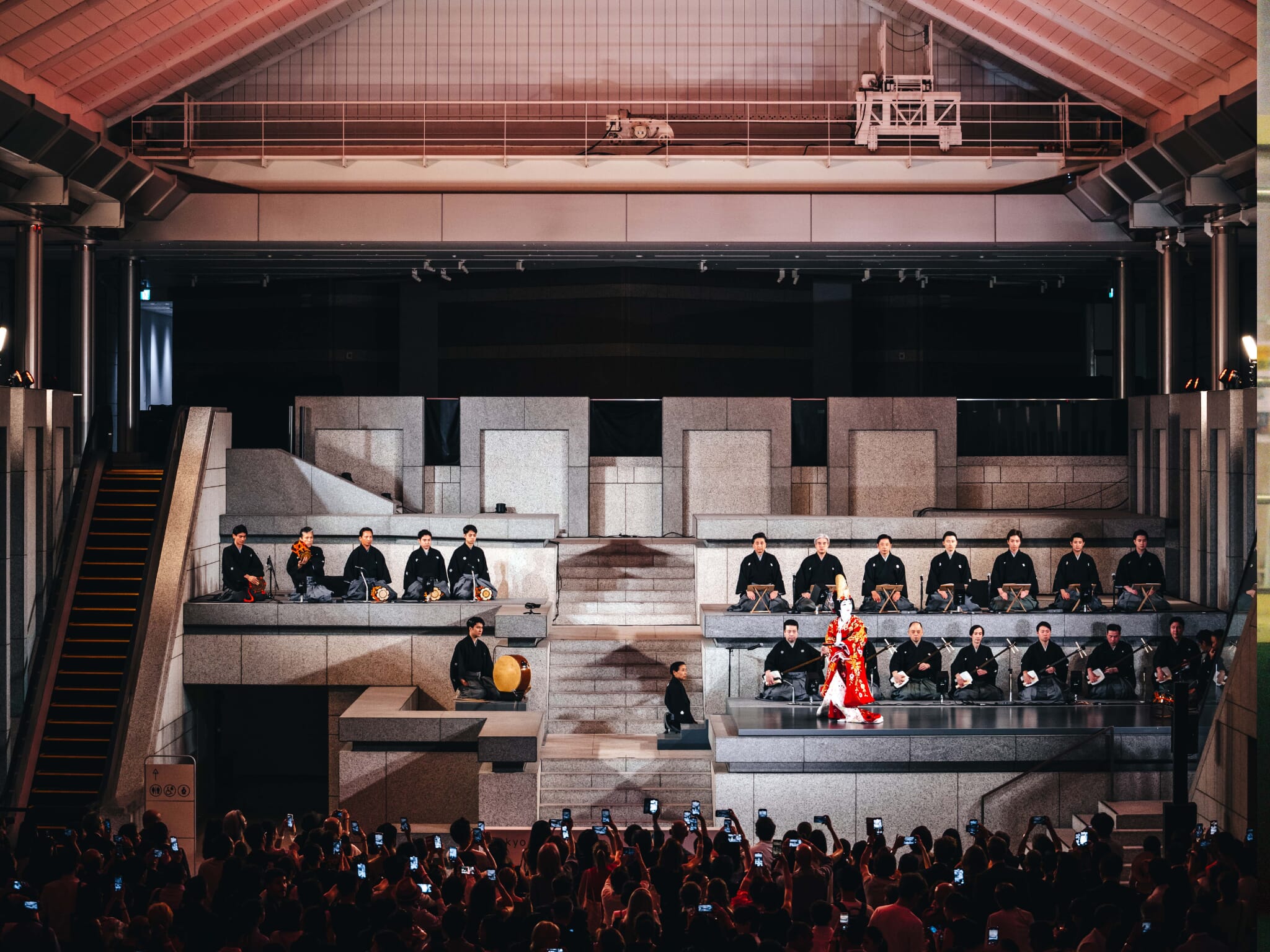
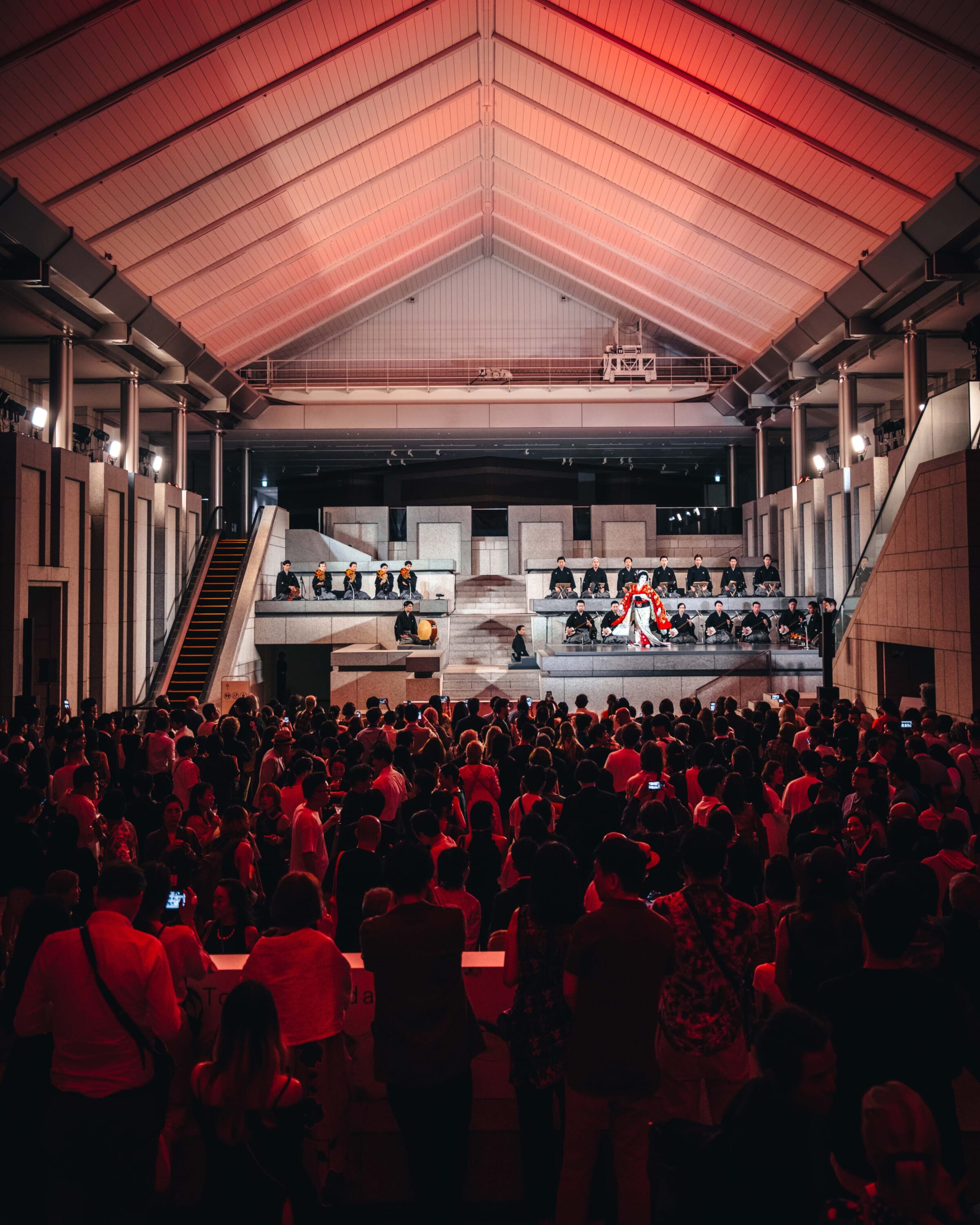
This September, they’ll get the chance to stand inside its actual history. Independent arts organization Ranshou is taking over the Grand Theatre stage at Tokyo’s National Theatre — which has been closed to the public for years — for a two-day exhibition called Future History: Lineage and Form of Onnagata, showcasing more than 100 works spanning from the 17th century to today.
A Theater Reopened For Only Two Days
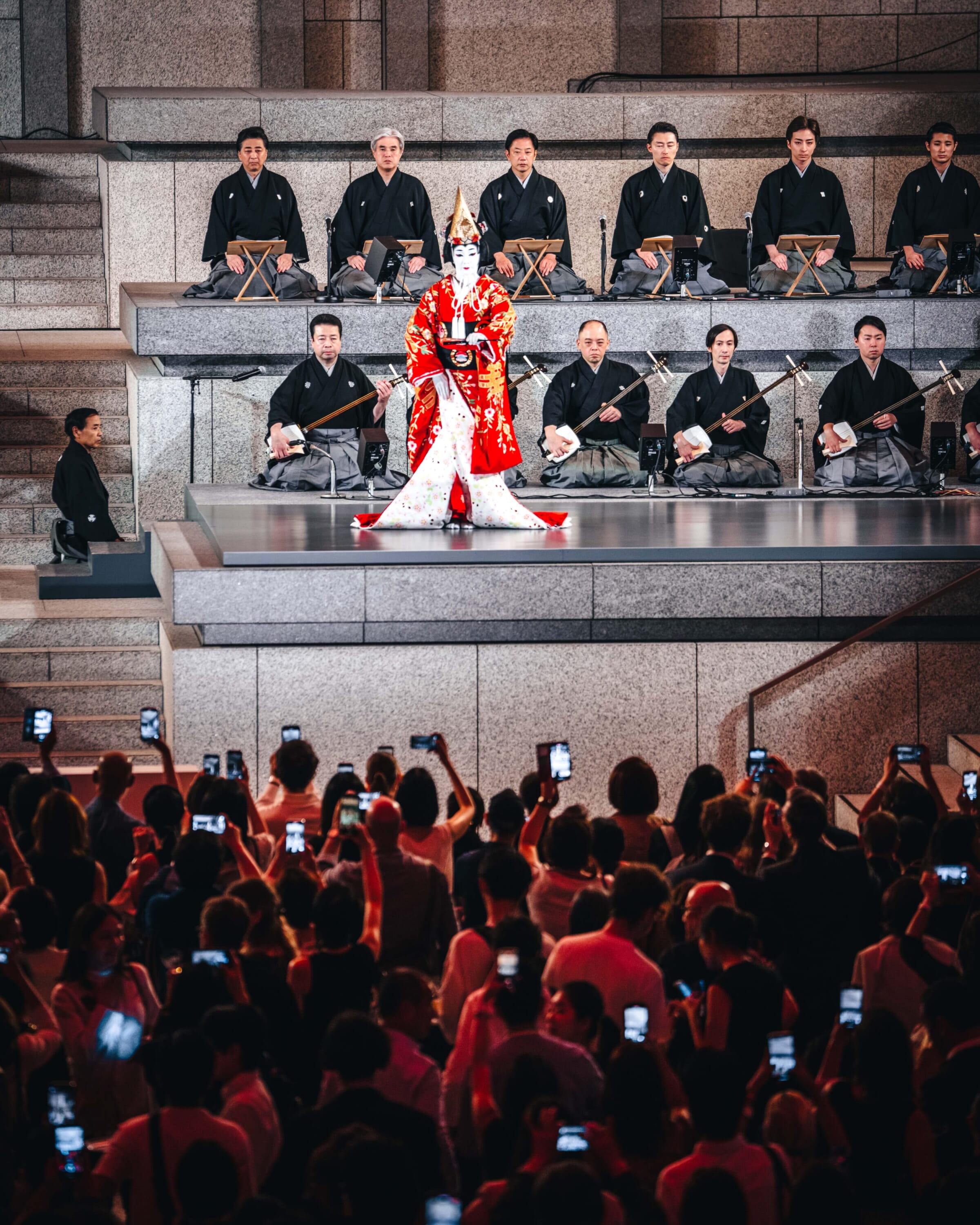
The National Theatre has been dark since its reconstruction began in October 2023, with no confirmed reopening date. Ranshou’s takeover opens it for exactly two: September 12 and 13. Rather than watching from their seats, visitors can walk directly across the Grand Theatre’s stage and through its backstage corridors, the same route generations of kabuki‘s most celebrated actors have taken since the building went up in 1966.
At the center of the exhibition is Kyokanoko Musume Dojoji, a famous onnagata-centric play first staged at Edo’s Nakamura-za theatre in 1753. The exhibition unfolds across five sections: The first traces the cultural memories behind the play, while the second explores kabuki as a complete theatrical form encompassing performers, musicians, audiences, costumes and architecture. The third examines onnagata’s recurring relationship with life, death and transformation. The fourth turns to the lesser-known history of o-kyogenshi, female kabuki performers in the Ooku, the women’s quarters of Edo Castle. The final section brings the tradition into the present through new works asking what inherited forms might become in 2026 and beyond.
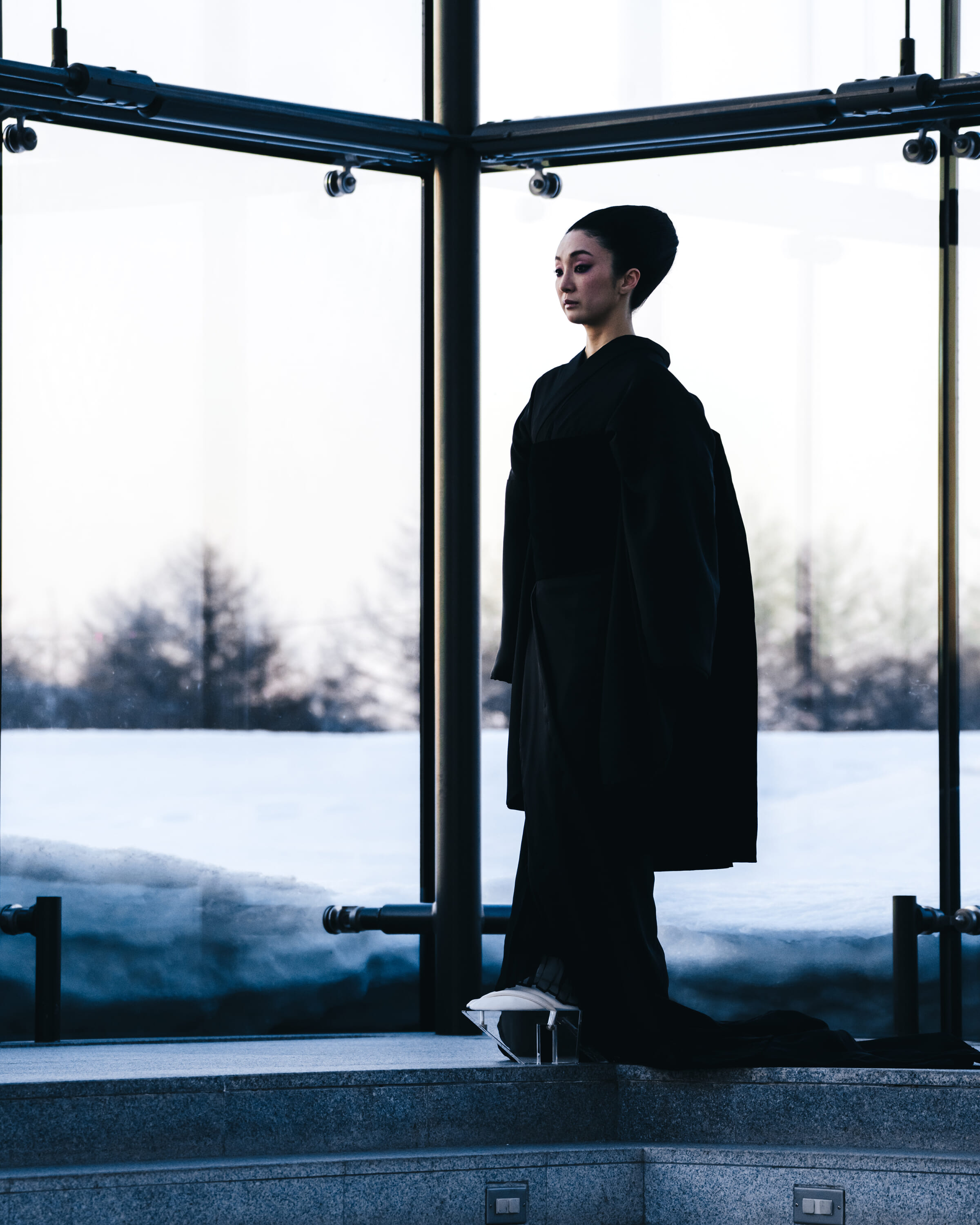
Visitors will find religious and literary texts, illustrated books, rare ukiyo-e prints, playbills, stage materials and kabuki costumes appearing alongside film, photography and contemporary works such as acrylic geta made in collaboration architect Shigeru Ban’s office, washi-paper photography by RK, and de(i)fied, a single-channel film by Fujima herself.

Ranshou and the Question of Inheritance
The exhibition is also a reflection of Ranshou Fujima’s own relationship with the tradition. Born outside a hereditary kabuki family, she began studying classical Japanese dance at four and later trained professionally in kabuki-buyo, developing a particular devotion to onnagata.
Her position raises questions about how forms shaped primarily through male bodies might be received and embodied from another perspective. Much of the exhibition’s historical material comes from the Ranshou Archives & Collection, which she began assembling as a teenager while searching for the foundations of the forms she learned through her own body.
Future History ultimately treats onnagata as more than the representation of women. Through transformations between the human and supernatural, life and death, and past and present, it asks a larger question: what does it mean to be human?
Key Details
Future History: Lineage and Form of Onnagata is on view at Tokyo’s National Theatre between September 12 and 13, 2026.
Opening Hours: 11:00-18:00
Admission: Free
Address: 4-1 Hayabusacho, Chiyoda City, Tokyo
Nearest Station: 8-min walk from Hanzomon Station (Hanzomon Line)
Visit Ranshou’s official website for more details.