
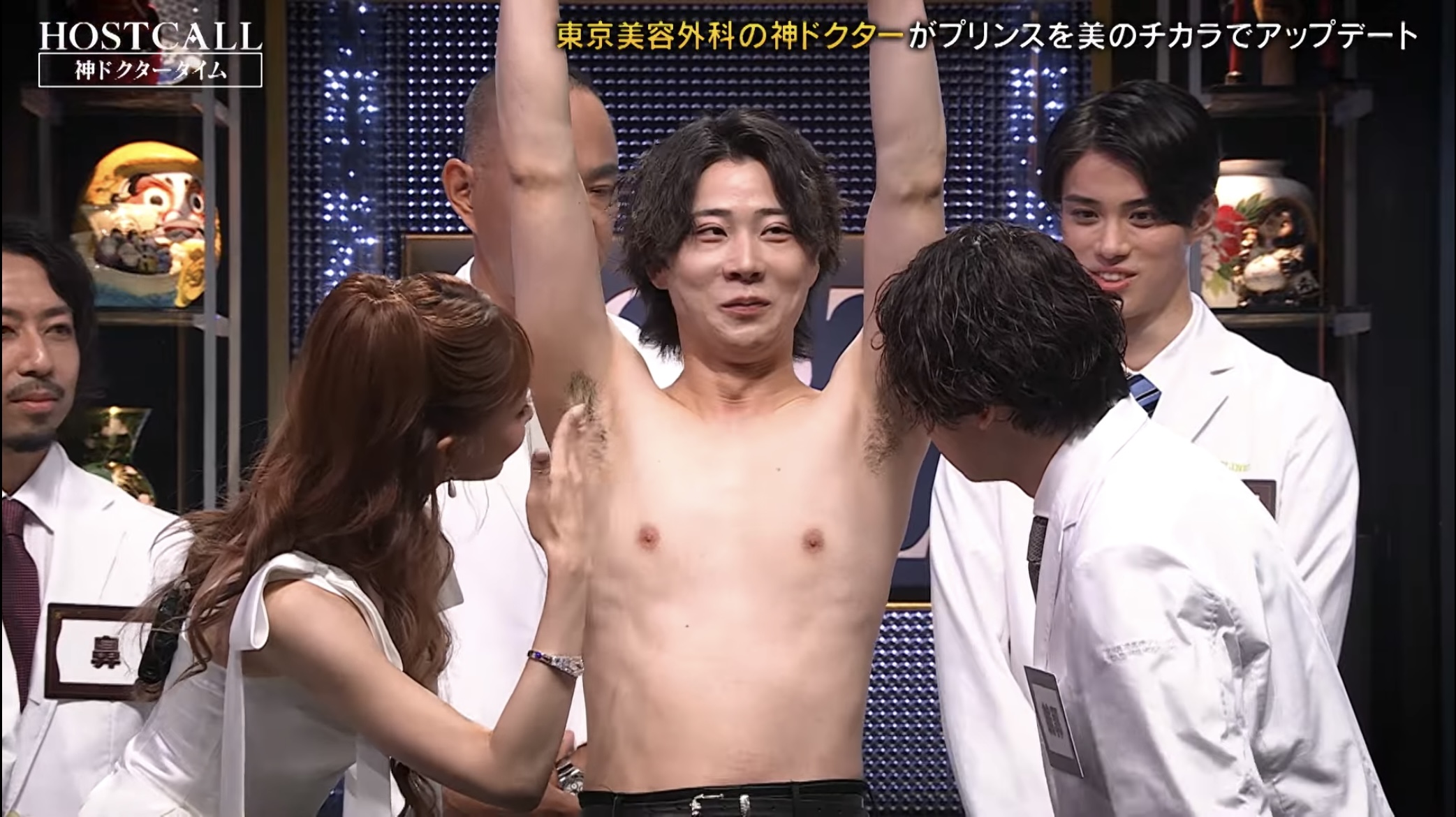
I have spent the last several weeks watching 18 of Japan’s most successful hosts decide whether other men have what it takes to join them, which has meant learning considerably more than I expected to know about the professional requirements of being desired by women. I have met a 27-year-old local-government employee with over ¥10 million in debt, a man with four girlfriends who intends to dump all of them in order to devote himself more fully to women, and a butler cosplayer. I have watched a contestant undergo a philosophical interrogation about the difference between wanting to repay ¥10 million and wanting to become the kind of man capable of repaying ¥10 million, which the hosts regard as an important distinction. I have watched eight plastic surgeons in matching white coats gather around another man to determine which parts of him might be improved, while a former porn star leaned in to smell his armpit. And then I watched a doctor pull open the same man’s waistband to check whether he was circumcised.
The YouTube show is called Host Call, and everyone involved would like you to know that its purpose is to clean up the host industry. I wanted to understand what, exactly, was being cleaned, and by whom. It turns out to be a more interesting question than the phimosis joke suggests.

The Kings and Princes
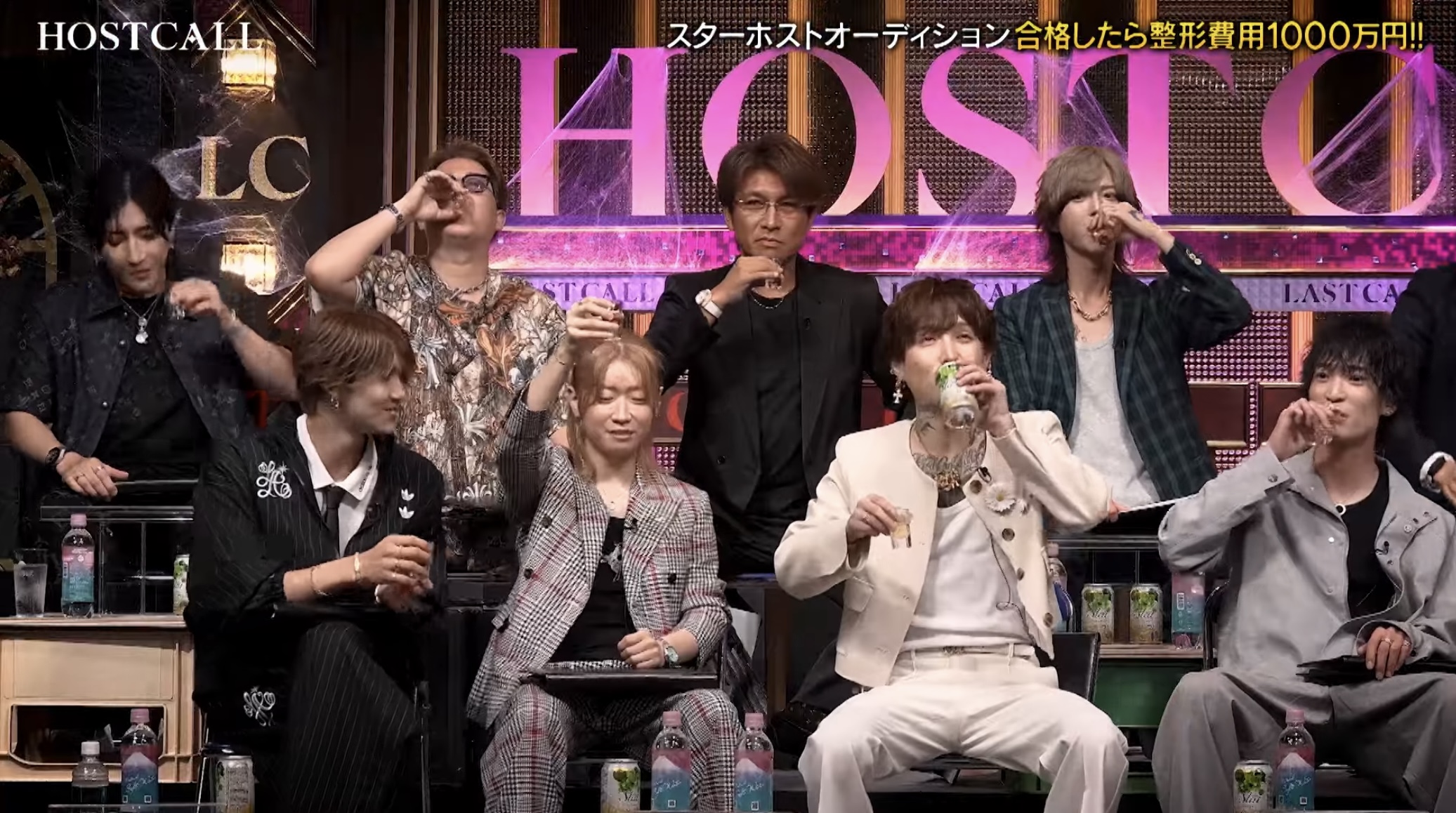
Host Call is a spinoff of Last Call, an audition show that’s spent six months having some of the industry’s biggest hostesses assess aspiring newcomers. Where Last Call casts aspiring hostesses trying to break into Tokyo’s nightlife, its sequel turns to the other side of the industry: aspiring hosts, credited as “Princes,” judged by 18 sitting or veteran hosts credited as “Kings.” Yuji Mizoguchi, the entrepreneur behind both shows, hosts the YouTube series alongside Roland, a former top-tier host turned television personality.
A majority of the Kings must vote yes for a Prince to pass, and the winner receives the opportunity to work at a prominent host club, along with plastic surgery worth as much as ¥10 million.
The Kings aren’t just top sellers, though several are that too. They are, disproportionately, the men who run the country’s largest clubs. The panel includes the chairman of Acqua Group, one of Japan’s biggest host franchises; the chairman of Group Yggdrasill; and the owner of the Rhythm group. This is the single most important fact about the show, and the one its marketing least wants you to sit with: the men being asked to certify that Japanese hosting has reformed itself are, to a significant degree, the men who run it.

God Doctor Time
A typical episode puts one Prince through several rounds of evaluation, including a grueling interrogation before the Kings and a practical test in a mock host club, where he must entertain a deliberately difficult customer (here, a lot of the girls from Last Call make cameos).
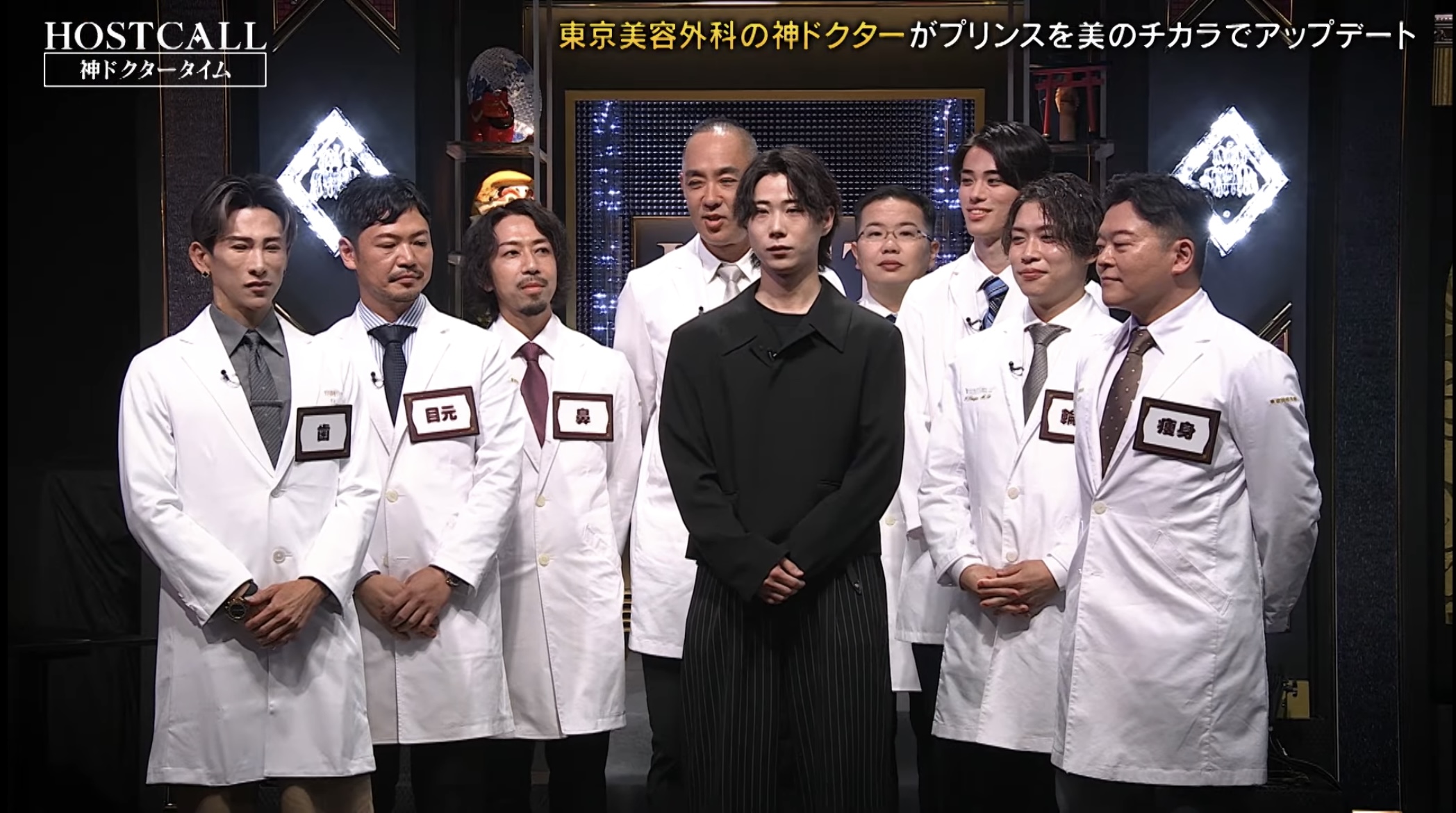
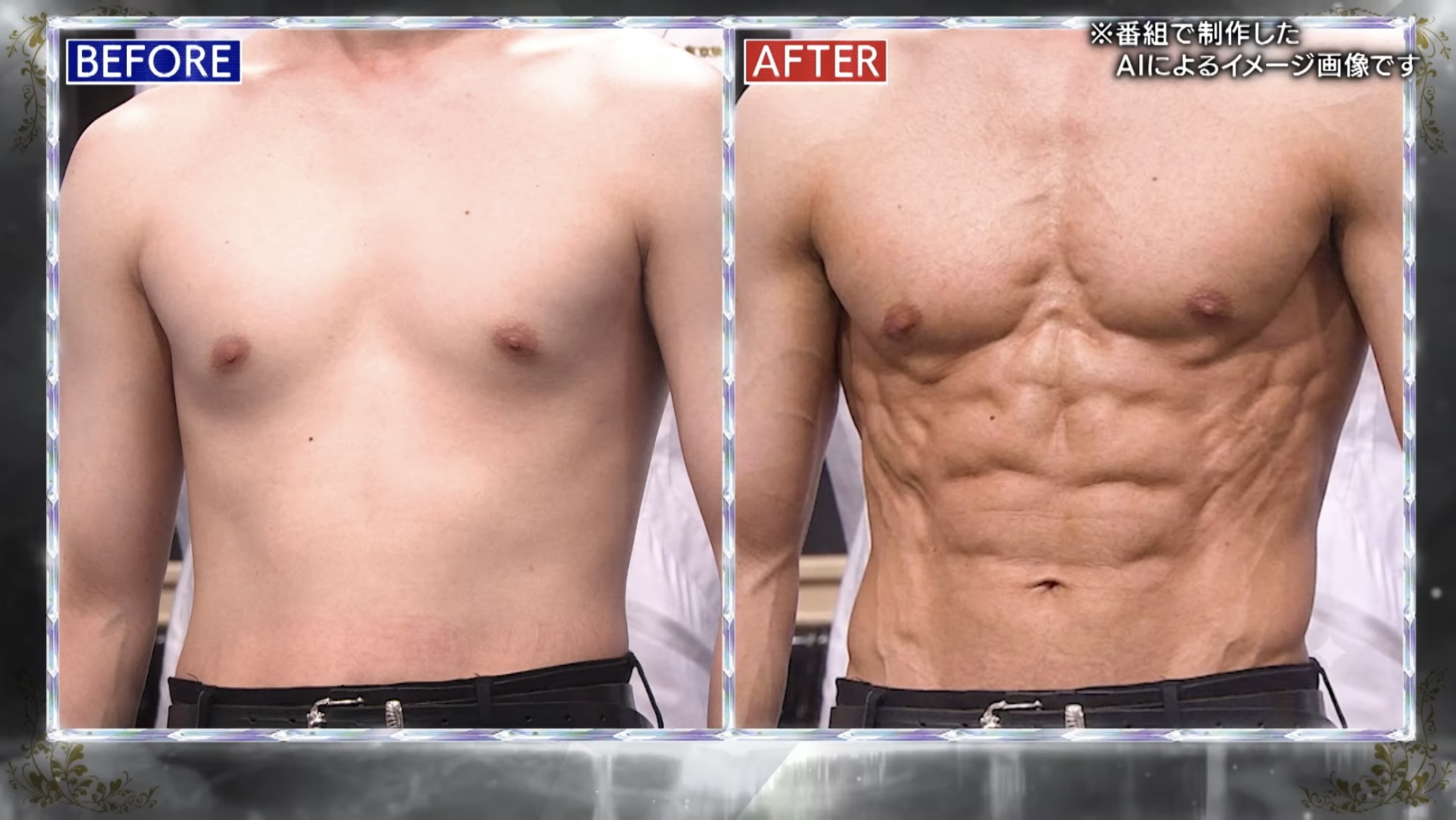
Then comes Kami Doctor Time, or “God Doctor Time,” when seven plastic surgeons from sponsor Tokyo Biyou Geka inspect his face and body and propose improvements. The clinic supplies both the doctors identifying the flaws and, for the eventual winner, up to ¥10 million in procedures to fix them; viewers, meanwhile, are periodically informed about offers through which they can purchase treatments themselves. The arrangement is almost admirably self-contained: the flaw produces the content, the content produces the makeover, the makeover advertises the sponsor and the sponsor can also fix you.
I want to tell you I watched this with some kind of critical distance. I didn’t. Watching eight plastic surgeons enumerate the possible improvements to a stranger’s face produces an unfortunate secondary question: what would they say about yours?
Episode three introduced the first actual contestant: a 27-year-old local-government employee with over ¥10 million in debt. During God Doctor Time, a doctor checked whether he was circumcised as co-host and former porn star Kirara Asuka leaned in to look, followed by a discussion of size, shape and possible procedures. Later, he went shirtless, and Kirara and a doctor pressed their faces into his armpits to rate how he smelled.
Host clubs are licensed, under Japan’s entertainment business law, in the same category as hostess clubs: a business built on companionship, drinking, conversation and explicitly nothing further. Selling sex requires a different license these clubs don’t hold, and risks prosecution under the anti-prostitution law. A Prince’s circumcision status shouldn’t, officially, be professionally relevant information.
Unofficially, the industry has a name for what happens anyway: makura eigyou, or pillow sales, in which a host sleeps with a top customer off the club floor to deepen her loyalty. It isn’t explicitly illegal — no statute criminalizes a consensual relationship between adults — but it sits close enough to the amended law’s ban on exploiting a customer’s romantic feelings that lawyers describe it as not illegal, but functionally close to it, and clubs that tolerate it risk their license. It’s precisely the gray zone a cleanup show would want distance from.
Kirara and the clinic’s director both apologized once the clip spread. From the latest episode, the sixth one, the segment had disappeared.
The Cleanup of the Host Industry
To understand why “cleanup” is the word everyone keeps reaching for, it helps to know what needs cleaning.
Host Call had entered Japan’s host club industry after several years of intense scrutiny over malicious host clubs, particularly cases involving customers who accumulated enormous debts and were subsequently pressured to earn the money through prostitution or other sex work. In the most abusive version of the system, the host himself would push the customer into this sort of work and would make money from it.
In 2025, the government attempted the unusual task of drawing a legal boundary through a profession built on making commercial intimacy difficult to locate. Amendments to Japan’s Entertainment Business Act banned sales tactics that exploit romantic feelings — known in Japanese as iro-koi eigyou — and criminalized pressuring indebted customers into sex work. By the police’s own numbers, it worked: arrests dropped to 143 in 2025, down 64 from the year before; administrative sanctions fell to 251, down 456; complaints to police dropped by over 400. The National Police Agency credited the law itself for the decline.
Despite these efforts, the cleanup remains unfinished, and some of the highest-profile cases trace back to the same company. Months after the law took effect, ACQUA Group’s AXEL by ACQUA became the first club in the country sanctioned under the new restrictions on iro-koi eigyou. Weeks after Host Call premiered, another Club ACQUA franchise became the first operator in its prefecture referred to prosecutors under the amended law, after a host confiscated a customer’s phone to keep her from leaving until she ordered more — though the host was ultimately not indicted.
This is the industry Host Call says it’s reforming. It’s also, per its own panel, the industry supplying the men vouching that reform already happened: Acqua’s own chairman sits at the judging table, while stores carrying his group’s name keep supplying the case law for the very statute Host Call claims to have made obsolete. That doesn’t make him responsible for every affiliated store, but it does make him a strange choice of character witness.
By my seventh episode, I had also begun to understand that Host Call’s definition of clean was narrower, and perhaps more coherent, than I had assumed. Clean did not mean sexless, modest or particularly wholesome; God Doctor Time had settled that. The champagne could stay, and so could the seduction, the plastic surgery, the basic proposition that a man’s desirability converts into money, Kirara Asuka, and — presumably — the four girlfriends, until the Prince made good on his promise to dump them.