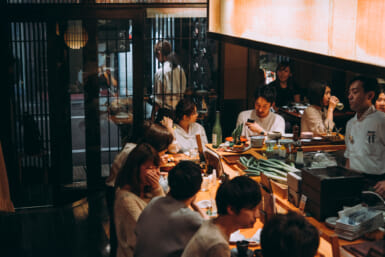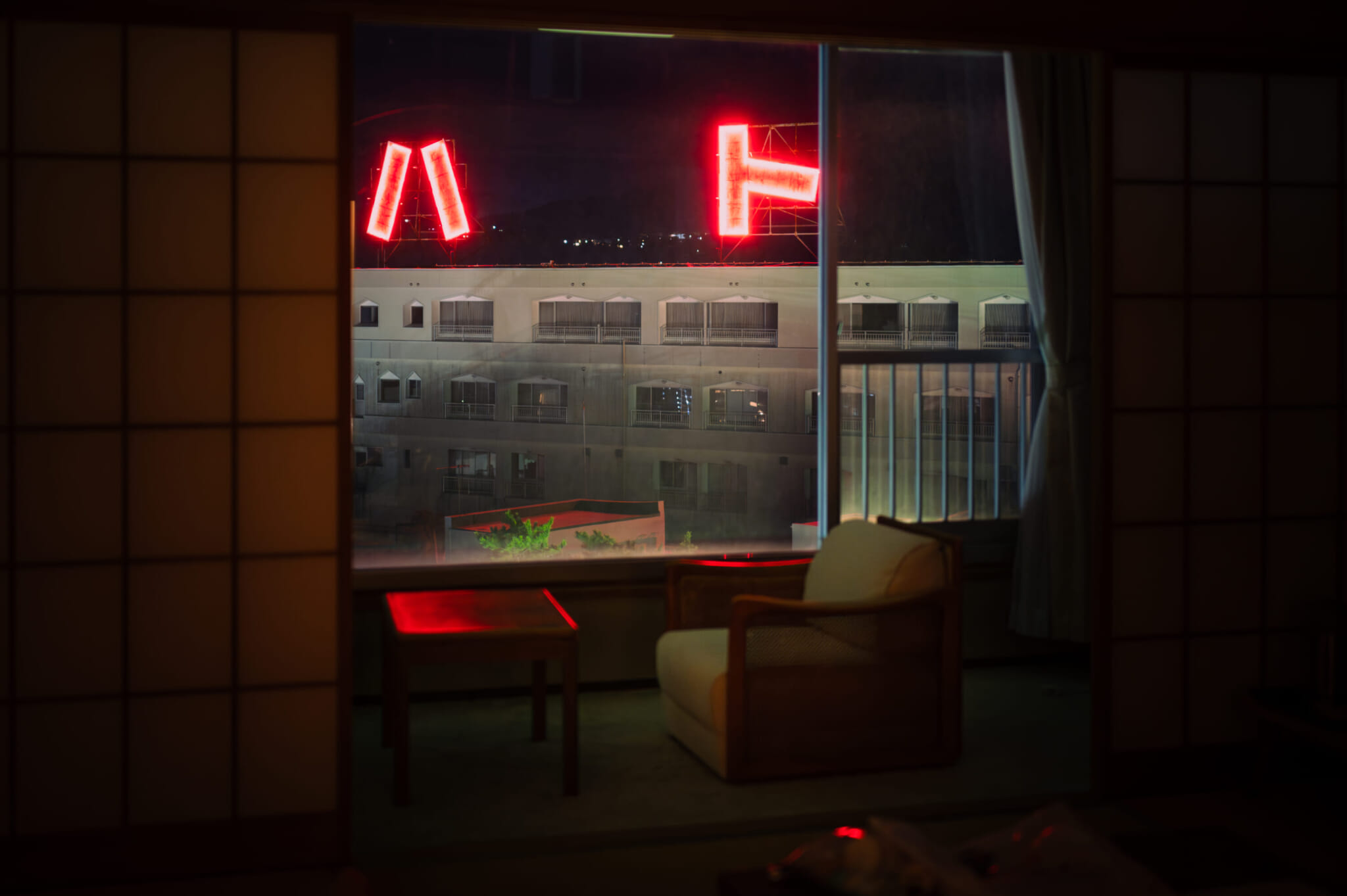
There’s an undeniable allure to staying somewhere new. Modern luxury stays and sleek boutique design hotels are often gorgeous in their precision — floor-to-ceiling glass, crisp minimal lines, perfectly curated color palettes and tasteful art collections. But there’s a unique thrill in stepping into a hotel that feels frozen in time, with structures that feel idiosyncratic now and flourishes we associate with films from bygone eras: heavy-grain mahogany, dense, jewel-toned textiles and an unapologetic opulence that feels outdated to some.
In Japan, this nostalgic hospitality comes in a few categories. The most revered among locals is the “classic” heritage hotel, which can range from structures built in the late Meiji period through early Showa periods (late 19th century to pre-1940s). These grand, European-influenced properties were often built with foreign diplomats and royalty in mind, blending western luxury with Japanese motifs.
A second, lesser-explored category is the post-war leisure boom (1960s to late 1980s). As domestic travel surged, developers concocted big, bold and delightfully theatrical hotels, especially in coastal resort towns like Atami. You can still find many of these treasures scattered across the country, complete with carpeted grand lobbies, cocktail lounges, maximalist baths and beyond.
Below are a few of our favorite retro hotels across Japan, each with a distinct history and irreplicable charm.
Hotel New Akao (Shizuoka)
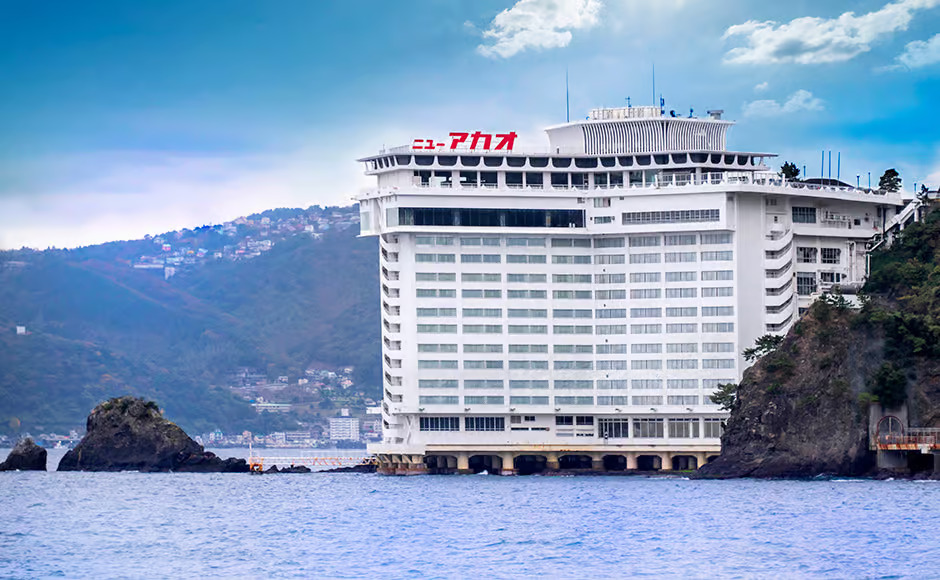
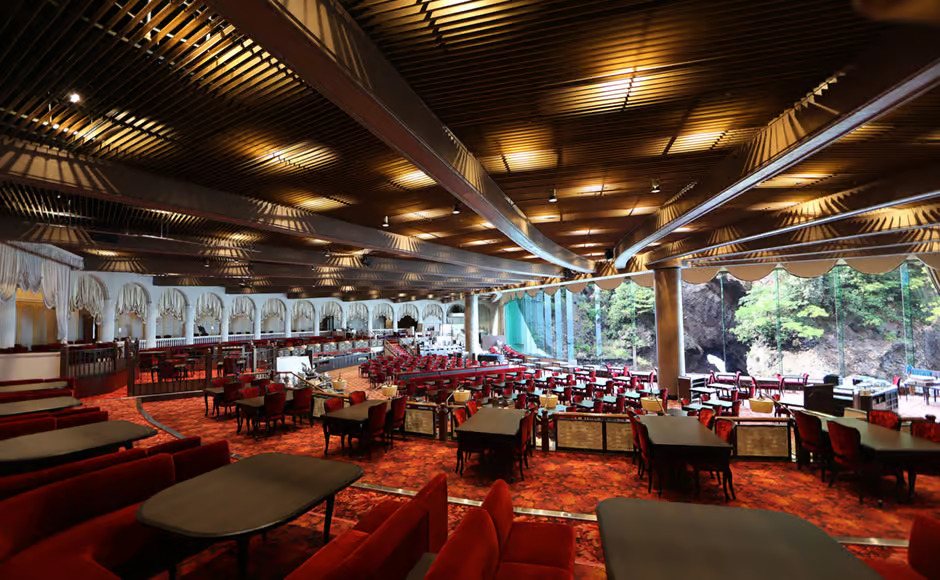
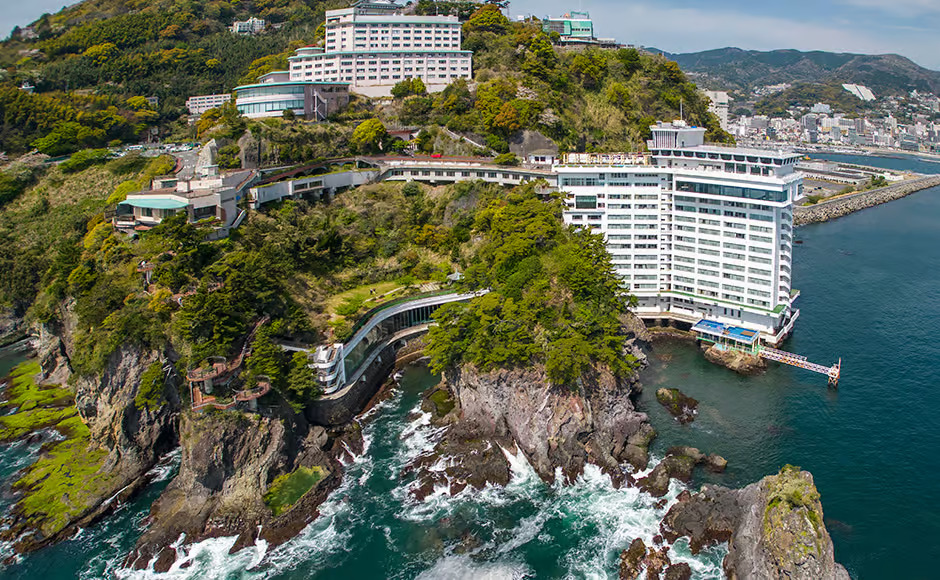
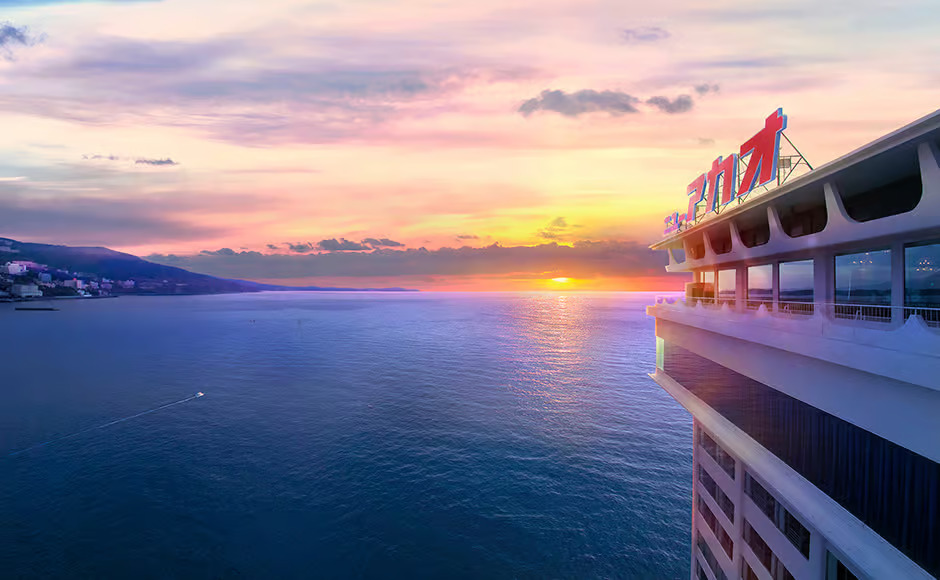
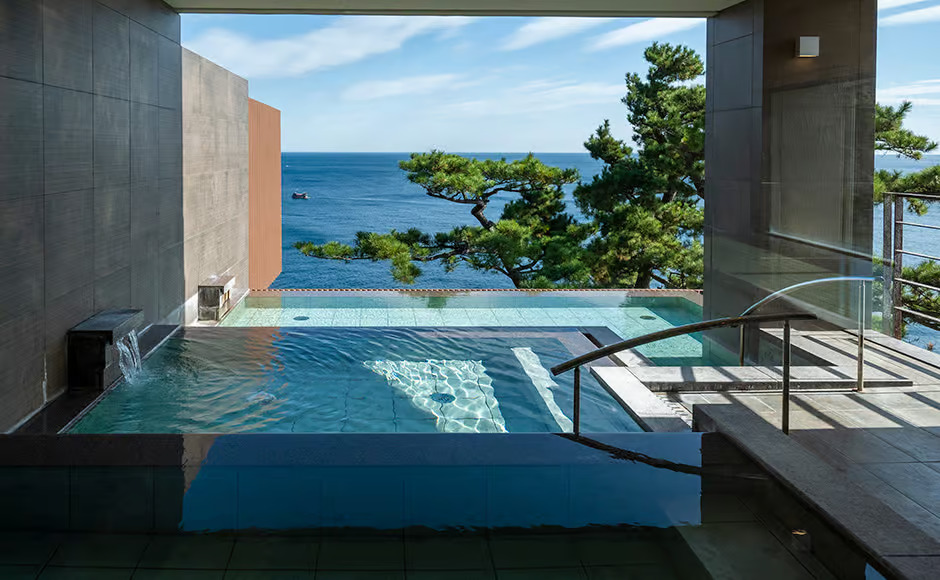
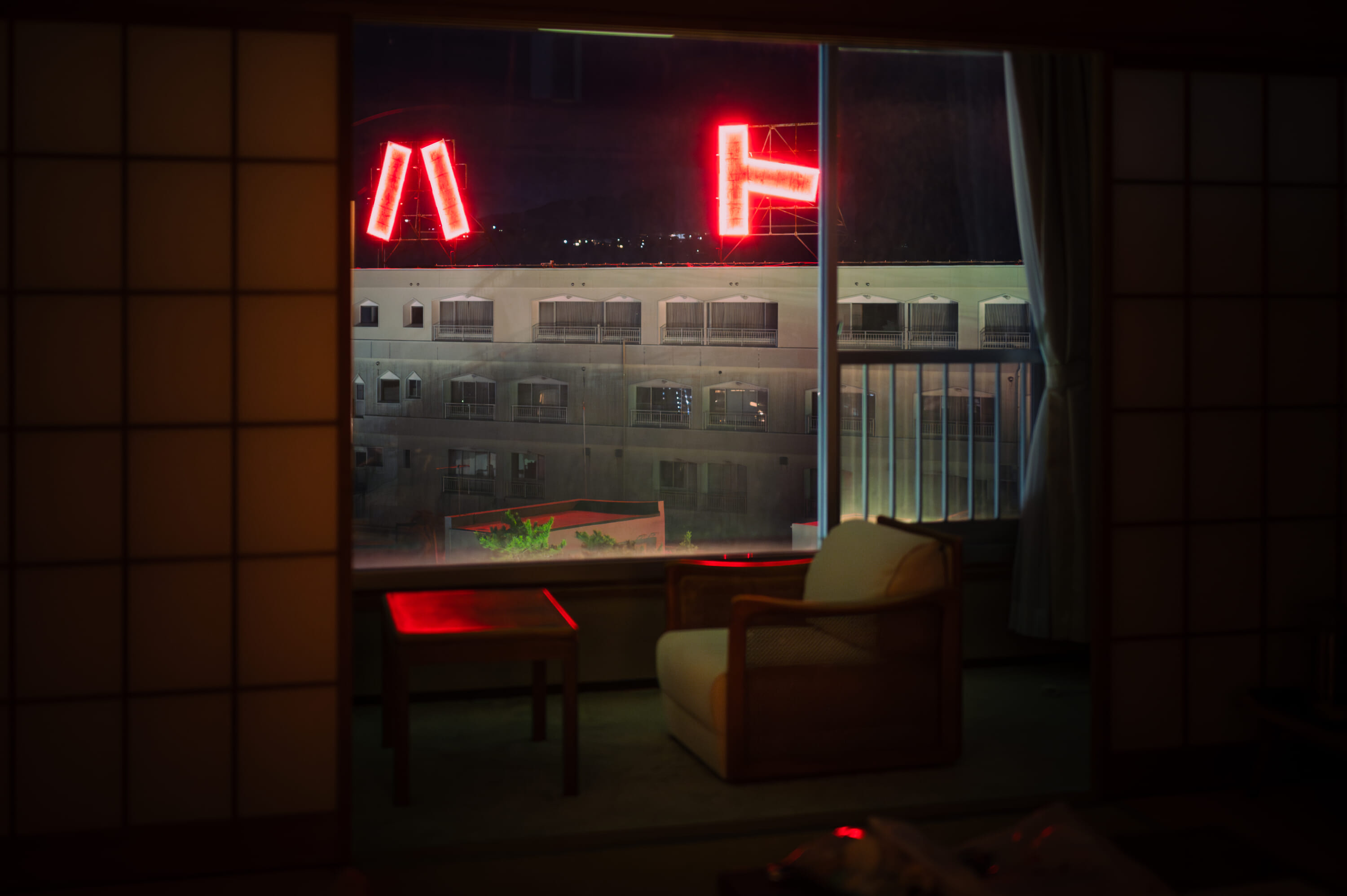
Clinging dramatically to the cliffs of Atami — a vintage seaside hot spring town just an hour’s train ride from Tokyo — Hotel New Akao is an emblem of Showa-era resort culture. Built in 1973, the hotel closed in 2021 after nearly five decades and reopened in 2023 under new ownership, its famous, retro red-letter katakana sign still glowing mysteriously after dark.
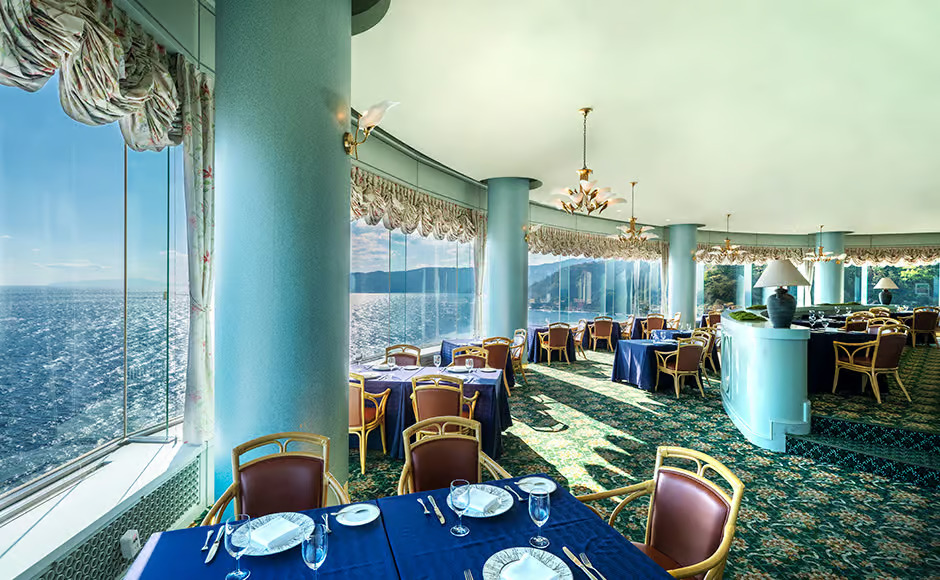
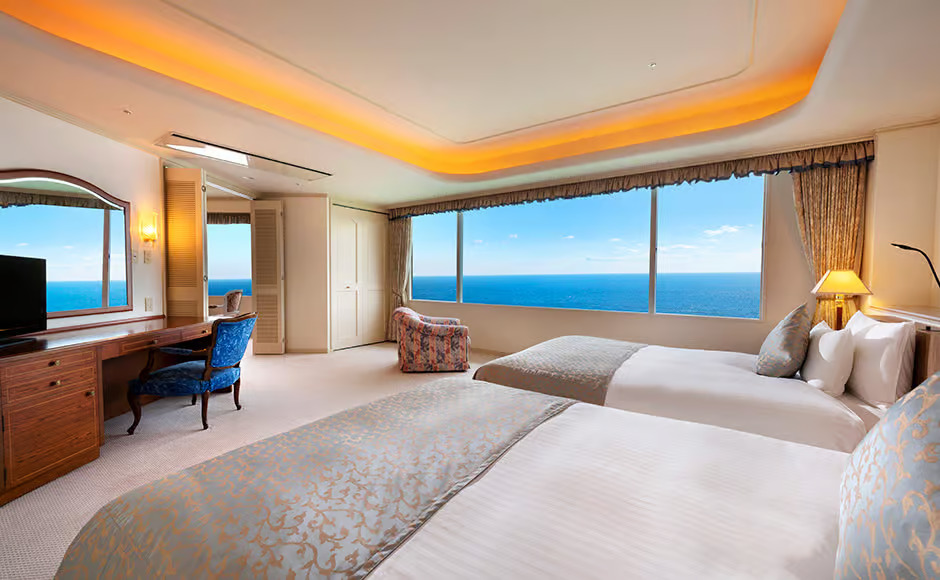
Its structure is upside-down: you enter through a grand lobby on the 17th floor and take elevators down toward guest rooms perched straight over the crashing waves. Inside, you’ll find a massive fan-shaped dining hall shrouded in red velvet carpets and opulent chandeliers, where you can eat fresh seafood while gazing out at the sea. Between its winding staircases, gilded dance hall and an open-air infinity bath where the hot spring water seems to spill right into the Pacific Ocean, Akao is an absolute visual spectacle.
Access: Take the Tokaido Shinkansen from Tokyo Station to JR Atami Station (45–50 minutes). Free shuttle buses run regularly from Atami Station directly to the hotel (approx. 10-minute drive).
Hatoya Hotel (Shizuoka)
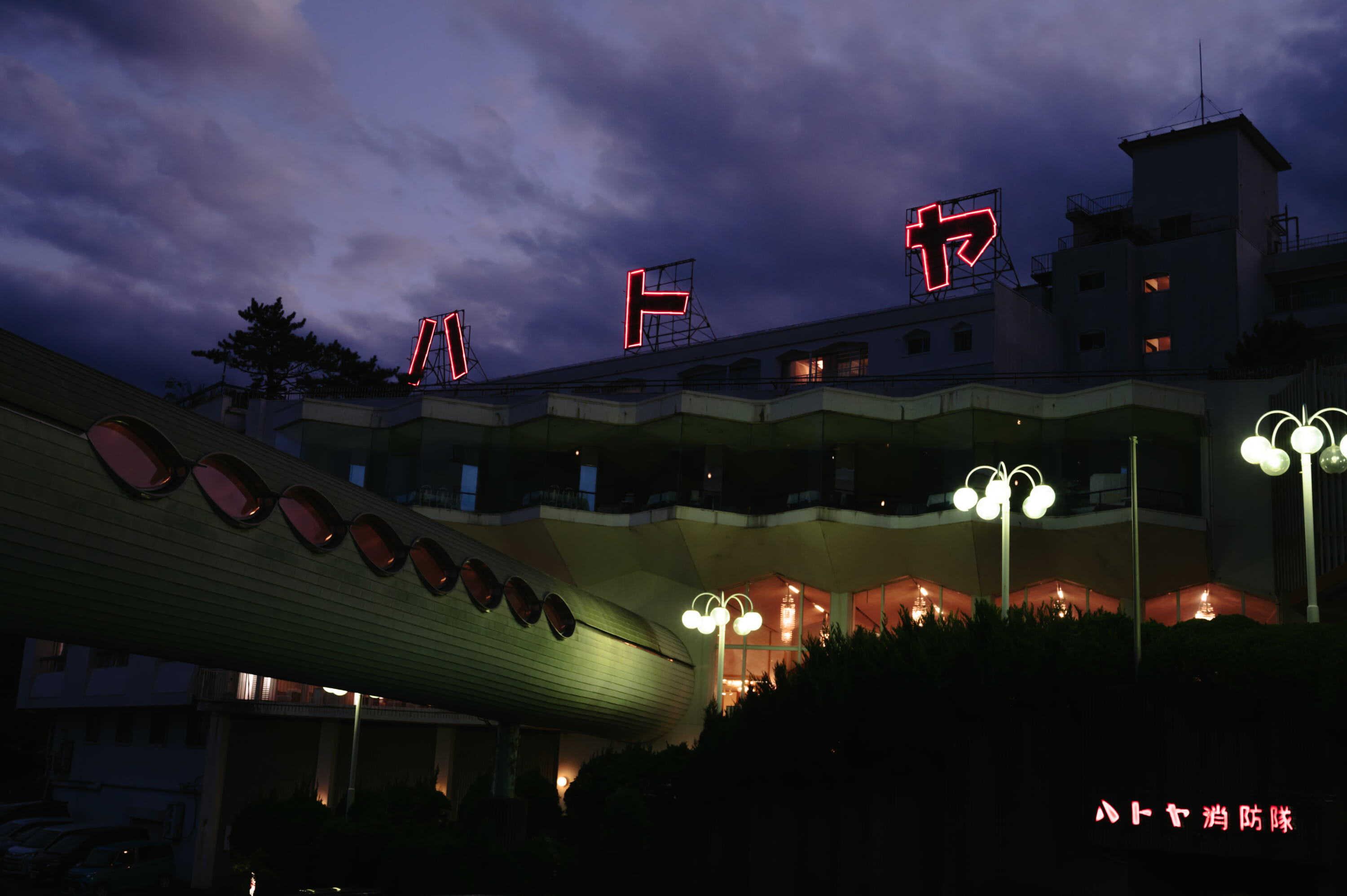
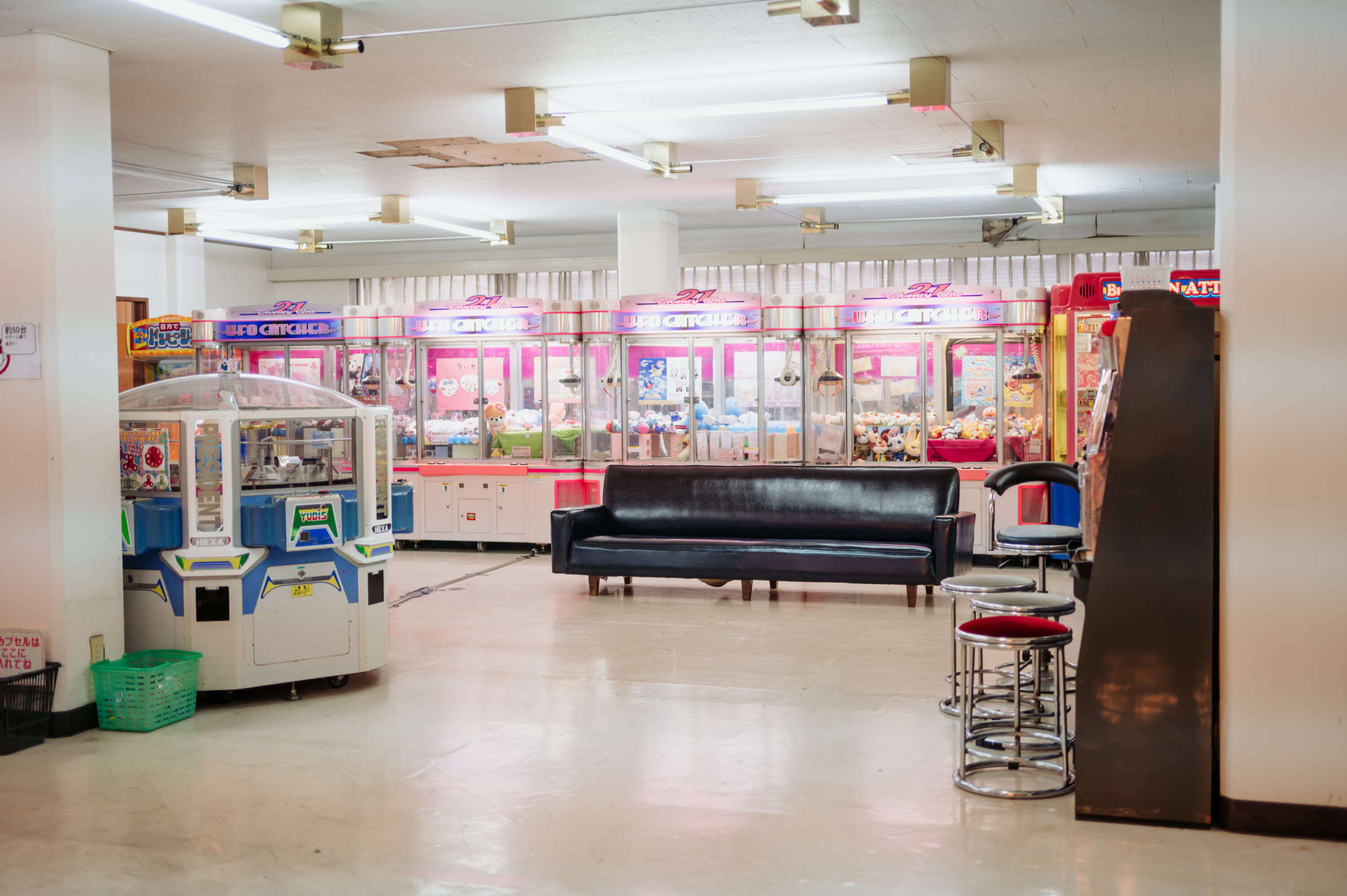
Just down the coast from Atami in the quiet beach town of Ito, Hatoya Hotel represents the fun, futuristic optimism of family vacations in the 1970s — generations of Japanese families grew up singing along to its catchy television commercials, and the hotel has lovingly preserved that magic.
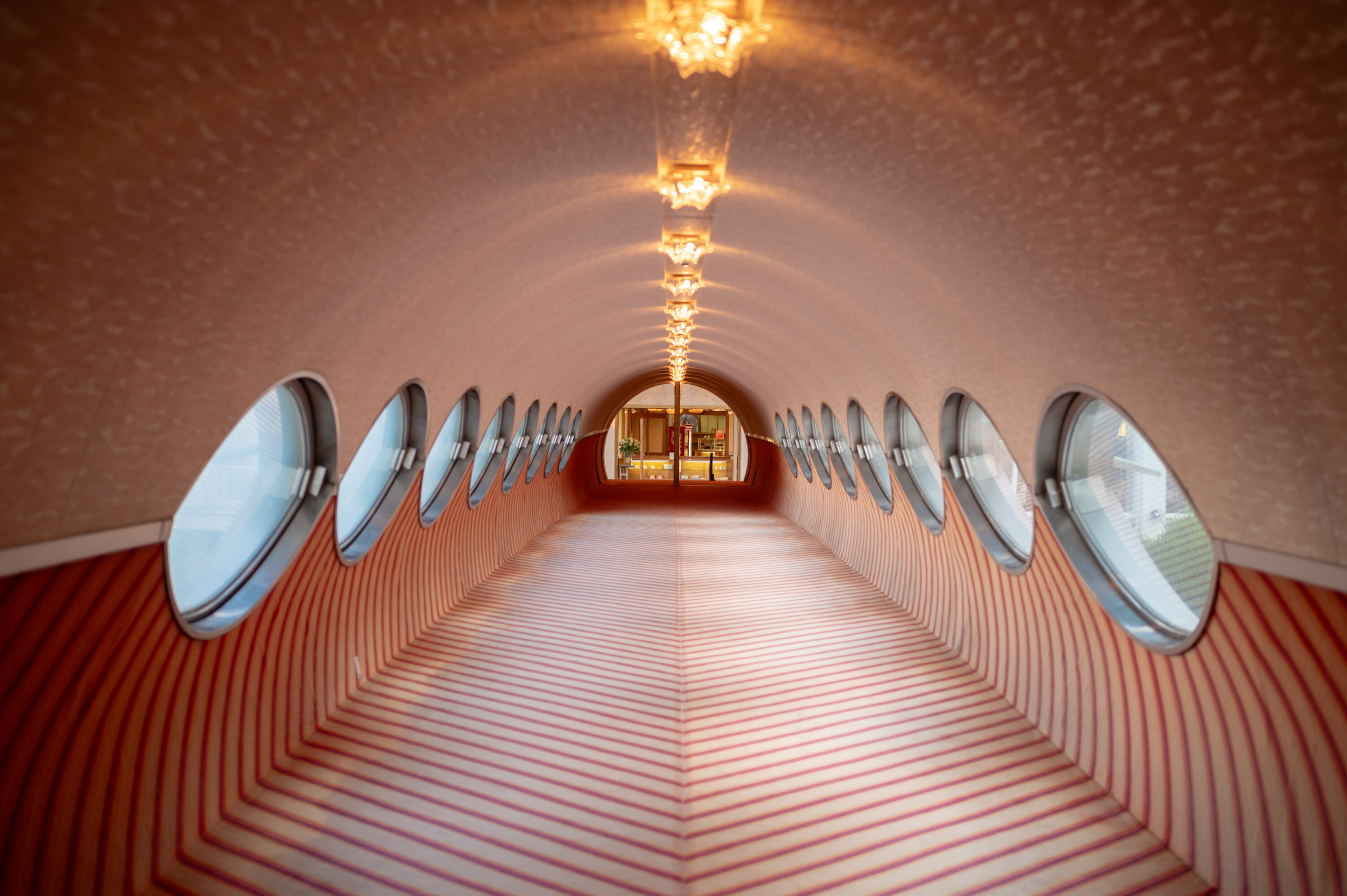
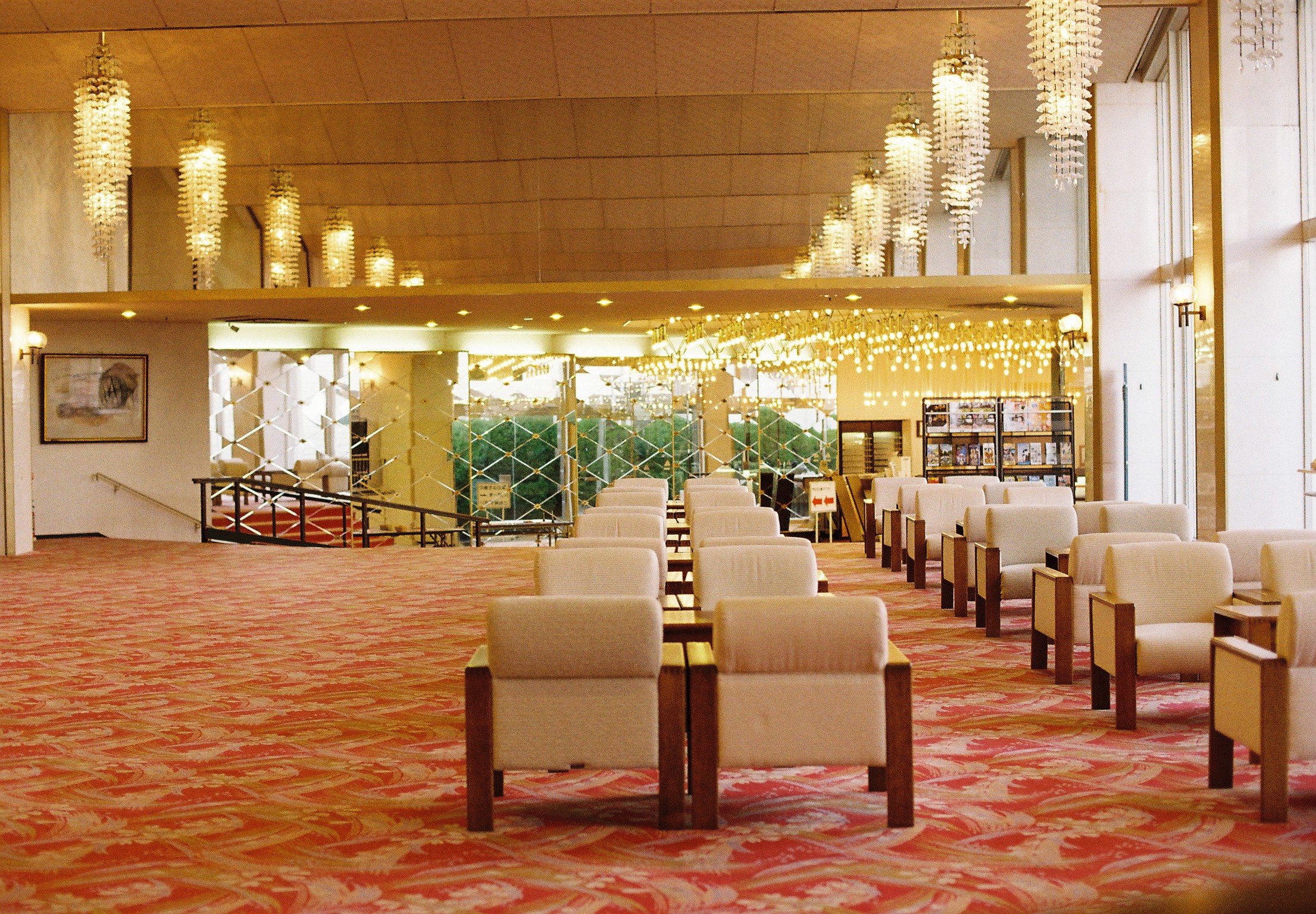
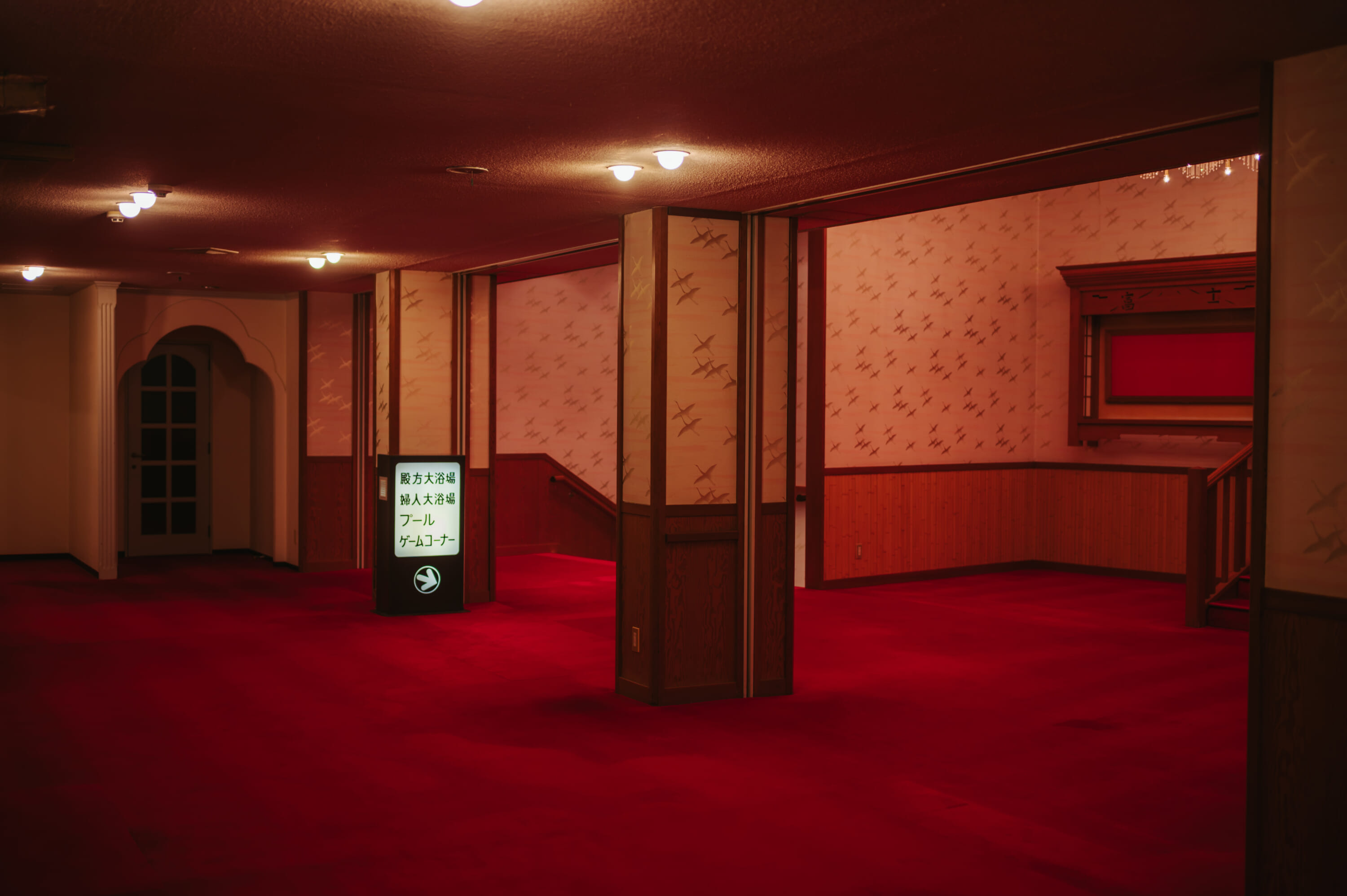
Walking through the property feels like exploring a sci-fi film set; its most iconic feature is an orange-hued aerial walkway complete with curved ceilings and oval, spaceship-style windows. You’ll also find fluorescent-lit retro gaming parlors, endless red-carpeted halls, an atmospheric lounge bar and midnight ramen. If any of this has piqued your curiosity, here’s an essay we’ve published entirely dedicated to Hatoya’s many charms.
Access: Take the JR Tokaido Line/Ito Line or the Limited Express Odoriko from Tokyo to JR Ito Station (~1 hour 40 minutes). The hotel operates a free shuttle bus from Ito Station (approx. 5 minutes).
Rihga Royal Hotel (Osaka)
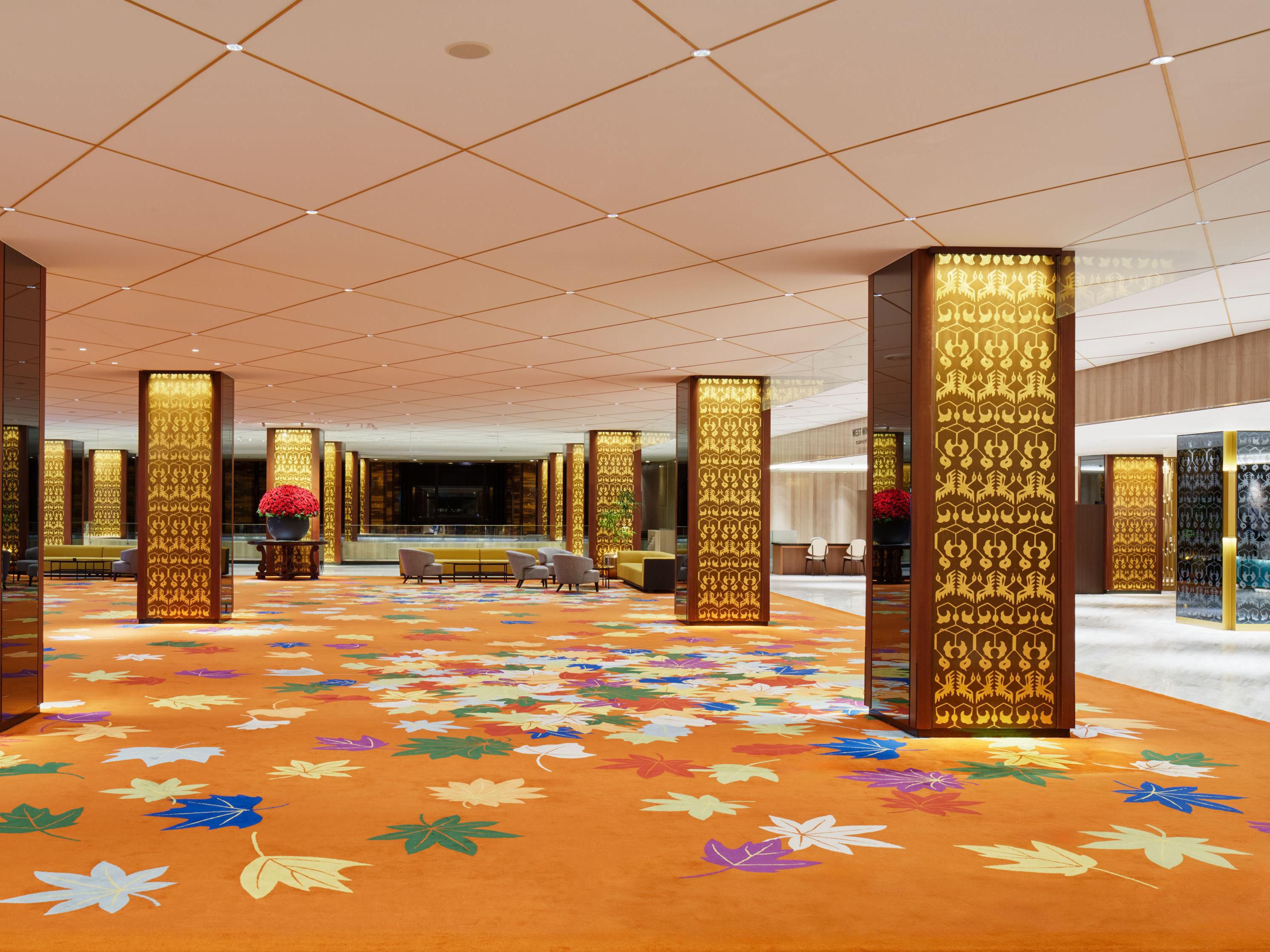
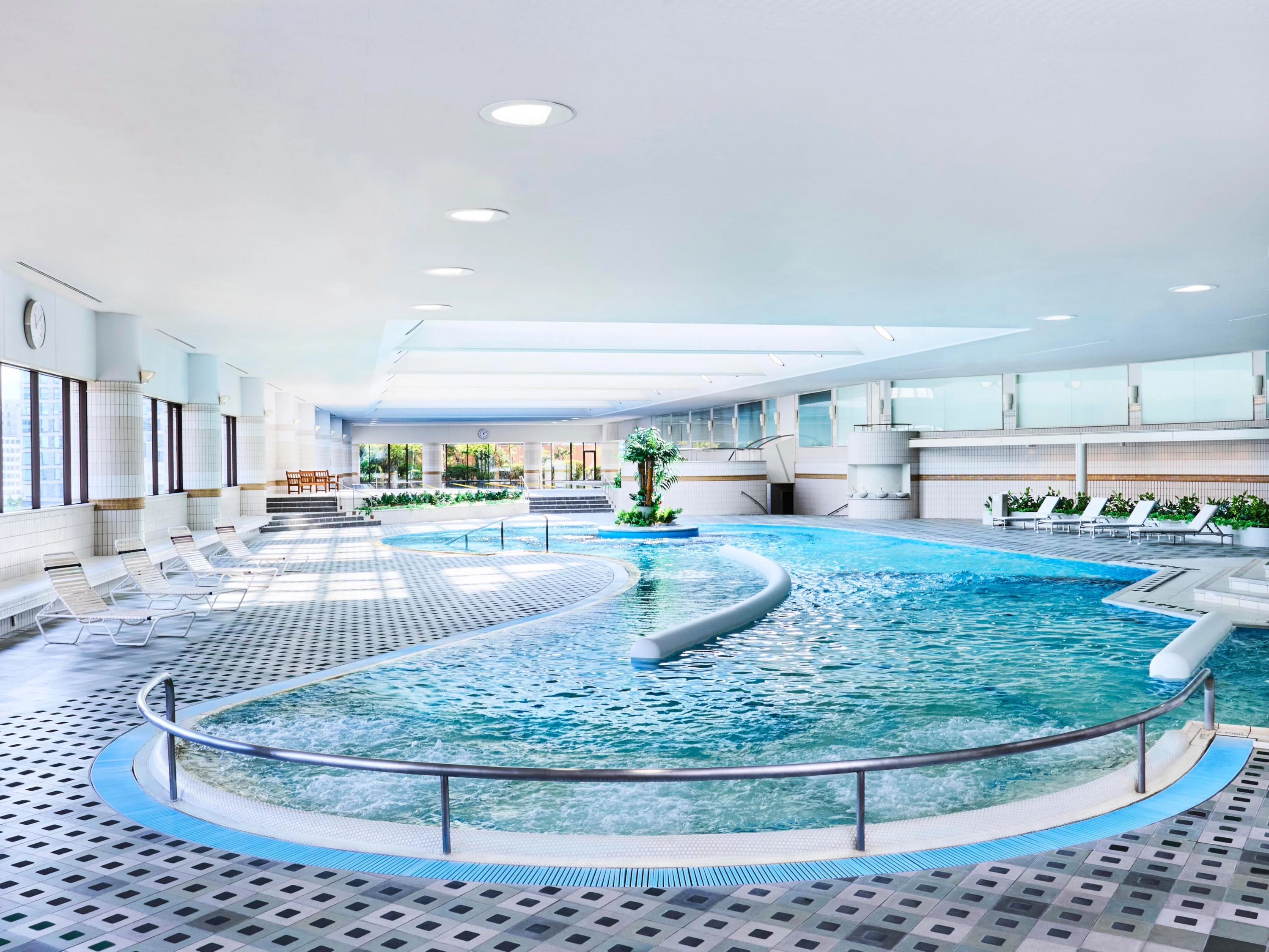
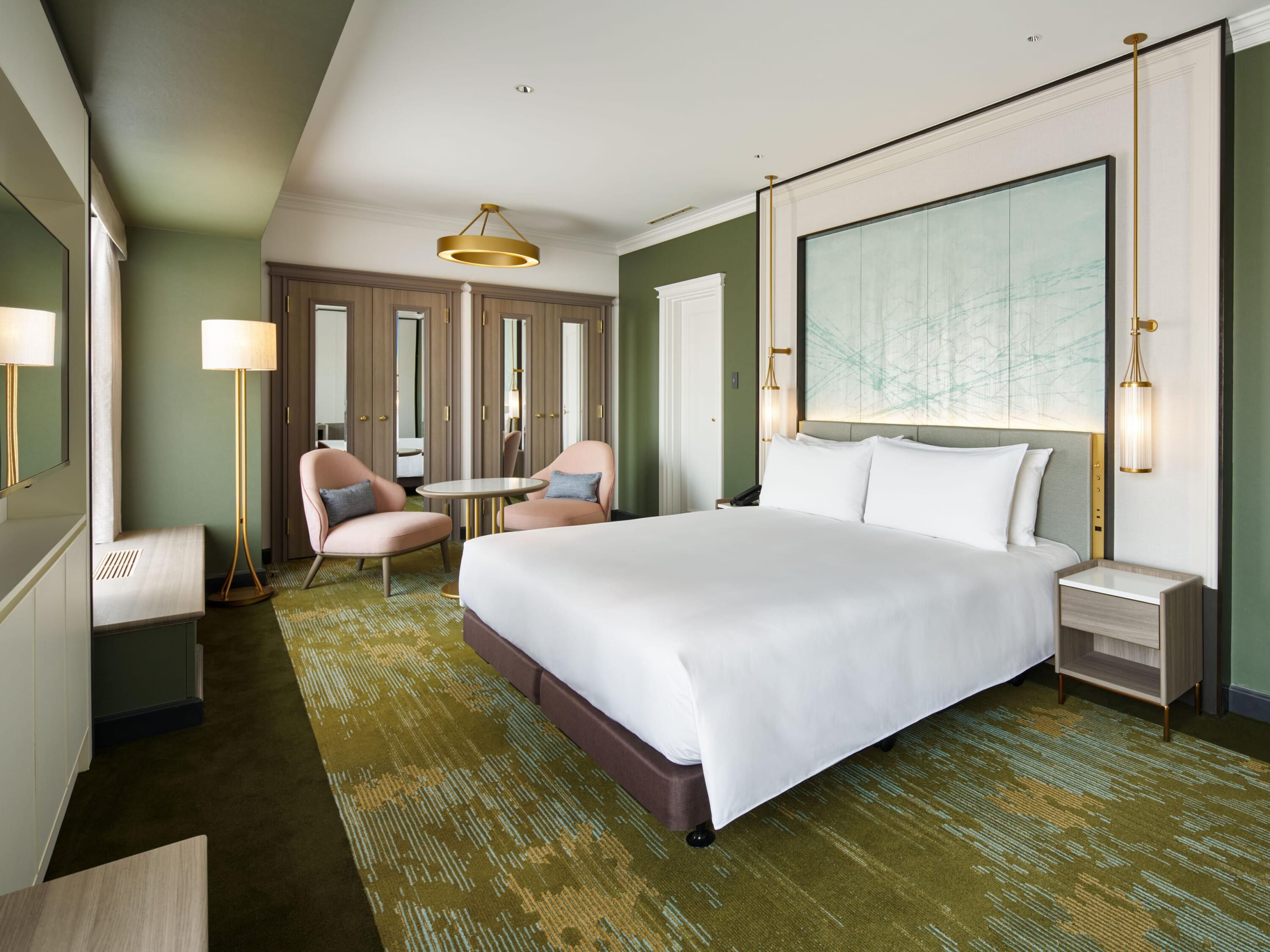
Known for decades as the “State Guest House of Osaka,” the Rihga Royal Hotel in downtown Osaka brings a refined, glittering spin to mid–century modern design. First opened in 1935, its grand public spaces were shaped by acclaimed Japanese architects who blended natural Japanese elements with sleek modern layouts.
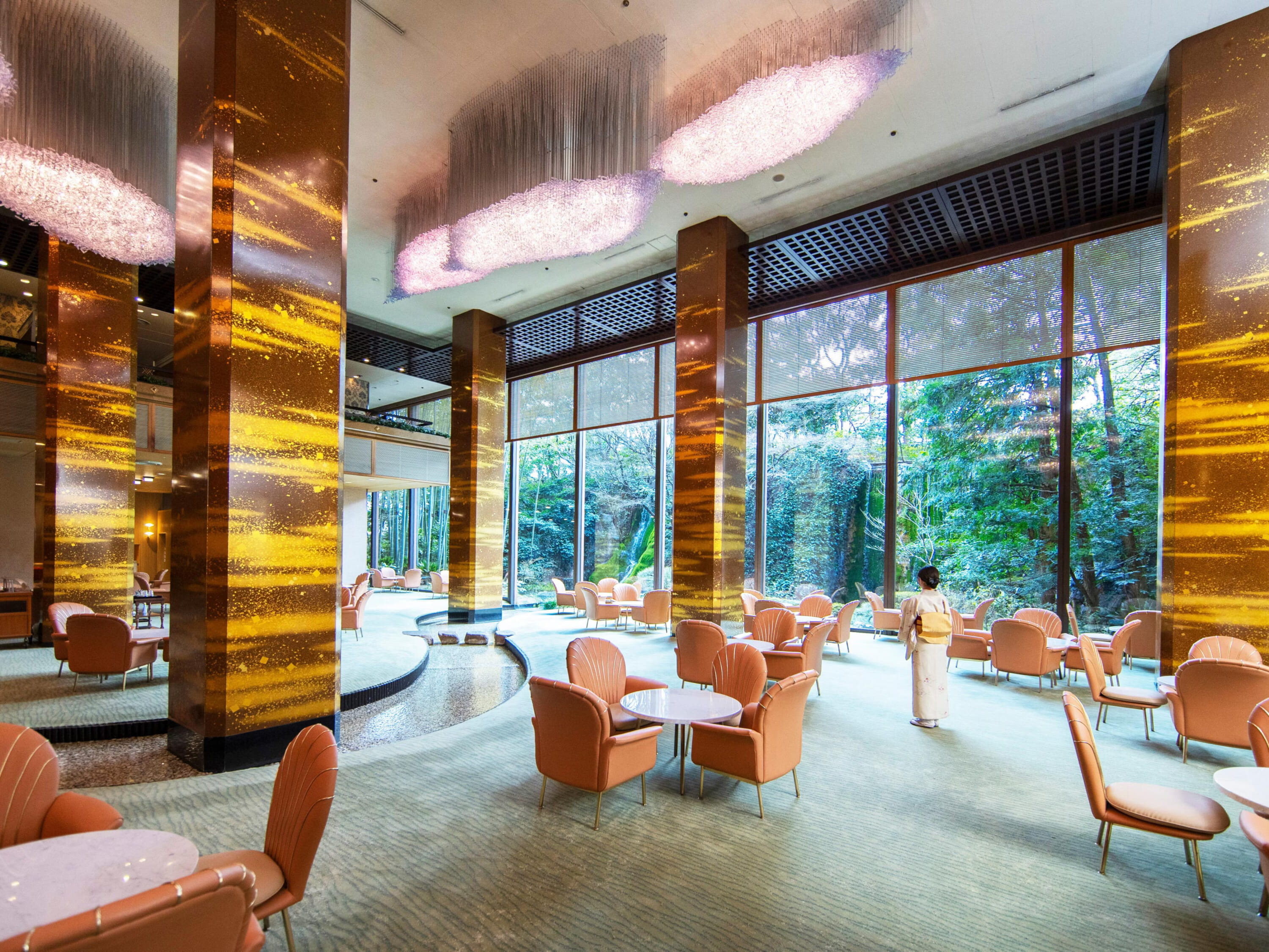
Its standout feature is the Main Lounge, where huge floor-to-ceiling glass walls frame an outdoor garden complete with two cascading waterfalls. Inside, gold-leaf pillars and crystal chandeliers resembling floating clouds overlook velvety lounge chairs. The space is truly ethereal — straight out of a ’70s Architectural Digest spread. Another detail not to miss is the historic Leach Bar on the hotel’s first floor, designed with input from the British potter Bernard Leach.
Access: Direct connection to Nakanoshima Station (Keihan Nakanoshima Line). From Shin-Osaka Station, take the JR line to Osaka Station (5 minutes), then take the complimentary hotel shuttle bus (runs every 6–15 minutes from JR Osaka Station, 10-minute ride).
Hotel Kawakyu (Wakayama)
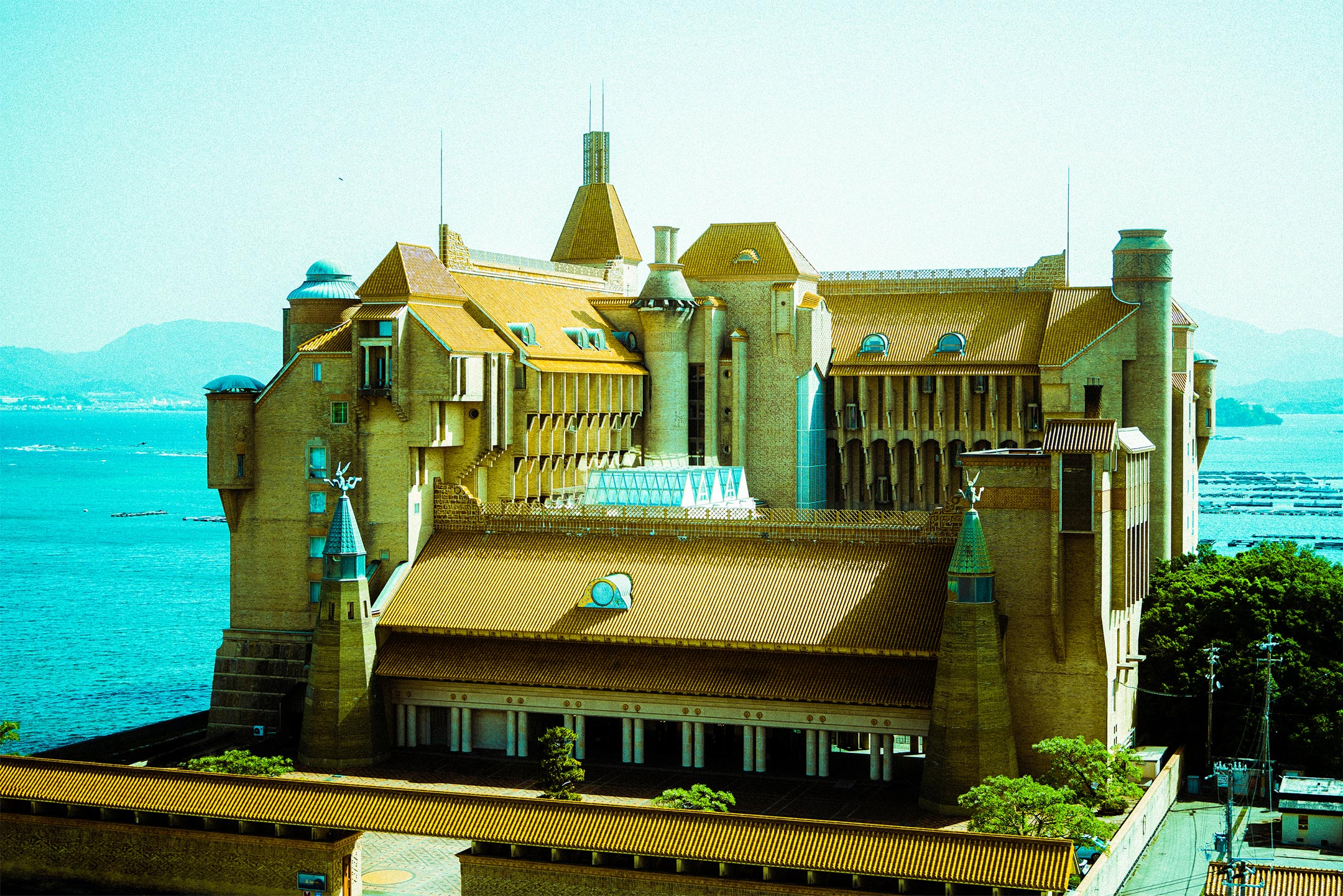
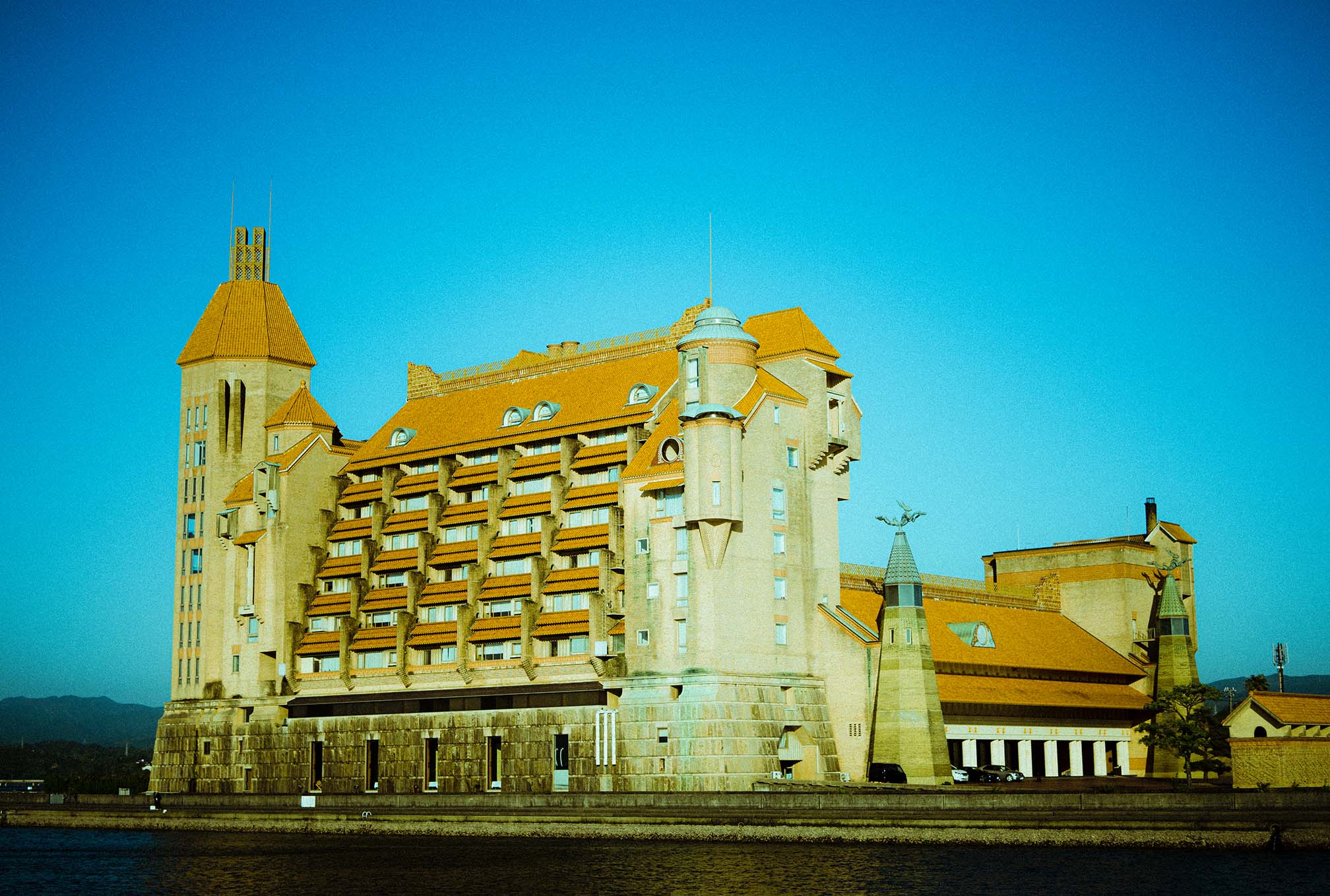
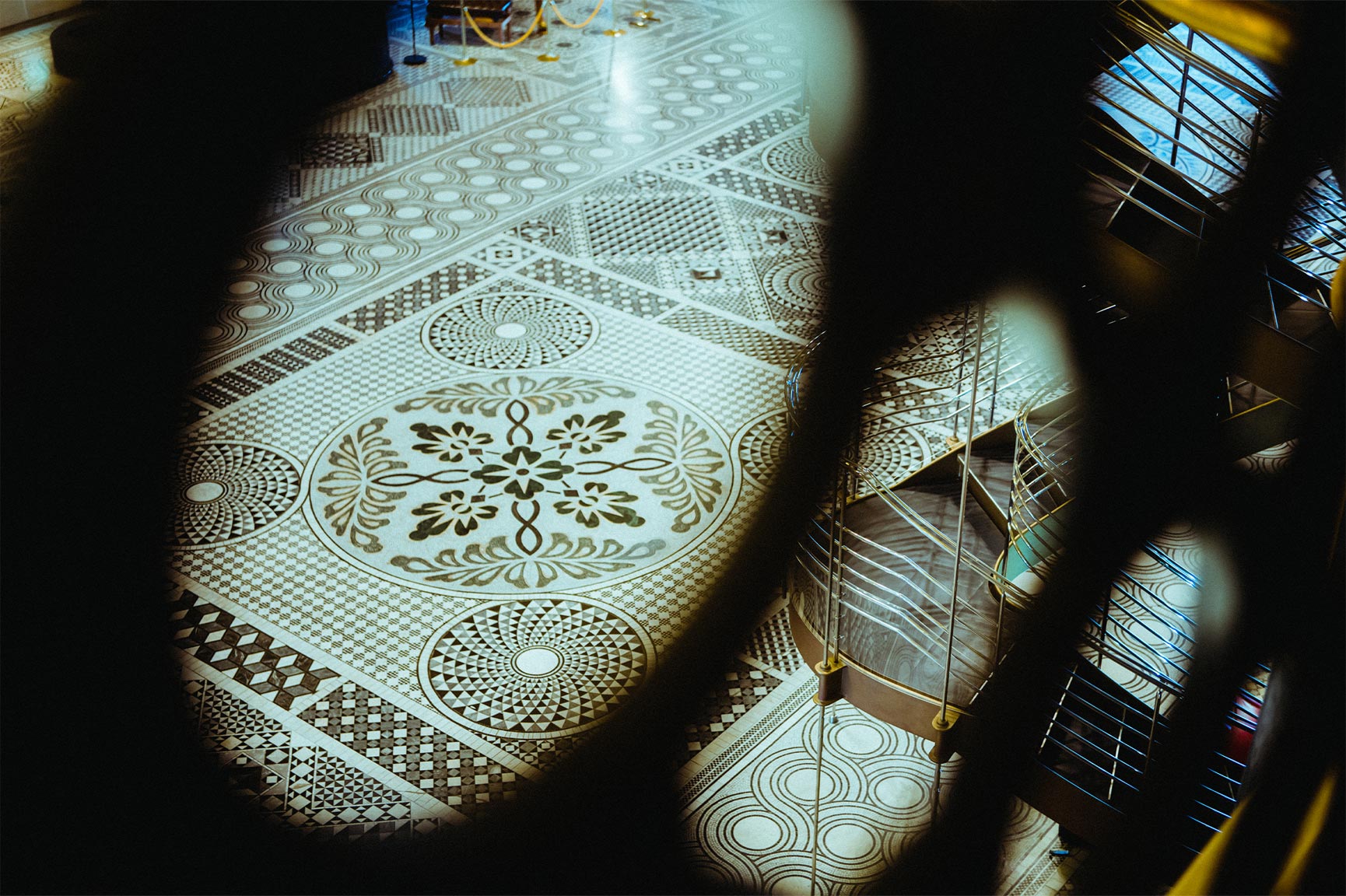
Located in Shirahama — a popular beach and hot spring resort region south of Osaka — Hotel Kawakyu is a legendary monument to bubble economy extravagance in the late 1980s. Sitting right on the water’s edge, the exterior is like a surreal cross between an ancient Portuguese fortress and Prince Eric’s seaside castle from The Little Mermaid. Rebuilt in 1991, the hotel was crafted by elite artisans brought in from all over the world. The roof, for instance, is covered in 470,000 glazed yellow tiles that were once reserved for Beijing’s Forbidden City.
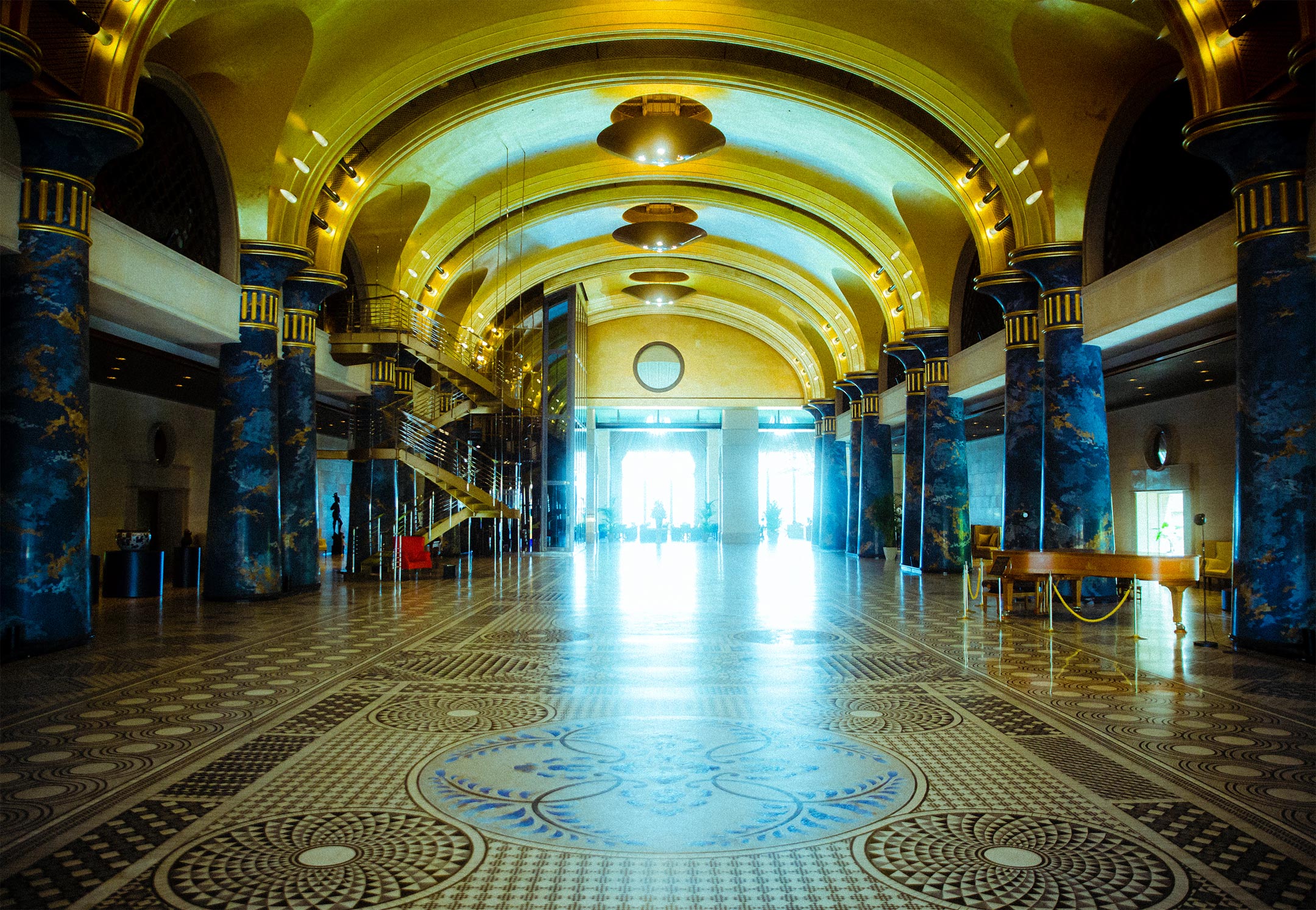
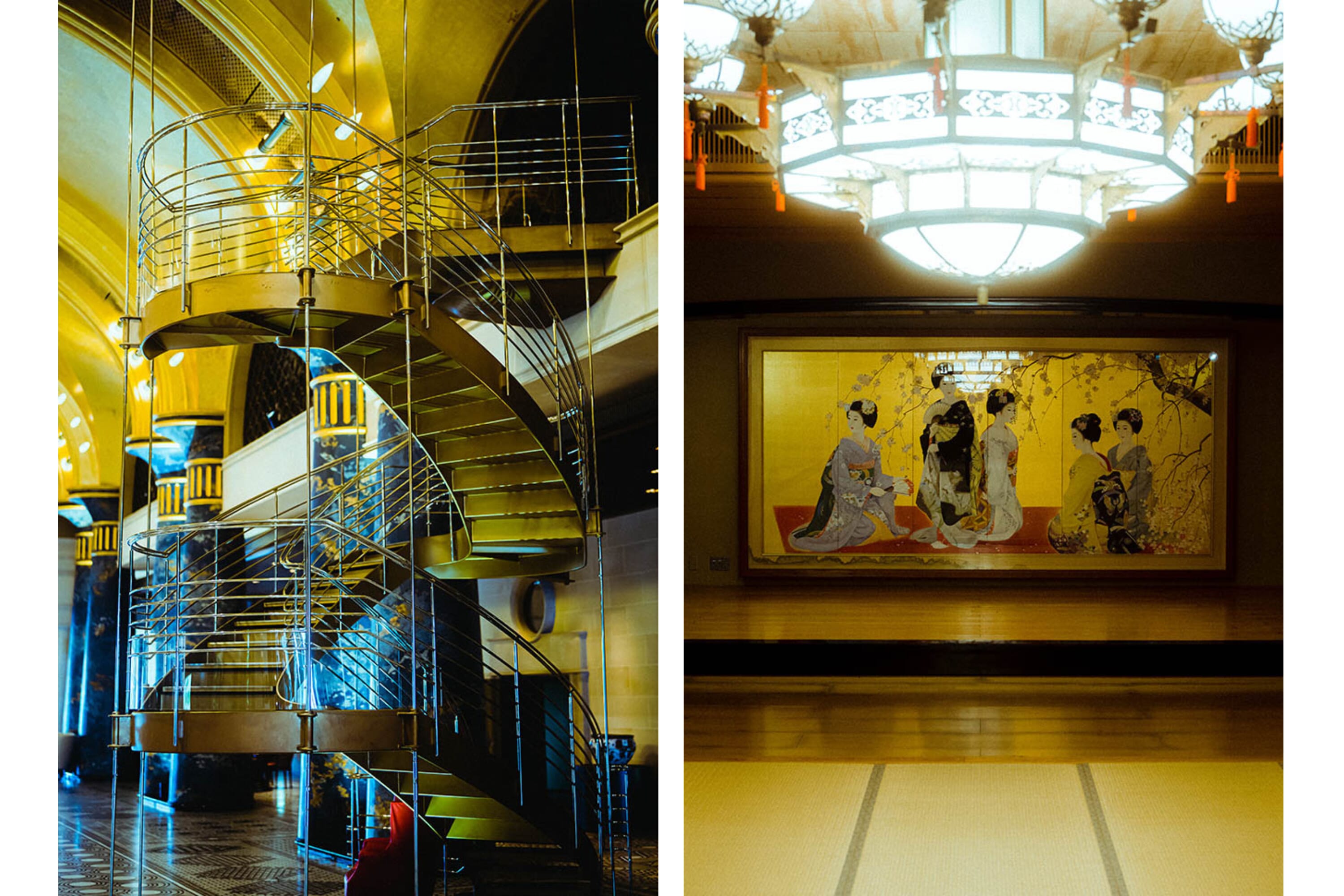
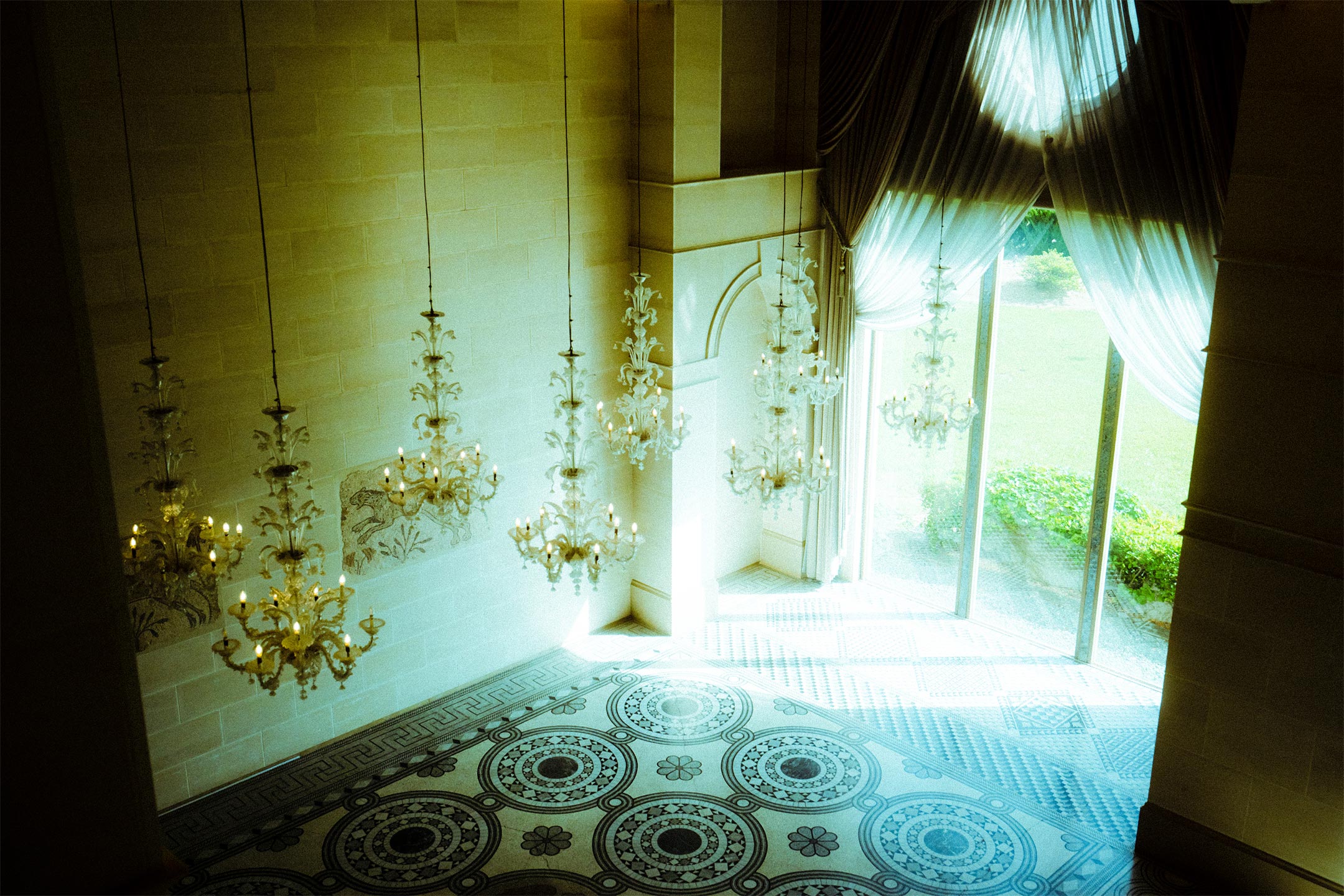
Inside, the grand lobby hall features an arched ceiling lined with 22.5-karat gold leaf (it holds the Guinness World Record as the world’s largest gold-leaf covered ceiling) and bright blue faux-marble pillars. Today, the hotel operates as an all-suite resort where every guest room overlooks the bay. It also officially functions as the Kawakyu Museum, offering tours of its extraordinary collection of global artisan crafts, sculptures and fine art so guests can explore the building as a living gallery.
Access: From Shin-Osaka Station, take the JR Limited Express Kuroshio to JR Shirahama Station (2 hours 15 minutes). From Shirahama Station, it is a 10-minute taxi ride or a 15-minute public bus ride to the Saki-no-yu / Kawakyu-mae stops.
Unzen Kanko Hotel (Nagasaki)
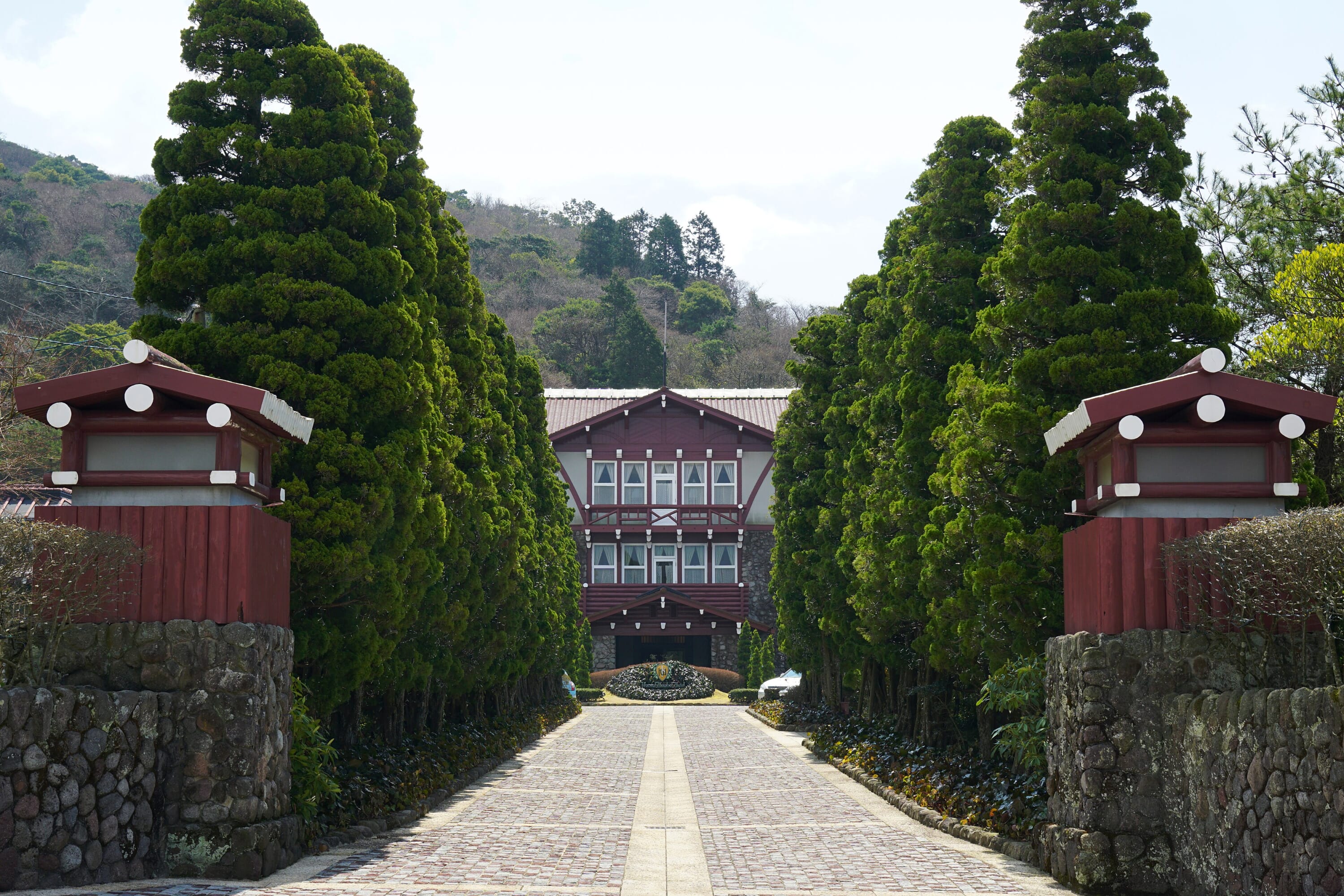
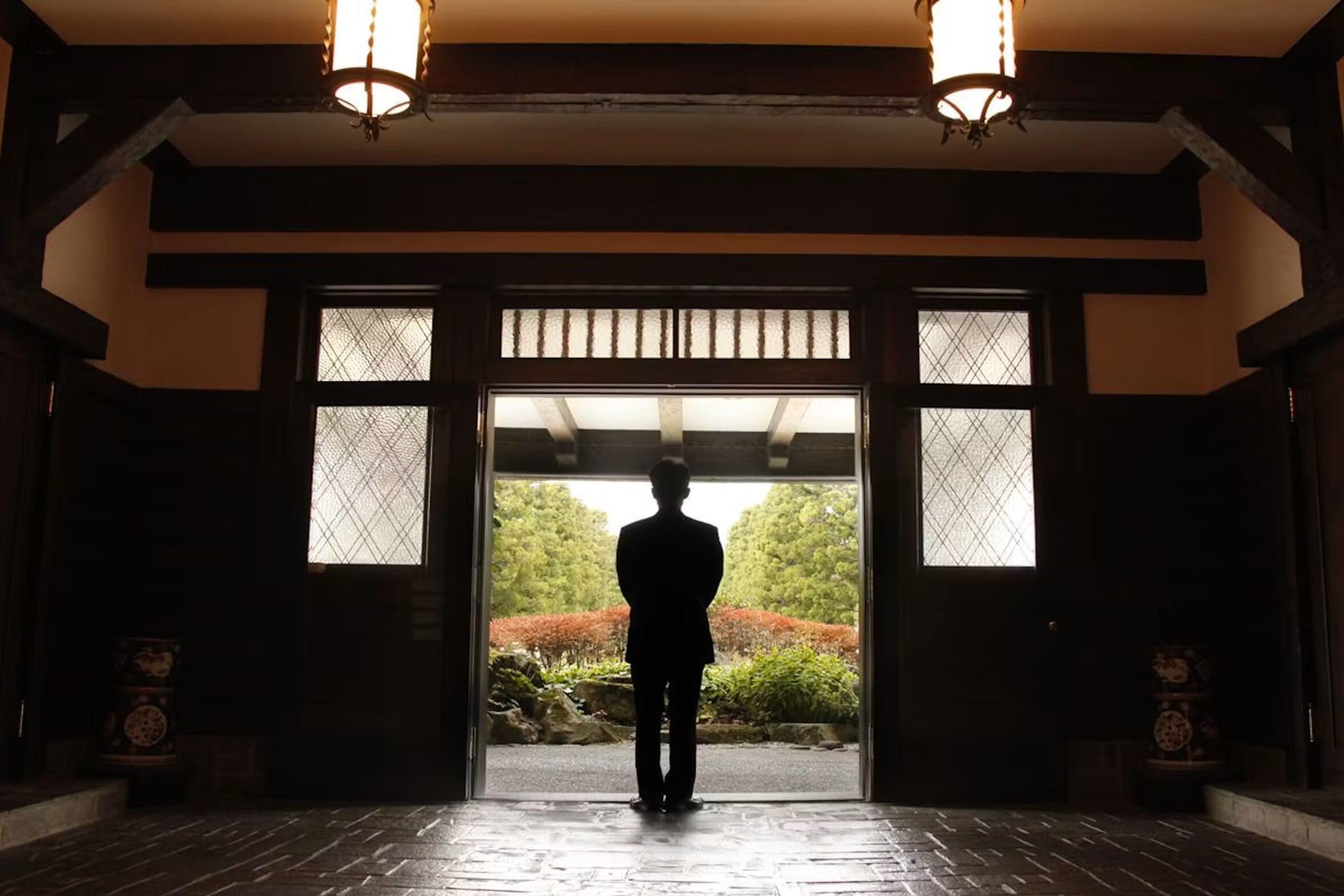
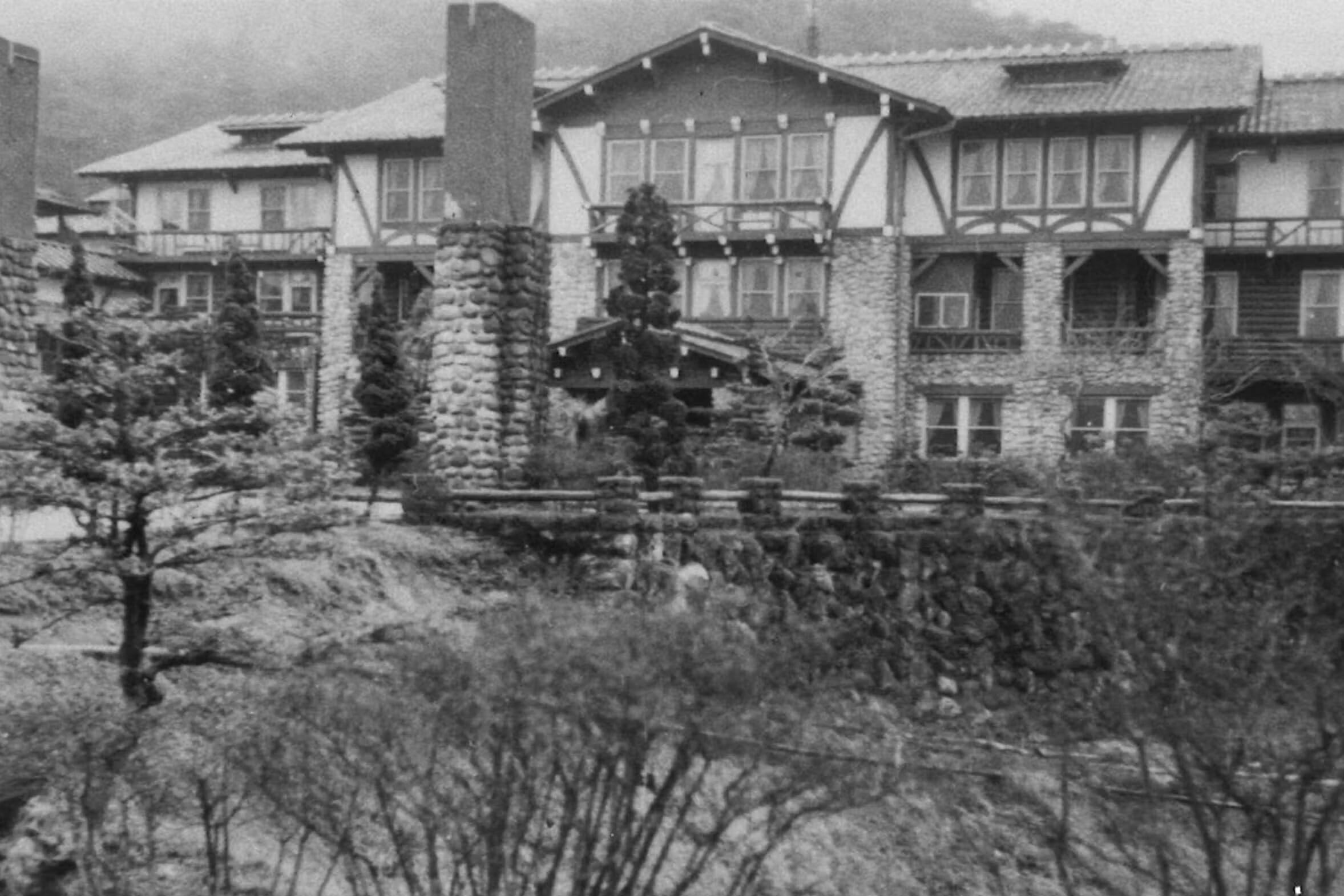
Unzen Onsen was one of the very first places foreign travelers visited for mountain air and mineral baths in the early 1900s. Situated in the mountains of Nagasaki on Japan’s southern island of Kyushu, Unzen Kanko Hotel opened in 1935 specifically to cater to those international guests. Its exterior has become an iconic landscape since — a grand Swiss chalet dropped into a misty Japanese forest.
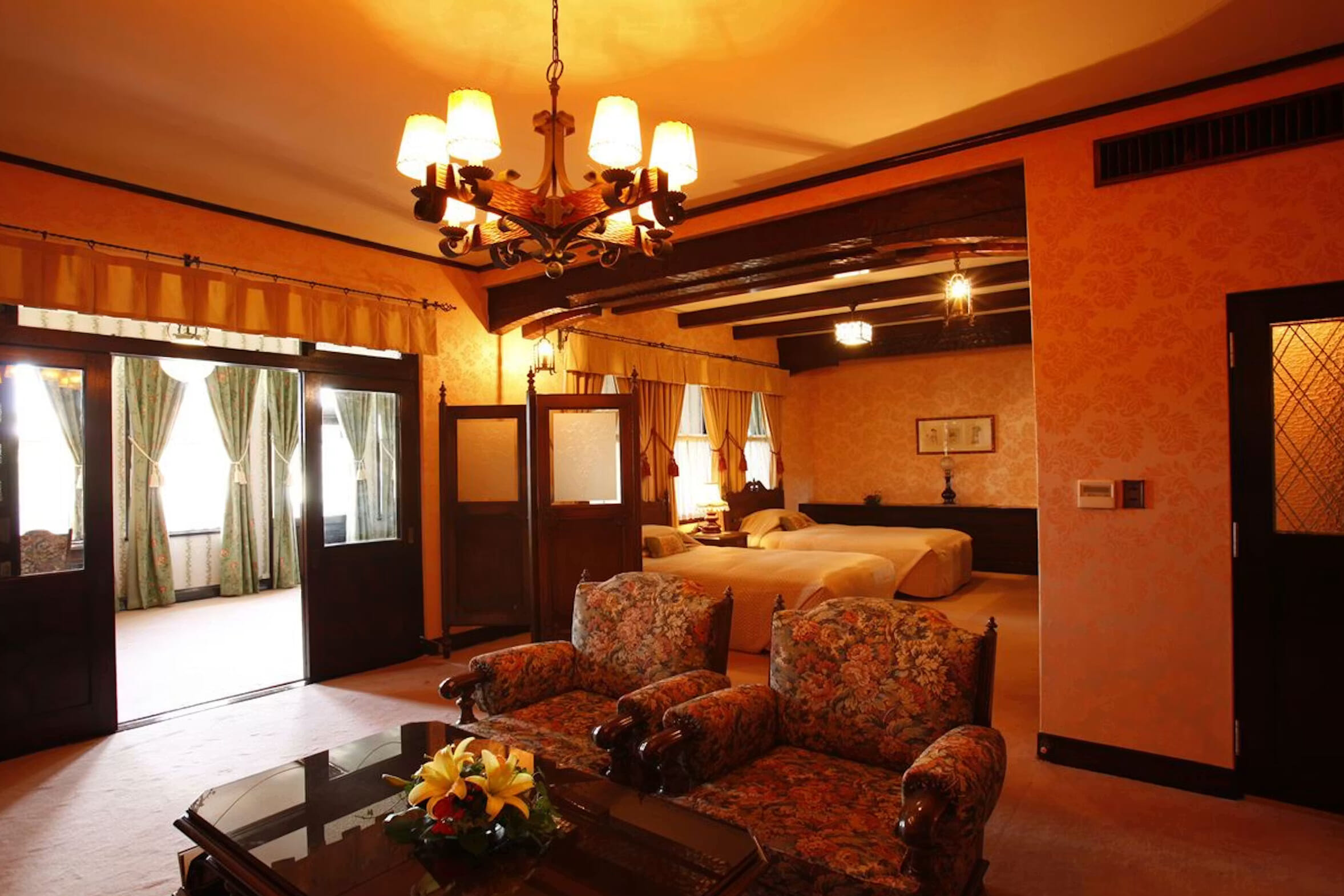
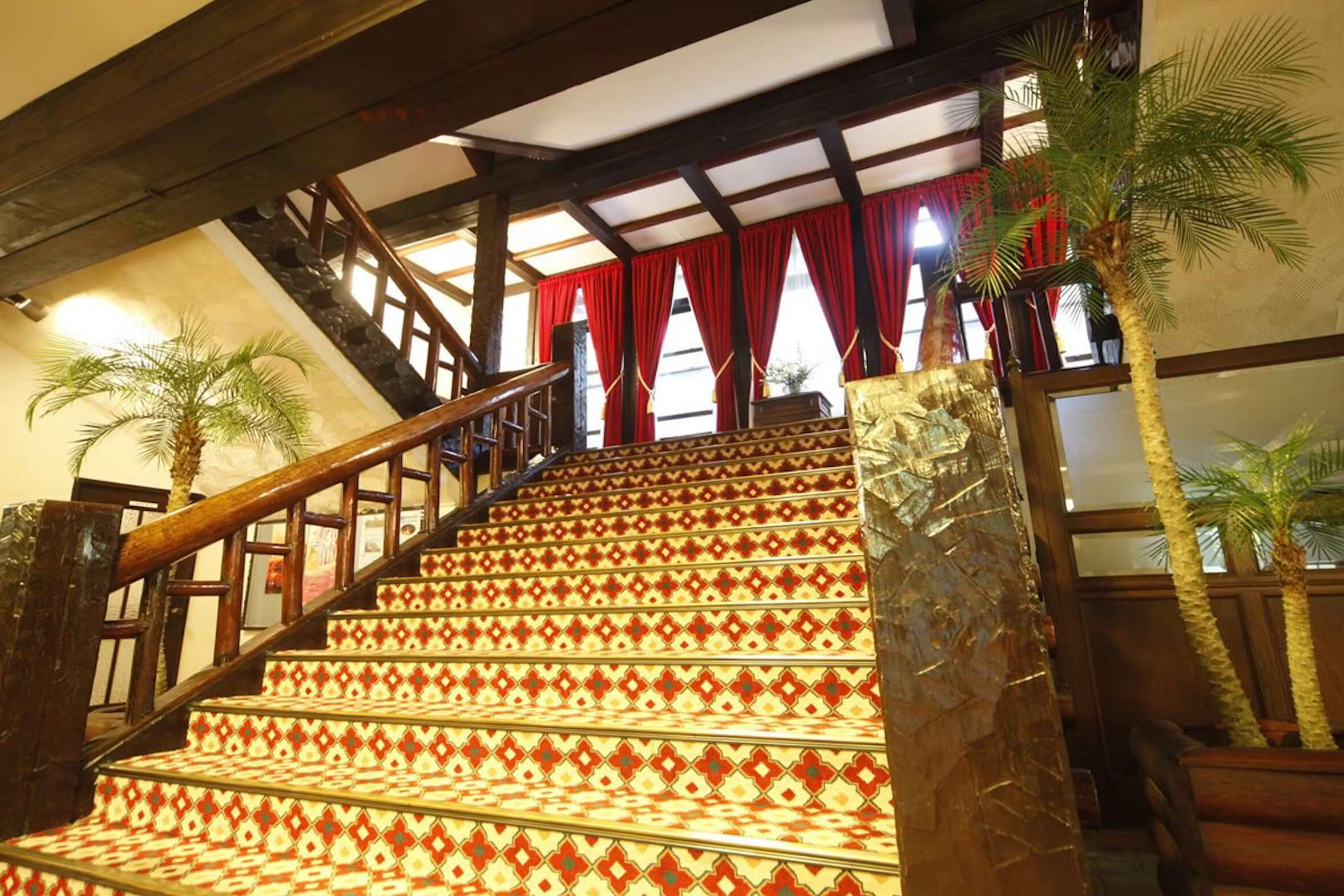
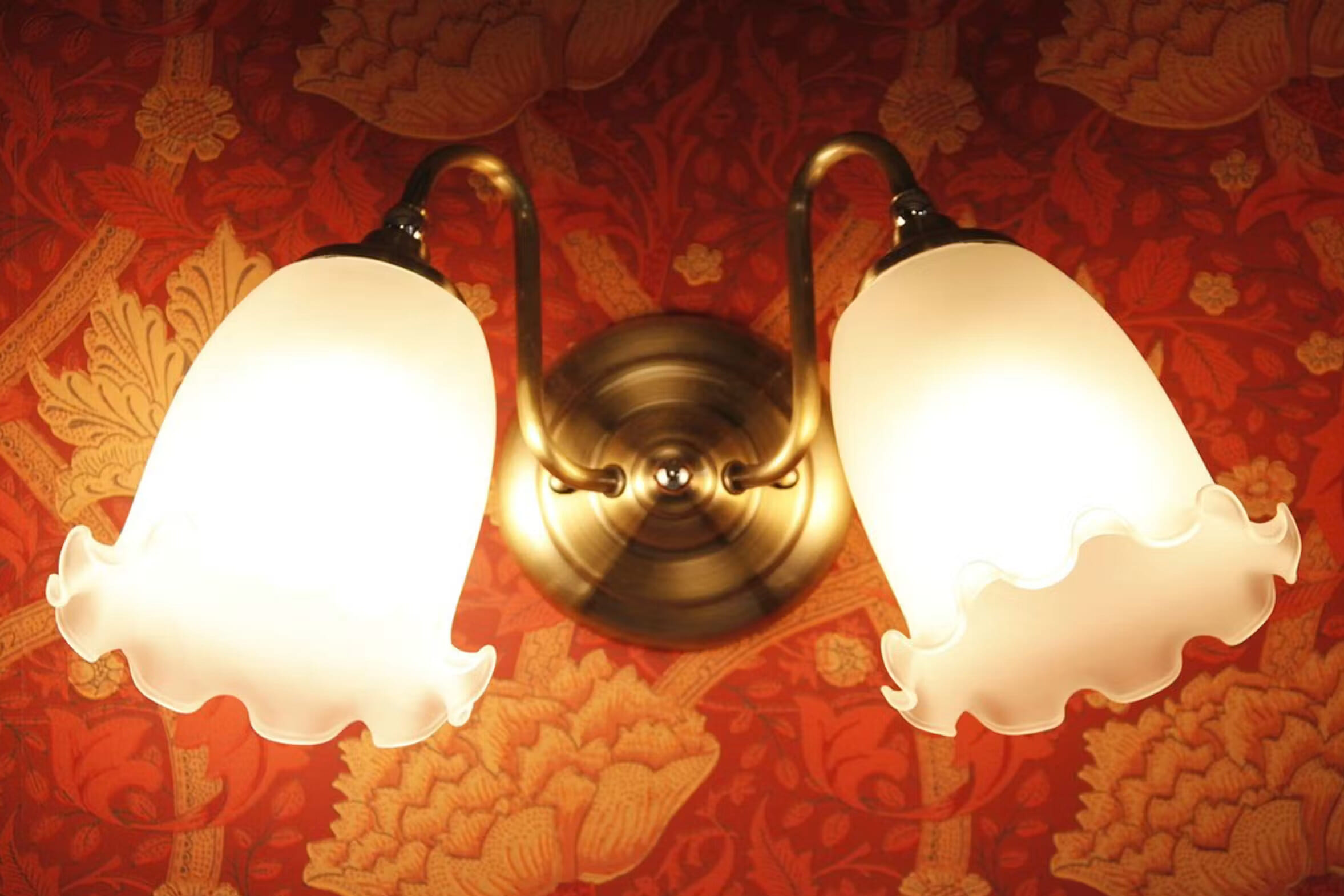
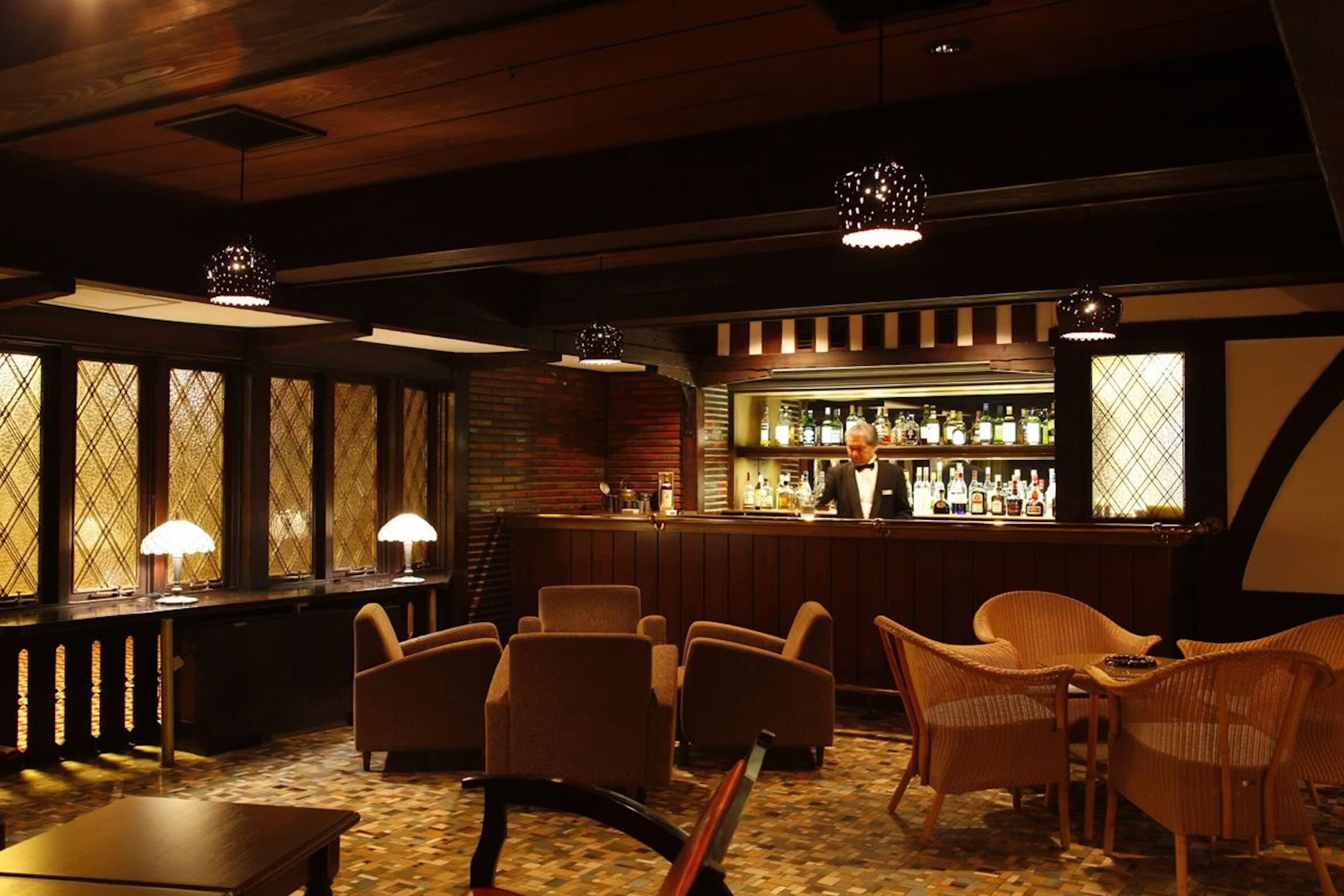
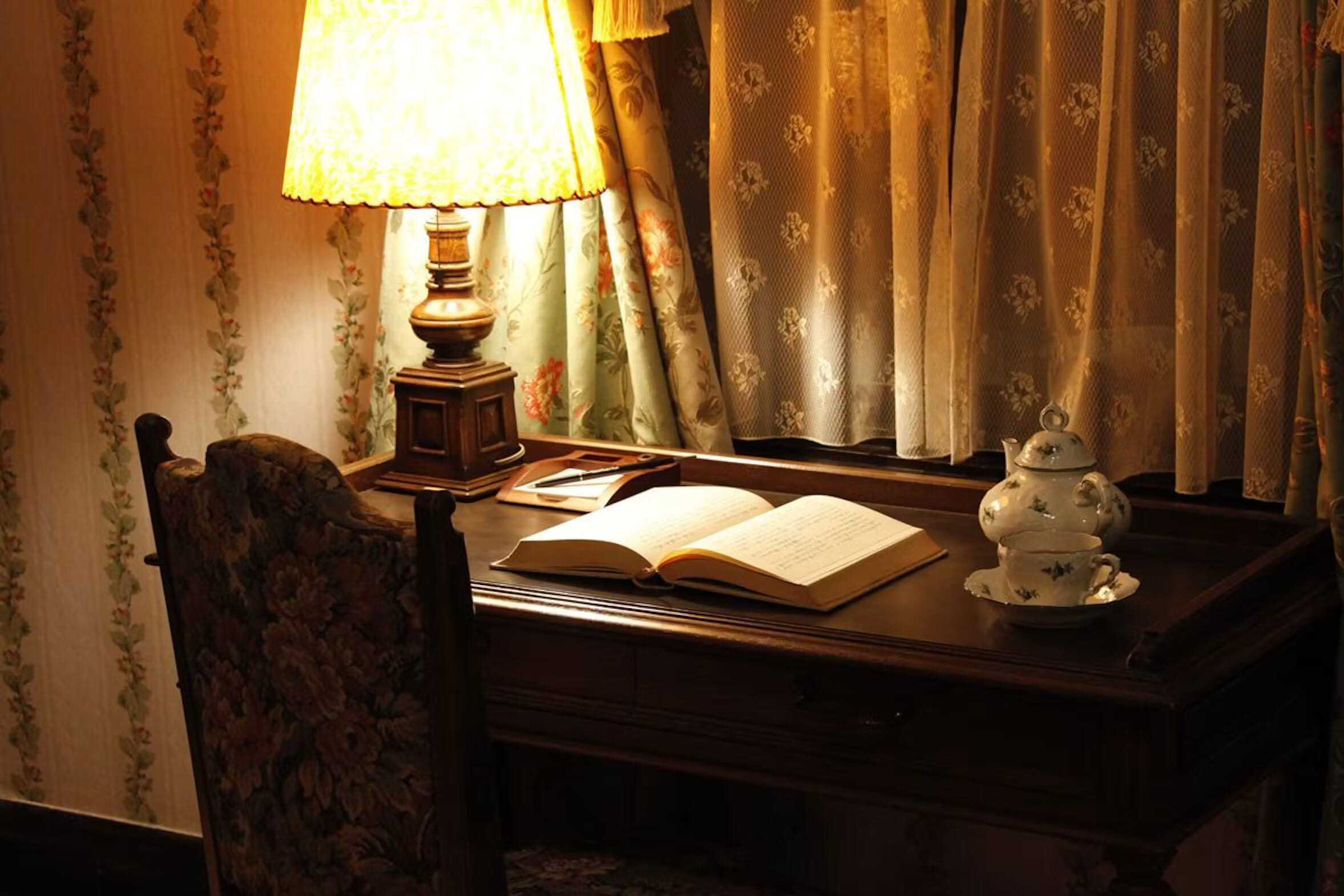
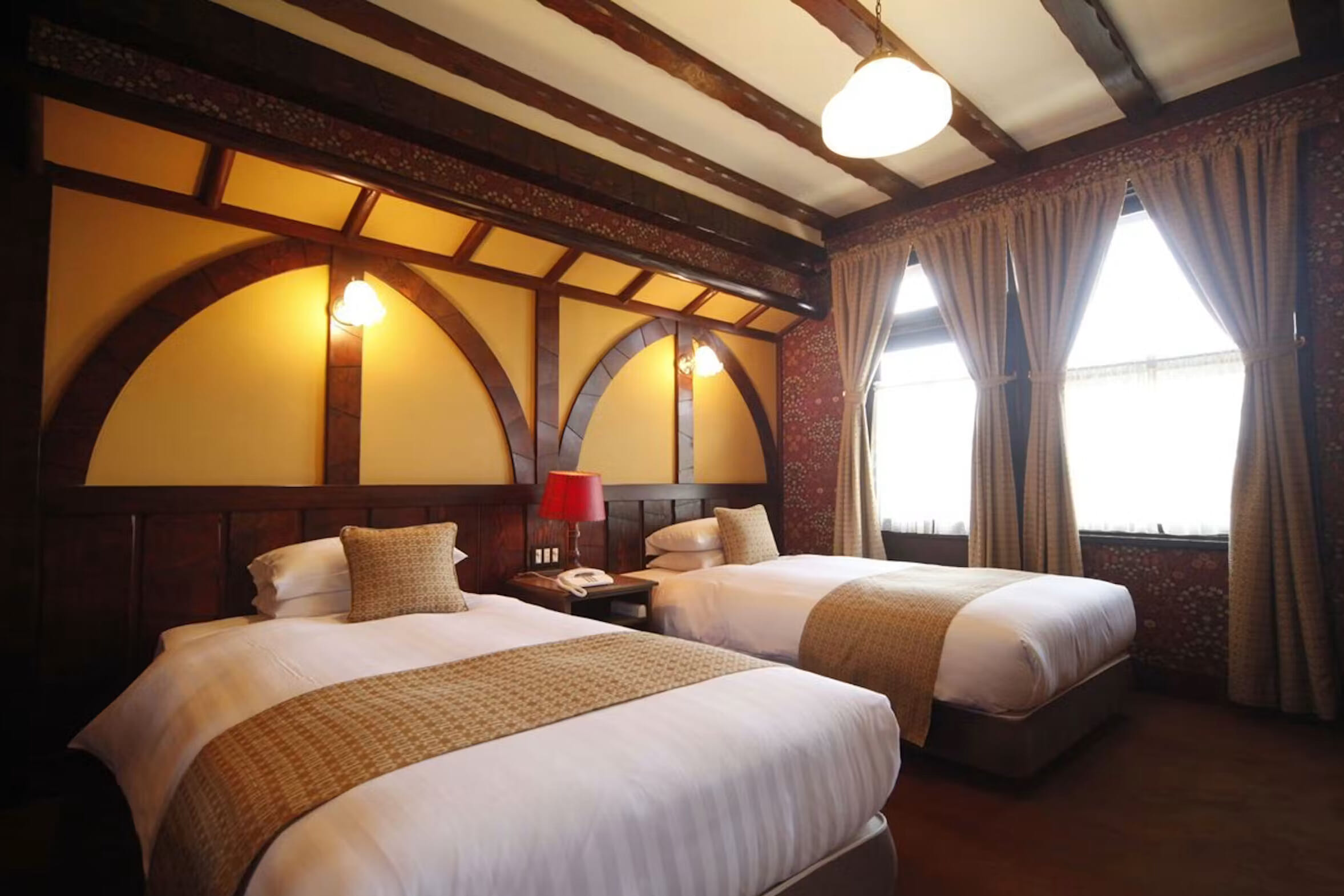
Inside, the hotel feels like a cozy, high-end mountain lodge — with hand-carved wooden staircase railings, stone fireplaces and guest rooms wrapped in classic William Morris floral wallpapers. You can spend an afternoon just browsing the 1,500-plus vintage books in the wood-paneled library, playing billiards or soaking in hot spring baths decorated with stained glass windows and art deco tiles.
Access: Fly into Nagasaki Airport or take the Nishi Kyushu Shinkansen to JR Isahaya Station. From Isahaya Station, take a Shimanetsu local bus bound for Unzen Onsen (~80 minutes, drop off at Unzen Bus Terminal, a 3-minute walk to the hotel). Due to its mountain location, taking a local bus or booking a private taxi from Isahaya is required without a car.
Gamagori Classic Hotel (Aichi)
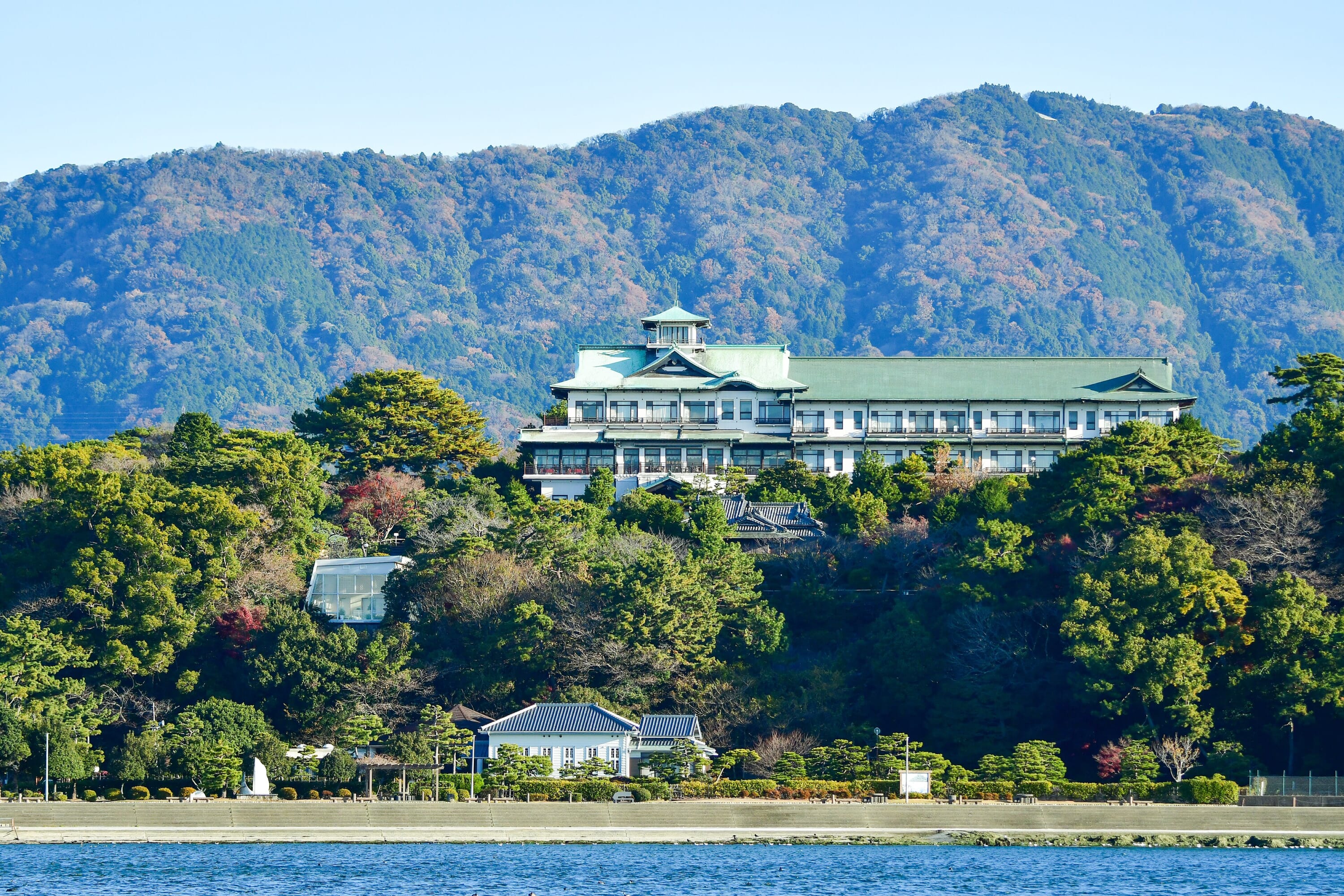
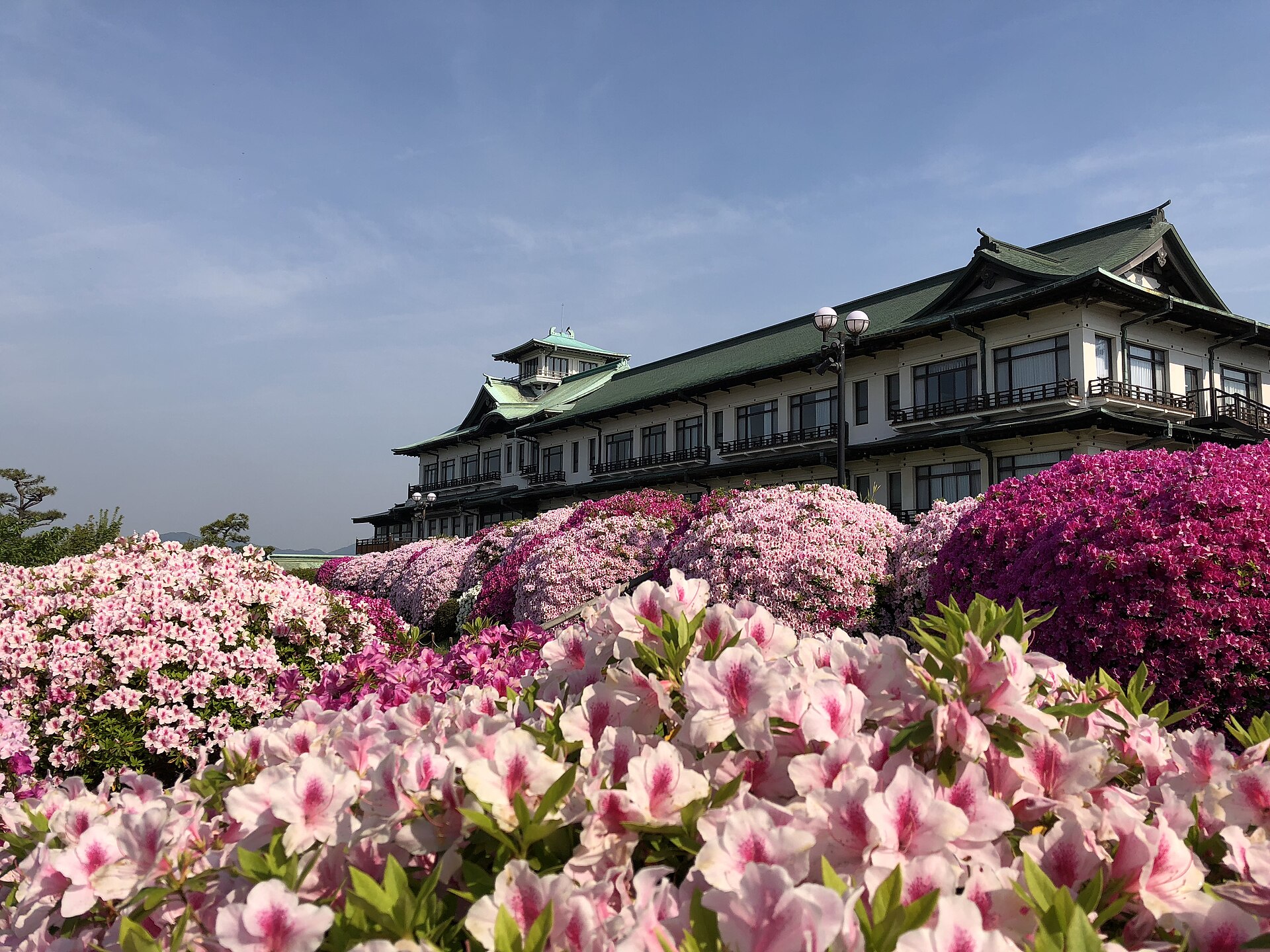
Perched high on a grassy hill overlooking Mikawa Bay in Aichi Prefecture, the Gamagori Classic Hotel is a sumptuous example of 1930s “Imperial Crown” architecture. This unique design style combined traditional Japanese castle roofs with sturdy, western concrete bases to impress visiting international travelers.
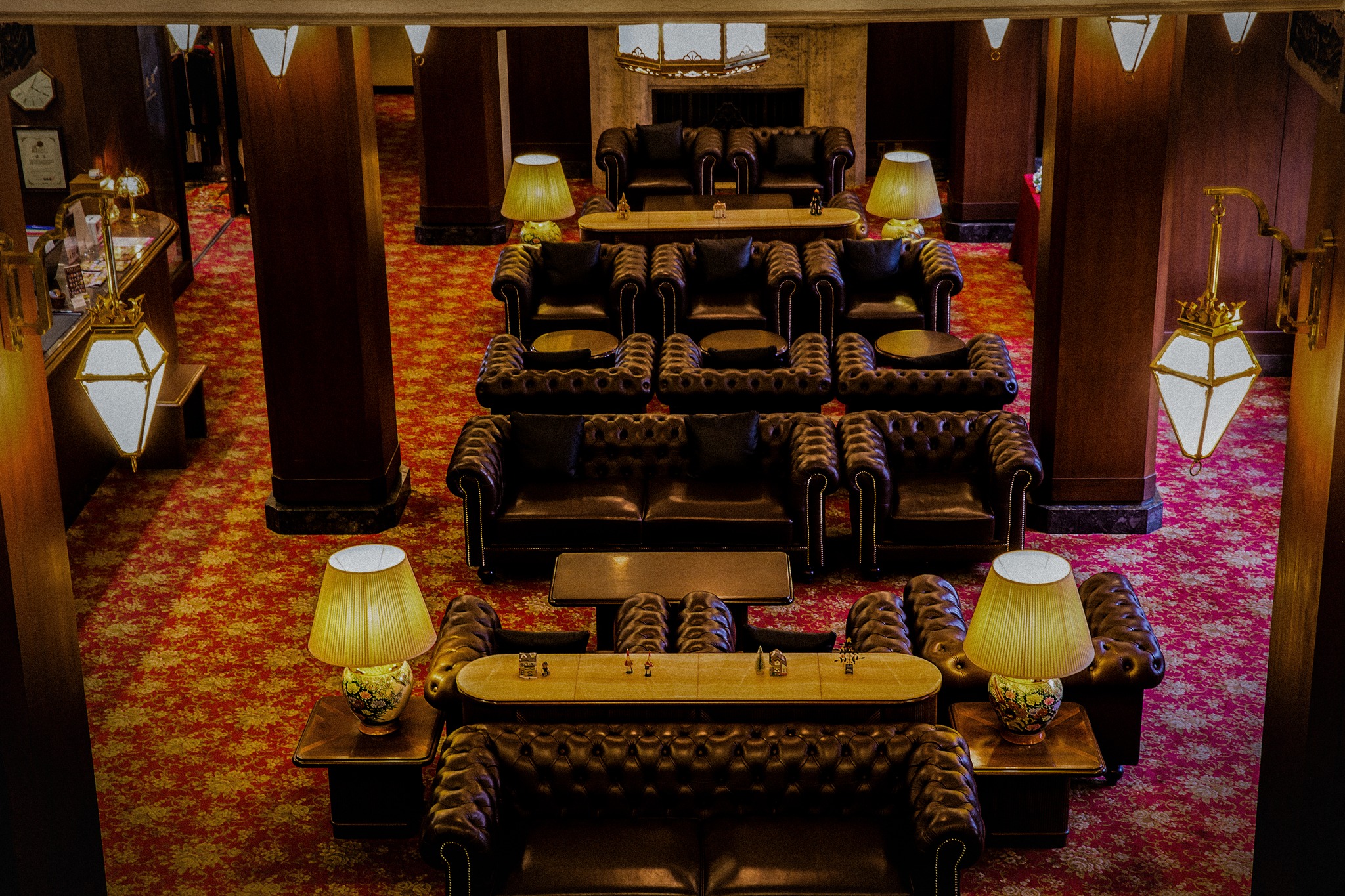
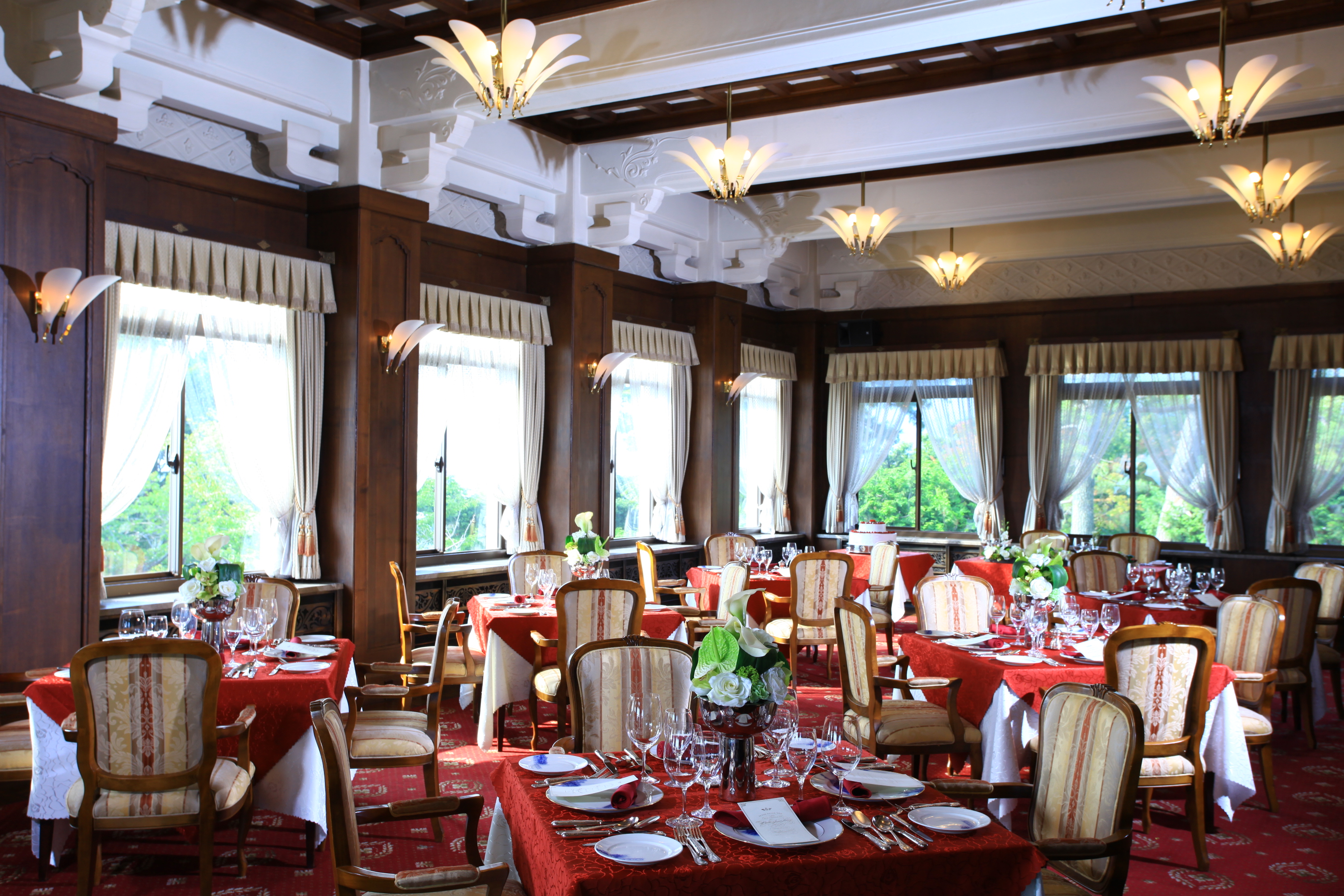
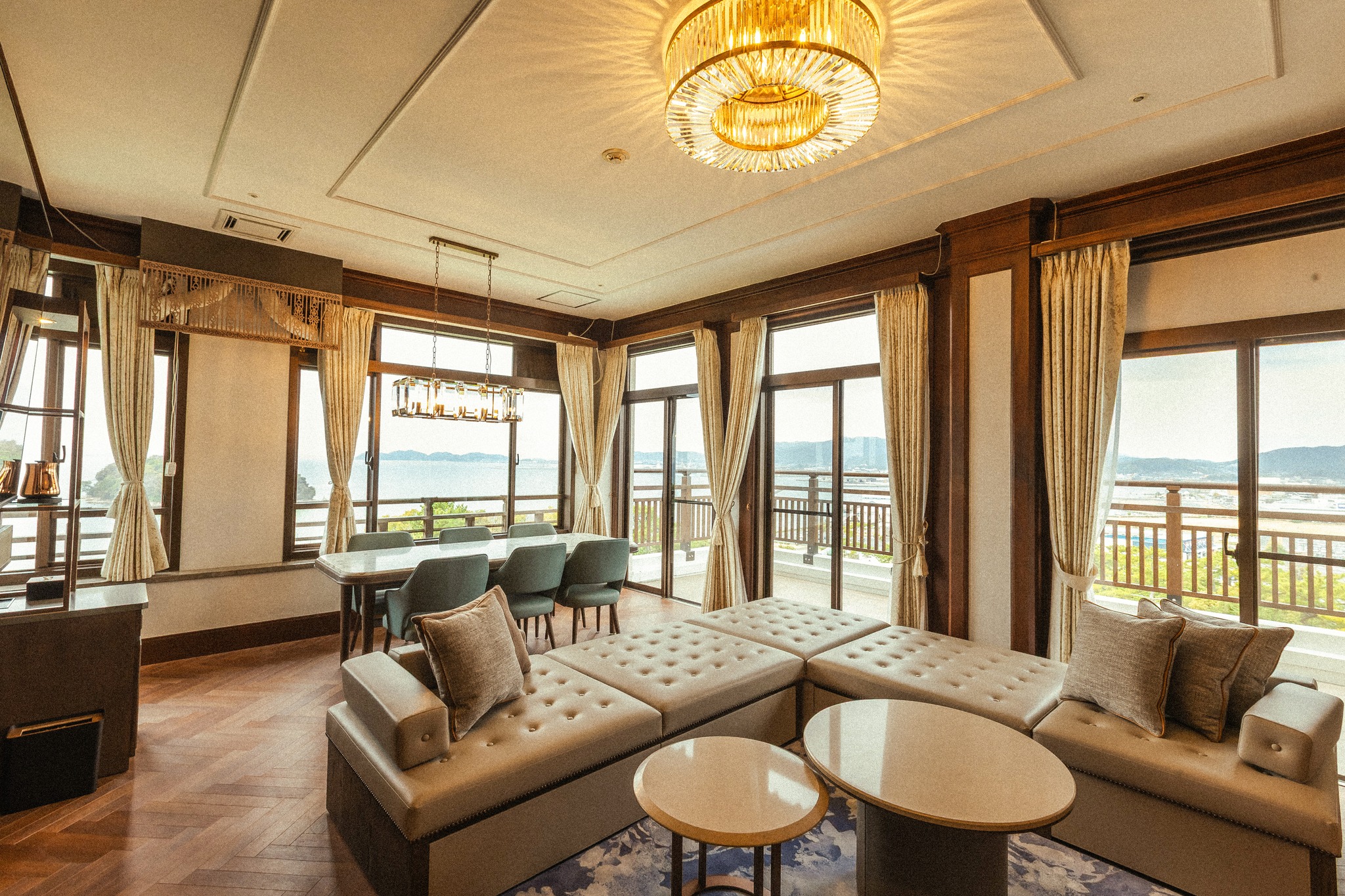
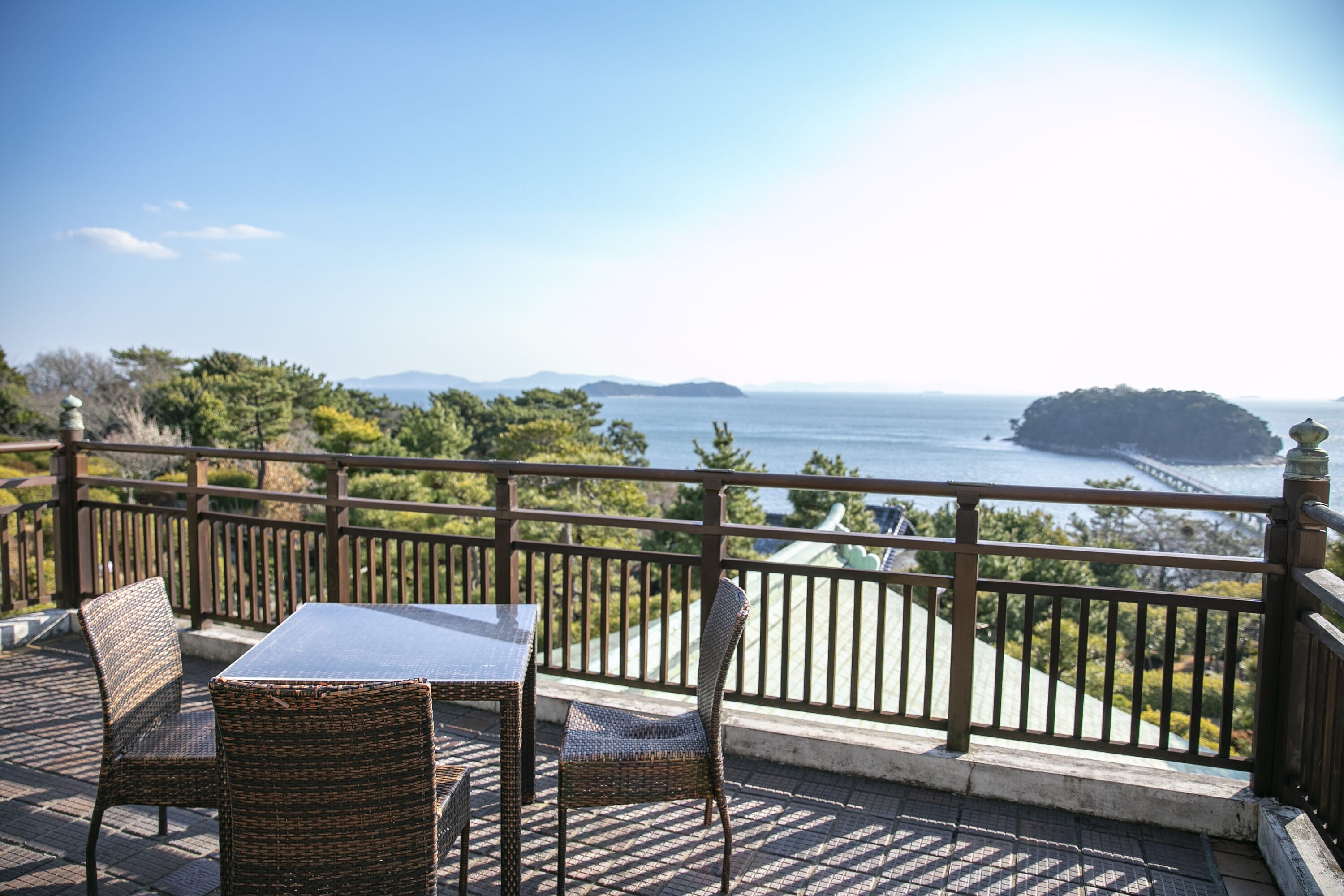
Built in 1934, the hotel still holds onto its authentic pre-war elegance and art deco interior, featuring hand-carved wooden trim, plaster ceiling details, vintage brass elevator dials and soft pastel stained-glass windows along the stairwells. Famous Japanese authors like Yasunari Kawabata and Junichiro Tanizaki used to hide away here to write their novels, and guests today can still sit in the same beautiful lounge with a slice of cake, taking in sweeping views of the bay and the tiny, shrine-topped island of Takeshima just off the coast.
Access: Take the Shinkansen from Tokyo or Osaka to JR Nagoya Station, then transfer to the JR Tokaido Line to JR Gamagori Station (40 minutes from Nagoya). The hotel is a 5-minute taxi ride or a 15-minute scenic walk uphill from Gamagori Station’s South Exit.
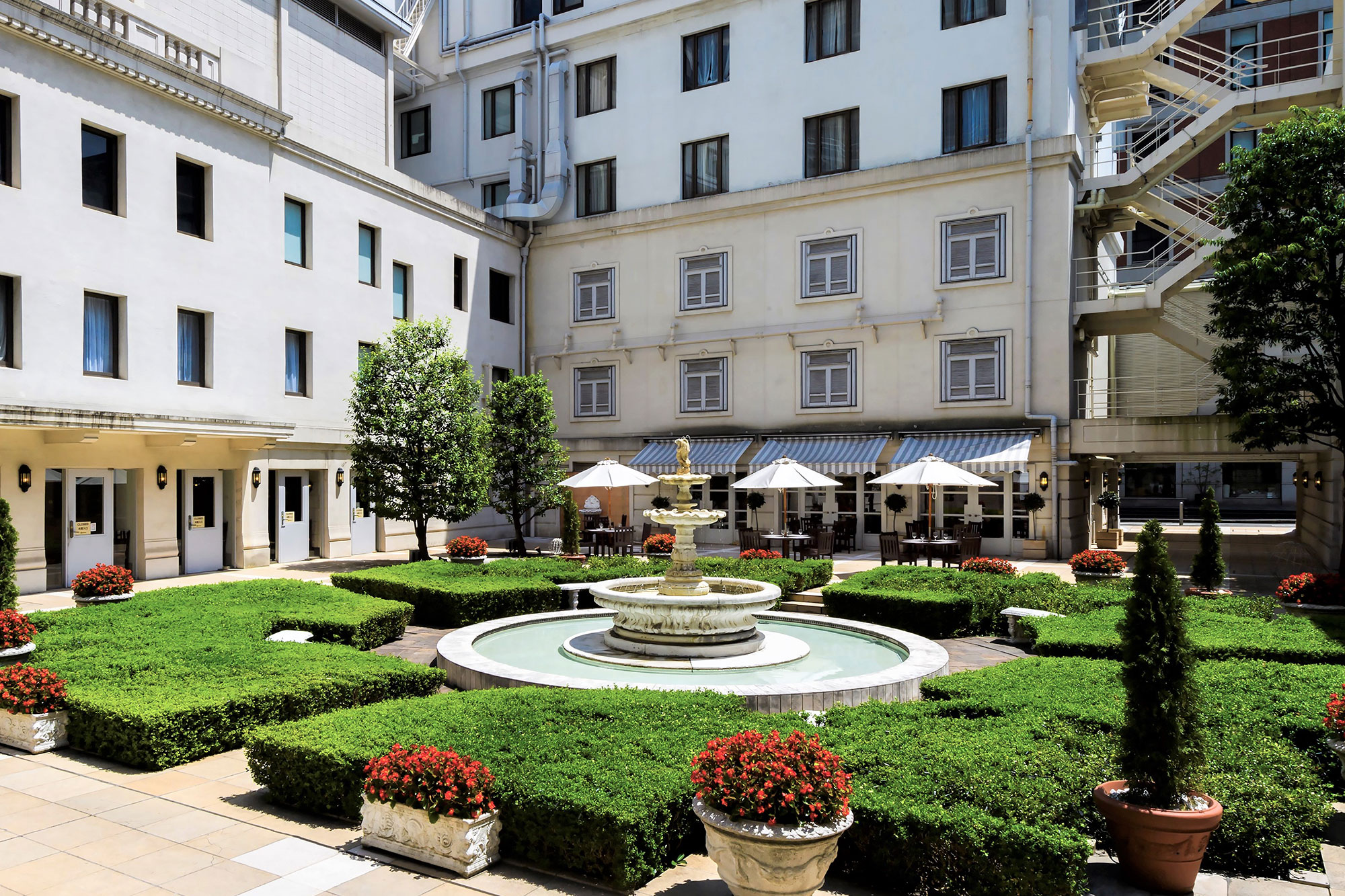
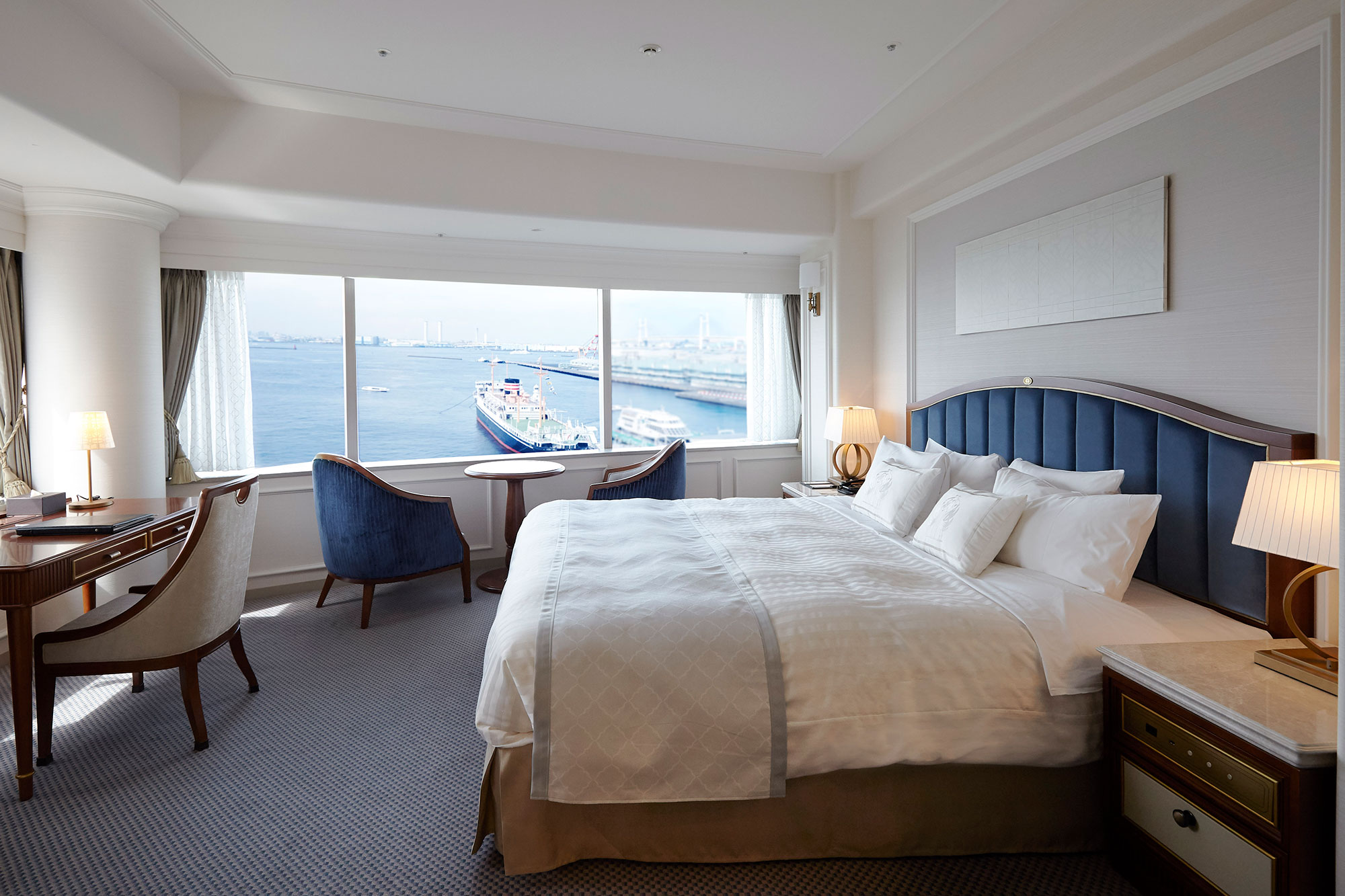
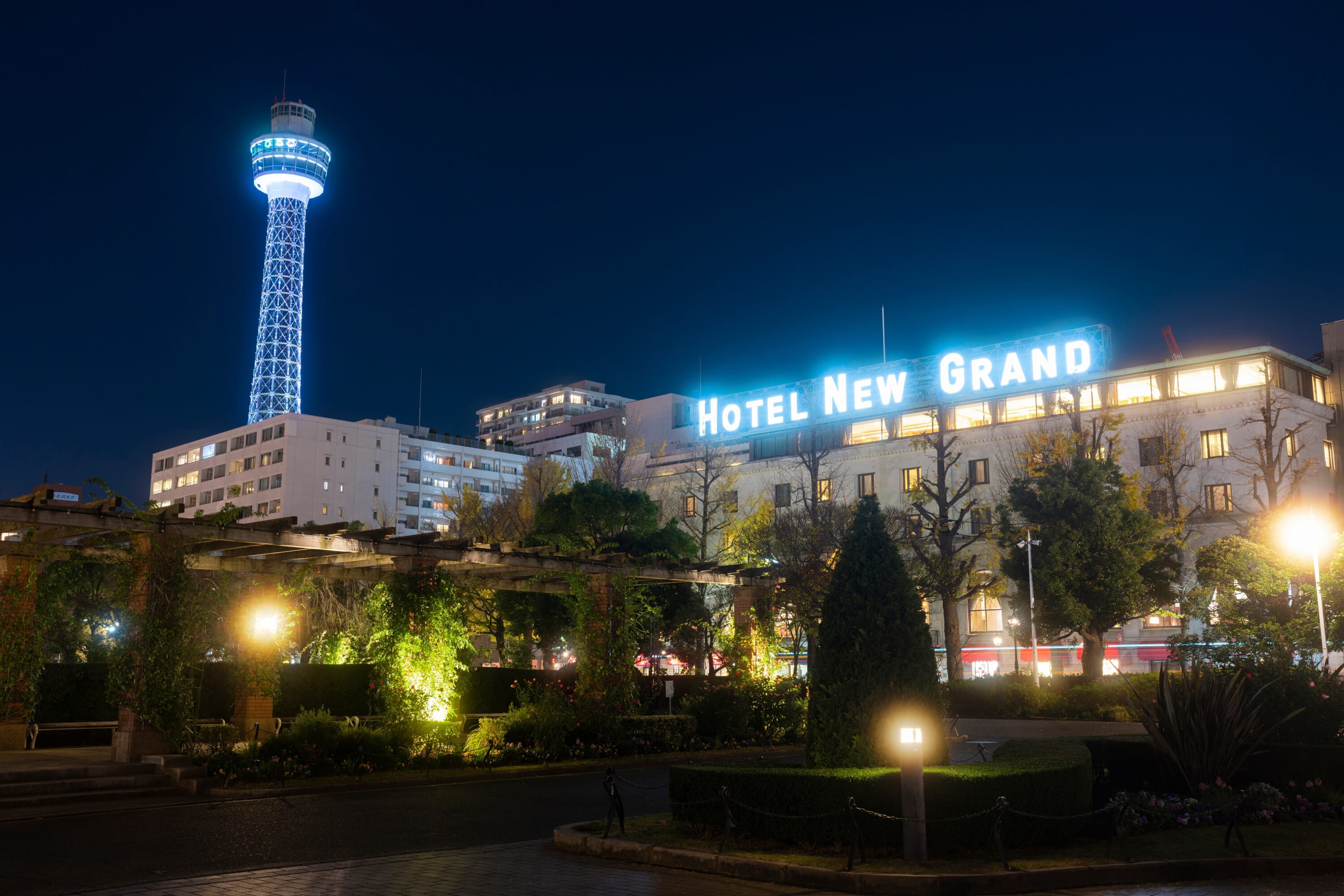
Hotel New Grand (Kanagawa)
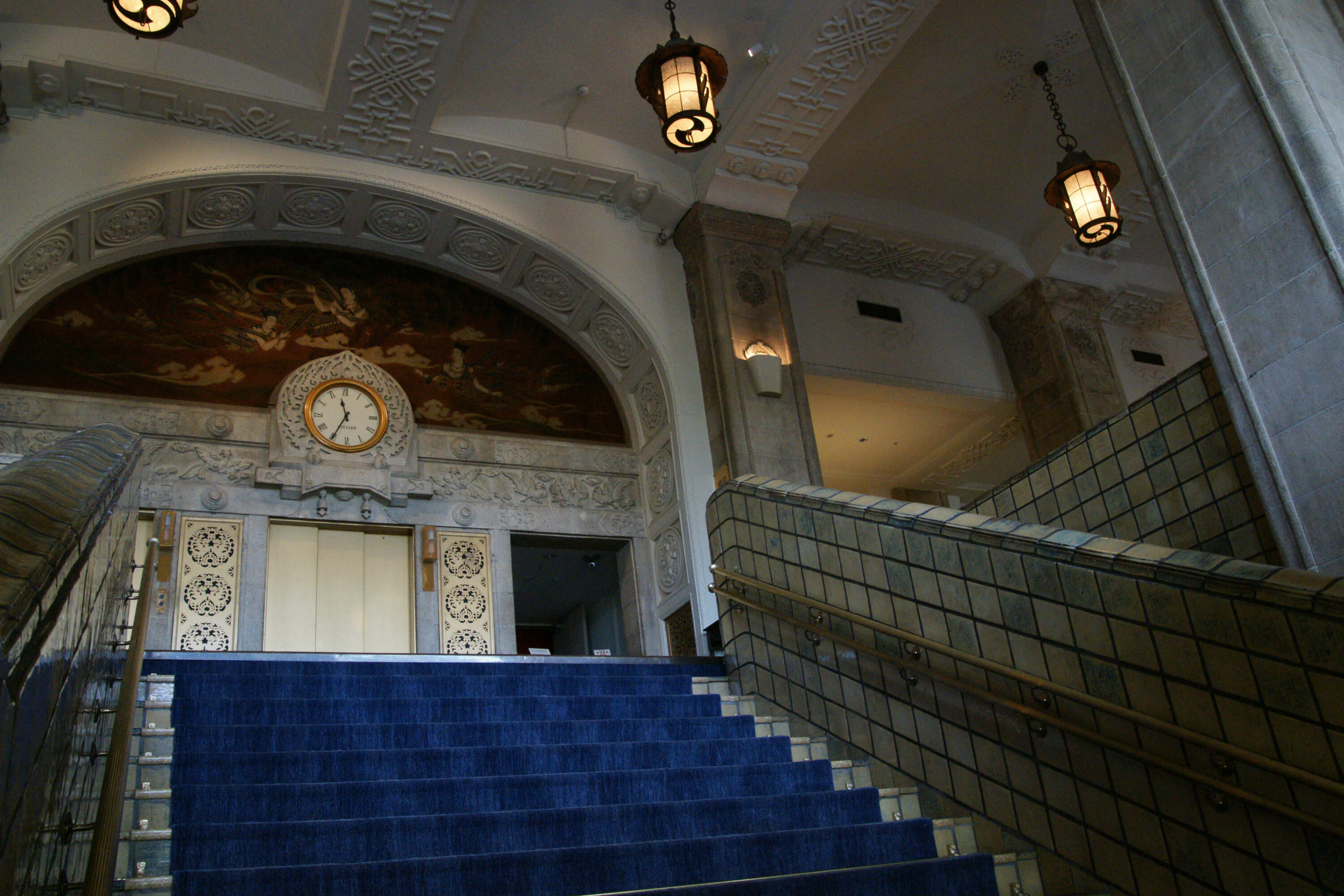
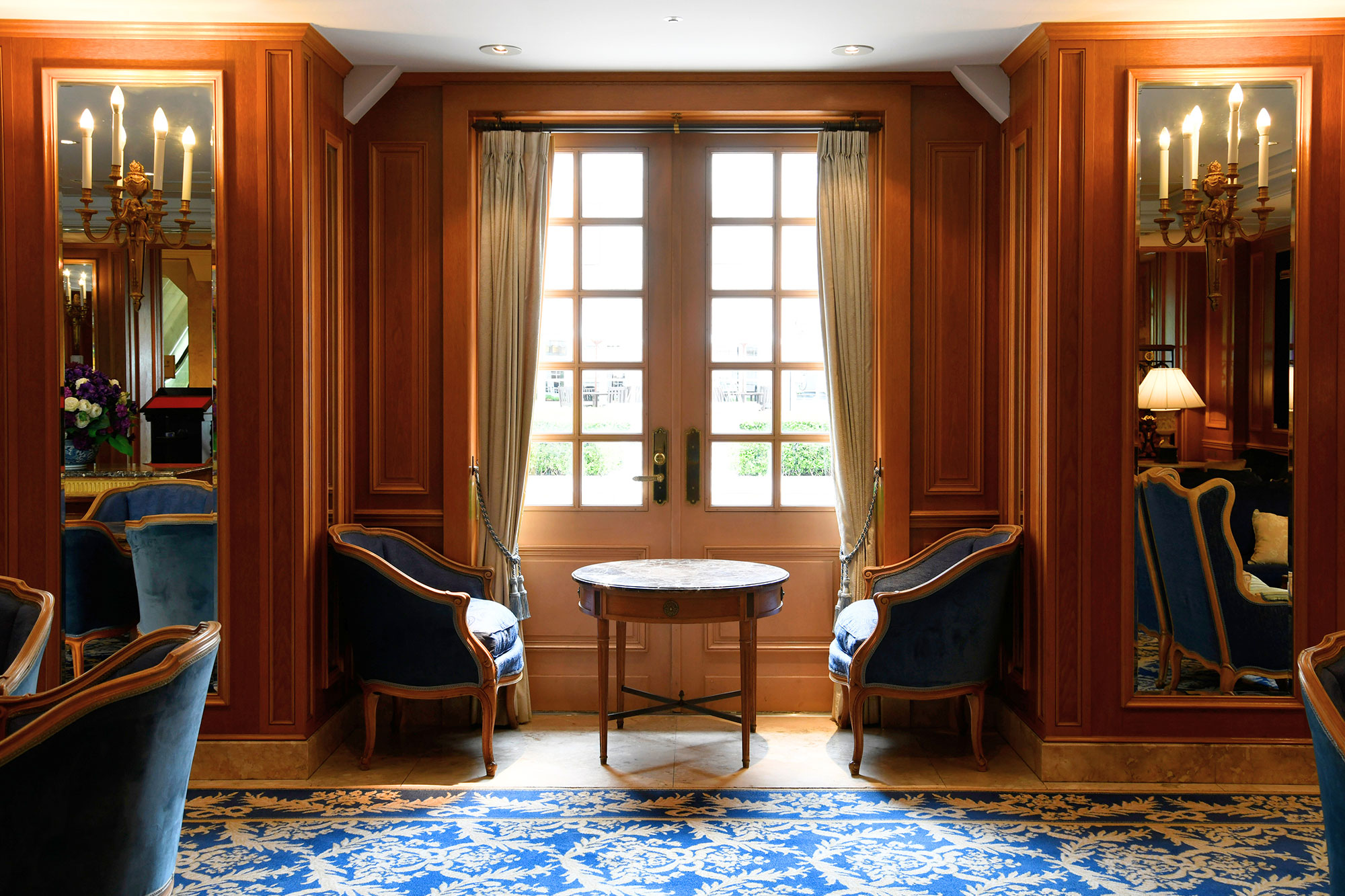
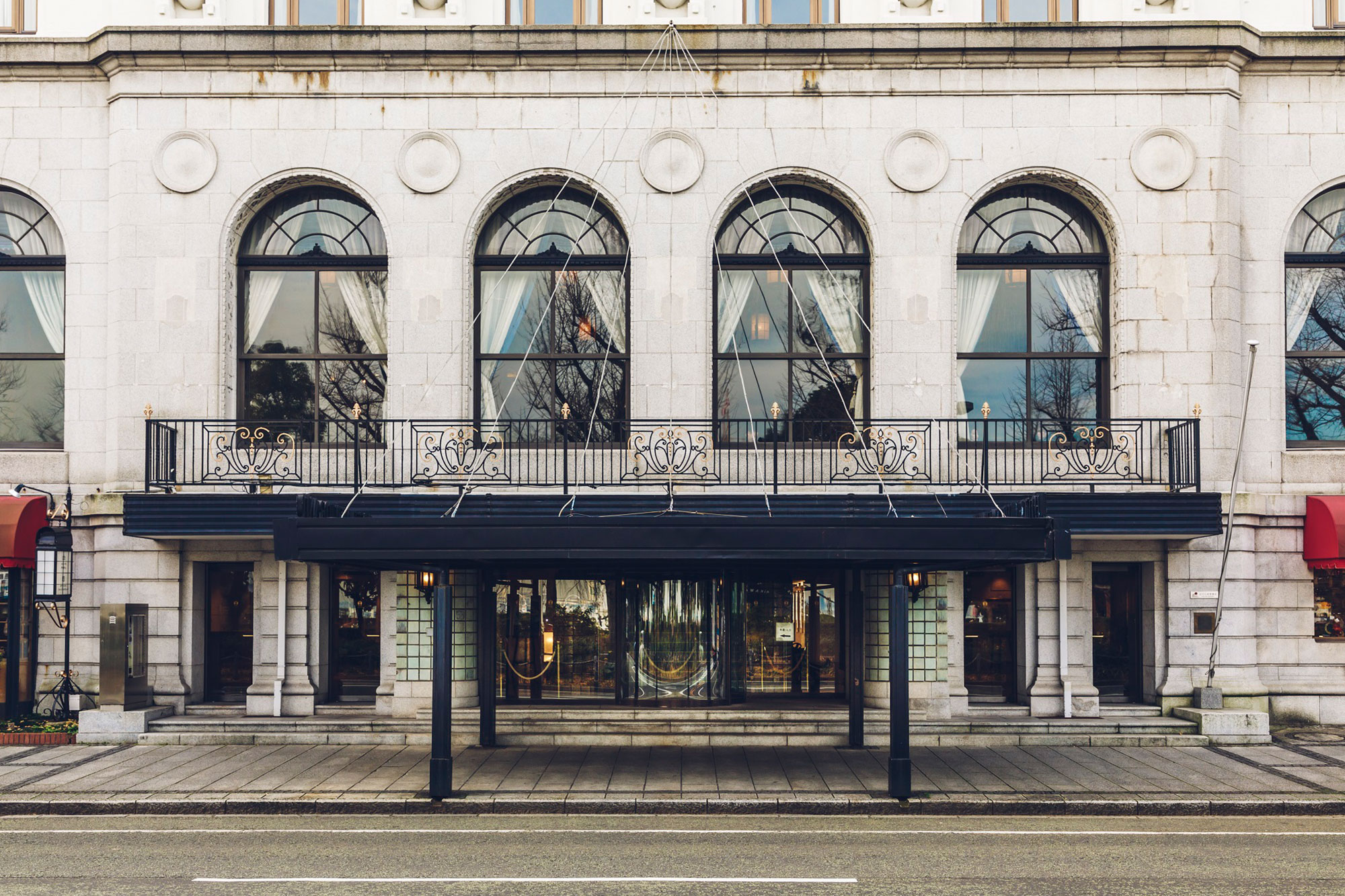
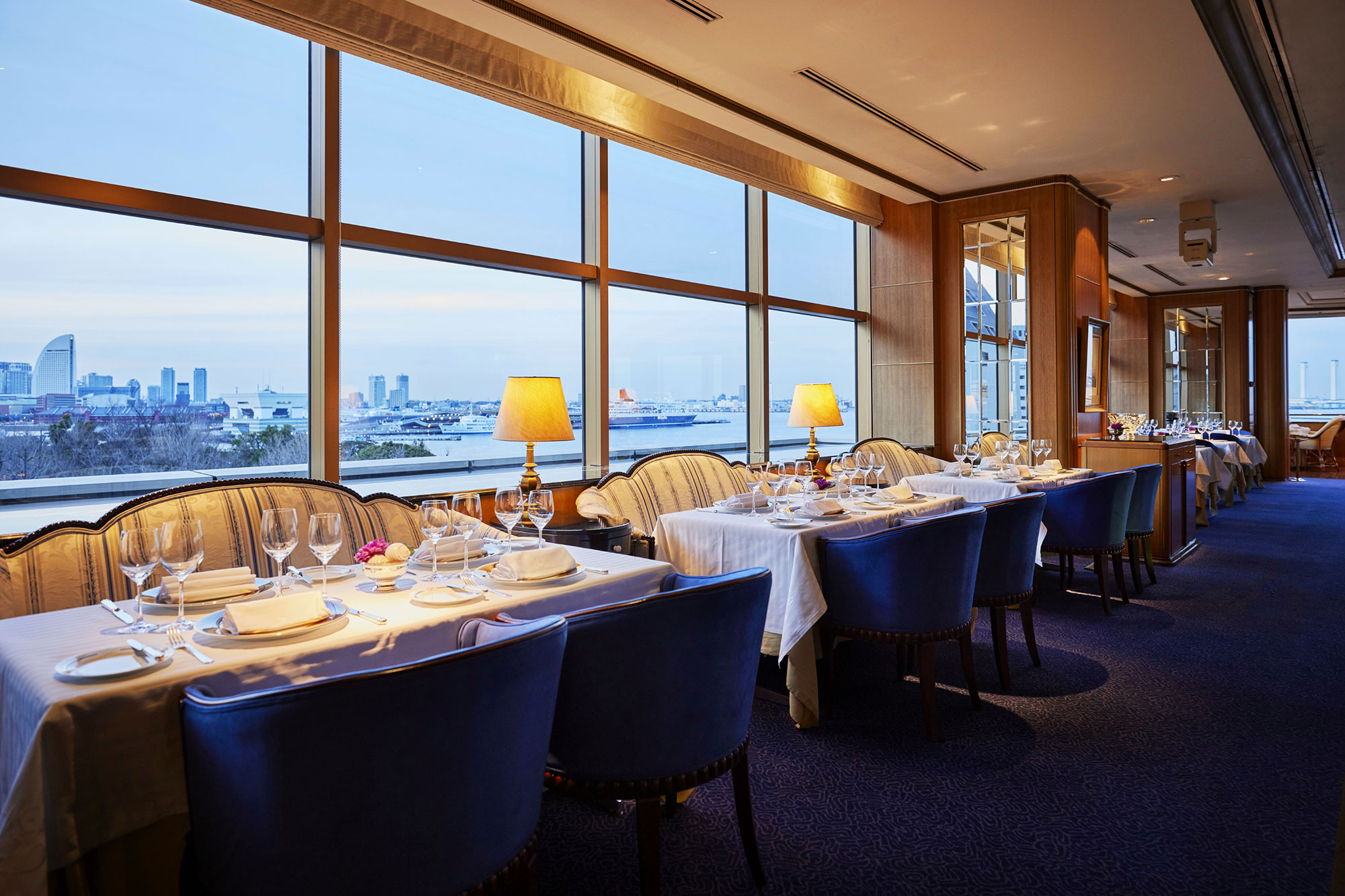
Hotel New Grand almost needs no introduction as one of Japan’s most storied retro hotels. Sitting right on the waterfront in Yokohama, it offers a glimpse into classic, pre-war luxury in Japan. Originally opened in 1927 to welcome international travelers arriving by steamship, the original hotel building is a mix of European style and Japanese craftsmanship.
Walking up the royal blue carpet of the grand staircase leads to a soaring lobby framed by dark mahogany wood, hand-carved furniture and phoenix motifs. Over the decades, figures like Charlie Chaplin, Babe Ruth and General Douglas MacArthur have stayed here, but our favorite detail is that the hotel originated the spaghetti Napolitan — one of the country’s most beloved yoshoku (Japanese-western) dishes. You can read more about its origin story here.
Access: Take the Minatomirai Line from Yokohama Station to Motomachi-Chukagai Station (8 minutes); Exit 1 puts you right at the hotel’s doorstep. Total travel time from central Tokyo is just 40–50 minutes.
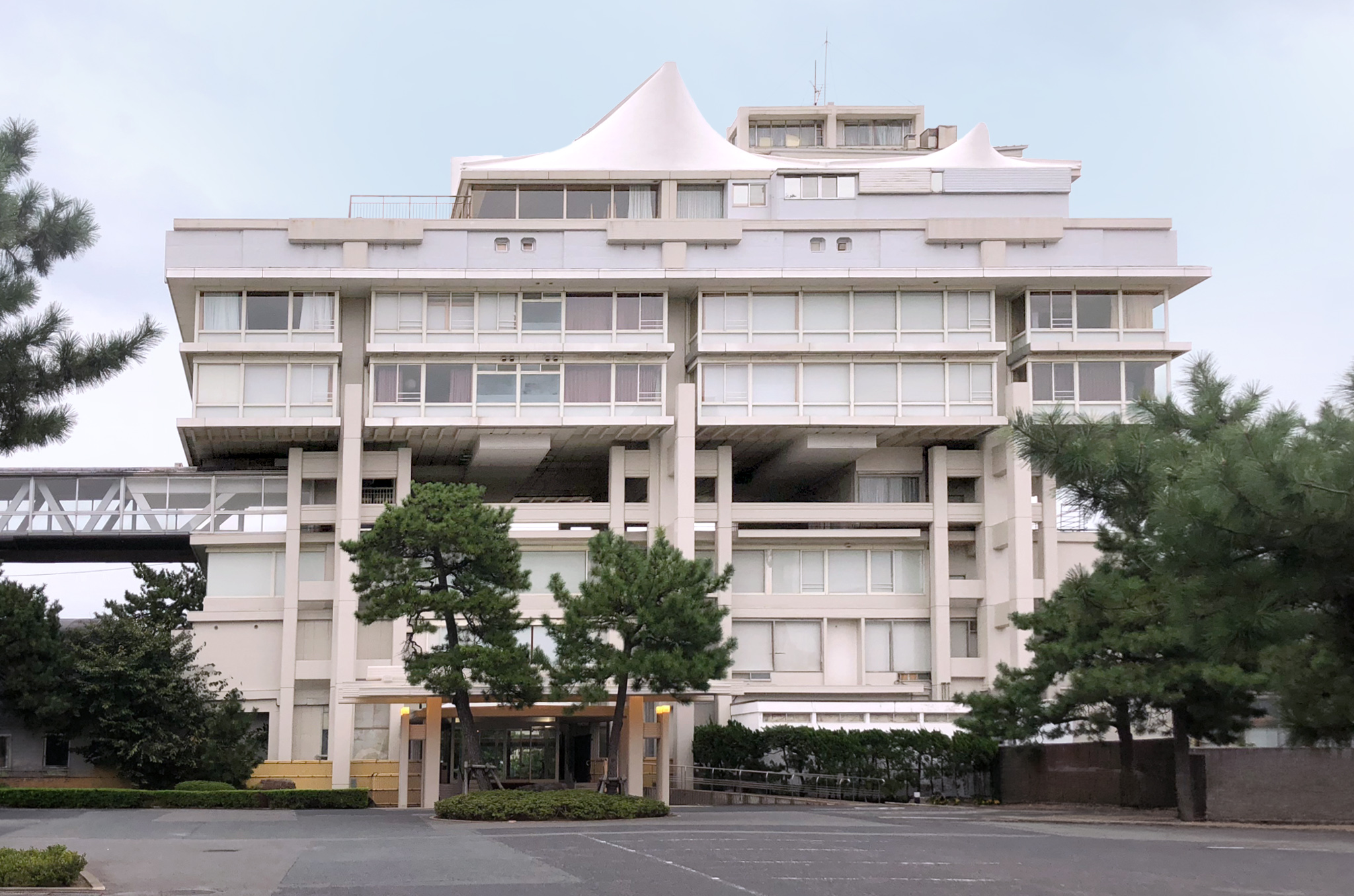
Toukouen (Tottori)
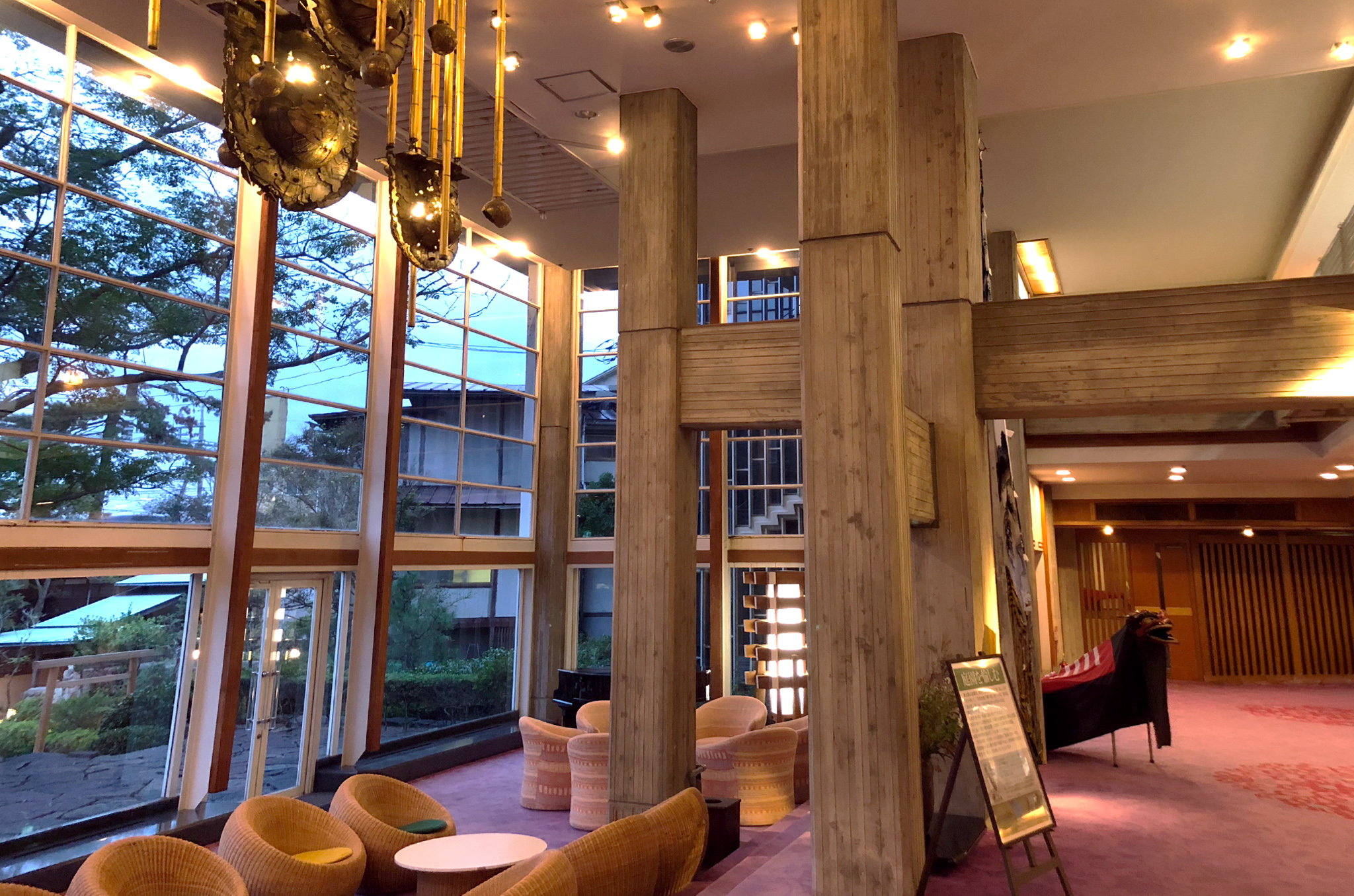
Part brutalist monolith, part ancient Shinto shrine, Toukouen was built in 1952 in the seaside town of Kaike Onsen in Tottori Prefecture. Its most iconic main building was designed by the visionary architect Kiyonori Kikutake in 1964, and is hailed as a stunning example of Metabolism — a post-war Japanese architectural movement that treated buildings like living organisms. The main building is registered as a Tangible Cultural Property.
The entrance is dominated by six massive, bundled concrete pillars that echo the structure of traditional torii gates. Stepping inside reveals a soaring, glass-walled lobby where soft morning light catches deep, dramatic shadows cast by the central columns. Here, a striking lavender-colored carpet stretches across the floor, setting a plush stage for rows of egg-like woven chairs. It’s a fascinating dialogue between textures: warm, natural wooden accents, washitsu tatami rooms and a beautiful Japanese garden soften the building’s raw concrete frame and futurism.
*As of November 2025, Toukouen has been closed due to renovations, but plans to reopen sometime in 2026 — keep an eye out!
Access: Fly into Yonago Kitaro Airport or take the JR Hakubi Line to JR Yonago Station (approx. 3.5 hours from Osaka via Limited Express Yakumo). From Yonago Station, take a local bus to Kaike Onsen (20 minutes, stop is a 3-minute walk from Toukouen).