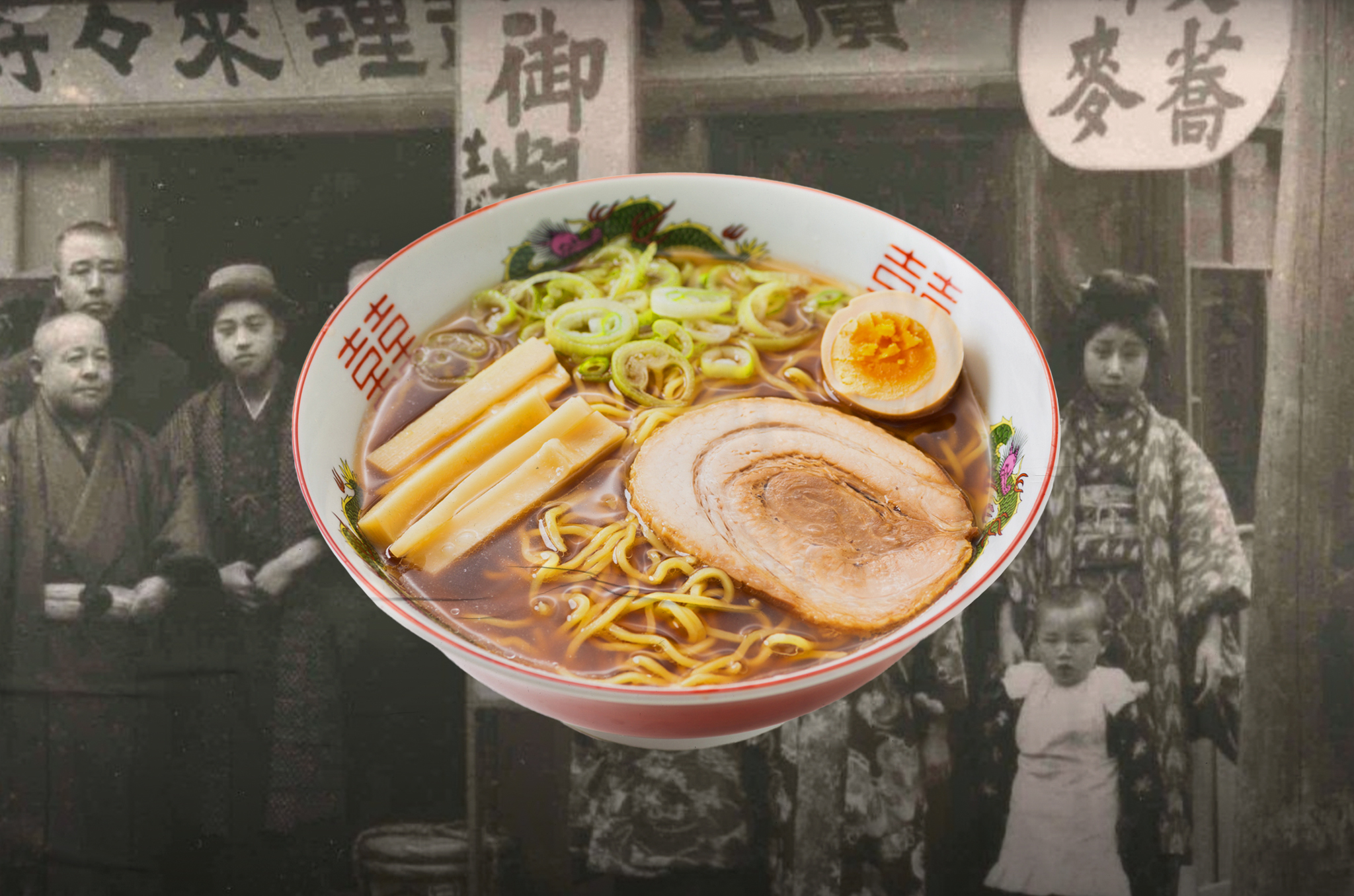
Over the years, there must have been more than a few foreign travelers who ordered a chuka soba expecting earthy, chewy buckwheat soba noodles. The word “soba” is right there in the name. Imagine their surprise when, instead, they got a bowl of wheat noodles in a savory broth with toppings. Yes, that does sound a lot like ramen.
That’s because “chuka soba” (Chinese soba) is a synonym for the world-famous Japanese staple. You can kind of see how that would work, what with both dishes being wet noodles and ramen having roots in China. But you don’t see, say, spaghetti in Japan being advertised as “Italian soba.” So why does it happen with ramen? Let’s find out.
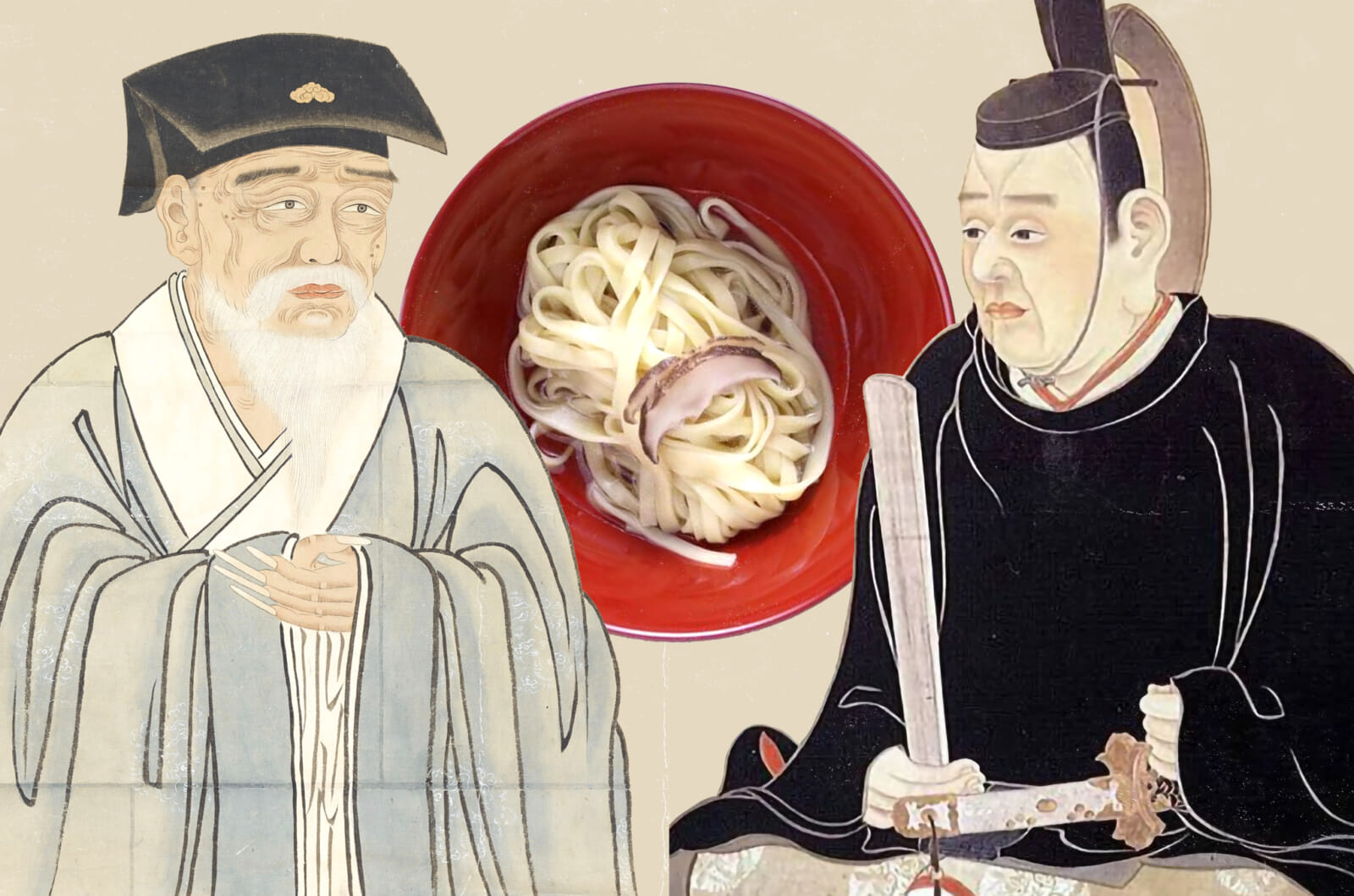
Zhu Shunshui (left) and Tokugawa Mitsukuni (right) with a recreation of 15th century “keitaimen” noodles, courtesy of the Shin-Yokohama Ramen Museum
The Two Origin Myths
There are two competing theories about the origin of ramen in Japan. One traces the dish back to keitaimen, served at the Inryoken residence on the grounds of Shokokuji’s Rokuonin subtemple in Kyoto. This wheat dish, whose name means “noodles cut like a sutra sash,” was eaten in Japan as far back as 1488 and is sometimes cited as a precursor to modern ramen because it was made using alkaline water.
The other theory holds that in the mid- to late 17th century, the powerful lord Tokugawa Mitsukuni was advised by a Ming loyalist named Zhu Shunshui (not the only Chinese refugee in Japan at the time) to add Chinese-style toppings like garlic, ginger and scallions to his udon (thick wheat noodles eaten in a simple dashi broth).
Both keitaimen and the modified udon are rejected as real precursors to ramen by researchers of Japan’s culinary history, who see them as little more than evidence that noodles existed in Japan for a long time. Moreover, the second narrative is actually a little problematic because it seems to recognize Chinese influence on ramen — or rather proto-ramen — while framing it as something that was fundamentally Japanese from the get-go. It’s most likely a later, fictional account meant to nationalize ramen’s identity, and it runs counter to all the elements of ramen’s history that we can actually verify.
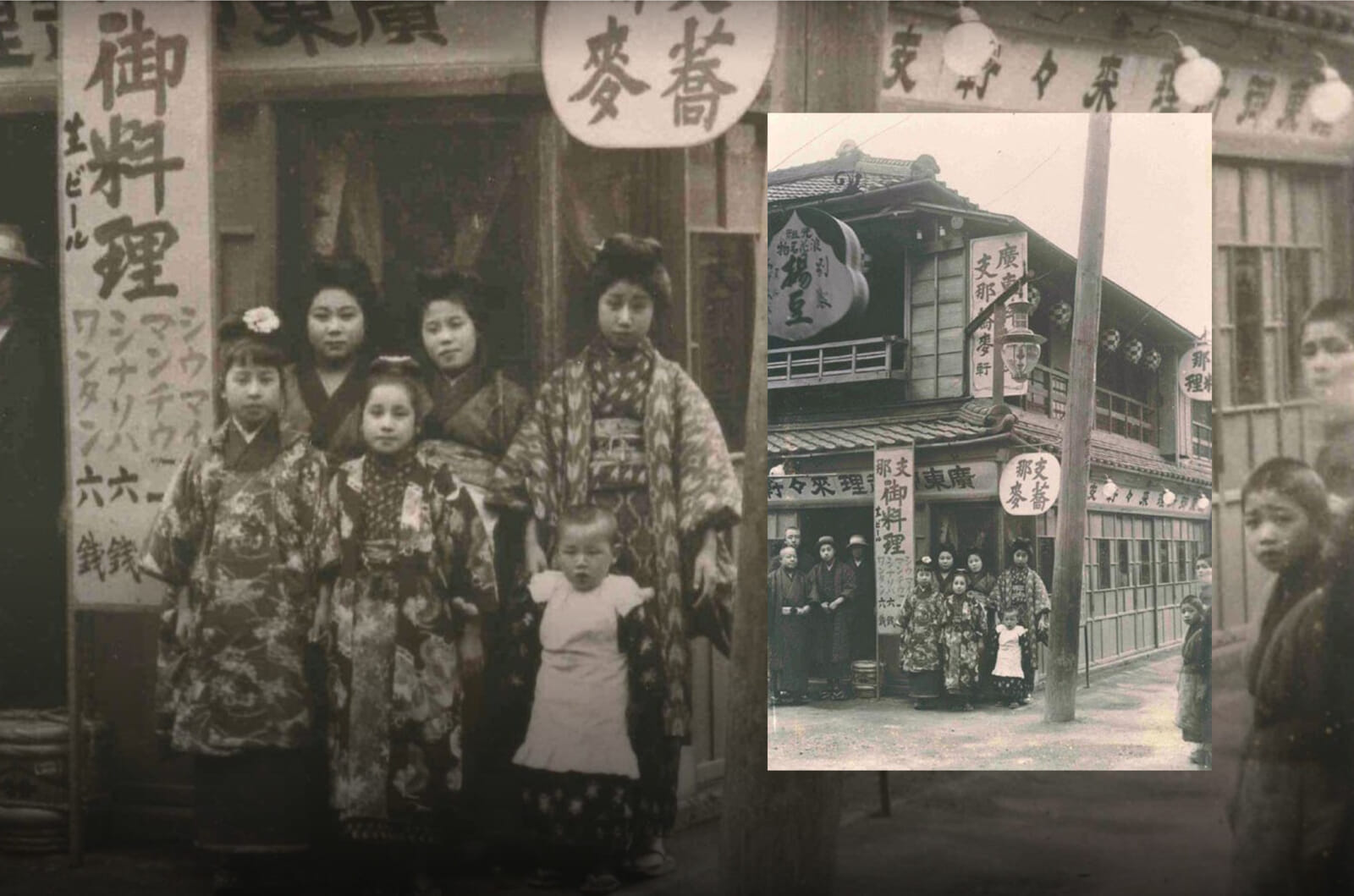
Image depicting Rairaiken, the first “Shina Soba” store in Japan (est. 1910’s in Asakusa) which employed cooks from Yokohama’s Chinatown | Image: Shin-Yokohama Ramen Museum collections
How Chinese Noodles Reached Japan
The real history of ramen starts in Yokohama, at a time when it was home to Blood Town. After the small fishing village was transformed into a massive international port in 1859, it attracted a large Chinese population that introduced lamian (sometimes spelled la-mien) to Japan. Originating in northern China, it was — and still is — a dish of hand-pulled wheat noodles served in light broth, often with scallions.
It was pretty close to modern ramen but was still missing a few things, like soy sauce and more elaborate toppings. Still, the etymological link between “lamian” and “ramen” seems obvious, though Cantonese-style lo mein noodles topped with char siu barbecued pork have also been cited as a possible “ramen” ancestor.
At this time, there was no attempt to obscure the purely Chinese heritage of the noodles, which were sold as Nankin (Nanjing) soba. The name was actually playing up the “exotic” nature of the foreign dish, trying to elevate it from what was simple laborers’ sustenance, all fast, salty, cheap and filling. “Soba” was just an analogy to quickly explain what the dish was to Japanese consumers using their existing culinary vocabulary.
Still, it was not modern ramen.
The Birth of ‘Shina Soba’ in Tokyo
That most likely developed at the Rai-Rai Ken restaurant in Tokyo in 1910, where Nankin soba was adapted to Japanese tastes by cooks hired from Yokohama’s Chinatown. With the addition of soy sauce, char siu, boiled spinach, fishcake, seaweed and a variety of other ingredients, the alkaline wheat noodle dish could finally be called “ramen.”
But it wasn’t: It was known as “Shina soba,” using the imperial-era Japanese term for China. The implication was deeply political. The dish only evolved slightly, but the atmosphere around it changed dramatically. Now, it was a Chinese dish that wasn’t adapted but rather tamed by Japan.
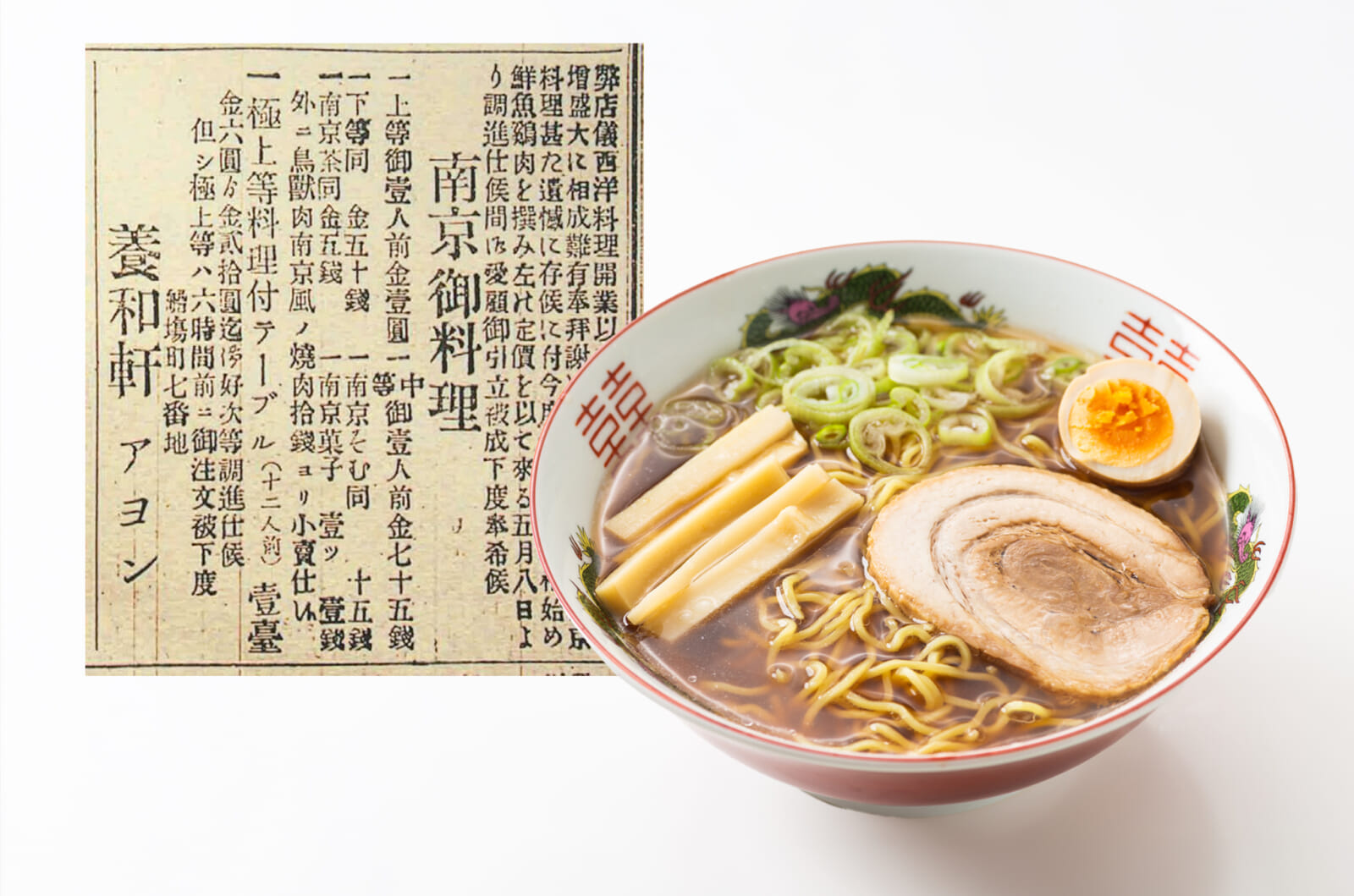
The oldest recorded instance of the name “Nankin Soba” being used (c. 1884, Shin-Yokohama Ramen Museum Collection) with a bowl of ramen as typically served today
Ramen and Chuka Soba — Humanitarian Compromises
In the postwar years, Japan’s use of the word “Shina” was abandoned — a change at the highest level of government that trickled down to noodle shops. “Shina soba” was renamed “chuka soba,” moving away from a term associated with colonial subjugation to one that evoked the splendor of Chinese culture. But even that proved touchy in places. So, one day (we don’t know when), someone (we don’t know who for certain) suggested using the name “ramen,” after “lamian” or “lo mein.”
The word had been around since before WWII, but its postwar usage was a deeply political compromise invented to shield Chinese people (who were still the main cooks of the noodles) from racial abuse.
Ramen has changed a lot since then, with many later innovations — like Yokohama’s iekei variety (thicker noodles in a rich pork-bone broth with soy sauce and chicken fat) — being undoubtedly Japanese. But they are all working off a dish whose Chinese heritage cannot — and, given its history, should not — be denied. When you think of it like that, “chuka soba” is actually the more respectable word choice because, while it may confuse some foreigners, it openly acknowledges where the supposedly Japanese staple really came from.
Related Posts
- Ramen 101: A Beginner’s Guide to Japan’s Favorite Noodle Dish
- Iconic Japanese Foods That Are Actually Not From Japan
- Tracing the Origins of Japanese Comics With Toba Sojo
Updated On June 25, 2026