In Japan, hairdressing occupies a rarefied space. It is exacting, competitive and governed by strict technical standards — a profession that demands years of disciplined training before a stylist earns creative autonomy. The country’s leading hairdressers are revered for both technical rigor and imagination: razor-sharp geometry, audacious color, silhouettes that edge toward the avant-garde.
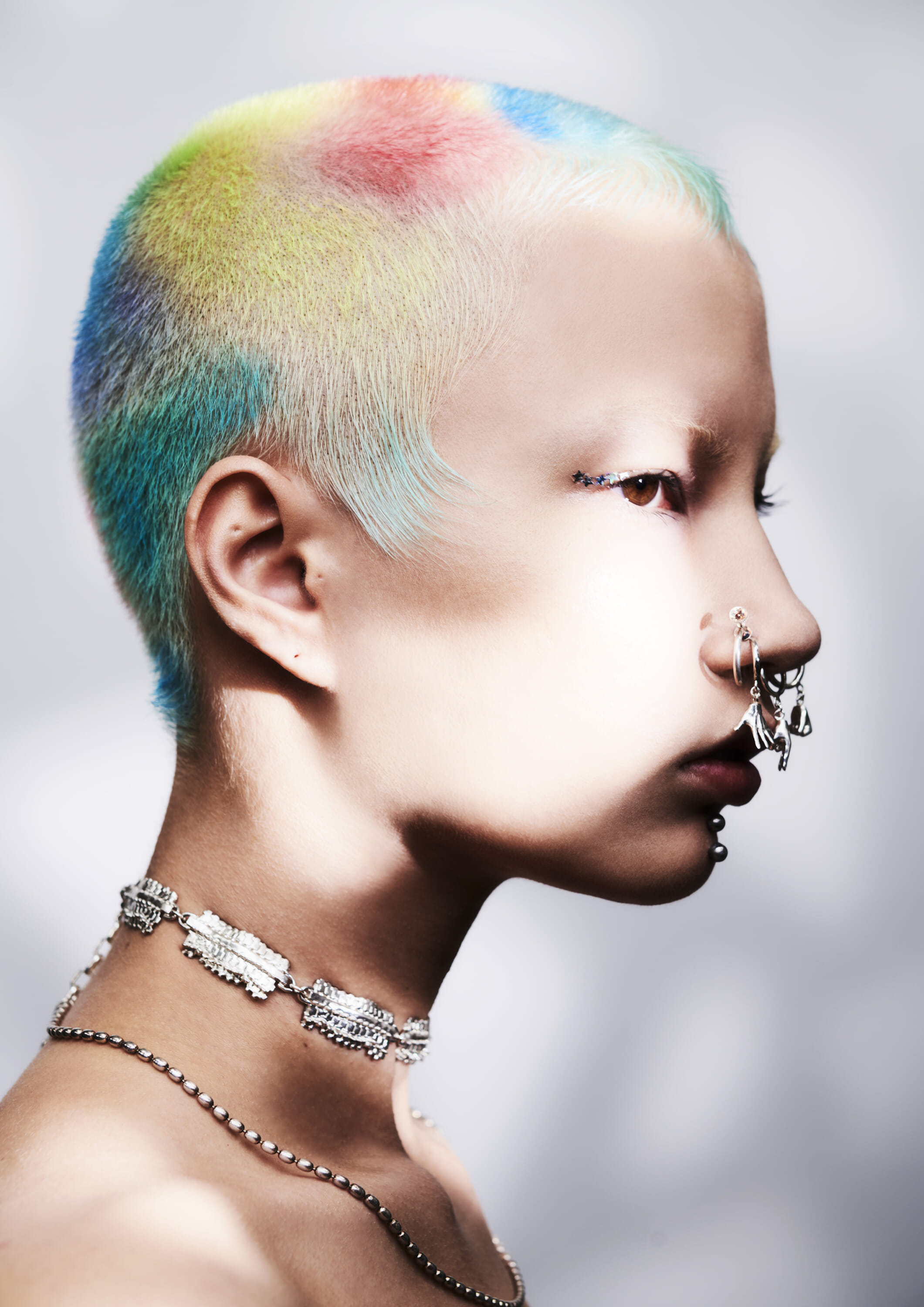
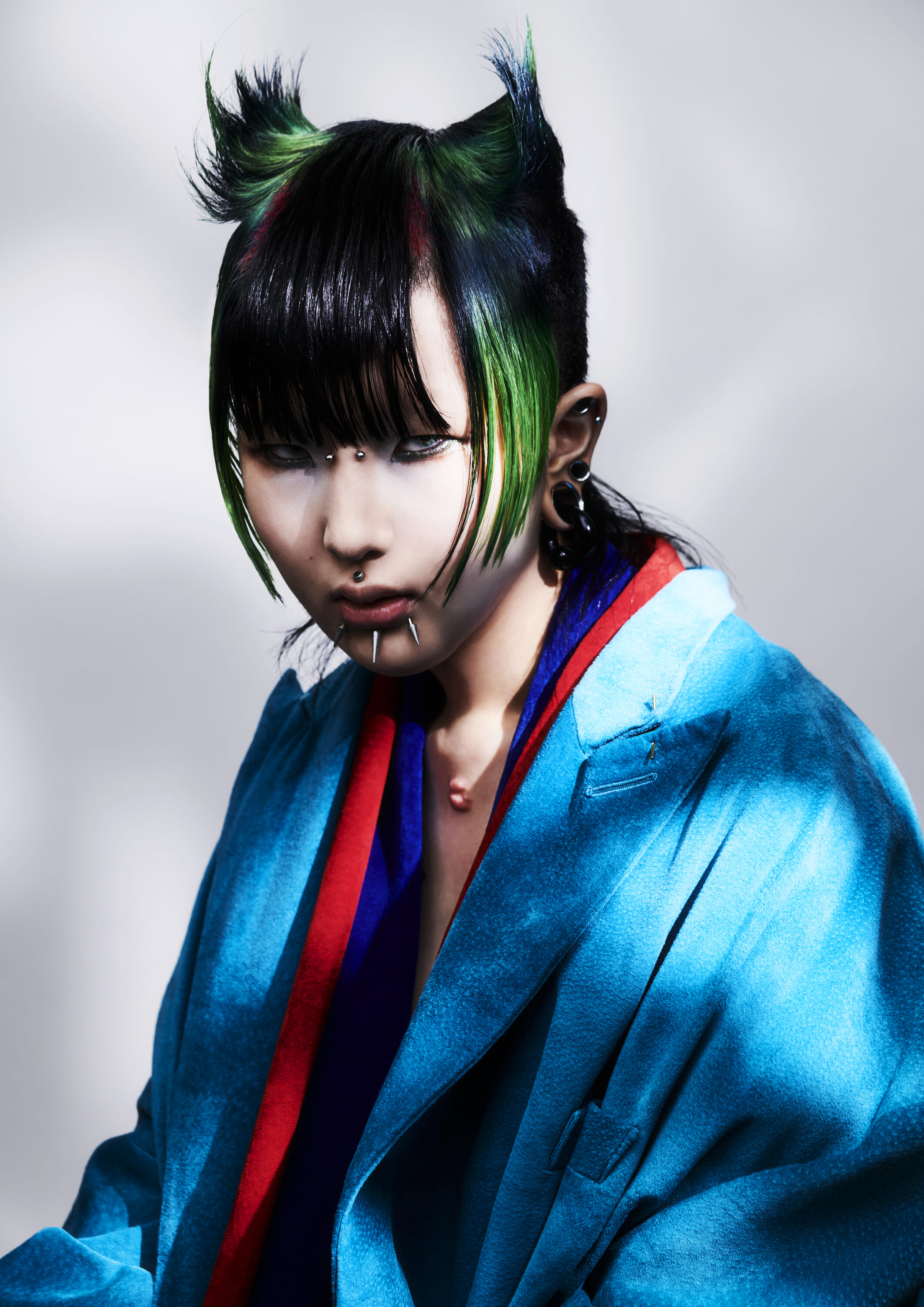
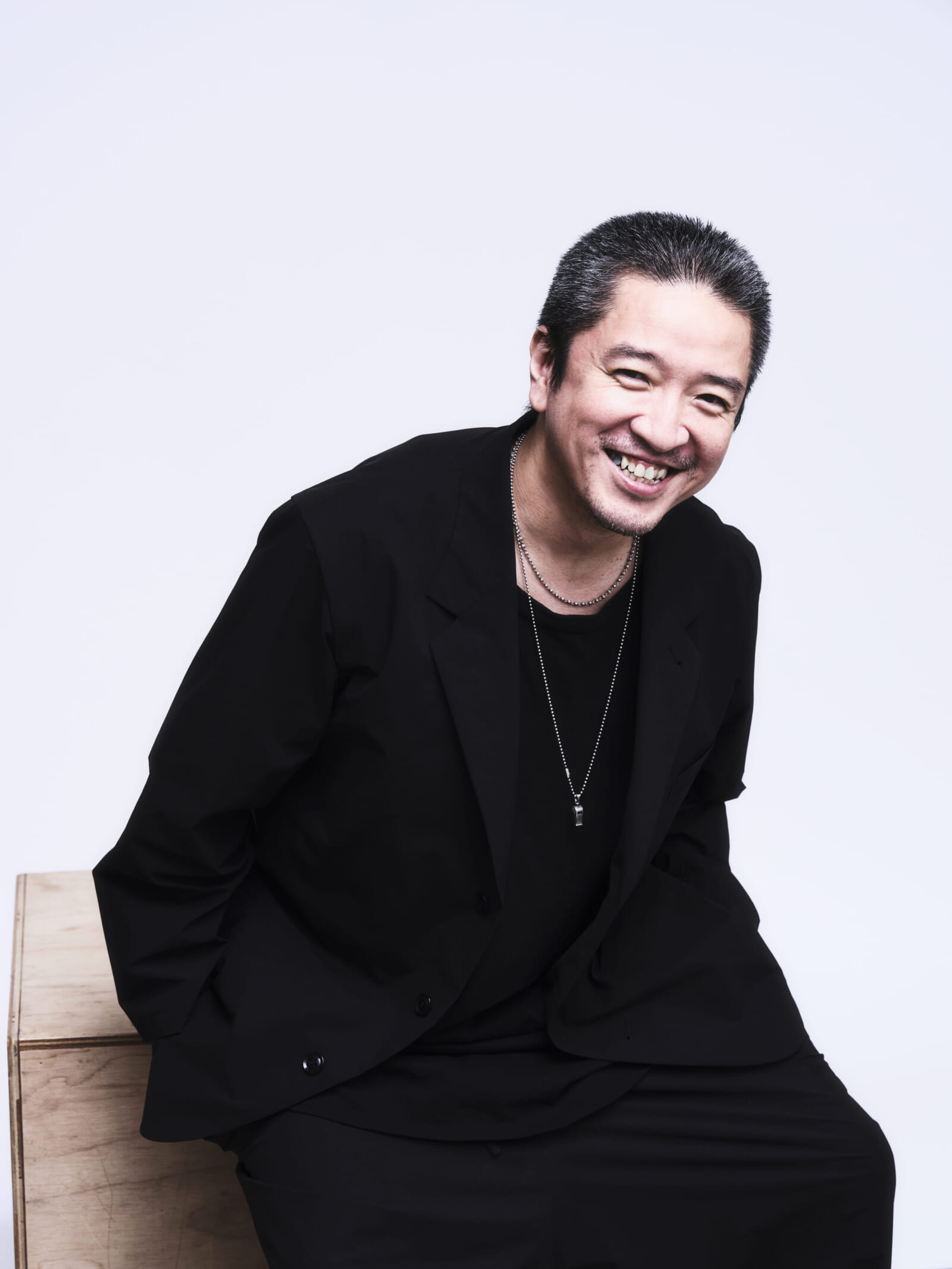
Hidetoshi Saiga is one of the masters of the craft; named Hairdresser of the Year at the 2024 Japan Hairdressing Awards, he stands at the forefront of the industry. His work stretches the boundaries of what hairdressing can be: He’s sculpted hair so that it stands straight up, like a pair of flaxen wings extending from a model’s head; he’s molded bangs into an intricate, thin zigzag pattern; he’s crafted an enormous wig with several eerie doll faces peering out of it. His more everyday designs are equally impressive — dye applied with immense precision to create crisp patterns, the sharpest bob you’ve ever seen, origami-esque layers.
Saiga currently works as the president and international artistic director of Toni & Guy Japan, the Japanese branch of the London-founded salon group long regarded as one of the most influential names in modern hairdressing. He’s carrying on his father’s legacy — over 40 years ago, it was Kenji Saiga who established the legendary salon’s first Tokyo location. In his youth, Kenji had made quite a name for himself in the UK, working alongside Toni & Guy’s two founders, Toni and Guy Mascolo, and their brothers, Bruno and Anthony. When he got old enough, Hidetoshi, too, went to London to prove himself.
TW spoke to Saiga about his career path, what it was like working between countries and cultures and the lessons he’s learned from his father.
Hidetoshi Saiga Full Interview
Your father had a huge influence on your career. How did he get started at Toni & Guy?
Men’s hairdressing was flourishing in the early 1970s, and my dad wanted to be part of that. The UK was at the forefront of that movement, and he was convinced that was where he had to live. My grandfather had shown him a video of his travels around the world in 1963, and, for some reason, the only city my dad was impressed by was London. He eventually moved there in 1974 to study at the Vidal Sassoon Academy.
Toni & Guy had recently opened a second shop in Mayfair, just around the corner from the academy. My dad was looking for a job while studying, and they took him in. They were immigrants as well and treated him like a family member. At the time, it was just the three brothers running it, as Anthony was still a teenager. My dad became his mentor. I was born four years after he joined.
What were your memories of the Mascolo brothers growing up?
They were all very cheerful. The brother I remember the most as a kid was Toni. He was like an Italian uncle, and used to ask me when I was joining the family. One conversation we had that sticks in my head was when he told me about his plans to expand the business globally. I was only 6, so I didn’t really know what he was talking about, but I knew he wanted to conquer the world.
That global expansion started in 1985, with salons in Dallas and Tokyo. I was kind of responsible for the shop opening in Japan. It suddenly dawned on my parents one day that their son didn’t speak any Japanese. That was why they decided to go back home, and Toni subsequently asked my dad to start a franchise that he would help set up.
Was it always your ambition to follow in your father’s footsteps?
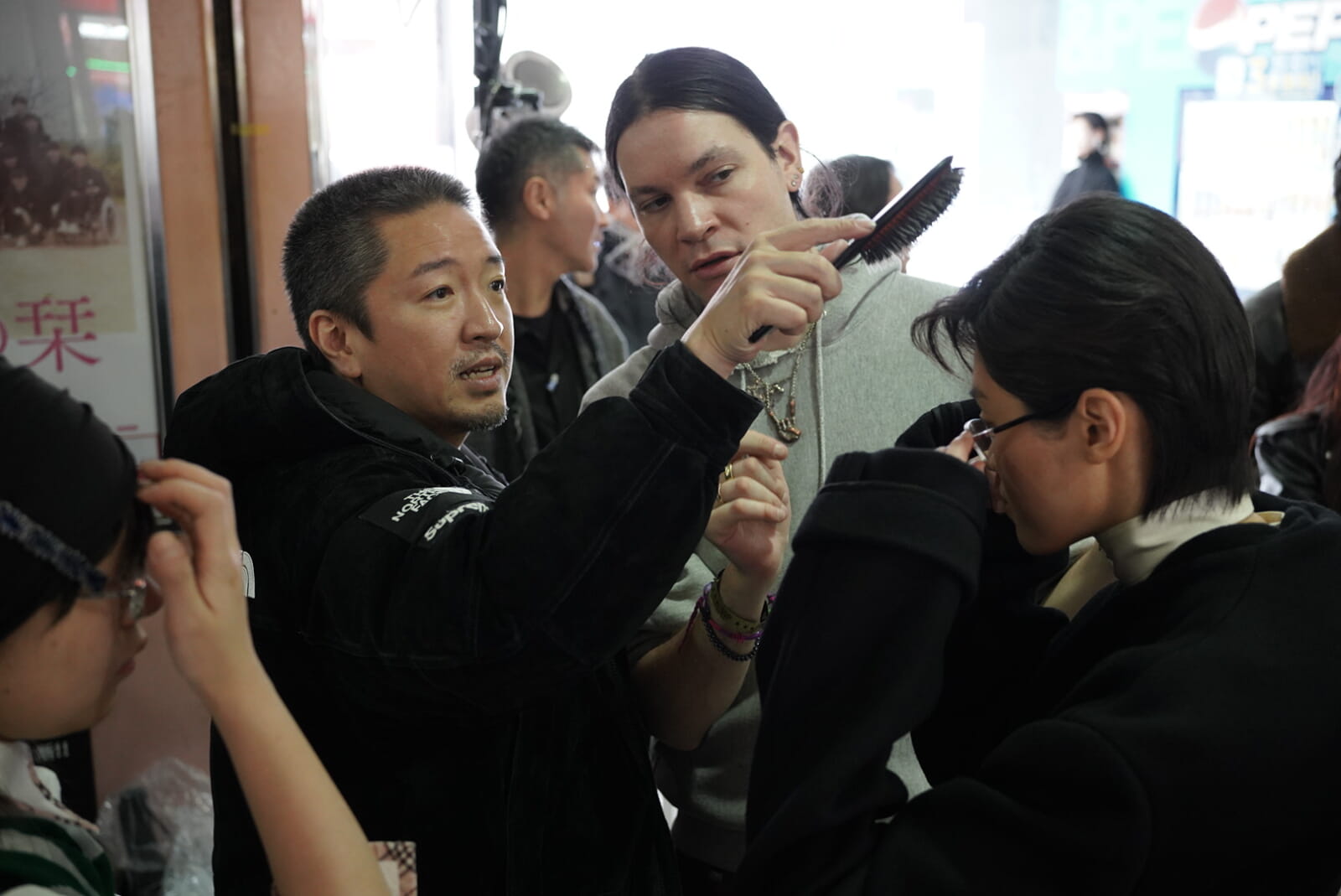
Not when I was very young. It seemed like too much work, especially when I saw the assistants cleaning between the tiles with toothbrushes. I had a part-time job washing the towels at the salon when I was in the third grade at primary school, which put me off as well. One day, I asked my dad for a pay raise, and he just told me to not bother coming back.
When did your perspective start to shift?
Around the second year of junior high school. There’s pressure on students in Japan to follow the same path: get good grades and go to university. I didn’t like that. I told my parents I wanted to be a hairdresser in London, but they refused to entertain the idea. They thought I wasn’t serious about it, and I just wanted to live in the UK. They were probably right.
I brought up the idea again during my high school days after seeing a promotional video my dad did with the hair care brand Wella. It looked better than most pop videos, and I thought to myself, “I want some of that.” Realizing I was more serious, he sent me to Saga [in Kyushu] for two months during my summer break to work at a chain of salons, testing if I could cope. The days were long, but I enjoyed it.
Where did you go from there?
London. I went straight to Toni’s house, and he greeted me with the words, “Welcome to the family.” He arranged for me to enroll in the company’s beginner’s course. My first job was then as an assistant at the Mayfair salon. Some of the apprentices bullied me because they felt I’d been fast-tracked, and my English wasn’t great, so it was hard to fight back. Fortunately, I wasn’t there long, as a new shop opened on Regent Street.
I enjoyed it there. I became very good at “the Rachel,” as Friends was so big at the time. My biggest client then was the radio DJ and TV presenter Chris Evans. Being able to keep him long term earned me the respect of my colleagues. I then became an educator, and at 21, I was the head of the beginner’s course at the academy.
Why did you decide to return to Japan?
I heard my dad cry for the first time over the phone. He’d been diagnosed with cancer, but initially told me and my younger brother, who was also working as a hairdresser in London, that he’d be fine, as the surgery was straightforward. It was a success, but he later informed us that there was a good chance he could have died during surgery. Hearing that, I thought it was the right time to go back and spend time with him.
I returned in 2010, and remember sitting at my empty desk in the dark side of our office in Tokyo, thinking I might have made a mistake. I’d just bought a house in London, had been appointed the manager of the academy a few years earlier and had a long list of clients. In Japan, I didn’t really have anything. It was tough, but got much harder after a few months: My dad’s cancer returned. He died in 2012.
Is that when you took over the franchise?
Yes. That was the most difficult time of my life. It was like the captain of a jumbo jet had died midflight, and I had to take over the controls even though I didn’t have a license. Business in Japan was still alien to me. People would say “hai” in meetings, and I naively thought they really meant yes. That said, I’m just about managing to steer us. While we’ve had to close some shops in the last decade, we’ve also opened five or six.
How did it feel to be named Japan’s Hairdresser of the Year in 2024?
I was delighted because I was a finalist eight times, so I started thinking it wasn’t going to happen. Again going back to my dad — it was an award he wanted to compete for when it was established in 1990. Back then, though, they had an age limit, so he was considered too old and became a judge instead. I wanted to do it for him, so it was one of the proudest moments of my career.
More Info
Follow Saiga on Instagram.