
On March 11, 2011, at 14:46, a 9.0 magnitude earthquake struck off the northeast coast of Honshu, Japan’s biggest island — the largest quake ever recorded in Japan and the third-largest in the world since 1900. The quake was soon followed by a nearly-40-meter tsunami and devastating nuclear meltdown at the Fukushima Daiichi nuclear power plant in Fukushima Prefecture’s Futaba district.
As of March 2026, the Japan National Police Agency reported 15,901 deaths, and 2,519 missing people and presumed deaths.
Visiting the coastal communities closest to the destruction brings a somber reminder of the destruction that still haunts the neighboring towns. Prior to the disaster, Futaba had around 7,200 residents. Now, it’s home to only 190, under 3% of the original population.
Yet through it all, resilience, innovation and hope also have a determining presence in the area, as locals fight for their home’s revival.
I was invited on a media tour to Fukushima by Japan’s Ministry of the Environment along with other international reporters to see the area’s developments since 2011. Visiting Futaba district’s Okuma and Namie towns — areas that were severely impacted by the disaster and are still in active recovery — I was able to speak with survivors and see locals’ inspiring determination first-hand.
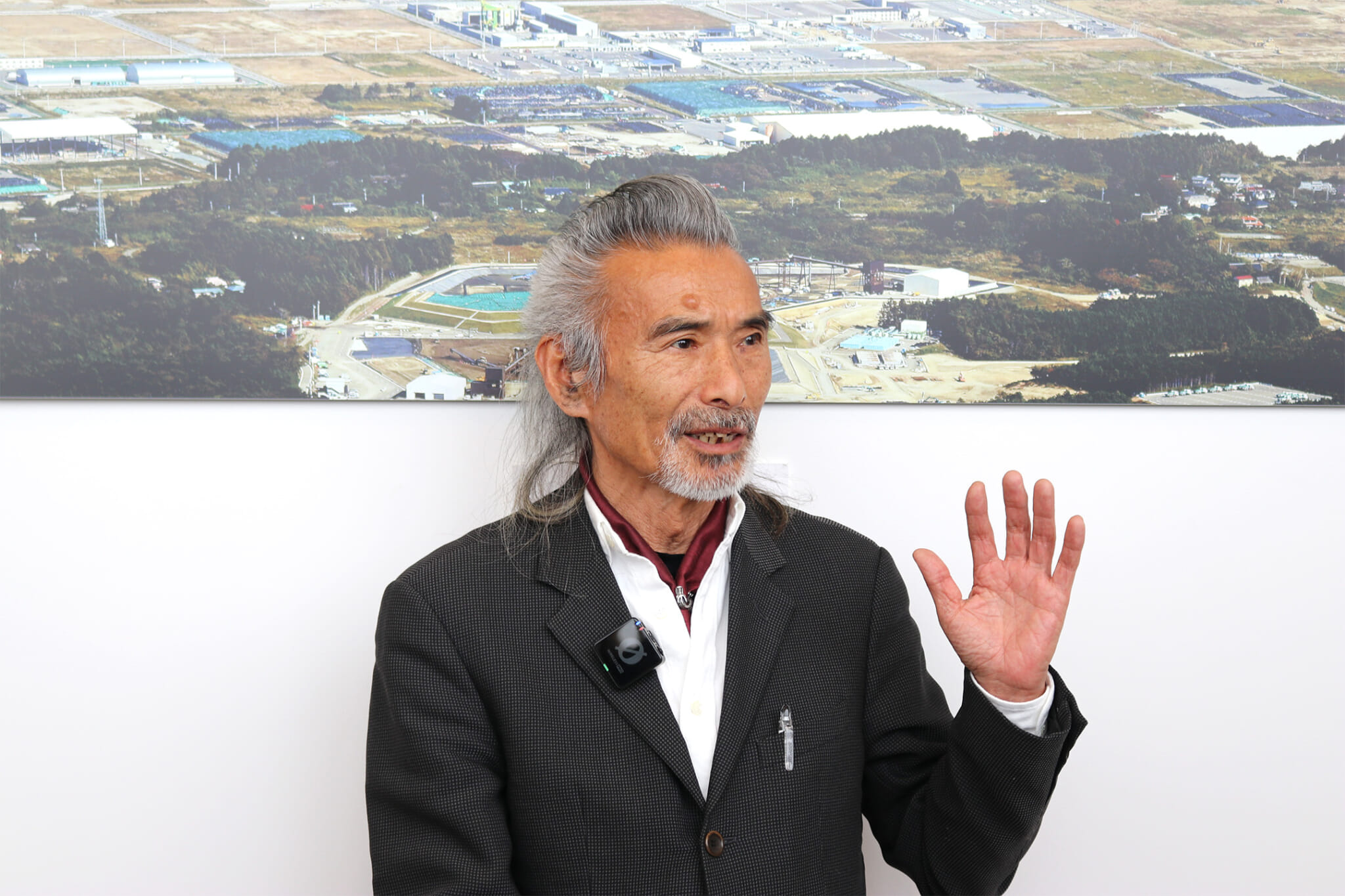
Isuke Takakura, a local survivor and mayor of the Hamano Administrative District | Photo by Aya Sato
15 Years Later
Isuke Takakura, who was born and raised in Futaba, currently serves as the mayor of his district in Hamano. As a representative, Takakura is known for being outspoken, recounting the events of the disaster and bringing awareness about the recovery situation.
Takakura used to live in a small neighborhood two kilometers west of the initial evacuation center. All 50 houses in the area were completely wiped away. Recounting his choice to evacuate, Takakura states that if he had hesitated to act, or if the tsunami had hit just a few seconds earlier, he probably wouldn’t be here today.
The morning after the tsunami, sheltering in an evacuation center, he remembers seeing three policemen, not in their usual uniforms, but all dressed in radiation protection equipment. “That’s when we knew this wouldn’t be a normal search party,” he says.
“Our whole town had to evacuate, and we didn’t hear anything about our town for the next three to five years,” Takakura explains. Futaba was left deserted.
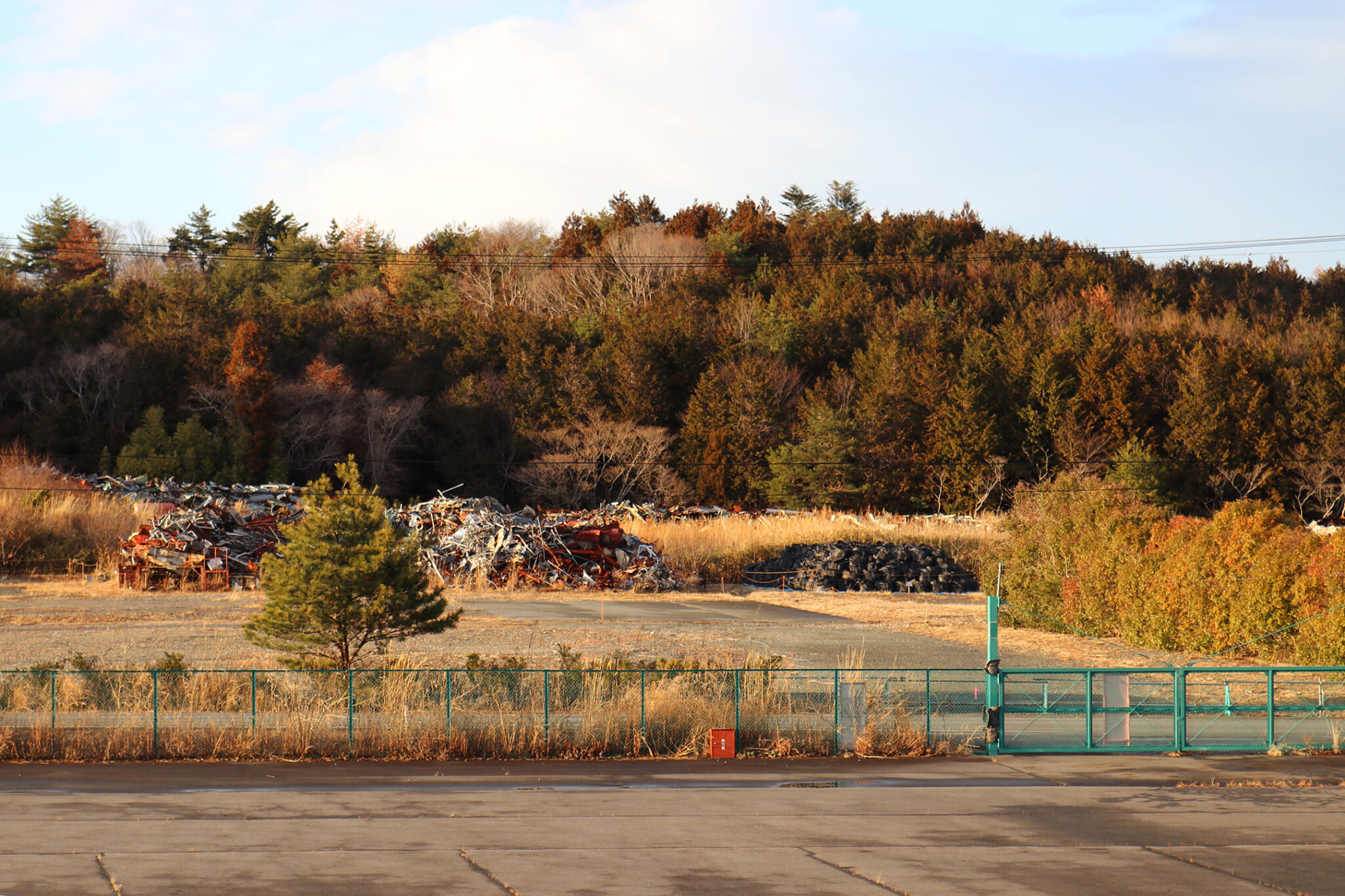
The Interim Storage Facility continues to process the waste from the 2011 disaster | Photo by Aya Sato
In 2017, evacuation orders for some areas were lifted, though they still remain in place in seven municipalities across Fukushima Prefecture. According to the Reconstruction Agency, as of February, 26,281 people are still living as evacuees.
Out of the 17 neighborhoods that were evacuated in the region, three remain uninhabitable, including Takakura’s original hometown.
When he was finally able to at least return to the greater Futaba area, Takakura admits that he was very resentful about the massive loss that he and his neighbors faced, and the lack of action and accountability he felt he received from the government. But he pushed himself to step forward and do something — he didn’t want his home to remain a barren wasteland.
He became a local representative and rebuilt the neighborhood shrine as a small but hopeful symbol of regrowth. “I have my ancestors … to whom I have to answer to … I want to be able to show my descendants my hometown. That’s what’s driving me,” says Takakura.
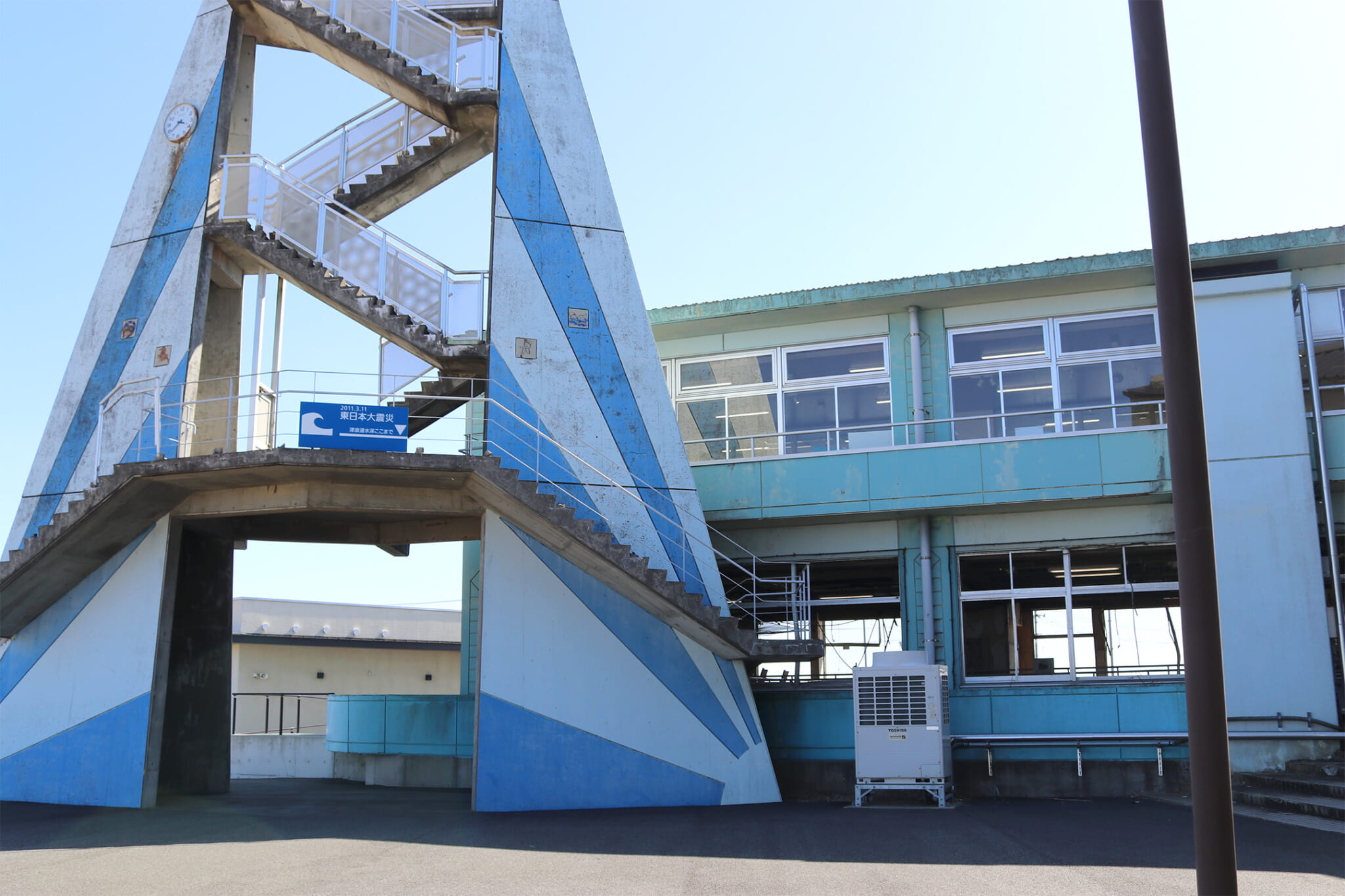
A sign outside of Ukedo Elementary School marks the level of the tsunami | Photo by Aya Sato
Remembering the Destruction
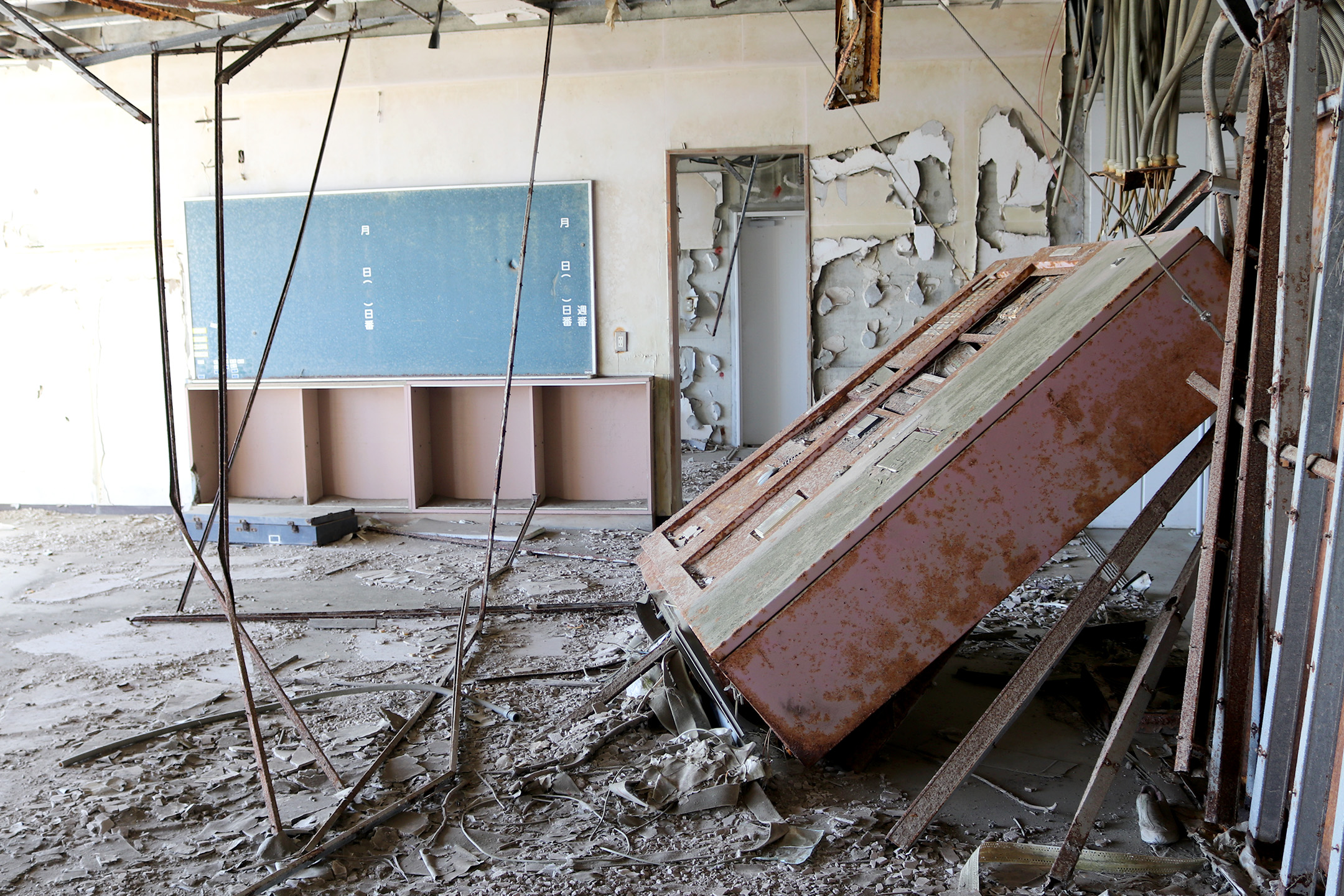
Futaba’s Ukedo Elementary School is located just 300 meters from the coastline and five kilometers from the nuclear power plant. Most of the school’s internal structure was destroyed in the disaster, and the ruins now stand as a museum and preserved site of the tsunami’s impact. The site is a shocking visualization of the destruction trail, displaying a level of wreckage that cannot be easily described through words alone.
Walls ripped apart, metal doors folded, and the kitchen counters and stoves — which just moments ago had been used to cook lunch for the small students — crumpled like paper.
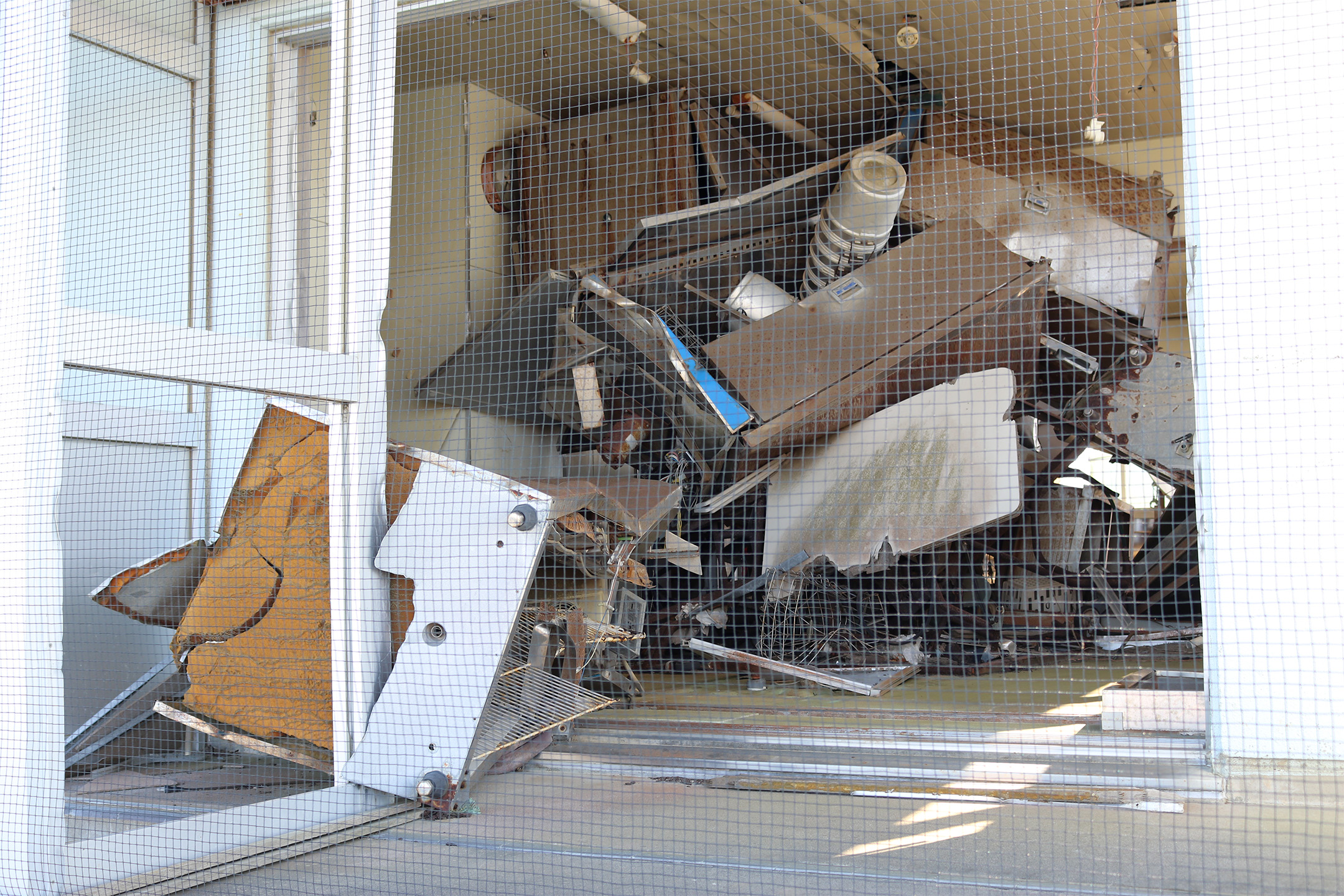
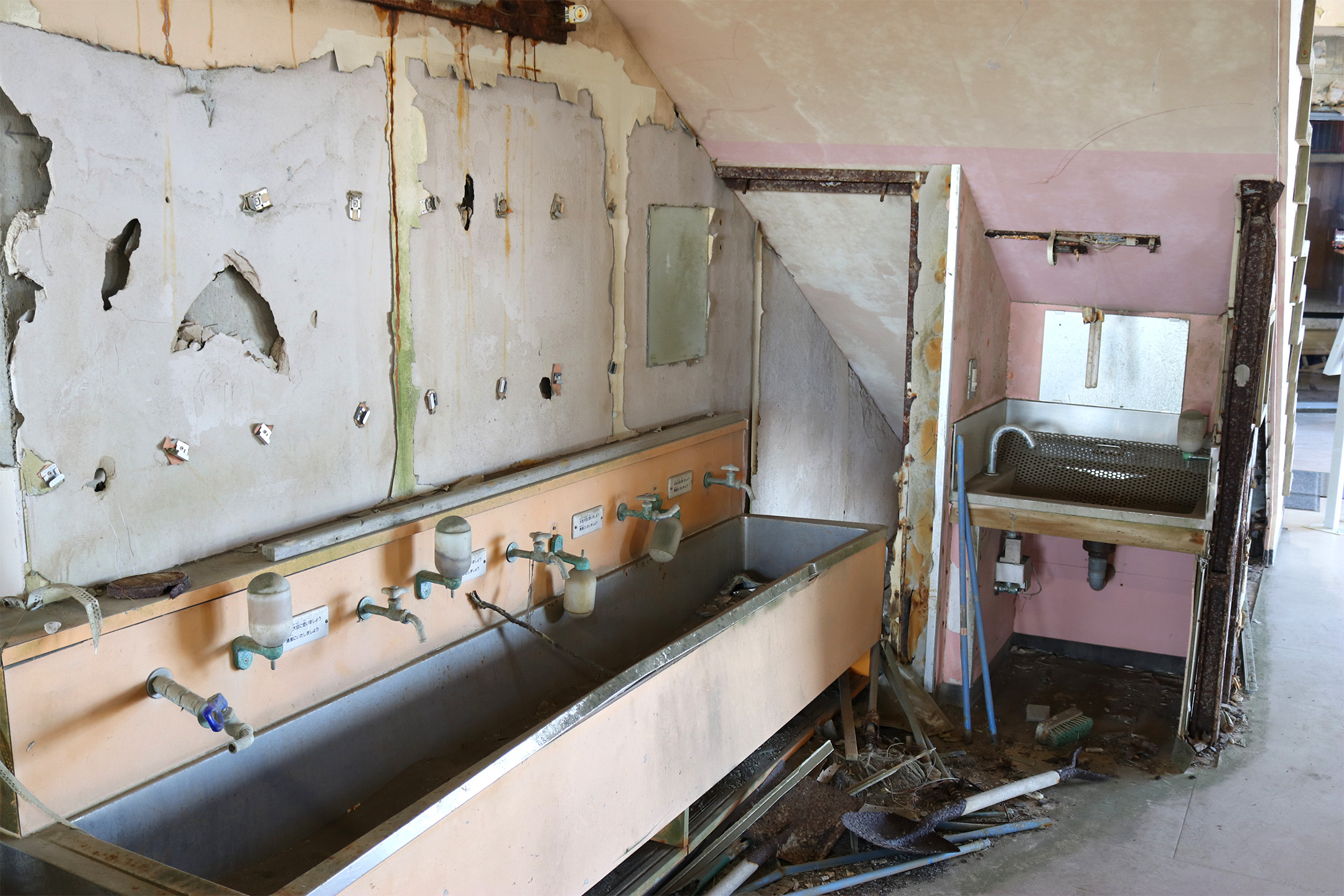
A former teacher at the school remembers how she was in the gymnasium, helping to prepare for the graduation ceremony when the shaking started. “It was a tremor clearly different from any earthquake I had experienced before,” she said.
The original evacuation drills instructed students to move to the schoolyard in front of the gym. But as soon as the first tsunami warning was broadcast through the radio, teachers immediately led the children toward Mount Ohira, the highest altitude spot near the school’s vicinity. Crucially, one of the students knew of a shortcut and guided everyone further into the mountain paths until they reached the highway, where a passing truck rushed them to city hall. The children walked nearly 2.5 kilometers to escape.
Miraculously, all 83 students and staff survived.
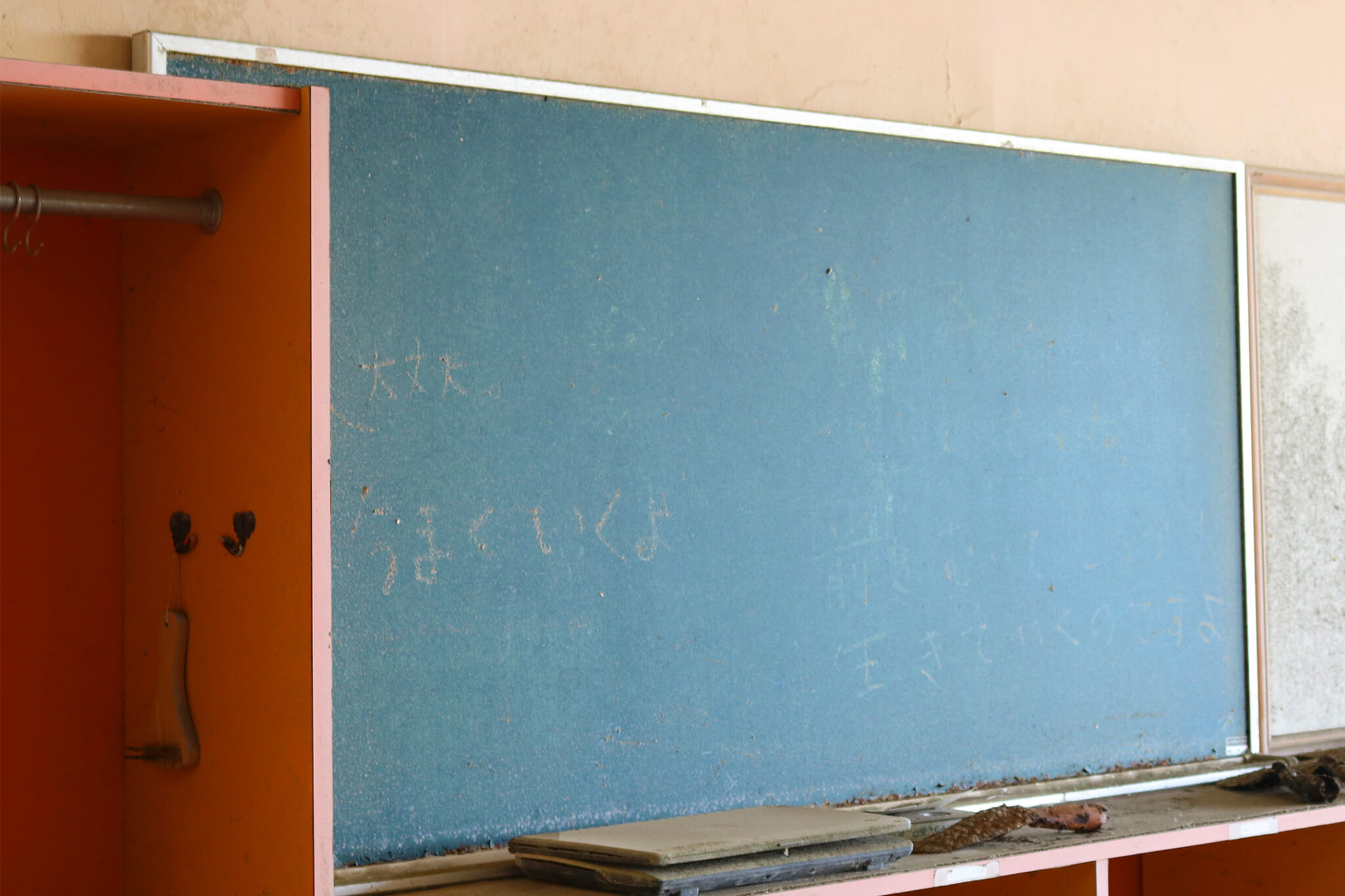
A chalkboard in the classroom reads, “It’s ok, it will work out” | Photo by Aya Sato
There are no windows or doors left at the school, leaving the passing wind as the sole audible sound as visitors pass through the hallways in complete silence. The school is now frozen in time. Though an emotional walkthrough, seeing the wreckage and terror of March 11 through the perspective of elementary students brings a new viewpoint to the event that cannot be fully encapsulated in news reports.
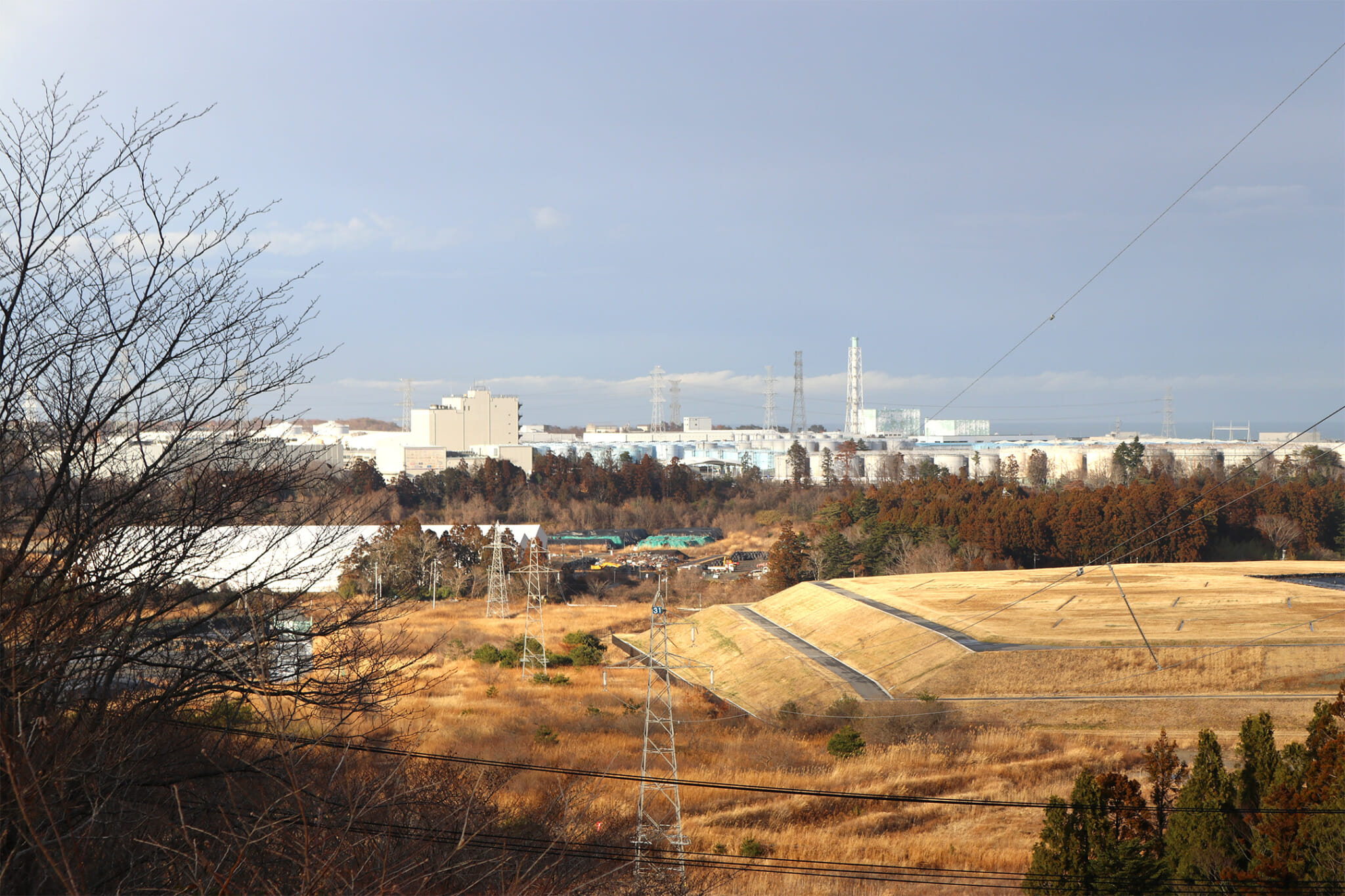
Outside landscape in Okuma’s Interim Storage Facility | Photo by Aya Sato
Inside Fukushima’s Interim Storage Facility
The now disabled Fukushima Daiichi nuclear power plant is inside Futaba’s Okuma town.
The Fukushima Interim Storage Facility — run by Japan’s Ministry of the Environment — was built in Okuma to treat and temporarily accommodate contaminated soil, waste and incinerated ash from the power plant in preparation for final disposal.
The facility occupies around 1,600 hectares, roughly the size of Shibuya. To make way for it, around 2,000 local residents gave up land their families had lived on for generations, holding onto the hope that they might one day return. Under Japanese law, all waste must be removed from Fukushima by March 2045.
But there is a lot of waste — about 14 million cubic meters, enough to fill nearly 11 Tokyo Dome stadiums.
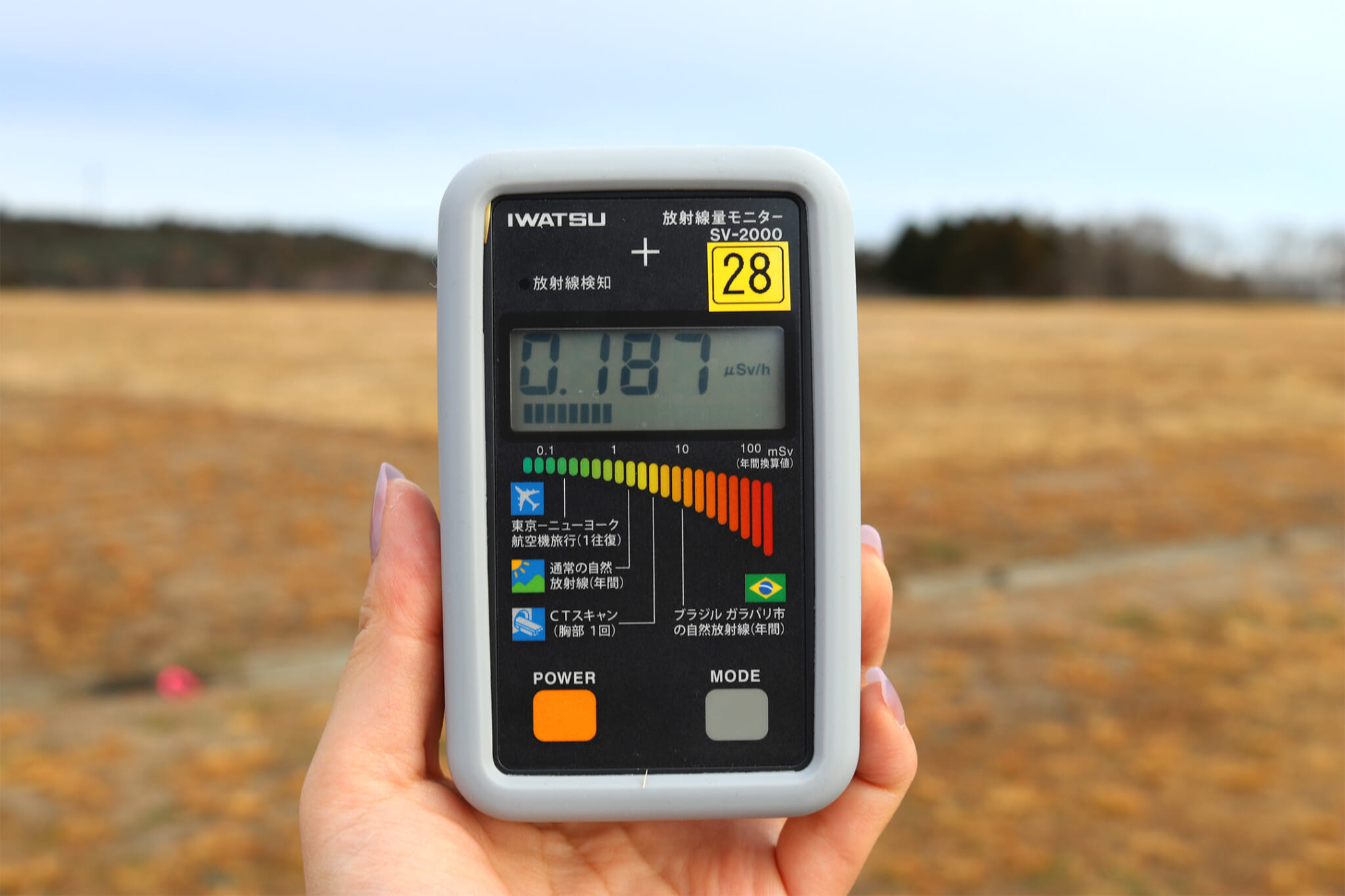
Radiation reading atop one of the treated soil mounds in the Interim Storage Facility, levels are equivalent to the natural radiation received by a flight from Tokyo to New York | Photo by Aya Sato
With that astronomical amount, the Ministry of the Environment is planning to recycle 75% of waste with relatively low radioactivity concentration (average of 6,400 becquerels per kilogram, which is below the government standard for public construction projects). One proposed solution is the Road Embarkment Demonstration Project, which seals treated soil under clean soil and asphalt.
So far, monitoring has shown that radiation levels are below detectable limits, suggesting the approach is safe. But the Ministry of the Environment is continuing to monitor the radiological impacts to ensure the safety of workers, residents and facility users before the project proceeds to full implementation.
Public trust remains the biggest hurdle. In a recent survey of Japan’s 47 prefectural governors, more than half said that they are not prepared — or are simply unwilling — to accept the treated soil. Some governors, including Tokyo’s, declined to respond altogether.
Some soil was brought to Tokyo last year to create a flower bed in the prime minister’s garden and symbolically demonstrate the material’s safety to skeptics, but official reception of Fukushima’s waste remains a fragile topic.
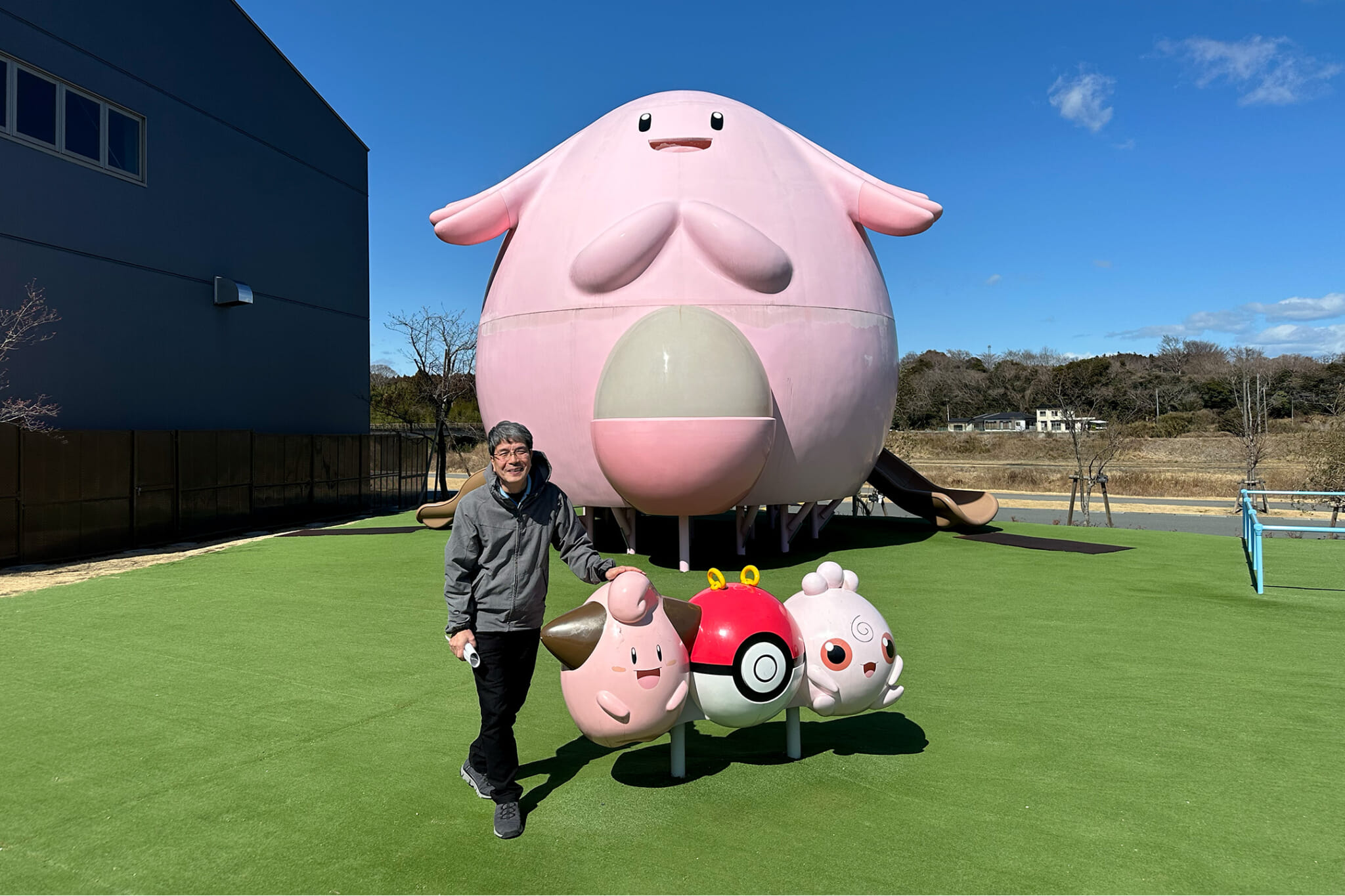
Yuji Watanabe, the station director of the Namie michi-no-eki, posing in front of Chansey Park | Photo by Aya Sato
Rebirth and Regrowth
Although the recovery process is slow and at times painful, hope persists. Locals and many people with ties to the impacted areas are striving to encourage revitalization.
Pokemon creator and game designer Satoshi Tajiri’s father is from the town of Namie, just north of the nuclear power plant. In such close proximity to the tragedy, The Pokemon Company donated six pieces of playground equipment to the community. Rakki Koen, or Chansey Park, opened at the Namie michi-no-eki (roadside station) in 2021 with the hope of bringing joy and laughter to local children and visiting families. The playground was the first-ever Pokemon-themed park and includes a 6-meter-tall Chansey, a Lickitung slide and Wingull swing set.
Chansey was appointed as an official Fukushima support Pokemon in 2019. Chansey’s Japanese name “Lucky” pairs well with the “fuku” (good fortune) etymology within Fukushima, and the character’s healing nature supports the initiative’s mission of recovery.
Pokemon Company corporate officer Taku Kawamoto said, “[Chansey] is a Pokemon character that brings happiness. I want people to play a lot at this park and bring a lot of happiness to the town of Namie.”
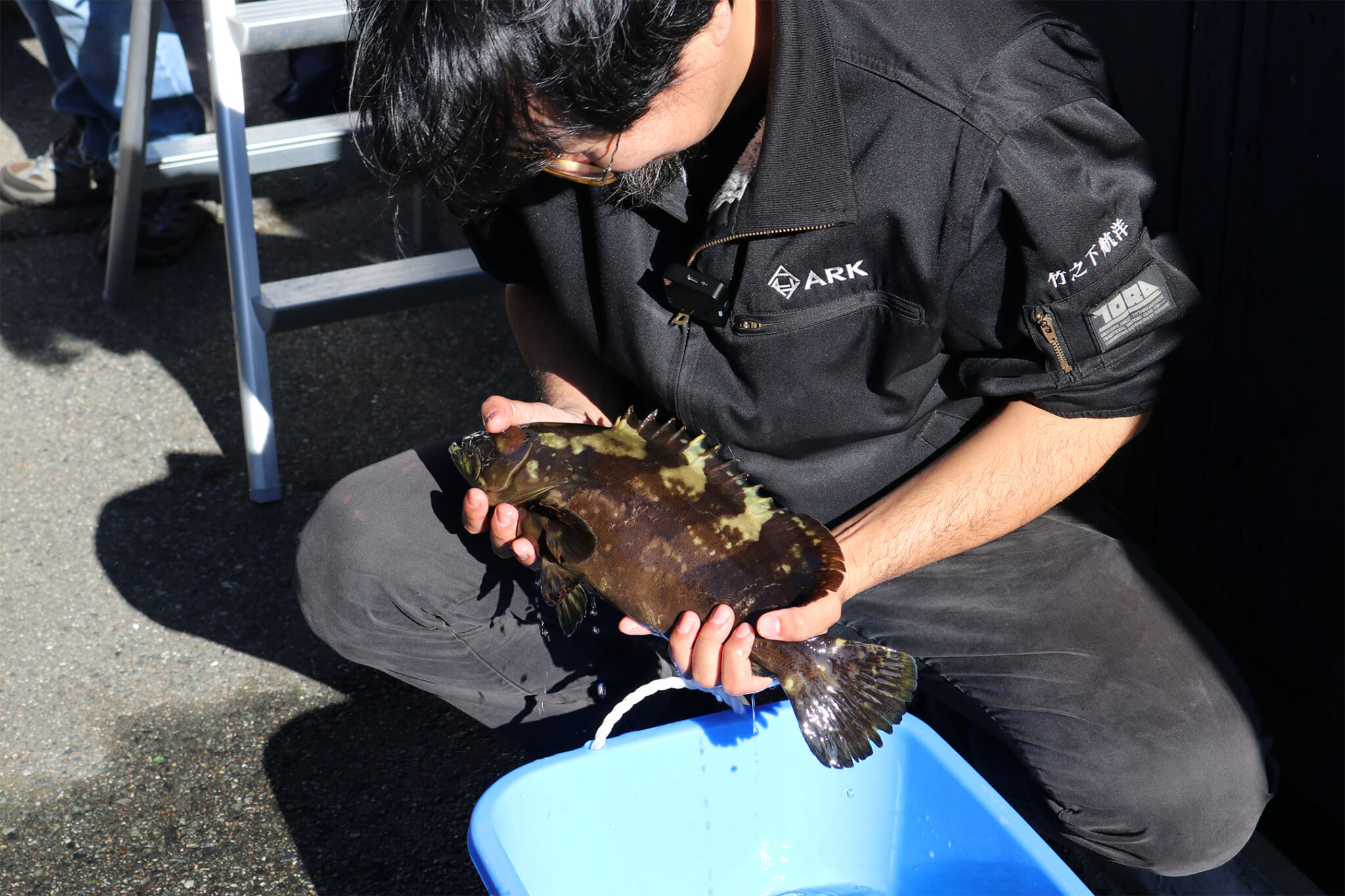
Ark co-founder and CTO Koyo Takenoshita holding a kue-tama grouper grown in the mobile fishery | Photo by Aya Sato
Other businesses are contributing to Fukushima’s revitalization plan. Ark, for instance, is an aquaculture development company based in Kanagawa but working with local industries to grow sustainable fishing solutions.
Prior to the disaster, the Futaba district had a bustling fishing community. But the tsunami caused a profound disruption in the industry. The instant impact left ports, fishing boats and processing plants completely destroyed, and the Fukushima Prefectural Federation of Fisheries Cooperative Association immediately suspended all commercial fishing operations and the government prohibited the sale of select seafood caught in Fukushima due to food safety concerns from nuclear waste.
All of Fukushima’s fishing ports have reopened, but the industry now has to navigate a complex recovery landscape. Lingering stigma from both domestic and international markets has left the prefecture’s fishing industry at around 20% of pre-disaster levels.
Ark’s fisheries offer a new roadmap for farming in Fukushima, one that doesn’t have to directly interact with the area’s water systems. This is because Ark makes land-based mobile fisheries, allowing fish like kue-tama (grouper) to be raised on shore; this is what’s currently being farmed at the Namie facility. The fishery uses solar heat to warm the water, allowing fish that normally only live in warm climates survive in cold communities like coastal Fukushima.
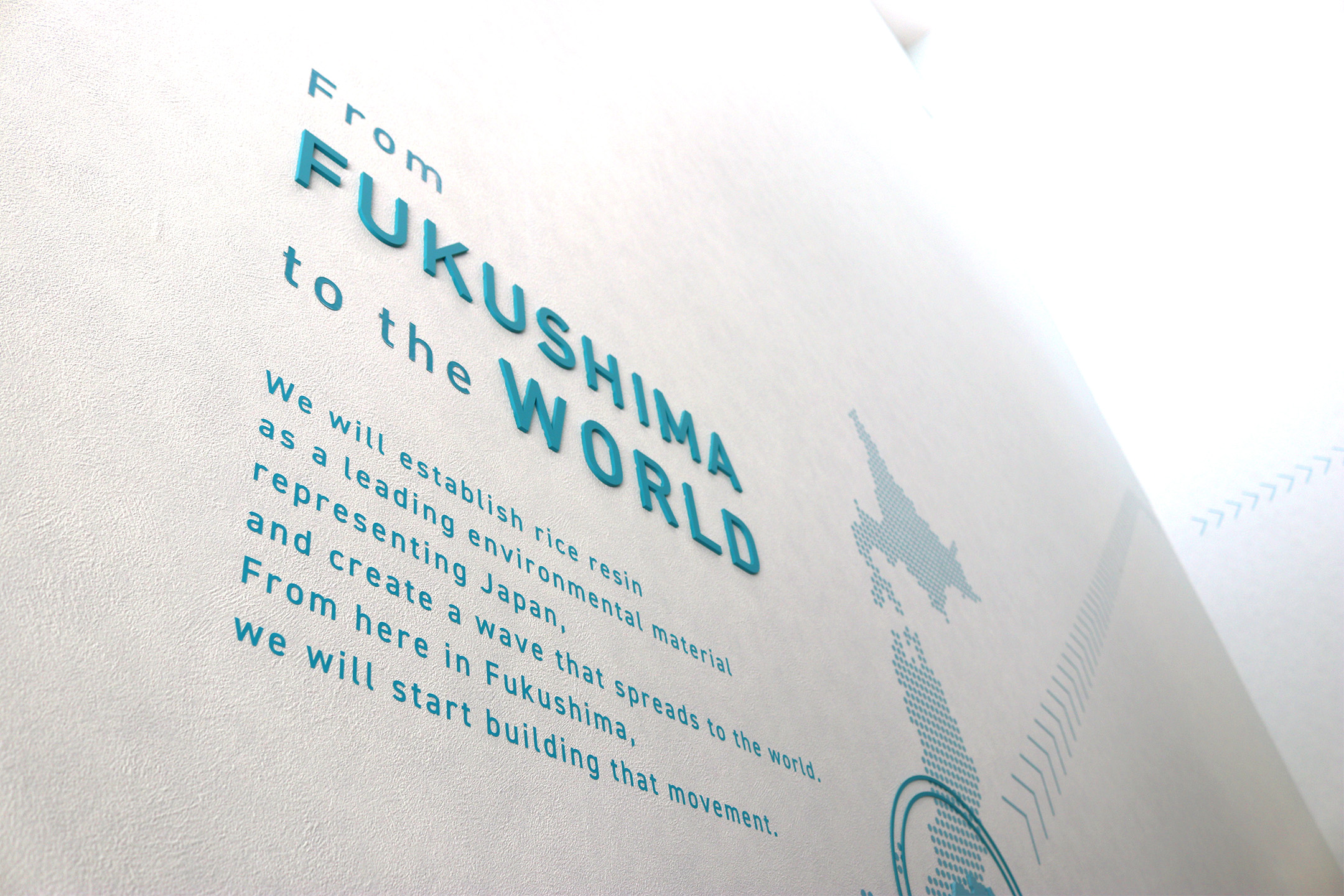
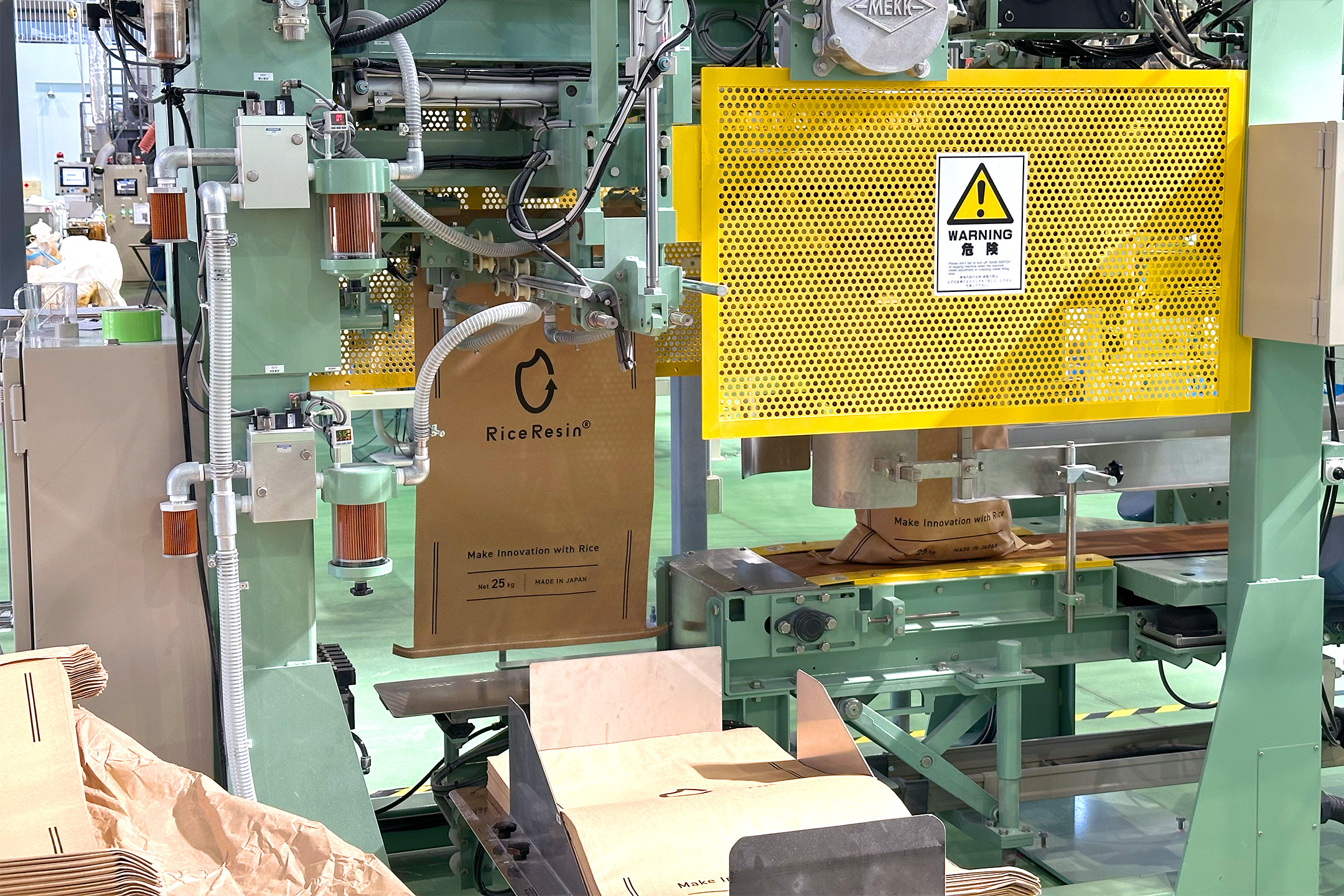
Additionally, Rice Resin is an innovative manufacturer in Namie that utilizes inedible rice to create recycled plastic material. The biomass plastic mixes old or damaged grains that can no longer be consumed into polypropylene polyethylene plastic, which is made of up to 70% rice. Rice Resin’s R70 variety resulted in a 57% drop in carbon dioxide emissions during manufacturing. The recycled plastic is already being used in over 800 products.
Shiro Izawa, the current mayor of Futaba district, celebrates the industrial development that the community has managed to achieve despite evacuation orders being lifted only in 2020.
“I have a feeling that Futaba will become a town where something new can be created, as all the companies have unique technologies and have chosen Futaba with passion,” he states.
Related Posts
- Still Searching: Fifteen Years After the Tohoku Disaster
- Scenic Hikes in Fukushima: Peaceful Footpaths Along the Coast
- Fukushima Prefecture’s Best-Kept Culinary Secrets
Updated On April 22, 2026