

Anna Yagi was 39 when she was found dead in a hotel in Naha in the early hours of October 3. Okinawa police say she died from pressure to her neck; her backpack and wallet were missing, and surveillance footage showed the man who had entered the hotel with her leaving alone with what appeared to be her belongings. The next day, police arrested Lance Corporal Devin Jacob Ballard, a 20-year-old US Marine stationed at Futenma, on suspicion of robbery-murder. Ballard has denied the allegations.
In Okinawa, the arrest fell into painfully familiar territory. Serious crimes involving American servicemen have repeatedly become flashpoints in a prefecture that accounts for around 0.6 percent of Japan’s land while containing roughly 70 percent, by area, of the facilities reserved exclusively for US forces. The military responded to Yagi’s death with a 48-hour stand-down and a month-long overnight curfew, and Okinawan officials once again demanded answers about discipline and prevention.

Okinawa Governor Genta Koja (pictured) demanded stricter U.S. military discipline on Oct. 7, remarking “past disciplinary measures … by the U.S. military have not worked at all.” | Image: Wikimedia
The Case Against the Victim
Online, attention moved quickly to Yagi herself. Within days, social media users were circulating an Instagram account they claimed belonged to her, along with screenshots that appeared to show her with younger foreign men. Police have not authenticated the account or most of the claims now attached to it.
Takizawa Gareso, the massively followed online aggregator, reportedly said that he had been asked to cover the case but declined because the victim had been “posting on Instagram … publicly showing herself sleeping with a succession of young U.S. Marines, so it seems like a pretty dark rabbit hole.” One X user described Yagi as an older woman who had gone around “devouring” young servicemen until she “finally pulled a Joker.” Another invoked the idea of nightlife as a kind of lottery in which, if you mess around for long enough, you eventually meet the man who ruins your life.
There are, of course, no circumstances in which a woman’s sexual history makes this kind of violence inevitable.
The posts drew enough attention that reporters raised them with Okinawa Governor Genta Koja on October 6. Koja said he did not know the details of what was being claimed. “When a person is killed, there is no such thing as fault on their part,” he said. “I ask that people refrain from this.”
Still, when a woman is raped, assaulted or killed, there’s often a second investigation running alongside the official one, conducted by strangers with screenshots and too much time on their hands. What was she wearing? How much did she drink? Did she know him? Had she slept with him before? Was she reckless? Was she stupid? What they’re looking for is some detail that allows them to shift the blame for the violence onto her.
In the United States, Jane Doe, the former Cornell student suing seven fraternity members over an alleged gang rape, has faced a similar campaign, with social-media users trying to uncover her identity, rifle through old photos and posts and make the details of her private life look relevant to the case.
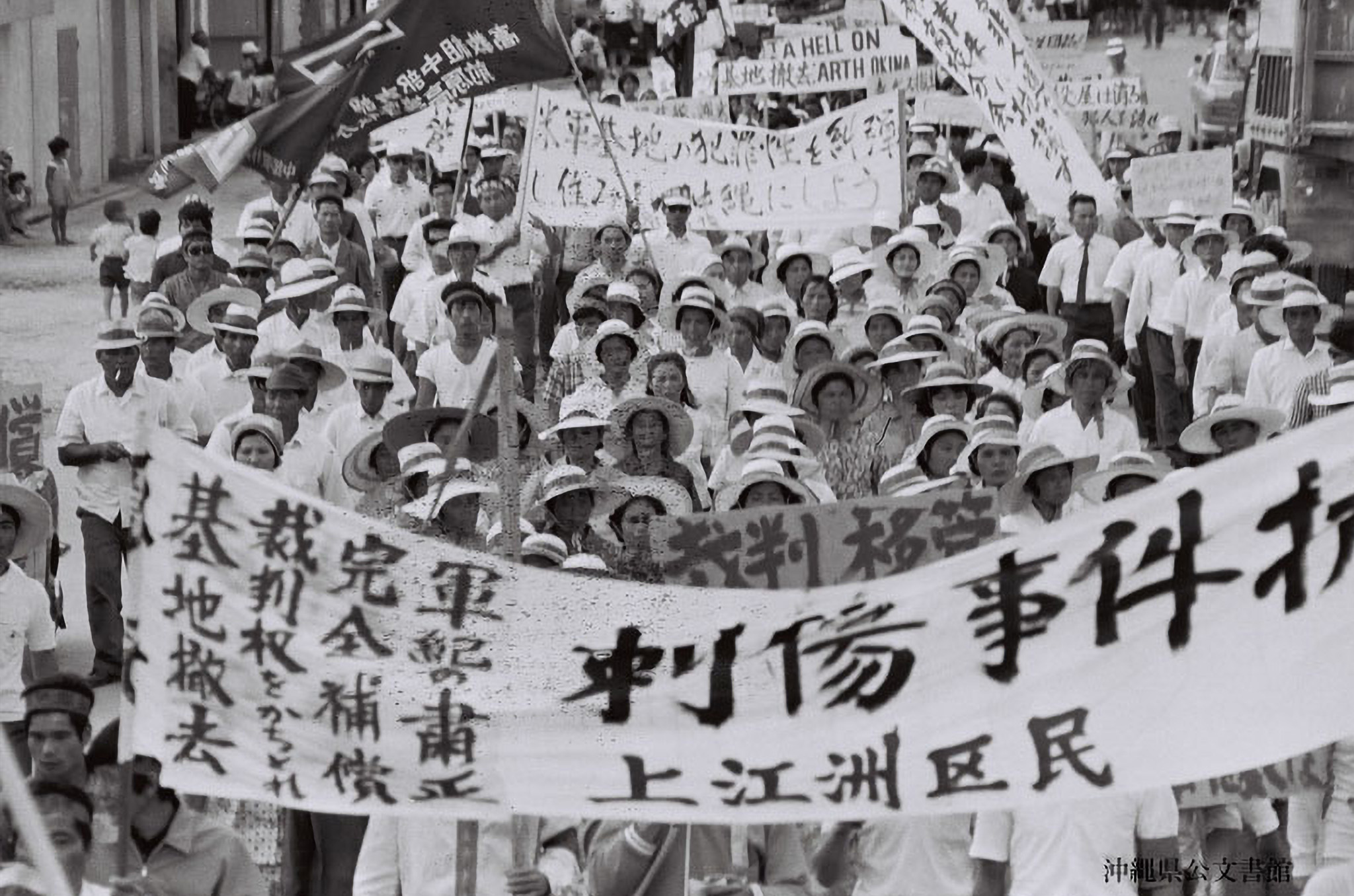
Okinawans protesting U.S. military violence in 1970 | Okinawa Prefectural Archives
The More Relevant History
While people eagerly comb through Yagi’s personal history, they’re ignoring a much more relevant context: the long record of violence against women and girls in Okinawa committed by U.S. military personnel.
In 1955, a six-year-old girl was abducted, raped and killed by a U.S. Army sergeant; her body was later discovered near Kadena Air Base. Forty years later, two Marines and a Navy sailor abducted and raped a 12-year-old girl, bringing tens of thousands of Okinawans into the streets in one of the largest protests against the U.S. military presence in the prefecture’s history.
The cases continued: In 2008, a Marine was accused of sexually assaulting a 14-year-old girl. In 2016, 20-year-old Rina Shimabukuro disappeared while out walking and was later found to have been raped and murdered by a former Marine working at Kadena. In 2024, Okinawans learned that an American airman had been indicted over the abduction and sexual assault of a girl under 16 — months before prefectural officials were informed. Another Marine was separately accused of sexually assaulting a 21-year-old woman that same year.
Even children have not reliably escaped the judgment of strangers after suffering a violent attack. After the 2008 case, for instance, commenters picked apart the 14-year-old victim’s behavior, including her decision to accept a ride from the Marine, and attacked her online. She later withdrew her complaint, saying she wanted to be left alone. When news of the airman’s indictment became public in 2024, posts blaming the girl appeared almost immediately.