In Japan, there’s no shortage of hot spring towns claiming to be the best. Some promise luxury, others lean hard into nostalgia and a few bank on being easy to reach from Tokyo, like Hakone and Atami. But in 2026, Kusatsu Onsen has once again been voted Japan’s favorite for the third year in a row.
According to a nationwide survey by the Jalan Research Center, Kusatsu topped the rankings for three consecutive years, beating out 333 other onsen destinations across the country. More than 12,500 people were asked a simple question: Which hot spring towns would you most like to revisit?

What Makes Kusatsu Onsen Special
Kusatsu is located in Gunma Prefecture, perched 1,200 meters up in the mountains of central Japan, and about three hours away from Tokyo. The first thing most people notice when they get there is the smell. Kusatsu’s sulphuric springs give the town a very distinct scent that hangs in the air, especially near the center. The town is also renowned for having the highest natural hot spring output in Japan, with more than 32,000 liters of water flowing per minute.

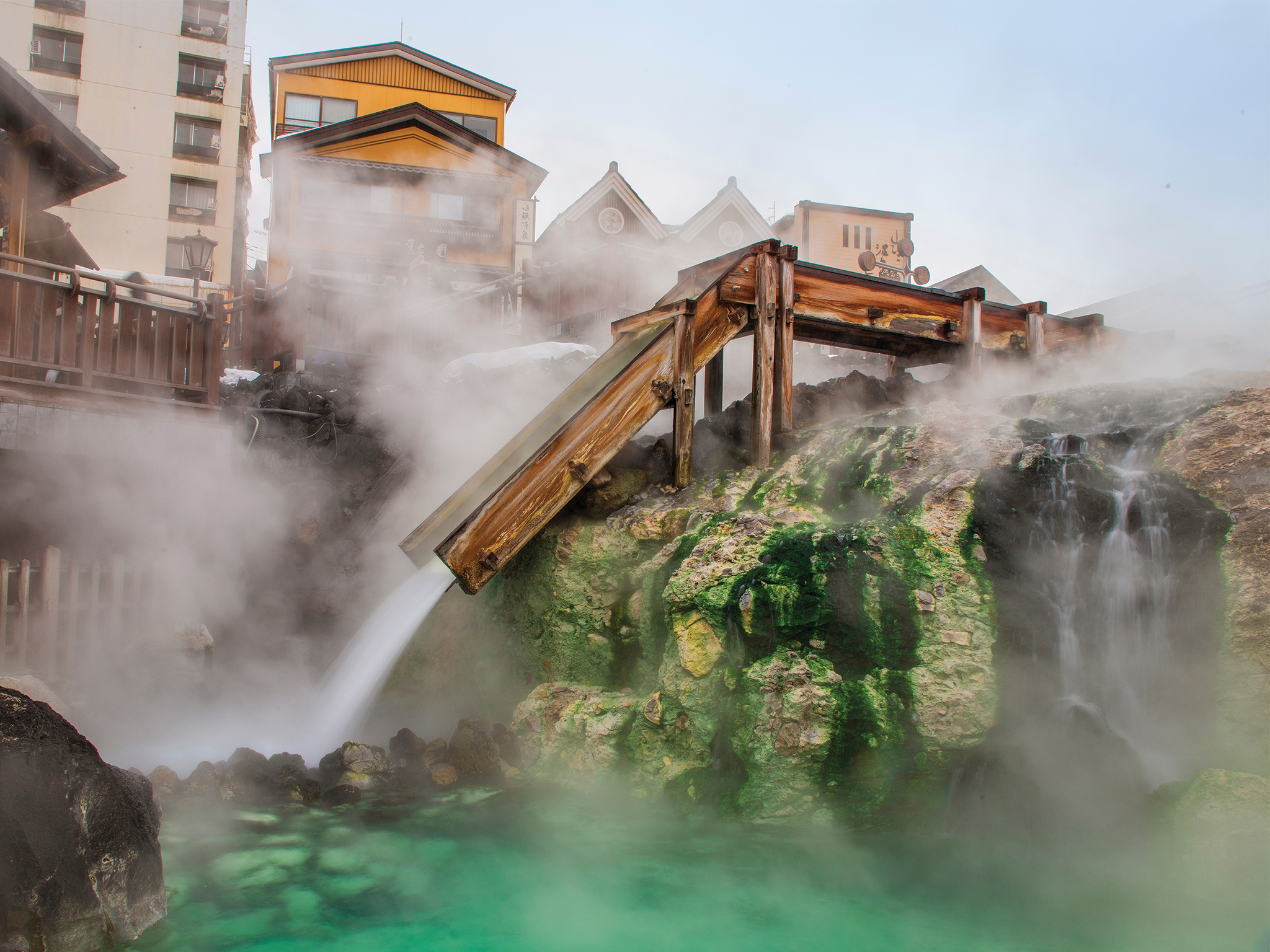
The Yubatake, or “hot water field” of Kusatsu
At the heart of the town is a yubatake, or a hot-water field. Thick, mineral-rich spring water gushes out here before cooling naturally as it runs through wooden aqueducts that deliver the water to different onsen around town. Kusatsu is also known for yumomi, a traditional way of cooling hot spring water without adding cold water. Using large wooden paddles, the hot water is stirred in a rhythmic motion, often accompanied by folk songs and dance shows that are performed to the public six times a day.
When it comes to bathing, Kusatsu has plenty of well-known spots. Sainokawara Rotenburo, one of Japan’s largest outdoor baths, is especially popular, particularly in winter when snow piles up around the steaming pools. Otakinoyu offers a series of baths known for beautifying the skin, while smaller public baths like Shirahata-no-yu, Chiyo-no-yu and Jizo-no-yu are easy to drop into while walking around town.

A yumomi ceremony
While you’re there, don’t forget to snack on onsen manju (steamed sweet buns), try local dishes like hot udon or grilled river fish, browse small souvenir shops and stroll around in yukata between soaks. In warmer months, there are easy hikes nearby; in winter, the town’s ski slopes add another reason to visit.

Yufuin Onsen in Oita Prefecture
Other Standout Onsen Worth the Trip
While Kusatsu topped the “most want to revisit” ranking, the survey also highlighted other onsen towns that people are either quietly obsessed with or dreaming about visiting.
Yufuin Onsen, in Oita Prefecture, ranked first as a “dream destination” — a place respondents haven’t yet visited but hope to someday. Ginzan Onsen also ranked highly, known for its nostalgic, postcard-perfect streets lined with gas streetlamps and charming vermillion bridges. Meanwhile, Beppu climbed up the popularity rankings thanks to its variety of hot spring experiences, and in fifth place, Hakone continues to draw visitors with its convenience and easy access from Tokyo.
The survey also looked at so-called “hidden gems,” factoring in how often a place was recommended compared to how many people had actually visited it. Nyuto Onsenkyo in Akita once again stood out, praised for its secluded atmosphere, natural surroundings and deeply relaxing baths.
Related Posts
- Japan’s Best Onsen Towns
- The Legendary Onsen of Kyushu: Immerse Yourself in Myth
- Must-Try Japanese Bath Salts for an Authentic Onsen Experience at Home
Updated On January 20, 2026