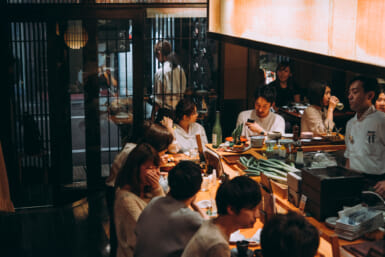
Tokyo is a true haven for architecture lovers. In each of its distinct neighborhoods, you can often spot a dynamic patchwork of eras: century-old wooden structures stand alongside postwar concrete experiments and ultramodern skyscrapers.
This year’s Tokyo Architecture Festival, running from May 16 through May 24, pauses to examine this layered environment. For one week, private owners, corporations and cultural institutions are opening doors to properties that define different chapters of the city’s modern identity, highlighting the continuity between past design innovations and current urban landscapes.
While several guided tours and lottery-based registrations are already closed, a significant portion of the festival is designed for independent visitors. Here are 12 properties we recommend checking out at your leisure — none of them requires advanced registration, and most are free to enter.

Courtesy of Tokyo Architecture Festival 2026
Buildings To Explore
1. Nihombashi Mitsukoshi Main Store (Nihombashi)
A towering monument of Western classical style, the Nihombashi Mitsukoshi Main Store stands as an Important Cultural Property designed by Yokogawa Komusho (now known as Yokogawa Architects & Engineers). For the festival, a special exhibition is being held in the main building’s rooftop elevator hall. On display are archival construction photographs, original blueprints and preserved historical materials from over a century of architectural stewardship, demonstrating how a monumental department store dynamically updates itself while safeguarding its structural soul.
Where: 1-4-1 Nihonbashi Muromachi, Chuo-ku (Directions)
When: May 16–May 24, 10 a.m.–7 p.m.
Price: Free
More Info: https://2026.kenchikusai.tokyo/program/24-01/

Courtesy of Tokyo Architecture Festival 2026
2. Kyu-Iwasaki-tei Gardens (Yushima)
Located near Ueno Park, this ornate mansion is the work of Josiah Conder, often referred to as the “father of modern Japanese architecture.” It is the former residence of the Iwasaki family, who founded the Mitsubishi conglomerate. In addition to its unique billiard room opening, the site is running a special promotion: all visitors who declare they are attending the Tokyo Architecture Festival upon ticket purchase will receive an exclusive commemorative architectural postcard.
Where: 1-3-45 Ikenohata, Taito-ku (Directions)
When: May 23–24, 10 a.m.–5 p.m.
Price: Standard admission fee of ¥400 required
More Info: https://2026.kenchikusai.tokyo/program/11-01/

Courtesy of Tokyo Architecture Festival 2026
3. Noa Building (Kamiyacho)
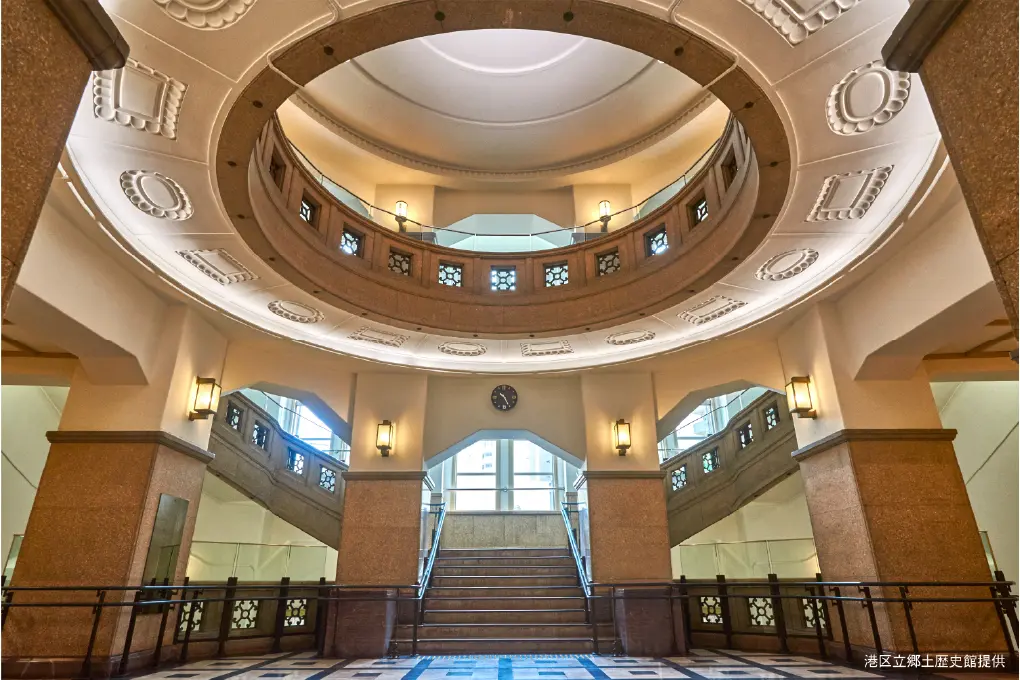
Rising as a dramatic sculptural landmark at the Azabudai-Iikura intersection, the Noa Building is a masterwork by the philosophical architect Seiichi Shirai. The structure contrasts a rugged brick base with a striking, oxidized oval tower. Visitors are welcome into the first-floor main entrance and basement lobby area to witness an interior landscape defined by sweeping arches, polished black granite reflections, snaking circulation routes and a cosmic ceiling lighting scheme.
*This building requires same-day registration. Online waiting list sign-ups open on the morning of each public opening day.
Where: 2-3-5 Azabudai, Minato-ku (Directions)
When: May 20–May 22, 10 a.m.–5 p.m.
Price: Free
More Info: https://2026.kenchikusai.tokyo/program/17-03/

Courtesy of Tokyo Architecture Festival 2026
4. Minato City Center for Traditional Culture (Mita)
Originally constructed in 1936 as the Shibaura Kyo-do Kaikan, this extraordinary wooden structure has been meticulously preserved by Shigeru Aoki Architect & Associates and reinforced to withstand earthquakes. Visitors can immerse themselves in early Showa era regional history while admiring the structural ingenuity that earned it the Good Design Award and the Excellence in Seismic Retrofitting Award. The special opening allows rare access to areas normally closed to the public, including the back staircases and backstage dressing rooms.
*Please note that socks are required to enter.
Where: 1-11-15 Shibaura, Minato-ku (Directions)
When: May 23, 10 a.m.–5 p.m.
Price: Free
More Info: https://2026.kenchikusai.tokyo/program/16-05/

Courtesy of Tokyo Architecture Festival 2026
5. Keio University Old Library (Akabanebashi)
Completed in 1912 by pioneer architects Tatsuzo Sone and Seiichiro Chujo, this elegant Gothic-revival brick masterpiece has survived both the Great Kanto Earthquake of 1923 and wartime air raids. Now converted into a historical exhibition pavilion, the Important Cultural Property opens its doors to showcase beautiful interior staircases, elaborate stained-glass fixtures and a collection of precious architectural drawings and panels detailing the university’s heritage.
Where: 2-15-45 Mita, Minato-ku (Directions)
When: May 16, May 18–May 23, 10 a.m.–5 p.m.
Price: Free
More Info: https://2026.kenchikusai.tokyo/program/28-03/

Courtesy of Tokyo Architecture Festival 2026
6. Meiji Seimei Kan (Hibiya/Nijubashimae)
Hailed as a pinnacle of Showa era classical revival architecture, the Meiji Seimei Kan features a majestic Corinthian colonnade overlooking the Imperial Palace. While its beautifully restored first floor offers a permanent historical showcase, the festival features an exclusive giant “photomontage” display of the long-lost Mitsubishi Building No. 2, which occupied this exact plot before Meiji Seimeikan’s construction in 1934.
Where: 2-1-1 Marunouchi, Chiyoda-ku (Directions)
When: May 16–17, May 19–24, 9:30 a.m.–7 p.m.
Price: Free
More Info: https://2026.kenchikusai.tokyo/program/23-01/

© Casa Batllo © Pere Vivas / Triangle Books. Please note the photo depicts Casa Batllo in Barcelona, not the exhibition.
7. “Gaudí: Windows on the Future” at 21_21 Design Sight (Roppongi)
Commemorating the centenary of Antoni Gaudí’s passing, this special satellite exhibition organized by YKK AP unpacks the legendary Catalan architect’s revolutionary window designs. Adapting the concept of the main exhibition held at the World Heritage Palau Güell in Barcelona, this presentation explores how Gaudí synthesized light, ventilation and artistic craftsmanship, utilizing architectural models, research findings and documentary footage tailored specifically to Gallery 3.
Where: 21_21 Design Sight, Gallery 3, 9-7-6 Akasaka, Minato-ku (Directions)
When: May 16–July 12, 10 a.m.–7 p.m. (Closed May 26 and June 23)
Price: Free
More Info: https://2026.kenchikusai.tokyo/program/47-02/
Courtesy of Tokyo Architecture Festival 2026
8. Shibaura House (Mita/Tamachi)
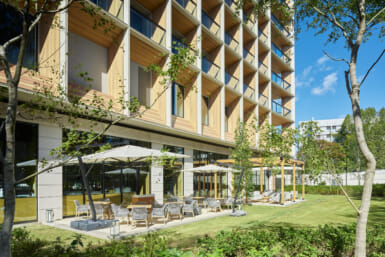
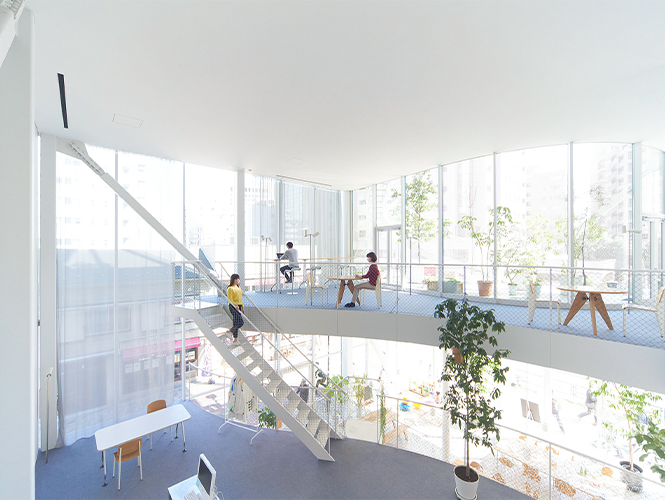
Designed by Pritzker Prize laureate Kazuyo Sejima and completed in 2011, Shibaura House is a masterpiece of contemporary transparency. For the festival, this iconic building — normally only accessible during weekday business hours — will host a special evening opening. Visitors can observe how its glass facade, curved structural staircases and newly incorporated accommodations interact under evening illumination, transforming the depth and texture of the shared open space.
*The 4th floor requires visitors to remove shoes.
Where: 3-15-4 Shibaura, Minato-ku (Directions)
When: May 23, 5–8 p.m.
Price: Free
More Info: https://2026.kenchikusai.tokyo/program/16-04/
Courtesy of Tokyo Architecture Festival 2026
9. Kajima KI Building (Akasaka)
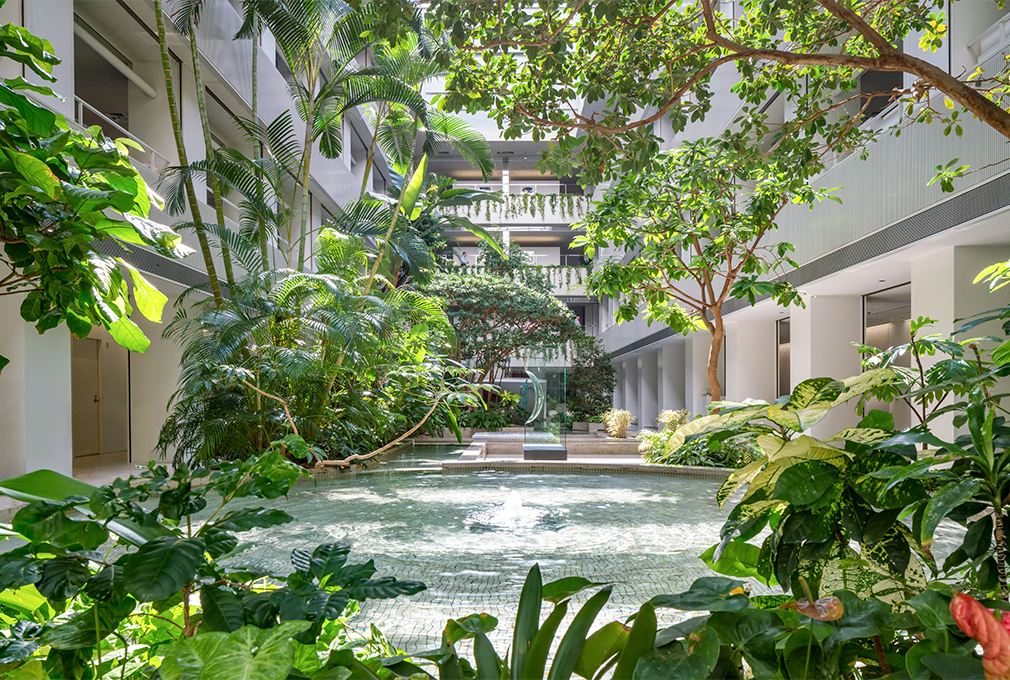
The Kajima KI Building beautifully showcases the intersections of corporate engineering, workspace wellness and environmental art. Centered around an expansive, light-filled indoor atrium that blends interior and exterior environments, the open house displays scale models of space architecture, advanced automated construction robotics, corporate forestry initiatives and immersive 3D spatial audio demonstrations utilizing Kajima’s proprietary OPSODIS technology.
Where: 6-5-30 Akasaka, Minato-ku (Directions)
When: May 23–24, 10 a.m.–5 p.m.
Price: Free
More Info: https://2026.kenchikusai.tokyo/program/17-06/
Courtesy of Tokyo Architecture Festival 2026
10. Minato City Local History Museum (Shirokanedai)
Housed inside the majestic former Institute of Public Health building constructed in 1938, this structure is a premier example of “Uchida Gothic,” designed by visionary architect Yoshikazu Uchida. Characterized by its scratch-tile facade, symmetrical U-shaped layout and soaring pointed arches, the building opens its usually hidden rear steel-framed grand roof area exclusively for festival participants.
Where: Inside Yukashinomori, 4-6-2 Shirokanedai, Minato-ku (Directions)
When: May 23–24, 10 a.m.–5 p.m.
Price: Free
More Info: https://2026.kenchikusai.tokyo/program/18-01/
Courtesy of Tokyo Architecture Festival 2026
11. Hamacho Future Lab (Ningyocho/Suitengumae)
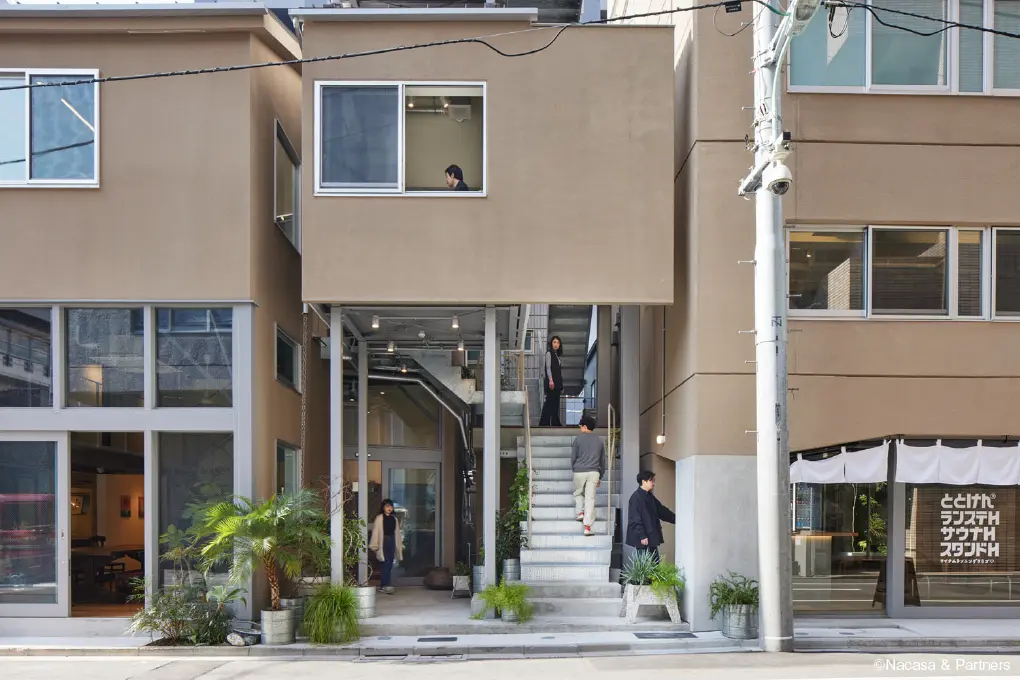
An innovative project in urban adaptive reuse, the Hamacho Future Lab merges two separate decades-old structures — one timber-frame and one reinforced concrete — into a unified workspace. Designed collaboratively by Wact Architects & Planners and Saisei Laboratory, the project converted noncompliant spaces into an asset through strategic “subtractive architecture” (reduction of floor area). The public is invited to tour Wact’s office space, which proudly retains original structural timber alongside contemporary interventions.
Where: 3-9-8 Nihonbashi Hamacho, Chuo-ku (Directions)
When: May 23–24, 10 a.m.–5 p.m.
Price: Free
More Info: https://2026.kenchikusai.tokyo/program/14-05/
12. Okada Building (Otemachi)
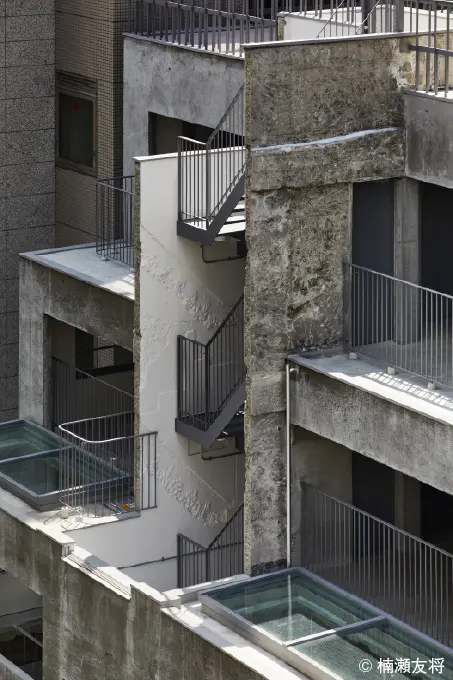
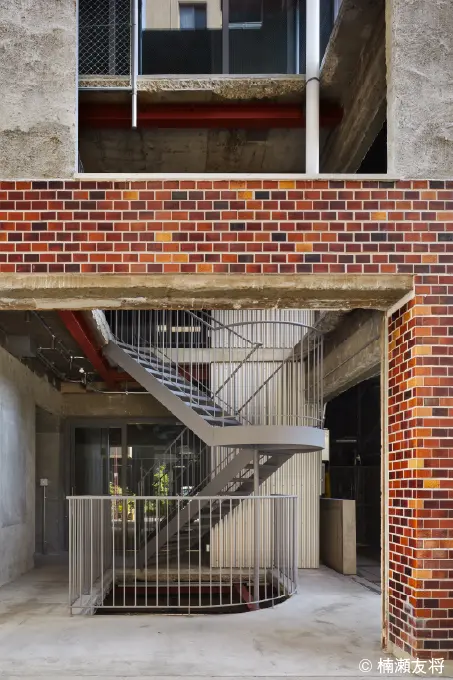
Built in 1969, the Okada Building is a celebrated archetype of modern structural rejuvenation. Evolving zoning laws saw the building become noncompliant, but by boldly reducing its overall floor area, the design team at Saisei Laboratory successfully brought the building into full legal compliance while maximizing daylight penetration and cross-ventilation. This highly awarded structure opens its communal access ways, office levels and open-air rooftop to the public.
Where: 2-9-15 Kanda-Nishikicho, Chiyoda-ku (Directions)
When: May 23–24, 10 a.m.–5 p.m.
Price: Free
More Info: https://2026.kenchikusai.tokyo/program/12-03/
About the Tokyo Architecture Festival 2026
Festival Period
May 16–May 24, 2026. The primary public openings and architectural showcases are concentrated on the final weekend: May 23 and May 24.
Admission Costs
All listed special public openings and special exhibitions are entirely free of charge. (Note: Kyu-Iwasaki-tei Gardens requires a standard park admission fee of ¥400 for adults.) Guided tours and separate formal events are generally paid programs.
Queueing System
To minimize extended wait times on-site for popular locations like the Noa Building, a digital “waiting list sign-up” (online numbered ticketing) will be implemented. Visitors must secure their designated entry slots online on the morning of the respective public openings. Links and specific distribution times will be shared via the official website and social channels. Entries will be guided by time slots, and registration will close once capacity is reached.
Weather Policies
Events proceed rain or shine. In the event of severe weather warnings (such as typhoons or gale storms), operations will be suspended. Cancellations will be announced on the official website two hours prior to opening times.
Learn more about Tokyo Architectural Festival 2026 at the official website.
Related Posts
- Tokyo’s Arimasuton Building: A Concrete Masterpiece Made Entirely by Hand
- Kioi Seido: Tokyo’s Enigmatic ‘Building With No Purpose’
- Lesser-Known Art Museums in Tokyo
Updated On May 18, 2026