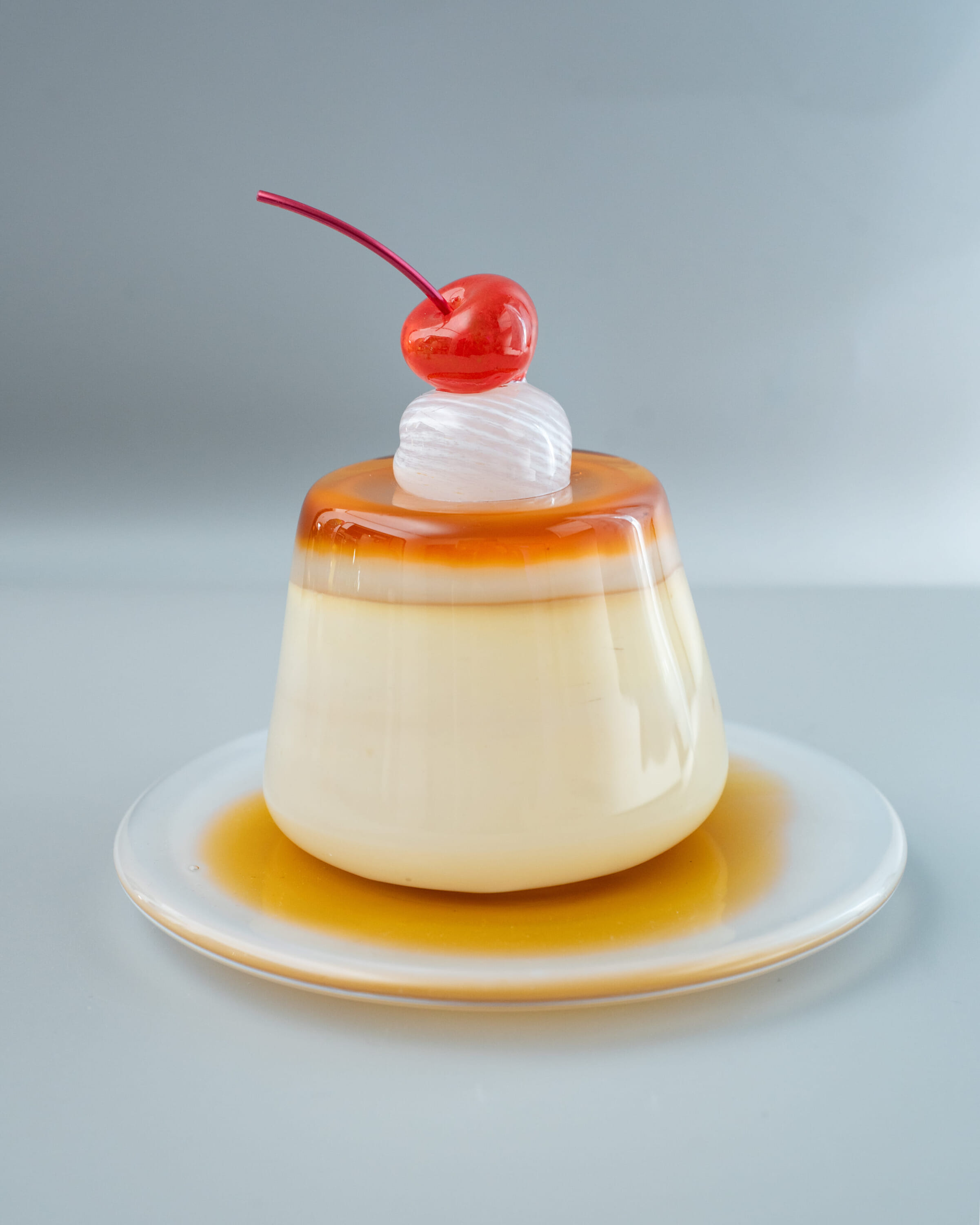
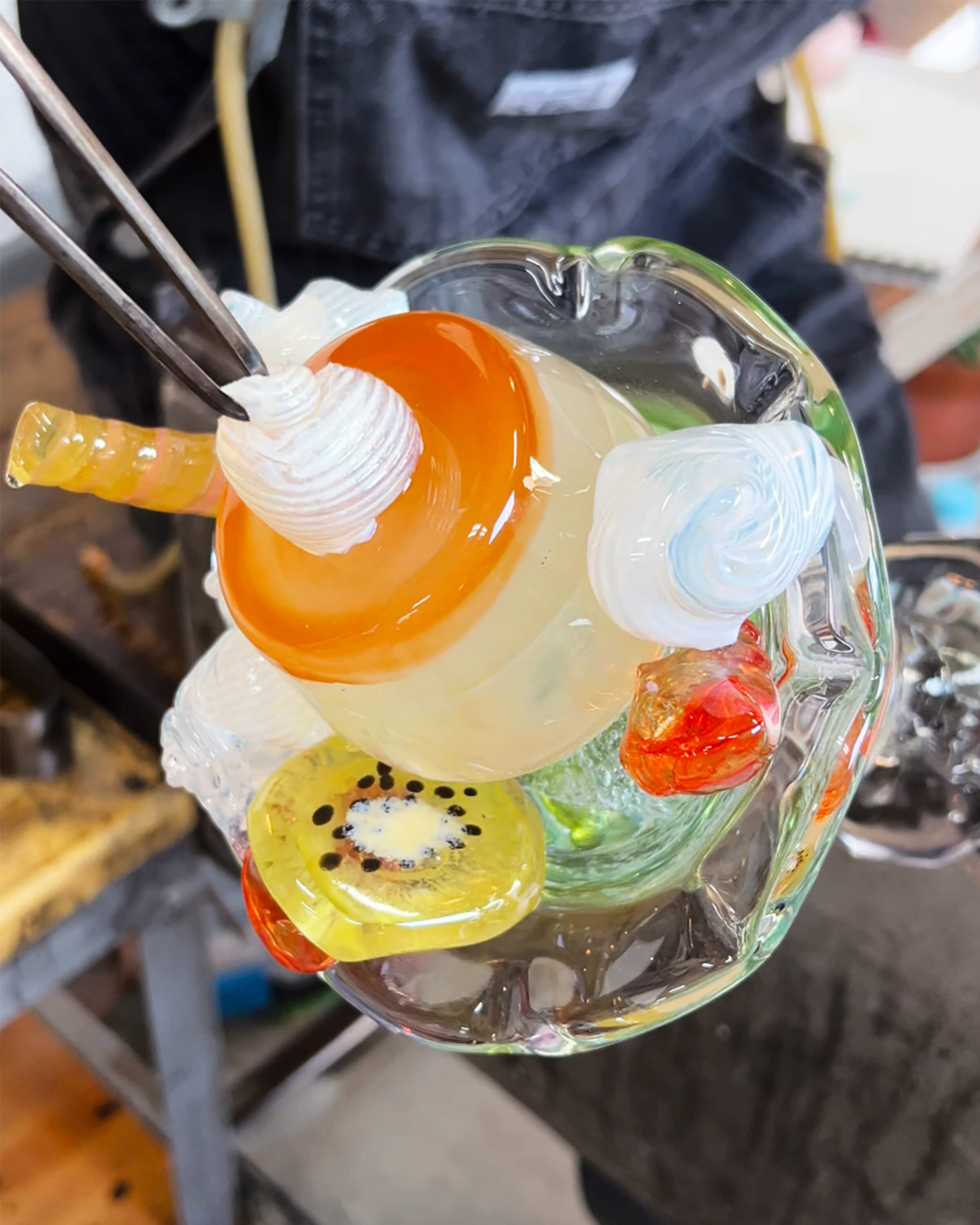
Picture a simple pudding: the kind you might find at an old kissaten, tottering aloft a small plate, its caramel pooling slightly at the base. A dollop of whipped cream sits on top, and a single cherry crowns it. Now imagine picking it up and finding it completely solid and cool to the touch. It weighs nothing like food should. It will never melt. It was made from a single breath of molten glass.
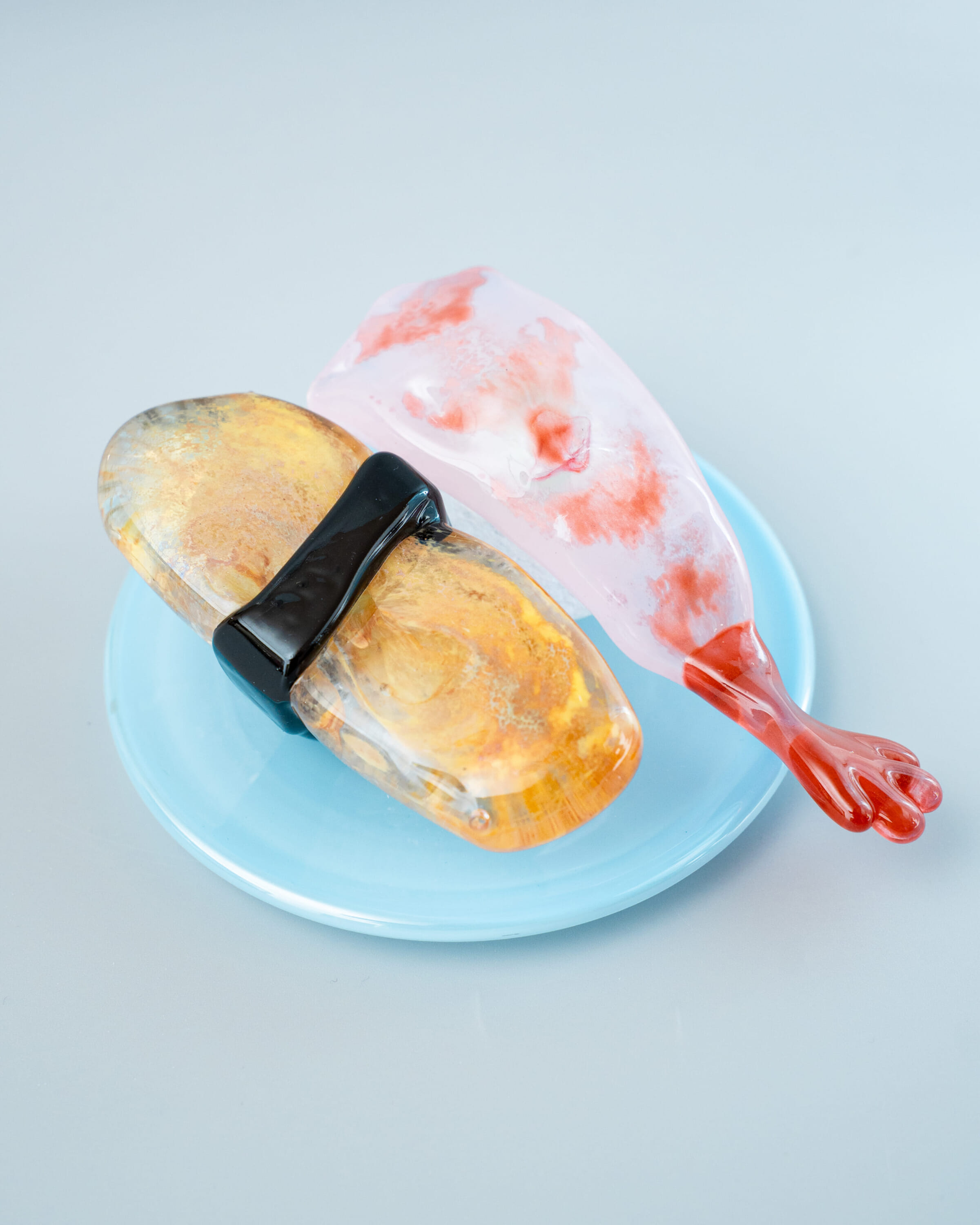
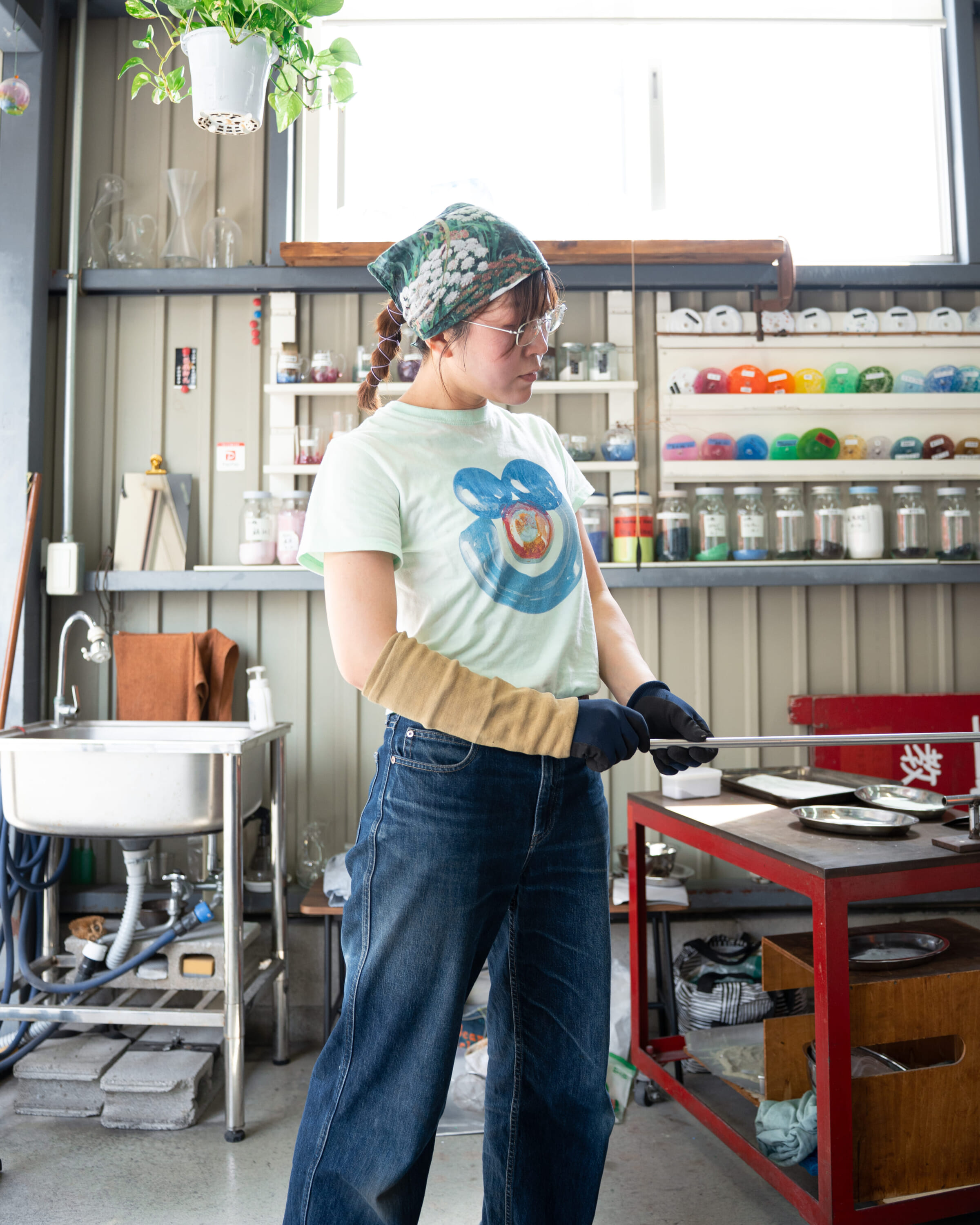
This is the kind of object Miwa Ito specializes in. The Osaka-based artist has built a following of around 320,000 on Instagram by blowing glass into charmingly quotidian shapes. Although her main practice centers on whimsical, blob-like mugs, saucers and vases, what really draws attention is her astonishingly complex glass food sculptures — a hot dog drizzled with chili sauce, a donut dotted with rainbow-colored sprinkles, a transparent piece of gyoza, lightly charred.
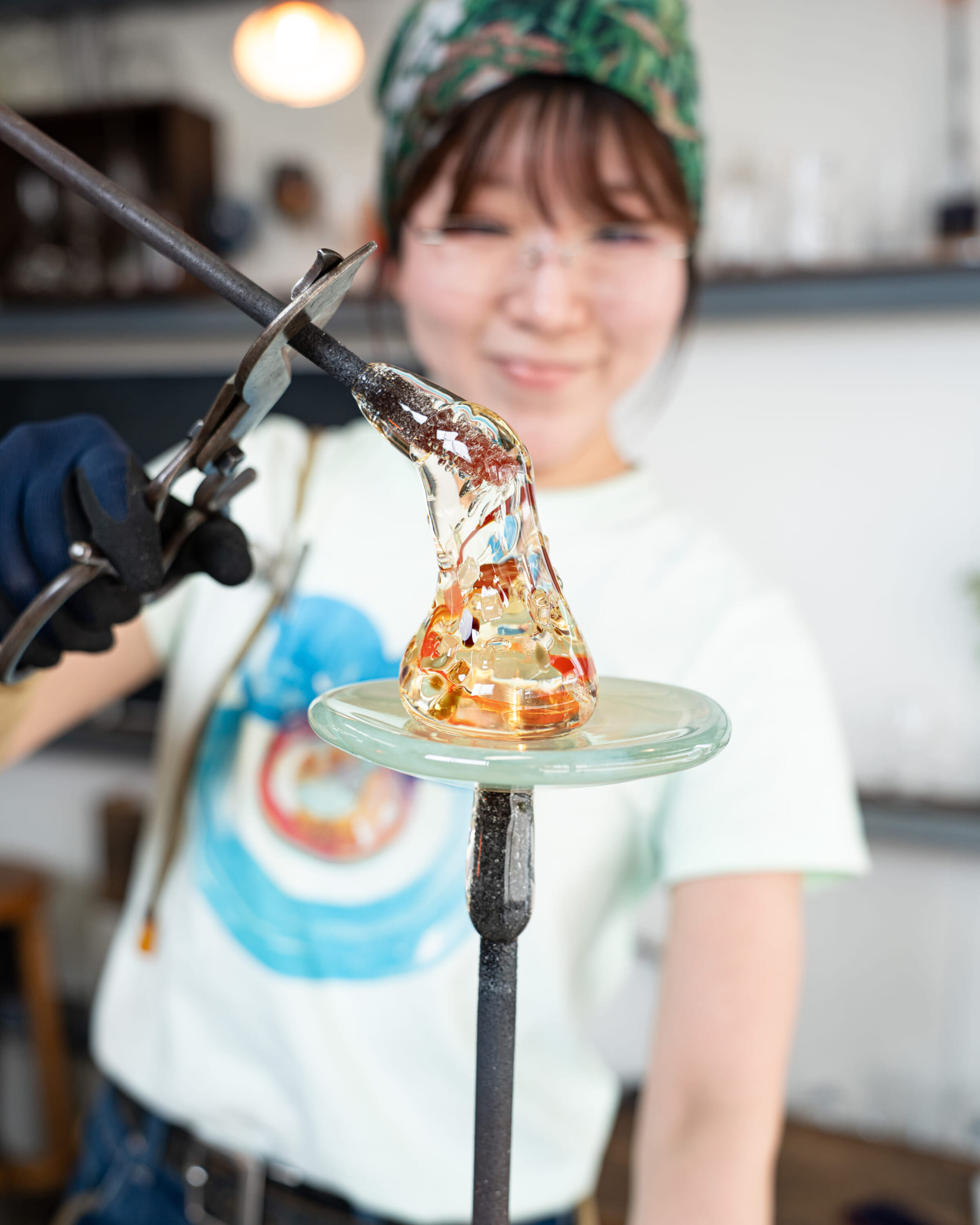
Each one begins as a molten blob of glass on the end of a blowpipe, coaxed — by breath, heat and gravity — into something that looks edible, familiar and completely impossible.
Goofy Goblets and Slime Mugs
Ito began working with glass at Kindai University in Higashiosaka — something she feels was almost inevitable. “I’ve loved transparent, squishy, slime-like things ever since I was a child,” she tells TW. “I could spend hours just looking at them and touching them, and I feel like that fascination naturally led me to glassblowing. The first time I saw molten glass glowing yellow, it struck me deeply, and I felt, ‘This is the material I’ve been looking for.'”
Since graduating in 2018, Ito has worked full time at GGG Glassblowing Studio in Osaka, where her day-to-day centers on the functional glassware the studio is known for — delicate mugs, saucers and vessels, each handblown and unique. Alongside that, she has quietly built her own artistic practice with a signature style that sits somewhere between craft and cartoon.
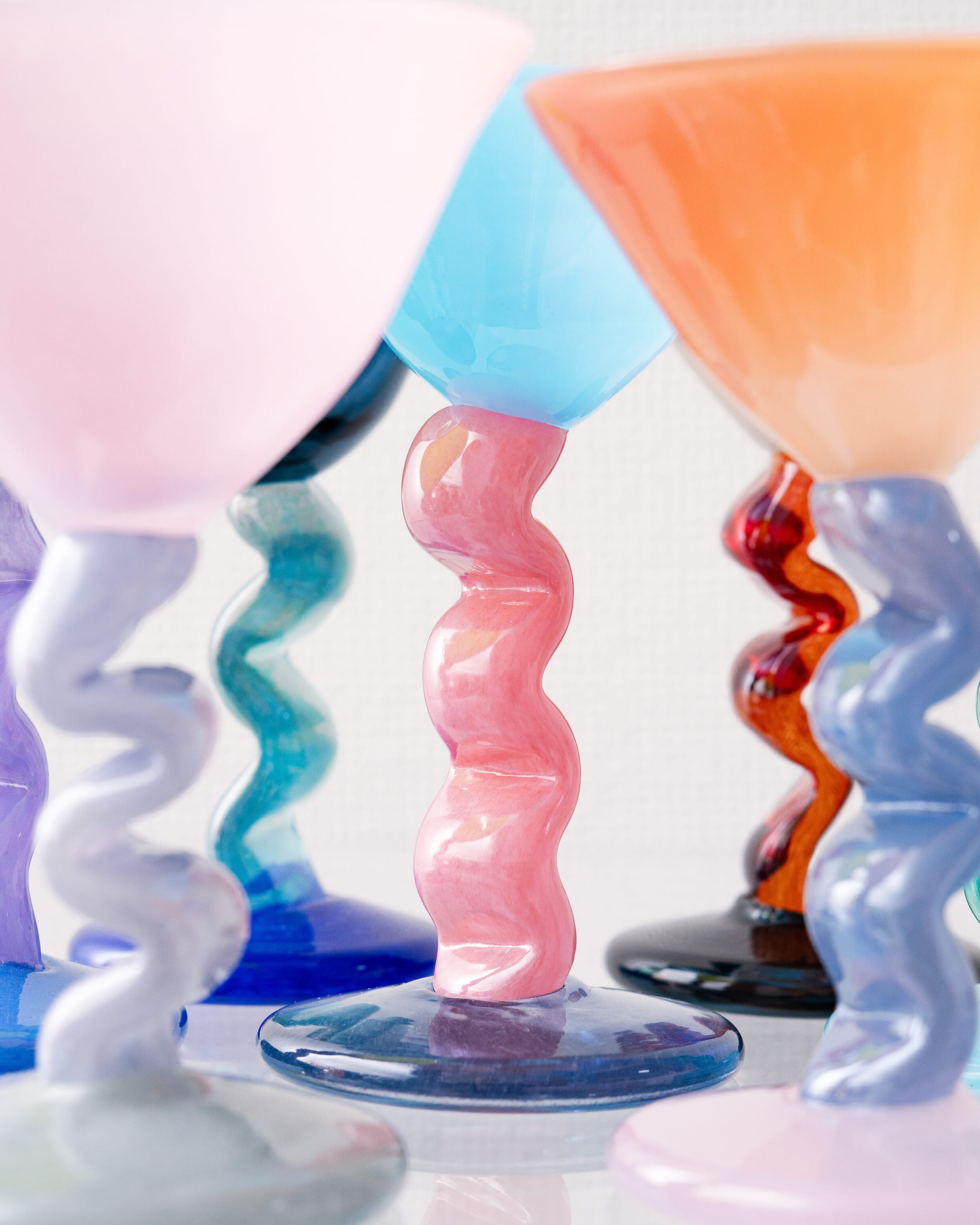
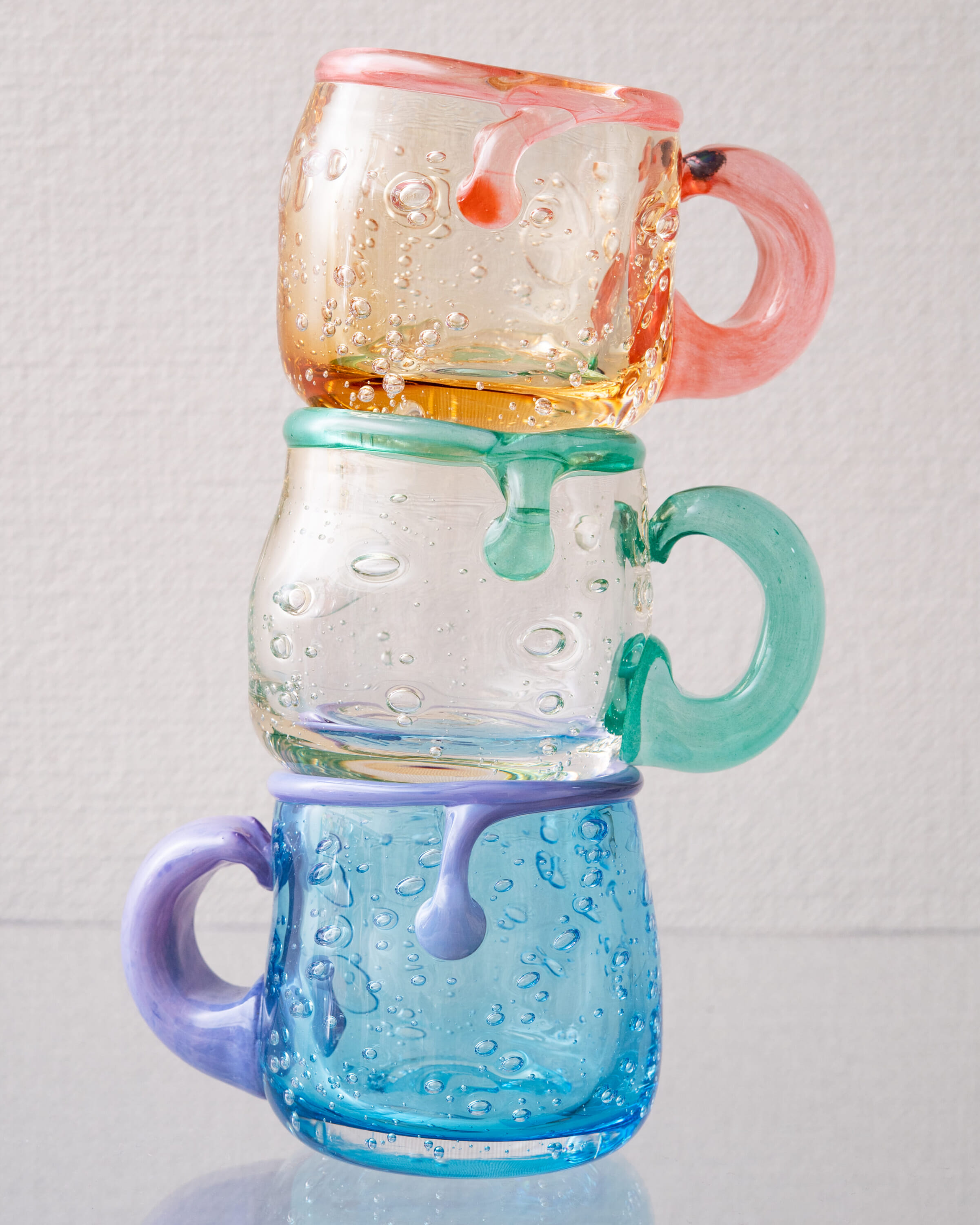
Her Goofy Goblets, for instance, are tall, wobbly drinking glasses in bright primary colors that look like they might tip over at any moment. Her Slime Mugs bubble and warp at the surface as if the glass is still moving. And her Chubby Mugs — squat, round-bellied little cups barely taller than they are wide — look like something you’d spot in a shot of Tinker Bell’s pantry in a Disney movie.
Over the years, she’s held multiple solo exhibitions across the globe, in London, Taipei, Fukuoka and Seoul, as she’s found an audience for work that sits somewhere between craft object and collectible. But it’s on social media that her work has spread the most. In 2024, Ito launched a new project called Glassman poo poo, dedicated specifically to exploring and sharing the process of glassblowing itself.
It was through this channel that the food sculptures first took off. She began filming herself making them from scratch — “cooking” in real time, trimming, pulling and shaping molten glass into a hot dog, a plate of fried rice, a bowl of ramen — and the reels spread rapidly, even among audiences that don’t really pay much attention to traditional arts like glassblowing.
“The response to my work [on Glassman poo poo] last year encouraged me to move further toward creating pieces as art,” she says. “When I make a piece, I think of it as [something] that I would want to leave behind for the future. Because glass does not deteriorate, I believe it has the power to carry the thoughts and intentions embedded within it across time.”
The Spirit That Dwells in Everything
At first glance, Ito’s work reads as pure, exuberant play. The pop culture influences are right there on the surface — Ito grew up on American cartoons as well as Japanese anime and manga, and she was deeply influenced by their bold use of color, their sense of playfulness and the powerful worlds they create, where the impossible is accepted without explanation. That sensibility runs directly into her work: bright, a little absurd and completely committed to its own logic.
But there’s a deeper meaning underlying her work, too. Ito was raised in a household with strong Shinto beliefs, where prayer was embedded in daily life. Shinto — Japan’s indigenous spiritual tradition — holds that gods and spirits, known as kami, reside in all living things and natural phenomena. Growing up with that worldview, Ito developed an early sensitivity to the invisible. “Believing in things that cannot be seen became something very intuitive to me,” she says. “My source of inspiration always lies within these invisible, quiet sensations of reverence.”
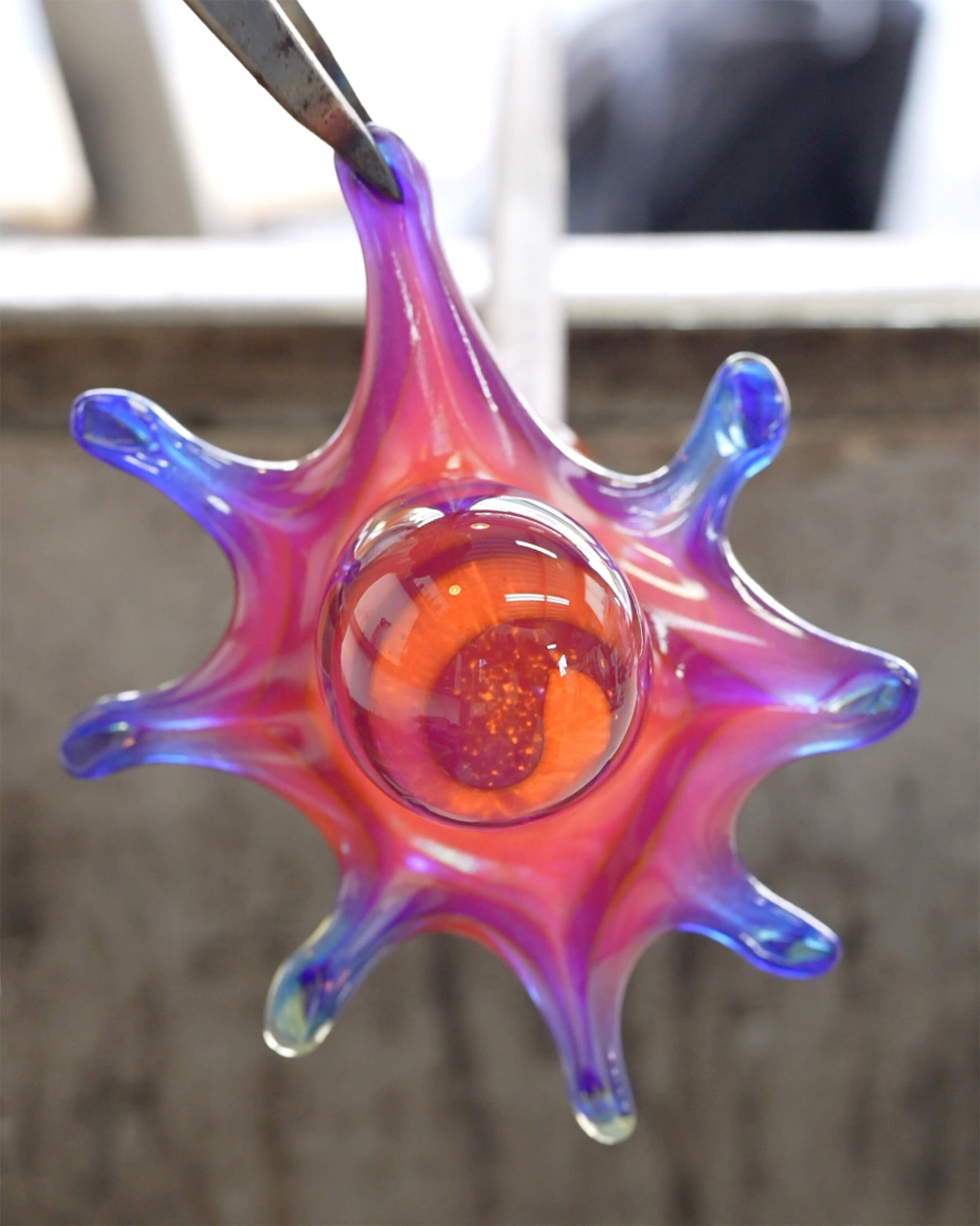
Rather than feeling like she’s giving shape to her objects, she feels like she is discovering a form that’s already there: “I always try to approach the material of glass with as much care and empathy as possible. During the making process, I often feel as though I am being moved and guided by the glass itself. This comes from my belief that nature is alive and something to be respected.”
These two sides of her — the playful and the reverent — are not in conflict, she insists, but rather “naturally connected.” When Ito blows a glass fish or a plate of omurice, she’s not merely making a charming object, but also thinking about what food actually means. In Japanese, the phrase “itadakimasu” — said before eating — holds layers of meaning beyond simply beginning a meal. It is an expression of gratitude: to the life that was given, to the farmers and the cook, and to the body that is healthy enough to eat.
Ito aims to incorporate this idea inside the glass food she makes, too. “I want to convey respect for everything behind the daily table — life, the earth, family, the environment — in a fun and warm form,” she says.
Love the Earth
There’s a phrase Ito uses in the artist statement published on her website: “Love the Earth.” She says this is the theme she’s been working toward through glass all along. It’s a concept rooted in how she was raised, in the country she was born into and in the serendipitous way she found this material. “Glass,” she writes, “is itself a fragment of the earth, shaped by fire, air and gravity. Working with it never quite feels like making something. It feels like living alongside nature.”
“I feel that this is my life’s path,” she says. “Being born in Japan, growing up with Shinto … and, by good fortune, encountering glass and acquiring the skills to work with it — these elements have all come together. To engage with glass each day with respect, to refine my spirit and to create work that can be carried into the future — this feels like a role that has been entrusted to me through my practice.”
More Info
Follow Miwa Ito on Instagram at @miwaito.official.