Japan sure does love cats … right? There are definitely a lot of them in anime, though usually heavily anthropomorphized — basically humans with cat ears (known as nekomimi). But that doesn’t really feel like it counts. And what about Hello Kitty, you ask? According to Sanrio, the world-famous character is actually a little girl and not a cat at all.
Come to think of it, the most famous cat in Japanese culture is probably Doraemon, a robot from the future who basically looks like two blue circles stacked together, a shape … rarely seen in nature when it comes to felines.
So, does Japan actually like real cats? Oh, it definitely does. More than you can imagine. Here’s an abridged history of cats in Japanese culture:
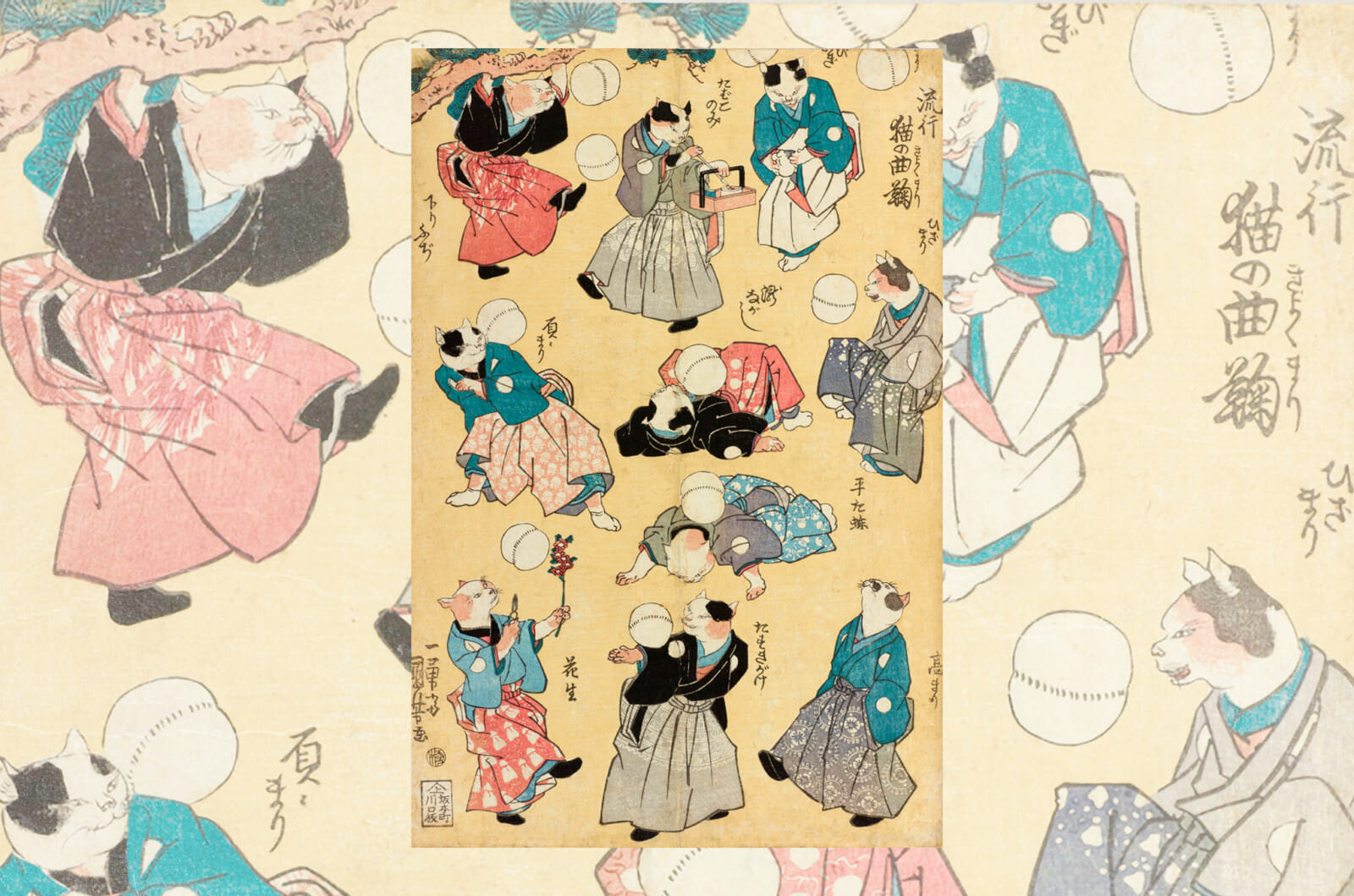
“Fashionable Cats Juggling Balls” by Utagawa Kuniyoshi (c. 1841)
From Sacred Protectors to Mind-Reading Imperial Companions
The oldest evidence for the domestication of cats in Japan comes from an archaeological dig on Iki Island in Nagasaki Prefecture that uncovered 2,100-year-old cat bones. It took a few more centuries for the animals to spread to the rest of Japan, where they quickly left their mark. Literally. The oldest evidence for the domestication of cats on mainland Japan is a cat paw print impression preserved on a 1,400-year-old piece of Hyogo pottery, the closest thing to a keyboard at the time.
It’s speculated that cats initially arrived on Iki via traders from the Korean Peninsula, but were brought over from China in larger numbers by Buddhist monks back when their religion was first being introduced to Japan in the sixth century. It wasn’t (just) for their company — cats were important to Buddhist priests because they hunted mice and rats, protecting sacred Buddhist scriptures from becoming sacrilegious rodent lunch.
In other words, when cats were first introduced to Japan in bulk, it was as semi-holy animals. And because there were relatively few of them in the country at first, they became highly prized by royals and aristocrats.
The first written mention of cats in Japan comes from the diary of Emperor Uda (867–931), who kept one as a pet. You may have read something about it online, especially the part where Uda supposedly wrote, “I am convinced it is superior to all other cats.” Cat owners, right?
Well, unfortunately, that’s not really the right translation. Japan content creator Linfamy explained that the diary entry actually reads: “Furthermore, its skill in swiftly catching mice at night surpasses other cats.” However, that doesn’t change the fact that Emperor Uda was 100% obsessed with his cat, writing in 889: “Though it is a small creature, my affection for it is profound.” He also believed that his cat could understand him when he talked to it. Cat owners, right?
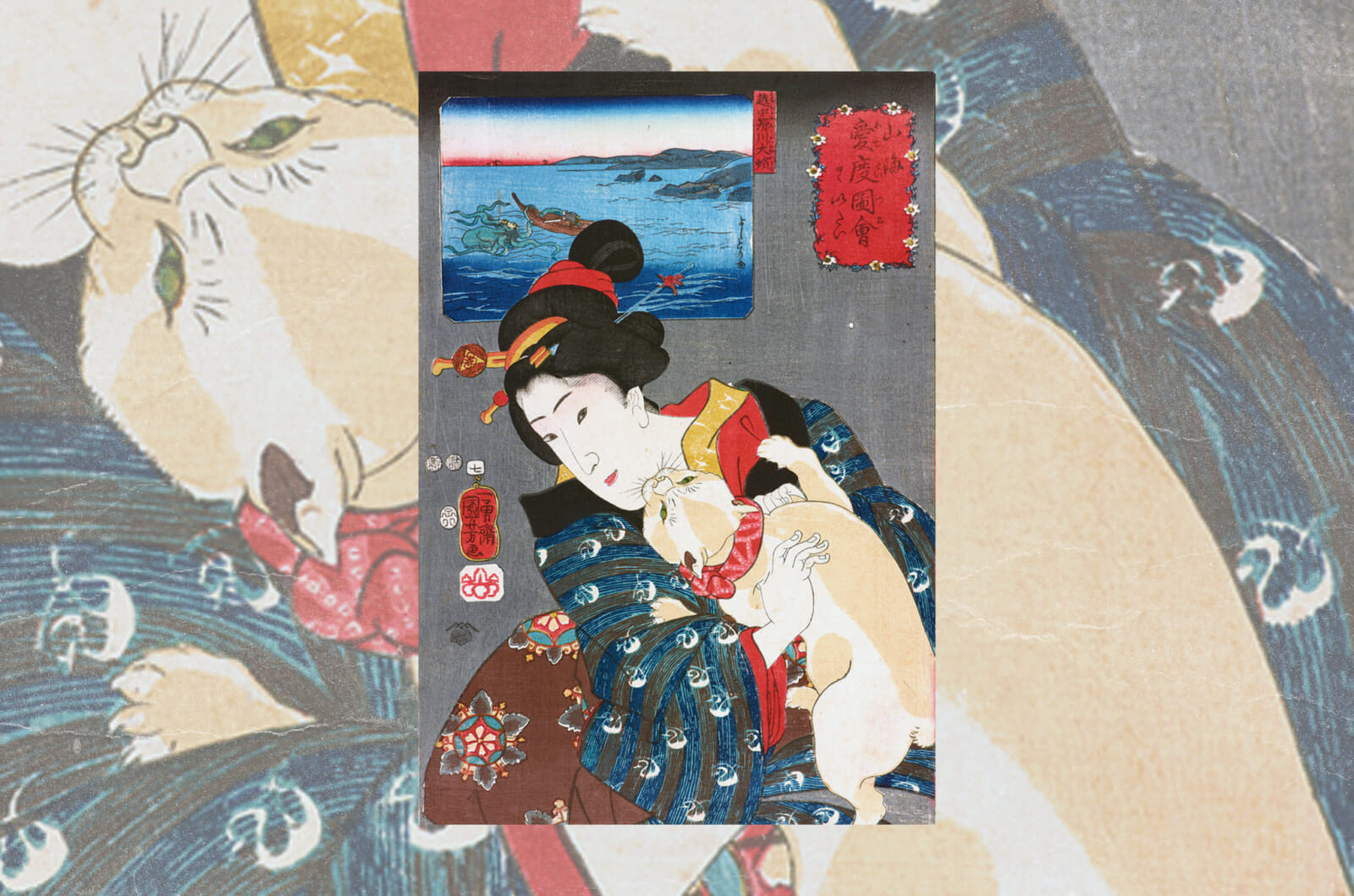
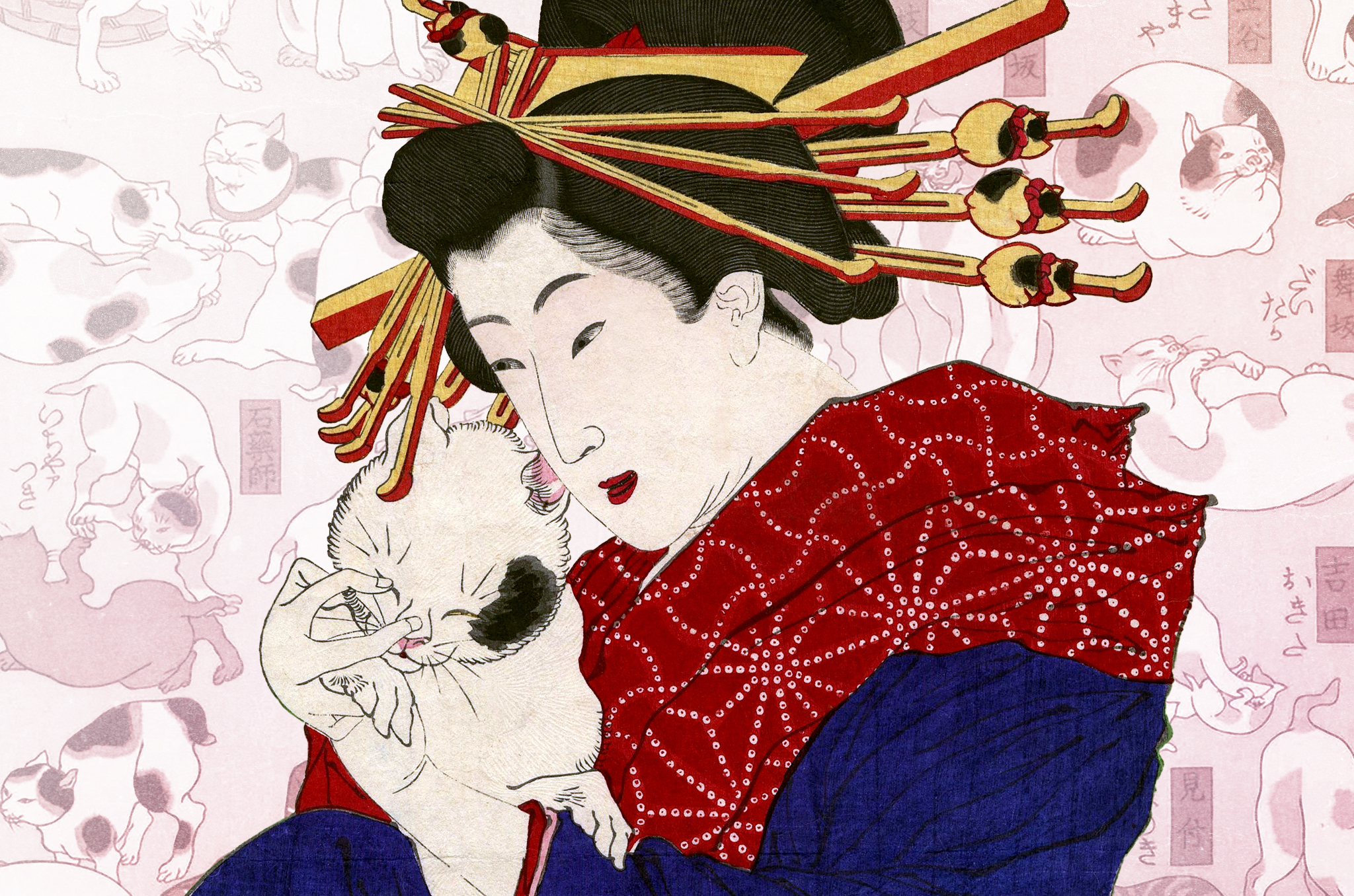
Red-collared cat with courtesan in “Oh, That Hurts!” by Utagawa Kuniyoshi (1852)
‘That’s the Honorable Lady Furbaby to You!’
During the Heian period (794–1185), cat ownership became a big thing among Kyoto’s aristocracy. The domesticated animals were still extremely rare, so being seen with one was like flashing an expensive sports car today. It also helped that they came from China at a time when everything Chinese was considered refined and high-class. Classical Chinese was the court language of Kyoto and all those of “proper” breeding. Even Emperor Uda’s diary was written in Chinese.
As such, the loss of a cat would have been a terrible blow, both personally and to one’s status. Therefore, cat leashes and collars were common. Red was the prevailing color. Cute, but it also meant that aristocratic cats spent most of their time tied up. Perhaps they got some free time in a secure room, but otherwise, no owner would risk letting their cat roam free.
It wasn’t just about protecting valuable property. The people of the Kyoto court simply didn’t want their cats to come to harm; they basically looked at them as little furry people. But unlike modern cat ladies, Japan’s blue bloods had much better ways of expressing those feelings.
Emperor Ichijo (980–1011) was another noted historical cat-lover who gave his beloved pet an official court rank, which later became its name. Ichijo was the owner of Myobu no Otodo, with the first and third word both meaning “noblewoman” or “female court official.” It was the ancient Japanese equivalent of naming your cat “Dr. Whiskers,” only with Myobu no Otodo, the title was official thanks to imperial power and made the cat a Fifth-Rank courtier, putting it somewhere in the middle of the entire Kyoto hierarchy. Maybe Emperor Ichijo thought it would motivate the cat to try and climb that court rank ladder?
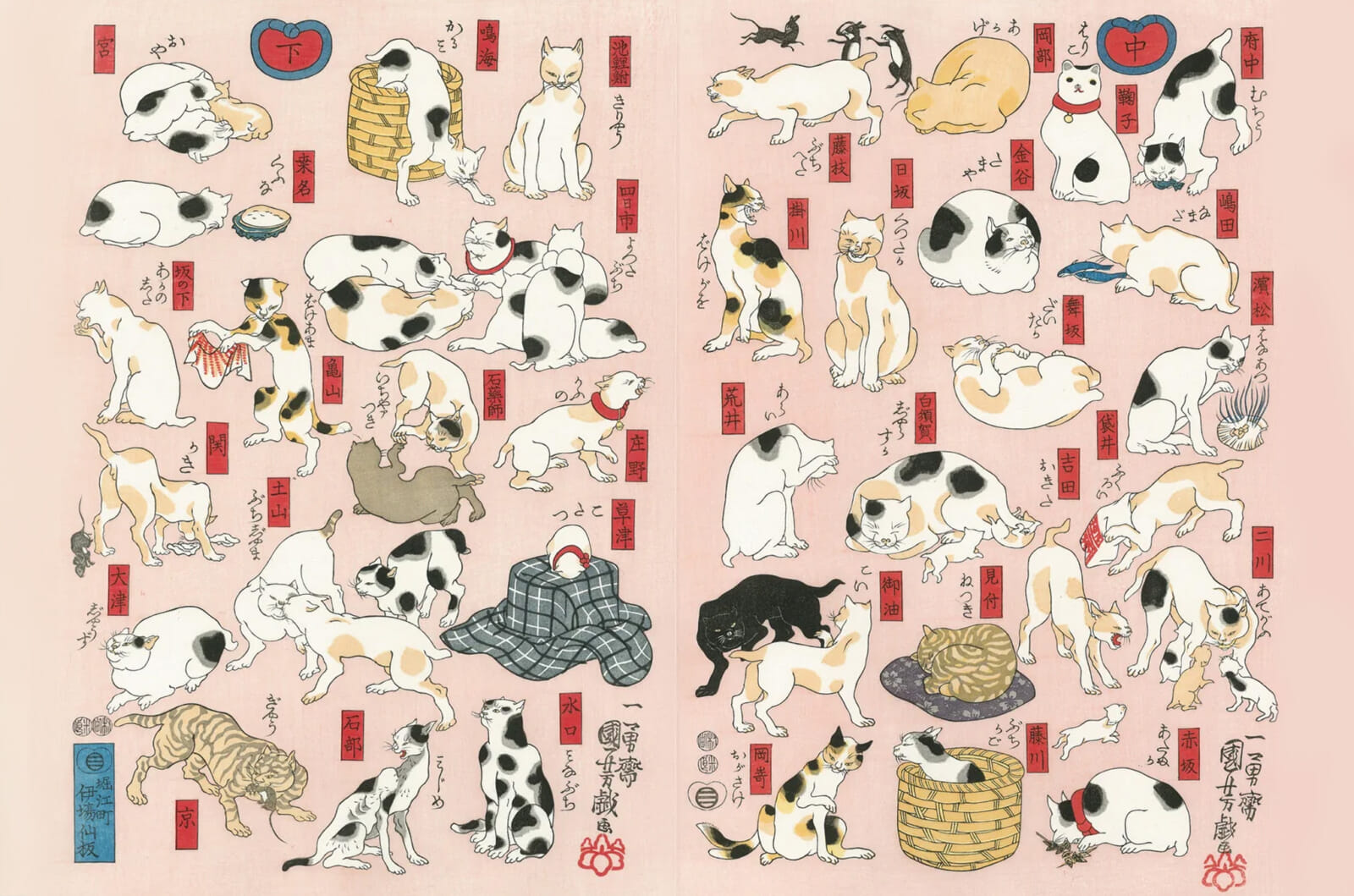
“Cats as the Fifty-three Stations of the Tokaido Road” by Utagawa Kuniyoshi (1852 – panels 1 & 2 of triptych)
Cats Saved One of Japan’s Most Important Industries
After the Heian period, the cat population in Japan steadily increased, helping cat ownership spread beyond royals and aristocrats. Initially, it was a way for the wealthy to imitate the habits of Kyoto nobles, but soon even farmers and merchants found themselves taking care of furry little companions for the same reason as the Buddhist priests.
Cats hunting mice and rats protected important things like rice and silkworms. Cultivating silkworms was actually one of the most important jobs for Japanese peasants. They themselves were often forbidden through official government decrees from wearing silk, but they were expected to keep making it for the rich and powerful. (Same situation as with rice, honestly.) Cats made producing silk a lot easier, which is why — just like at the Kyoto Imperial Palace — it wasn’t unusual to tie a cat up in the silkworm space to make sure it was always on duty.
But that, apparently, wasn’t enough.
By the early 1600s, the human population of Kyoto was booming — and so, too, was the rodent population. To help control the latter, in 1602, the Tokugawa shogunate ordered all domestic cats to be released to fight the ongoing silk crisis. The goal was to allow cats more chances to … mingle … and raise their population. Of course, they didn’t say that part out loud, as it would be impossible for any ruler to retain their authority if they told people they wanted their pets to have more sex. Vibes aside, the math worked: More cats meant more dead rats, fewer dead silkworms and a better-protected sericulture industry.
The Edo period (1603–1867) was really the golden age for Japanese cats. Now free-roaming, they saved Japan’s silkworms, introduced Japanese people to the concept of semi-ownership and became part of everyday life across the country. Soon, they became a staple of urban art, often as stand-ins for people — there’s just something in the human brain that makes a person happy when they see a cat in human clothing or poses.
Cats even inspired Japanese mythology by acting like, well, cats. Lanterns in the Edo period used fish oil, and cats, keen for a taste, would stand on their hind legs, licking at the lanterns. This created monstrous shadows on the walls, helping to make cats one of the most popular shapeshifting supernatural creatures in Japanese myths and legends.
That’ll do, cats. That’ll do.