

On July 15, 2006, director Mamoru Hosoda released his technically second but spiritually first anime film: The Girl Who Leapt Through Time. His debut was a One Piece feature from a year prior, but with its follow-up, Hosoda got the creative freedom to explore his emerging, unique style. Two decades later, the director’s filmography includes many internationally acclaimed works and one Academy Award nomination, but did it all start with The Girl Who Leapt Through Time or did he first have to get all the bad ideas out of him before becoming a great director? Let’s find out.
One Line that Flips Time-Travel Conventions on Their Head
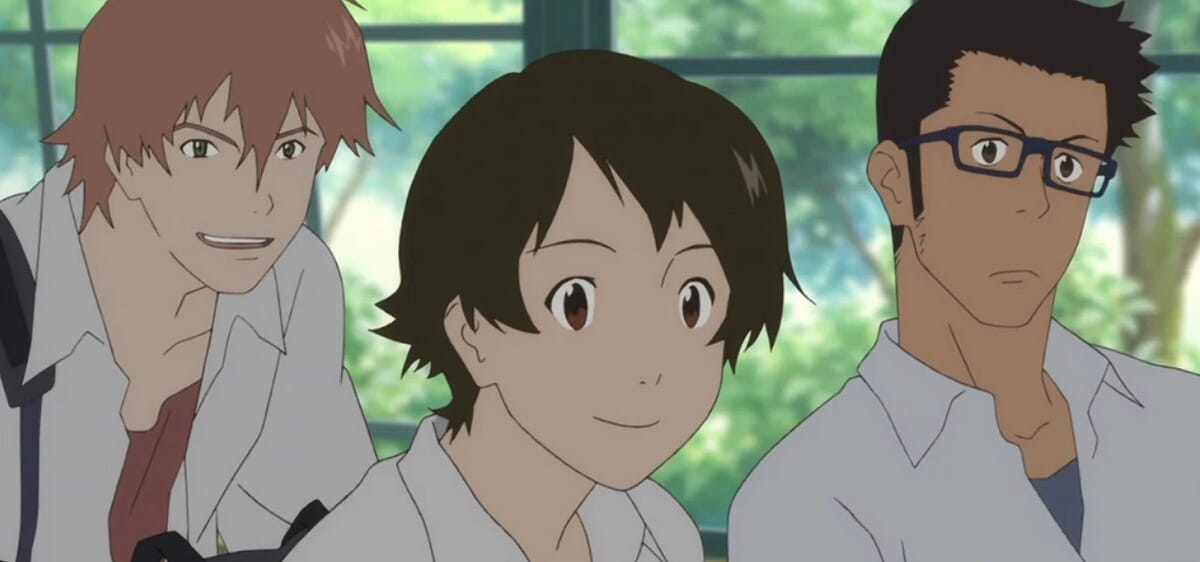
The Girl Who Leapt Through Time tells the story of high-schooler Makoto who suddenly gains the ability to travel back in time. At first, she uses her powers frivolously, like to eat her favorite foods. But in typical time-travel movie fashion, it turns out that meddling in the past, even in the tiniest of ways, can have dire consequences, like accidentally getting two people killed. This gets fixed in the end with the help of a friend who turns out to be from the future, but the lesson is inescapable: Don’t do time-travel, kids. You never know what consequences your actions might end up having.
We’ve seen this dozens of times before. But in the last few minutes, the movie briefly dives much deeper into the idea. If changing the past can radically alter the present, then everything we’re all doing right now, no matter how small, is constantly creating the future. When you think of it like that, every step you take should terrify you because you have no idea how it will butterfly-effect in a year, a decade, a century. At the same time, there is a lot of power in this realization.
With the right person, it can motivate them to go out there and change the world for the better. Makoto turns out to be that right person, using her new-found perspective to vow to protect a beautiful painting that her time-traveling friend came to the past to see so that everyone can enjoy it in the future. The Girl Who Leapt Through Time was hardly the first movie to play with the idea of changing the present for a better tomorrow, but by keeping the details vague, the message in the anime becomes more inspirational. It’s not “don’t do this specific thing so that a specific bad thing won’t happen” but rather “you have the power to shape the future.” And it’s all established beautifully through one line when Makoto promises to make the most out of her time on Earth.
Embracing Change
The most times that Makoto jumped back in time was when a friend confessed having feelings for her and she tried over and over to avoid having that awkward conversation. It’s not that she didn’t like the boy per se, but them dating would destroy the routine of her daily life. It’d be a big change, and through the first half of the movie, Hosoda establishes pretty clearly that Makoto doesn’t like change.
Makoto is constantly indecisive about everything, from her classes to what she wants to do when she grows up. It’s perfectly fine to have doubts, but Makoto’s problem goes beyond that. She doesn’t like choosing because any choice is a step forward, and she wants to stay exactly as she is now, where it’s cozy and safe and familiar. Though she doesn’t realize it, she’s stuck, trying to stay in a perfect moment of minimal responsibility and to delay having to grow up. The time-travel aspect thus becomes a deeply symbolic mechanic for exploring Makoto’s character.
As the movie repeats over and over again (to the point where you kind of want to yell “OK, we GET IT!”), time waits for no one. It’s a message that appears in different forms throughout the film, and it can be interpreted in a lot of ways. You eventually have to grow up. You can revisit the past for a while but eventually you have to get on with your life. You can’t avoid unpleasant things forever. Or, given Hosoda’s personal experience, the message might be a subtle jab at Studio Ghibli.
The Girl Who Leapt Through Time: An Anti-Ghibli Movie?
Hosoda’s first movie was originally going to be Howl’s Moving Castle, which would instantly put the young filmmaker on the anime map. But he ended up leaving the project due to creative differences, later even stealthily criticizing the way Hayao Miyazaki depicts female characters. It’s not the craziest idea in the world that The Girl Who Leapt Through Time could be a veiled attack on the famous animation studio and its head.
The bulk of Ghibli movies take place in the past. The year is rarely given (with some exceptions) but the world is unmistakably some idyllic version of “what once was,” which is almost always much better than what is. During the “what once was” the food was fresher and tastier, people were nicer and there was more whimsy and literal magic in the world. In the “what once was,” you could linger and take things slow. And as we’ve established, The Girl Who Leapt Through Time preaches pretty much the exact opposite message.
In the 2006 anime, Mamoru Hosoda rejects the nostalgia for and escapism into an idealized past, almost as if he was personally imploring audiences to stop lingering, to stop staring at the clouds and to get their act together. The high-school world of The Girl Who Leapt Through Time has friends and sunny days and a lack of care but none of it ever comes across as something uniquely precious. It’s just something that happens and then it’s over and then other things happen to you. It’s only when Makoto desperately clings to the past that terrible things start to happen in what feels like a rejection of the Ghibli formula.
The Girl Who Leapt Through Time ultimately elevates itself above clichés through imperfect characters, harsh lessons, and possibly the director’s personal grudges. In short, it’s the purest form of art and final proof that Hosoda’s career wasn’t a fluke.