
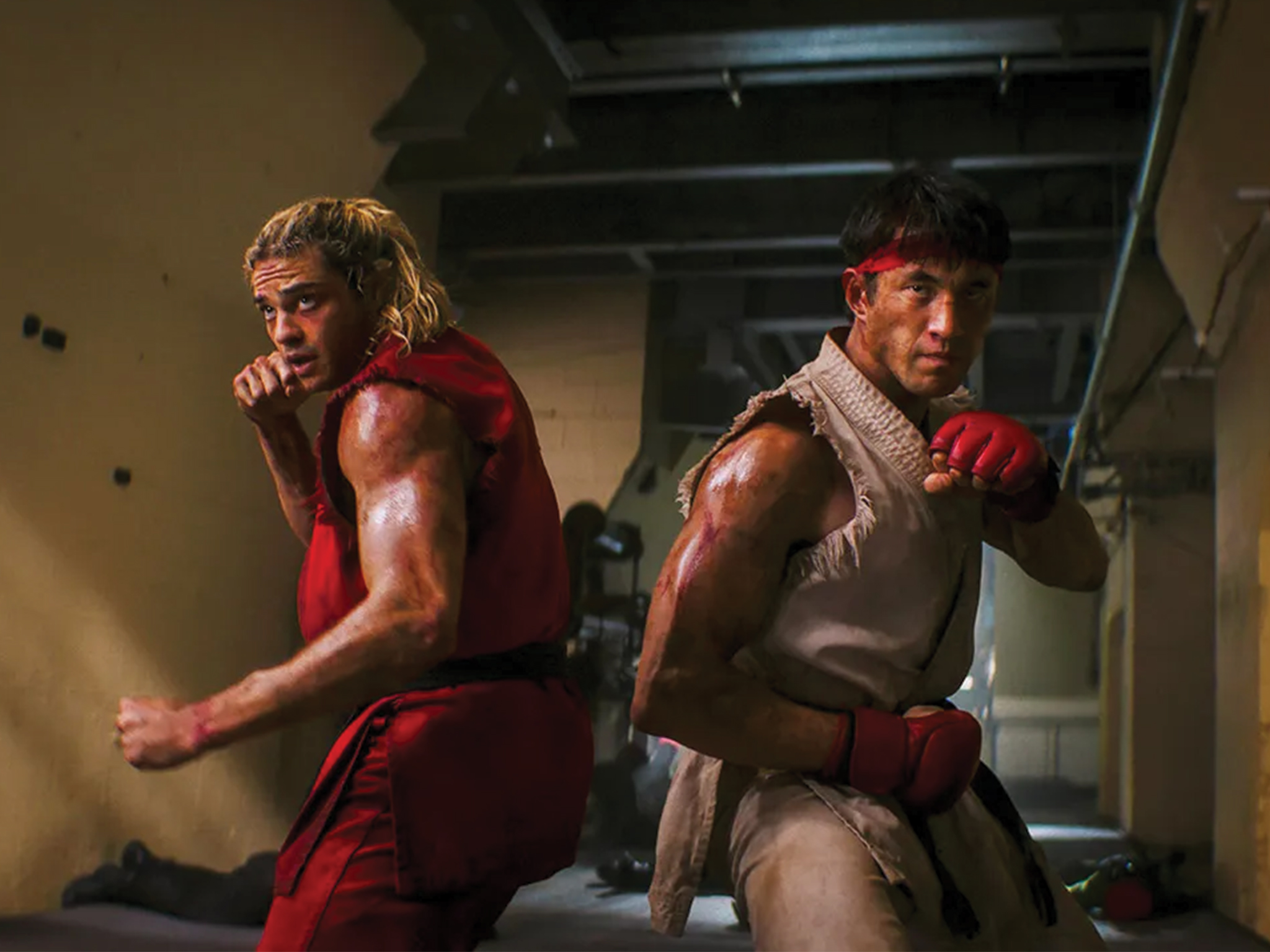
The new Street Fighter movie (dir. Kitao Sakurai) that opened on October 16 seemingly has one of the easiest jobs in the world. Not only is it based on Capcom’s bestselling fighting game franchise in a time when video game adaptations have proven themselves to be commercially and artistically viable, the bar that the film has to clear is Street Fighter (1994). For years considered one of the worst movies ever made, reactions to it have softened over the years but, at best, they basically boil down to “so bad, it’s kind of good.” And if being better than Steven E. de Souza’s film is a mark of success, then Sakurai’s Street Fighter has already won because it’s not bad. It’s good. Even great at times. But that may not matter, at least for Japan. There are a lot of factors at play here.
For Japan, the Movie to Beat Wasn’t the 1994 Adaptation
Japanese audiences did not love Steven E. de Souza’s Street Fighter, but they also didn’t despise it. There were criticisms at shifting the focus away from Ryu and Ken to the American character Guile (Jean-Claude Van Damme), the B-movie feel of it all and the militaristic guns-blazing vibe to the story. The last one is a common and understandable admonition of the film from a country that still deals with monstrous behavior by some members of the US military. But praise was occasionally given to the scope of the 1994 film as well as some of its sets, effects and performances.
The first Street Fighter adaptation is certified “rotten” on Rotten Tomatoes with a score of 20% from both audiences and critics. But Japanese review sites like KINENOTE or Eiga.com give it a much more lenient 51.5/100 and 2.7/5, respectively. That might be because, before watching Steven E. de Souza’s take on the Capcom property, Japan was treated to what many still consider the best possible adaptation of Street Fighter.
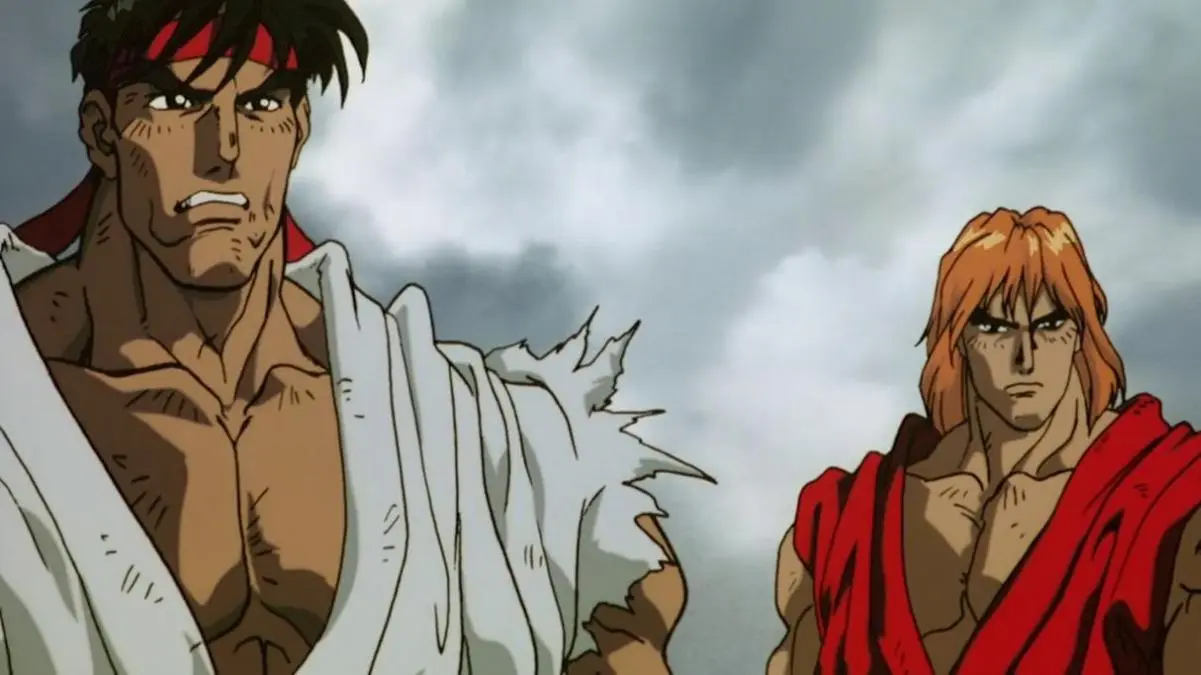
Street Fighter II: The Animated Movie (dir. Gisaburo Sugii) premiered in 1994, a year before the live-action movie was released in Japan. It was a critical and box office success fueled by its faithfulness to the Street Fighter lore and amazing animation. This is the movie that still lives in the pop-culture memory of Japan over 30 years later. This is the movie that Sakurai’s Street Fighter is secretly competing with to attract Japanese fans of the games. And it really did try its hardest.
Street Fighter 2026 Is Uniquely Tailored to Japanese Audiences
Sakurai’s Street Fighter is a live-action movie, but it’s bookended by animated sequences that also pop up throughout the film, courtesy of Titmouse Inc. The scenes are really beautiful, with amazing, fast-paced action. They also technically make a lot of sense since most of the animated parts are flashbacks, which meant that the movie didn’t have to go looking for additional co-stars to play the young Ryu and Ken.
The sequences additionally include a character who might become a big part of the franchise in the future, and introducing him via animation with no lines opens up casting options for a possible sequel. But it still feels like chunks of Street Fighter (2026) are animated to make fans of Street Fighter II: The Animated Movie happy.
On its own, this wouldn’t really be evidence of trying to woo Japanese audiences, but also consider that— slight spoiler alert —the new Guile (Cody Rhodes) is almost comically absent from the movie. The character whose centering was a point of contention for some viewers in Japan actually loses his first tournament fight off-screen. That just smells too much like a deliberate though friendly dig at the 1994 live-action movie. The new film also stars the accomplished Japanese-British actor Andrew Koji as Ryu, casts the popular pro-wrestler Hirooki Goto as E. Honda and even features a prolonged dialogue scene entirely in Japanese. And throughout it all, it doesn’t for one second alienate American viewers.
A Love Letter to the Games
While Koji’s Ryu is one of the central characters of Street Fighter (2026), the movie’s heart is the character’s partner Ken, played by Noah Centineo in a performance of a lifetime. David Dastmalchian as the superpowered dictator M. Bison is also phenomenal, bringing a wonderfully creepy cult leader energy to the big screen, as well as Raúl Juliá’s famous “Tuesday” line from the 1994 film (if you know, you know).
Another thing the film gets right are the fights because it throws realism out the window and fully embraces the wacky atmosphere of the games and the character’s special attacks. But never with a wink or as if it was ashamed that it’s based on a video game. There seems to be genuine love for the Street Fighter games (warts and all) emanating from every scene in Sakurai’s film, which is why it’s such a shame that it might not translate to any kind of success, at least in Japan.
Early Reactions in Japan Are Split
For now, early Japanese reviews of the film are starting to come in, and the verdict so far is divided. Currently, the film’s page on eiga.com, one of Japan’s largest movie sites, is showing a 3.1/5 average. That already beats the 2.7/5 the 1994 film holds on the same site. About half of the scored reviews give 3.5 or 4 stars, one gives a perfect 5, and two give just 1.
The animation, the element the film seems to have built most clearly for Japan, is getting good notices. Four reviewers praise the animated flashbacks, one saying they have more momentum than the live-action scenes, while only one thinks they could have been done in live action. A couple of reviewers say the actors playing Ryu, Ken, Guile and M. Bison are too slim for the game’s muscular fighters. Dastmalchian’s casting as M. Bison is dividing viewers, with some calling the casting genius, while others are saying he lacks menace.
Audiences seem way more responsive to Sakurai’s film in the US where Street Fighter has scored an 84% on Rotten Tomatoes (with the critics giving it just 45%) as of this writing.
As things stand right now, Street Fighter may be heading into the same territory as Mortal Kombat (2021), which was a moderate worldwide success and even got a sequel, but made less than $1 million in Japan and isn’t exactly held up today as the pinnacle of video game adaptations. We’ll have to wait to see what the legacy of the new Street Fighter will ultimately be. In the meantime, catch the film in cinemas to form your own opinion on it.
Related Posts
- 5 Essential Cary-Hiroyuki Tagawa Movies
- New Sega Universe Project Aims To Revive Classic Sega Games
- 7 Relaxing Japanese Games To Cozy Up With This Fall
Updated On October 16, 2026