Back in mid-June, 131 people took the Koka-ryu Ninja Certification Exam in Koka, Shiga Prefecture, one of the centers of Japan’s ninja culture. The test, devised as a way to promote the local heritage of Japan’s famous spy-assassins, awarded extra points for costumes and shuriken-throwing skills, but it was primarily a written assessment that tested participants on their ninja knowledge and history. Interestingly, this was sort of historically accurate. Ninja villages perhaps didn’t look like they do in anime, but ninja exams — at least later in the profession’s history — were a real thing that aspiring shinobi studied for from books, some of which have thankfully survived to modern times. Here’s a crib sheet for the three most famous ones:
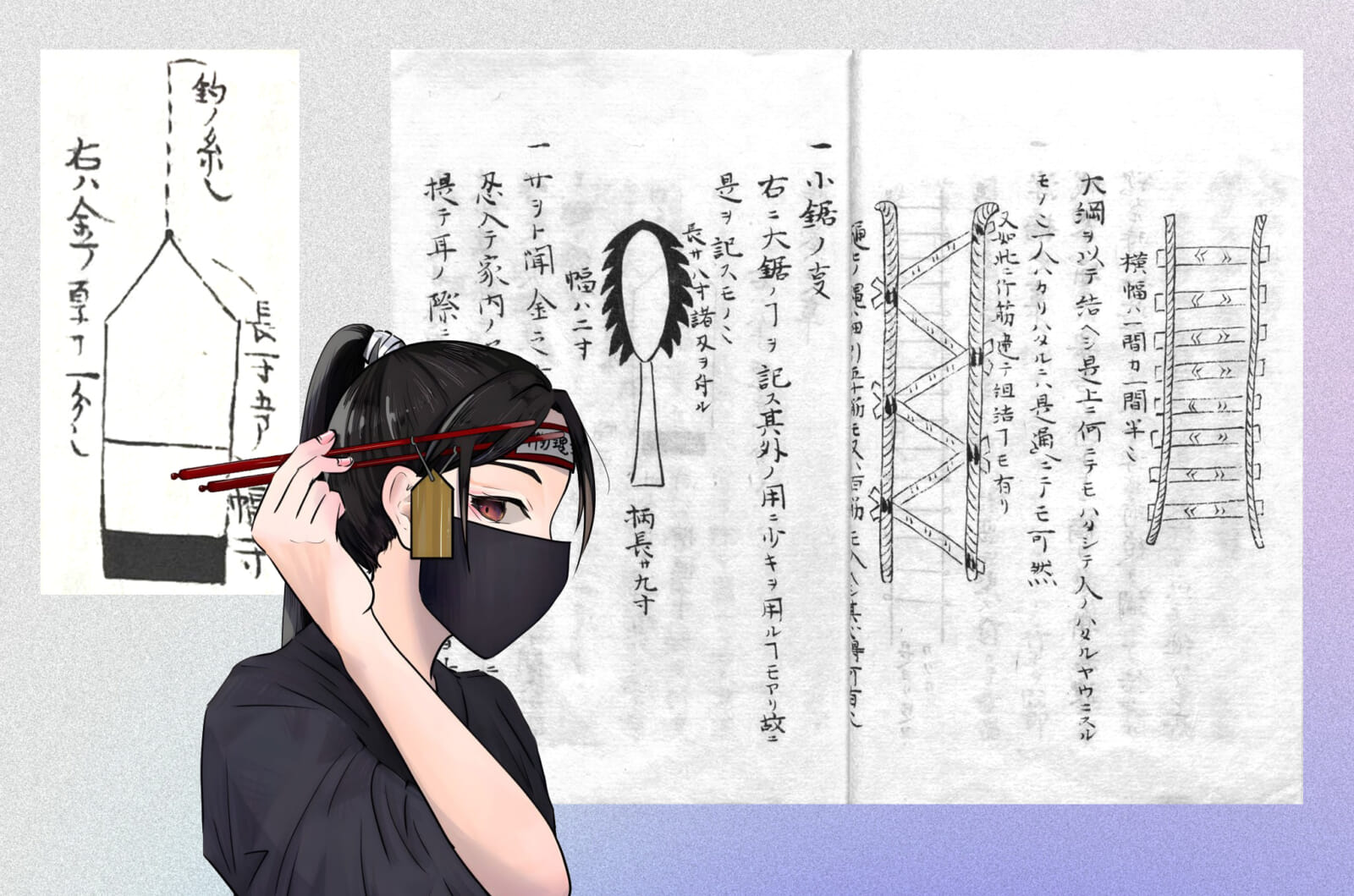
Ninpiden pages showing the “saoto-kikigane” listening device and how it was used (left) and diagrams for a saw and floating bridges (right) | Images: Yamaguchi University
The Ninpiden: Practical Instructions That Sharpen Observation Skills
The Ninpiden (Mysteries of the Ninjas) is a ninja manual that some sources trace back to 1560 and the clan of Hattori Hanzo — arguably the most famous ninja in history. Others, however, challenge this claim and believe that the manual was composed around the 1700s, when Japan was already a century-deep into an era of peace. Regardless of provenance, there’s still a lot to be learned from this guide, which covers, in broad terms, fire (lest we forget that ninjas were expert pyrotechnicians), concealment, equipment, intelligence and water operations, with technical instructions on the construction of all sorts of ninja implements. There were even diagrams!
For example, one illustrated instruction on the construction of the kama sickle shows that the blade should be about 5 sun (approximately 15 centimeters) long and attached to a hardwood handle made from red cinnamon or oak. The metal should ideally be heat-treated. Other equipment that you can learn how to build from the Ninpiden includes floating bridges for crossing moats, climbing hooks and lock-breakers.
But the manual also offers pragmatic advice for people who might get lost in the mystery and coolness of being a ninja, reminding them of things like getting all your gear in order before a mission and double-checking everything you learn in the manual since humans make mistakes. And, indeed, the sickle diagram that we mentioned earlier has a typo in it, saying that the blade should be 5 bu, or 1.5 centimeters long. That’s probably wrong.
What’s most fascinating, though, is just how many things from the ninja book hold up to scrutiny. For example, the Ninpiden describes the saoto-kikigane, a piece of metal suspended from the ear to help ninjas eavesdrop. For the longest time, no one knew how it worked, but in 2022, students at a Yamaguchi high school proved that it reduced high-pitched background noises, making voices easier to make out through walls. Plus, it could be easily explained away as an accessory, allowing ninjas to operate in plain sight: a cornerstone of their profession.
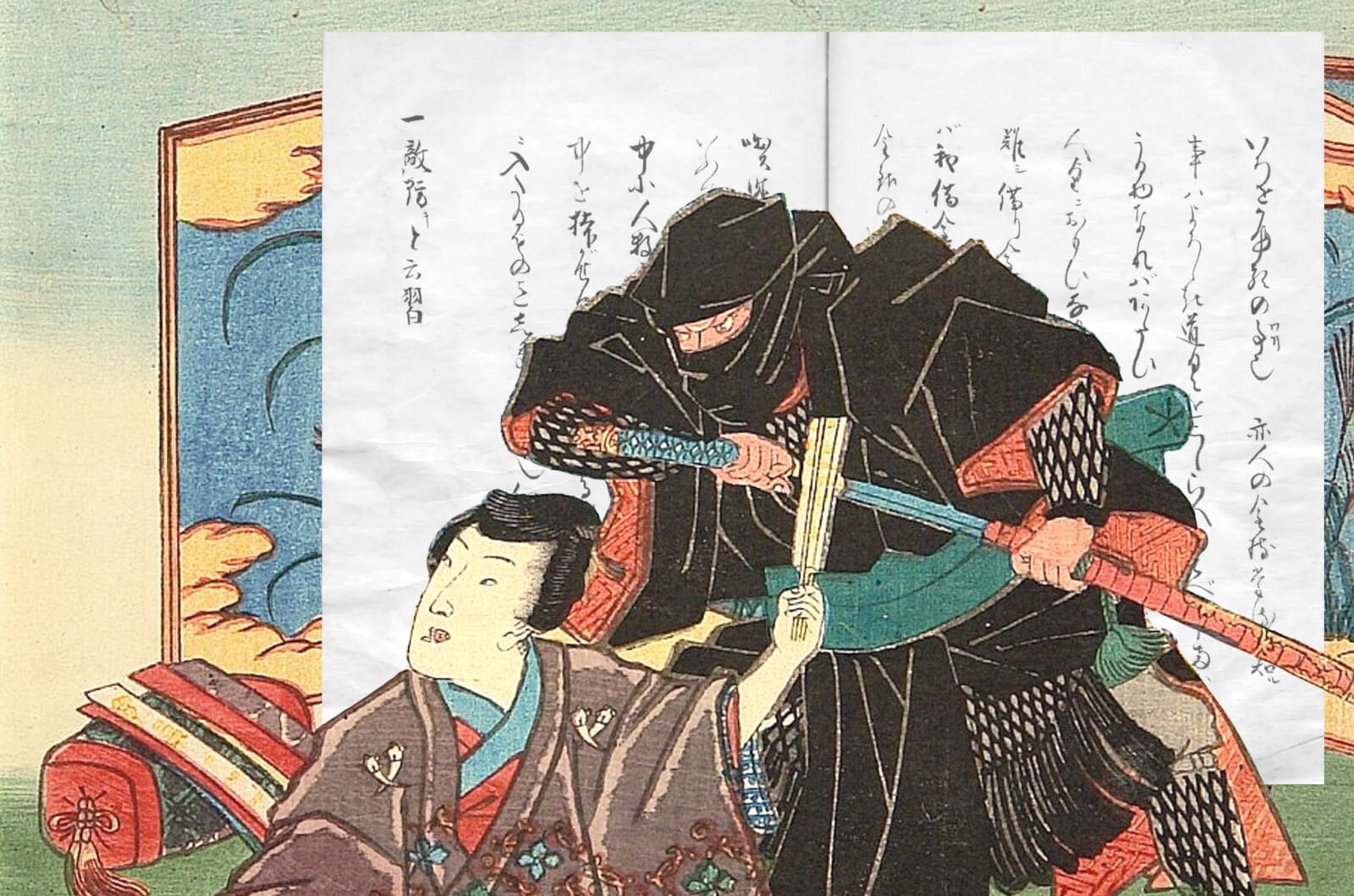
Page from The Shoninki Vol. 3 “Earth” (via NDL Collections) / Utagawa Kunisada’s “Ninja and Prince Genji” (1853)
The Shoninki: How To Avoid an Existential Crisis, Demythologizing Ninjutsu and Brains Over Brawn
The Shoninki (The True Ninja Record) was composed in 1681 and opens almost immediately with how shinobi are different from common thieves and burglars despite a lot of surface similarities. Both work under the cover of night, break into houses and sometimes take lives. It’s enough to make a ninja stop and ask themselves, “Wait, am I the bad guy?” The Shoninki aims to address those concerns.
The manual stresses that the ninja’s primary role is to gather information, and never for personal gain, only in the service of their lord or a greater good. Additionally, a ninja is disciplined, methodical and in total control of their emotions. Mental fortitude is at the heart of this text because the Shoninki continuously brings up examples of how being a ninja was downright miserable.
The record says that a shinobi must head out on every mission with the realization that they won’t come back alive, and the road to the grave won’t exactly be a picnic. The Shoninki mentions medicine as part of basic ninja equipment to keep up awareness and strength, hinting that it was probably a stimulant to keep ninjas going way past their limits. Another thing all ninjas should have on them, especially during chillier months? A kairo, a small metal container for slow-burning charcoal embers to keep your hands from stiffening up in the freezing cold of the night.
And, the text goes on, don’t expect cinematic sword battles between you and multiple opponents. Disguises and knowledge of human psychology were meant to be the primary weapons. Reportedly, dressing up as monks or mountain ascetics was especially useful camouflage. And instead of climbing walls and picking locks, the manual stresses the power of social engineering to gain access to locations — feigning illness near a house, returning later with gifts if you’d received assistance or befriending children and household members to slowly weasel your way into a target’s residence.
So become ninjas, kids. You will commit crimes in everything but name, freeze your ass off, betray your friends and probably die! At least the Shoninki was honest about it.
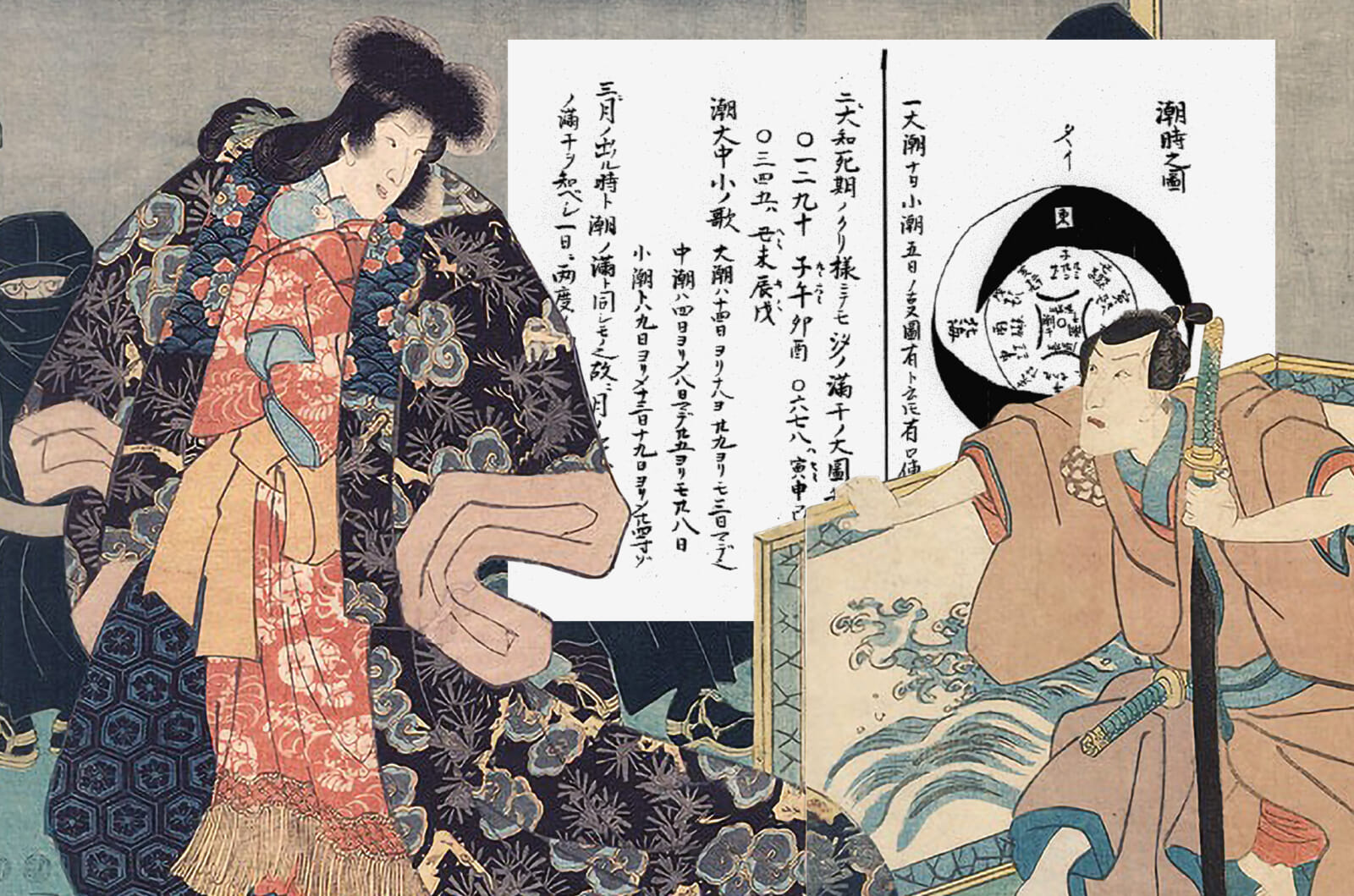
Page from the Bansenshukai, showing instructions on the ideal time for taking certain actions / Illustration: “Female Bandit and Ninja” (1851) by Kuniyoshi
The Bansenshukai: Ninjutsu as Military Science and the Power of Women
Also called the Mansenshukai, the Bansenshukai (Ten Thousand Rivers Forming an Ocean), was composed in 1676 and focuses on the ninja traditions of Iga and Koka. It possibly reproduces lessons from an earlier ninja manual dating to the 15th century, but many of its chapters are dressed up in Edo-period morality and include sections similar to the Shoninki, like how the skills of ninjas and burglars often overlap — but it’s OK because you can use this dark knowledge safely if you possess “The Correct Mind” (seishin).
The Bansenshukai describes a proper ninja as a person of strong moral character whose “correct mind” strengthens their judgment and courage. It’s not just a philosophical direction but also a practical one since, apparently, technical knowledge without proper or moral intent will often lead to failure. This is all part of the manual’s almost scientific approach to ninjutsu, stripping it of all mysticism to reveal a military combat strategy. Exploiting weaknesses, leveraging surprise or striking when the enemy is unprepared will get you further in life than a shuriken to the neck, according to the Bansenshukai.
The manual actually wants you to picture the ninja as very lightly equipped, except maybe for lockpicks and some climbing gear. The most important weapons a ninja can have are seeing, hearing, observing and deducing. All that being said, the Bansenshukai was not short on practical information, as there’s a whole chapter in the textbook on picking locks and overcoming other security measures.
The Bansenshukai also praises the singular abilities of female ninjas (kunoichi), whom it presents as essential specialists for missions where men would struggle to blend in. Female agents can, for example, enter places dressed as servant girls and disappear into the background of the house, making them ideal for gathering information quietly. Although the text includes some sexist biases — like how kunoichi supposedly needed extra training and how you could never be totally sure of their loyalty — the ultimate message was that the right woman was better at unlocking some doors than brute force. And for 17th-century Japan, this was about as feminist as most educational texts got.