When the bicycle first became popular in Europe, it caused something of a scandal. If young people — especially women — suddenly had the freedom to travel independently, critics warned, they could go anywhere, including places where they might engage in premarital sex.
It sounds absurd now, but ridiculous moral panics about technology aren’t anything new. In a slightly more recent example, after the Sony Walkman came out on July 1, 1979, it was quickly decried as a sign of the end-times and the unraveling of Japanese society itself. Here’s how being able to listen to music on the go was supposed to usher in a Mad Max future.
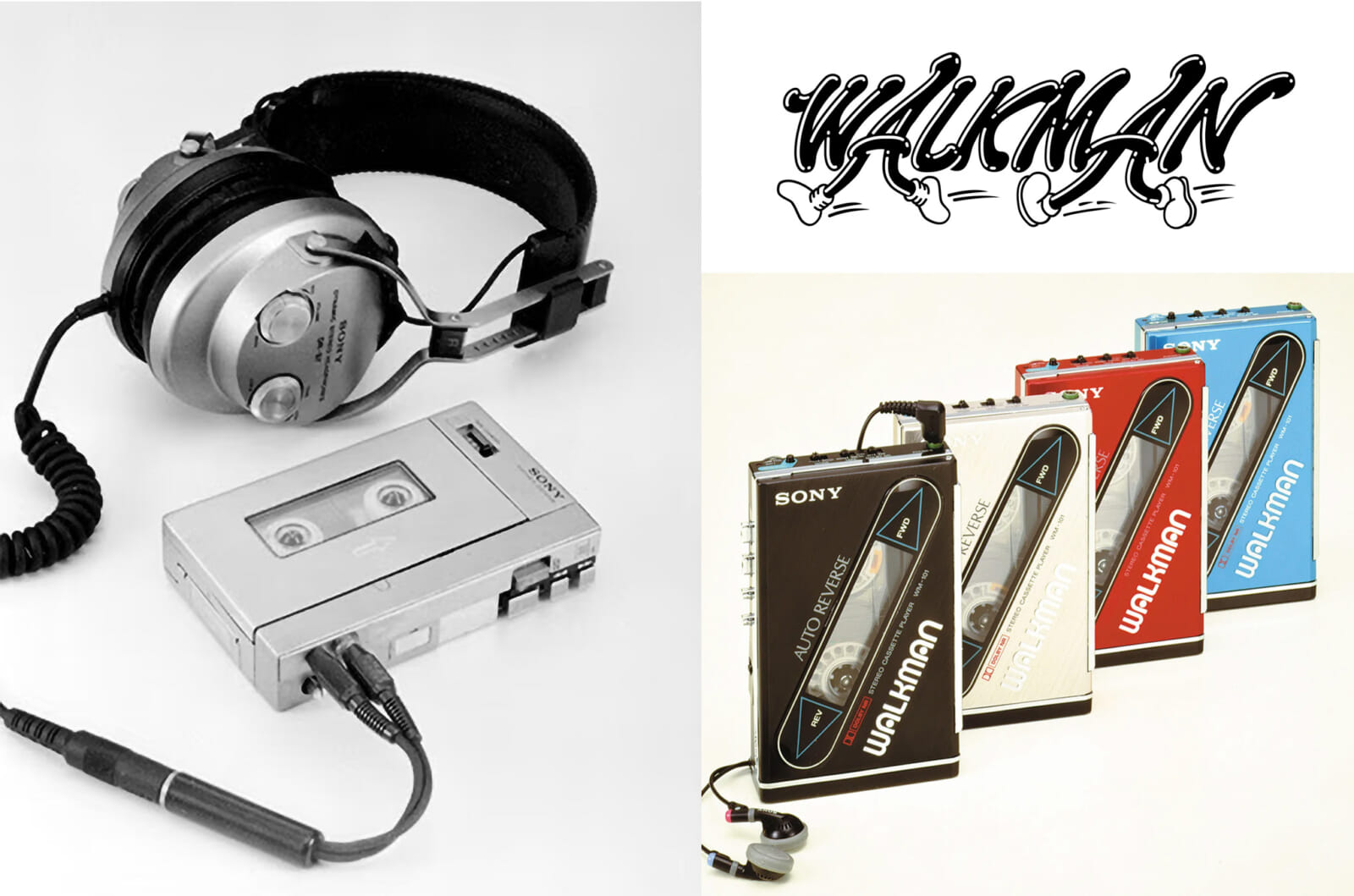
Clockwise from left: The 1978 prototype for the Sony Walkman, the early Walkman logo used in Japanese advertising, and the first model with rechargeable batteries | Images: Sony, Logopedia
The Walkman Effect
The Walkman caused a stir almost from the moment it hit the global market. The name sounds perfectly ordinary to us now, but it also doesn’t really make sense. It’s a clear example of wasei eigo — Japanese-made English expressions that are often confusing to English speakers.
Initially, other countries used different names for the portable music player, from “Stowaway” (UK) to “Soundabout” (US) and “Freestyle” (Australia). Sony America also proposed “Sony Disco Jogger” but that name was rejected by Sony’s co-founder Akio Morita, who closely oversaw the development of the Walkman and didn’t want to exclude older non-jogging generations as potential customers.
He needn’t have worried because the main buyers of Walkman players were young people. After the runaway success of the first models, fresh-faced Japanese consumers were wearing headphones like a second pair of ears. And it absolutely freaked people out.
Shuhei Hosokawa, a professor at the International Research Center for Japanese Studies, coined the term “Walkman effect” in 1984 to describe the way that Sony’s invention supposedly reshaped young people’s relationship with public spaces. Playing music that only they could hear apparently created something of a “personal sonic environment.”
According to critics of the Walkman, this effect allowed people to cut themselves off from the real world, leading to reduced situational awareness, increased the risk of accidents and encouraged rampant individualism. Hosokawa, for his part, wasn’t convinced. He filed such worries under what Umberto Eco called ‘cultural moralists’ — people who simply fear what they don’t understand.
As far as some commentators were concerned, the Sony Walkman set the stage for a bloody confrontation between young psychopaths and scared, angry mobs demanding to know what those young people were listening to.
First Japanese ad for the Walkman (1979), showing two unlikely people listening to the same Walkman
Walkmongering
Yasuo Kuroki, the head of the portable music player development team at Sony — who later earned the nickname “Mr. Walkman” — recalled in his book Uokuman-ryu Kikakujutsu (Walkman-Style Planning) that the initial backlash against the device stemmed from fears that it would increase social isolation.
The term hikikomori for Japanese shut-ins would not become widely used for years, but the underlying problem already existed in the country, so perhaps those early concerns were genuine. Then again, Kuroki also noted that adults “blasted the Walkman as a device for… drowning in narcissism,” which really is the “bike harlots” moral panic of the 20th century.
The media happily jumped on the bandwagon. In January 1981, Nikkei ran a story about students listening to their Walkmans right before university entrance exams. It didn’t explain why this was a problem, but the implication was clear: the newfangled device had followed young people into even the most important events of their lives.
It was changing how people behaved. So, what stopped it from turning an entire generation into isolated, antisocial monsters? You had to read between the lines to get that last nuance, but it was there.
The thing is, Sony shared some of those concerns. While the traditional headphone jack has declined in popularity, the original Walkman actually featured two jacks so that people could share their music. Morita apparently worried that solo-listening could be perceived as rude.
To steer people away from locking themselves in their own “personal sonic” bubbles, early versions of the Walkman also included a “hotline” switch that turned on the microphone and lowered the volume so that users could have conversations without removing their headphones. Rumors of a “smoke bomb” button for escaping unwanted social interactions, however, remain unconfirmed.
1981 English language/US commercial showing the US also focused on people listening together/socially
Walkmanphobia Breaks Containment
It’s easy to see why the idea of too much individualism would rub people the wrong way in Japan, a country where the saying “the nail that sticks out gets hammered down” remains deeply familiar. But what about a country that prides itself on its individualism and resilience? Surely the US embraced the Walkman with open arms, right? Actually, Americans kind of freaked out about it more than the Japanese did.
Cultural critic Allan Bloom called the Walkman “a nonstop … masturbational fantasy.” Author John Zerzan thought Walkmans encouraged withdrawal from social relationships. Digital technology pioneer Thomas Lipscomb actually compared the effects of the music player to the fictional drug soma from Aldous Huxley’s Brave New World.
Newspaper headlines chimed in, warning the public about such dangers of the Japanese invention as deafness and mental disorders. In Japan, the Walkman was unraveling society; in the US, it was ushering in a dystopia of deaf, neurotic onanists.
Woodbridge Township in New Jersey was determined not to let that happen, banning Walkman headphones while driving, riding a bicycle and even crossing the street. Violations could result in fines and a jail sentence of up to two weeks.
The law was challenged on October 7, 1982, by a retiree named Oscar Gross who deliberately approached police, put on his headphones, and crossed the street. Even though his headphones weren’t connected to anything, he received a citation. A judge ultimately waived his fine, which reportedly disappointed Gross, who wanted to fight the unjust law further.
Sony no longer makes the original cassette Walkman, but with over 385 million units sold around the world, it’s not hard to still find one, which is good news given retro tech’s recent resurgence. After all, a music player with no ads, subscriptions or required internet connectivity sounds like borderline magic in this day and age.