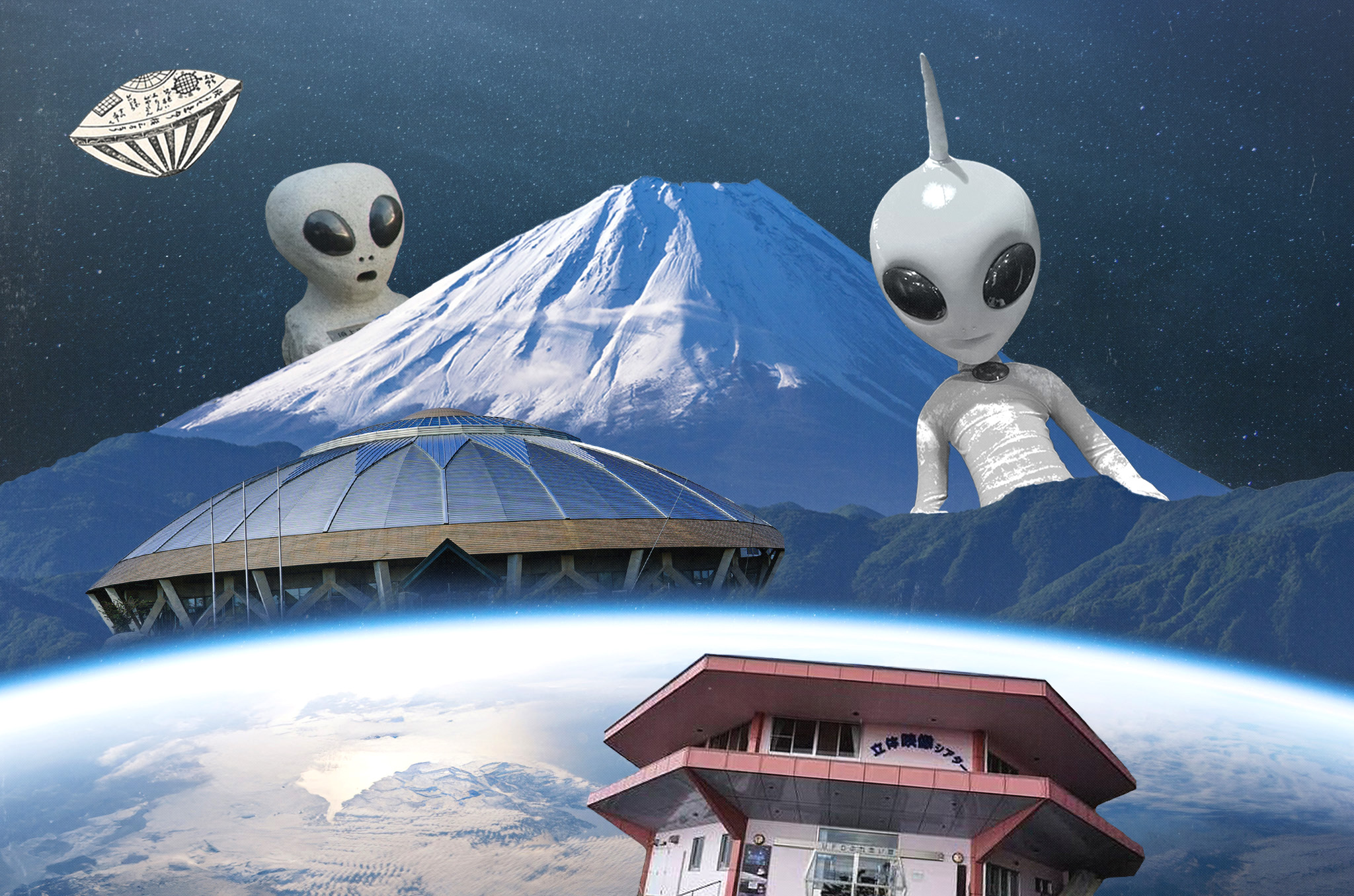
For some years now, Japan has been gaining a reputation for itself as the number one destination for close encounters of the third kind. And the more you think about it, the more sense it makes. UFOs have always existed on the border between science fiction and folklore, merging the futuristic with the spiritual and the mythological.
What country better exemplifies that than Japan, where massive techno-marvel skyscrapers surround the buried head of a god of wrath? It’s hardly surprising, then, that there are many places around the country where people believe that we aren’t alone in the universe.
1. Kamisu (Ibaraki Prefecture): The Oldest Documented UFO Spot in Japan
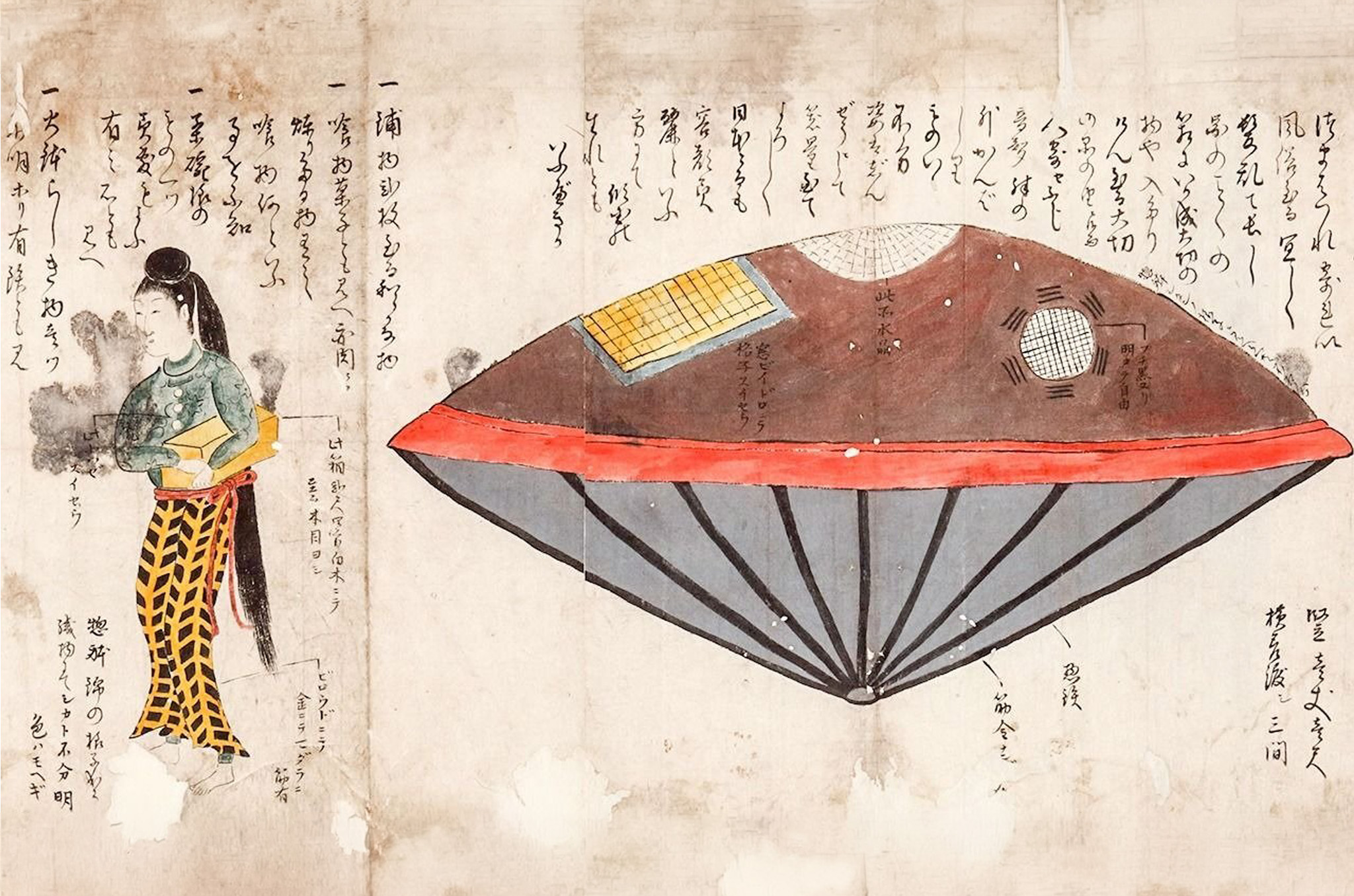
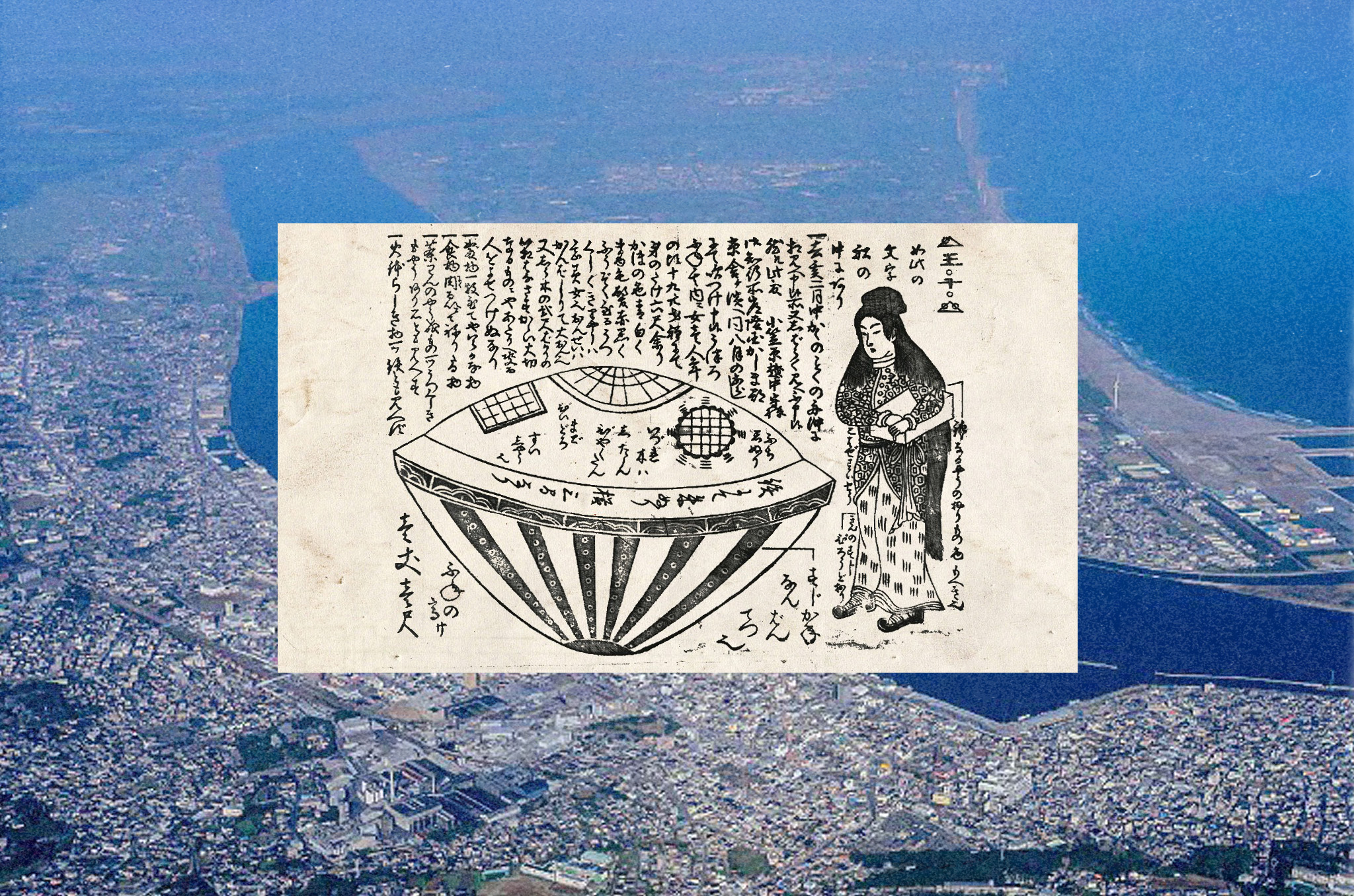
Aliens in the Edo period. Documented by ninjas. It sounds like the beginning of a very fun anime but it’s actually the bare-bones summary of the Utsuro-bune Incident.
Back in 1803, villagers in eastern Hitachi reportedly discovered a mysterious oval craft drifting off the coast of modern-day Kamisu, Ibaraki Prefecture.
The elliptical “hollow boat” (the literal meaning of “utsuro-bune”) was 3.3 meters high and 5.4 meters wide, almost exactly the shape we now associate with flying saucers. The UFO (unexplained floating oblong) reportedly had a metallic lower hull, windows and strange writing on it. Also, it might have been hollow but it wasn’t empty.
According to historical accounts, there was a woman on the ship, a strangely beautiful one with red hair, pale skin, exotic clothing and a sealed box that she didn’t let anyone touch. Deciding that this was way above their paygrade, the local villagers placed the woman back inside the craft and let it drift away.
There are many stories of utsuro-bune from the Edo period, several of them feeding into the “exiled noble” trope that is partially responsible for the modern image of ninjas. What makes this especially interesting is that the most reliable source on this particular incident is a reconnaissance report composed by the Ban, a ninja clan from Koka.
The ninja document even identifies the location of the alleged UFO encounter as the real-life Hasaki Beach in Kamisu, so if your plan was to stand somewhere with a big sign saying “Take me off this planet,” that might be a good place to start.
2. Iino (Fukushima Prefecture): Japan’s UFO Village
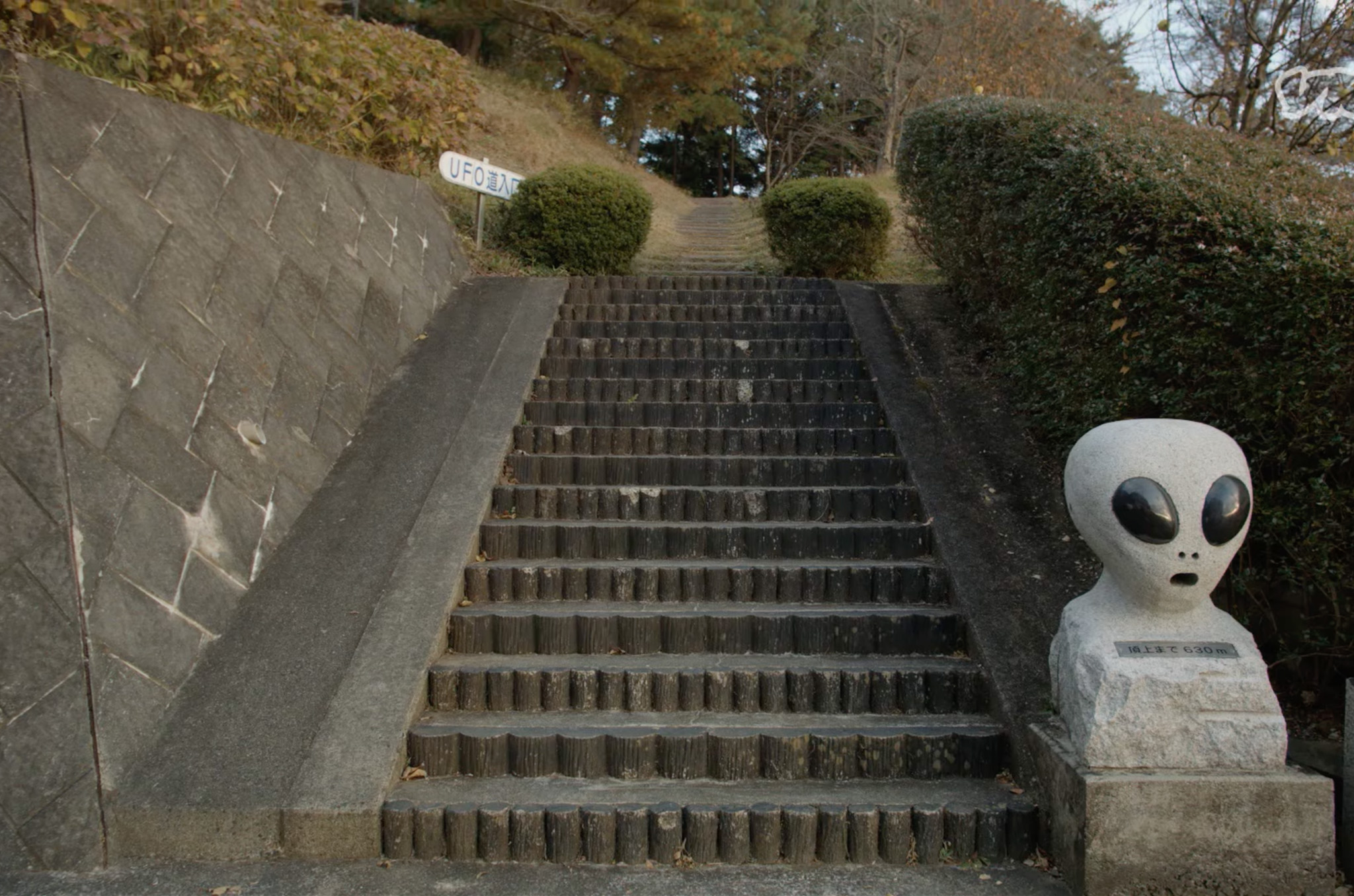
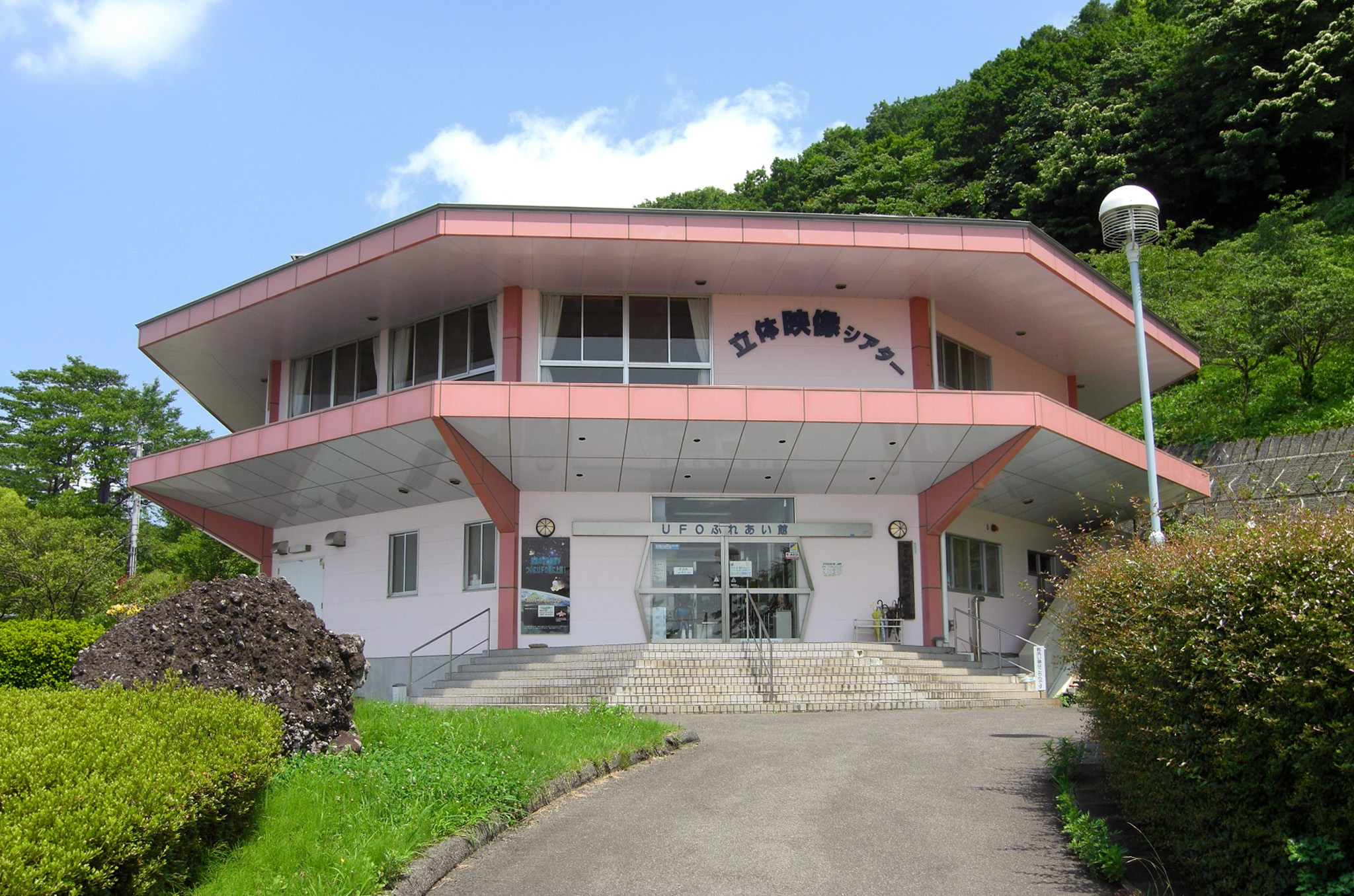
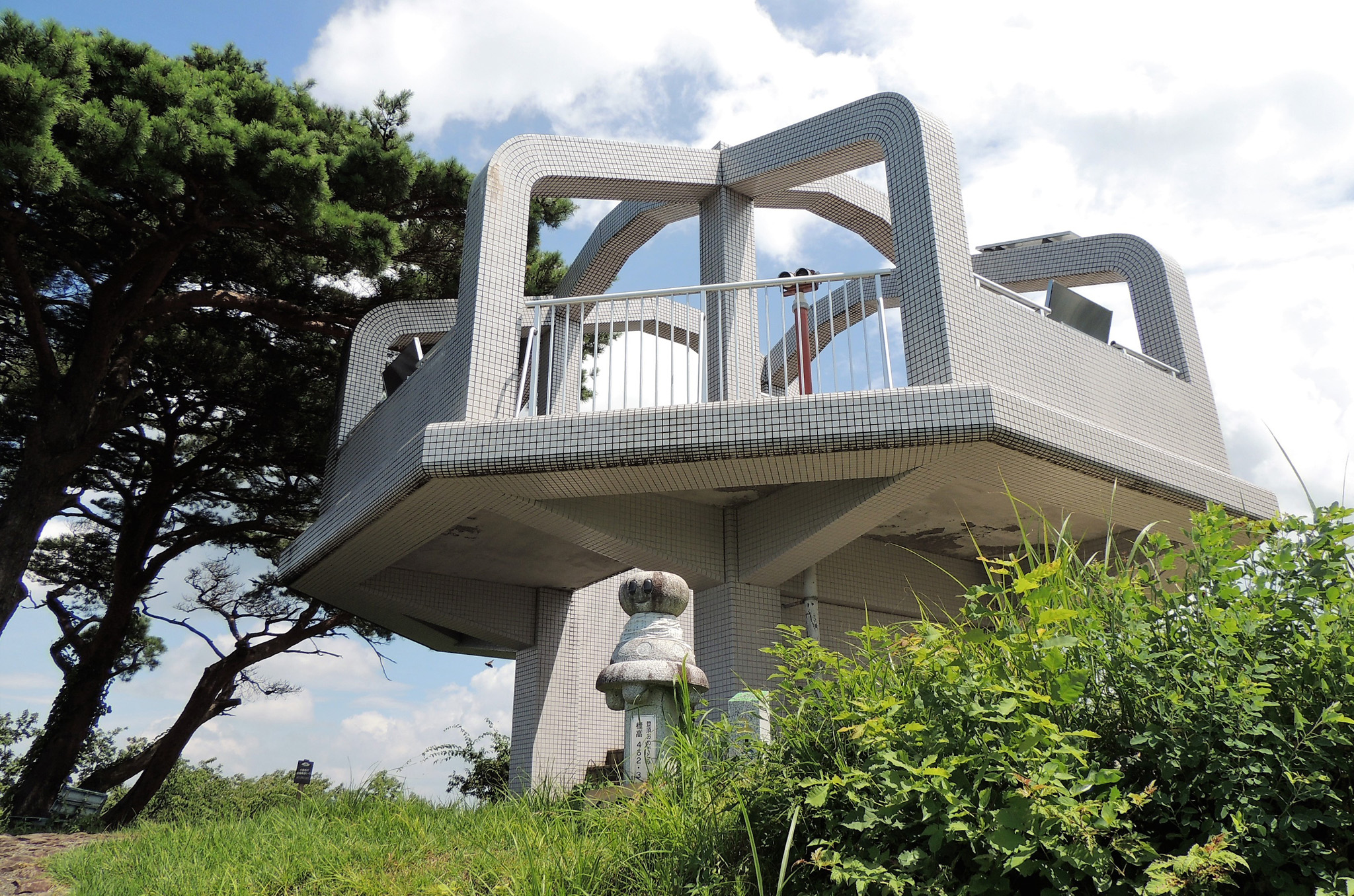
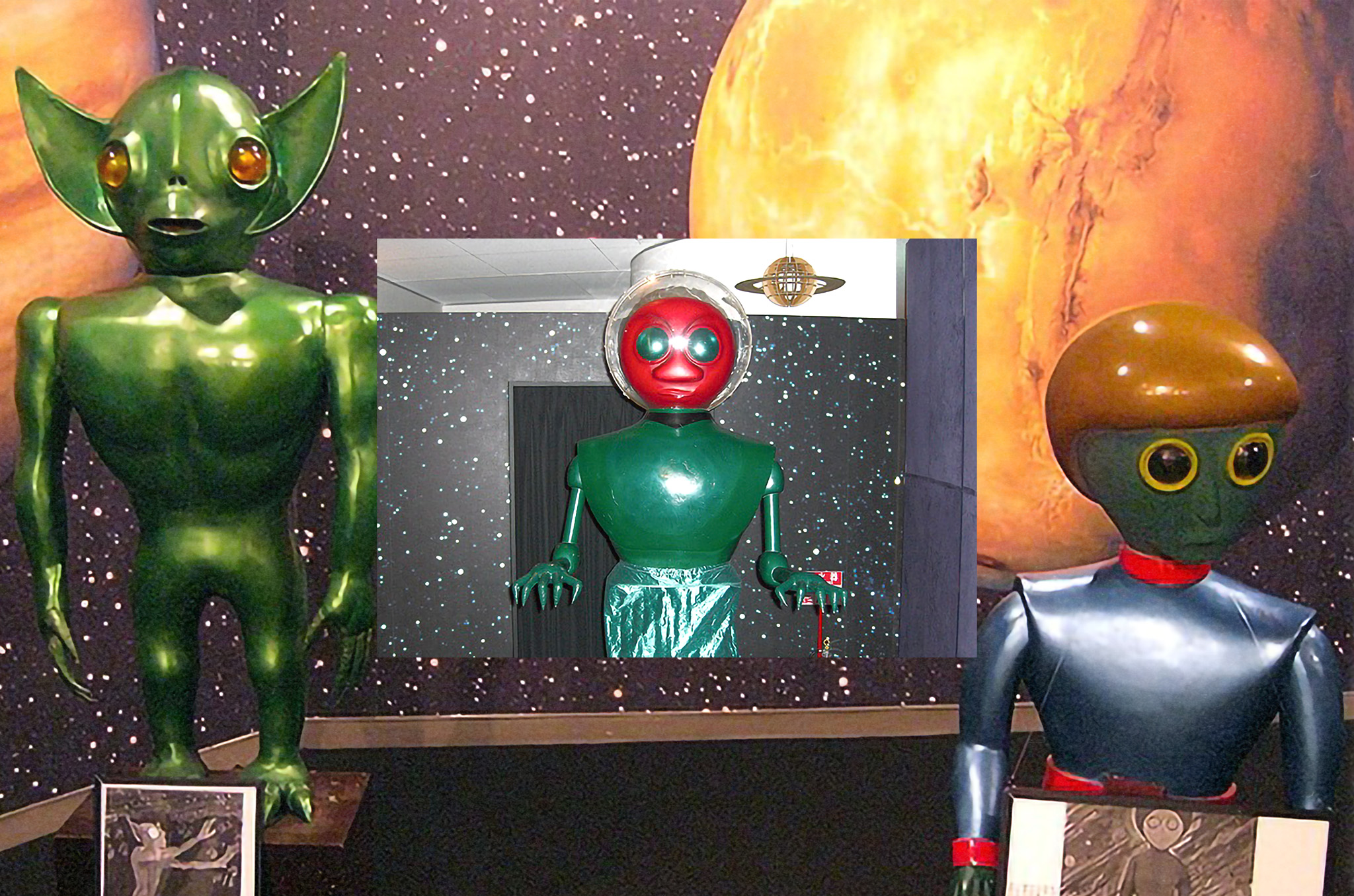
Now technically the Iinomachi district of Fukushima city, Iino is home to the Iino UFO Museum, Japan’s first research institute dedicated solely to unidentified flying objects. It also houses the International UFO Lab. The approach isn’t purely scientific, though, as evidenced by the fact that the International UFO Lab is headed by Takeharu Mikami, editor-in-chief of the famous paranormal magazine Mu.
Reports of strange objects over Fukushima go back decades — and have earned Iino the nickname “UFO Village” — but they have skyrocketed since the 2011 Fukushima nuclear disaster.
Put together, all of this makes Iino a perfect encapsulation of Japan’s UFO culture. Many alleged extraterrestrial sightings in Japan have strong emotional undercurrents and are often tied to moments of collective trauma — there have also been reports of strange flying objects over Hiroshima and Nagasaki. Yet in Iino, the phenomenon is treated with complete seriousness.
The museum never sells itself as a tongue-in-cheek place. A collection of more than 3,000 UFO photographs, alien models and archived materials is treated as serious scientific data, though the local government encourages it mainly because it helps combat rural decline. Existing somewhere at the intersection of belief, science, practicality and tragedy, Iino is where Japan’s particular UFO beliefs really come into focus.
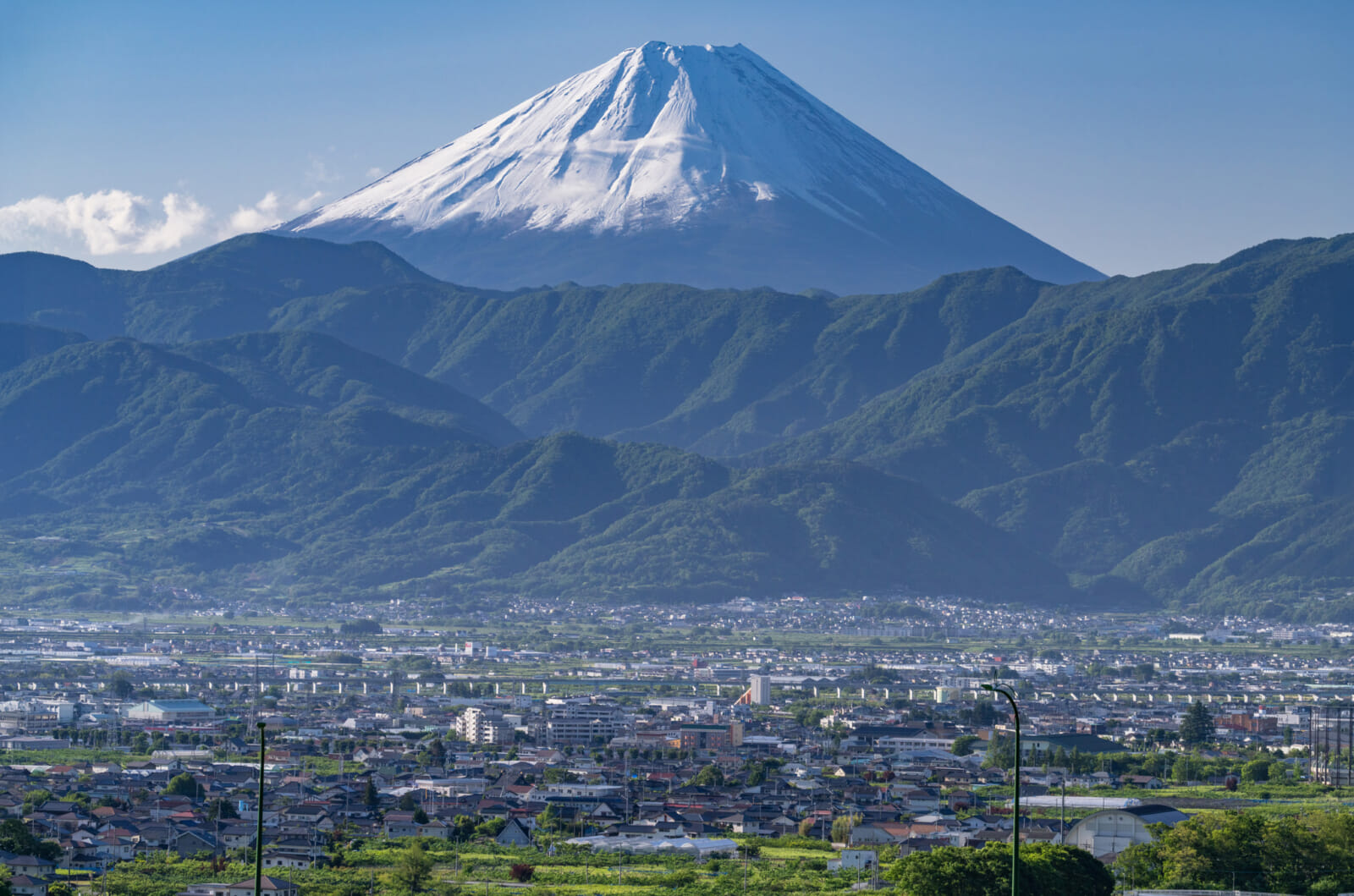
View of Mount Fuji and the Kofu basin | Image: Pixta
3. Kofu (Yamanashi Prefecture): Japan’s Roswell
Kofu has so many claims to fame, it feels a little unfair. It was home to legendary warlord Takeda Shingen and the voice actor for Sonic the Hedgehog is from there. It has also been called “Japan’s Roswell.”
Kofu’s connection to UFOs goes back to 1975 when two elementary school boys reported seeing a glowing orange craft landing at a vineyard near Mount Fuji, followed by a humanoid creature with dark skin and a silver suit emerging from it. Once again, the pragmatic explanation feels obvious. The kids were suffering from a terrible case of lack-of-internet and made up a story for attention.
The complication, however, is that other people claimed to have seen something in the sky around the same time. And when authorities checked the vineyard, they allegedly found scorched ground and elevated radiation readings. What’s more interesting, though, is the connection between UFOs and Japanese spirituality, given that the incident occurred in the vicinity of Mount Fuji, which many in Japan consider holy or even divine.
On the 50th anniversary of the incident, Kofu used that emotional anchor to declare itself a “UFO City.” It was clearly a marketing move, but one rooted in something many people seem to believe deep down: that there may be more to this world than we understand.

4. Hakui (Ishikawa Prefecture): The Most Educational UFO Destination in Japan
Tales of unexplained lights or strange crafts above Ishikawa Prefecture are well-documented, but that’s really it. They don’t go back hundreds of years, they don’t have an especially tragic emotional anchor and they don’t have a strong connection to folklore and mythology. But what Hakui lacks in the paranormal and the supernatural, it makes up for with hard, cold science.
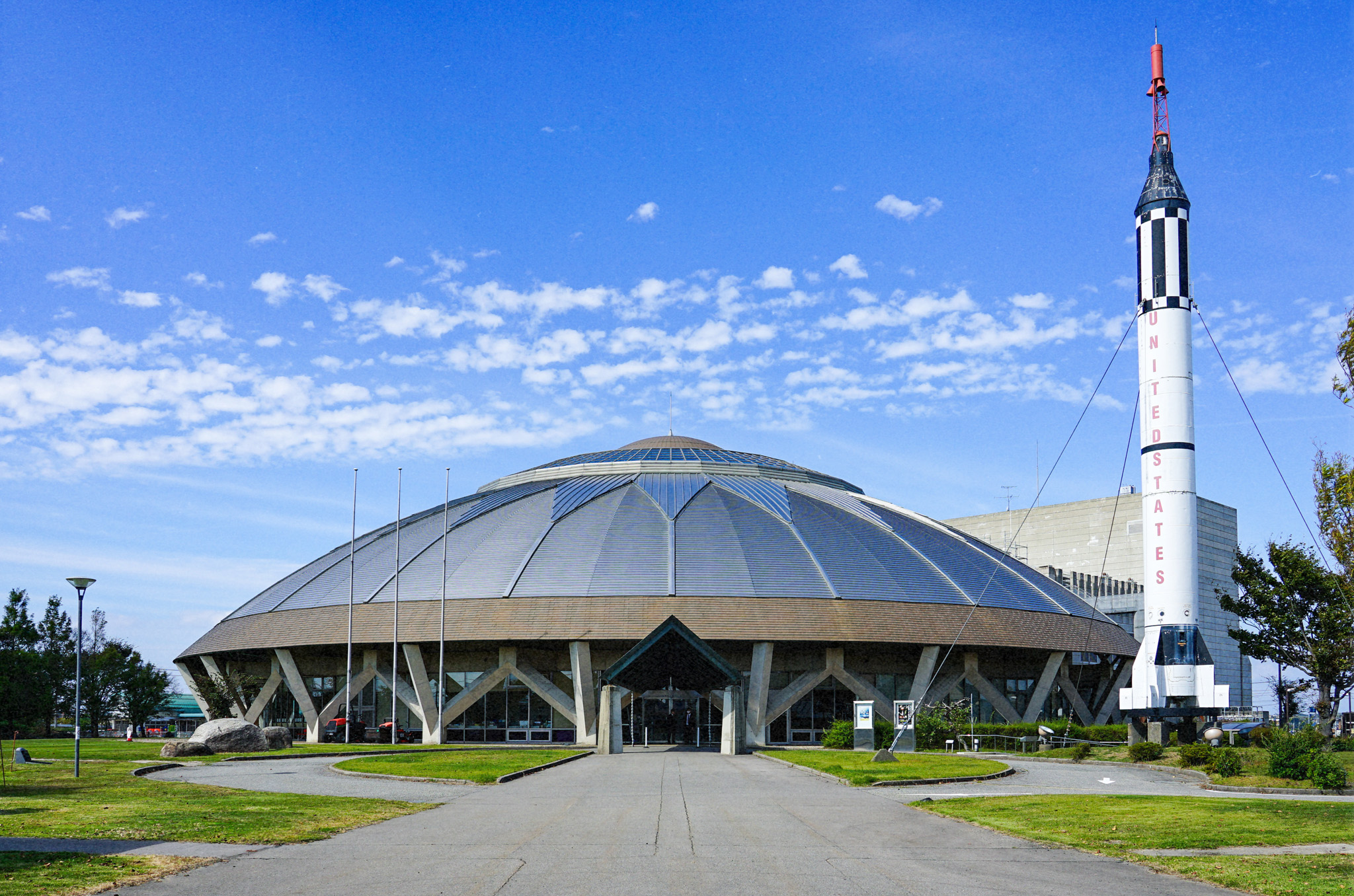
Its Cosmo Isle Hakui museum has exhibits on UFO photographs and public records that seem to prove the existence of aliens. But it also has a real Soviet Vostok capsule bearing scorch marks from reentry, a Mars rover and a 26.6-meter-long Redstone rocket outside the building, reportedly one of the space boosters actually used in the launch of Project Mercury.
None of these things exist in opposition to the museum’s UFO-related exhibits. Together, they form a one-of-a-kind culture that approaches UFOs in a way unlike any other country. In Hakui, the bigger focus is on science but it’s underpinned by that unshakeable faith in there being more to the universe than us.
Something bigger, something perhaps unknowable, but something that is never treated as a joke. That, in a nutshell, is Japan’s UFO culture.