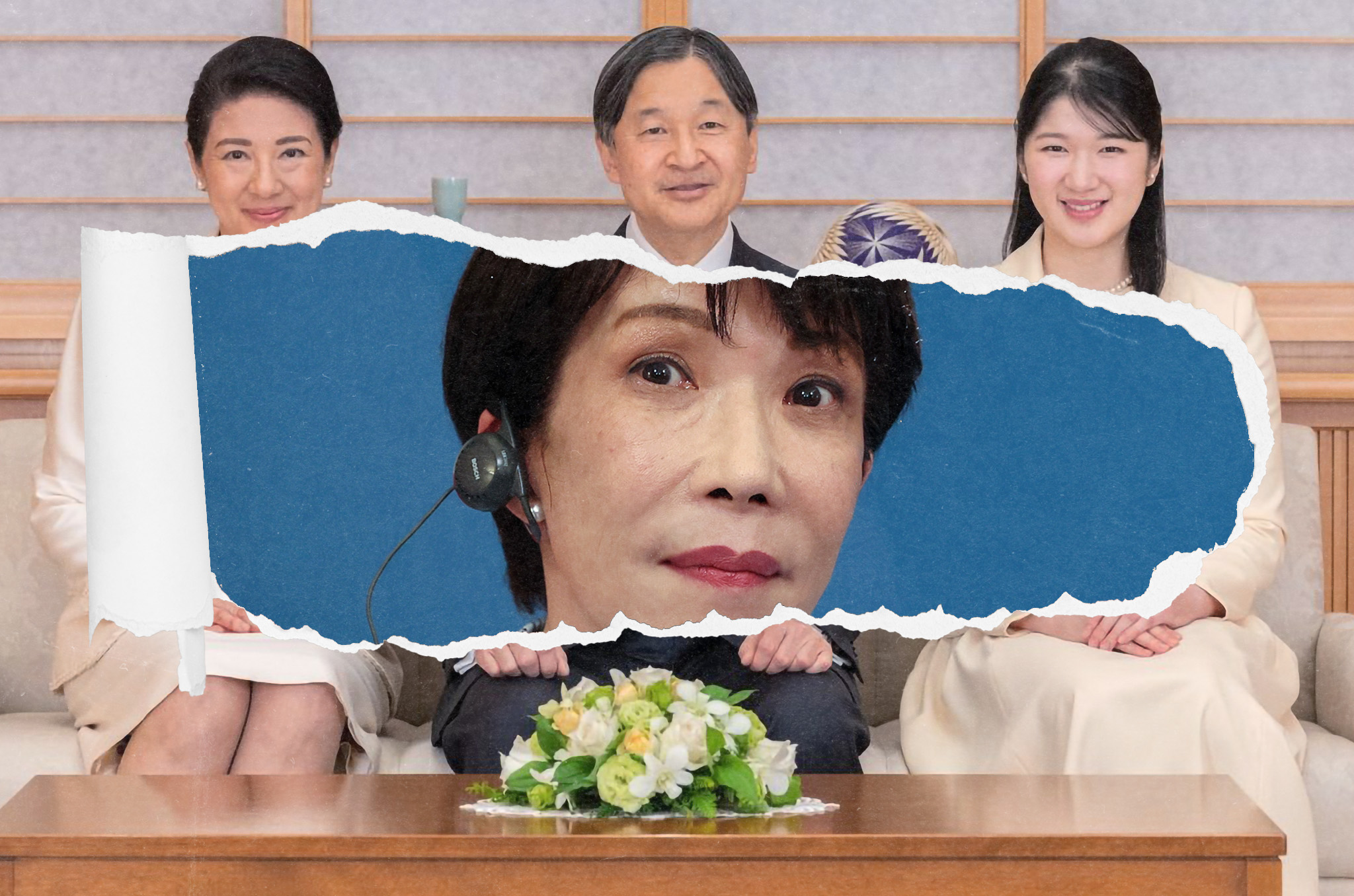
When Sanae Takaichi ascended to the role of Japan’s first female prime minister, she broke a major glass ceiling in global politics. On the surface, her victory seemed to signal a new dawn — or at the very least, a step toward gender parity in a nation consistently lagging in global gender equality indexes.
Yet, as the country faces a demographic collapse that threatens to extinguish the world’s oldest continuous hereditary monarchy, Takaichi has chosen to draw a bizarre line in the sand: she strongly opposes allowing a female emperor, insisting that only male heirs should inherit the throne.
Her message is loud, and strikingly hypocritical: A woman can lead the nation, but she is inherently unfit to sit on the Chrysanthemum Throne.
As her cabinet’s approval ratings begin their downward slide — dropping to 58% amid public weariness over a lack of bold, practical reform — Takaichi’s unyielding defense of the male-only lineage feels to many like a missed opportunity for gender progress, signaling just how bound she is to her party’s conservative orthodoxy.
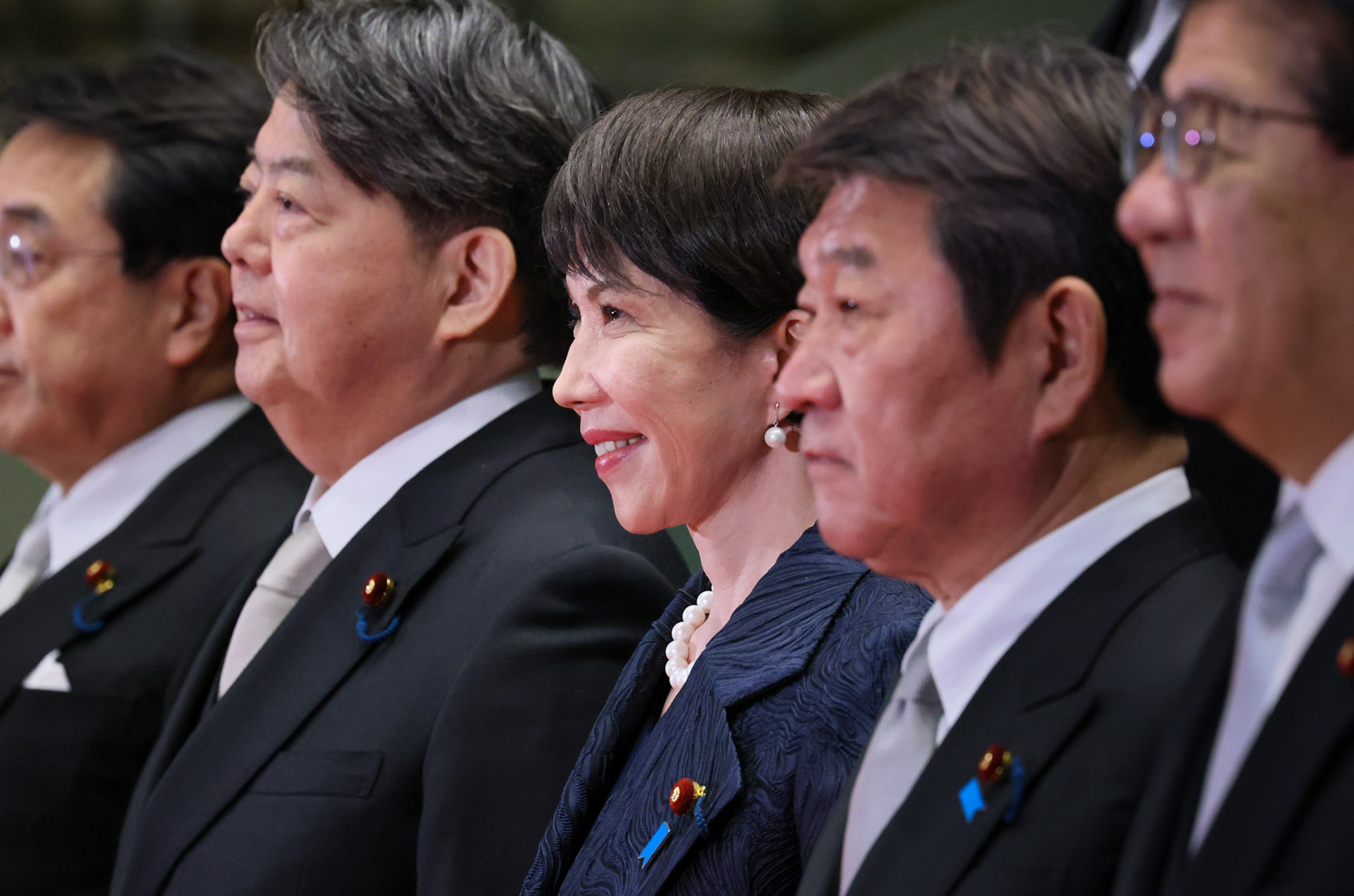
Takaichi’s first cabinet photograph, October 2025 | Wikimedia
Sanae Takaichi Opposes Female Heirs
The current heir to the throne is Emperor Naruhito’s 19-year-old nephew, Prince Hisahito. Under Japan’s current male-only succession law, the future of the imperial line rests on him. If he does not have a son, there will be no eligible heirs to the throne.
Still, during parliamentary debates and party conventions, Takaichi has repeatedly emphasized that the “unparalleled historic fact” of male-only lineage must be protected at all costs. To solve the crisis of a dwindling royal family, her administration has pushed forward a convoluted bill to amend the Imperial House Law.
Now officially passed into law by the Diet in the first major revision to the Imperial House Law in over 75 years, the newly enacted legislation allows royal princesses to retain their imperial status after marrying commoners, though their children would remain barred from the line of succession. To secure future heirs, the policy proposes an adoption scheme to bring unmarried, childless male descendants from defunct branches of the imperial family — branches dissolved nearly 80 years ago in 1947 — back into the royal fold, effectively granting imperial status to distant relatives who have lived their entire lives as ordinary citizens.
Rather than accepting the natural popularity of Princess Aiko — the emperor’s highly capable, 24-year-old daughter who currently works for the Japanese Red Cross — Takaichi’s government has enacted a hunt for distant male relatives. It’s a complicated, short-term fix designed to solve a modern problem with antiquated bias.
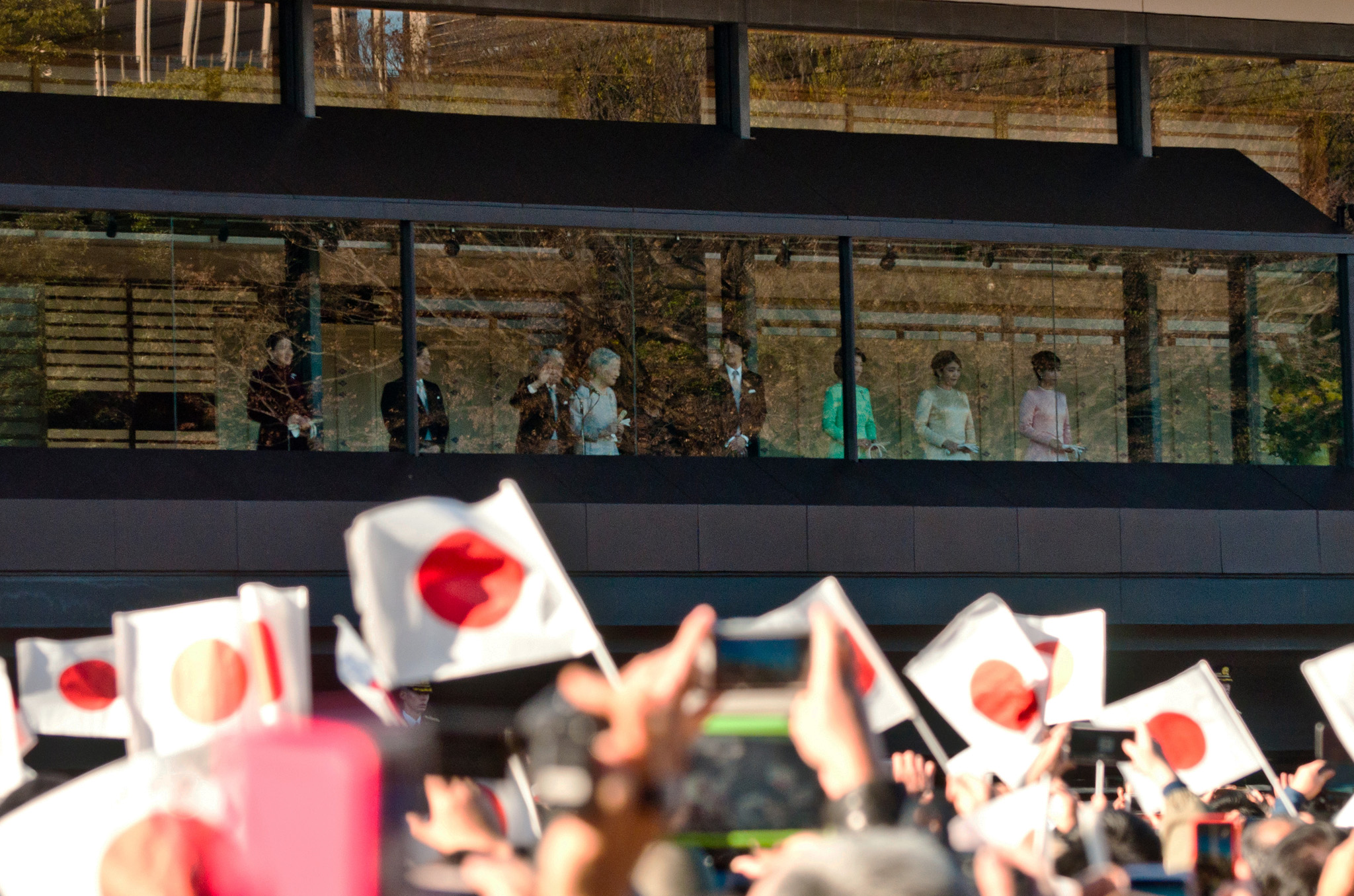
Crowds gathered for the Imperial Family’s annual New Year’s Greeting on January 2 | Shutterstock
The Silent Monarchy and the Vocal Public
The irony of this political theater is that the Japanese public is overwhelmingly ready for change. According to recent polling, between 60% and 90% of Japanese citizens broadly back the idea of a female emperor. They see no reason why Princess Aiko, who has captured the public’s affection, shouldn’t succeed her father.
Even the imperial family itself seems to have hinted at a desire for modern flexibility. Because the post-war constitution explicitly forbids the emperor from exerting political influence, the royals cannot simply state, “Let Aiko rule.” However, Emperor Naruhito recently expressed his hope that discussions on securing imperial heirs “can gain the understanding of the people.”
The “will of the people” is already clear: Most people want a stable, modern monarchy. By choosing a complicated adoption plan instead, Takaichi’s administration shows a disconnect between what conservative leaders want and what everyday citizens actually hope to see.
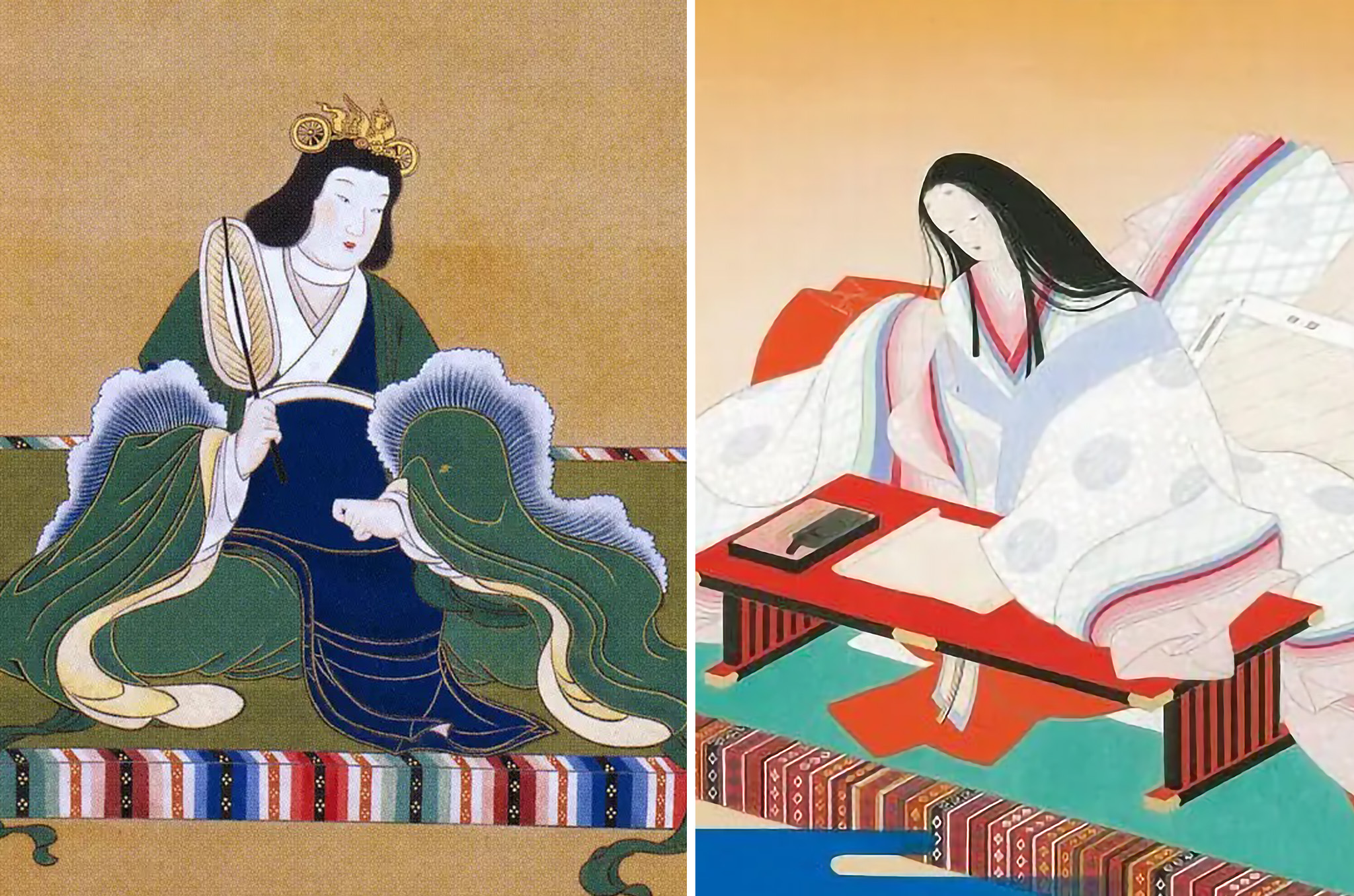
Japan’s first and last empresses to date: Empress Suiko (reign: 592-628 C.E) and Empress Go-Sakuramachi (reign: 1762-1771) | Wikimedia
The Inheritance Issue and Sticking to “Tradition”
Takaichi defends her stance by wrapping it in the protective blanket of “unbroken tradition,” arguing that the imperial line has been patrilineal for generations.
But this argument is historically hollow. Japan has had eight female emperors throughout its history, often stepping in during periods of transition. The ban on female succession is a product of the Meiji era, when the 1889 Imperial House Law codified male-only inheritance, heavily influenced by Prussian military-style patriarchy.
To call male-only succession an unalterable “Japanese tradition” is historically inaccurate. Scholars point out that there is absolutely no rational or constitutional basis for barring women.
Takaichi’s stance highlights a political irony. Much of her personal popularity — especially among women and younger voters who drove her historic rise — was built on the symbolic promise of her gender. For many of these supporters, electing Japan’s first female prime minister was supposed to be a step toward dismantling deeply entrenched patriarchal norms.
Instead, this succession battle serves as a reality check for voters who projected their hopes for gender equality onto her premiership. Takaichi has achieved the highest level of executive power, yet she remains a steadfast guardian of a system that denies other women the same leadership potential. This dynamic leaves many observers to conclude that while a woman may lead Japan’s modern government, the deeply entrenched traditions governing its ancient monarchy remain firmly closed to change.