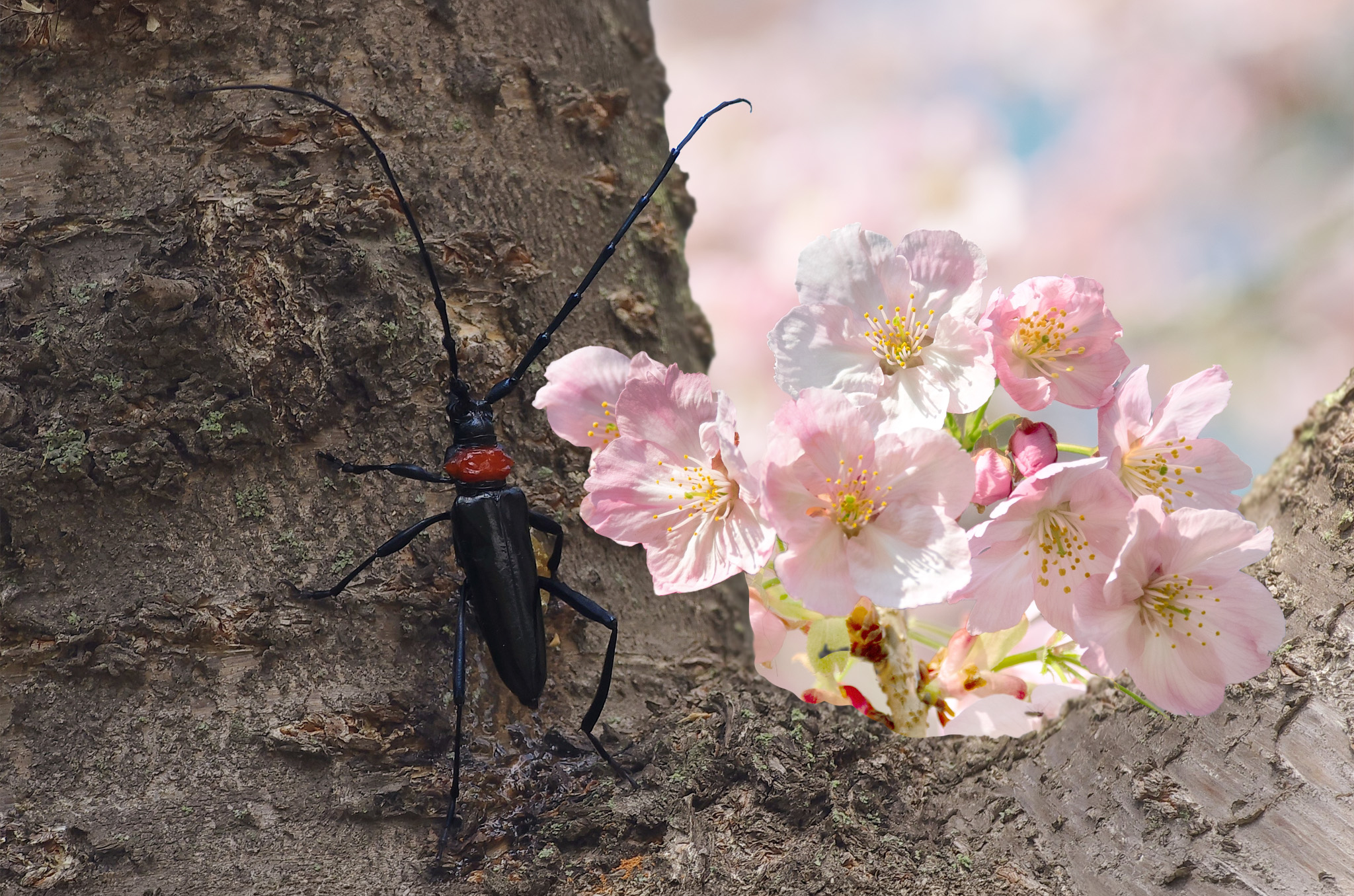
Municipalities in Japan are offering monetary rewards for help in eradicating the red-necked longhorn beetle (Aromia bungii), an invasive species that seriously threatens trees in the rose family, including cherry, peach, and plum. According to local governments, the key is finding the beetle early before infestations spread. NHK reported that affected areas had been confirmed in a total of 20 municipalities across Tokyo by the end of March, eight more than in the previous fiscal year.
The beetle poses a particular threat to Japan’s beloved cherry trees, which are deeply connected to the country’s landscapes and seasonal traditions. Once the larvae burrow inside a tree, they feed on the wood and weaken its structure from within. Severe infestations can eventually kill trees, forcing owners and local authorities to remove them to prevent the insect from spreading further. For communities that have spent years caring for trees, losing them can represent a significant environmental and cultural loss.
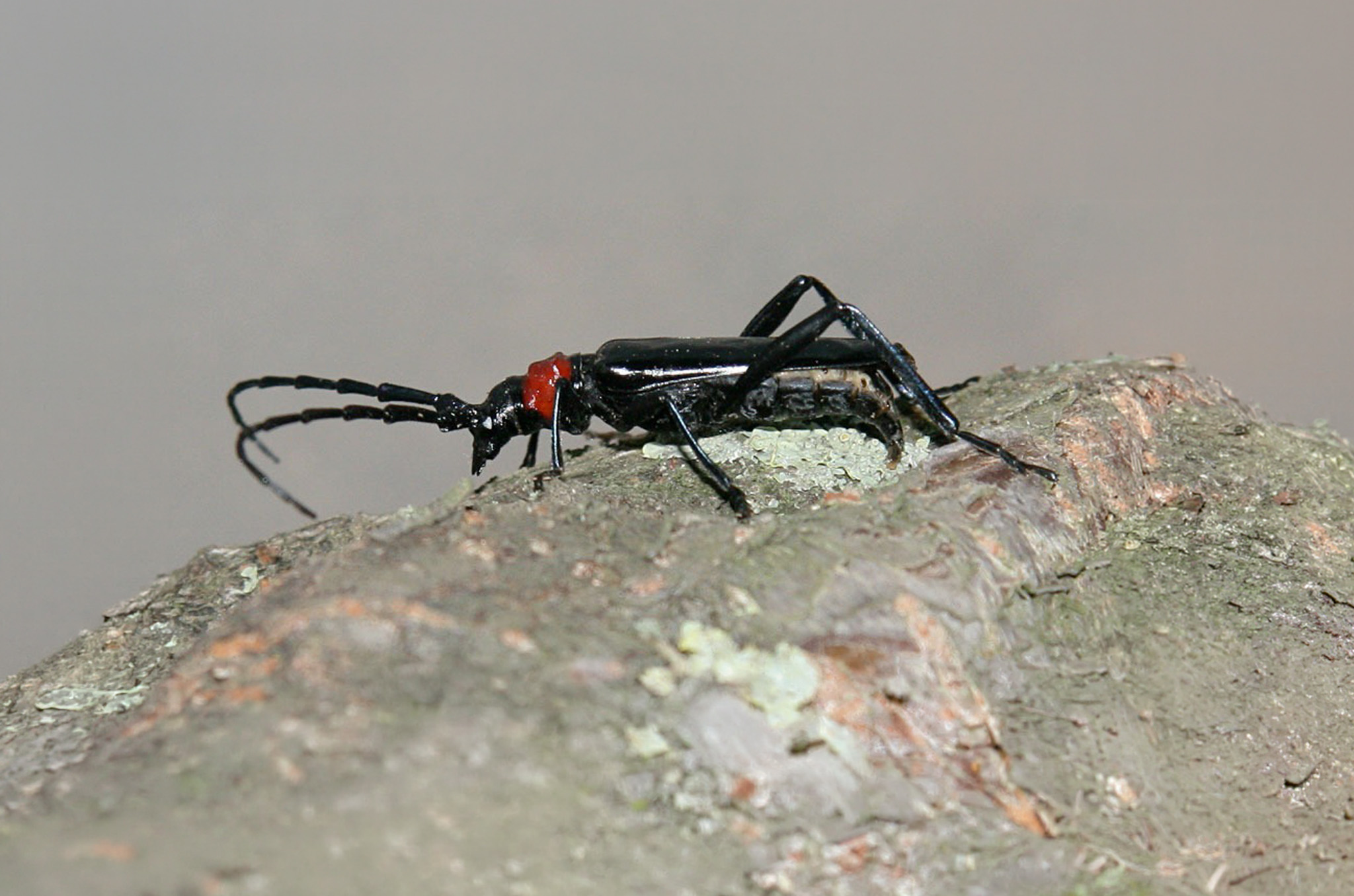
Monetary Rewards for Capturing a Red-Necked Longhorn Beetle
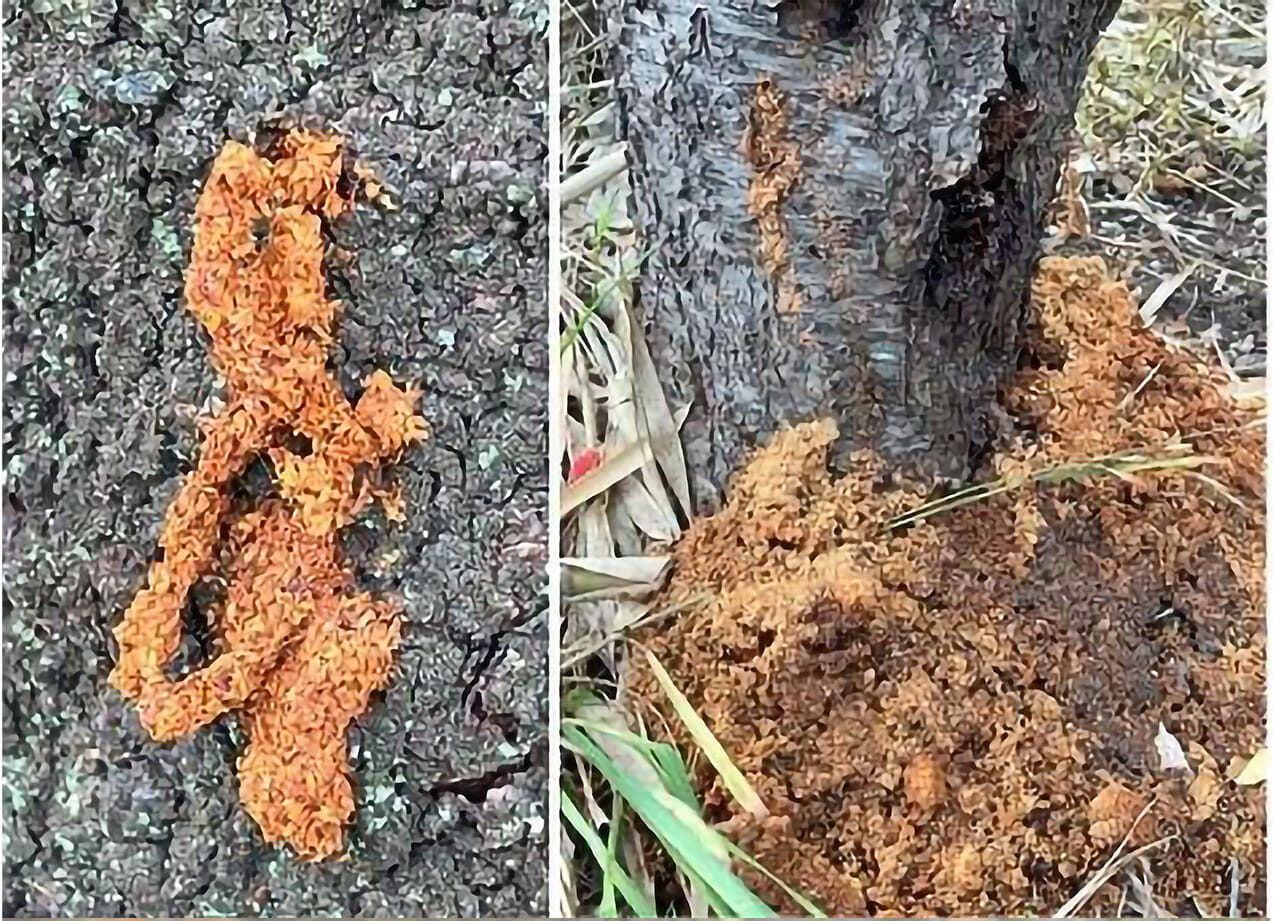
an example of frass on a tree
How To Spot a Red-Necked Longhorn Beetle
Look for Frass
One of the clearest warning signs that a tree is infested with red-necked longhorn beetles is “frass,” a sawdust-like mixture of wood shavings and larval droppings produced as the beetle tunnels through a tree. It often collects around the base of the trunk or protrudes from small holes in the bark, indicating an early infestation. Because the larvae spend most of their lives hidden inside trees, spotting frass is one of the easiest ways to detect an infestation before extensive damage occurs.
The red-necked longhorn beetle itself has several distinctive features that make it recognizable once you know what to look for.
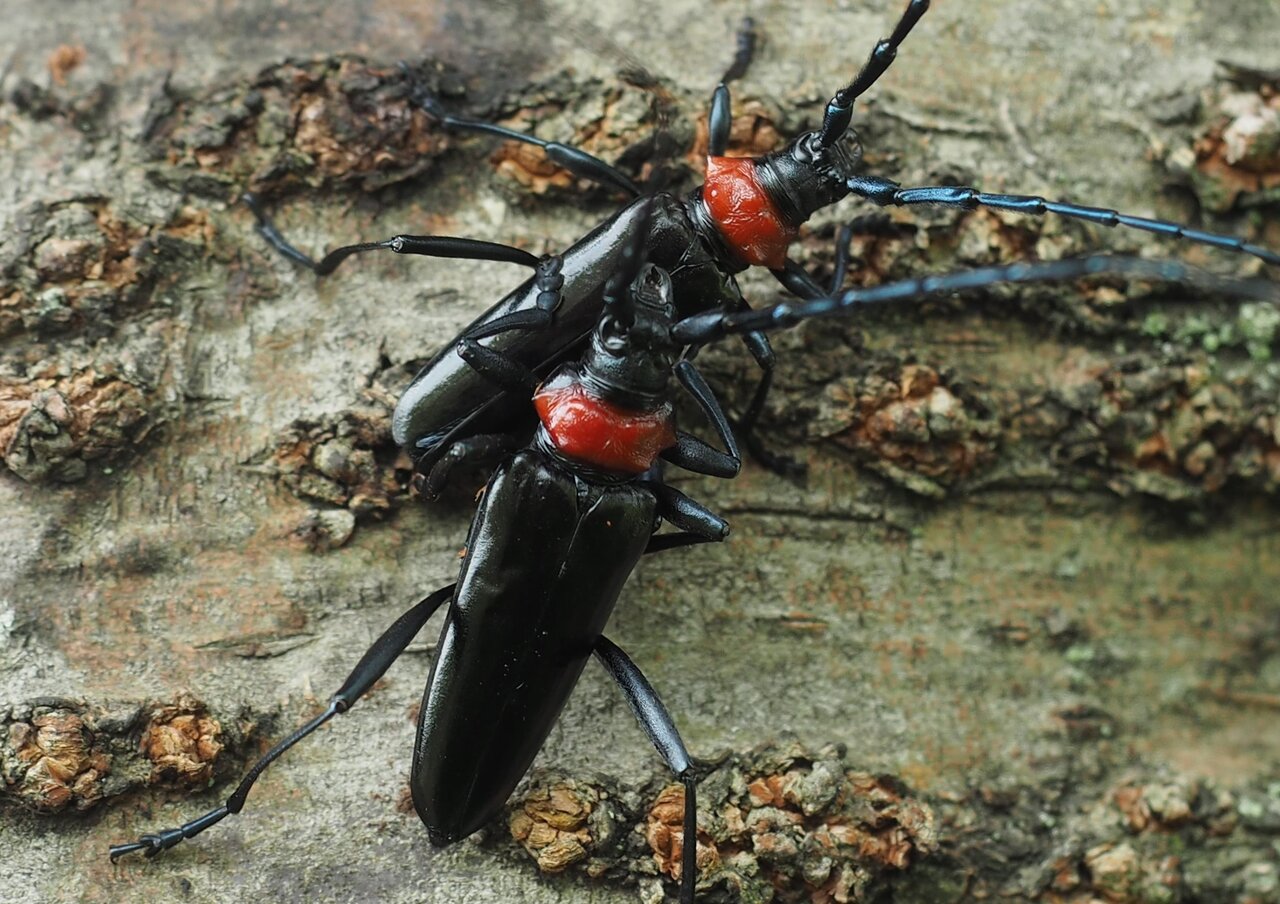
Adult Beetle Characteristics
Adult red-necked longhorn beetles are visually striking and relatively easy to spot when they emerge onto tree trunks and branches. Key identifiers include:
- Size: 2.5 to 4 centimeters in length — noticeably larger than most beetles you’d encounter casually
- Coloring: A vivid red or reddish-brown thorax (the “neck” that gives the beetle its English name) contrasting sharply with black wing covers that have a distinctive metallic or shiny sheen
- Antennae: Extremely long — roughly as long as the beetle’s entire body, sometimes longer, and often held out or curved above the beetle’s back
- Body shape: Elongated and cylindrical, typical of longhorn beetles (Cerambycidae family)
- Movement: Slower and more deliberate than most flying insects; they can fly but often walk along bark
The combination of the bright red thorax and glossy black wings is the most reliable field identifier. No native Japanese beetle looks quite like this.
When Adults Are Active
Research from Osaka Prefecture has shown that adult red-necked longhorn beetles are active from June through August, with peak sightings occurring in late June. This is the window when you’re most likely to see them on host tree trunks — the same period when hanami season has passed but cherry trees are otherwise in full leaf. Adults are most abundant early in the appearance period, so late June and early July are the highest-probability sighting windows.
Trees Most at Risk
The beetle specifically targets trees in the Rosaceae family, with a strong preference for:
- Cherry trees (Sakura, particularly the Somei Yoshino variety that dominates Japan’s ornamental plantings)
- Peach trees
- Plum trees (Ume)
- Apricot trees
- Cherry-plum hybrids
What To Do If You Spot the Red-Necked Longhorn Beetle
If you encounter what appears to be a red-necked longhorn beetle, quick action helps local authorities contain the spread.
For Adult Beetles
If you see an adult beetle:
1. Capture it if safely possible. Adults can be captured with a bug net, a small container, or even a plastic bag. They don’t sting or bite, though they can produce a defensive spray of chemicals when threatened, so avoid handling them directly with bare hands. Wear gloves if you can.
2. Do not release it. Once captured, do not release the beetle back into the environment. Every adult prevented from reproducing helps limit spread — a single female can lay hundreds of eggs.
3. Report and dispose properly. Contact the local municipal environment office (kankyou-ka, 環境課) or park management authority. Many affected municipalities now have designated collection points where you can submit captured beetles. In cities running bounty programs like Fussa or Kawajima, you may be eligible for a monetary reward.
4. Take a photo before disposal. Even if you’re not participating in a bounty program, photographing the beetle at the location where you found it helps authorities track the spread. Include a photo of the tree it was found on and the general area.
For Signs of Infestation
If you spot frass or other signs of infestation on a tree:
1. Take clear photographs of the frass, the tree and its location. Note the tree species if you can identify it.
2. Report to local authorities. Contact the municipal parks department, forestry office, or environmental section. Reports from residents and visitors are one of the key ways local governments learn about new infestation sites before they spread.
3. Do not attempt to treat the tree yourself. Removing frass, drilling into infested areas, or applying insecticides without professional guidance can spread the infestation further or damage the tree unnecessarily. Trained professionals will assess and treat affected trees.
How the Beetle Arrived in Japan
The red-necked longhorn beetle (known in Japanese as kubi-aka tsuya kamikiri) is native to China, the Korean Peninsula, Mongolia, the Russian far east and Vietnam. It first appeared in Japan in 2011, likely arriving via imported wood or packaging materials, and quickly established populations in several regions across the country.
By 2018, the beetle’s spread had become severe enough that Japan officially designated it an invasive foreign species on January 15 of that year. Despite this designation, the beetle has continued to expand its range. As of the most recent surveys, established populations exist in six non-contiguous regions across Japan — including parts of Tokyo, Saitama, Osaka, Hyogo, Kyoto, and other prefectures. Genetic research suggests the beetle likely arrived in Japan through multiple separate introductions, making eradication substantially more difficult than a single-origin invasion would be.
Related Posts
Updated On July 15, 2026