
If you look at any major international retrospective on Japanese photography over the last few decades, you’re bound to run into the familiar roster of names: Daido Moriyama, Nobuyoshi Araki, Hiroshi Sugimoto. It’s a brilliant but largely male-dominated pantheon that has long defined how the world sees Japan through a lens. A landmark retrospective, newly arrived in Tokyo, challenges that view with a long-overdue perspective: Women were just as central to shaping the country’s visual history.
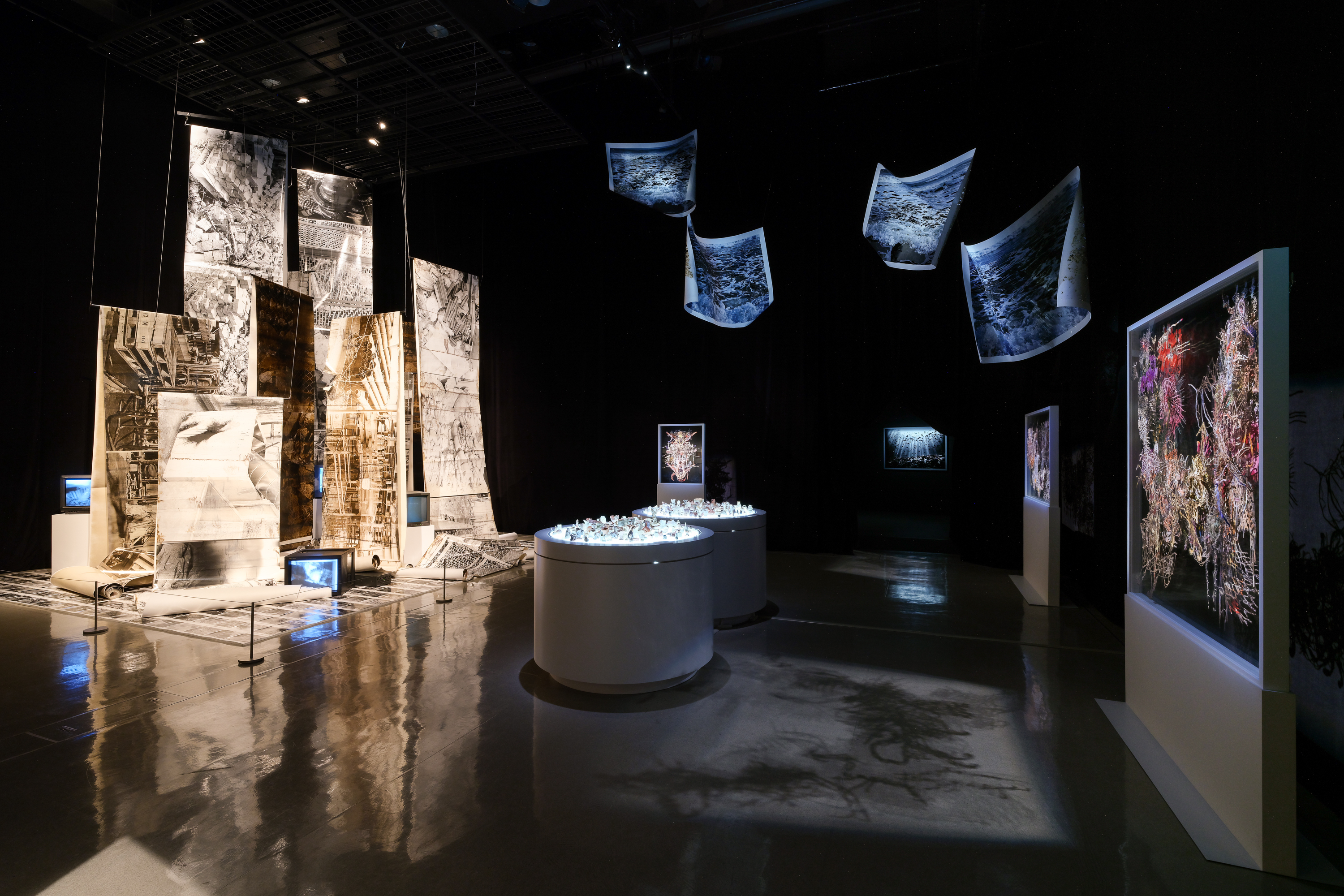
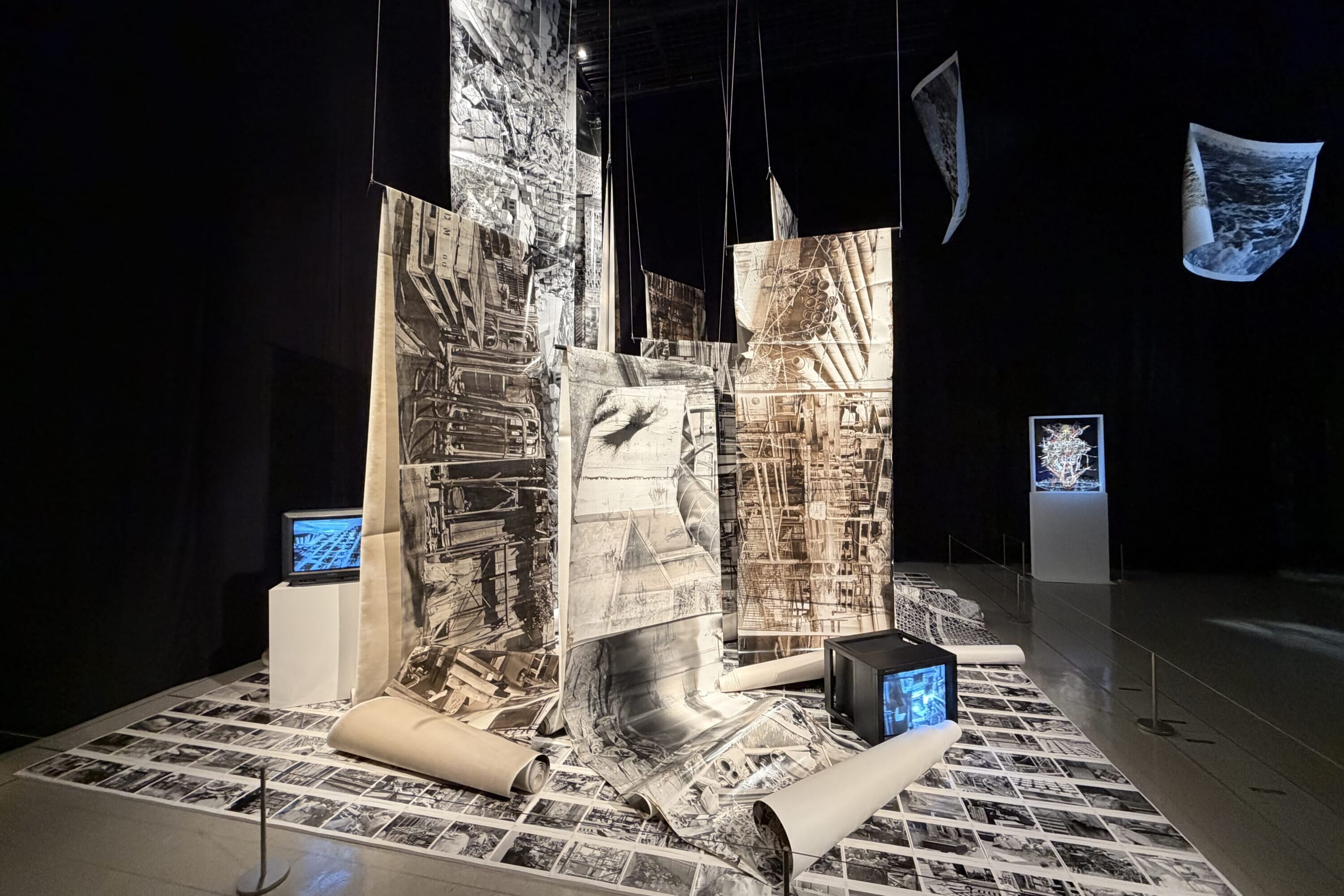
The exhibition, “I’m So Happy You Are Here: Japanese Women Photographers From the 1950s to Now,” gathers over 200 works by 30 women artists from postwar Japan to today. Held in Shibuya’s Hikarie Hall, it’s the triumphant homecoming of a touring phenomenon that has taken the art world by storm, drawing in over 140,000 visitors across Europe.
The exhibition grew out of a book of the same title, published in 2024 by Aperture, which aimed to correct a glaring blind spot — while Western institutions had spent decades focusing on the grit and conceptual genius of Japan’s male photographers, their female contemporaries’ innovations had been left untranslated and unarchived abroad.

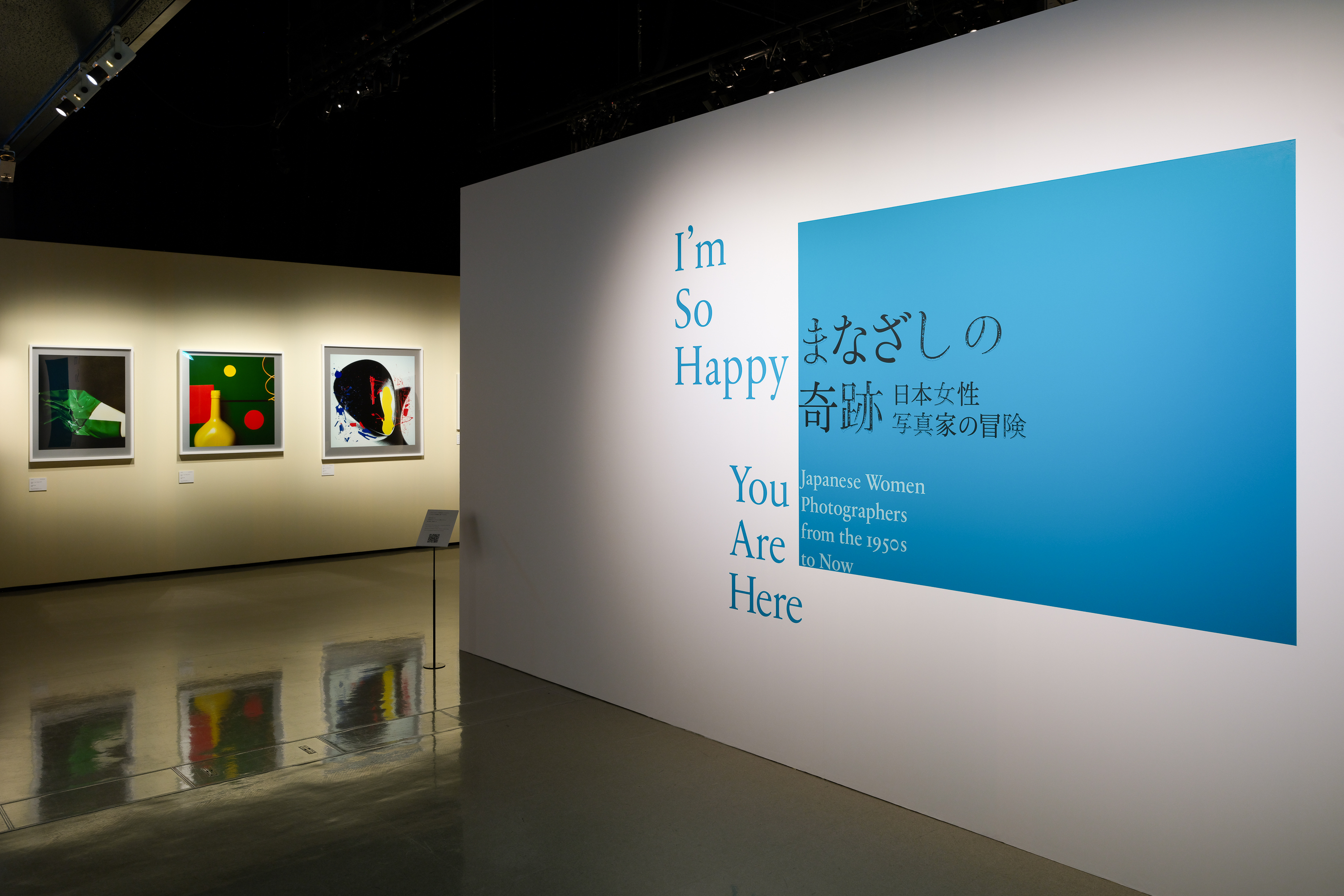
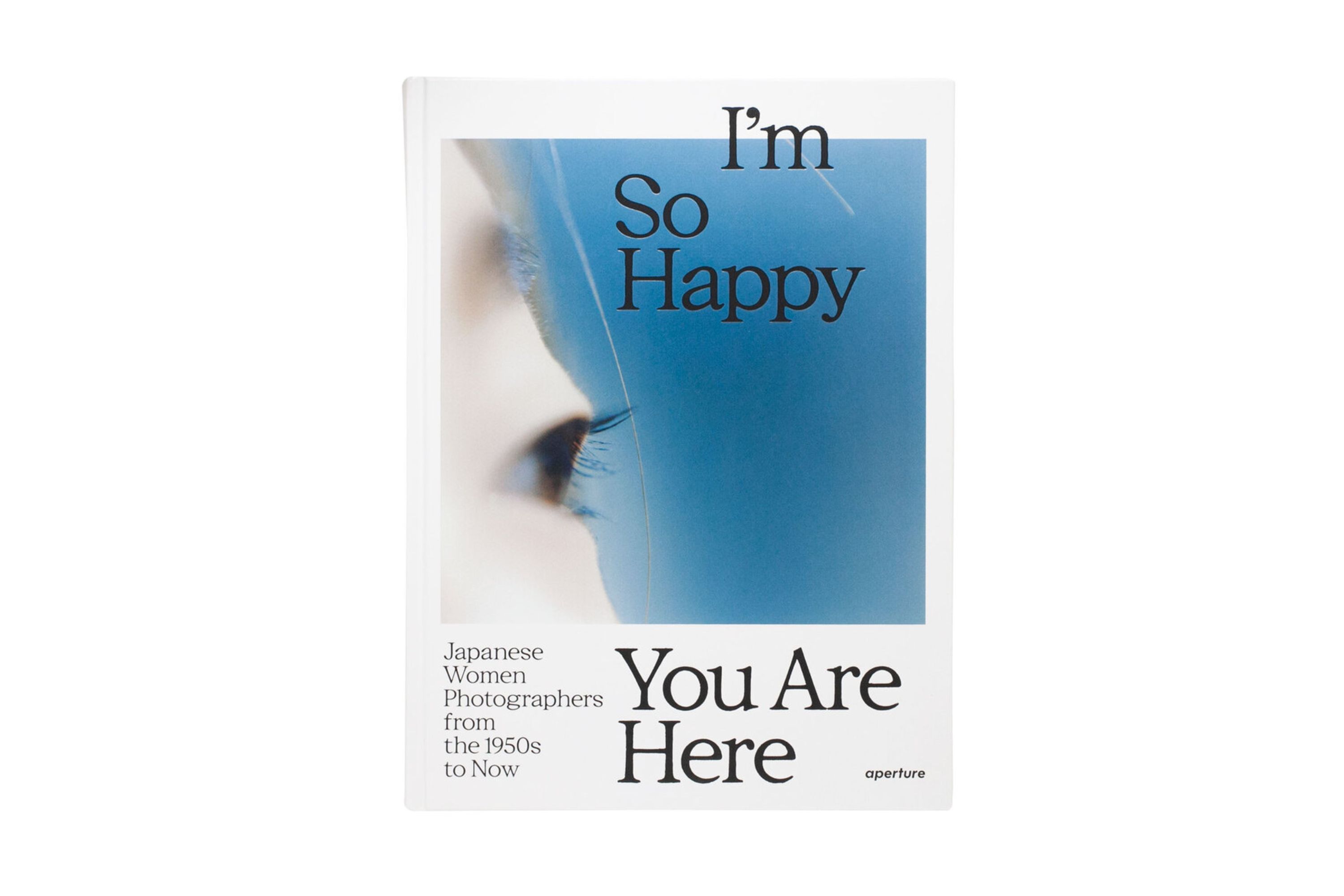
Japan head curator Mariko Takeuchi is quick to emphasize that the project is not some exercise in tokenism. “This isn’t simply about ‘because they are women,’” she said at the show’s opening. “Japan has a wealth of extraordinary photographers, and a great many of them happen to be women. Instead of treating them as a monolith, I felt compelled to honor them as individuals, highlighting how each artist commands a completely distinct worldview and approach to the medium.”
The exhibition sets its stakes at the entrance with a rare 1864 portrait by Shima Ryu of her husband, Shima Kakoku — the earliest known proof of a Japanese woman claiming the profession — alongside vibrant color studies by 1920s pioneer Eiko Yamazawa. This historical prelude makes it clear that women aren’t newcomers to Japanese photography; they’ve been guiding its evolution from the very beginning.

Sculpting Fantasy, Performing Identity
Many of the artists featured built their own intricate worlds from scratch, rather than simply treating the camera as a passive recording device. Take Toshiko Okanoue, a pioneer of the 1950s who clipped imagery from Western magazines like Vogue and Harper’s Bazaar to fashion dreamlike, allegorical collages reminiscent of Max Ernst or Hannah Höch. These fragmented worlds look wonderfully whimsical to a modern audience, but in the rigid domestic landscape of post-war Japan, they were also an act of psychological escape.
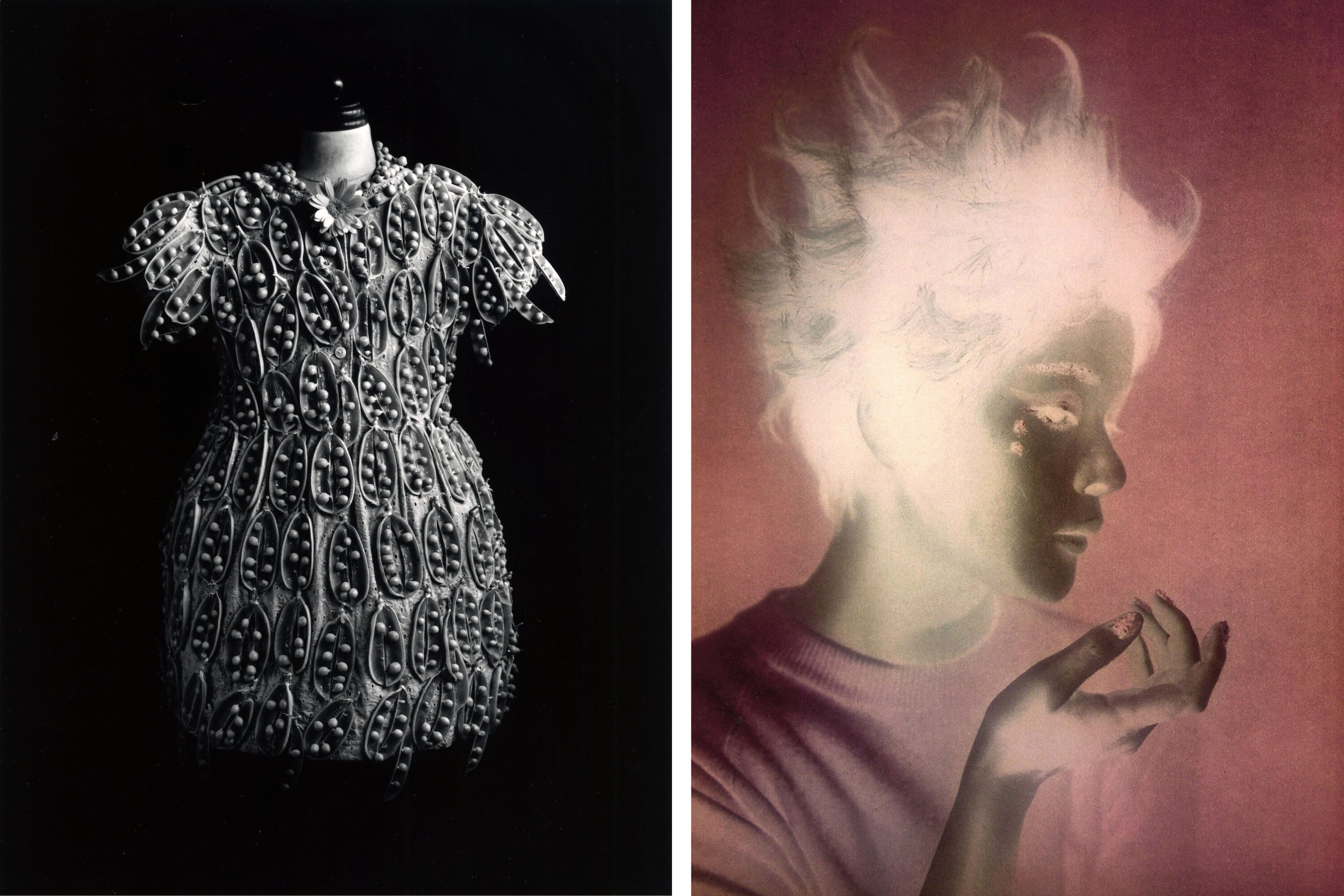
Decades later, Michiko Kon took that same spirit of physical creation and ventured into a startling new dimension of still-life photography. Kon shot highly perishable sculptures she made herself — fish scales pinned on a dress, a high heel wrapped in chicken skin, fresh vegetables and insects arranged into uncanny shapes. These eerie, tactile gelatin silver prints capture the exact threshold between beautiful artifice and organic decay.
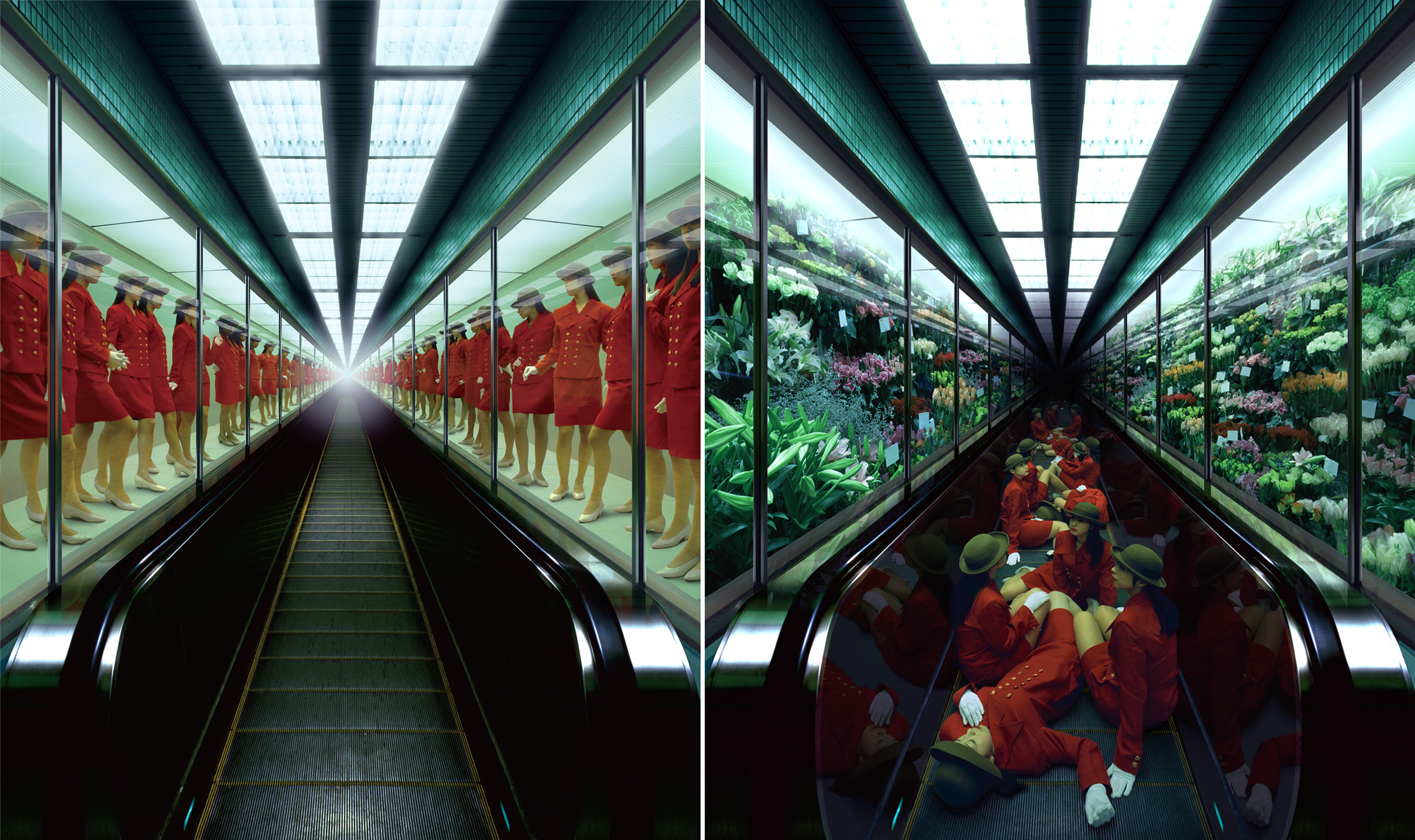
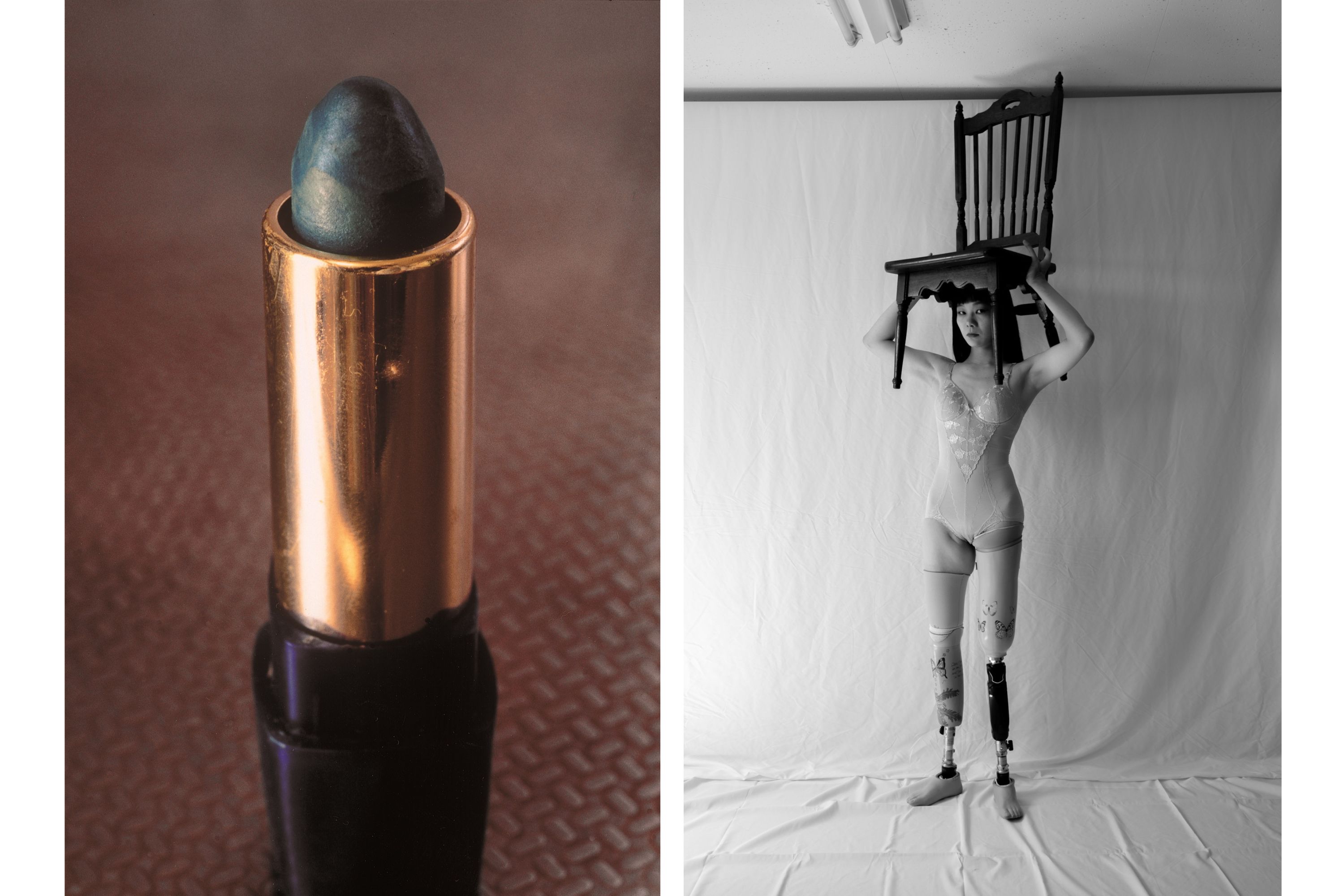
Other artists saw human identity itself as something constructed. Miwa Yanagi’s Elevator Girls series (1994-99) places models in tableaux-like department store settings, using the hyper-feminized profession as a symbol of constriction and conformity. “For many, Elevator Girls represents the pressure from society to fit into a specific group or hierarchy,” Yanagi told TW in a recent interview. “Some might see [this pressure] as a relic of the past; others might still feel its friction.”
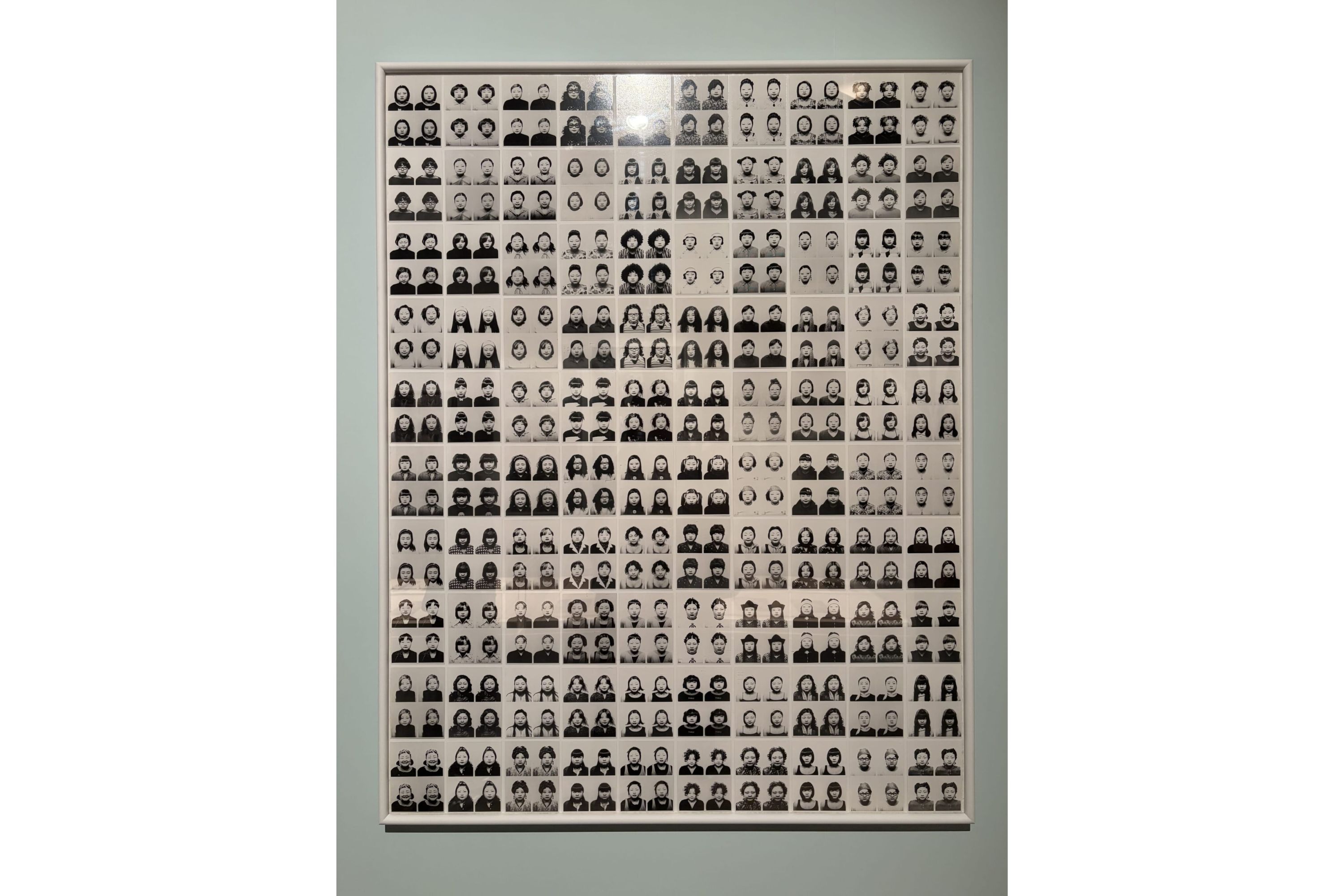
Tomoko Sawada takes this interrogation of performance a step further by employing herself as a blank canvas; in her ID400 series (1998-2001), Sawada used a public photo booth to transform into hundreds of different individuals through shifts in makeup, hairstyle and expression, challenging the idea of a fixed, singular self.

Real Life in Plain Sight
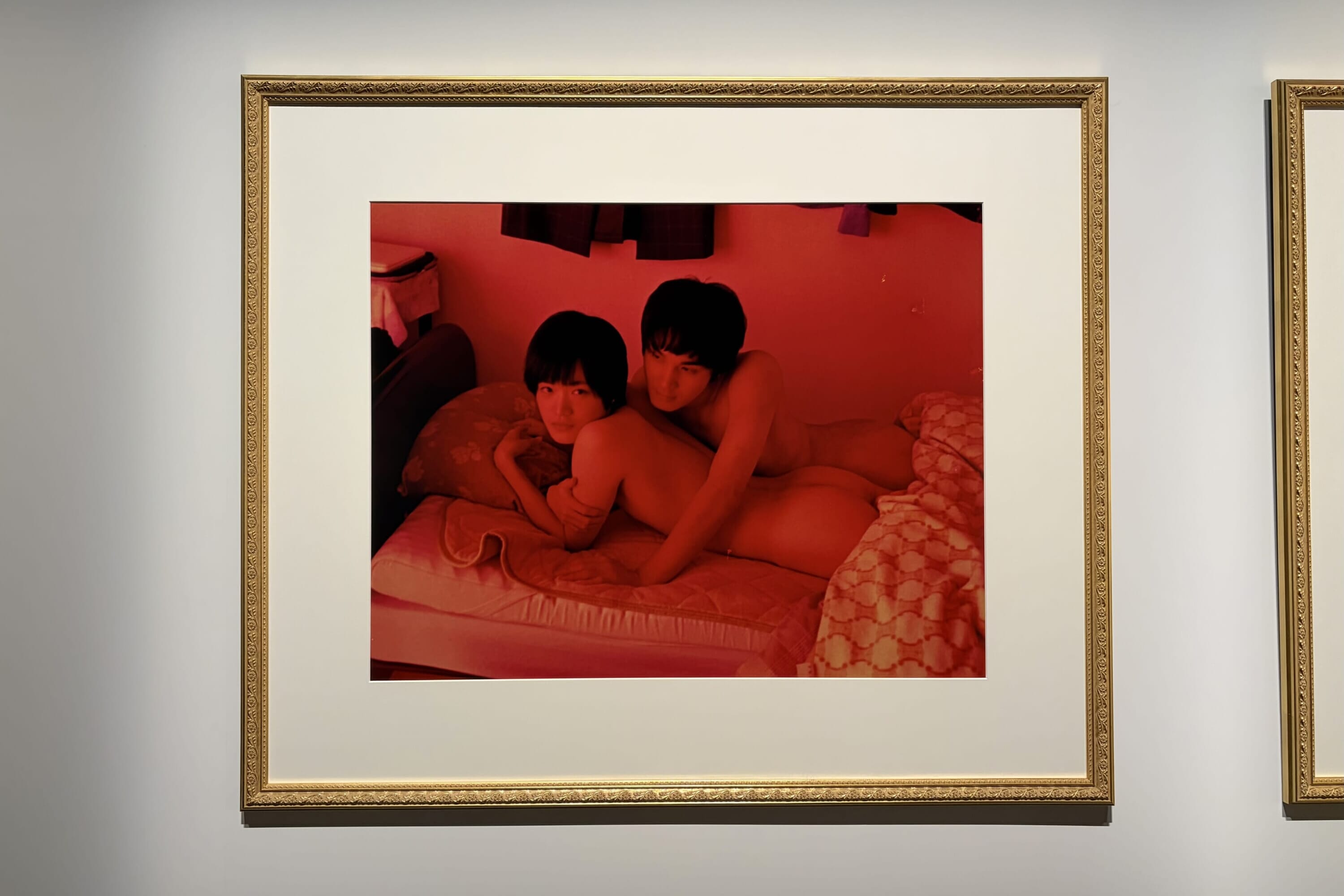
Other artists turned their cameras outward, capturing the complex relationship between history and daily life. Mao Ishikawa, for instance, has spent over half a century documenting the everyday rhythms of her native Okinawa. In her early twenties, while working as a barmaid at establishments catering to Black American GIs, Ishikawa began photographing her friends and peers for her pivotal series Red Flower (1975–77) — depicting everything from scenes inside bars to local women gossiping, unwinding and raising their children. While the island’s occupation has long been photographed by male outsiders, the series offered a candid, intimate celebration of camaraderie and youth at a time of high political tension.
The weight of the past shifts to a different landscape in Aya Fujioka’s award-winning series Here Goes River (2013-2017). Born and raised in Hiroshima, Fujioka avoids heavy-handed photojournalism and instead focuses on mundane moments in her hometown, decades after the atomic bomb. Orbiting the Atomic Bomb Dome as a living fixture of the city, she traces Hiroshima’s rivers both literally and figuratively, from its seven waterways to the streams of tourists, shopping arcades and trolley cars carrying commuters.
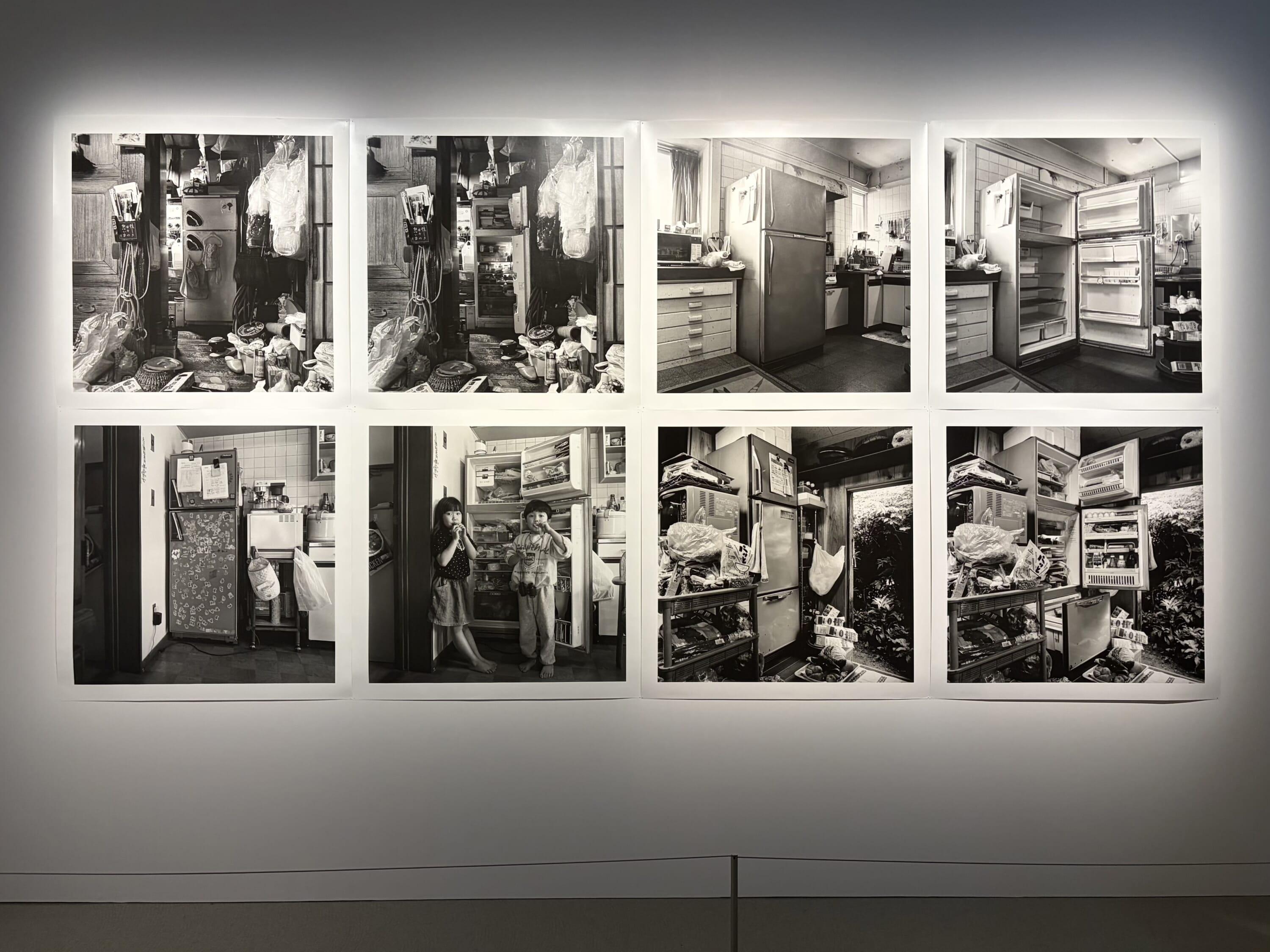
Tokuko Ushioda, from “Ice Box” series (1981-2001), Installation view by TW
If Fujioka maps memories across an open city, Tokuko Ushioda finds them behind closed doors, creating unique capsules of domestic life. In 1978, living with her newborn daughter and husband in a sparse, run-down apartment in Setagaya, she began documenting a single focal point of their home: the fridge, which was the only furniture they had in the beginning.
“Despite our poverty, every day felt strangely peaceful… I wanted to keep a record of our lives through this fridge,” Ushioda said in an exhibition catalogue from 1995. These snapshots soon grew into her famous Ice Box series (1981-2001), as she expanded the project to portraits of her neighbors and friends’ homes.
》-1-scaled.jpg)
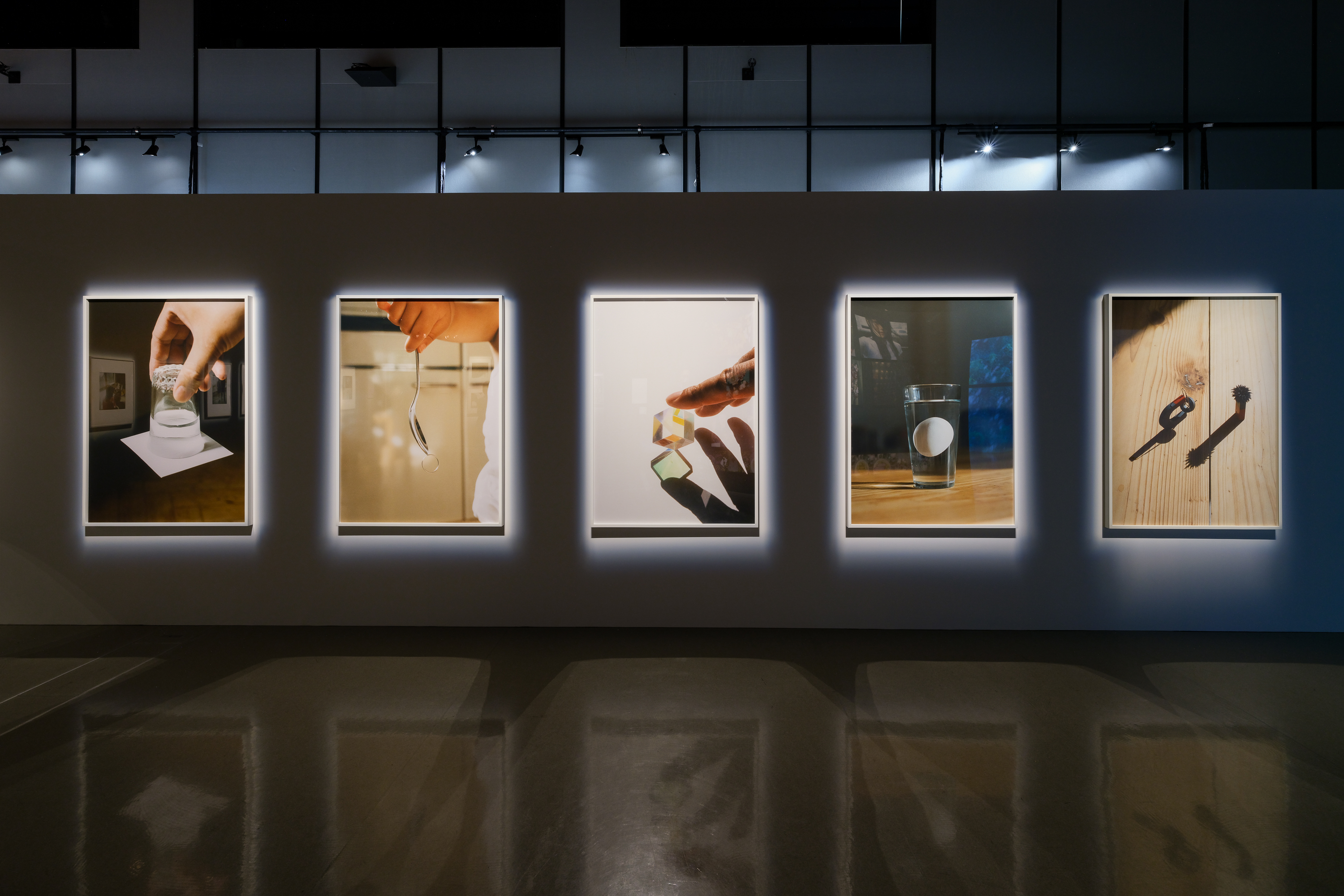
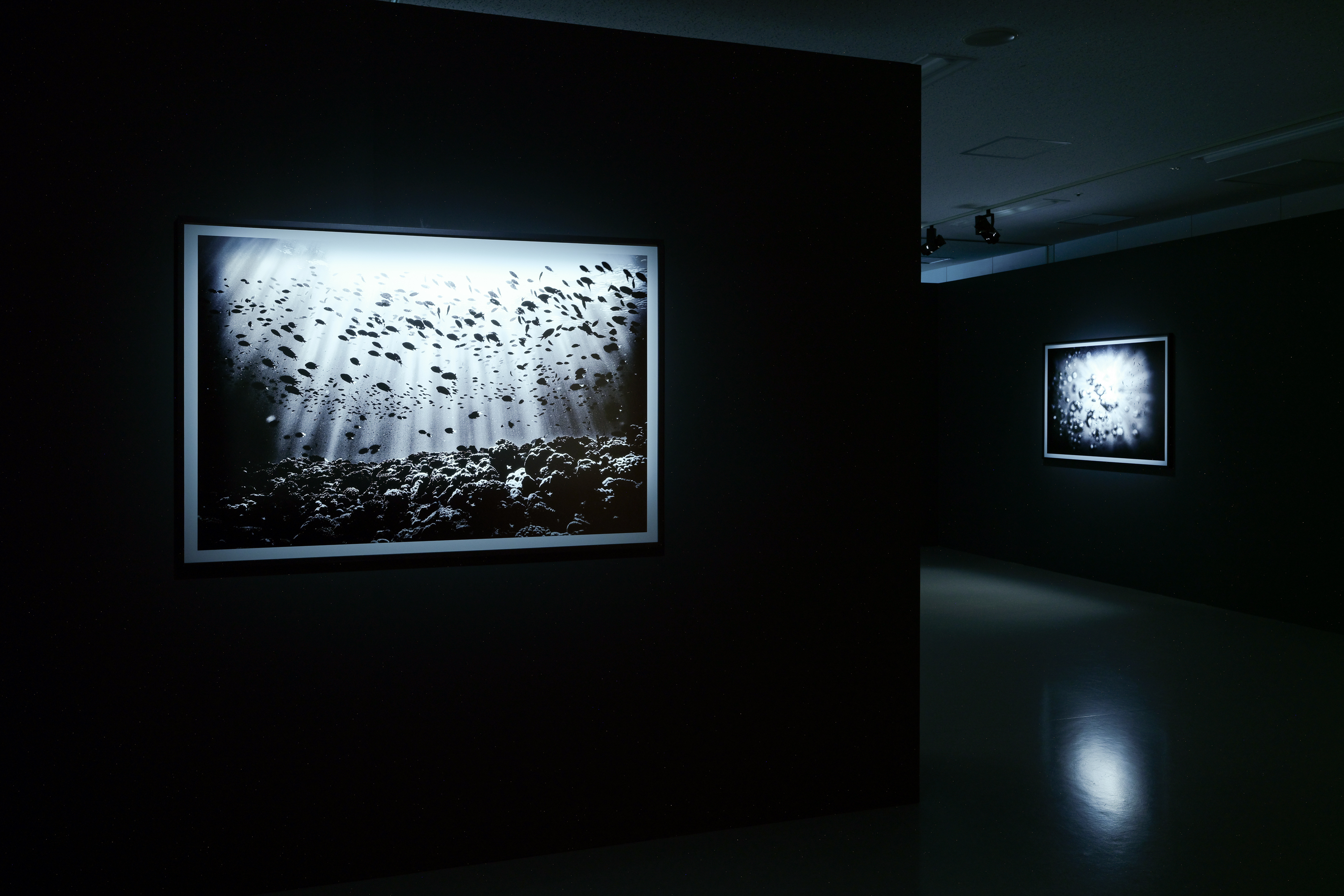
Rinko Kawauchi breaks away from specific geographic anchors altogether; her work feels almost locationless. Since her explosive debut in 2001, when she published three distinct photobooks simultaneously, Kawauchi has found extraordinary beauty in ordinary fragments of life. Her luminous, pastel-toned pieces zoom in on split-second details: a sudden splash of water, a passing shadow and shifting patterns of the natural world. At the exhibition, a video installation of her beloved series Illuminance (2001–2026) brings these fragments together, crafting an experience that feels intimately familiar yet spectacularly vast.
More Info
“I’m So Happy You Are Here: Japanese Women Photographers from the 1950s to Now” runs from July 4 to August 26 at Hikarie Hall in Shibuya. Learn more here.
Participating Artists in alphabetical order: Aya Fujioka, Mikiko Hara, Hiromix, Toshie Imai, Miyako Ishiuchi, Mao Ishikawa, Ai Iwane, Mari Katayama, Rinko Kawauchi, Hiroko Komatsu, Michiko Kon, Yurie Nagashima, Asako Narahashi, Mika Ninagawa, Tamiko Nishimura, Rika Noguchi, Sakiko Nomura, Toshiko Okanoue, Yuki Onodera, Momo Okabe, Tomoko Sawada, Rieko Shiga, Kunie Sugiura, Yuki Tawada, Toyoko Tokiwa, Tokuko Ushioda, Hitomi Watanabe, Eiko Yamazawa, Miwa Yanagi and Tomoko Yoneda. (Special exhibit: Shima Ryu)