
It’s no wonder some travelers plan their entire Japan itineraries around art. With thousands of museums, galleries and immersive installations scattered across the archipelago, the country offers one of the world’s richest cultural landscapes. It spans everything from ancient treasure troves to avant-garde architectural landmarks, offering a depth of material that can feel, at times, overwhelming.
Given the sheer volume of what’s on offer, it’s easy to miss the details that matter most: the why behind a restoration, or an architect’s original intent. Bloomberg Connects offers a practical way in. A free app developed by Bloomberg Philanthropies, it provides curated digital guides to more than 1,500 institutions worldwide, including many of Japan’s most significant and beloved sites.
Rather than a standard audio tour, the platform acts as a repository of expert insights and archival footage. It’s designed for use both on-site and beyond, unlocking context that doesn’t always appear on a gallery placard. Accessible anytime, anywhere on your phone and available in multiple languages, it makes the country’s creative legacy more open to all — whether you’re at a museum, planning a visit or looking to deepen your knowledge post-exhibition.
To help plan your next cultural journey, we’ve selected five key institutions across Japan that capture this blend of history and design. Each has partnered with Bloomberg Connects, offering visitors a new, digital way to uncover the stories behind their collections.
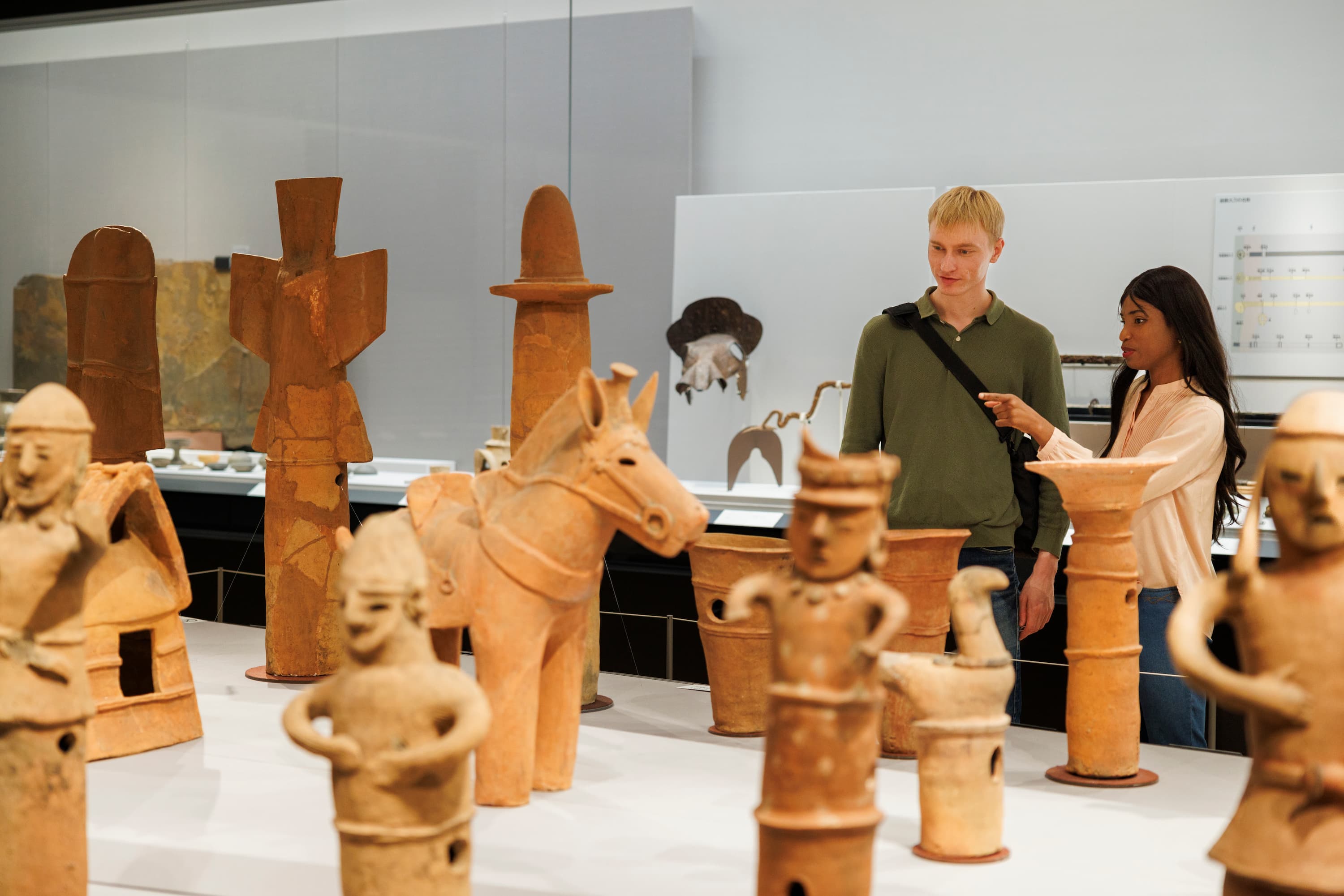
TOKYO NATIONAL MUSEUM, JAPANESE ARCHAEOLOGY GALLERY (HEISEIKAN). COURTESY OF TOKYO NATIONAL MUSEUM.
Tokyo National Museum
Established in 1872, the Tokyo National Museum is Japan’s oldest national museum and one of the country’s most important cultural institutions. Its collection spans more than 120,000 items — from haniwa clay figurines and samurai armor to ukiyo-e prints — tracing Japan’s cultural evolution from ancient times to the modern era. Because displays rotate frequently to protect fragile works, the experience shifts with every visit. The Bloomberg Connects guide helps make sense of this scale, leading visitors on an archaeological journey from the Paleolithic period through the Edo period.
For a closer look at preservation, the guide also features expert videos on the restoration of a pair of 12th-century Nio guardian statues — Heian-period figures once stationed outside a Buddhist temple and later damaged in a 1934 typhoon. Elsewhere, it offers an accessible introduction to Japanese art, highlighting masterpieces from the Jomon period (around 11,000 B.C.E.) to the 17th century.
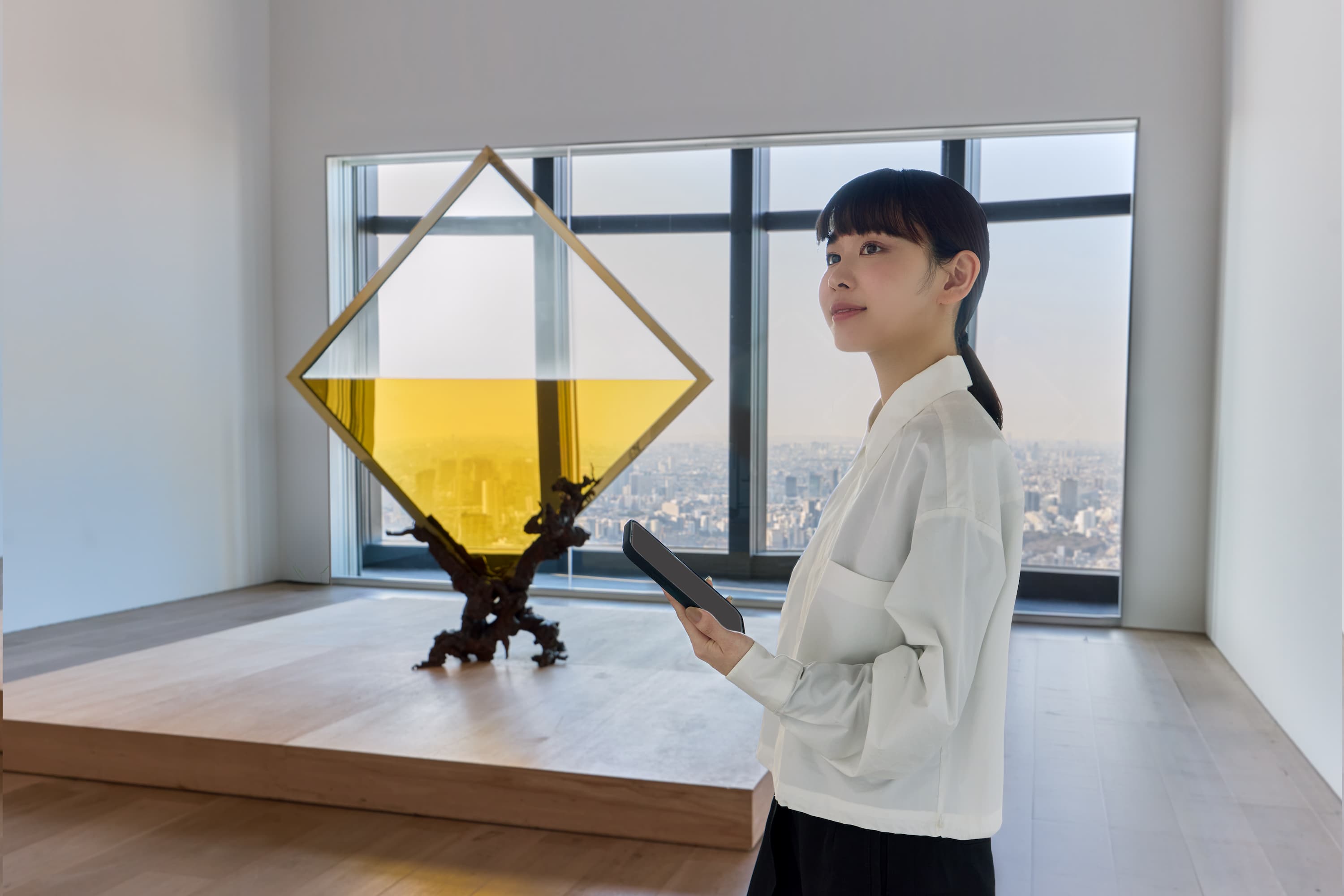
WADA REIJIRO, MITTAG, 2025. PRODUCTION SUPPORT / COURTESY: SCAI THE BATHHOUSE, TOKYO. INSTALLATION VIEW: ROPPONGI CROSSING 2025: “WHAT PASSES IS TIME. WE ARE ETERNAL.,” MORI ART MUSEUM, TOKYO, 2025-2026.
Mori Art Museum
Soaring above the city on the 52nd floor of the Roppongi Hills Mori Tower, the Mori Art Museum is Tokyo’s leading venue for contemporary art, known for its global perspective and strong engagement with artists from Asia and beyond. Its programming spans thematic exhibitions exploring contemporary issues and cross-cultural dialogue, alongside major presentations by artists such as Louise Bourgeois and Chiharu Shiota.
The app functions as both archive and preview. Users can revisit past exhibitions — including work by artists like Cao Fei and Theaster Gates — through artist quotes and guided videos. Through the app, you can also get a look at the 2026–27 lineup, including Ron Mueck’s hyper-realistic figures and Mariko Mori’s projects where art and science intersect.
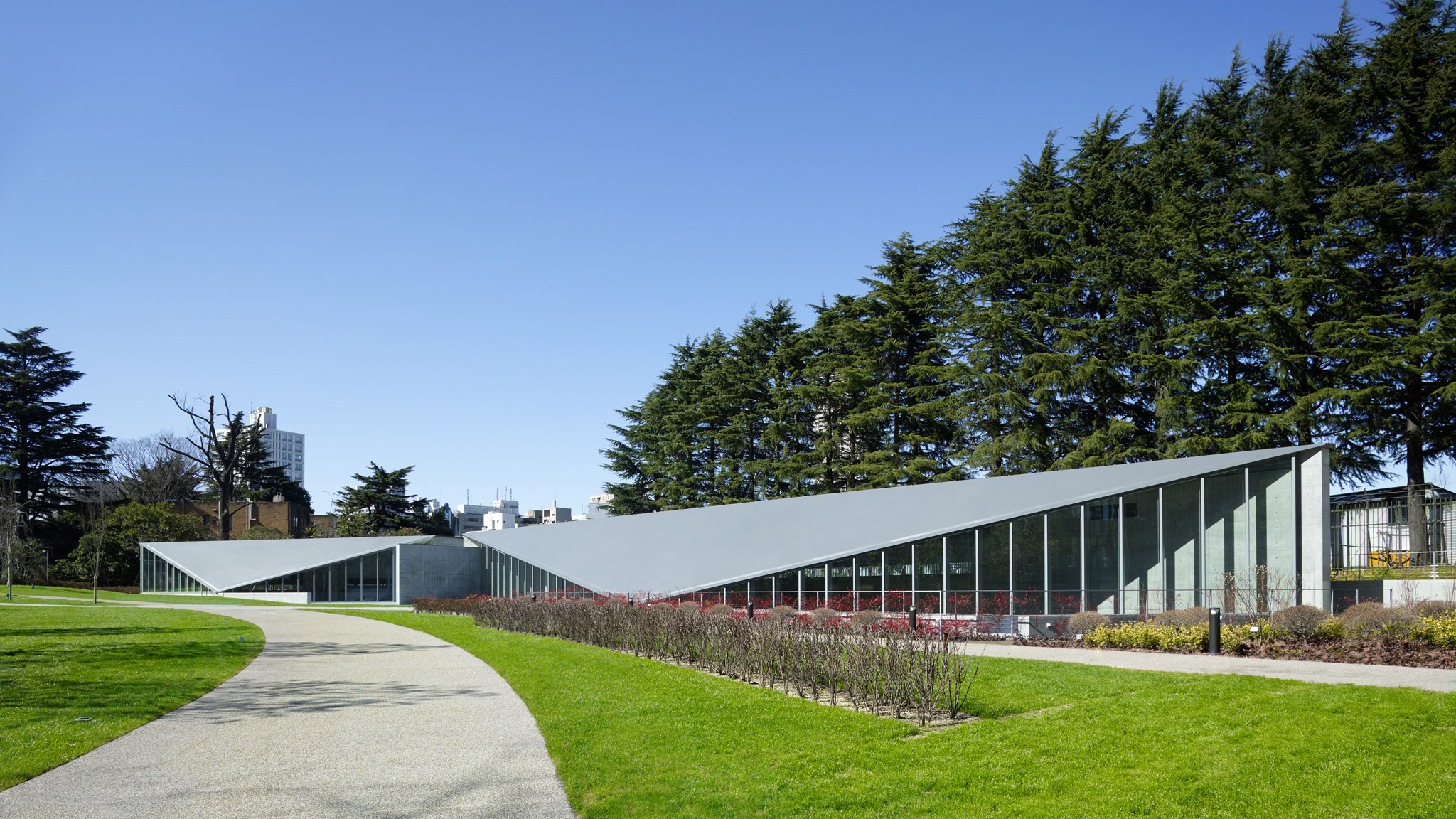
PHOTO: MASAYA YOSHIMURA
21_21 Design Sight
Close by, in Roppongi’s Tokyo Midtown, 21_21 Design Sight shifts the focus to the joy of design in daily life. Founded by designer Issey Miyake, the institution is dedicated to exploring design not as a discipline unto itself, but as a force that shapes culture, industry and daily experience. Its name reflects the idea of moving beyond 20/20 vision to imagine the future. The building itself is a landmark, designed by architect Tadao Ando, with a folded steel roof inspired by Miyake’s clothing. It features the longest sheet of double-glazing in Japan, which blends beautifully with the surrounding greenery.
Through the Bloomberg Connects guide, visitors can take a self-guided architectural tour that explains the construction and philosophy of Ando’s design. The app also offers insight into rotating exhibitions, such as “Soup as Life,” which reexamines the origins of food, clothing and shelter from a design perspective. Interviews with the gallery’s directors add further context, shedding light on shows that range from Japanese graphic design to the everyday aesthetics of something as simple as a ramen bowl.
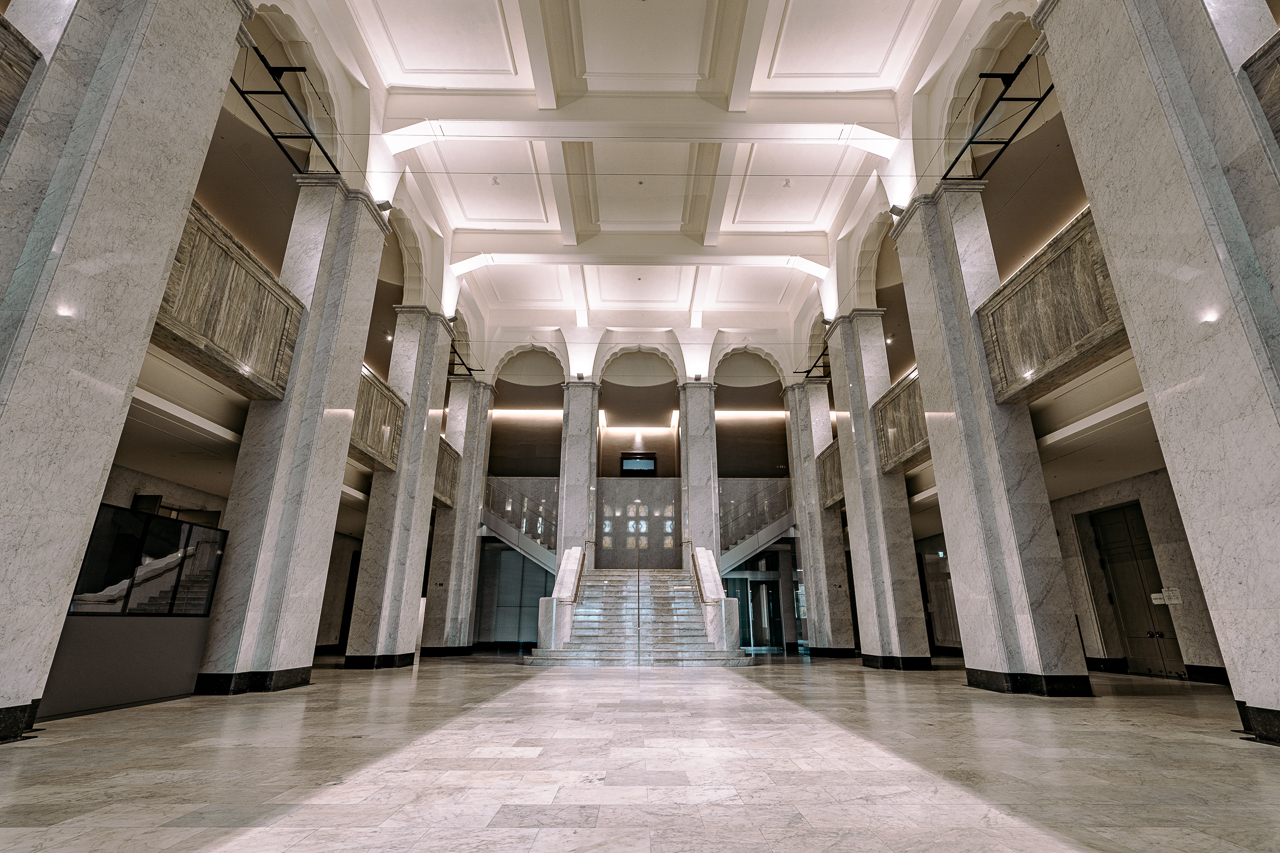
COURTESY OF OSAKA CITY MUSEUM OF FINE ARTS
Osaka City Museum of Fine Arts
The Osaka City Museum of Fine Arts recently reopened after a two-year renovation that restored much of its original 1936 character. The project carefully revealed architectural details that had been hidden over time, including the intricate decorative patterns on the central hall ceiling. Located in Tennoji Park, the museum houses a wide-ranging collection of Japanese and East Asian art, and is particularly known for its Chinese sculptures.
Through the app, audio guides provide cultural and historical context for works from major cave temple sites like Longmen and Yungang, unpacking the symbolism behind their forms. Additionally, the digital guide to the “Treasures of Osaka” collection allows visitors to trace the city’s cultural heritage through the museum’s earliest acquisitions, including the very first painting the museum obtained when it opened.
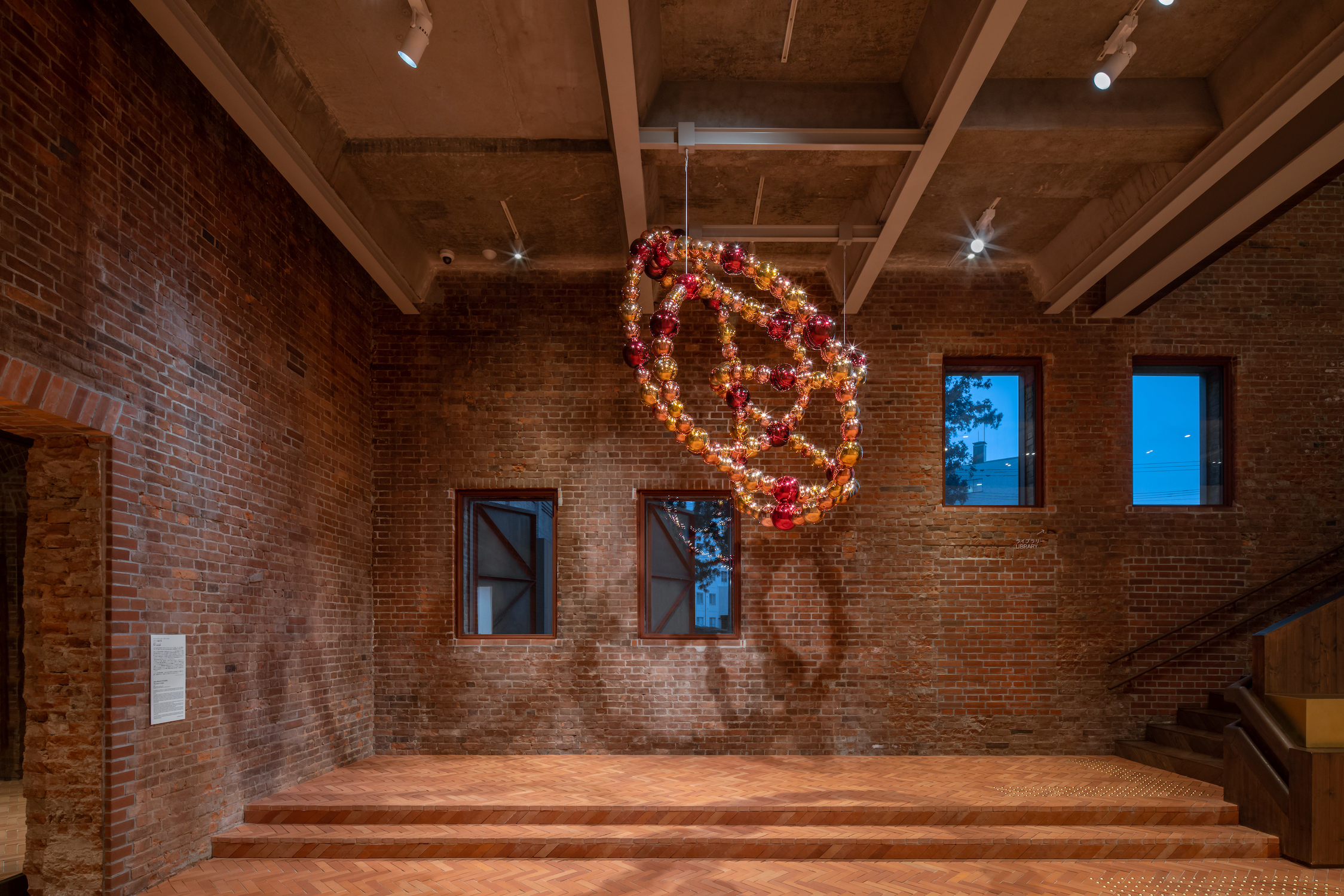
JEAN-MICHEL OTHONIEL, THE KNOT OF EDEN, 2020. COLLECTION OF HIROSAKI MUSEUM OF CONTEMPORARY ART. PHOTO: TOLOLO STUDIO
Hirosaki Museum of Contemporary Art
In northern Japan, the Hirosaki Museum of Contemporary Art offers a compelling example of how regional heritage can be revitalized. The museum occupies a Meiji-era brick warehouse that once functioned as a sake brewery. Architect Tsuyoshi Tane led its transformation, preserving the original exterior while adapting the interior for large-scale contemporary works.
The collection focuses on artists with ties to the Tsugaru region, including site-specific works like Yoshitomo Nara’s A to Z Memorial Dog and Jean-Michel Othoniel’s Venetian glass installation The Knot of Eden.
The Bloomberg Connects guide includes a video tour narrated by Tane, detailing how the building’s historic character was maintained while being adapted for modern use. The app also serves as a digital archive of the museum’s history since its 2020 opening, helping visitors understand how this regional site connects to a broader global art dialogue. It also provides deeper insight into the museum’s exhibitions. For the current Sachiko Kazama exhibition, for instance, visitors can watch short video commentaries in which the artist explains individual works.
More Info
Bloomberg Connects is a free mobile platform for exploring museums and cultural spaces via your own smartphone, offering architectural video tours, expert restoration insights, artist interviews and multilingual support.
Download the app ahead of your next museum visit to unlock deeper insights on-site.
Learn more at bloombergconnects.org.