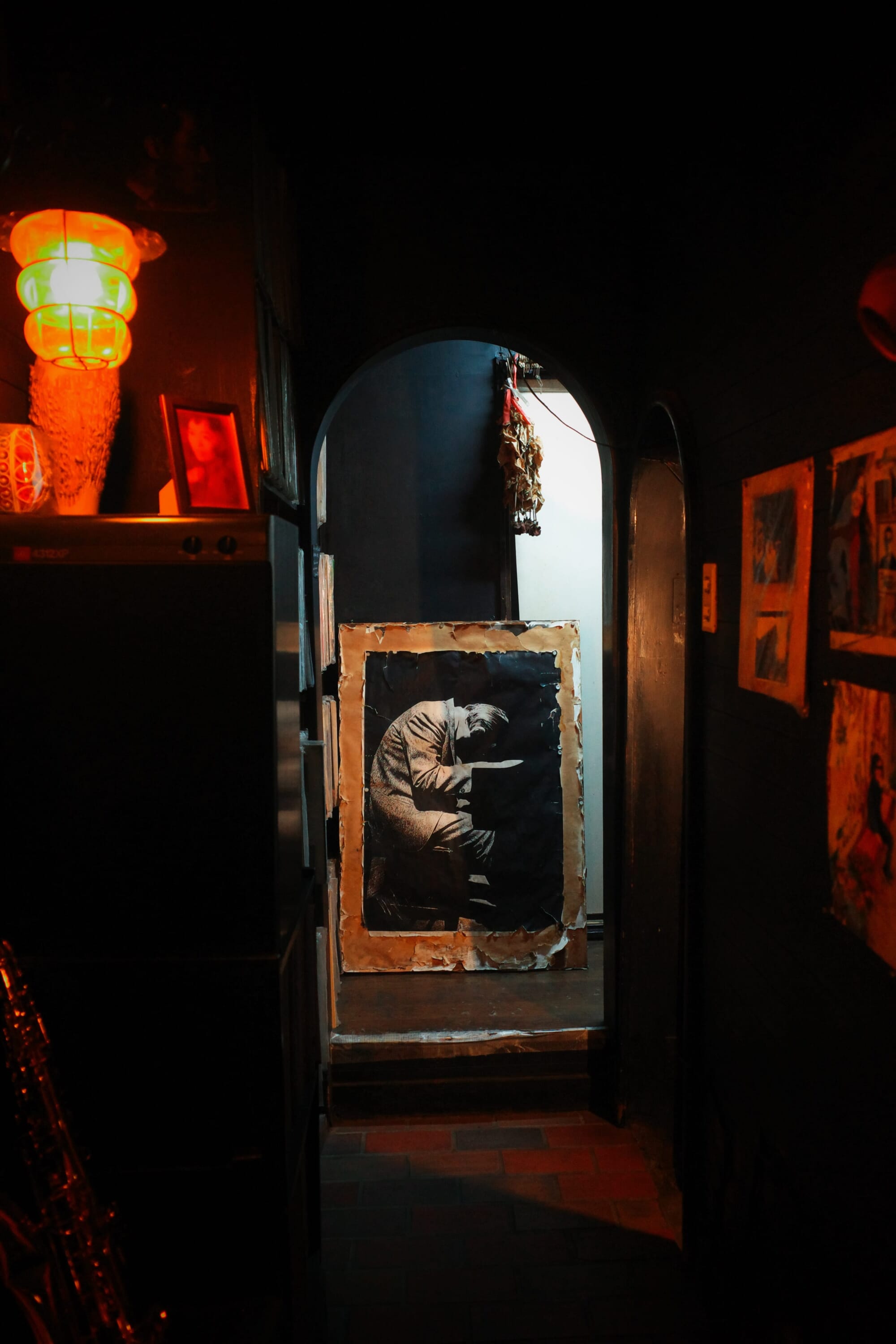
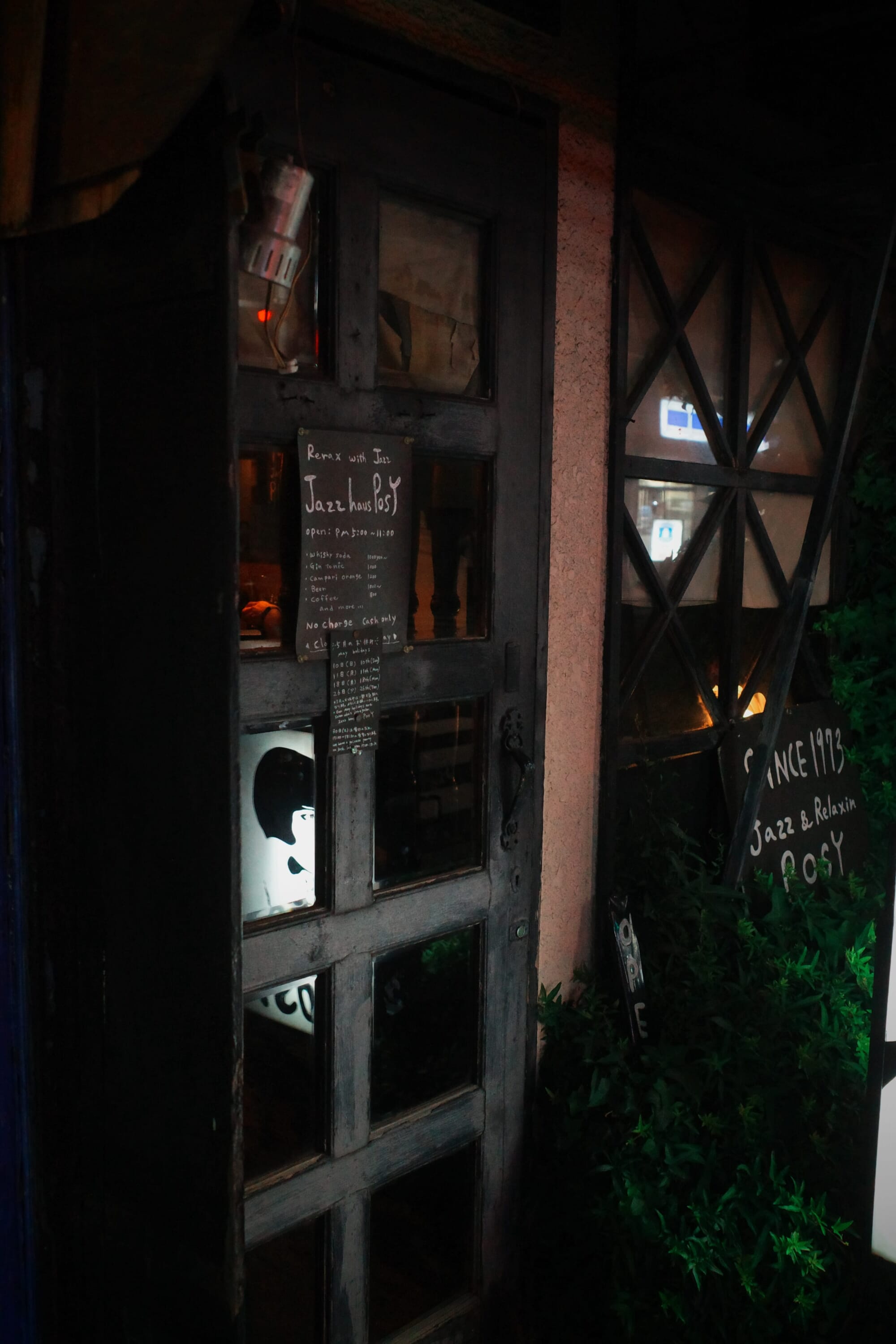
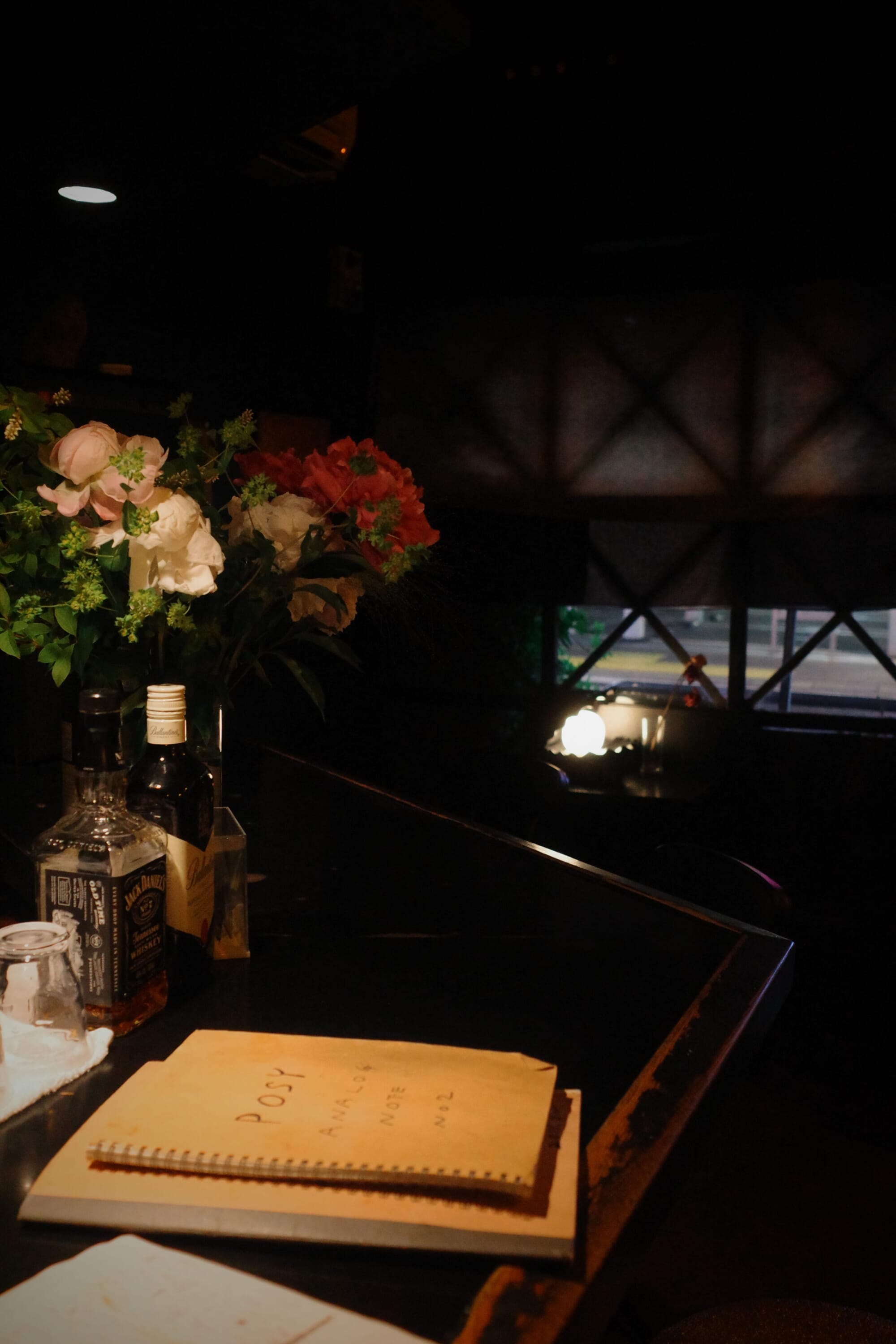
You can’t enter Jazz Haus Posy unannounced. Push open the door, and you’ll see a buzzer on the table. Press it, and someone will appear from the back — usually Ako, a small bespectacled woman in her 40s, smiling. As you walk in, the first thing you’ll notice is the black-and-white poster of Bill Evans hunched over his piano, placed at the end of an arched hallway.
Then, smaller details will begin to emerge, like the warm amber cast from lamps falling across dozens of shikishi — square cardboard plaques traditionally used in Japan for signatures and dedications — displayed on the walls. The room is dark and intimate. Outside, Shimokitazawa hums and rattles. Inside Posy, all of that falls away.
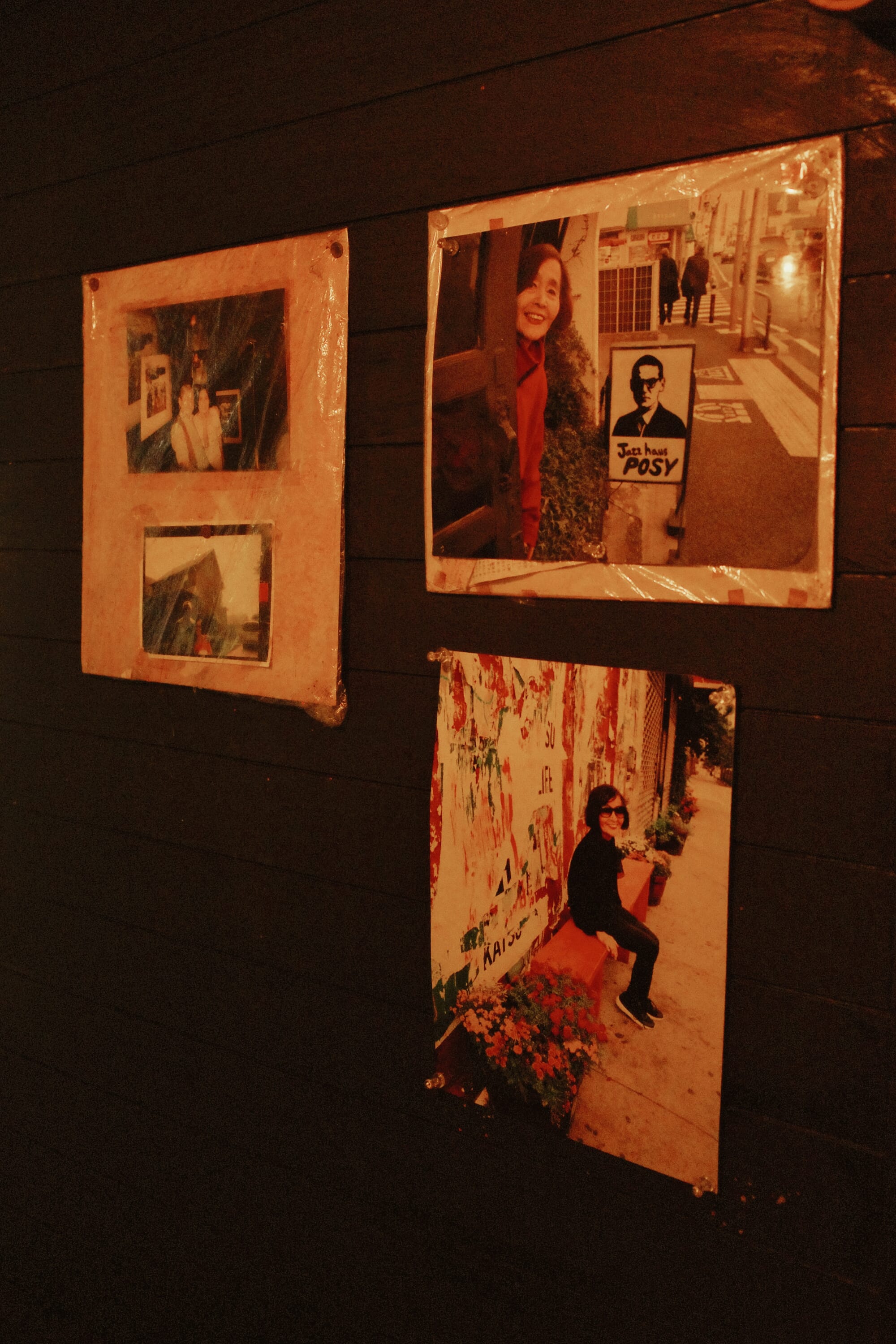
Misa — Ako’s mother — opened the bar in Shimokitazawa’s Daizawa neighborhood in 1973. A posy, Ako explains, is a diminutive bunch of flowers — a small, careful gift. Just like the bar itself. Ako grew up here, watching her mother pour drinks, spin records, hold court with the regulars. Misa has always been enthusiastic and slightly uncontainable, Ako says — someone who was always unafraid of chasing after what she wanted. And Posy was, from the beginning, a portrait of her love of jazz.
Two years ago, when Misa — now in her 90s — began to slow down, Ako stepped away from her old job and took over running the bar. Misa still stops by now and then to chat up the customers. She even hosts a private gathering for her beloved regulars twice a year, while Ako bartends. Taking over the business, Ako says, felt less daunting than many people assumed. “To be honest, I didn’t feel much of a challenge. After all, I grew up alongside the bar and its regulars, and I watched my mother do everything.”
For years, that was the whole of her relationship to Posy: observer, daughter, the quieter one in the room. Now she is the one who appears when the buzzer sounds. Where Misa was all force and momentum, Ako is measured, gentle, a woman of few words — but those words, when they come, are warm, and the care she has for this place and its people is unmistakable.
The Jazz That Never Left
When Misa first opened Posy in 1973, it was a regular kissaten — a coffee shop, quiet and unassuming. Shimokitazawa itself was still a mostly residential town then, before the livehouses and vintage shops began appearing like mushrooms after rain, before the small theaters arrived and gave the neighborhood the creative identity it carries today.
Then, at some point during Ako’s childhood, something shifted in Misa. She fell in love with jazz — a sudden, consuming obsession — and the kissaten transformed to accommodate her passion. The coffee stayed. The jazz arrived and never left.
The bar is now home to a large collection of records — around 1,500 of them — that form the heart of the space. Bill Evans is Misa’s greatest love, and Ako still opens every evening with his music.
Mother and Daughter, Against the World
After divorcing Ako’s father, Misa raised her daughter all on her own, and Ako describes her mother as “almost like my best friend at certain times.” For years, the pair traveled together to jazz festivals and bars across the world — New York first, in 1989, then Nairobi. From there, Cuba, Norway, Switzerland, Denmark and more over the decades. Their most recent trip together was in 2018, back to New York.
Misa, Ako recalls, would arrive at each destination without a plan. She’d collect flyers and local newspapers upon arrival, decide on the spot which bars or clubs or sessions were worth attending, and move through each city on instinct and appetite. Only the festivals themselves required advance booking. Everything else was improvised.
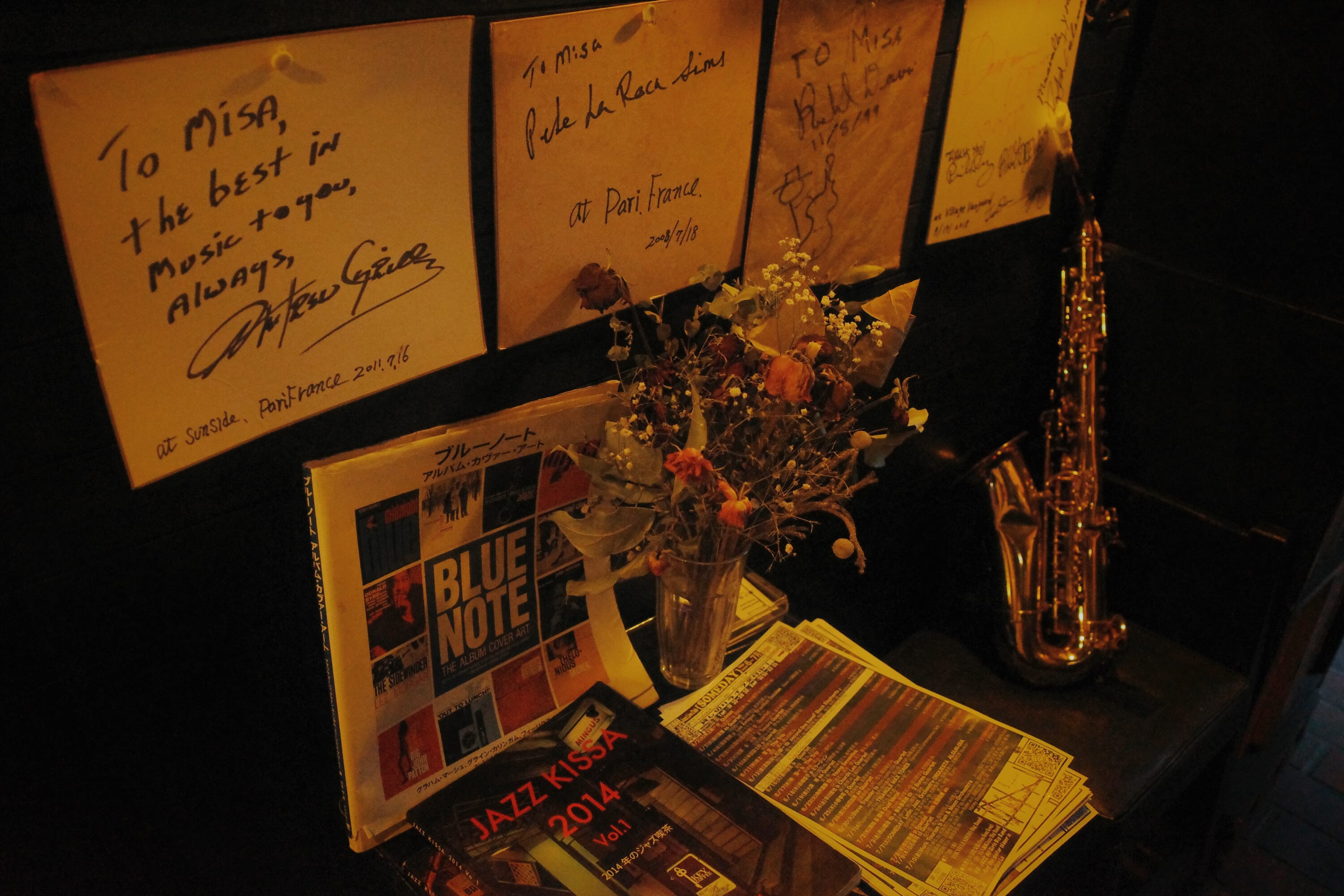
For each of these trips, Misa packed dozens of blank shikishi boards. At the end of every performance, she’d make her way to the musicians and ask for their signatures; despite her limited English, she would make it work. Ako, more reserved by nature, watched her mother’s determination with a feeling somewhere between admiration and mortification. “I thought it was quite brave,” she says. Then, after a pause, she smiles: “Though at the time, I was a little embarrassed by her enthusiasm.”
It’s a small moment, but a revealing one. Throughout our conversation, this is the dynamic that keeps surfacing: Misa as force, Ako as witness — quietly absorbing and learning. And yet Ako was always there, beside her.
A Shrine to Jazz
Today, the autographs Misa brought back from those trips cover the walls of Posy in close, overlapping rows. Interspersed among them are photos of her beaming alongside musicians across the decades — some faded and sun-warmed, clearly from decades ago, others more recent. What strikes you, looking at them, is how little Misa seems to change: the same wide smile, the same unguarded delight.
Perched on the main speaker, a small photograph of Misa as a young woman watches over the room. Elsewhere, a dented saxophone slouches on a chair, left behind by a regular. Small vases of flowers echo the bar’s name.
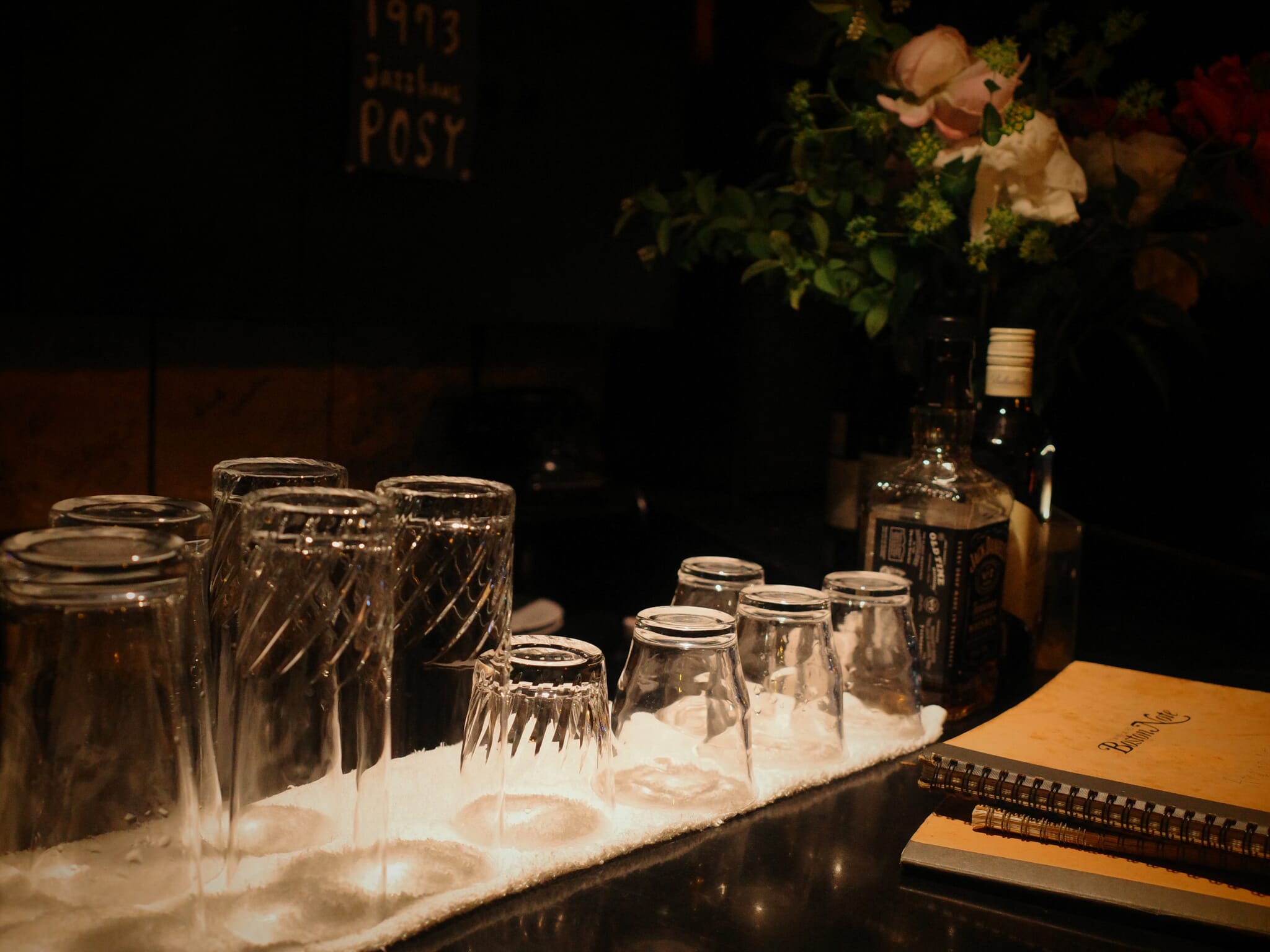
Ako pulls out the bar’s first-ever guestbook: a plain ruled notebook, yellowed and curling at the edges, with a smoothed water stain across one corner. Inside the front cover is a news clipping about Miles Davis’ death, September 28, 1991. Misa sometimes wrote in it like a diary. Ako returns it carefully to the counter, setting it atop a thick stack of the guestbooks that followed — 50 years of people who wanted to honor their memory of Posy with a signature.
She straightens the pile without a word. This is, I realize, the same sort of care she brings to everything here: the records, the flowers, the stories she tells about her mother. Misa may not be in the room, but she is everywhere in it.
Jazz and Relaxin’
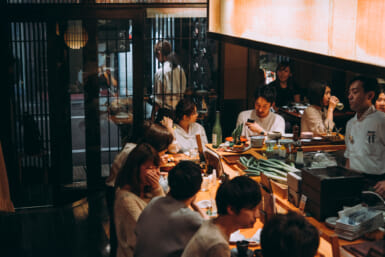
The evening I visit, the guests arrive in an order that feels almost choreographed. First, a young couple dressed to the nines — drinks in hand, the man drawing on a cigarette — speaking in low murmurs. Then a young Korean traveler, alone, who orders a scotch on the rocks and tells us he came all the way from the other side of town to visit Posy.
Next comes a Japanese man in his 50s, carrying a guitar case, who sits with the easy authority of someone who has occupied that spot many times before. He takes out a dog-eared book and reads in the low light. He orders a coffee, and Ako begins making a pour-over, the rich aroma spreading through the room, layering over the jazz and the particular silence of people at peace. It feels like a scene from a Murakami novel. Six strangers, each in their own world, sharing a room.
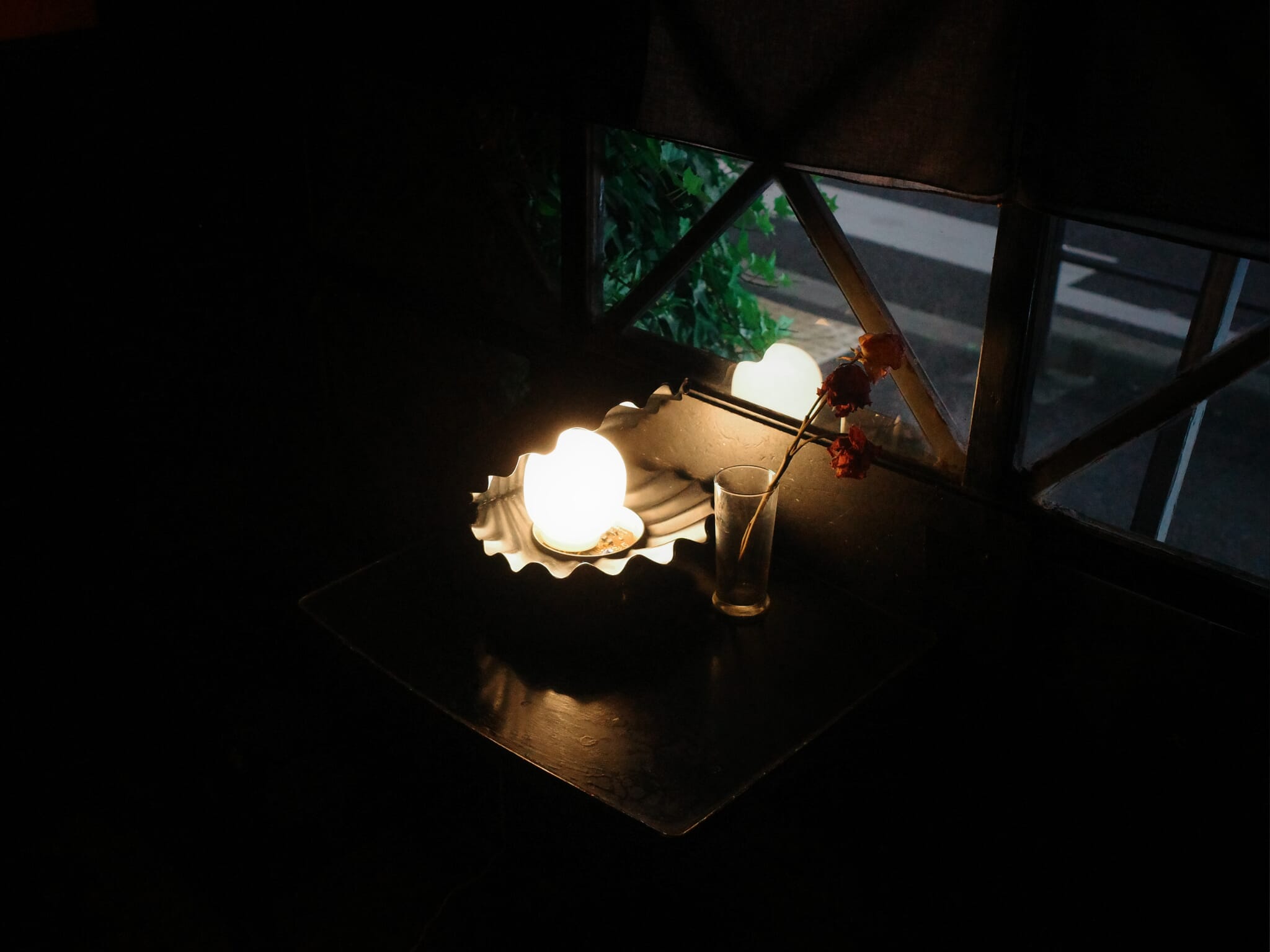
When I ask Ako what she wants the bar to be going forward, she pauses for a moment before answering, “A place where people can come in and simply rest at their own pace.” A handwritten sign on the window reads: Jazz and Relaxin’. “You can stay for as long as you like and not say a word,” she says, “and daydream for as long as you like.”
More Info
Jazz Haus Posy, 5-6-14 Daizawa,
Setagaya city, Tokyo 155-0032
Please note that Posy is a cash-only establishment. Keep up with Posy on Instagram at @1973posy.
Related Posts
- A Century in Sound: A Love Letter to Japanese Listening Cafes
- Jazz Records and English Breakfast: Donato Kissaten
- Jazz Kissa: A Musical Culture Unique to Japan
Updated On June 30, 2026