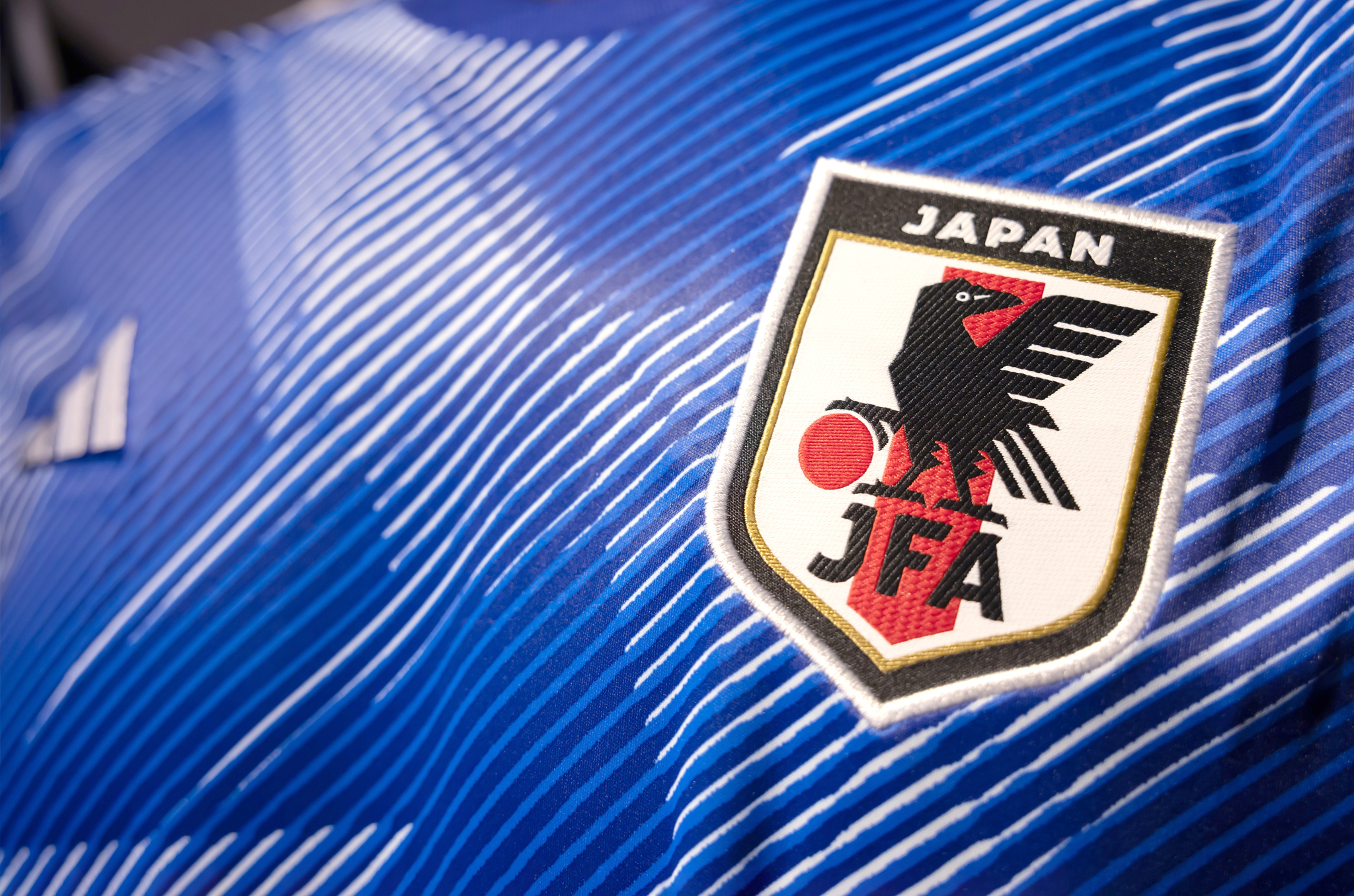
The 2026 FIFA World Cup kicks off on Friday morning at 4 a.m. (Japan time) with co-hosts Mexico taking on South Africa in a repeat of the opener from the 2010 tournament. With 48 teams and 104 matches spread across 16 cities, it is the biggest World Cup ever. Japan enter the tournament with high expectations following their impressive run in Qatar four years ago and a string of strong results against elite opposition. The Samurai Blue begin their campaign against the Netherlands on Monday morning at 5 a.m. Sweden and Tunisia are their other Group F opponents.
Japan World Cup 2026 Preview
Strengths
Cohesion. Japan are a well-oiled unit, aggressive in attack and comfortable without the ball. Despite injuries to key players such as Brighton’s Kaoru Mitoma and Monaco’s Takumi Minamino, the squad depth is arguably stronger than it has ever been heading into a World Cup. Recent friendly victories over England and Brazil suggest the Samurai Blue no longer need to fear going toe-to-toe with the game’s traditional powerhouses. Under Hajime Moriyasu, Japan are unbeaten in 90 minutes against European opposition, recording eight wins and one draw. That draw came against Croatia, before Japan were eliminated on penalties.
Weaknesses
Injuries to key players. The loss of Mitoma, in particular, is a major blow for Moriyasu. The Brighton winger is Japan’s most dangerous attacking player, combining elite dribbling ability with an excellent first touch and positional awareness. Minamino’s absence will also be keenly felt, while the fitness of captain Wataru Endo remains a concern. The Liverpool midfielder has not played a competitive match since February and didn’t take part in any full training sessions during Japan’s pre-tournament camp. The Samurai Blue must also overcome the psychological burden of their World Cup record, having never won a knockout match at the tournament.
Japan’s World Cup History
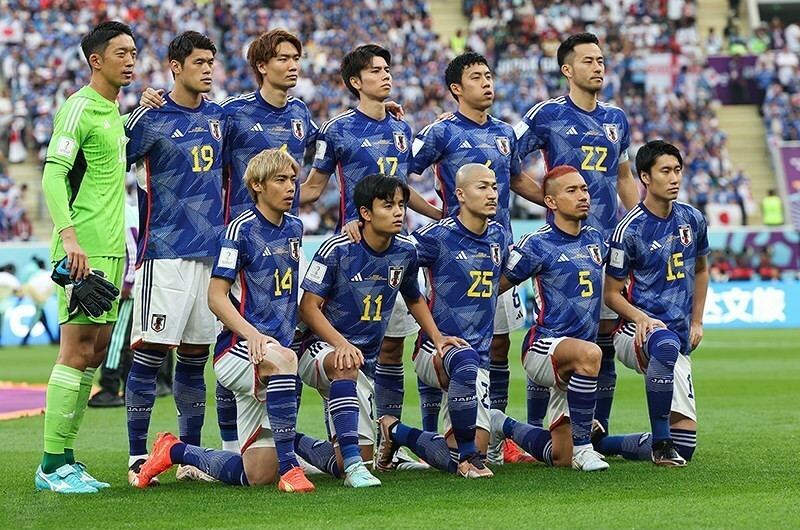
Japan debuted in the World Cup at France 98, where they lost all three group games. Their first victory came in 2002 on home soil, when they beat Russia and Tunisia before Turkey eliminated them in the round of 16. They reached the second round again in 2010, losing on penalties to Paraguay, sandwiched between group-stage exits in 2006 and 2014. In 2018, Belgium ended their run with an injury-time winner in a dramatic 3-2 comeback, before Qatar 2022 saw historic wins over Germany and Spain, only for Japan to once again fall at the round of 16 stage.
The Manager
Despite guiding Japan to arguably the country’s most memorable victories, Moriyasu remains a divisive figure among fans. Alongside the praise he received for orchestrating wins over Germany and Spain in Qatar, he was heavily criticized for the defeat to Costa Rica, and many felt he was too cautious in Japan’s penalty shootout loss to Croatia. Japan’s last two Asian Cup campaigns were also viewed as disappointing, and some supporters have questioned his World Cup squad selection, notably the inclusion of veteran full-back Yuto Nagatomo and the omission of highly rated midfielders Hidemasa Morita and Kodai Sano.
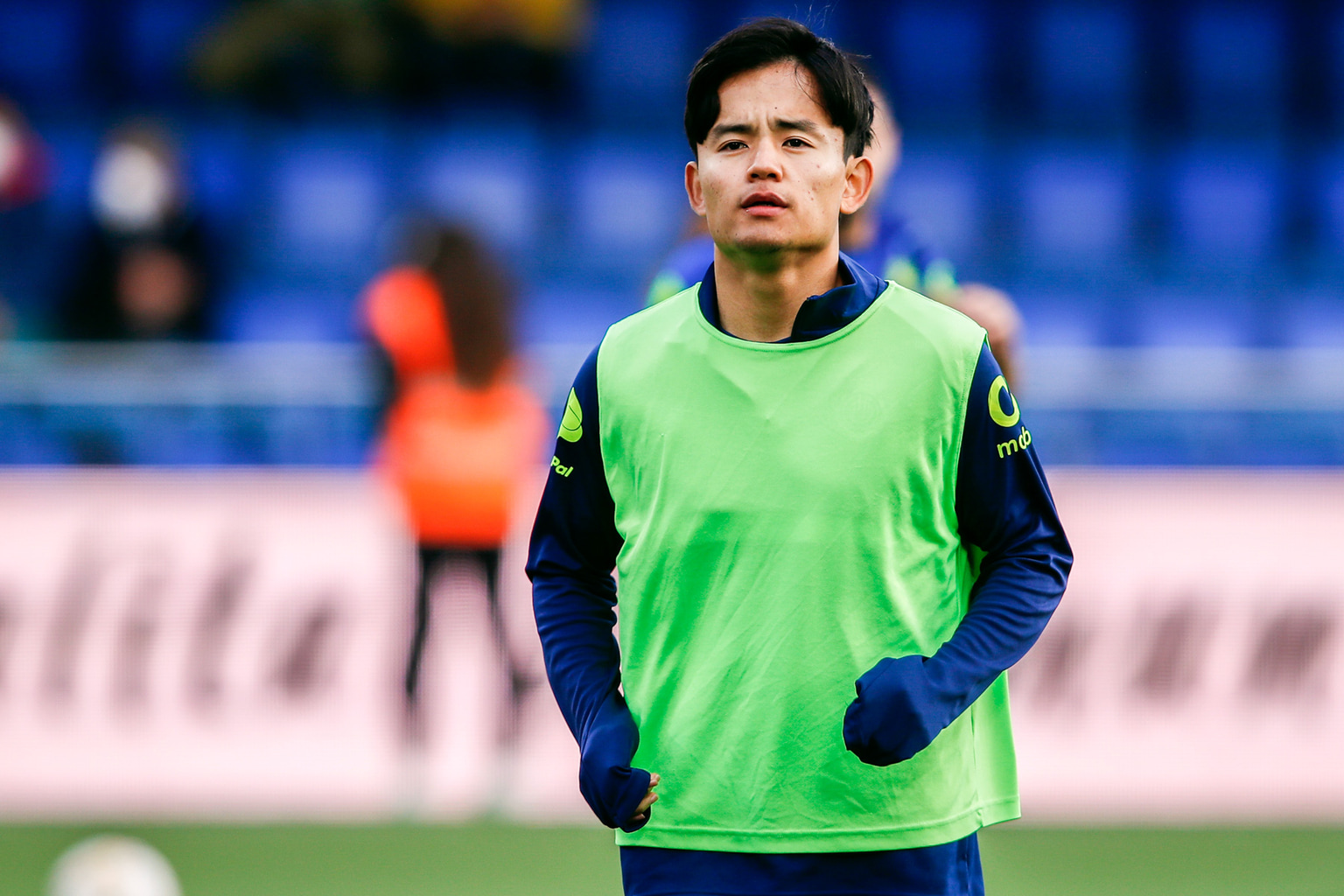
Takefusa Kubo | Image by Saolab Press/Shutterstock
Key Players
Japan have a strong spine, with Parma goalkeeper Zion Suzuki providing a reassuring presence between the sticks. The back line, featuring Feyenoord’s Tsuyoshi Watanabe and Bayern Munich’s Daiki Ito, is well organized, while Kaishu Sano established himself as one of the Bundesliga’s top defensive midfielders with Mainz last season. Daichi Kamada was instrumental in Crystal Palace’s Europa Conference League triumph, while Feyenoord striker Ayase Ueda heads into the tournament full of confidence after finishing as the Eredivisie’s top scorer. Real Sociedad’s Takefusa Kubo, arguably the biggest name in the squad, endured an injury-hit 2025/26 campaign.
One To Watch
A dynamic left winger with an eye for goal, Keito Nakamura spent the 2025/26 season in Ligue 2 after Stade de Reims rejected offers from clubs such as Beşiktaş and Villarreal last summer. The 25-year-old is expected to leave in the summer and will hope to boost his options with a strong showing in North America. Deployed as a wing-back, he was arguably Japan’s best player in their recent 1-0 win over England. With Mitoma out, Moriyasu must decide whether to push him further forward or keep him at wing-back alongside another option such as Celtic’s Daizen Maeda.
The Group
On paper, Group F looks one of the tougher groups. The Netherlands, who’ve lost three World Cup finals, are favorites to finish top. Led by Liverpool captain Virgil van Dijk, they boast a formidable backline and a dynamic midfield, with Barcelona’s Frenkie de Jong pulling the strings. Sweden are also a serious threat. Despite finishing bottom of their qualifying group with just two points, they secured a place at the tournament through the Nations League playoffs. Their biggest strength is in attack, where Viktor Gyökeres should partner Alexander Isak. Tunisia, meanwhile, are a pragmatic side with a solid defensive structure.
Japan’s Prospects
Following their impressive run in Qatar in 2022 and recent friendly victories over Brazil and England, Japan are being touted as a potential dark horse to reach the latter stages of the tournament. According to Moriyasu, the aim is to “win the World Cup.” For many fans, the hope is simply to see the team finally win a knockout match. It will not be easy. If Japan advance from Group F, a second-round meeting with Brazil or Morocco is a distinct possibility, while a third-place finish could set up a clash with another heavyweight such as Germany or France.