When I push open the door to Sabor on a weekday morning, Jimbocho is still mid-yawn. Rain drifts through the early air, softening the neighborhood’s rows of secondhand bookshops into a watercolor blur of gray and muted browns. It’s the kind of weather that makes you instinctively seek refuge: somewhere warm, somewhere softly lit, somewhere that promises a hot drink in your hands. Sabor answers that instinct immediately.
For 71 years, Sabor has been a legendary local fixture, beloved for its cozy, cabin-like interior and comforting kissaten staples — fizzy cream sodas, hefty plates of Napolitan pasta and pizza toast. But more than anything, it’s the people who define Sabor; its third-generation master, Fumio Suzuki, had manned the counter since the cafe opened in 1955. When he passed away in 2021, a pair of young employees took over the reins: Masafumi and Chie Ito, a husband-and-wife team who first met and fell in love while working in the cafe.
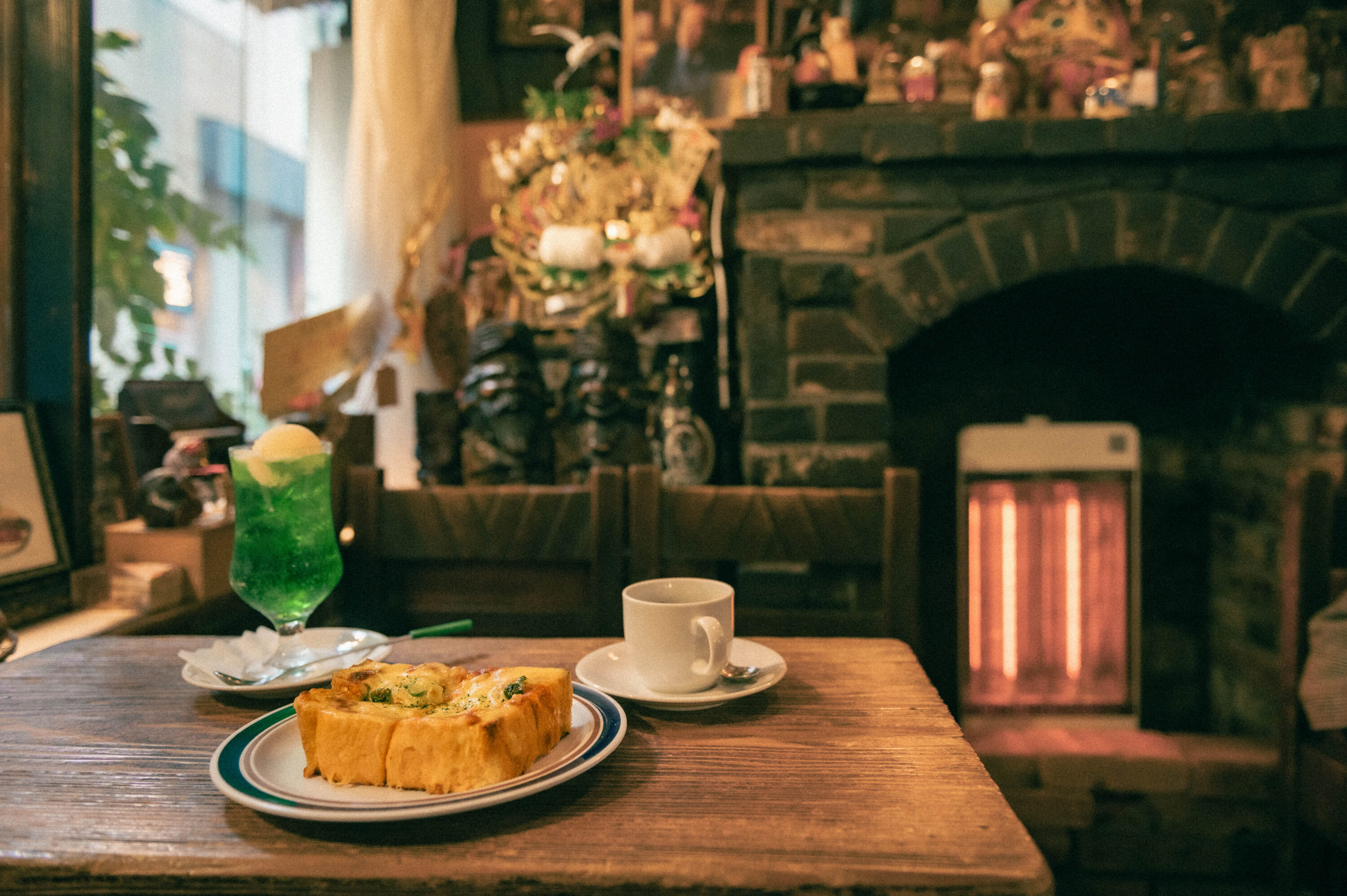
Half an hour before its opening at 11 a.m., three people are already lined up and waiting outside, peering through the fogged-up glass. By noon, the place is full. Outside, the rain slides down the glass in slow lines. Inside, the window seats are warmed by a floor heater nestled in the fireplace. Ito draws my attention to this area. “The window side,” he says, “still holds the feeling of the regulars chatting there. And of the previous master being part of those conversations.”
For decades, Suzuki took up a regular post by the window, warmly greeting people as they passed by. Now, a framed photograph of him sits there, gazing off into the distance. From certain angles, it feels as if he is still quietly overseeing the space.
When asked if he feels the pressure after taking over a local icon, Ito shrugs gently. He doesn’t really feel it, he says. People around him talk about responsibility, so sometimes he wonders if he should feel more — but mostly, he’s enjoying himself. What weighs on him is not expectation so much as transition. “We’re living in changing times,” he explains. “Some of the methods that worked for the previous generation simply don’t work anymore. If they continue exactly as before, they’ll be left behind. And yet, some things must absolutely remain. Balancing what to preserve and what to update — that is the real challenge.”
Inheriting a Cafe in the World’s Coolest Neighborhood
Sabor exists in a neighborhood that, in recent years, has found itself thrust onto the global stage; last year, Jimbocho was named the coolest neighborhood in the world by Time Out magazine. I ask Ito how he feels about running a historic kissaten at the center of it all.
His first reaction, he admits, was simple: Only now?
He laughs lightly when he says it. “Everyone in the neighborhood was happy,” he continues. “I’m glad people recognize the uniqueness of this area — its slightly strange atmosphere, in a good way. I do think it’s cool. There are so many interesting people here.”
Yet beneath the headlines, daily reality remains a challenge. Ito doesn’t see many cafe owners his own age nearby. He keeps in touch with a few, including the owners of Cafe Trois Bagues, Ladrio and Milonga Nueva. Beyond Jimbocho, he meets cafe owners from Ueno, Osaka, Kyoto and other cities at events. Many of them inherited their shops from their parents, a path different from his own, yet their concerns overlap. When they talk, he says, they often realize they share the same quiet anxieties about sustaining old spaces in modern times. “It’s a kind community,” he adds. “Everyone is genuinely kind.”
As Jimbocho continues to evolve — drawing tourists, students, photographers — Sabor’s adaptability, Ito believes, comes from the philosophy he inherited. Suzuki never rejected people. Young customers, elderly regulars, overseas visitors — all were welcome, so long as they respected the space. “I want Sabor to remain a place anyone can walk into easily. A low barrier, in a good sense,” says Ito.
Space for Everyone
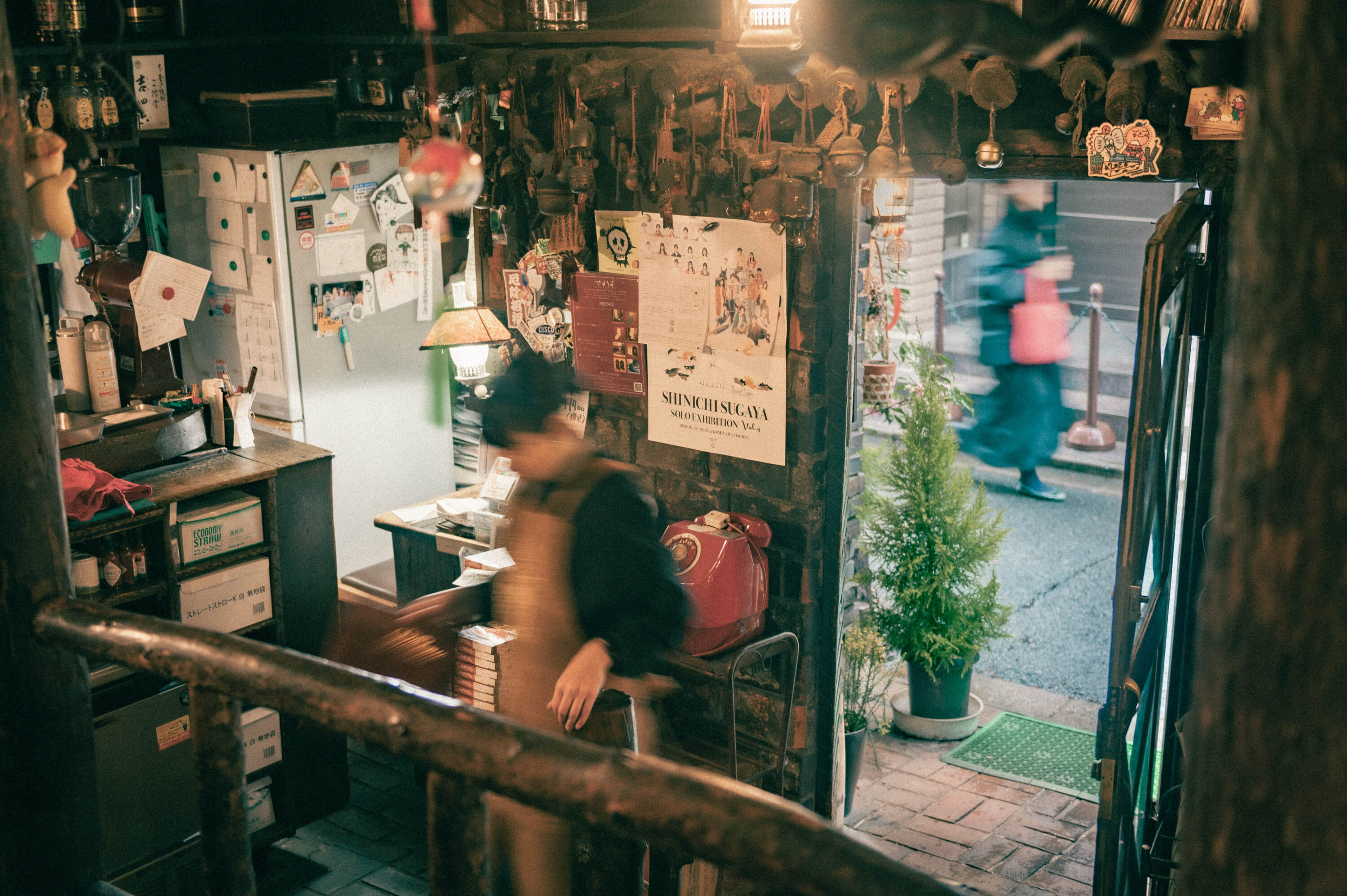
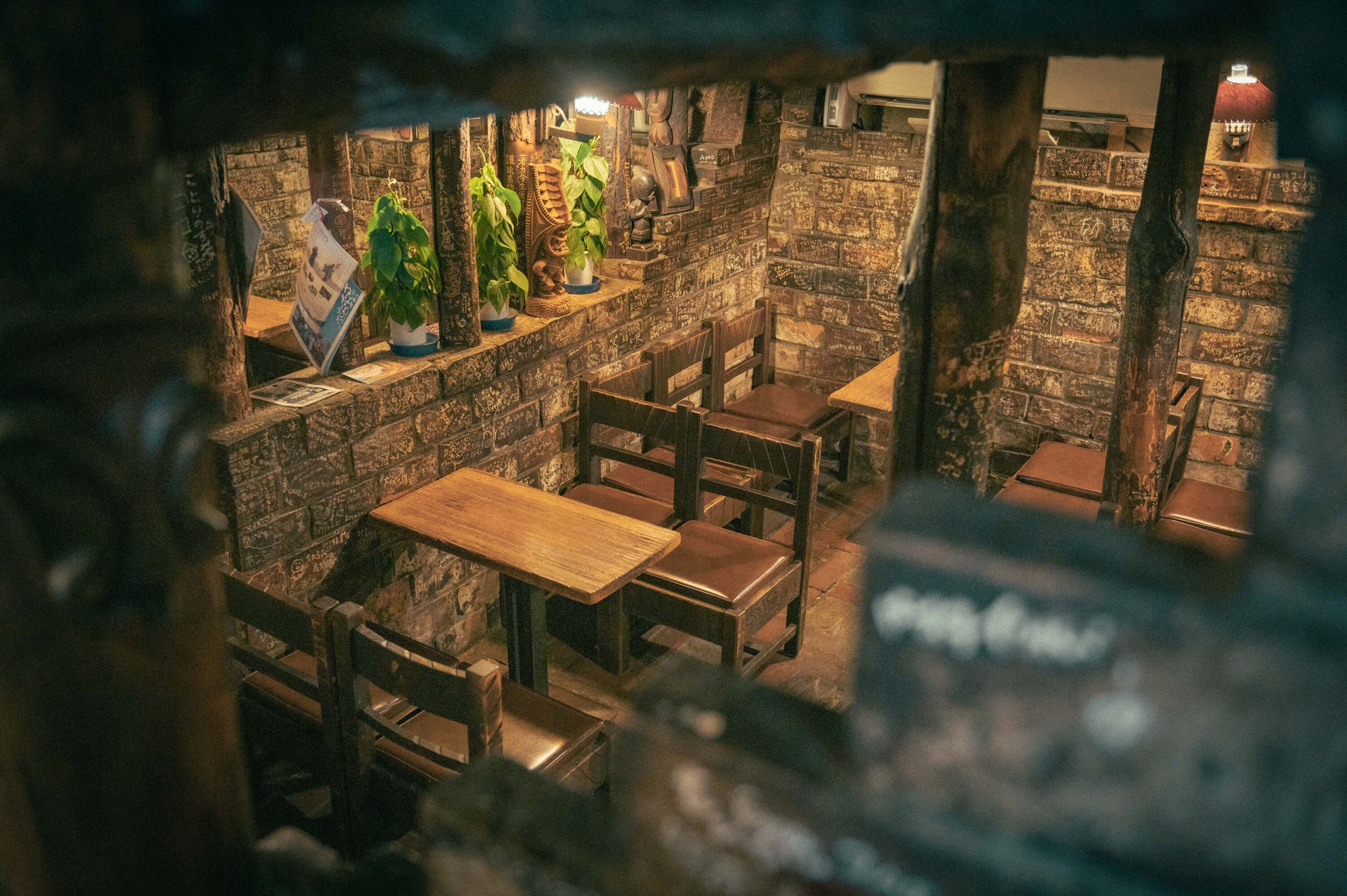
Sabor is unlike any cafe you’ve ever seen. The interior rises like a jungle tree house built from dark wood: Tiki masks and totem motifs cover the walls, and a wooden bead partition frames the staircase leading to the basement. Every table bears the gentle wear of decades — tiny cracks in lacquer, softened edges, surfaces that have held thousands of cups. Downstairs, a row of pendant lamps casts a low amber glow over the brick walls.
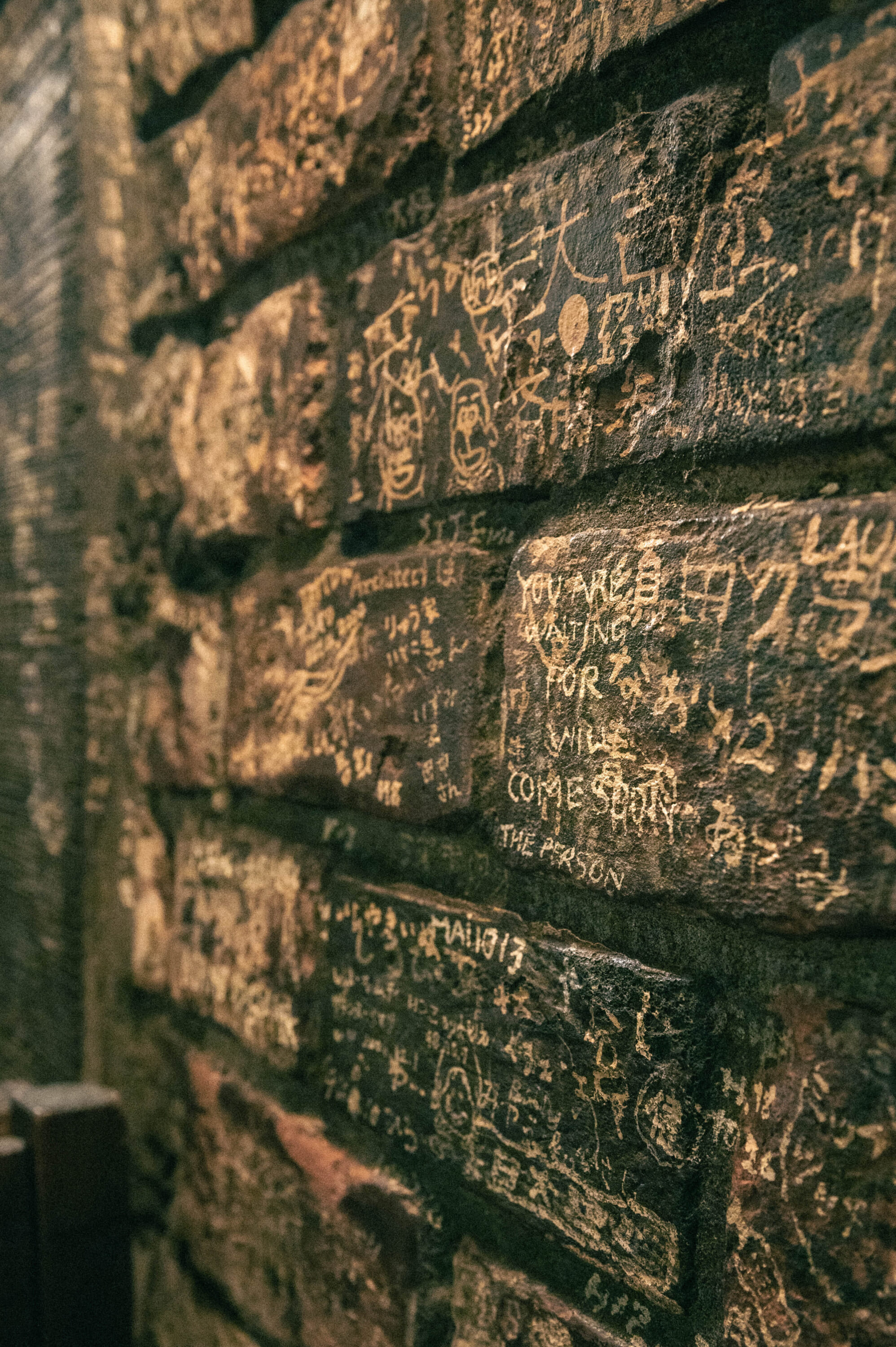
Lightly etched graffiti covers the walls — names of regulars who treat the cafe as a second home; sketches of umbrellas with a name beneath on each side, a symbol of romance not unlike the padlocks couples fasten to railings at certain scenic spots; messages of encouragement and even stray declarations of love or hopes of passing a certain exam; whimsical doodles you would find in the margins of a textbook … One scribble, written across the flat end of a wooden beam, simply reads: “pizza toast.” Another also catches my eye. On a pillar, in slightly faded white ink: “Thirty years in a flash.” Who wrote it? A student passing through? A couple marking a moment? A regular who had watched the decades quietly add up?
At Sabor, time moves in its own peculiar rhythm. Of the three wall clocks hanging side by side, only one continues to tick with any conviction. A cuckoo clock sleeps in silence, its little door closed. Another, its face scratched and clouded with age, has long since surrendered, its hands fixed in place.
A Room Full of Objects, A Room Full of People
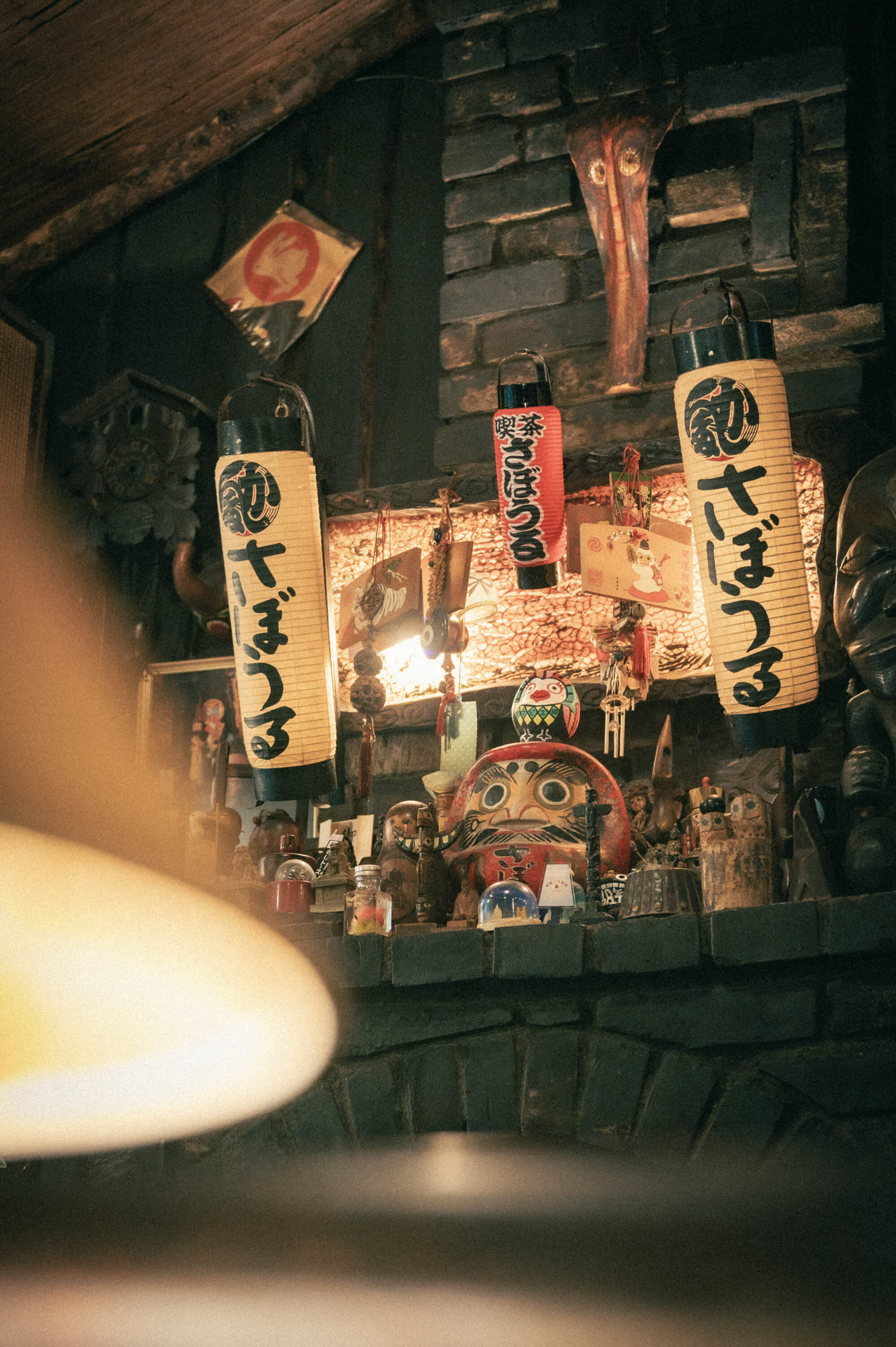
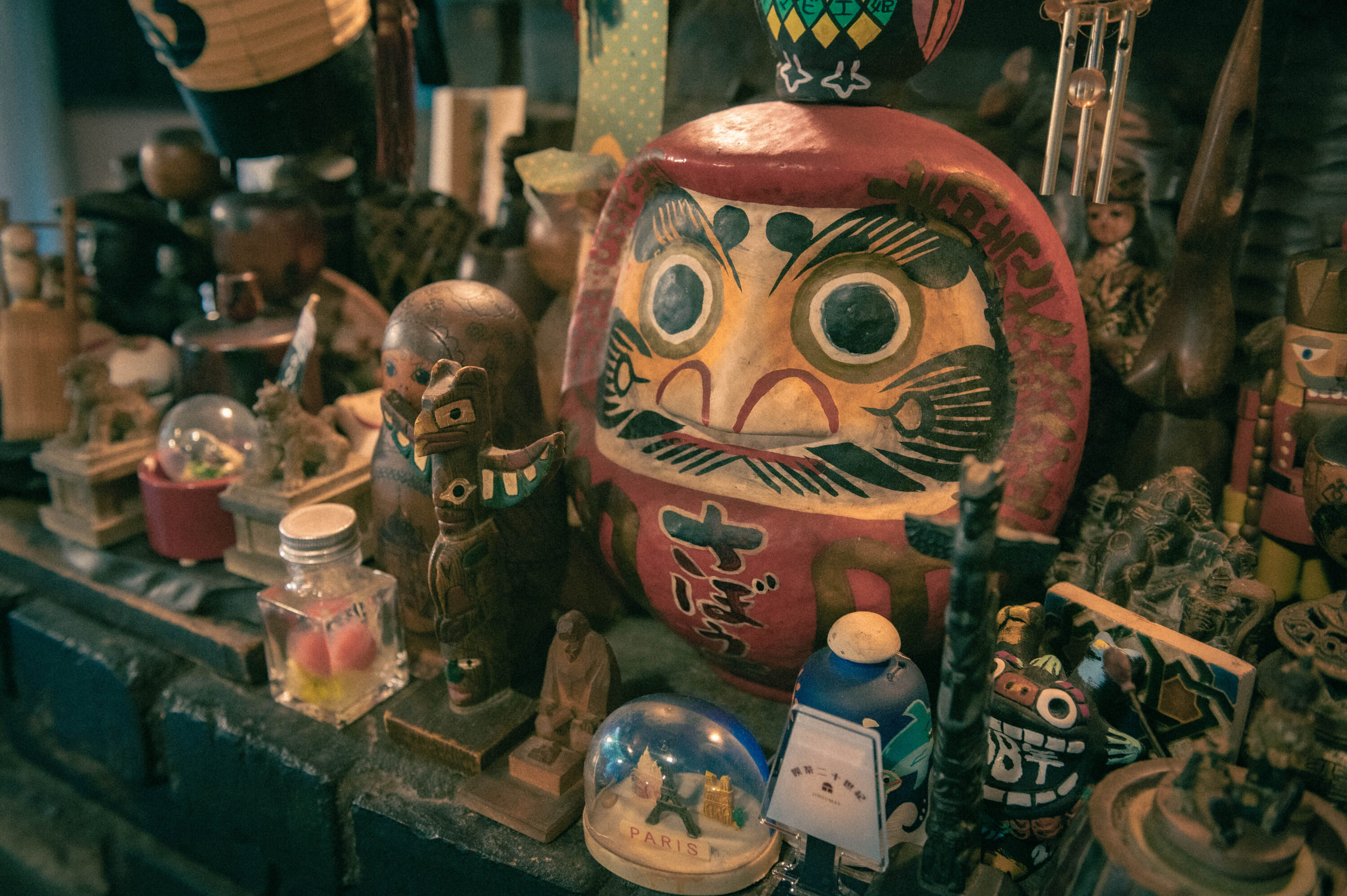
Speaking of objects, Sabor is anything but minimalist. Sitting in a window booth, I find myself surrounded by some of its permanent tenants: a squad of tiki statues standing guard on a shelf against the brick wall, packed together with traditional lanterns bearing the cafe’s name. On the window bench, daruma dolls share a seat with an opaque snow globe and some lucky animal talismans on a stack of dusty magazines. Wind chimes, dreamcatchers and mobiles hang from the ceiling. But I’m most struck by a framed drawing of Suzuki smiling warmly, a younger man with hair parted in the middle — presumably Ito — standing behind him in bartender’s attire.
Suzuki’s instinct, Ito tells me, was always to surprise people. He liked seeing customers startled in small, joyful ways. Sabor’s famous rainbow of cream sodas grew from that impulse. When most cafes offered only the classic green hue, Suzuki introduced multiple colors. Back then, it wasn’t even seven, Ito recalls — just four — but customers would react with genuine surprise when they heard there were other options. In the end, many still chose green. But it was the moment of hesitation, the small widening of the eyes, that he enjoyed most.
Throughout the course of my visit to Sabor, I watch a nonstop stream of customers coming in. A flock of old ladies enters first, moving with the familiarity of people returning to a living room. One of them pauses at Suzuki’s framed photograph, leans slightly closer and smiles — a private, tender expression, as if greeting an old friend. Then comes a family; their young son chooses the red cream soda and holds it carefully with both hands. Two high school girls slide into a booth, their laughter ringing loudly from the dark wood basement, and immediately order Sabor’s famed strawberry juice. The room fills as it has for decades: with students, regulars, tourists, families.
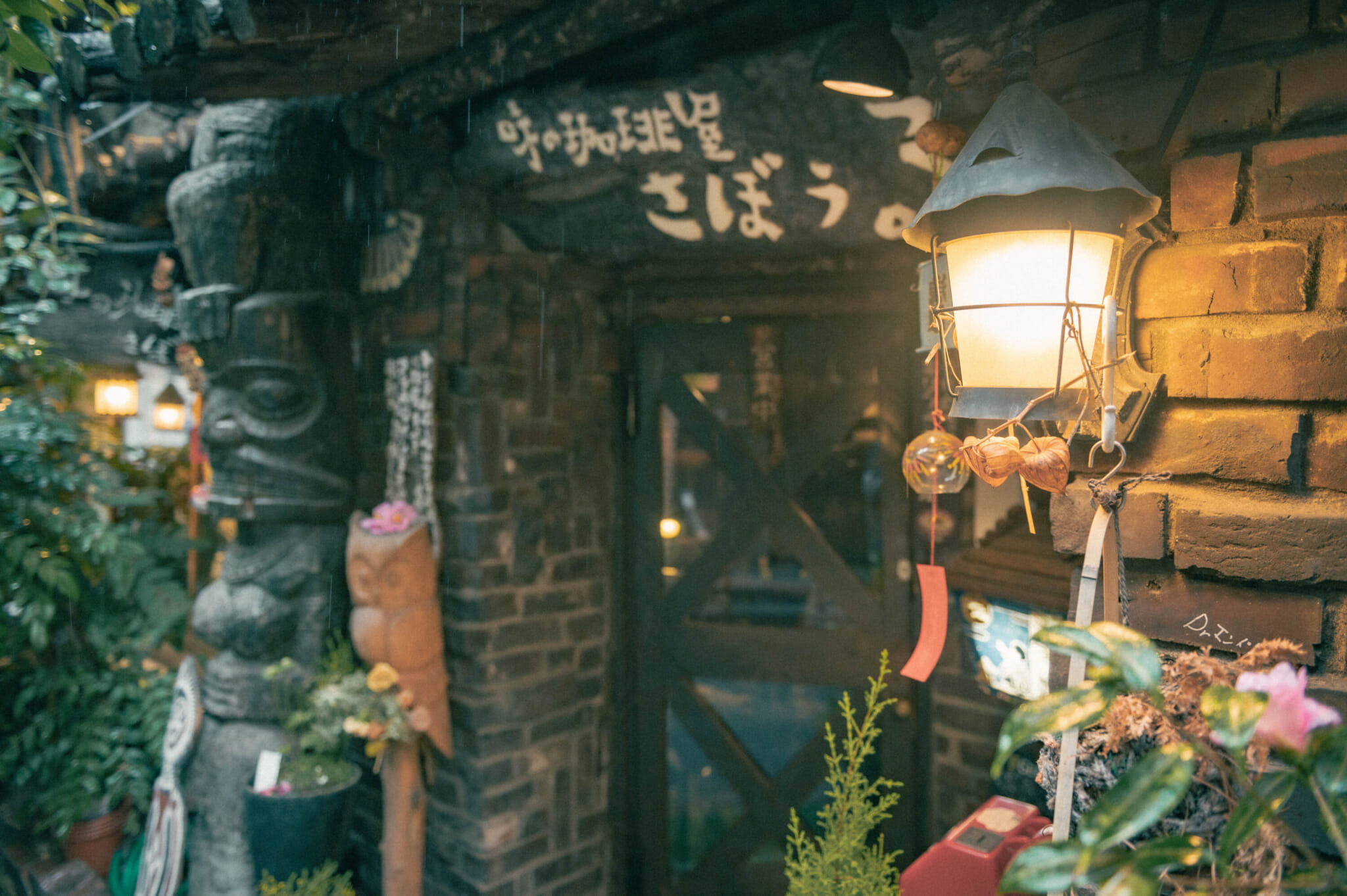
When I ask what kind of place he hopes Sabor will be, especially for younger customers, Ito says that he hopes it becomes memorable. “The interior is visually distinctive, so I’d like people to be able to look back 20 or 30 years from now and think, ‘Oh, I remember that place.’ So many cafes look similar these days, you might forget where you went. But if a place stands out, it stays in your memory. If someone remembers visiting Sabor after they start working or later in life, that’s enough for me.”
Of course, he adds with a small smile, they’ll have to keep the cafe running that long. But there is no doubt in his voice when he says it: It’s a one-of-a-kind place.
More Info
Sabor, 1-11 Kanda Jimbocho, Chiyoda-ku, Tokyo
Please note that Sabor is a cash-only establishment.
Keep up with Sabor on Instagram.