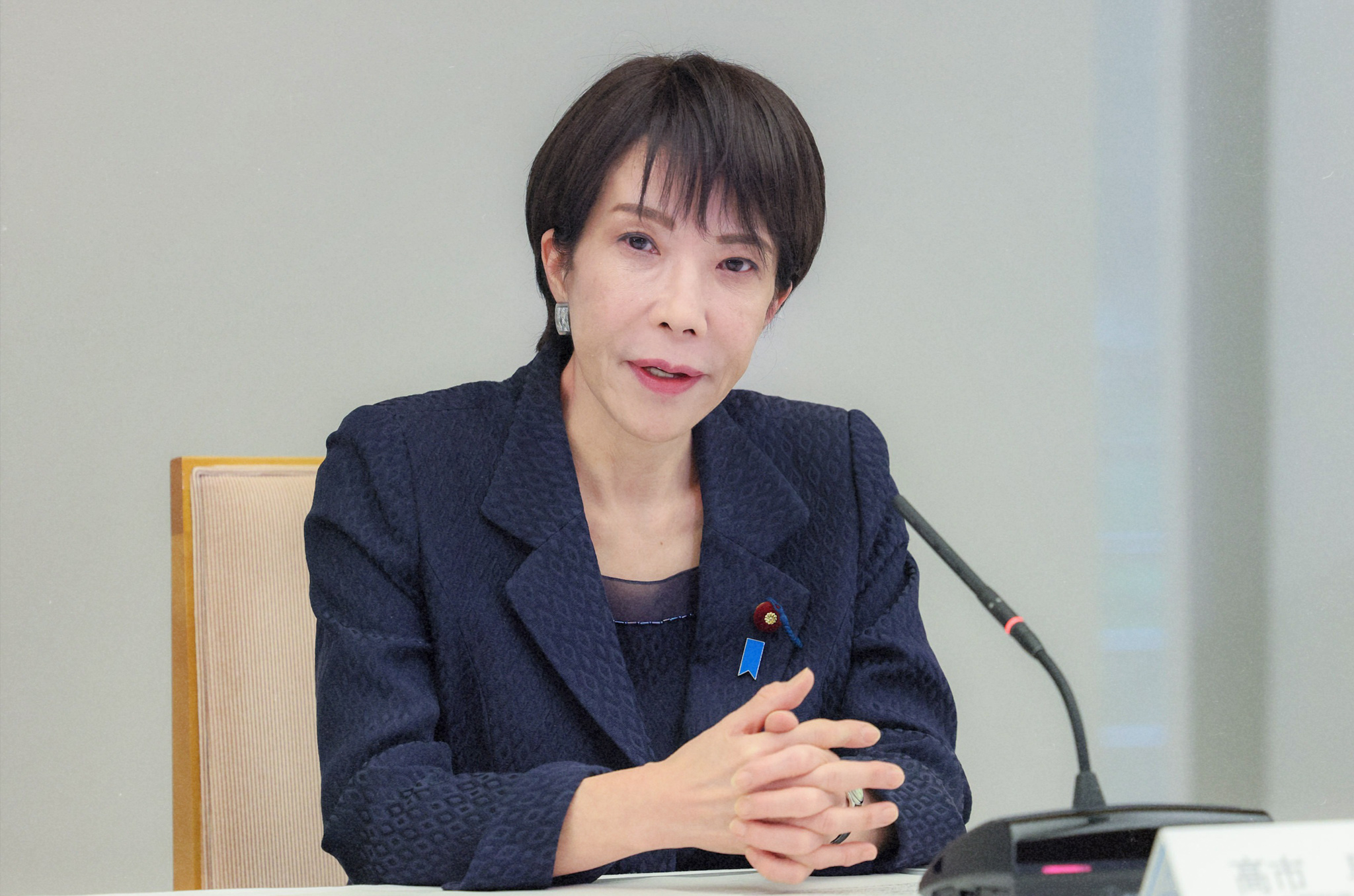
On Monday, Japan’s Prime Minister Sanae Takaichi announced that she will dissolve the Lower House this Friday to pave the way for a snap election on February 8. The nation’s first female leader is aiming to capitalize on the high approval ratings she’s enjoyed since taking office last October. However, her popularity is in contrast to the support rate for the Liberal Democratic Party (LDP), which is hovering around the 30% mark.
The decision to call for a snap election is, therefore, seen as a risk. “I am putting my future as prime minister on the line,” said Takaichi. “I want the people to decide directly whether they can entrust the management of the country to me.” Campaigning for the vote to elect the 465 Lower House MPs starts next week, on January 27.
Here we take a closer look at the main political parties contesting seats in the Japanese general election.

The Liberal Democratic Party (Jiminto)
The conservative LDP has been in power almost continuously since its founding in 1955 (except for 1993 to 1994 and 2009 to 2012). However, it’s lost its majority in both Diet chambers over the past two years following a slush fund scandal that led to many lawmakers being indicted. Ahead of the latest election, Prime Minister Takaichi is considering a two-year halt to the 8% consumption tax on food.

The Japan Innovation Party (Nippon Ishin no Kai)
Frustrated with the LDP’s opposition to reforms on funding, Komeito withdrew from the ruling coalition last October. Takaichi subsequently invited the Japan Innovation Party (JIP), the third-largest party in the Diet, to join the coalition. Led by Osaka Governor Hirofumi Yoshimura and businessman Fumitake Fujita, it leans further to the political right than Komeito, though it brands itself as a “reform” party that is more radical than the conservative LDP.
The Centrist Reform Alliance (Chudo Kaikaku Rengo)
After breaking ties with the LDP, Komeito has a new partner: the Constitutional Democratic Party of Japan (CDP). They have decided to unite as the Centrist Reform Alliance to take on the conservative ruling camp. “This is a chance for centrist forces to become centered in politics,” said the CDP President Yoshihiko Noda. Komeito is strongly supported by the powerful lay Buddhist organization, Soka Gakkai.

The Democratic Party for the People (Kokumin Minshuto)
Led by Yuichiro Tamaki, the Democratic Party for the People (DPP) is a center-right party initially formed in 2018 as a merger of the Democratic Party and the Party of Hope, before a new DPP was formed in 2020. Speaking after the snap election announcement, Tamaki said, “We’ve sought a new form of politics that prioritizes policy over political maneuvring, placing the lives of the people and the economy first.”

Sanseito
Founded in early 2020 as the coronavirus pandemic was beginning to unfold, Sanseito gained attention for its divisive and inflammatory rhetoric. As well as vehemently opposing mask mandates, PCR testing and vaccine requirements, the party was also openly anti-immigration. Last year, leader Sohei Kamiya said his party’s “Japanese First” approach wasn’t xenophobic. At the 2025 Upper House election, Sanseito secured 14 seats, up from one.
The Conservative Party of Japan (Nippon Hoshuto)
After the LGBT Understanding Promotion Act — designed to promote better understanding of the LGBTQ+ community — was established in 2023, novelist Naoki Hyakuta founded the Conservative Party of Japan alongside journalist Kaori Arimoto in opposition to the bill. It’s a party that claims to “protect Japan’s national polity and traditional culture.” Characterized by its far-right, nationalist ideology, it downplays Japan’s war atrocities, specifically the Nanjing Massacre.

Reiwa Shinsengumi
A progressive left-wing party, Reiwa Shinsengumi was founded by actor-turned-politician Taro Yamamoto in 2019. It advocates for the abolition of the consumption tax to ease the burden on households. At the same time, it calls on the government to enforce higher taxes on wealthy individuals and large corporations to fund social welfare programs. Earlier this week, Yamamoto announced his resignation from the Upper House due to health reasons.

The Japanese Communist Party (Nihon Kyosanto)
Formed in 1922, the Japanese Communist Party (JCP) is the oldest active political party in Japan, though it was only legalized in October 1945. Before the end of the war, it operated clandestinely. The party, now run by Tomoko Tamura, would like the country to break away from what it terms a “subordinate alliance” with the US. It has long campaigned for the repeal of Japan’s controversial security legislation.
Related Posts
- LDP-Led Coalition Lose Upper House Majority, Ishiba Vows To Continue as Prime Minister
- Sanseito Explained: The Alarming Rise of Japan’s Far-Right Movement
- Why Japanese Leftists Are Using Melonpan to Mock Sanseito
Updated On January 22, 2026