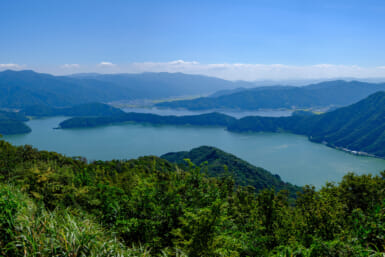
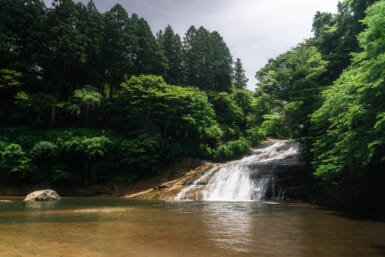
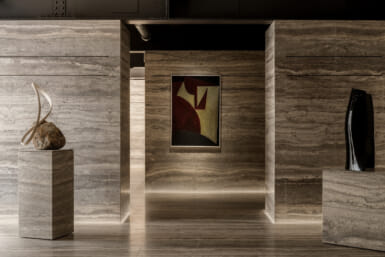
Yamanashi Prefecture is home to the northern side of Mount Fuji where over 200,000 people from around the world visit to climb each year. Beyond the famous peak, the region has a long history of craftsmanship shaped by its climate, natural resources and local industry.
For generations, mineral-rich geology supported the development of crafts such as inkstones and gemstone carving, while overseas technological influences later shaped textile production, including knitwear.
Building on this heritage, the Yamanashi Design Project was launched in 2024 as part of a prefectural initiative to spotlight unique artisan souvenirs. The project pairs three Yamanashi-based producers with two world-class designers, highlighting the creative fusion inspired by the region’s history and environment.
Now entering its second year, the project introduces three new standout pieces.


Kai Amehata Suzuri’s Inkstone Sets
Legend holds that jet-black stones discovered along a tributary of the Fuji River were carved into the first Kai Amehata inkstones. After being presented to the Shogun, the craftsmanship of Amehata inkstones gained national fame and have been preserved in Kajikazawa, Koshu (present-day Yamanashi) for more than 300 years. Today, the tradition lives on at Kai Amehata Suzuri Honpo Amemiya Yahei, led by 13th-generation master craftsman Yataro Amemiya, who describes the inkstone as “a vessel of the spirit.”
Their complete calligraphy set, the Kai Amehata Suzuri Inkstone set – Jitsugetsu (Sun and Moon) Inkstone in collaboration with Design Director of the Yamanashi Design Center Naoto Fukasawa, have everything you need — ink, a water dropper, a brush and washi paper — all housed in a beautiful paulownia wood box for a sophisticated experience. The portable model cleverly uses the shape and dimensions of a common notebook to carry a whole calligraphy kit for on-the-go inking.

KAI AMEHATA SUZURI INKSTONE PORTABLE SET – JITSUGETSU (SUN AND MOON) INKSTONE. YAMANASHI DESIGN PROJECT. PHOTO: GOICHI KONDO. ART DIRECTION: KEN OKAMOTO.
Fukasawa is regarded as one of the world’s most influential designers and his style is recognizable for quiet yet simultaneously bold designs. In modern times, where daily routines don’t often call for analog tools, inkstones offer a meditative ritual of quiet contemplation with each brushstroke.
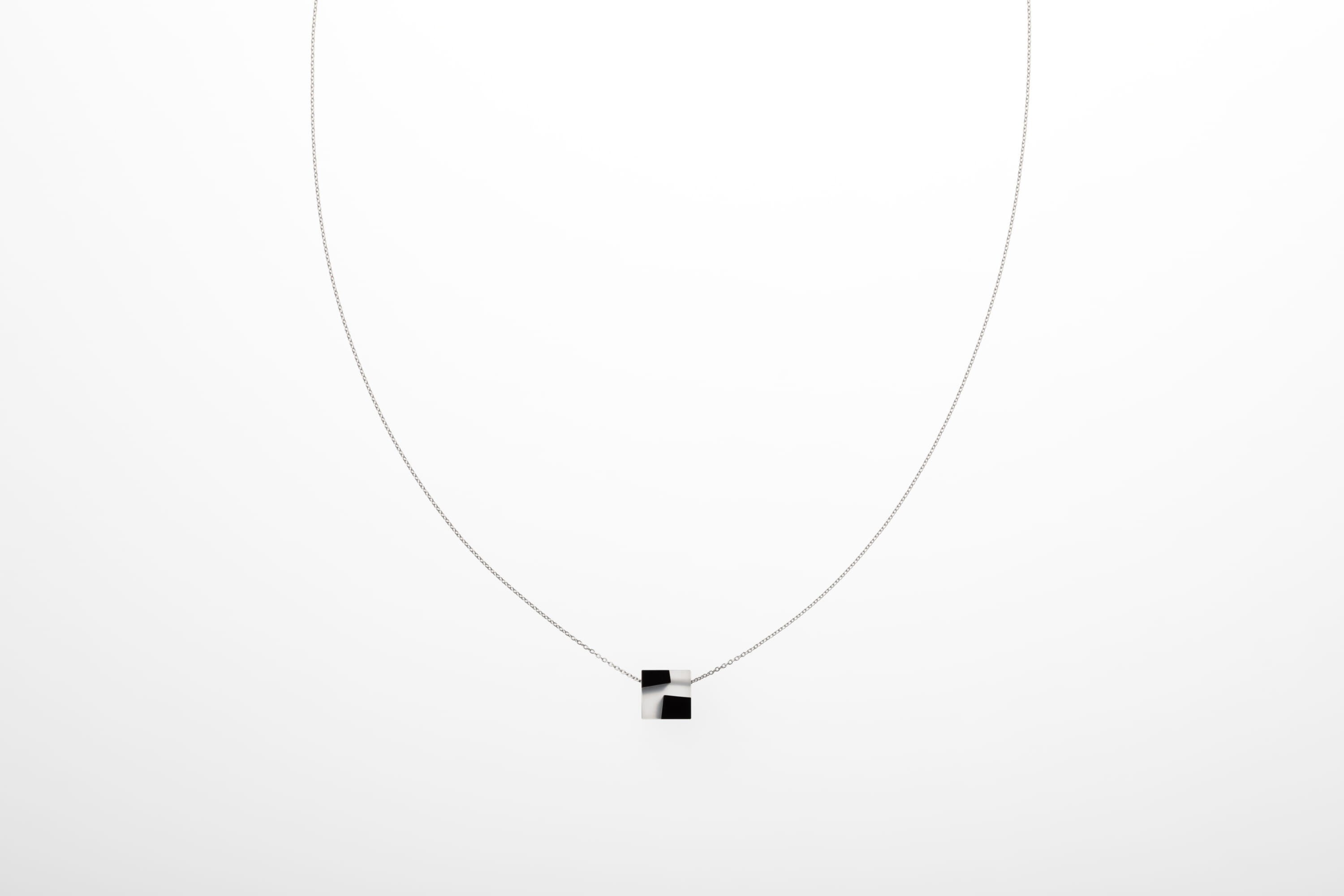
NOUGAT(NECKLACE). YAMANASHI DESIGN PROJECT. PHOTO: GOICHI KONDO. ART DIRECTION: KEN OKAMOTO.
To Labo’s “nougat” Ring and Necklace
Yamanashi’s northern border is rich in crystals. So much so that the northern city of Kofu is nicknamed nationwide as “the city of crystals,” for its development of the mining industry and its jewelry culture that has been cultured since the Jomon era. The land surrounding Mount Kinpu is particularly renowned for its pristine, high-quality quartz crystal, which has been captivating people with its beauty for generations since its discovery approximately 1,100 years ago.
It was in this rich natural environment that Kiseki Choukoku Ohyori was born. Now a third-generation crystal carving studio with over 100 years of history, it is led by Tomohiko Ohyori, a nationally certified Traditional Craft Artisan and was the youngest ever craftsman to be recognized as an official Jewelry Master of Yamanashi Prefecture.


The Kiseki Choukoku Ohyori To Labo “nougat” collection of rings and necklaces designed in collaboration with Naoto Fukasawa, take inspiration from the aerated confectionery to create beautifully crafted pieces with a unique two-toned cubic design. The jewelry showcases expert craftsmanship with precise three-dimensional alignment and polishing that seamlessly blends crystal and black agate or white chalcedony.

EVAM EVA SOCKS. YAMANASHI DESIGN PROJECT. PHOTO: GOICHI KONDO. ART DIRECTION: KEN OKAMOTO.
Evam Eva’s Knitwear
Ichikawa Misato Town, located in south-central Yamanashi, evolved into a knitwear production hub following World War II, revolutionized by the introduction of flat knitting machines.
Evam Eva by Kondo Knit is a masterful example of the region’s specialty, known for its sustainable style. With more than 80 years of history, the company is guided by a philosophy of creating pieces people wish they had in their daily lives. Working from its nature-rich headquarters and factory in Yamanashi, the entire process — from planning to production — is handled in-house. Natural materials such as linen, cotton, wool and cashmere are central to the brand’s approach, combined with simple designs and refined silhouettes to create timeless pieces meant to be cherished beyond seasonal trends.


Their newly designed cashmere series in collaboration with Yamanashi Design Center Designer Director Fumie Shibata who is a Yamanashi native and professor at Tama Art University, includes socks, gloves, leg warmers and stoles that showcase playful yet natural tones. Kondo Knit’s stoles come in five colorways and keep a trendy voluminous shape while remaining lightweight.
Learn more about the Yamanashi Design Project.