
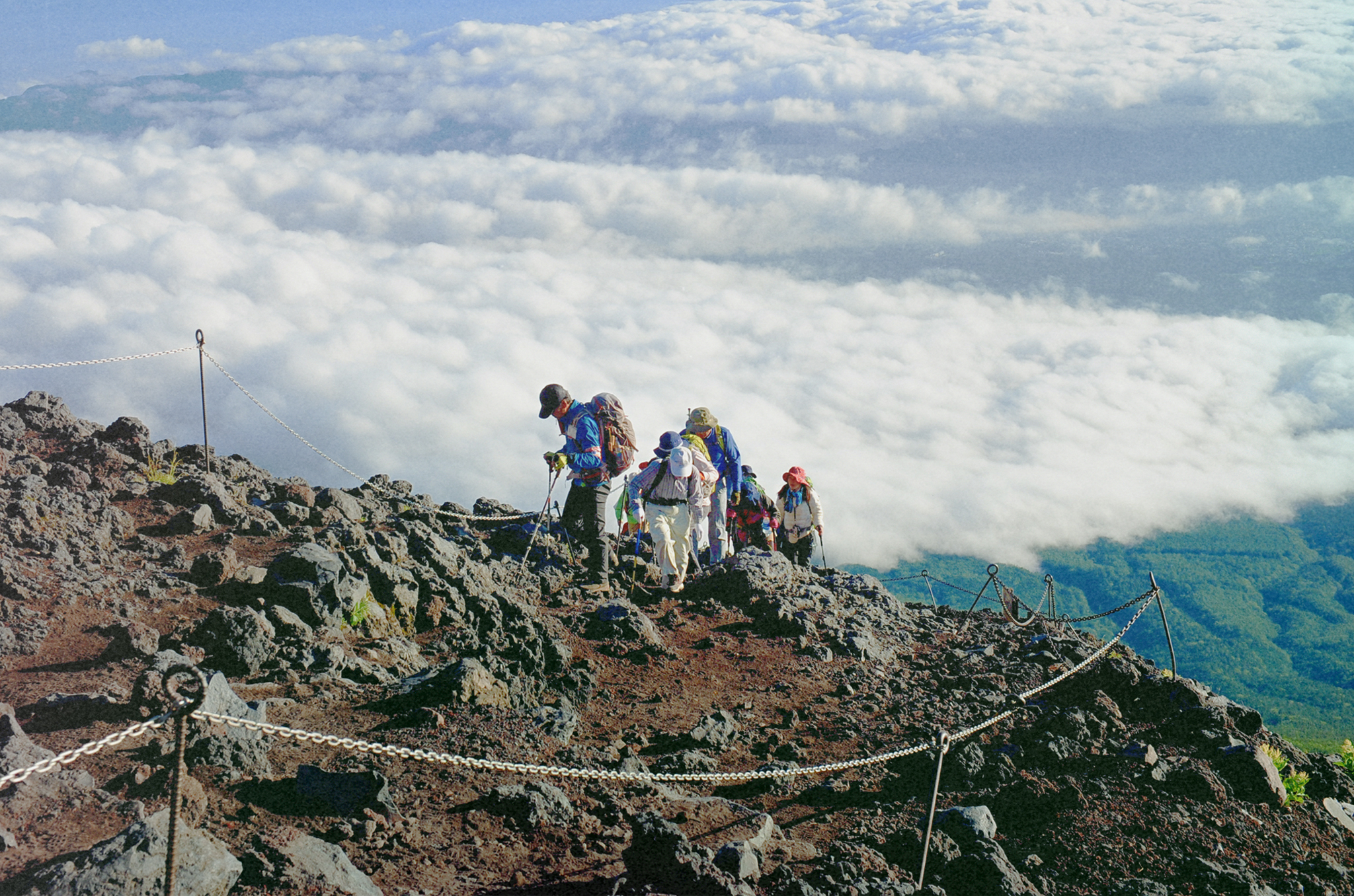
Mount Fuji’s Official Climbing Trails Are Now Closed
Mount Fuji’s 2026 climbing season is now over. All four official routes to the summit ended their climbing seasons on September 10. From that point, using the closed sections of those trails is prohibited under Japan’s Road Act and can carry up to six months in prison or a ¥300,000 fine.
Climbing Mount Fuji in the Off-Season
This does not mean that being anywhere on Mount Fuji after September 10 is illegal. The law applies specifically to the closed official trails. Some experienced mountaineers still attempt off-season ascents, though authorities strongly discourage it and require them to submit a climbing plan. That plan does not override the trail closures, meaning they still cannot legally use the official routes once they have closed.
When Can I Climb Mount Fuji?
Mount Fuji’s official climbing season is short, generally running from early July through September 10. Exact dates are confirmed each year and can change depending on weather, remaining snow and trail conditions, so climbers should always check the official Mount Fuji website before making plans. In particular, openings can be delayed if snow removal has not been completed.
For 2026, the four official routes operated on the following schedule:
- Yoshida Trail: July 1–September 10
- Subashiri Trail: July 1–September 10
- Fujinomiya Trail: July 10–September 10
- Gotemba Trail: July 10–September 10
The Summit Rim Trail, or Ohachimeguri, also opened July 10 and closed September 10. Dates for the 2027 climbing season have not yet been announced. Until then, there are plenty of other mountains to climb across Japan.
Three Deaths in Four Days
The final days of this year’s climbing season have already been deadly.
On September 9, two solo climbers were found in cardiac arrest along the Fujinomiya route. One, a man in his 50s, was discovered near the summit; the other, a Thai man in his 60s, was found near the New Seventh Station. Both were later confirmed dead. Neither showed obvious external injuries, according to police, and their causes of death have not yet been reported. Heavy rain and strong winds had battered the mountain, with temperatures dropping below 10 degrees Celsius overnight.
The weather was bad enough to interfere with the rescue itself. A landslide at the Fujinomiya fifth-station parking area buried three parked vehicles, while strong wind and rain initially made it difficult for mountain rescuers to reach the two climbers.
They weren’t the first casualties of the closing stretch. On September 6, a 62-year-old man from Tokyo was found dead around the eighth station of the Gotemba route after another climber reported that he was unwell. He was believed to have been climbing alone.
Conditions become more dangerous as the season moves into autumn. Mountain huts, first-aid facilities and toilets shut down; maintenance of the trails stops. Officials warn that September and October bring a particularly high risk of hypothermia alongside typhoons and prolonged autumn rain, while later months add snow, ice and avalanche danger.
Off-season rescues are hardly theoretical. In April 2025, a 27-year-old Chinese university student living in Japan was rescued from Mount Fuji after becoming ill and losing his crampons during an off-season climb. Four days later, he returned to retrieve belongings he had left behind, including his phone, and had to be rescued again after developing altitude sickness near the eighth station.
Related Posts
- Where Hikers Sleep at 3,000 Meters: Japan’s Mountain Huts
- Mount Mitake Day Trip Guide: Tokyo’s Most Underrated Mountain Getaway
Updated On September 10, 2026