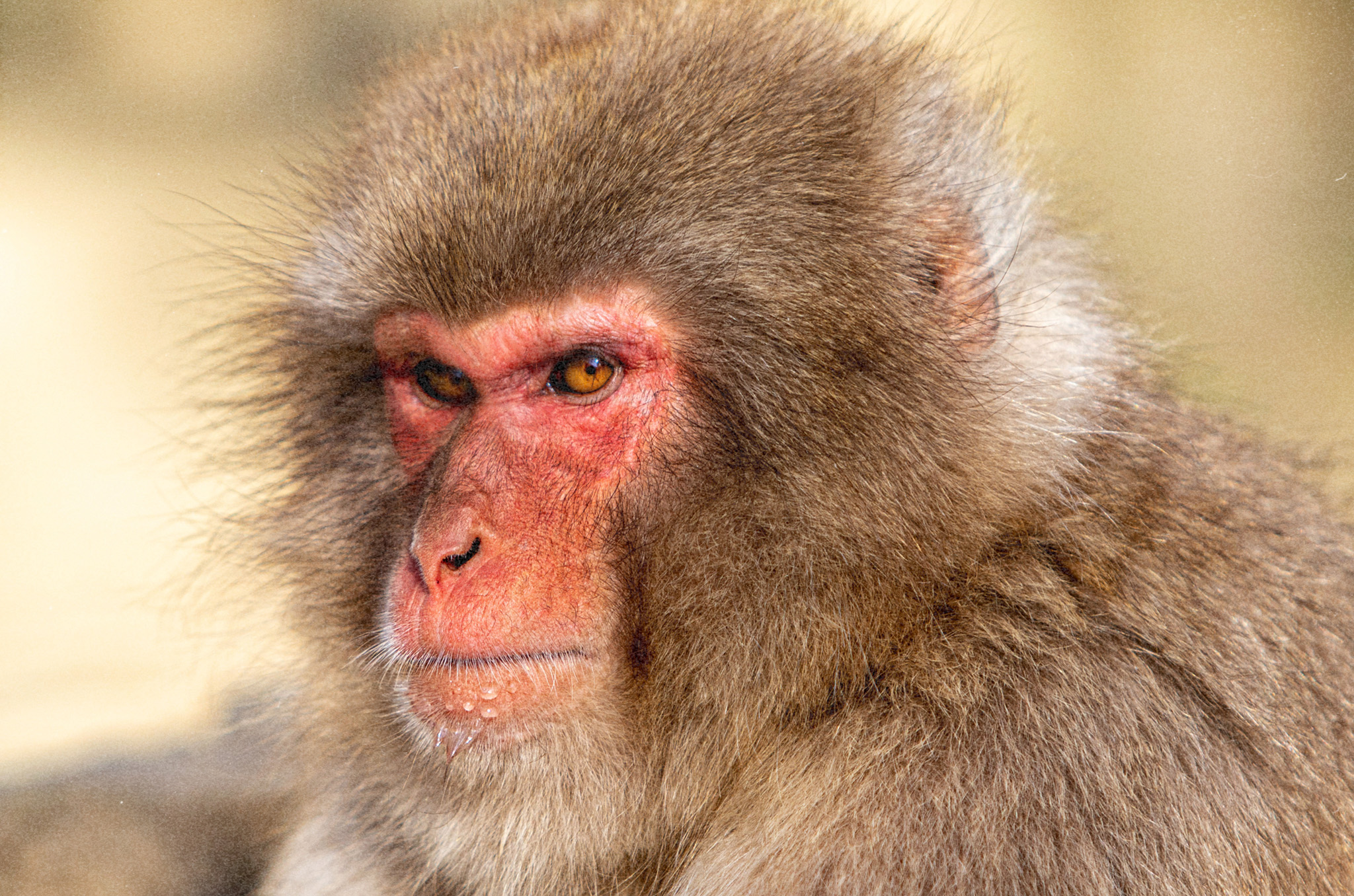
A wild monkey in Yamaguchi Prefecture has allegedly thrown a kitten into a pond and attacked the man who tried to rescue it. The incident took place on October 13 in the city of Shunan, where a 49-year-old resident heard a splash in his garden and went outside to investigate.
According to local broadcaster Television Yamaguchi Broadcasting Systems, the man found that a monkey had apparently grabbed a stray kitten living around his property and tossed it into the water. After he pulled the animal out, the monkey climbed onto his roof and began threatening him. When the man turned away, it leapt down and scratched him across the back, leaving a roughly 10-centimeter wound despite his thick work clothes.
The monkey, believed to be an adult measuring approximately 50 centimeters in body length, escaped. Police have since increased patrols around the residential neighborhood, where children regularly walk to school.
Remarkably, the encounter is only the latest in a string of increasingly bizarre monkey incidents reported across Japan in recent weeks. The animals have been biting residents, occupying suburban streets and even vandalizing graves.
The Monkey Syndicate
In Gero, Gifu Prefecture, police began investigating a series of suspected vandalism incidents after gravestones and flower holders were found damaged at several cemeteries in September. Security camera footage eventually revealed the culprits: monkeys, which had been pulling out flowers, shaking stone fixtures and knocking parts of the graves to the ground.
One man whose father’s grave had been damaged twice lamented that he had only recently paid for repairs. Unfortunately, he added, there was no way to demand compensation from a monkey.
In Okazaki, Aichi Prefecture, four elderly men were bitten over October 2 and 3, three of them within 45 minutes on the second morning. All sustained minor injuries. The monkey was later captured with a tranquilizer dart and euthanized.
Meanwhile, in the hot-spring town of Yugawara, Kanagawa Prefecture, a particularly troublesome troop of around 20 monkeys has become a longstanding local menace. Known to authorities as the T1 group, the animals have been filmed blocking roads, approaching vehicles and helping themselves to ripe persimmons from residents’ trees.
According to TV Asahi, Yugawara recorded 6,054 reports of monkey-related trouble last year, averaging roughly 16 a day. Some residents have taken to carrying umbrellas, insecticide sprays and even fireworks to ward off the animals, although one resident complained that the fireworks no longer seem to work.
On September 17, a man in his 40s encountered approximately 15 monkeys from the troop and was bitten on his right hand, requiring an ambulance. It was reportedly the first confirmed biting incident attributed to T1.
On October 15, a Nippon TV crew encountered approximately 20 monkeys wandering through Yugawara, crossing roads without paying much attention to passing cars. One was filmed lying on top of a vehicle. Wildlife specialist Seiga Miki, who reviewed the footage, said he had never seen monkeys appear so relaxed around people, warning that the proximity between residents and wildlife could lead to dangerous encounters.
Inside the Monkey Mind
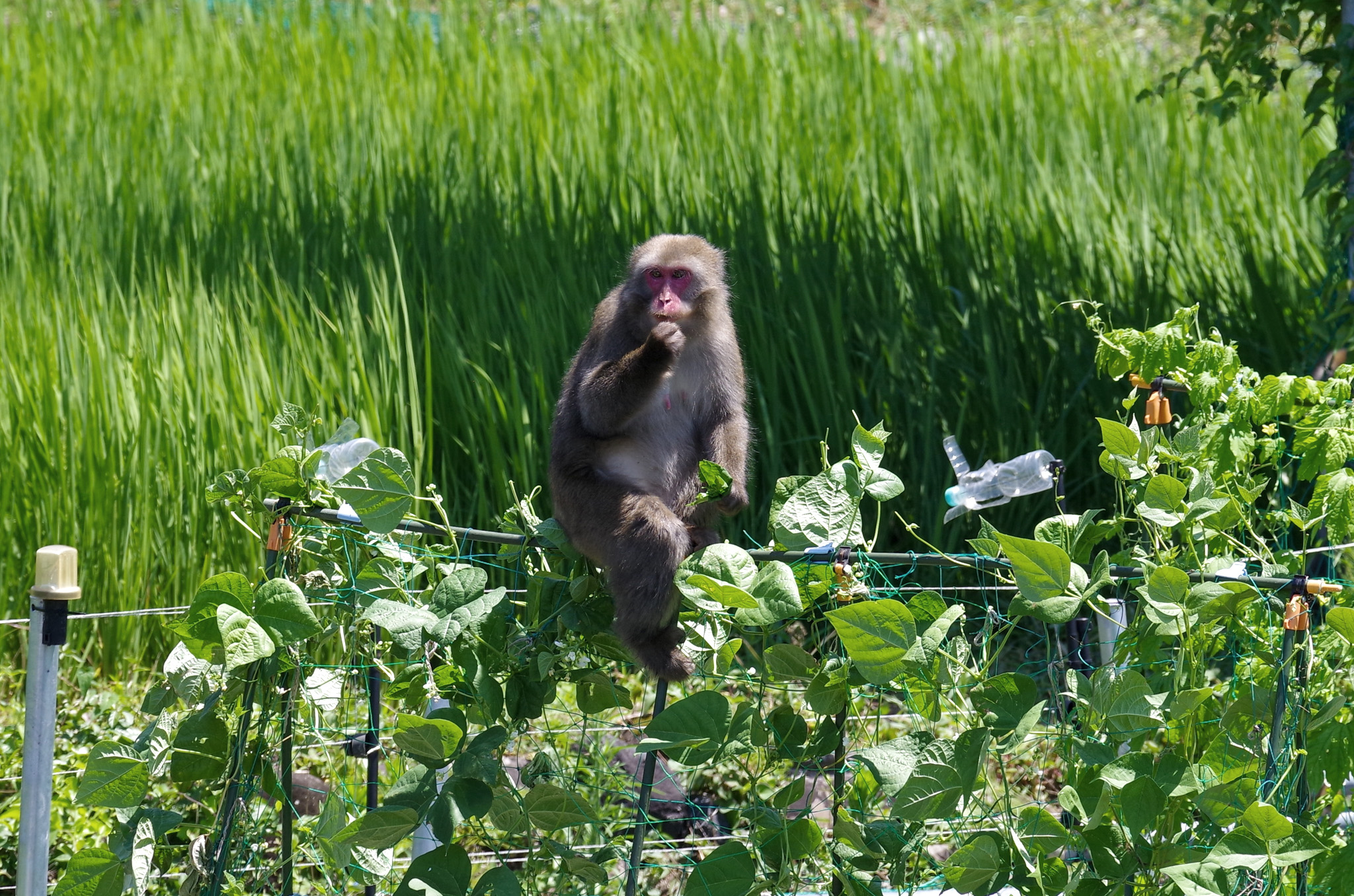
Japanese macaques are highly adaptable, and repeated access to food and shelter in residential neighborhoods can gradually erode their fear of people. In Yugawara, TV Asahi filmed members of the T1 troop entering and leaving an abandoned inn, while others wandered around a kindergarten. Wildlife specialist Tsuyoshi Abe explained that monkeys accustomed to living among humans may begin treating neighborhoods as their own territory, becoming aggressive toward residents.
Yugawara’s vacant buildings offer convenient shelter, while gardens and fruit trees provide food. The town has a vacant-home rate of around 10%, the highest in Kanagawa Prefecture, according to TV Asahi. Attempts to drive the monkeys away with firecrackers have had limited success.
Controlling the troop is further complicated by its conservation status. Although Japanese macaques are widespread nationally, T1 belongs to a regional population listed as endangered in Kanagawa Prefecture. Local authorities have requested permission to capture the entire troop, but the prefecture has resisted eliminating the population.
Autumn may also help explain some of the recent behavior. Japanese macaques enter their mating season around October, when males can become more demonstrative. In Gero, Japan Monkey Centre expert Rie Akami suggested that monkeys damaging graves may have been attracted by their reflections in polished stone, while shaking fixtures could resemble mating displays.
Whether monkey attacks are increasing nationwide remains unclear; the recent incidents involve different populations, and comparable national injury figures have yet to establish a surge. For residents encountering a wild monkey, authorities recommend avoiding eye contact, keeping food out of sight and retreating calmly.
As for the monkey in Yamaguchi, it remains at large.