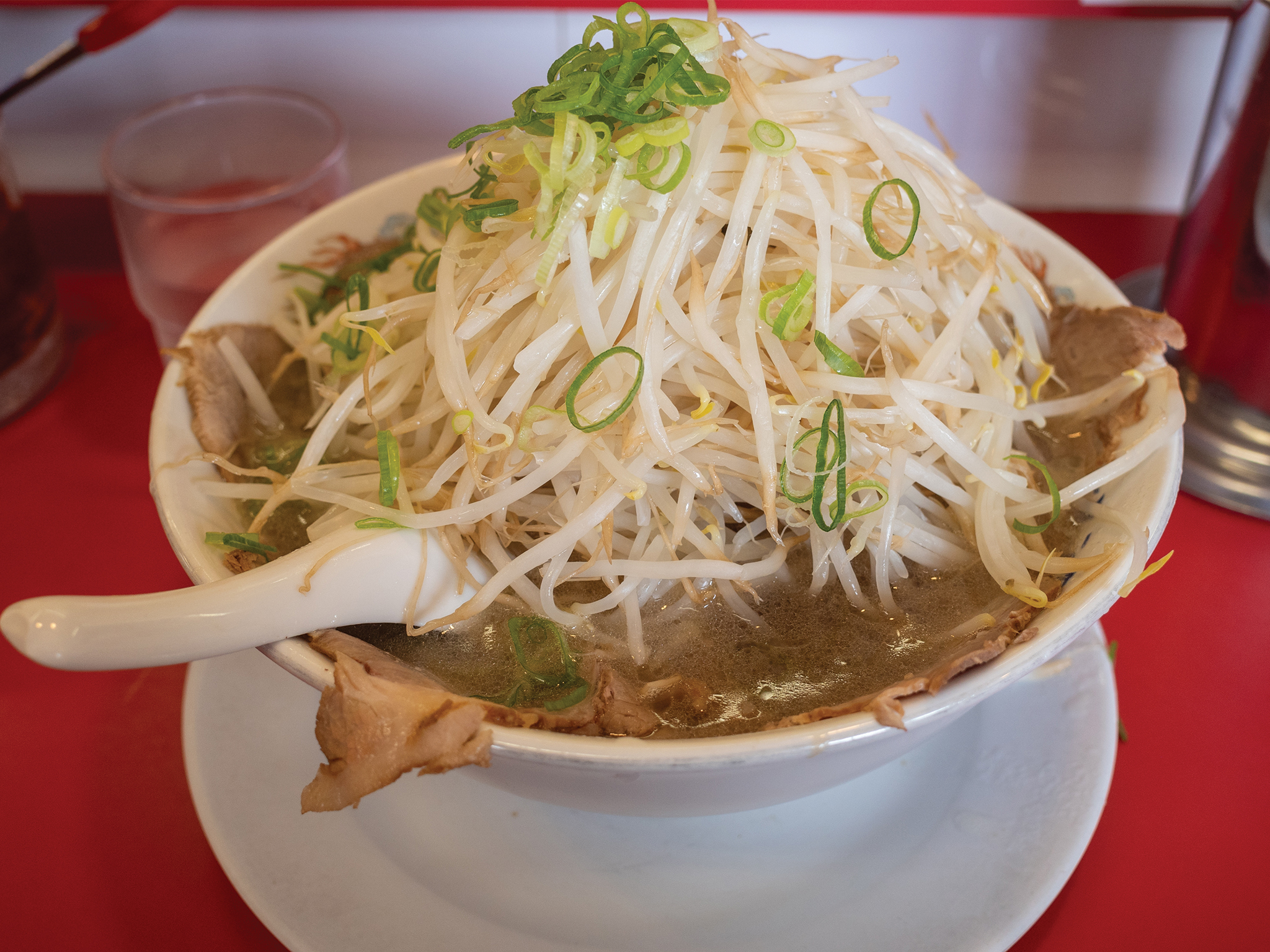
If you’ve ever eaten Jiro-style ramen, you know the vegetables are a serious part of the experience. A typical bowl arrives with thick noodles, fatty pork and a mountain of bean sprouts so tall it can obscure the broth entirely. Customers can often request even more for free, using the magic words yasai mashi, or an extra portion of vegetables.
However, some ramen shops are facing an almost unthinkable predicament: no more extra bean sprouts.
A Major Saitama Producer Halts Operations
In late September, several Jiro-style ramen restaurants posted notices on social media announcing that they could no longer offer their usual portions. The disruption follows the collapse of Saiki Foods, a major vegetable producer in Tokorozawa, Saitama Prefecture.
Founded in 1961, the company operated two factories and produced up to 40 tons of bean sprouts daily, making it one of Saitama’s largest suppliers. It halted operations by September 30, with approximately ¥1.5 billion in liabilities, according to Saitama Shimbun.
For Hisanobu Shibasaki, owner of Tokorozawa ramen shop D-Men, the trouble began months earlier. After four and a half years of doing business with Saiki Foods, his deliveries stopped abruptly in mid-June, without warning or explanation.
“Obviously, without bean sprouts, we couldn’t open,” he told TV Asahi. Shibasaki closed his restaurant for a day, then spent approximately two weeks visiting supermarkets himself to secure enough sprouts to keep serving customers.
The Disappearing Sprout Growers
According to the Japan Bean Sprout Producers Association, the number of domestic producers has fallen from 235 in 2009 to just 86 at the beginning of fiscal 2026, a decline of more than 60%.
Bean sprouts have long enjoyed a peculiar status in Japanese supermarkets. Known as bukka no yutosei, or the “king of price stability,” they’re one of the few groceries shoppers can reliably expect to cost next to nothing.
According to a Kansai TV report, their average price has remained below ¥20 per 100 grams for the past two decades. One Osaka supermarket was selling bags for just ¥38.
That reputation has become increasingly difficult for producers to maintain. Most bean sprouts sold in Japan are produced domestically using imported seeds, particularly mung beans sourced from China. Rising production costs in supplying regions have pushed up the cost of these inputs.
Producers also face higher electricity, fuel and transportation expenses, yet retailers remain reluctant to raise prices on a product customers expect to be cheap.
Saiki Foods’ financial history illustrates the squeeze. In the fiscal year ending March 2018, it recorded ¥2.44 billion in sales but just ¥4 million in net profit. By fiscal 2023, it was reporting a ¥126 million net loss.
The industry’s shrinking ranks don’t necessarily mean Japan is running out of bean sprouts nationwide, but the loss of a major regional supplier has demonstrated how quickly restaurants can find themselves scrambling.