The Ibaraki Prefectural Government has announced that it will implement a new reporting program, offering a cash reward in exchange for information on undocumented foreign workers, starting in the new fiscal year.
According to the Immigration Bureau, out of the approximately 14,000 foreigners reported as illegally employed in Japan in 2024, nearly a quarter of them were working in Ibaraki Prefecture, the highest number by prefecture for the third consecutive year.
“We must take drastic measures to solve this problem,” said Ibaraki Governor Kazuhiko Oigawa at a news conference on February 18.
The announcement has sparked concerns over the program potentially encouraging foreigner discrimination.
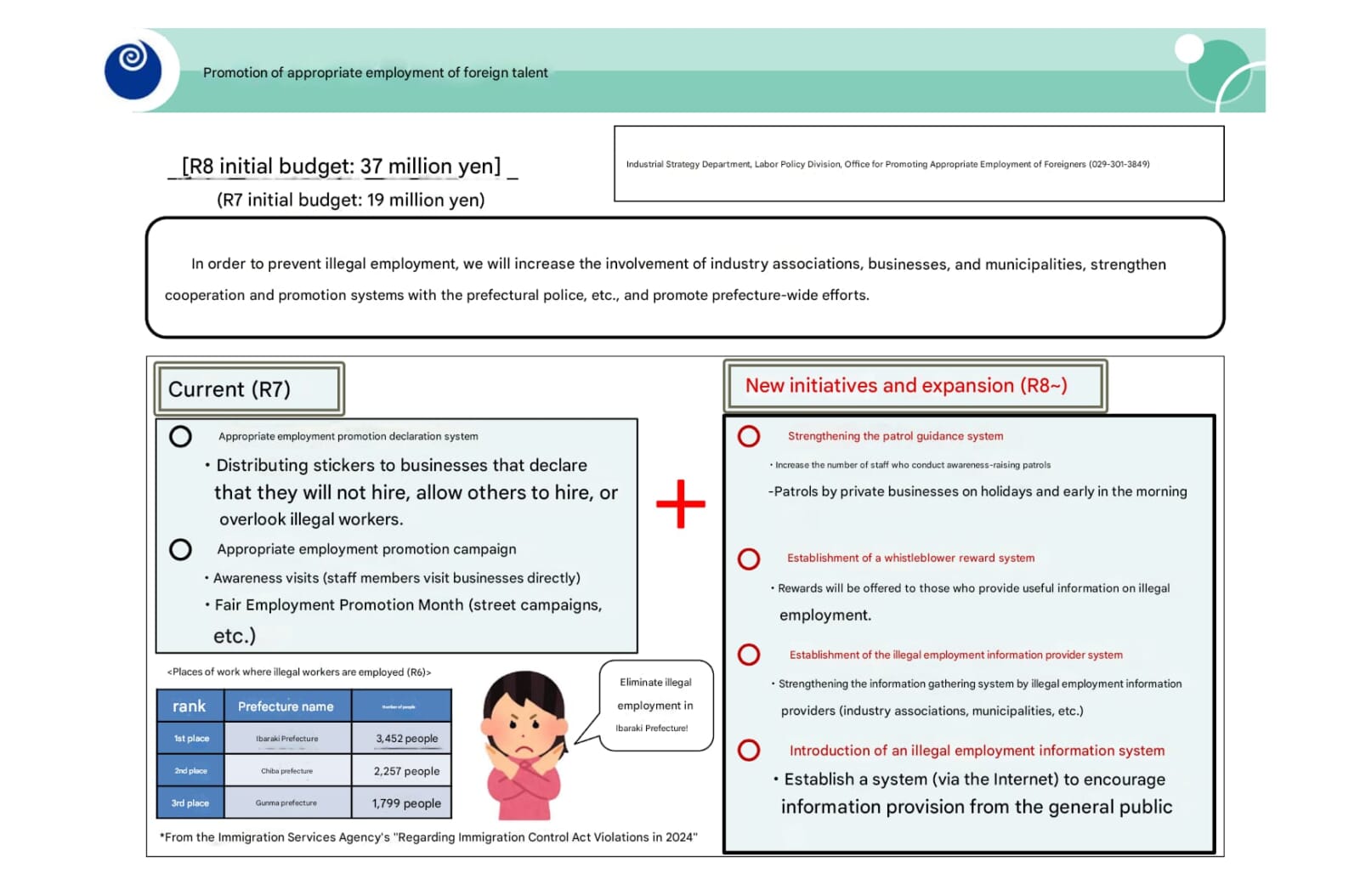
A translated page from the Ibaraki Prefecture FY2026 budget proposal document (page 21) explaining the initiative.
Details About the Reporting Program
The program will introduce an Internet-based reporting system to solicit information about foreign nationals working without proper visas and offer rewards if a report leads to a police arrest.
The reward money was reported to be “tens of thousands of yen,” though a specific amount has not yet been announced.
While the Immigration Bureau already has a similar tip system at the national level, Ibaraki marks one of the first localized prefectural programs. The national system, operating since 1951, offered ¥50,000 if a report led to a deportation order. However, no rewards have been paid out between 2021 and 2025.
It’s estimated that 70% of illegal laborers work in the agriculture industry, where farmers employ illegal workers to compensate for the labor shortage. As Japan’s 3rd largest agricultural producer (as of 2023), the new program could drastically affect Ibaraki’s farming industry.
Criticisms and Fears of Discrimination
The program has drawn criticism over concerns of human rights violations and encouraging harassment amidst growing anti-foreigner sentiment in Japan.
One outspoken critic is Jiho Yoshimizu, head of Nichietsu Tomoiki Shienkai, a Tokyo-based nonprofit organization that supports Vietnamese people in Japan.
Yoshimizu explained that many foreigners his organization supports have lost their homes after being fired from their trainee placements or fleeing abusive workplaces — leading them to overstay their visas due to not being able to secure a flight back home. Yoshimizu expressed concern that a reward system will only worsen conditions for foreigners and encourage hostile retaliation based on fears of being reported.
Eriko Suzuki, a professor from Tokyo’s Kokushikan University specializing in immigration policy, called Ibaraki’s new measure “a form of official xenophobia” with high risks of attracting inaccurate information.
Suzuki pointed out that the general public has no way of knowing whether or not a foreign worker is undocumented, leading to an expected surge of false reports. There are currently no announced penalties for false reports under this new program. Some foreign residents have reacted to the initiative online with comparisons to the United States Immigration and Customs Enforcement, worried about similar public threats and harassment.
Ibaraki officials and members of the prefecture’s foreigner employment office have tried to reassure the public that the department will “work out the details of the system in a way that takes human rights into consideration.”
The Ibaraki budget proposal document introduced the initiative as part of the “promotion of appropriate employment of foreign talent,” posing the program as a strengthened whistleblower patrol system.
“We will absolutely not allow this to become a reckless situation that makes even diligent foreign workers feel uneasy,” stated Governor Oigawa.