In Japan, the word juken carries an emotional gravity that’s hard to translate. More than just the taking of an exam, the term implies preparation, sacrifice, endurance — and, for many children, the first time they feel the pressure of society bearing down on their future. For some, that pressure begins before they reach double digits, when focused study for junior high school entrance exams turns childhood education into a rehearsal for grown-up responsibilities.
While not every student attends private junior high school, those who do often step onto a rigid educational ladder: a good junior high leads to a good high school, which leads to a good university, which shapes one’s job prospects — and, by extension, social stability. At each rung, exams function as gates, and the prospect of failing one can feel like the entire path ahead has narrowed.
In recent years, as competition intensifies in metropolitan areas and families invest more time and money into exam preparation, questions about the pressure-cooker education system are growing louder: At what cost does this system operate?
Explaining Japan’s Juken Culture
Japan’s exam culture is deeply tied to postwar ideas of meritocracy and collective order. In theory, standardized tests promise fairness. In practice, however, success often depends on access to resources, especially juku (cram schools), private tutors and parental time and attention.
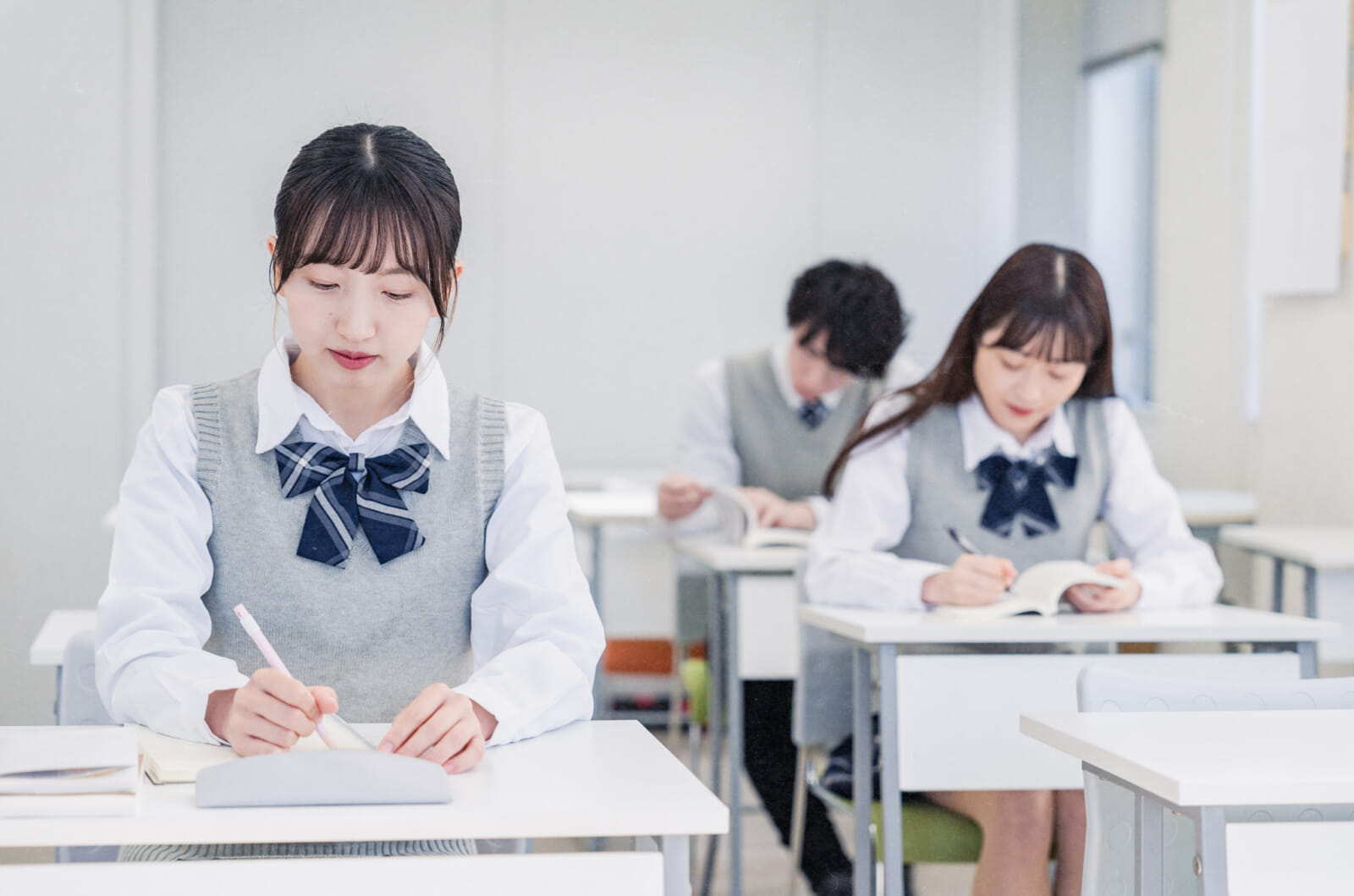
For families pursuing junior high school entrance exams (chugaku juken), the process can begin as early as the primary years of elementary school. Children may attend cram school four or five days a week, spending weekends in marathon study sessions or touring a laundry list of potential schools — each meticulously vetted against a child’s chances of passing.
The logic is forward-looking, almost contractual: endure now, and life will be easier later. Exams are framed as a form of insurance against future academic struggle or unstable employment. This thinking doesn’t end with junior high; high school entrance exams loom next, followed by university exams at 18, where students must not only gain admission but often decide their gakubu (academic faculty), a choice that can strongly shape career trajectories.
Unlike some Western systems, changing academic faculty partway through university can be difficult. Later in life, midcareer pivots are possible, but still culturally risky. As a result, juken becomes less about testing knowledge and more about locking in a future early, at a time when a child doesn’t fully understand who they are or what they want.

The Emotional Burden on Students and Families
A recent survey of families who experienced junior high school entrance exams revealed that over half of parents said they “regretted the experience,” at least to some extent. Common reasons included placing too much pressure on their child, forcing them to quit extracurricular activities and failing to allow adequate time for rest and play. These reflections often came after the exams were over, once the manic urgency faded and hindsight set in.
Children, meanwhile, reported giving up far more than many parents realized. Beyond obvious restrictions like limits on games or outings, students said they lost time to sleep, play with friends and practice hobbies. Perhaps most tellingly, they described losing the ability to express their true feelings. Long hours at cram school and the constant awareness of being evaluated created an environment where emotional vulnerability felt unsafe.
Several students described feeling isolated even within their own families: unable to complain, afraid of disappointing their parents or unsure whom they could talk to when anxiety peaked. While many parents believed their children were “handling it fine,” interviews revealed that some students were silently struggling with comparison and exhaustion.
Compounding the emotional burden of juken is the financial burden. Families routinely spend millions of yen on exam preparation, reinforcing the idea that sacrifice must be justified by success. When that much money, time and hope are invested, failure can feel catastrophic — not just for the child, but for the family unit.
This dynamic helps explain why juken pressure can escalate so quickly. Parents compare schools, scores and strategies with one another, while social media and online forums amplify success stories. Rarely given space are the voices expressing regret or burnout.
Yet, while many children said the hardest parts of the juken process were losing time to play and dealing with stress — sometimes to the extent of pulling out their hair or developing a deep aversion to studying — a majority still described the experience as a “success” afterward, even if they didn’t get into their first-choice school. This reflects a deeply ingrained cultural belief that endurance itself is virtuous, regardless of the outcome.

More Than Just an Exam
Japan’s juken culture is not simply about ambition or academic rigor. It is a mirror of broader societal anxieties: shrinking job security, widening inequality and the fear of falling behind in a system that prizes linear success. Children absorb these fears early, often before they have the language to articulate them.
As conversations around education slowly begin to include mental health and balance, cracks are appearing in the once-unquestioned authority of the exam ladder. Still, for many families, the world of juken feels less like a choice and more like a necessity.
The question Japan now faces is not whether juken produces high achievers — it undeniably does — but whether it can evolve into a system that measures success without demanding silence, exhaustion and regret from children who are barely teenagers. Because for those standing at the starting line, juken is more than just a few days of exams — it’s an entire lifestyle that not only shapes how a child learns but tethers their self-worth to the score on a sheet of paper.