Tokyo is hardly short of high-end omakase counters. In fact, there are so many these days that telling them apart is becoming increasingly difficult. Yet sitting down at Kappo Omakase Saki, on the 29th floor of JW Marriott, I found myself looking at the experience a little differently.
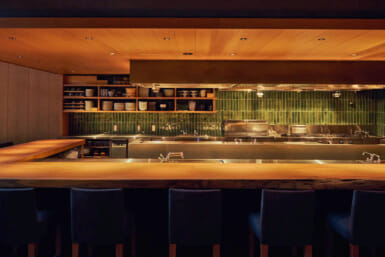
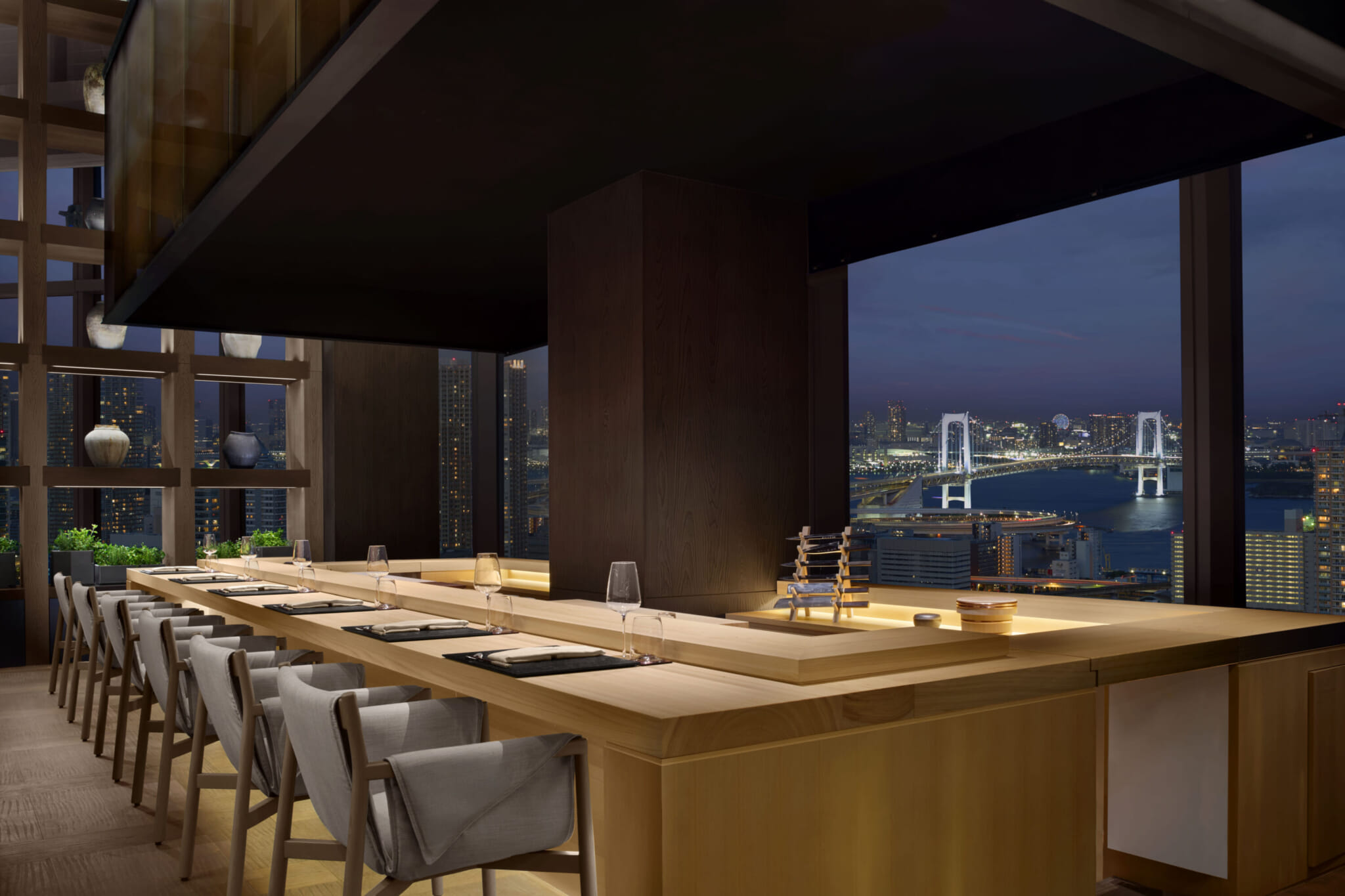
With just eight seats at the counter, the focus naturally turns to the chefs at work, the rhythm of the meal and the expansive Tokyo Bay skyline unfolding behind them. It’s a somewhat different omakase experience, one that feels intimate without being overly formal.
There’s no hidden entrance, no elaborate speakeasy theatrics or unnecessary sense of occasion when you arrive. There’s just a sleek, minimalist counter, where the food, the chefs and the sweeping views do all the talking. And that simplicity is part of the appeal.
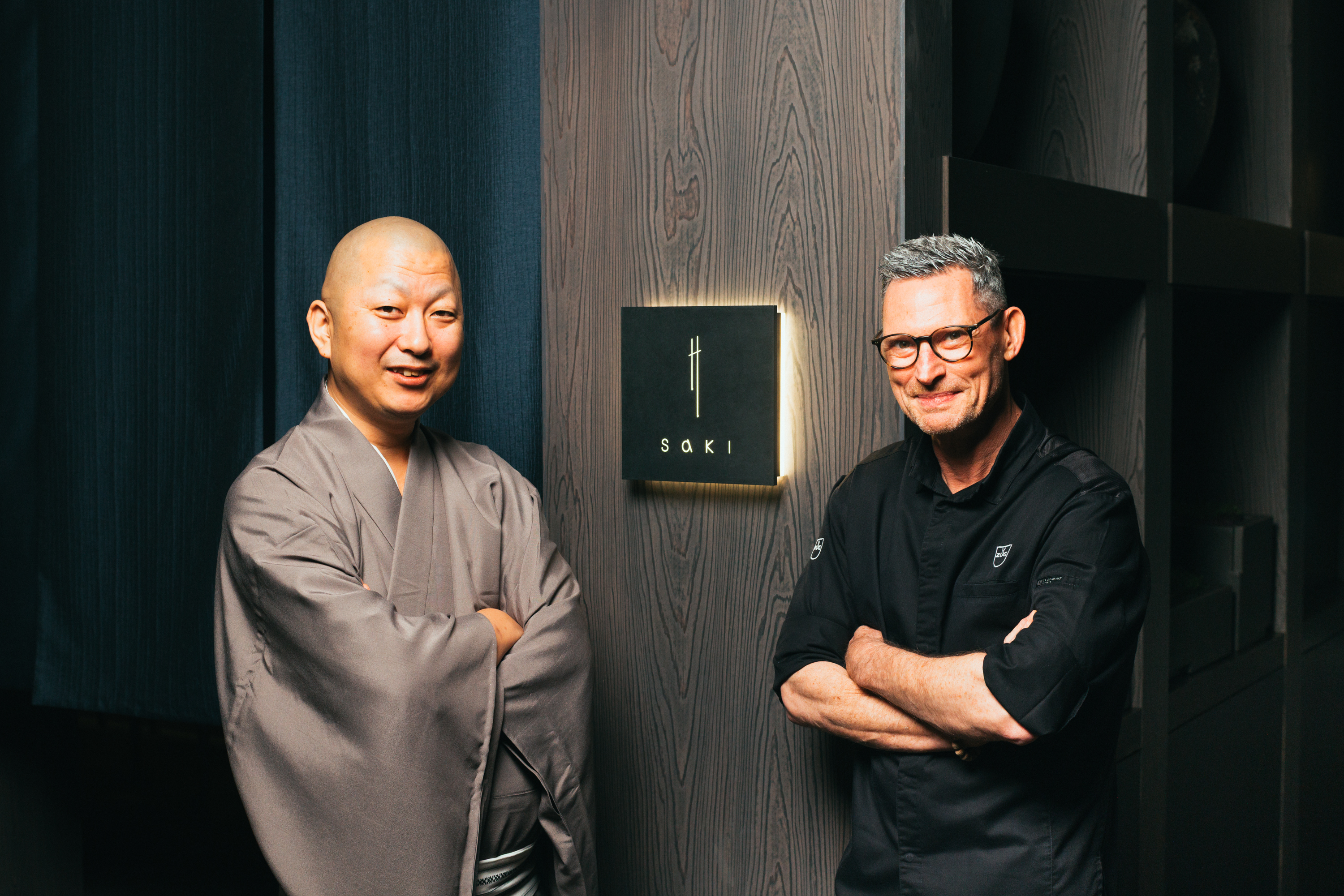
Kazumine Nishida and Emmanuel Stroobant
The Chefs Behind Kappo Omakase Saki
At the heart of Kappo Omakase Saki is a culinary partnership between two chefs from distinct culinary backgrounds: Emmanuel Stroobant and Kazumine Nishida. Stroobant founded the contemporary French restaurant Saint Pierre, while Nishida is the chef behind Shoukouwa. Both restaurants hold two Michelin stars and are based in Singapore.
While Stroobant and Nishida bring their respective culinary backgrounds to Kappo Omakase Saki, Head Chef Nakagawa is the one who oversees the kitchen and brings the menu to life. His approach is very much hands-on, with each ingredient carefully considered and every dish exquisitely prepared at the counter.
That attention to detail becomes immediately apparent once the menu gets underway. The opening courses set the tone with a thoughtful interplay of textures and flavors, beginning with Osetra caviar served alongside sweet Toyama botan-ebi (botan shrimp), which has a dense, almost creamy texture.
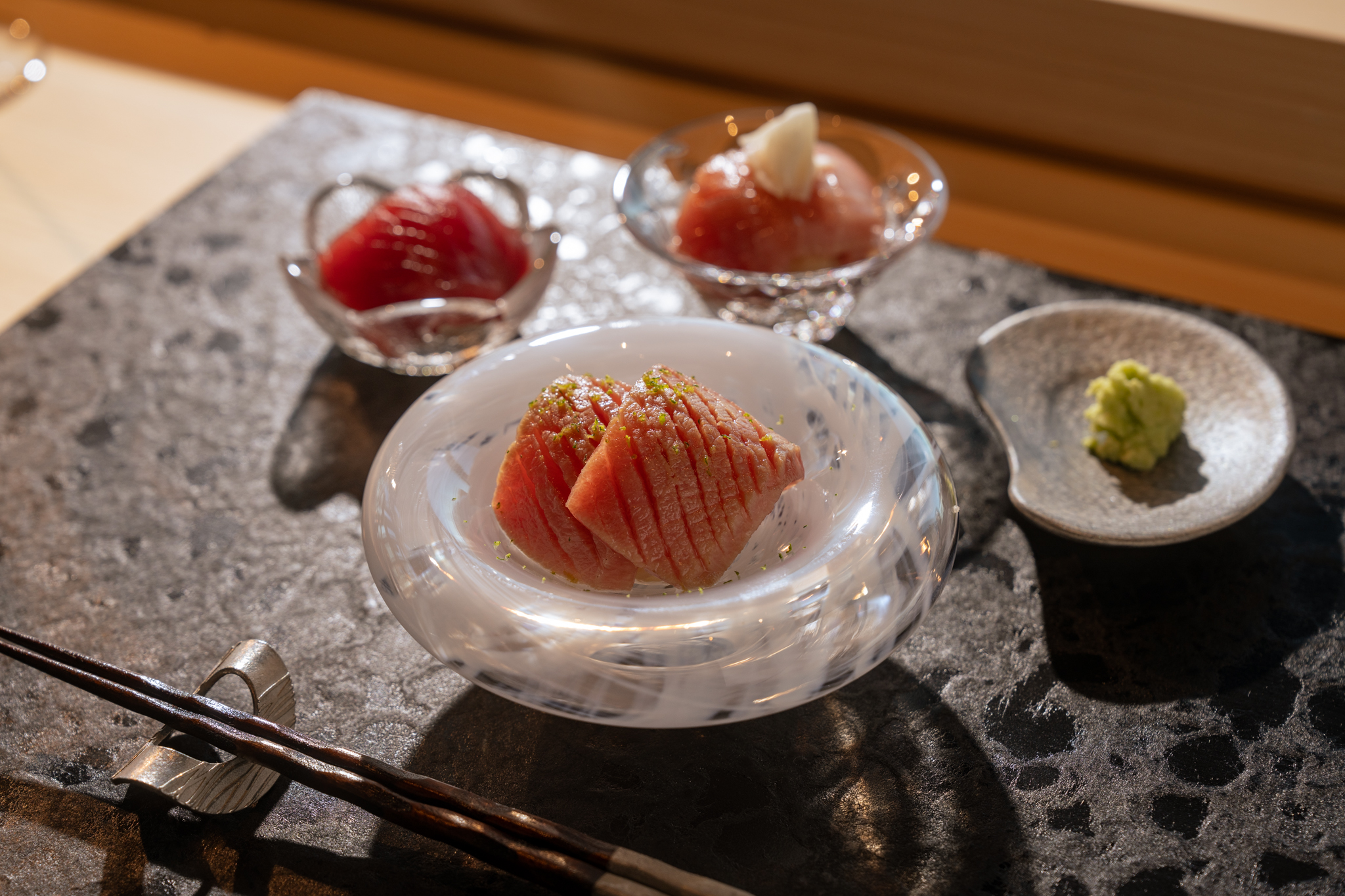
Bluefin tuna
From Hokkaido Seafood to the Finest Tuna
Hokkaido takes center stage for the following three courses, beginning with a Bafun uni (green sea urchin) from Hamanaka, which is layered in a chilled jelly with surf clams and sweet Amela tomatoes. Delicate yet distinctive, the dish brings together pure oceanic umami and bright, summery acidity.
The Hokkaido theme continues with hotate (scallop), paired with a piquant yuzu-kosho paste and shiso (perilla leaf), which add a refreshing herbal note to the sweetness of the scallop. That is followed by a light kegani (horsehair crab) soup, with ginkgo nuts and yurine (lily bulb).
The meal then moves on to bluefin tuna, presented in three cuts that showcase its varying degrees of richness. Served with rice tea and white soy sauce, the lean akami offers a delicate start, while the chutoro — the medium-fatty cut — has a softer, silkier texture.
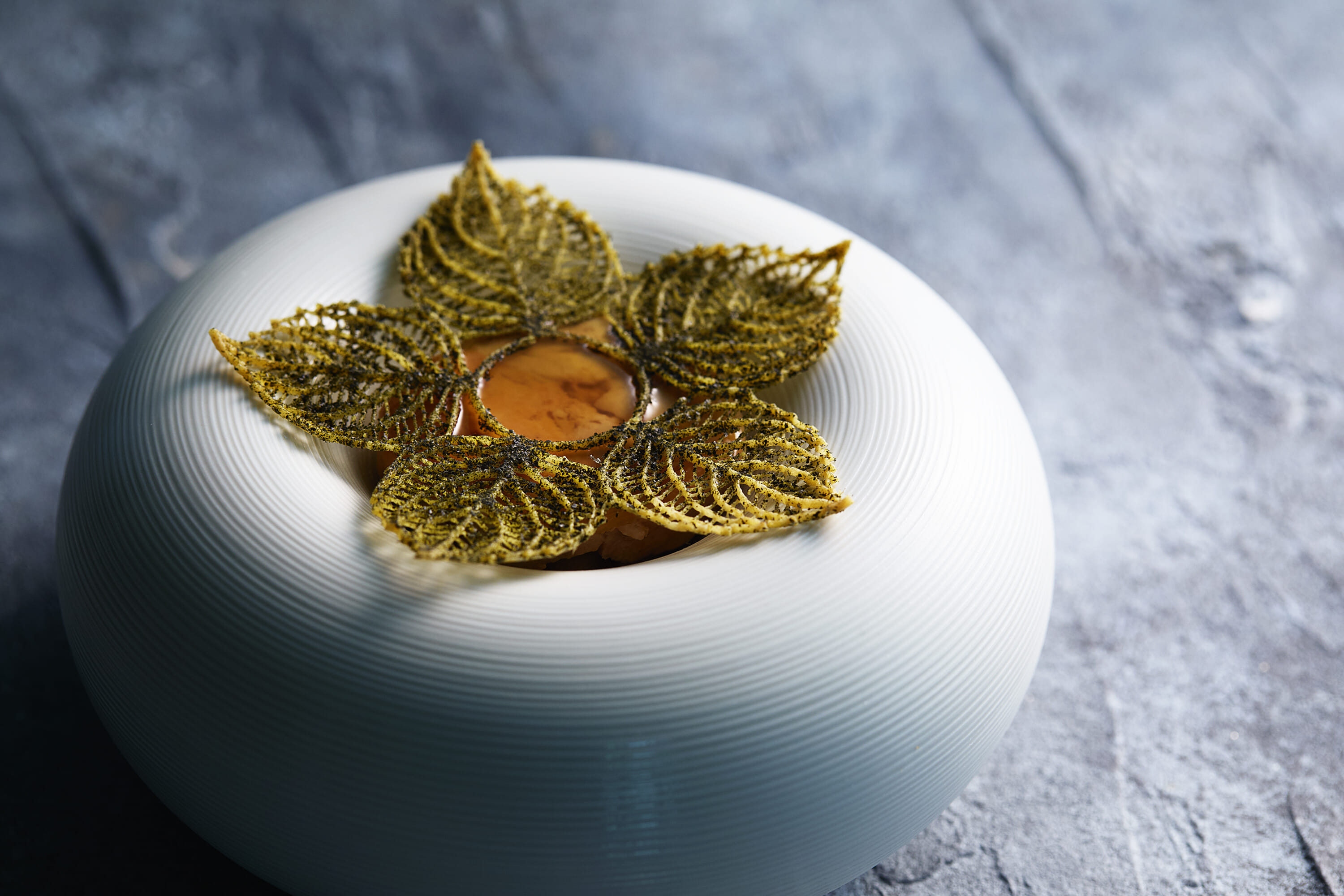
Ankimo
A Celebration of Japan’s Finest Ingredients
The highlight, however, is the richly marbled otoro, whose pronounced fattiness and melt-in-the-mouth texture make it the most indulgent of the three, with a touch of sudachi adding a refreshing citrus lift. Even the rice combines new and aged grains for the ideal balance of moisture and texture.
The Ise ebi (Japanese spiny lobster) is another standout, offering a firm, snappy texture and delicate natural sweetness. The richness then shifts to Yoichi ankimo (monkfish liver), prized for its creamy texture and deep, buttery umami, marking a more indulgent turn in the meal’s progression.
The savory courses continue with matsutake chawanmushi, a delicate Japanese steamed egg custard showcasing the woodsy aroma of the prized autumn mushroom. Bringing a more assertive combination of flavors is Saki’s signature torotaku temaki, filled with medium-fatty and fatty tuna, Sichuan peppercorn, pickled radish, white leek and perilla leaf.
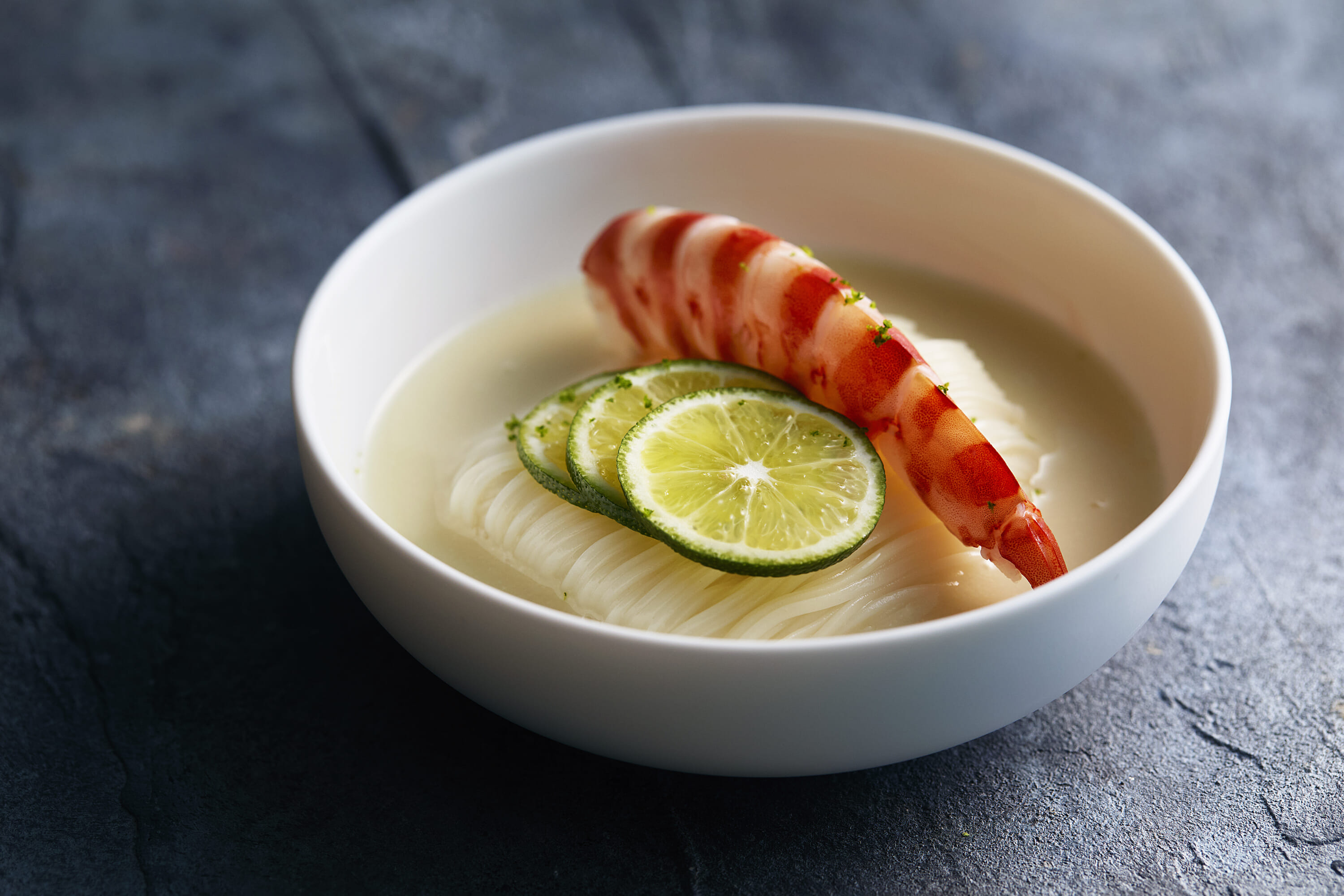
Amakusa kuruma ebi and somen
Towards a Delicate Finale
Amakusa kuruma ebi (Japanese tiger prawn) offers another taste of Japan’s exceptional seafood, with its naturally sweet, delicate flesh and pleasingly firm texture. It is accompanied by somen noodles and finely sliced white leek, adding freshness and a subtle contrast to the sweetness of the prawn.
A gobo infusion follows, combining burdock root, angelica leaf, mint, chrysanthemum, ginger flower and perilla leaf in an aromatic blend of earthy, floral and herbal notes. Finally, a hojicha parfait brings the meal to a gentle close, pairing roasted, nutty hojicha with crisp nashi pear and plum wine.
It’s a fitting end to a meal defined by balance, restraint and carefully chosen ingredients. In a city where high-end omakase is hardly in short supply, Kappo Omakase Saki offers a refreshing change of perspective, with an experience that feels considered, personal and quietly distinctive.