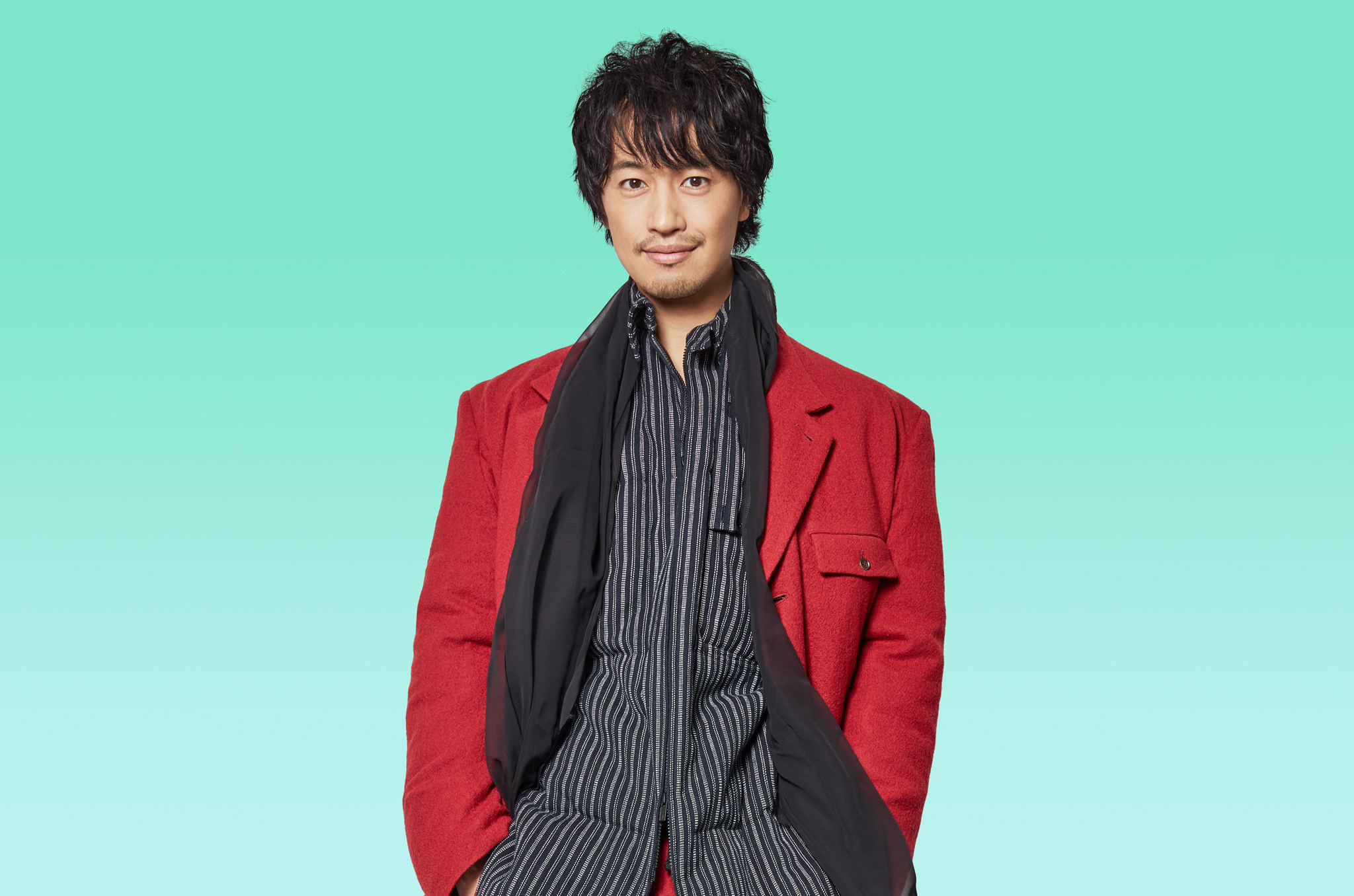
Takumi Saitoh is a rare multi-hyphenate in Japanese cinema — a celebrated actor, director and photographer whose career bridges blockbusters like Shin Ultraman and festival favorites such as his award-winning directorial debut Blank 13.
This interview has been edited for length and clarity.
What does the word “icon” mean to you?
I feel that an icon is a personal figure who represents an era. Personally, I’m very interested in hidden icons — characters who carry both light and shadow. I feel that in our times, icons aren’t just perfect heroes but figures who also embody darkness. For example, dark heroes like the Dark Knight or the Joker. It’s not only about absolute heroes. Modern icons need that element of shadow, too.
One actor I’ve always admired is Chishu Ryu. He appears in almost every Ozu film, often as the stern but loving father. He spoke little, but his presence became almost a symbol of Japanese identity. He’s the reason I entered this world.
What is the most memorable piece of advice you’ve ever received?
When I was in my teens and early twenties, I attended a theater school. My teacher there, Mr. Ito, once said something to my parents after they came to see a performance. At that time, I had little confidence in my future as an actor. He told them: “Expect nothing, yet expect.”
It wasn’t advice directly to me, but it struck me deeply. To watch over someone chasing a dream without forcing expectations — that’s powerful. As a director myself, I work with actors and child performers. Of course, I have expectations, but I try not to demand a single “correct” result. When you leave space, chance brings miracles.
What advice would you like to give the younger generation?
Recently I acted with an eight-year-old actress. She’s been writing screenplays since she was five. She’s already written about 16. I read one of her feature-length scripts and it was extraordinary. In the first few scenes, her perspective just blew me away.
Her theme was “altruism” — valuing others, respecting others. At eight years old! When I was her age, I couldn’t think like that. I feel today’s younger generation are a hybrid, different from how we were. So what we middle-aged people can do is not stand in their way.
I don’t believe I have practical advice for them. But at the very least, I don’t want to obstruct them. I trust they’ll improve the world with their own generational sensibilities. I feel gratitude — and hope — toward their existence.
What have you been deeply immersed in recently?
I’ve been running a “mobile cinema” since 2014, bringing one-day theaters to disaster-hit areas or places without cinemas, so children can watch films together, not alone. We did one in Nakanoto last year, and this October we’ll hold one in Suzu, in Okunoto, which was heavily hit by the earthquake.
It’s my life’s work, not just a job. I remember seeing films in a cinema as a child — how it opened worlds, showed me professions, gave me choices. I want today’s children to have that same experience of sharing wonder with others.
What’s something unusual or distinctive that always finds its way into your work?
When I took my horror film Home Sweet Home to a Shanghai film festival, an audience member told me: “All your films seem to deal with a mother’s love.” I’d never realized that myself, but looking back, it’s true. So it took an overseas viewer to make me aware of my own theme.
As for style, because I’ve seen so many films, I carry many “precedents” in my head. I always want to subvert them. Maybe that’s not pure originality, but I want to shift things so they aren’t exactly the same. I don’t want audiences or collaborators to predict me. I want to create little irregularities, even if they don’t end up being used — something that makes people think, “Oh?”