On November 8, the world lost Tatsuya Nakadai, one of the greatest actors in Japanese history. He was primarily known to Western audiences through his work with Akira Kurosawa in such masterpieces as Kagemusha or Ran. As expected, many English tribute articles to the actor focus heavily on his collaborations with the famous director. However, out of his 184 roles, only six were with Kurosawa, and one was uncredited.
To really understand why the loss of Tatsuya Nakadai is such a sad day for Japanese cinema, you have to look at his works with other directors that showcase his amazing range. The following five movies are a good place to start.
Harakiri (1962)
Barely nine years into his career, Nakadai delivered what some critics consider his finest performance. Harakiri (Seppuku) is an unflinching takedown of the myth of ritual Japanese suicide as some kind of noble and honorable act, not to mention a masterclass in cinematic suspense. A lot of the latter comes down to Masaki Kobayashi’s direction and Shinobu Hashimoto’s script, but the one who brings it all together is Nakadai. He plays the ronin, Hanshiro Tsugumo, who asks the overseers of a powerful clan’s estate for permission to commit seppuku in their courtyard.
Initially resolute and stoic in the face of death, Nakadai’s demeanor and aura change by inches as the film slowly reveals the circumstances of Hanshiro’s request. Harakiri is a transcendent experience on the first watch, but a second viewing — when your mind isn’t occupied with piecing together the plot — allows for a more meaningful appreciation of Nakadai’s performance. It’s layered and subtle when needed and frighteningly explosive at just the right time to leave an everlasting impression.
The Sword of Doom (1966)
Nakadai as Ryunosuke Tsukue in Kihachi Okamoto’s The Sword of Doom (Dai-bosatsu Toge) isn’t your typical depiction of a cinematic samurai, and that’s what makes the movie and the actor’s portrayal so fascinating. In a word, Nakadai’s Ryunosuke is a monster. An extremely skilled swordsman from the late Edo period — a time when Japan was at peace and samurai were free to contemplate the “soul” of the warrior — Ryunosuke is wholly disinterested in such metaphysical matters. All he wants to do is use his privileged social position to kill, which he does, with much glee.
We’ve seen evil samurai in movies before and since The Sword of Doom, but few if any boast such an amoral, psychopathic character as their protagonist. However, Nakadai also brings a kind of dark melancholy to the role, painting a cinematic portrait of a disturbed man looking for meaning in a world that no longer has any real use for samurai, and that’s exactly what Ryunosuke gives them: Pure nothingness in the place where his soul should be. In yet another incredible acting feat by Nakadai, he brings the words of screenwriter Hashimoto to life.
Lear on the Shore (2017)
One of the actor’s final movies, Lear on the Shore (Umibe no Ria) is wonderfully minimalistic with its story and setting, giving us 105 minutes of almost nothing but Nakadai acting his heart out in what can only be described as a gift from writer-director Masahiro Kobayashi. The movie follows an elderly actor with dementia trying to find some meaning in life during his final years on Earth.
Dealing with themes of aging, family and personal dignity, Lear on the Shore has a very one-man stage show-like quality to it: It’s carried almost entirely by monologues that, with many other actors, would eventually become tired. Not so with Nakadai. He brings a whole gamut of emotions into the performance, dominating the screen at times with furious anger, and disappearing into a corner in a sorrowful, whimpering exhibition of elderly fragility. It’s impossible not to speculate on the autobiographical aspects of the film, but wherever its raw authenticity came from, the audiences should be thankful to be in its presence.
Hachiko Monogatari (1987)
Everyone knows the story of Hachiko, the faithful Akita dog that continued to wait for its owner at Shibuya Station for years after the man’s death. But it’s one thing to know the story and another to really feel it, and for the latter, there is nothing better than watching Seijiro Koyama’s and Kaneto Shindo’s Hachiko Monogatari.
Scenes of Hachiko and Nakadai as his owner come off as candid family movies, capturing moments of pure emotional honesty. When Professor Ueno, played by Nakadai, experiences joy, sorrow or annoyance, it never feels like just fleshing out the character for the inevitable gut-punch when he dies. Nakadai continuously emanates love for life and his Akita dog, ushering viewers into the emotional core of this real-life story and making them feel all warm inside even when they know what is coming.
The Human Condition Trilogy (1959–1961)
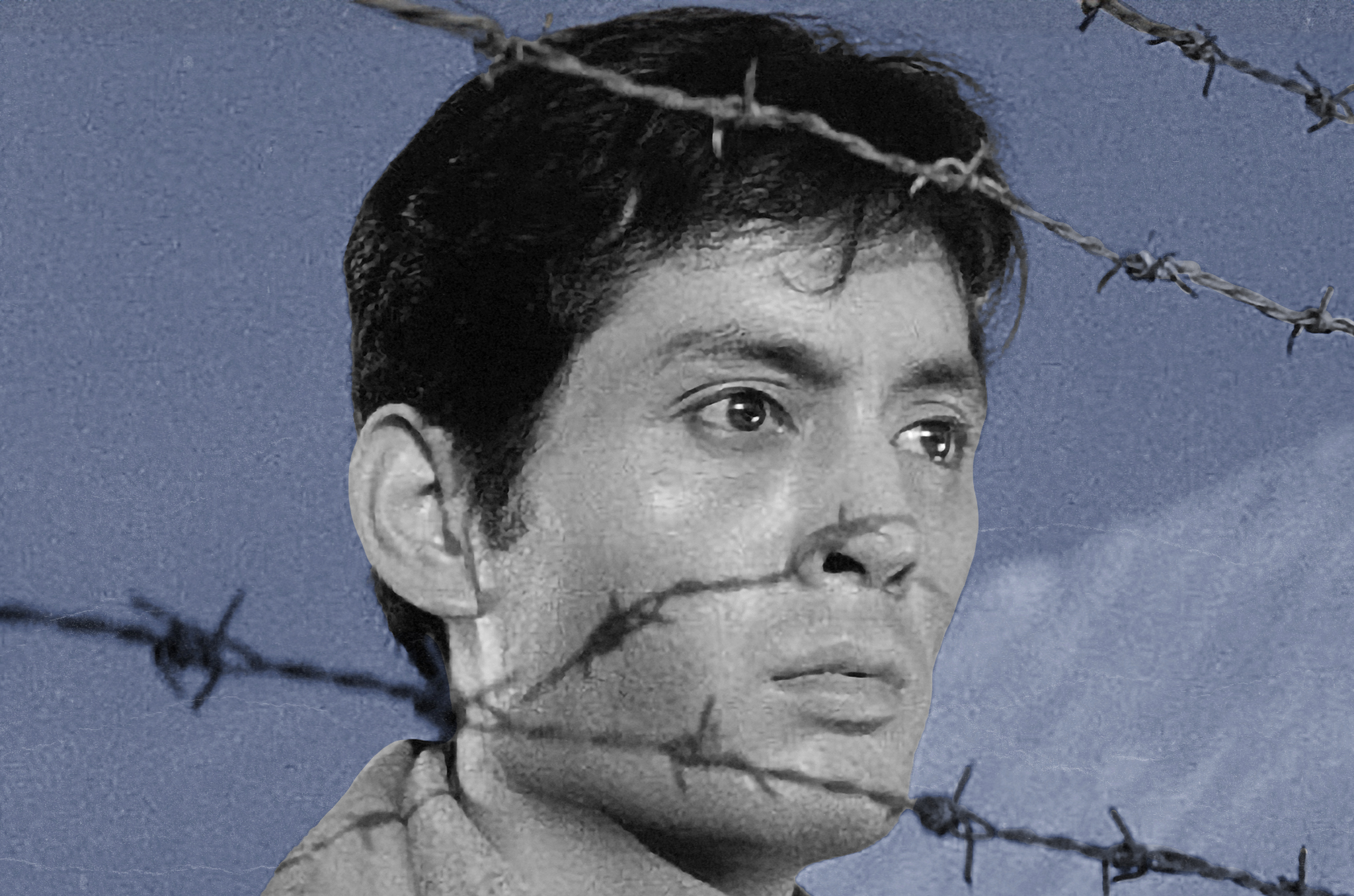
While all three installments of Kobayashi’s The Human Condition (Ningen no Joken) are sometimes identified by individual titles like No Greater Love (1959), Road to Eternity (1959) and A Soldier’s Prayer (1961), in Japan they are pretty much treated like one film lasting almost 10 hours. The Human Condition is the story of Nakadai’s Kaji going from a young idealist with a strong sense of humanity and compassion in World War II-era Japan into a disillusioned man thrashed mercilessly by the system, and finally into a POW husk with a broken body and soul.
To portray the same character over the course of three years as he undergoes immense inner and outer transformations, all while keeping the core of Kaji intact so that audiences recognize him as the same person, is like an acting ultramarathon. But Nakadai turned out to be just the person for the job, putting himself under massive physical and mental strain but never letting it show unless the plot called for it, all while burning holes in the film with his piercing gaze. The Human Condition trilogy showed the world that few actors can act with their eyes as intensely as Nakadai, while also showcasing his seemingly endless range.