
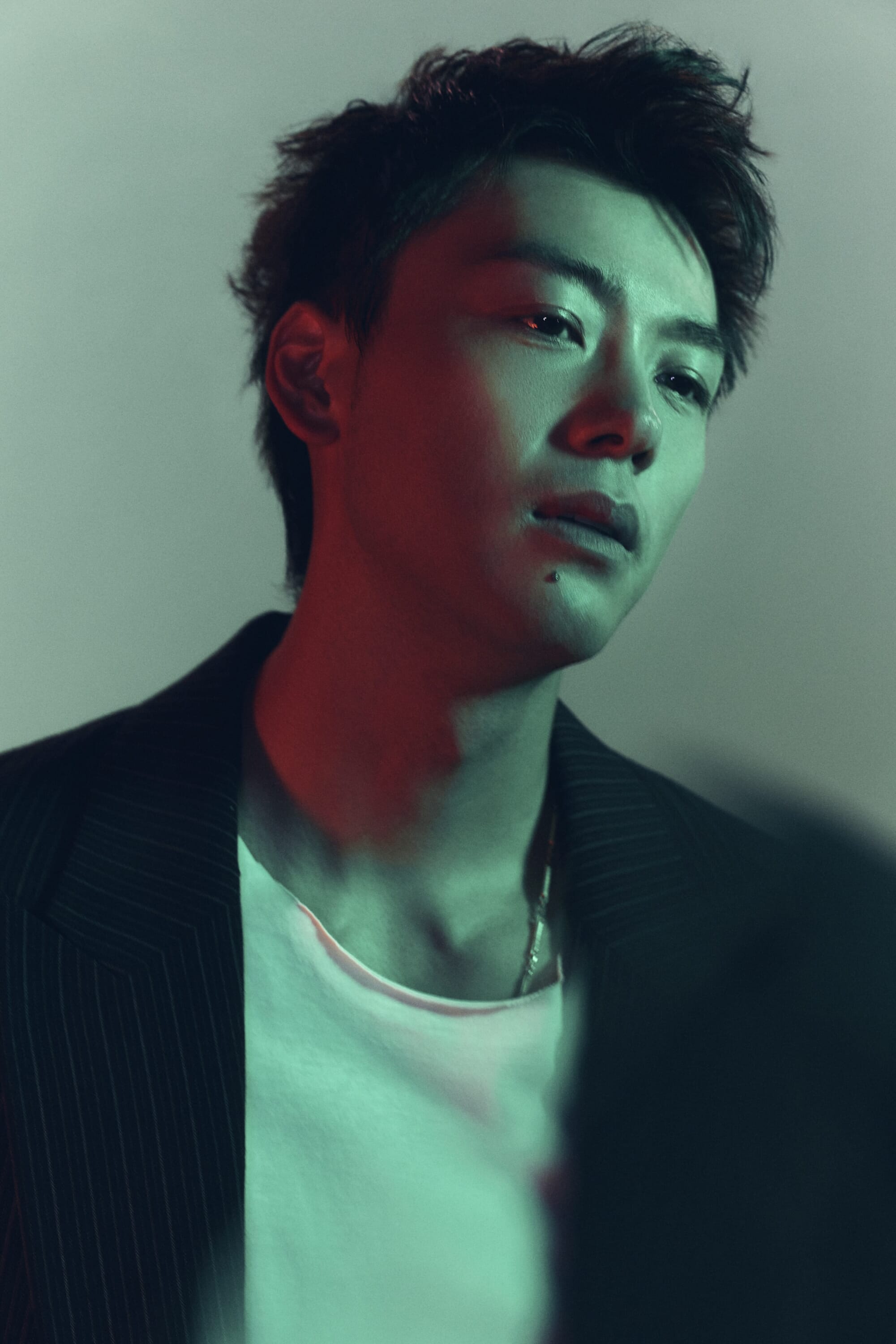
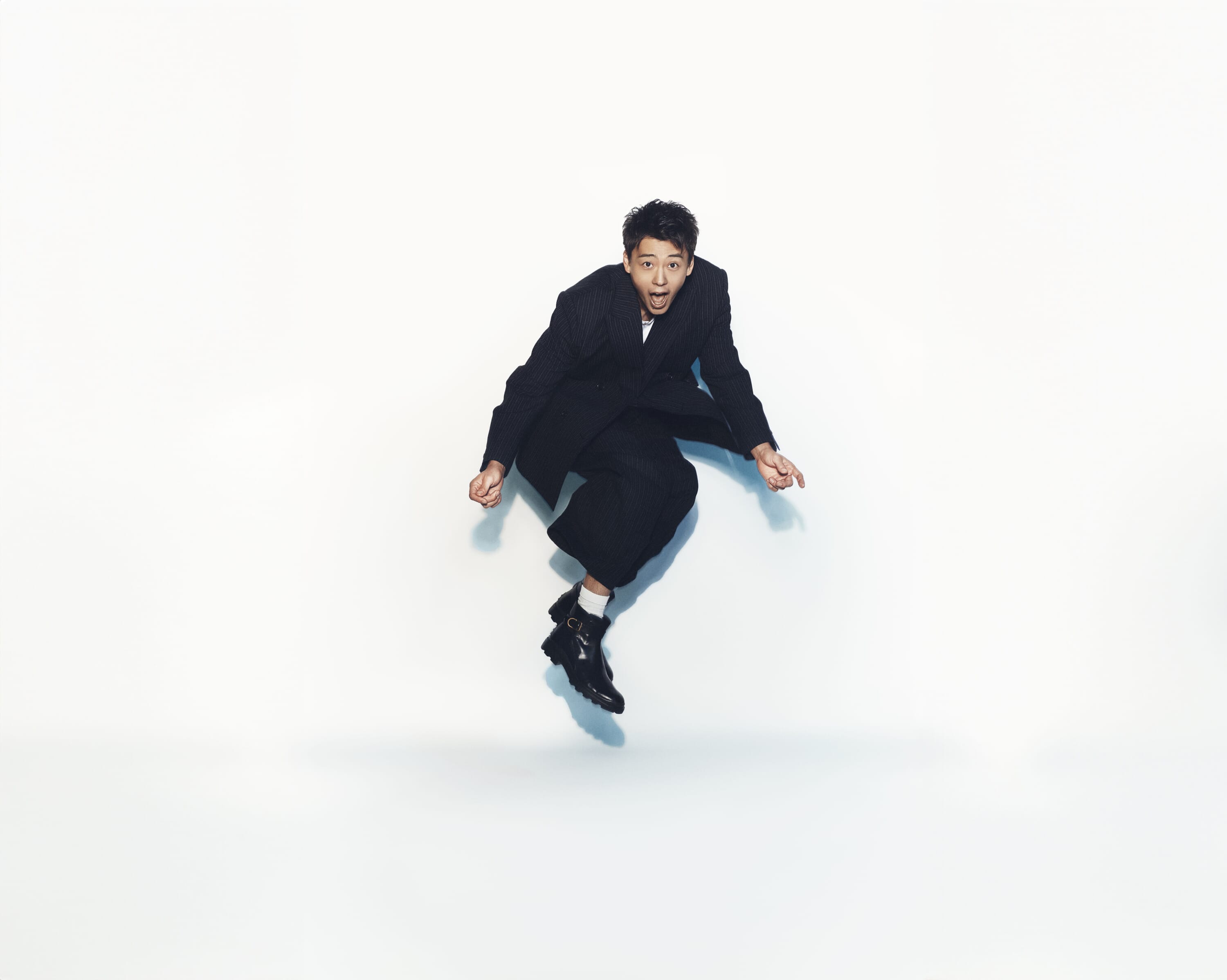
For more than a decade, Ryoma Takeuchi has held Japanese audiences in thrall. Effortlessly shifting from action hero to romantic lead, yakuza boss to ballroom dancer, Takeuchi approaches each role with a kind of full-bodied intensity. It’s not simply versatility; it’s a sustained curiosity about the outer limits of his own range. His career resists neat categorization, defined instead by an instinct to test, stretch and subtly subvert the archetypes he inhabits.
In 2013, before he was a household name, Takeuchi entered the Mina Kare Grand Prix, a fiercely competitive modeling contest hosted by the women’s magazine Mina. He beat out 2,457 applicants to claim the top prize, and within a year, he was cast as Shinnosuke Tomari in Kamen Rider Drive — taking the reins of one of Japan’s most enduring superhero franchises and winning over young viewers and longtime fans in the process. By 2017, he had solidified his status as a drama heartthrob, leading prime-time romances across major networks, including classics like NHK’s morning drama Hiyokko and NTV’s Overprotected Kahoko.
More than a decade after his debut, his résumé reads less like a string of hits and more like a steady widening of scope. With his boundless adaptability comes a sense of ubiquity. Turn on Netflix in Japan, and you’ll likely be greeted with his unmistakable face: sharp-jawed, wide-eyed, radiating both intensity and warmth. Two of his recent projects — the murder mystery Silent Truth and 10Dance, a sultry, Netflix-produced movie about ballroom dance — were just in the streaming platform’s Top 10 in Japan, with 10Dance ranking both domestically and internationally.
Now, as he prepares to take to the stage in the musical Leap of Faith, which tells the story of a con artist posing as a faith healer in drought-stricken Kansas, Takeuchi finds himself in a position to reflect. Speaking with TW, he describes acting as a continuous back-and-forth negotiation between performance and authenticity. Each role becomes a testing ground, a way of measuring how much of himself he is willing to bring into the work.
Finding Himself
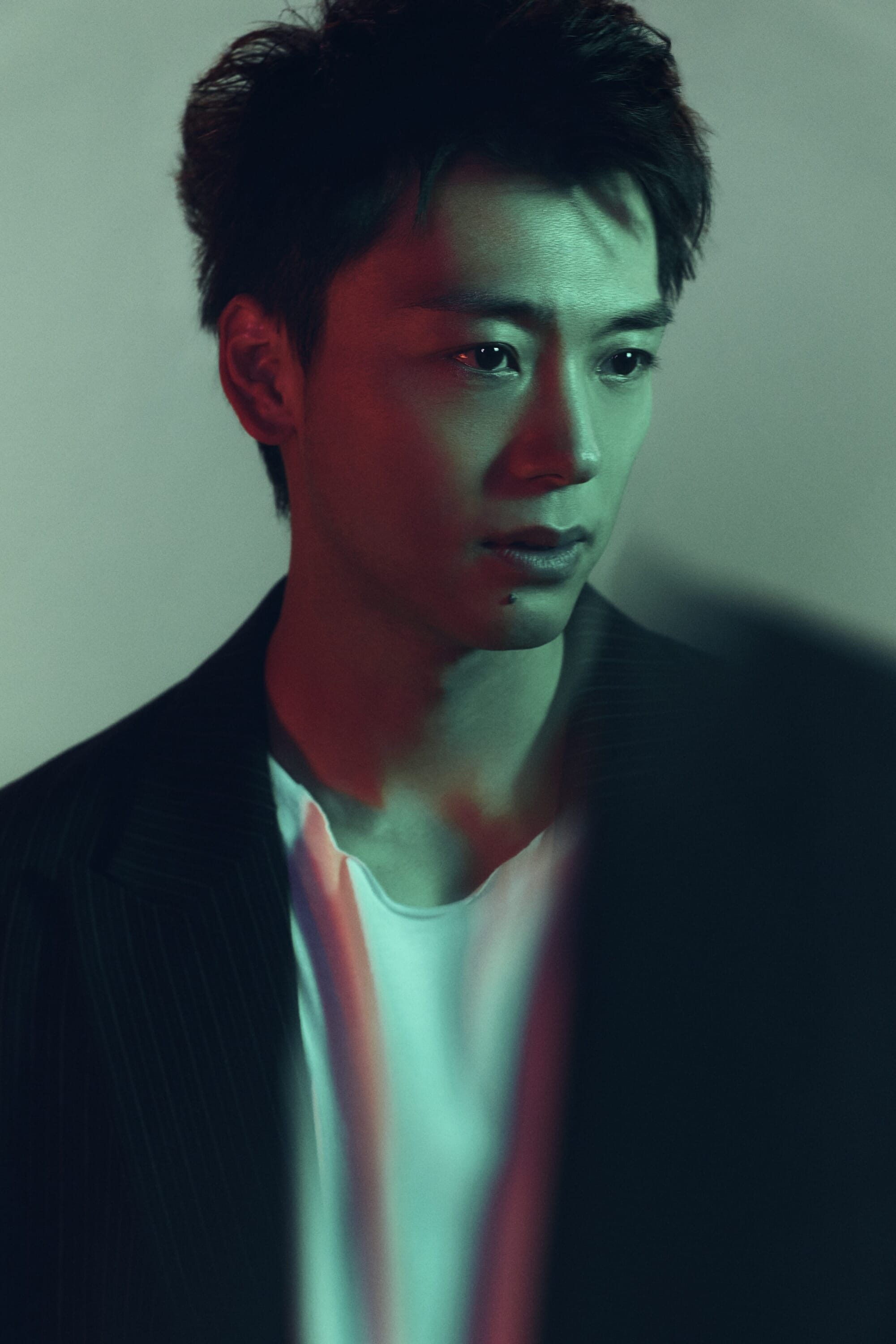
Before he became an actor, Takeuchi was chasing a different dream: becoming a professional soccer player. He played on the youth team of Tokyo Verdy, one of Japan’s most storied clubs, until an injury forced him to reconsider his future. “I lost my direction once, but I was determined to succeed as an actor,” he said in an interview that appeared in The New York Times, later describing that period as a turning point in his life.
For him, acting has become a sustained process of self-discovery. He sees each new character as an opportunity to confront emotions and instincts he hasn’t yet accessed in himself. “Sometimes I play a role with the hope that I might find a new version of me,” he tells TW.
Earlier in his career, he says, he felt that there was a clearer boundary between himself and the characters he portrayed. Rather than fully inhabiting each role, his goal was simply to execute it convincingly. His way of thinking has changed over time. “Over the past few years, I’ve been focusing on how to link myself with my roles,” he explains. “I want to make the gap as small as possible.” To do so, he keeps journals written from his character’s perspective, examining their emotions and motivations. “If I switch on and off into my character, I get disconnected from my role. By combining my daily life with my character’s, I can enter a scene more easily.”
At the heart of his craft is a single guiding principle: truth. “In some ways, acting is a form of lying,” he muses — at its core, it’s pretending to be someone you’re not. Yet truth is never fixed; Takeuchi approaches each role by discovering what feels authentic for his character. “While I’m filming, using my emotions and body, I believe I am living that truth,” he says.

Dance as Language
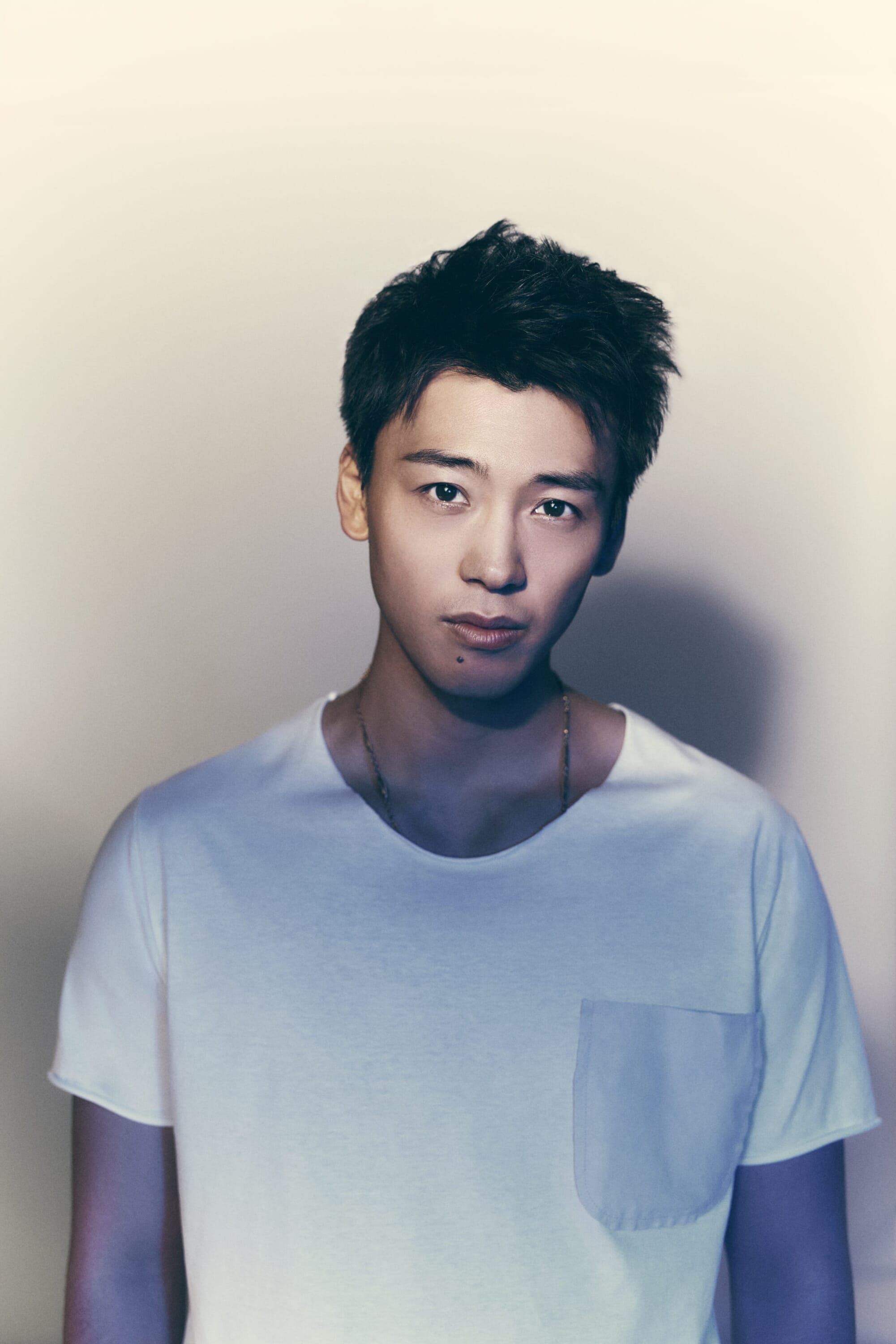
In 10Dance, he discovered that truth primarily through his body. The film follows a pair of ballroom dancers preparing for a rigorous competition while unpacking their complicated emotional connection. He plays Shinya Suzuki, a charismatic, sensual and, at times, vulgar professional Latin dancer who finds himself inexorably drawn to his more polished and repressed rival, also named Shinya.
His preparation involved intensive sessions with an acting coach in Los Angeles, honing both technique and physical presence. He also mapped out emotional beats that didn’t appear on the page, considering how they might emerge through movement. “I wrote down what wasn’t in the script,” he explains, “so I could express it through music and dance.”
Dance, he realized, operates as its own language. “People used to dance and pray without words,” he observes. “Dance is quicker to explain things than words.”
While movement has always been a key part of Takeuchi’s acting, 10Dance amplified it to a new intensity. The close-quarter partner work demanded precision and instinct, letting him communicate desire, tension and emotion with the smallest gesture — or even in the subtle tilt of his posture. Every movement became a language of its own. “I didn’t have much experience with dance, so I had no idea how far I could push myself,” he told Elle in an interview about the film. “All I could do was trust my instructor and practice relentlessly every day.”
A Village
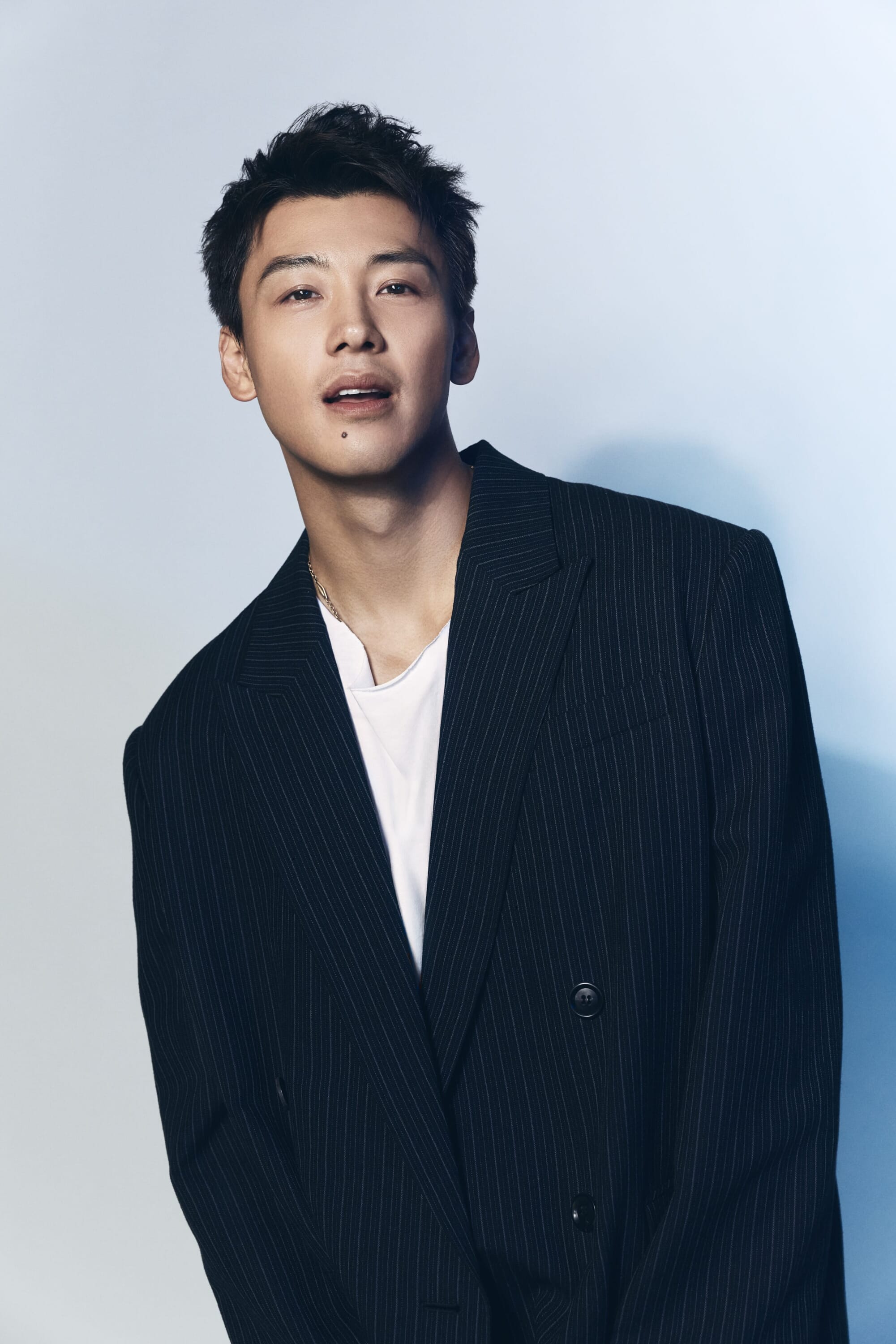
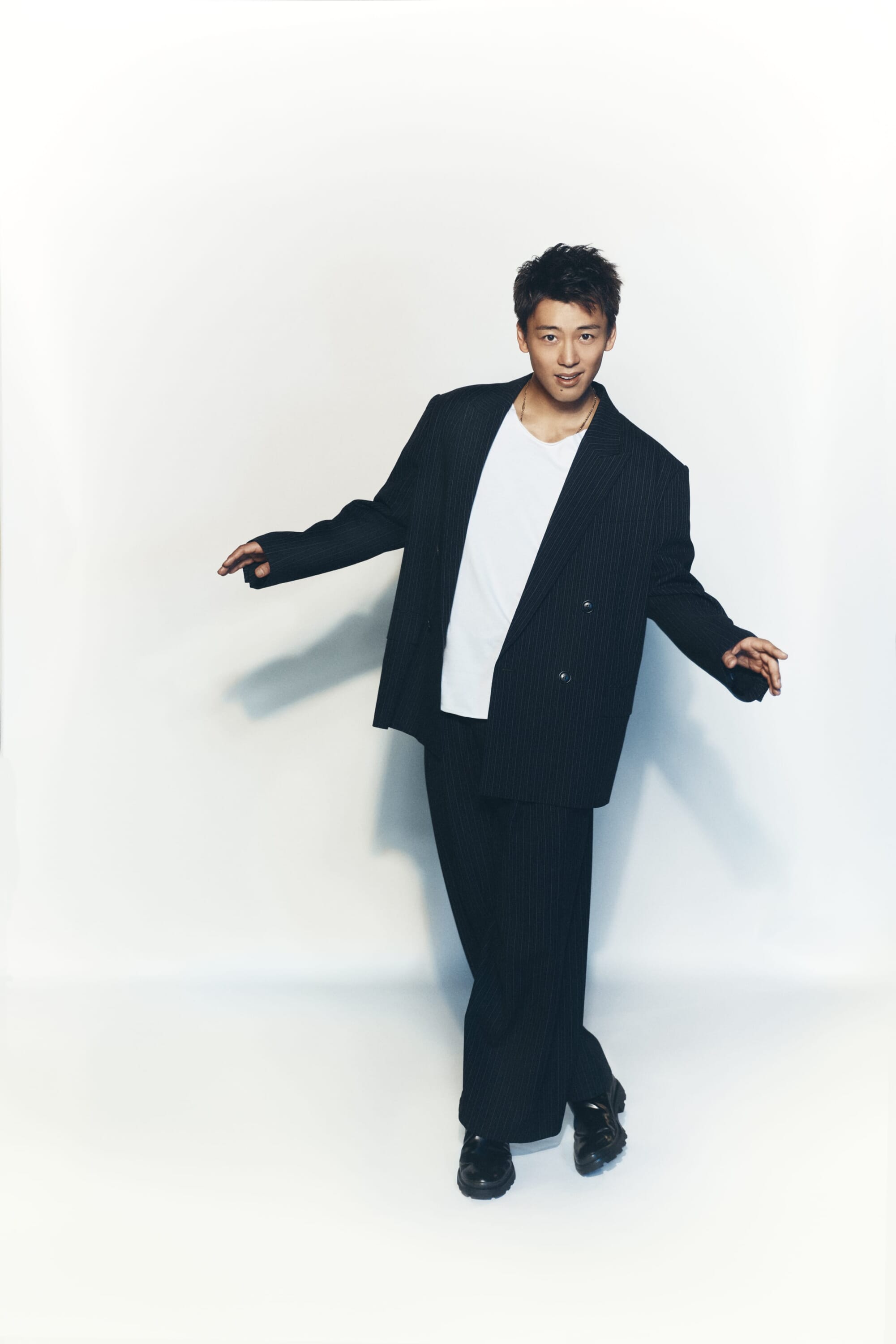
Leap of Faith, which starts its run in April at Tokyo Tatemono Brillia Hall before traveling to three other cities, stars Takeuchi as a fraudulent “reverend” whose cynicism is tested when he witnesses a true miracle. It’s a demanding role; stage performance, with its sustained emotional intensity and real-time audience presence, requires a different kind of stamina than screen work.
It’s also, Takeuchi notes, far more communal than film or TV. “The most enjoyable part of this whole process is that sense of being a group. There are moments when everyone’s hearts and souls feel like they become one, and that’s something you can only truly experience on stage.”
Beyond the typical pressures of stage performance, this production also presents unique cultural challenges — it’s a Japanese adaptation of a Broadway original, and the themes and topics that it deals with may be unfamiliar to audiences here. For Takeuchi, that was one of the appeals of the project, a way to test himself once again. “The musicality is completely different from Japan’s, and we have to understand overseas religious elements and musical styles, then reinterpret them in our own way,” he explains.
The role is layered, built around a character whose intentions are never straightforward. “I don’t think of it as a story about someone deceiving others,” Takeuchi says. Instead, he focuses on the character’s internal coherence. “I think it’s interesting to make audiences consider how much of what they do is actually the truth.”
“The question of what my ‘true self’ is has always been one of my personal themes. Maybe I’ll discover something during rehearsals. Maybe during the performances. Maybe only after everything is over,” he says, grinning. “That uncertainty is something I’m really excited about.”
Constant Evolution
Across mediums and roles, a consistent pattern emerges — a refusal to settle. When asked what version of himself he would like to see next, he pauses, then says succinctly: “I want to be an actor who is honest with myself.”
“I want to be honest with myself about my simple desires of ‘I like this’ and ‘This is fun,’” he elaborates. External pressures — whether money, expectations or obligations — complicate any career, yet he always returns to his instincts. At this stage in his life, staying true to that nearly childlike curiosity feels more urgent than accumulating credits or preserving a public image.
His lighthearted dream role — “I want to play a kindergarten teacher” — reflects that openness: a willingness to play, to surprise, to resist being reduced to a single archetype. If his career so far suggests anything, it is that he is less interested in protecting the general image of a leading man than in continuously redefining what one can be.
More Info
For more information about the Japanese production of Leap of Faith, please click here.