
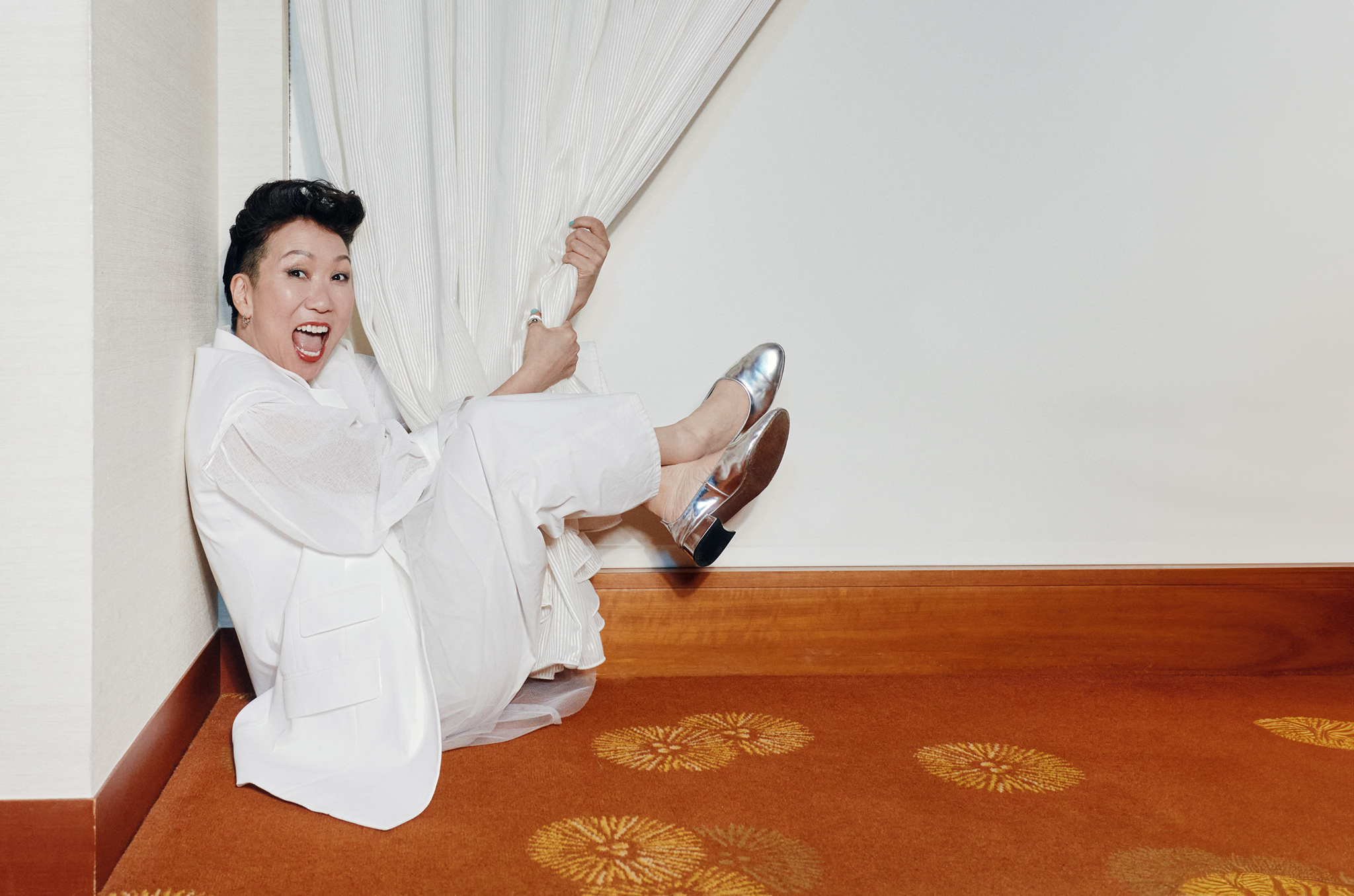
Hikari could not have chosen a more fitting stage name; in Japanese, it means “light” or “radiance.” The director, born in Osaka as Mitsuyo Miyazaki, laughs easily and loudly, talks to everyone like they’re an old friend, hugs goodbye with people she’s just met. When I meet her at the hotel suite where she’s spent two days giving interviews and sitting for photo shoots, she is warm, effusive and dressed in a blindingly fluorescent hot pink Comme Des Garçons hoodie. If she is tired, she doesn’t show it at all.
Hikari is usually based in Los Angeles, where she’s resided for about 25 years, but she’s spent the past few weeks on the road to promote her new movie, Rental Family, which she directed, co-wrote and produced. The press tour so far has been dauntingly robust, befitting the scope of the film. It stars Brendan Fraser as Phillip Vanderpleog, a struggling actor turned “token white guy” at a rental family service in Tokyo, in what multiple reviews have already dubbed an Oscar vehicle for the actor.
Rental family services are precisely what they sound like: They allow people to hire complete strangers to take on the role of a relative or loved one, usually paying by the hour. Pioneered in Japan, the phenomenon has been an object of fascination for writers and directors for years now, the subject of a famous New Yorker profile and a Werner Herzog drama. Hikari puts a new spin on the concept.
If you were to ask me what the film is about, I could easily give several different answers. It’s a heart-warming family comedy punctuated with a series of morally dubious moments. It’s a story about an immigrant who genuinely wants to understand his adopted home. It’s a visual ode to Tokyo. It’s an examination of the concept of tatemae — the self you show in public, which stands in contrast to your true feelings (honne). In Japan, this bifurcation of selves isn’t seen as dishonest but rather as a form of consideration, a way to maintain harmony and avoid burdening others.
The concept of rental families “says a lot about our culture,” Hikari says. “A lot about how people are seen and feel like they’re seen.
“The movie ended up being very heartwarming and cozy and very emotional, and people are very excited about it, but truthfully … this sort of thing exists because of our negative cultural background, right?” she continues. “Where people are suppressed and don’t know how to be emotional or how to express their true feelings, where people don’t know how to talk about their issues.”
Making Friends With a Million People
From a young age, Hikari was drawn to performing. As a child, she sang in a chorus, was part of an internationally renowned opera troupe and joined a major theater company at age 14 to pursue acting. One day, walking through Tennoji Station, she came across an ad that would change the trajectory of her life. It was massive, promoting an English conversation course. The copy said something along the lines of, “Learn English, and you can make friends with a million people!”
Hikari wanted to make friends with a million people. Without consulting with her mother, she applied to a study abroad program in the US; wanting to fully commit, she asked to be sent to a high school where she wouldn’t encounter any Japanese people. She was assigned to a tiny town in Utah. With her bags already packed, she sprung the news on her mom and asked to borrow around $10,000 for school fees.
She lived with a Mormon homestay family, struggling every day because she couldn’t understand any of her class assignments. But gradually, things began to click, so much so that she returned to Utah for college, studying theater, art and dance at Southern Utah University — “doing everything where you don’t make money when you’re doing that.” After graduation, she moved to LA, waitressing at House of Blues, where she befriended Stevie Wonder; selling her art at coffee shops; appearing in commercials and dancing in a George Michael music video. She had a stint as a hip-hop photographer, photographing artists like A Tribe Called Quest.
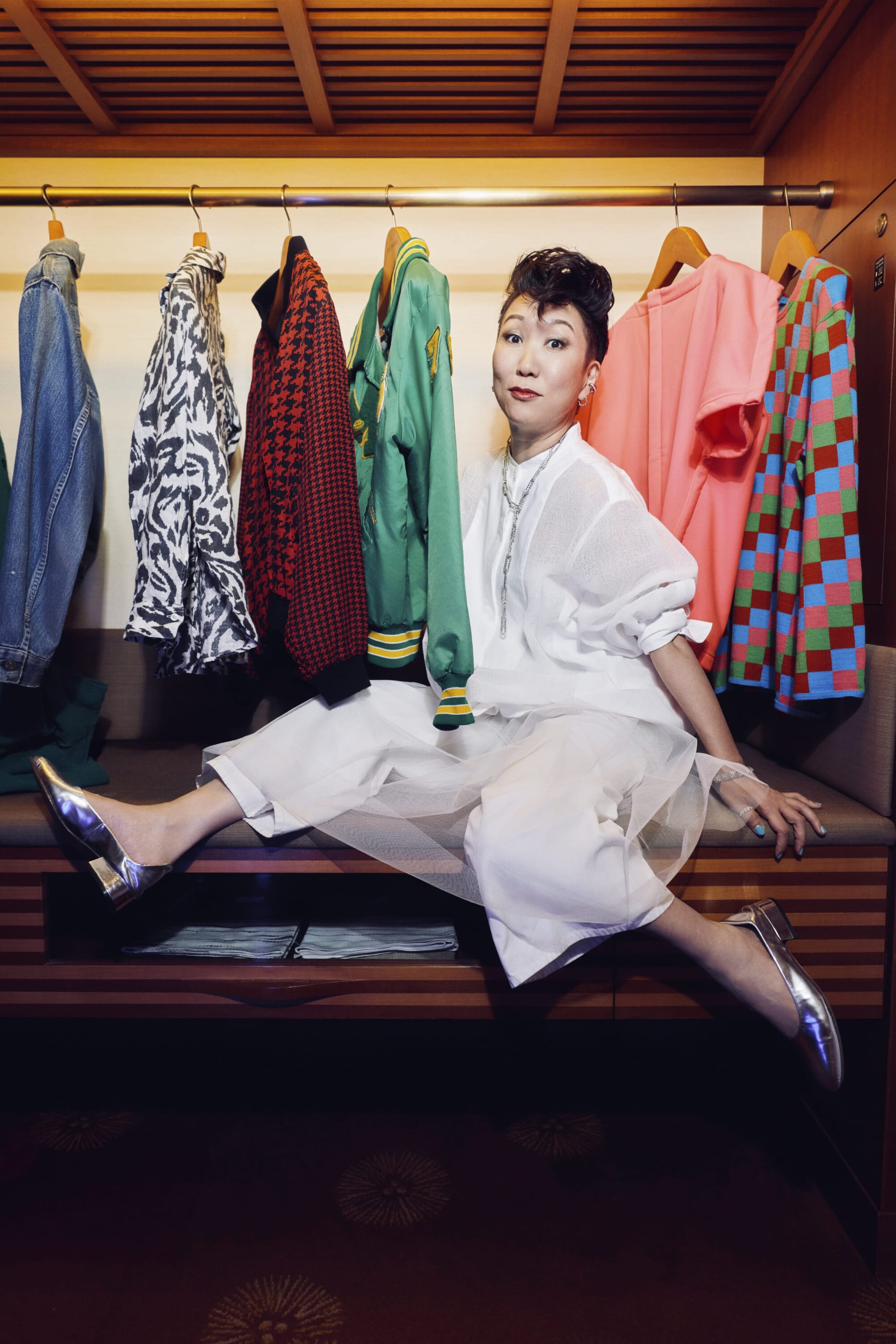
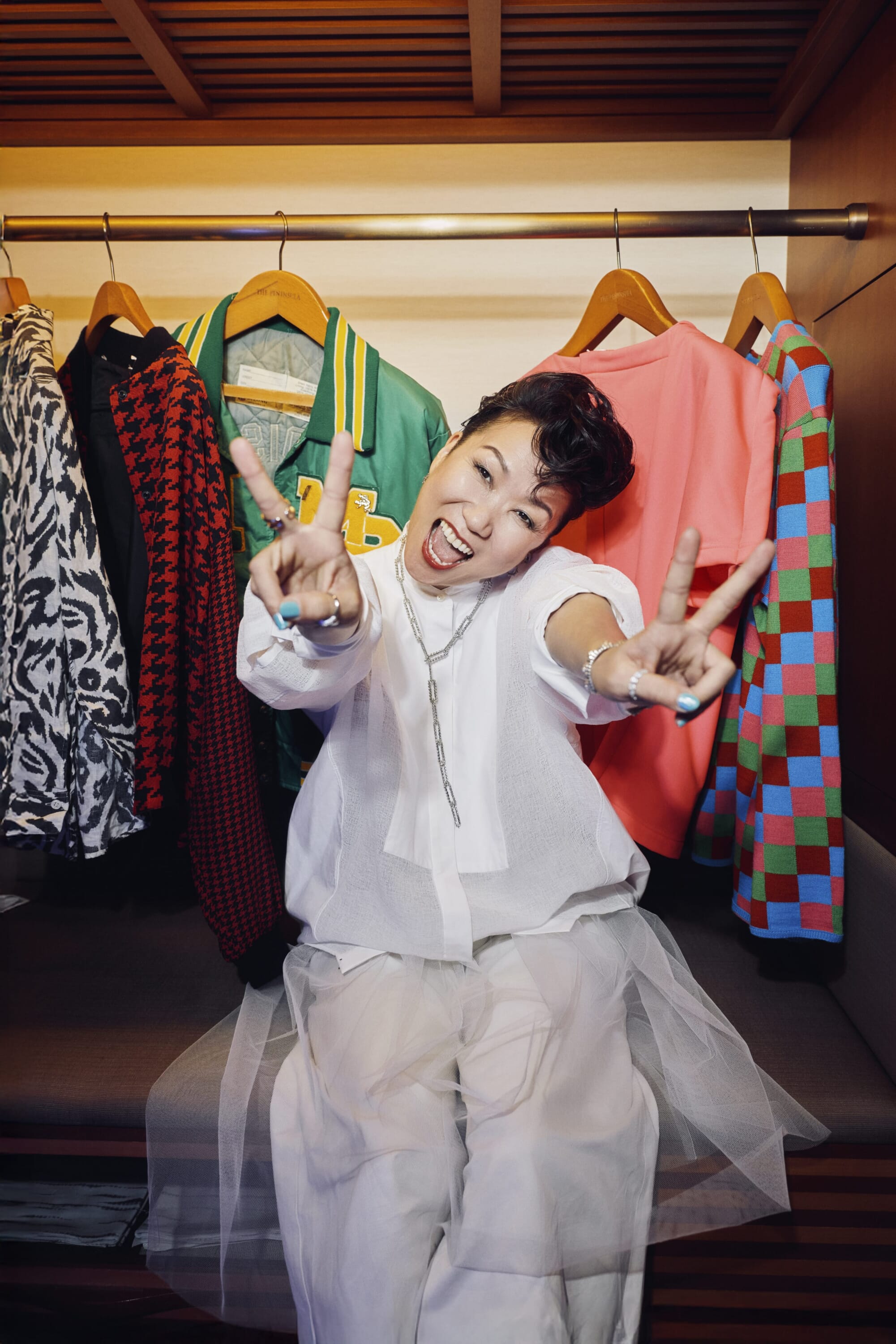
At around age 30, she tried something new yet again: She decided to pursue directing, and enrolled in the USC School of Cinematic Arts. The short film she made for her thesis project, Tsuyako, went to over 100 festivals and won 50 awards. Three more short films followed, then a debut feature, 37 Seconds, which won the Panorama Audience Award at the 69th Berlin International Film Festival. Then she was hired to direct two episodes of Tokyo Vice and three episodes of Netflix’s Beef.
Hikari relays this astonishing chronicle to me with the insouciance of someone describing the errands they ran on an average Wednesday. Although she’s essentially listing a litany of accomplishments that would be life-defining for the average person, she doesn’t sound at all like she’s bragging. There isn’t a glimmer of arrogance or self-satisfaction in her — she’s just a person who’s very curious, relentlessly creative and in constant forward motion.
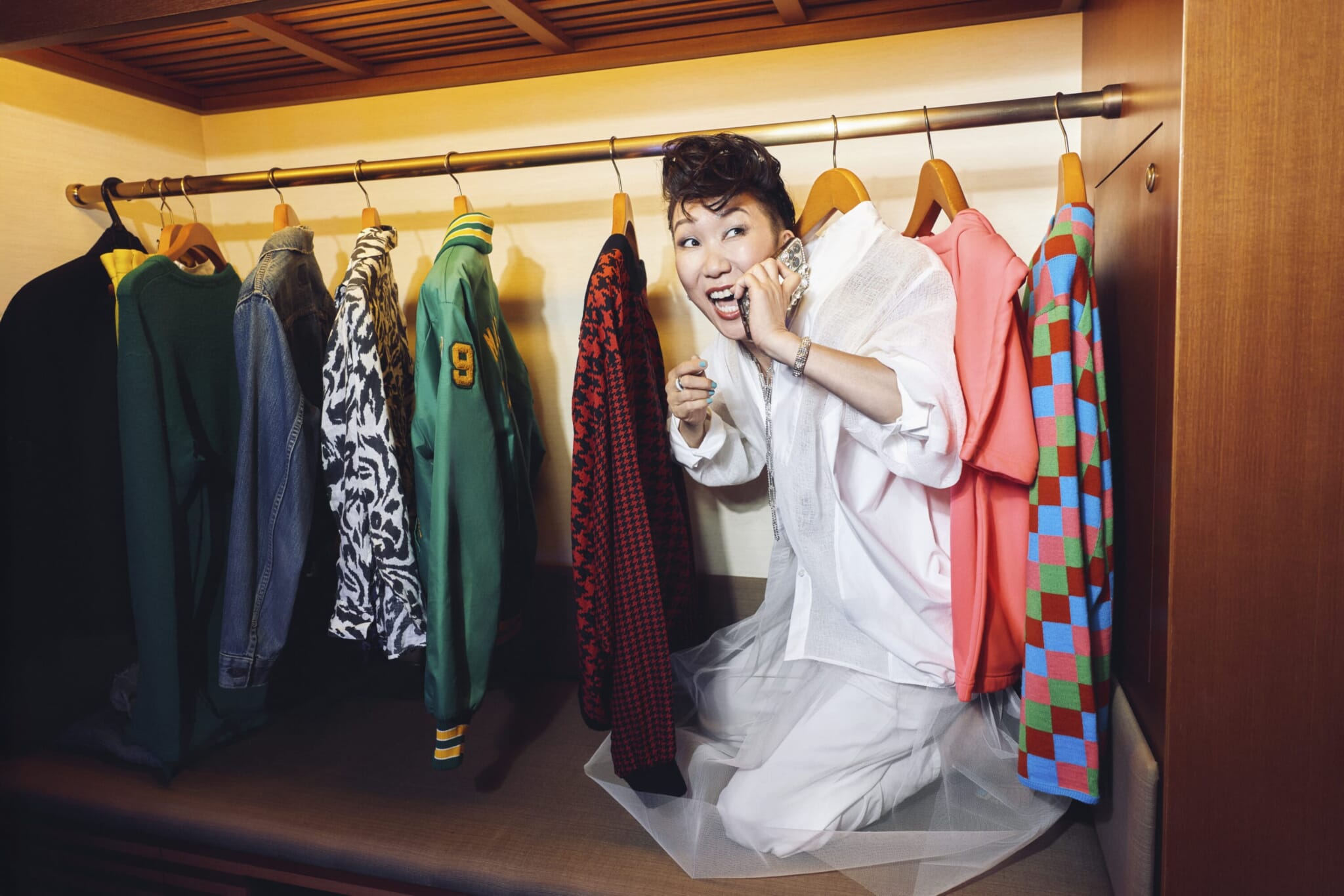
And she doesn’t show any signs of slowing. When asked, during a Zoom interview, what’s next for her, she cheerfully rattles off a list of jaw-droppingly high-profile projects, punctuated by gentle scoldings from her publicist, typed out in chat bar: “Not announced yet :)” ; “Also not announced yet :)”
“OK, oops, I didn’t say that,” she says with a laugh.
Building a Rental Family
Rental Family was a project several years in the making. When Hikari’s writing partner, Stephen Blahut, first mentioned the topic to her, she was intrigued: “I was like, who uses this? Who does this job? How do they even start doing this? Why, you know?”
The film mainly probes these questions through the lens of Phillip, a basically out-of-work actor who’s been in Japan for around seven years. (The role requires Fraser to use quite a bit of Japanese, which he does surprisingly well. Hikari says he spent several months studying to prepare.) Phillip initially takes on the rental family gig out of financial necessity, but his colleagues insist that what he’s doing is, at its core, helping people. “We sell emotion,” explains his boss, played by Takehiro Hira.
As it turns out, the demand for a token white guy is high. A lonely otaku pays him to be his best friend. A woman hires him to pose as a journalist and interview her father, an aging actor worried that his legacy is already starting to fade. His most thorny project comes later: A single mother requests his help in deceiving her 8-year-old daughter, Mia (Shannon Mahina Gorman), who has never known her father. Mia is applying to an exclusive private school, and her odds will vastly improve if she has a dad, as will her self-confidence. It will be better, her mom says, if she believes Phillip is the real thing.
Although Phillip starts out skeptical, being an imposter friend and relative becomes revelatory for him. It pries him from his life of isolation and gives him a sense of purpose. He doesn’t want to sell a mere fantasy — he wants to become a source of genuine support. He patiently listens to his fake daughter’s concerns outside of work hours, sending her gently encouraging texts; he grows closer and closer to the aging actor, who is battling dementia. Along the way, he finds his heart opening, too. “He’s living in this — it’s like a fake reality that’s also helping him,” Hikari explains.

Shannon Gorman and Brendan Fraser in RENTAL FAMILY. Photo by James Lisle/Searchlight Pictures. © 2025 Searchlight Pictures. All Rights Reserved.
A Portrait of Love
Interestingly, Hikari has been in a position similar to Mia’s. She didn’t know her father growing up. Her parents divorced when she was a baby, and her mom lied to her repeatedly about his identity and whereabouts. First, she said he was dead, then she said he was a famous actor, then another, even more famous actor. When I learned this about Hikari, I found myself applying it retroactively to Rental Family: a story about a young girl finding a father figure, absent a real one … a story of a man who steps up … perhaps a way for Hikari to imagine a different childhood for herself …
Hikari quickly disabuses me of this notion. When she talks about the various mistruths her mother told her, she speaks breezily and laughs often. She recalls the short-lived reign of her second fake dad: Yutaka Mizutani, who played a sexy teacher on a wildly popular TV show. “Everybody loved him, and everybody wanted him to be their teacher,” she recalls, visibly amused at the memory. “When [my mom] said he was my dad, I was like, ‘Nah, fuck off. You’re such a liar.’ I was laughing at this point. And then we had a conversation about it, and I was fine with it.”
Hikari loved her family as it was — mom and sister and grandparents. She didn’t particularly feel a paternal lack. She knew her mom just wanted her to be happy, and she understood she had her reasons for concealing the truth, perhaps as someone who had grown up in a culture of tatemae.
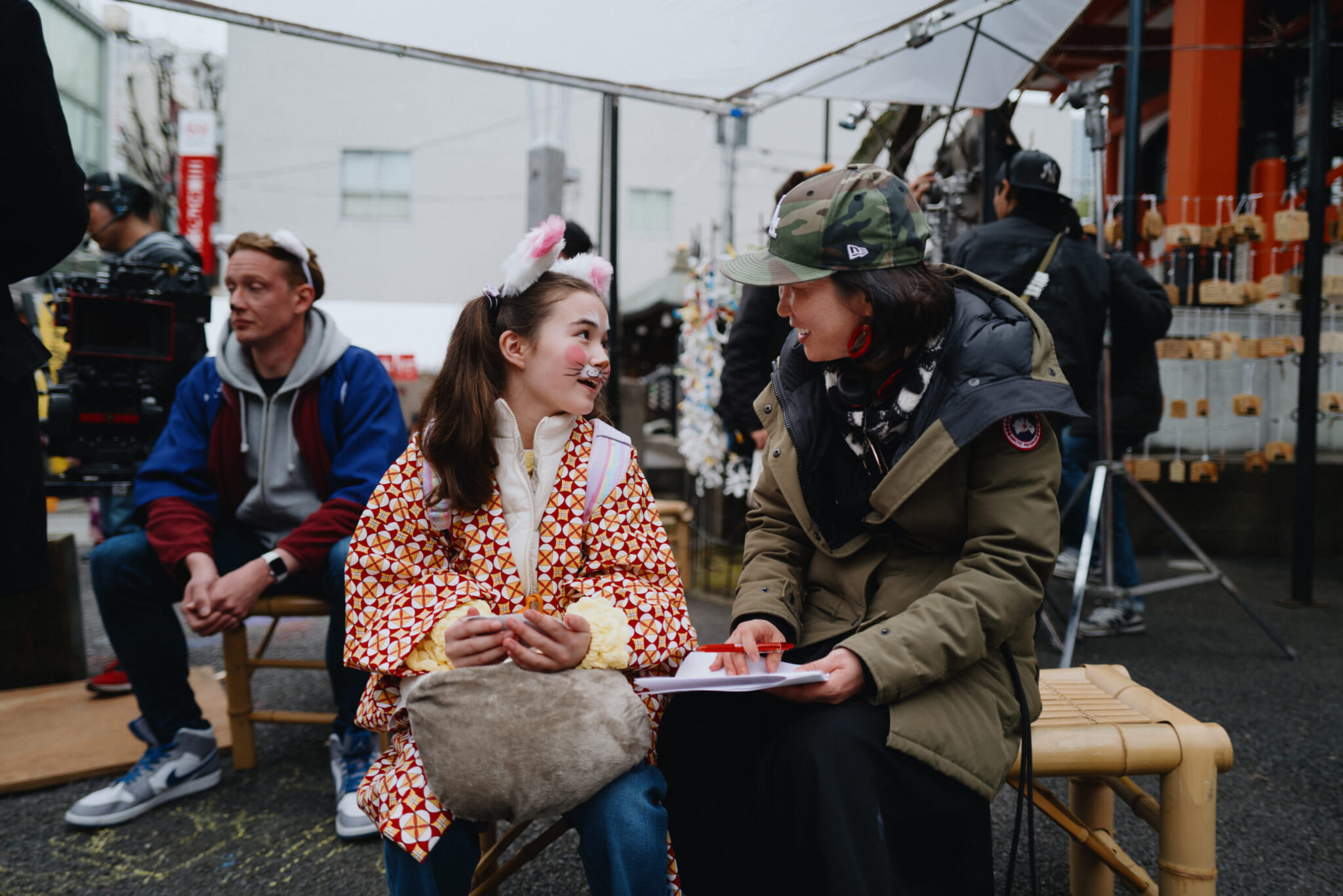
For her, the most resonant part of this story — the one that truly mirrored her life — is the relationship between mother and daughter. “What I wanted to do was to show a portrait of love from the mom,” she explains. “Because she really cares for her daughter. She wants the best for her, even if that means she has to lie.”
There’s a lot that’s remarkable about Rental Family, but one of the most striking things about it, for me, is its perspective: character-driven, following a middle-aged white guy, but written and directed by a Japanese woman. It presents Tokyo — and Japanese society at large — in a way that’s both intimate and removed, outsider and insider at once. It sharply questions without condemning, it accepts without making excuses, it finds pockets of tenderness where others might only see alienation. It takes a gentle approach, one that avoids cynicism, despite dealing with two of the most cynical topics imaginable: gig labor and deception.
Hikari is aware that the film’s subject matter could easily veer dark. She chose not to follow that route, because what would be the point? “I could’ve made a drama out of this. I always laugh about that — What if we make a dramatic version of it? That would be so depressing.” Ever optimistic, she wants to focus on the bonds that form between people, blood-related or not. She’s sympathetic to the lies we tell ourselves and each other. Ultimately, she doesn’t want to moralize, but to understand. The message is simple: “Do everything that your heart tells you to do,” Hikari says.
More Info
Rental Family was released on November 21 in the US. It will be released on February 27, 2026 in Japan.