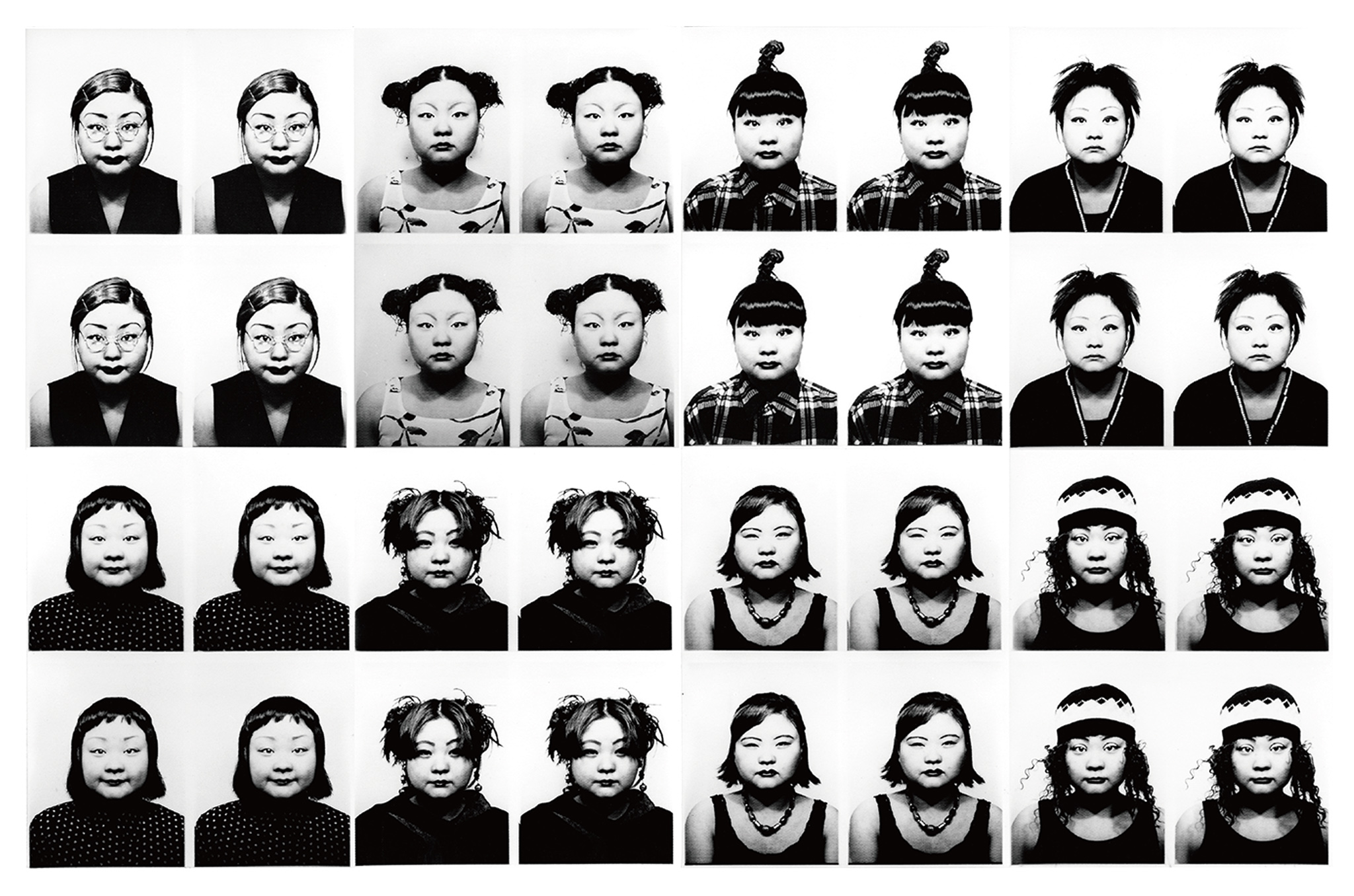
Outside a subway station in Kobe, a young woman feeds a few coins into an automated photo booth. She adjusts the stool, faces the lens and waits for the flash; minutes later, the machine spits out a strip of black-and-white ID photos, still damp with ink. Over the next year, she repeats this exact ritual hundreds of times — in wigs, in glasses, in heavier and lighter makeup, in expressions that range from vacant stares to polite smiles.
The resulting passport-style portraits form ID 400 (1998), a dizzying grid of strangers who are all actually the same woman: Tomoko Sawada. Born in Kobe in 1977, the artist has spent nearly three decades using her own face and body as an experimental canvas to portray how human identity is constructed, categorized and interpreted.
Sawada works almost exclusively in self-portraiture, but not in the conventional sense. Through elaborate costumes and impressively nuanced shifts in posture and expression, she presents an expansive variety of archetypes, ranging from a Harajuku gyaru to a nun clutching a Bible. This premise could sound like a stunt to some, but close attention to her works suggests something more like a philosophical exercise in how even the most minute details, like a clenched jaw or arched brow, can shape our perception of character.
The artist has collected an array of accolades since her first solo show in 1997, including the 29th Kimura Ihei Award, Japan’s most prestigious prize for emerging photographers. Her work has been displayed around the world and features in collections at institutions such as Maison Européenne de la Photographie in Paris, MoMA, LACMA, the Tokyo Photographic Art Museum and beyond. Most recently, she was one of the 30 artists featured in “I’m So Happy You Are Here: Japanese Women Photographers from the 1950s to Now,” the landmark survey seeking to redefine the country’s photographic canon, which drew thousands of visitors across Europe before landing in Shibuya this summer.

“School Days” 2004 © Tomoko Sawada, School Days / A
Beyond Face Value
Sawada’s enduring fascination with self-portraiture began with a college photography class assignment. “It’s hard to explain in words,” she tells TW, “but I had a visceral intuition that using self-portraiture as a method could allow me to create art as an artist.”
In fine art, self-portraiture is often associated with painterly traditions: Rembrandt studying his own aging face in a mirror for decades, Van Gogh feverishly painting his reflection after severing his ear, Frida Kahlo constructing surreal tableaux around her own piercing gaze. Many of these portraits feel like an intimate and almost sacred act of psychological interrogation — an autobiographical attempt to get at an inner truth or essence.
While this self-excavation exists in photography, too (Robert Mapplethorpe’s unflinching late self-portraits, Vivian Maier’s reflections caught in shop windows), the immediacy of the medium allows for a much more shallow engagement with your own image. For many of us, taking a self-portrait is easy and thoughtless, so much so that you’d never think to call it a self-portrait — hundreds of mirror selfies in quest of the perfect one, or taking and retaking a driver’s license photo.
That infinite replicability was exactly what Sawada wanted and needed to explore the relationship between appearance and identity in a way that felt contemporary. She chose as her studio a typical Japanese ID photo booth — diminutive structures that can be found alongside sidewalks and in stations across the country, where pedestrians can pop in and have an official photo taken for their passport, driver’s license or resume. “Using a photo booth allowed me to reference the social meaning that ID photos hold,” she explains, “and the ability to complete the work in the same style faster and more easily than shooting with a standard camera.”
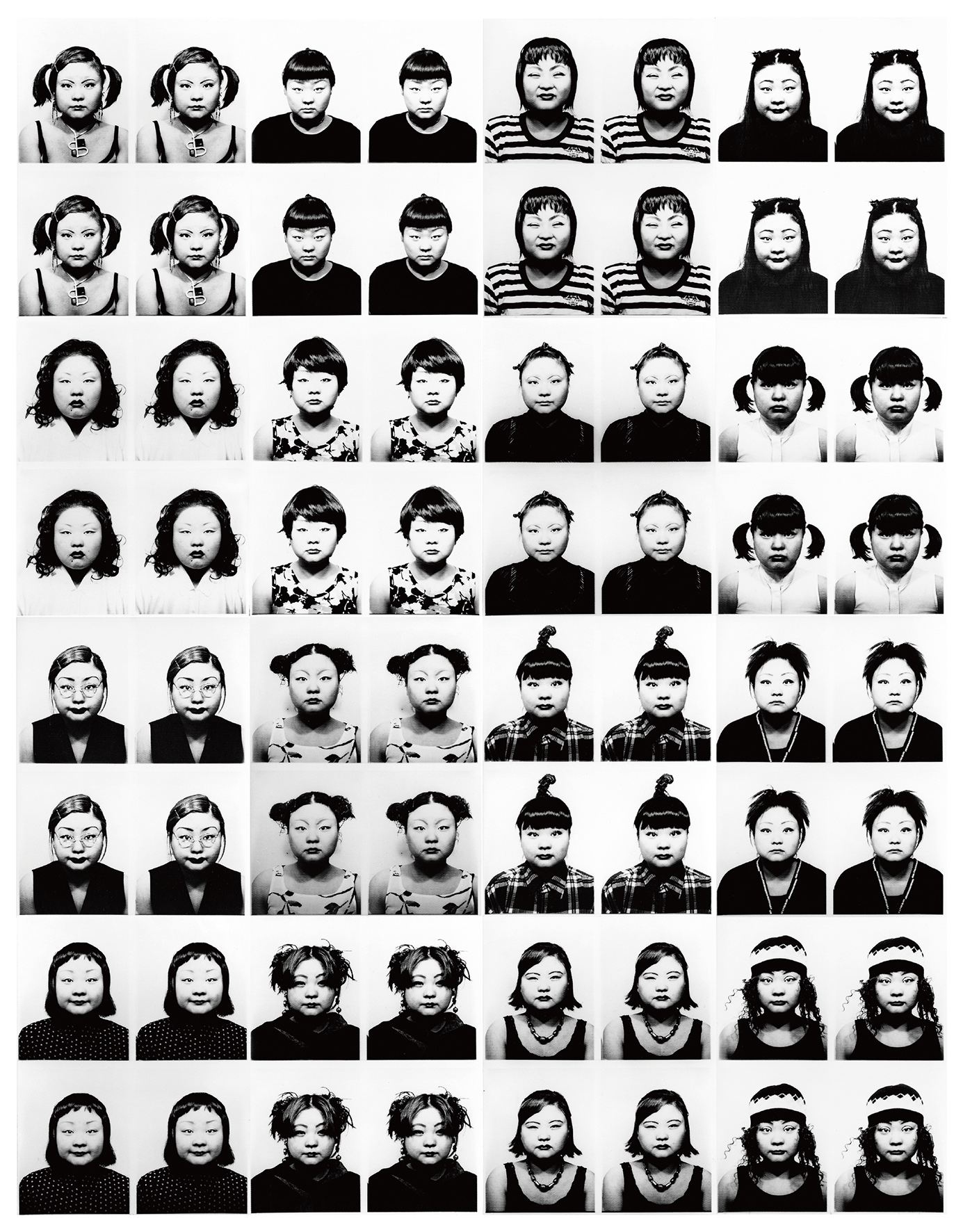
The project captured the art world’s attention almost immediately — a win at Canon’s New Cosmos of Photography competition, then a string of invitations abroad, including showings at New York’s Zabriskie Gallery. There’s something effortlessly composed about the completed work, but the physical reality of producing hundreds of distinct looks was a surreal operational feat, especially given that Sawada’s disguises are typically improvised; she doesn’t draft specific plans or blueprints for looks before shooting.
“There were some funny moments — like when people waiting to take ID photos lined up while I was shooting in heavy stage makeup and a wig, and I had to run out of the machine so they wouldn’t see my face,” she recounts. “Another time, the photos got jammed inside the machine and couldn’t be retrieved. When the technician removed them and handed them to me, the face in the photos didn’t look like mine, so he looked at me suspiciously.”
Although her costumes and makeup were integral to the final piece, Sawada emphasizes that the aim was not to transform into a real or fictional person, or even to represent aspects of her own personality. “I wasn’t ‘becoming’ anyone,” she emphasizes. “In the first place, I’m not acting or performing — so I am not trying to get into character or become anyone.”
The Frame Is The Message
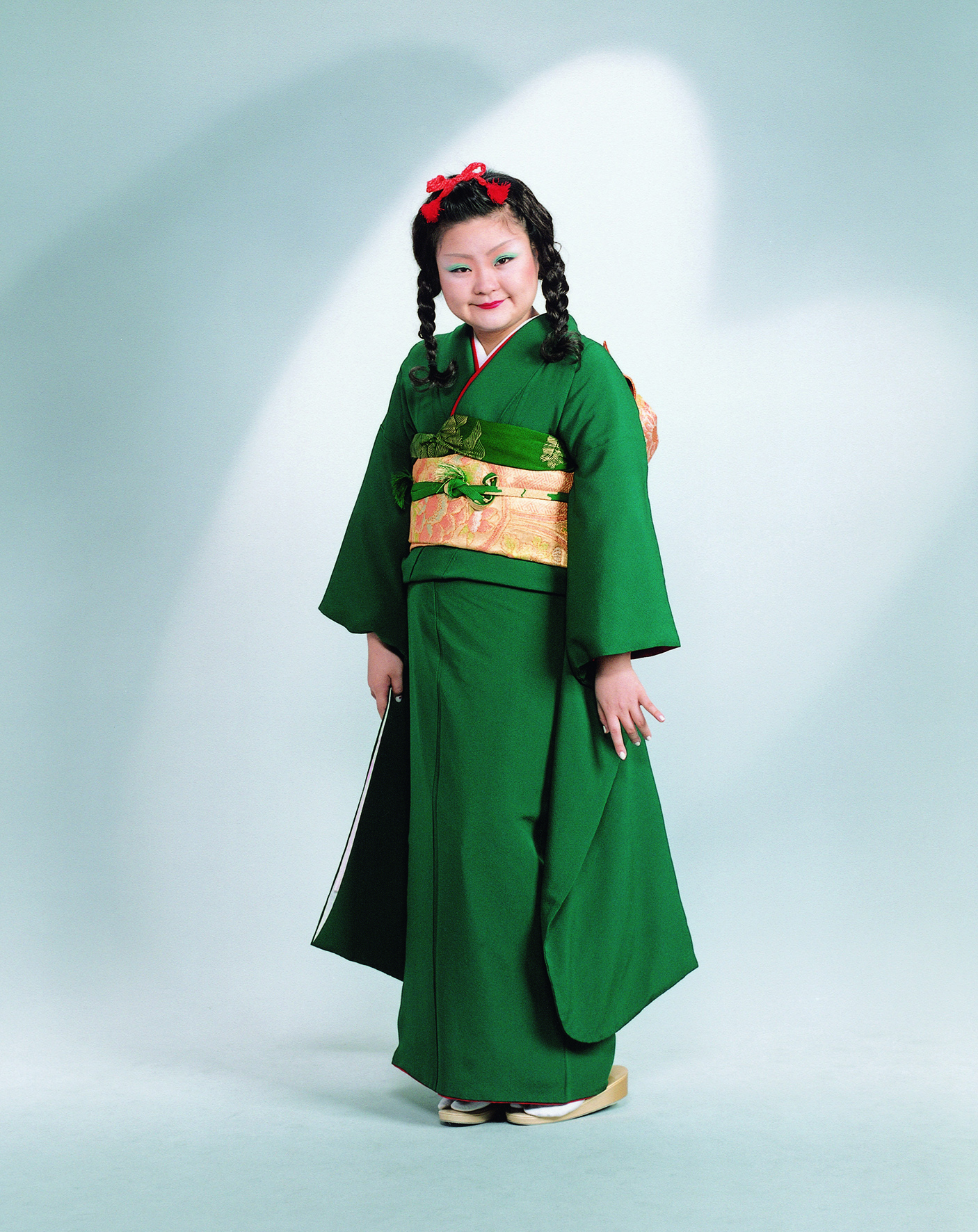
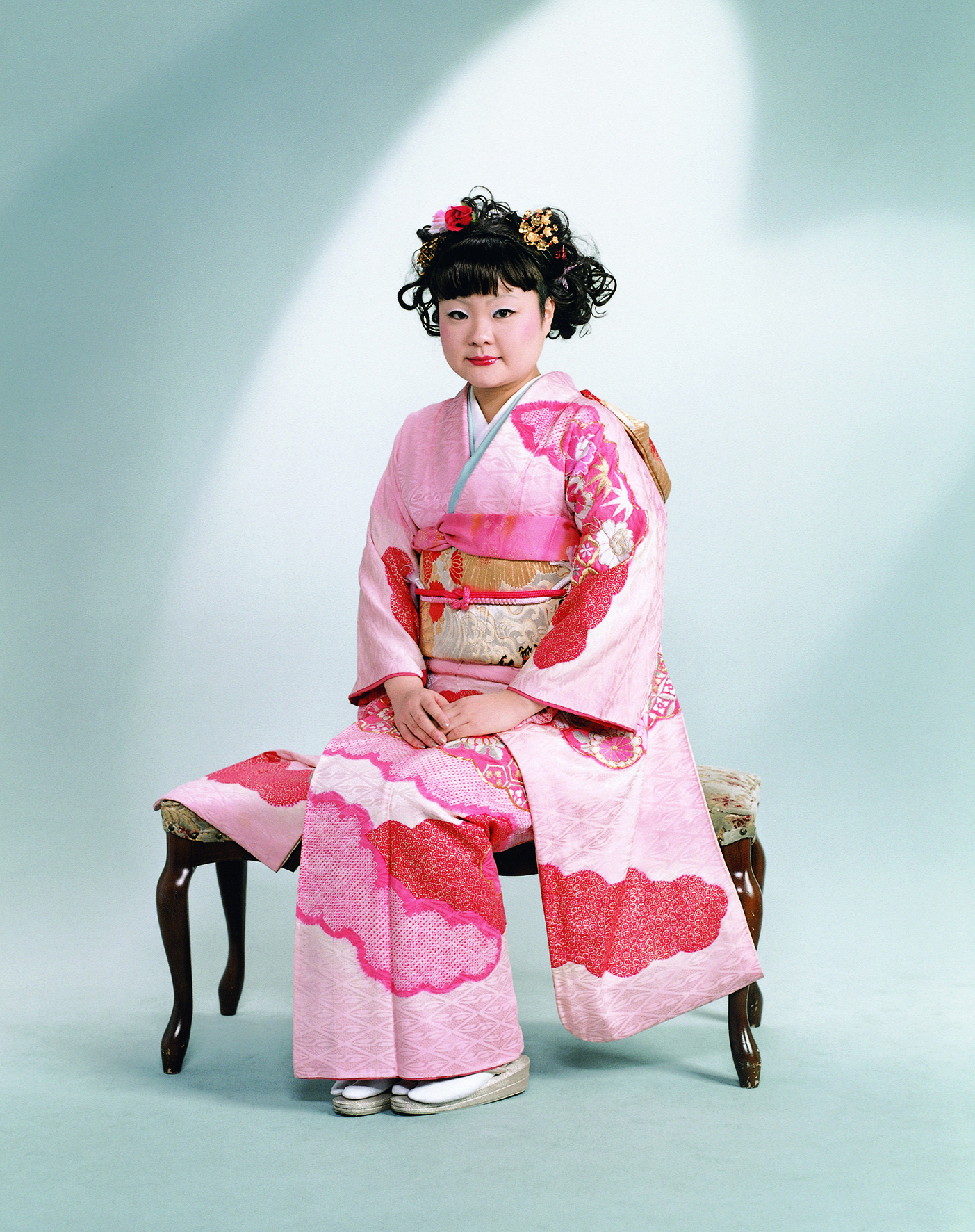
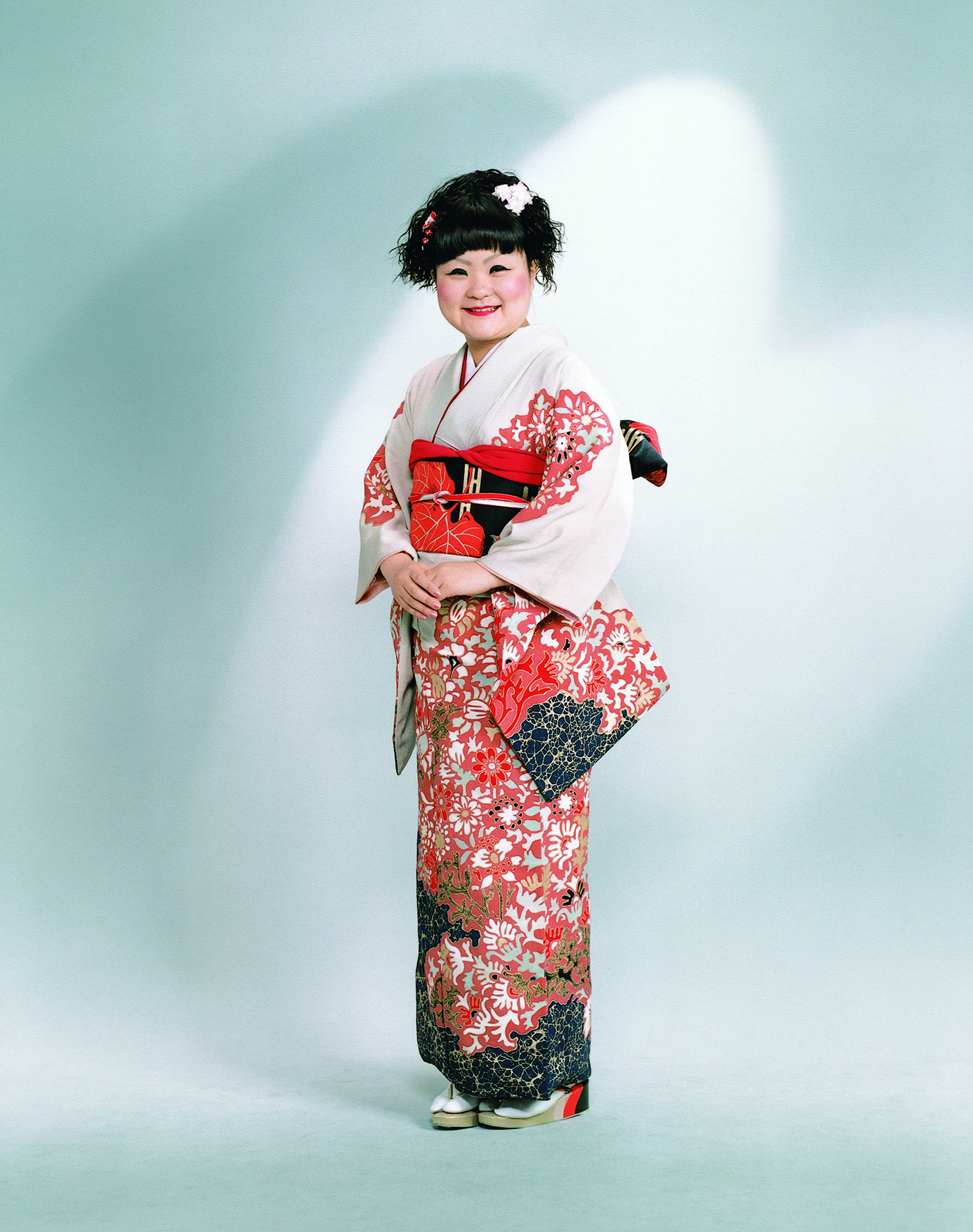
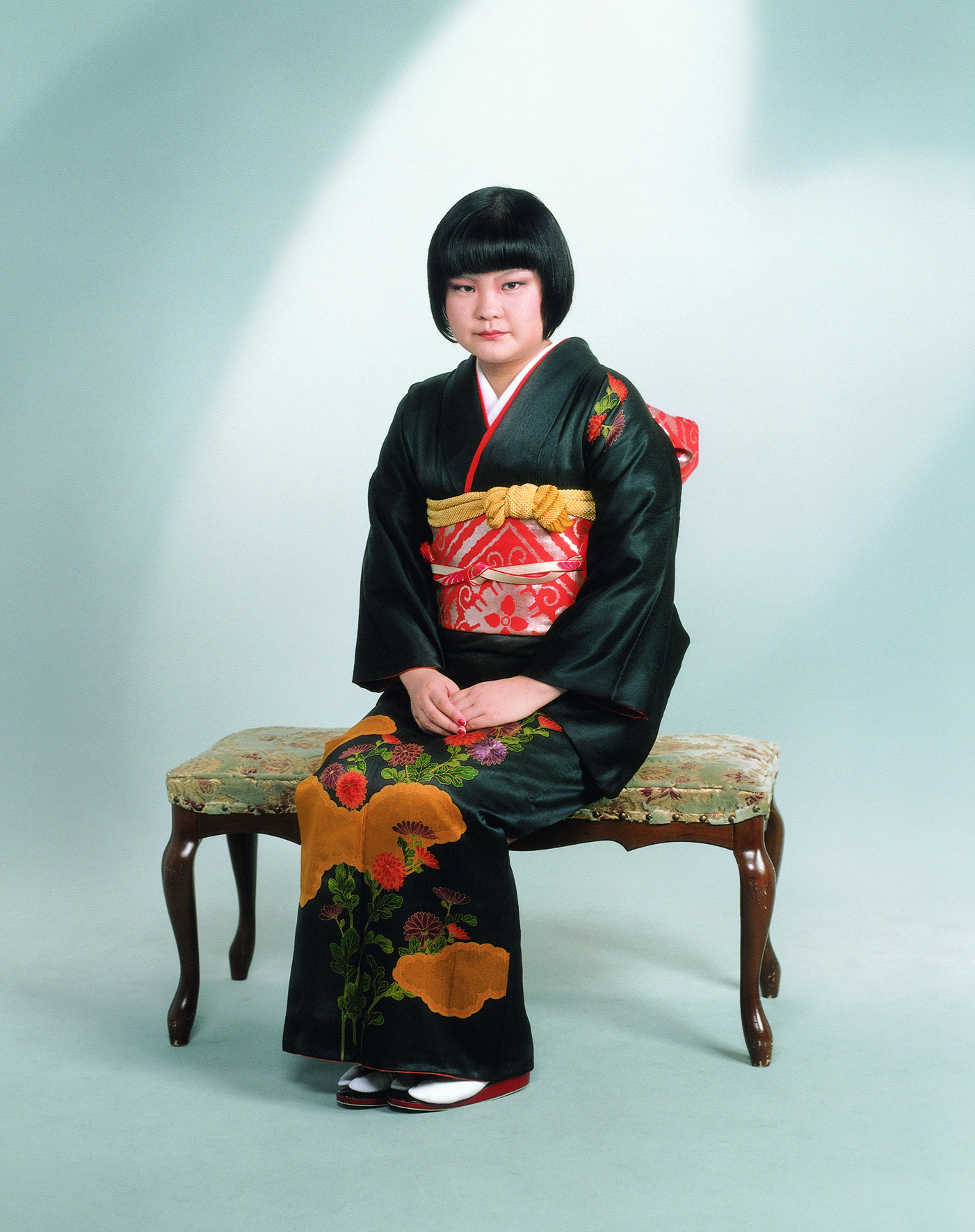
Sawada is more interested in examining how certain visual cues — clothing, grooming, even countenance — affect our judgement of each other. She explores this theme with her signature sharp wit in the series Omiai (2001). The work is a play on the practice of omiai, a traditional Japanese matchmaking custom in which formal portraits are exchanged between prospective marriage partners using a go-between. Posing at local photo studios, she created thirty distinct portraits of potential brides, dressing in everything from ornately patterned kimono to prim skirt suits. The series is a striking observation of how varied and arbitrary — yet unyieldingly specific — ideals of femininity can be, and, more broadly, questions to what extent a person’s external value can be distilled into one pristine frame.
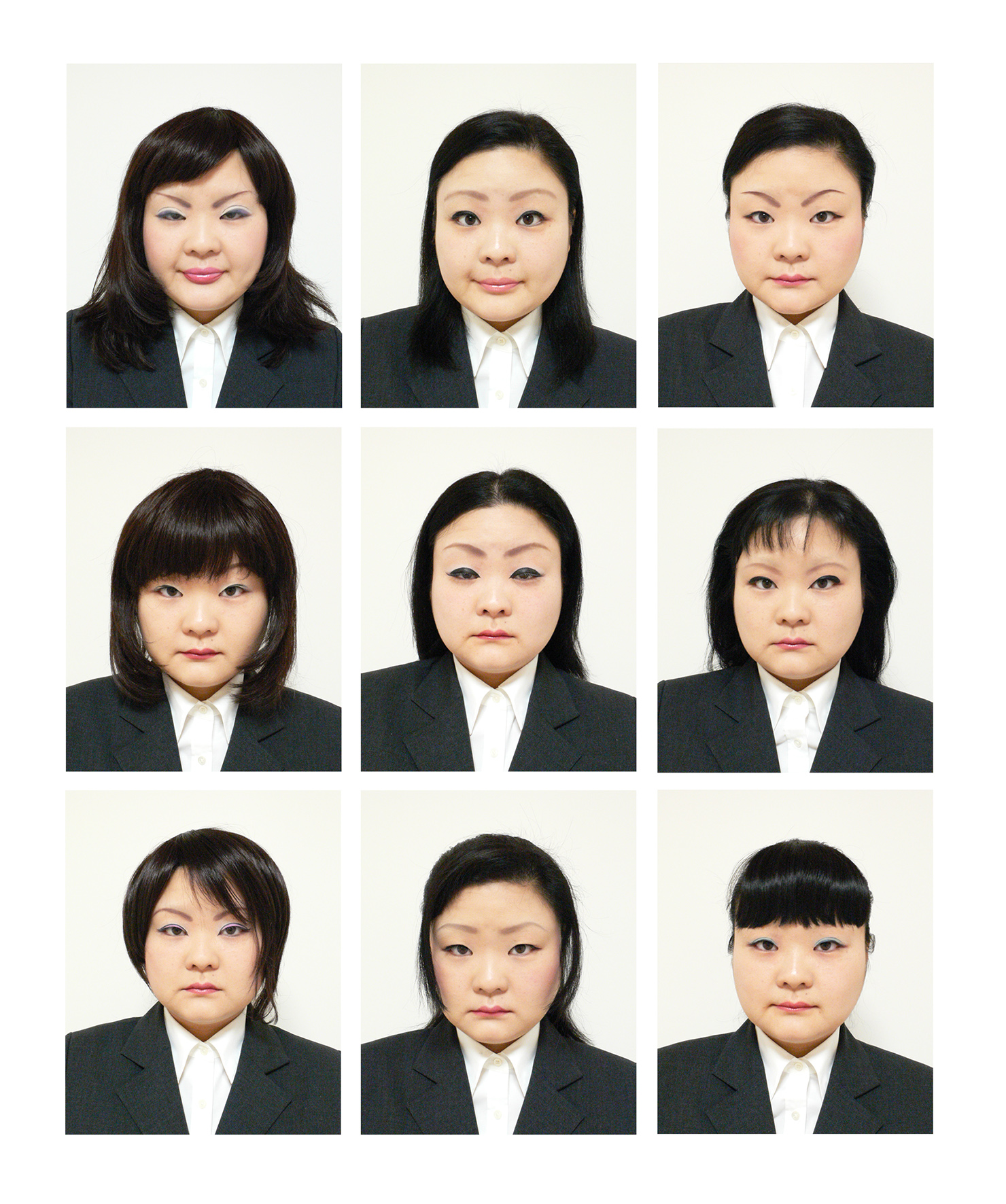
Sawada’s examination of rigid visual frameworks in Japanese society and beyond can be seen across her oeuvre. In Costume (2003), she presents herself in an array of occupations — a policewoman, a landlady in a kimono, a nun, a receptionist. In Recruit (2006), Sawada returned to the ID photo booth, this time clad in the instantly recognizable attire of job seekers in Japan: collared white shirts, black blazers, freshly dyed black hair and apprehensive-yet-determined expressions. School Days (2004) shows uniformed high school students and their teacher in a class photo; when you look closely, all of them are digitally composited clones of the artist.
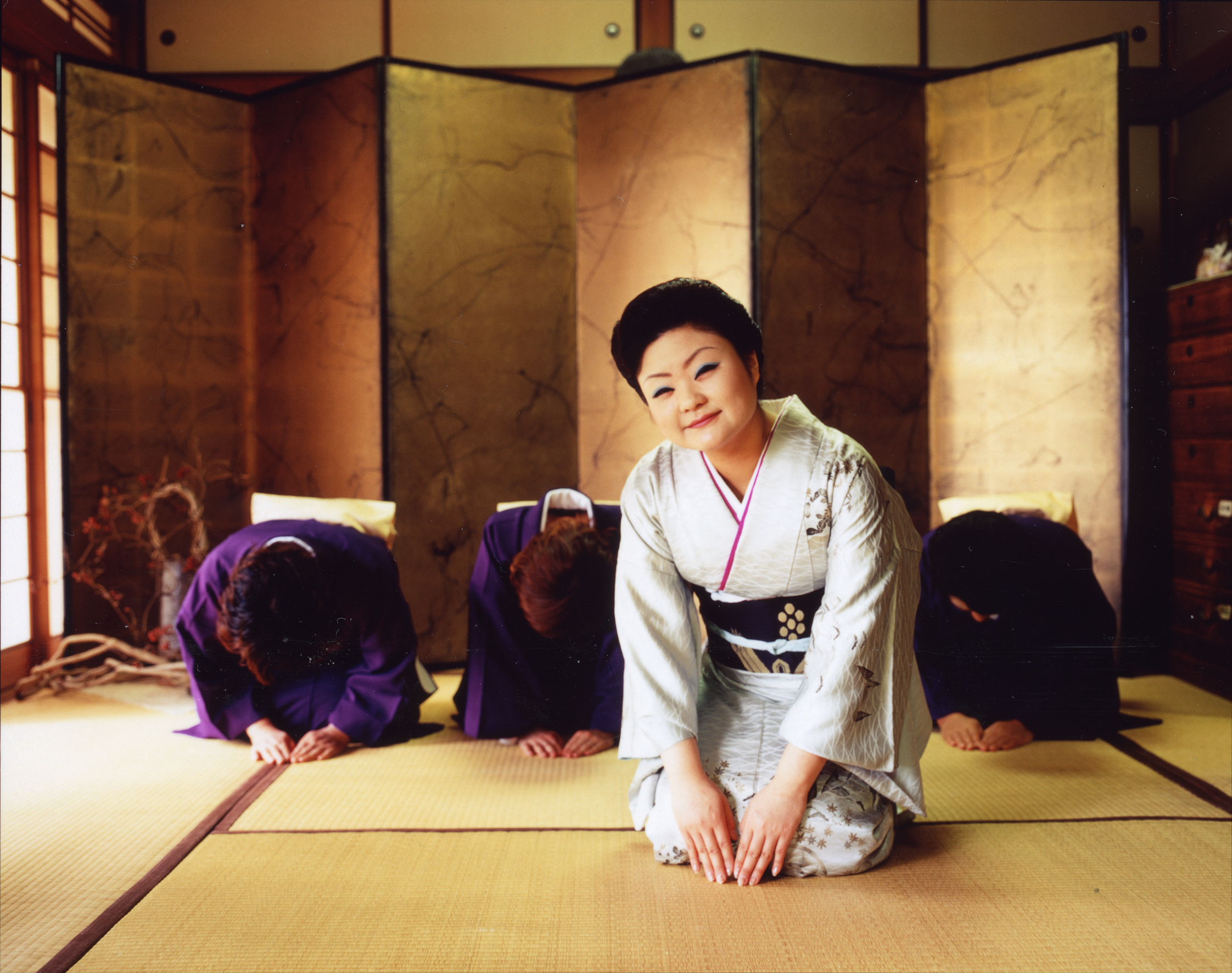
“Okami” 2003 © Tomoko Sawada, from the “Costume” series
She suggests that these projects are not critiques on specific social norms, rituals or life stages in Japan, per se, but rather vehicles that reflect her core theme: “the relationship between external appearance and inner identity.”
Today, in an era in which each self is promoted like a small brand online — and the concept of “being perceived” is a real source of dread for people who have never known a life without social media — Sawada’s exploration of exterior and interior selves feels more relevant than ever.
Yet when asked how modern image culture impacts her perspective, she remains unfazed, perhaps suggesting that modern hypervigilance has only amplified an instinct we always had: to see one version of someone and assume that’s all there is. “I feel that only the mediums and methods have changed; fundamentally, human nature hasn’t changed from past to present.”
More Info
Sawada’s work is currently on view in “Art Milky Way: The Taguchi Art Collection” at the Takaoka Art Museum in Toyama Prefecture. The exhibition runs from September 19 to November 29.
Head to tomokosawada.com or @tomokosawada_artist on Instagram to learn more about the artist.