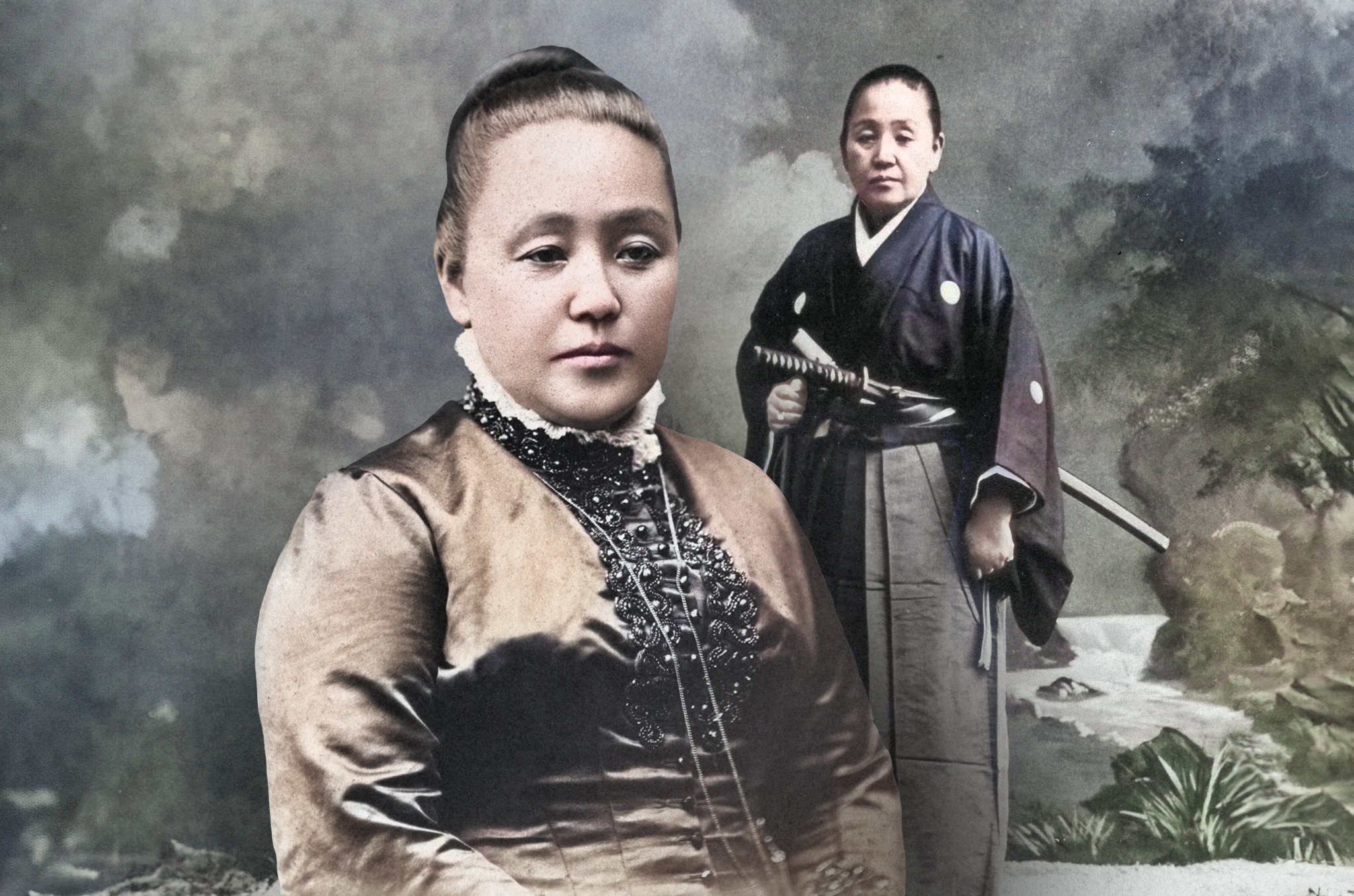
At first glance, it’s hard to imagine more dissimilar historical figures than Joan of Arc and Florence Nightingale. One was a military leader driven by faith, the other the mother of modern nursing who dedicated herself to science and progress. So what does it take for one Japanese woman to be compared to these two seemingly polar opposite figures? It probably starts with the realization that, despite surface differences, Joan of Arc and Florence Nightingale shared a great deal: a sense of duty, selflessness, a desire to lead and remarkable bravery. That, in a nutshell, is how Niijima Yae came to be likened to both the patron saint of France and The Lady with the Lamp. Here’s a more detailed account of her extraordinary life:
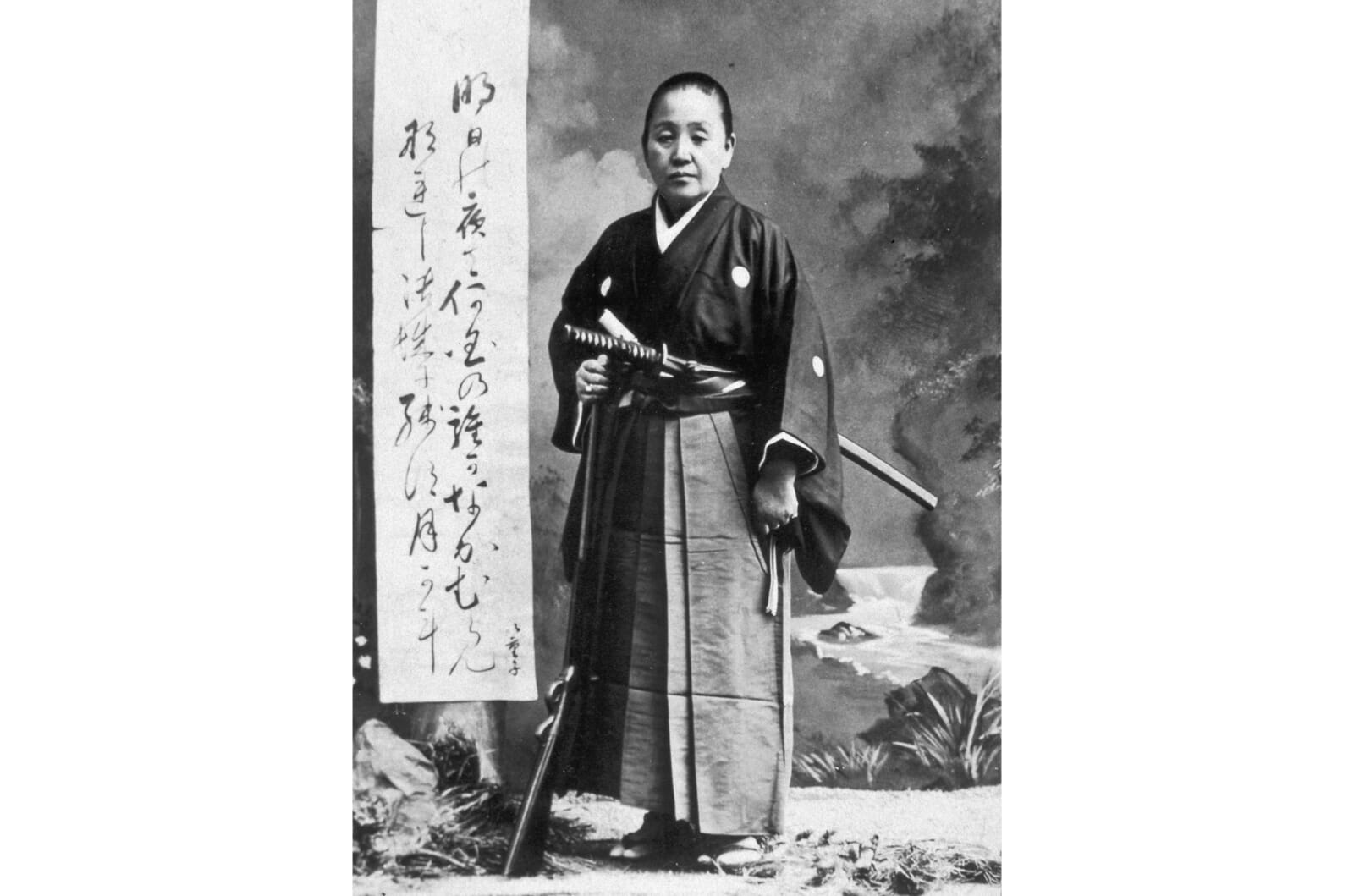
Niijama Yae posing with a katana, rifle and waka poem (c. 1862) | Image: Wikimedia
Yae’s Got a Gun
Yae, also known as Yaeko, was born into the Yamamoto family in 1845, during the last decades of the Edo period (1603 – 1867), a time when Japan was transitioning reluctantly from feudalism into modernity. She was the daughter of a samurai of the Aizu Domain in what is now Fukushima Prefecture, a region known for warrior traditions and deep loyalty to the Tokugawa shogunate. In 1868, the shogunate was being ousted in favor of imperial rule.
When the conflict came to their doorstep in the form of the Battle of Aizu (October – November 1868), Yamamoto Yae was ready to defend her home with gun in hand.
Her father, Gonpachi, was an official gunnery instructor to the lords of Aizu and he taught Yae everything he knew about firearms and artillery. This was unusual even by the standards of the time, as Gonpachi also had a son to whom he could have passed on his knowledge. Rather than necessity, it appears to have been conviction: he reckoned his daughter should know how to use a firearm.
Yae proved to be a gifted student. During the defense of Tsuruga Castle, she avoided using the naginata — a weapon typically reserved for female warriors — in favor of a Western-style rifle. Her sniping skills were legendary. During one encounter, she is said to have wounded Oyama Iwao, who would eventually go on to become a field marshal and a founding figure of the Imperial Japanese Army.
With limited ammunition, she reportedly trained others how to shoot and led night raids, using a sword for close combat. When the castle finally fell, Yae surrendered together with the men, her hair cut short and dressed in men’s clothing. Her leadership, battle prowess, and defiance of gender norms earned her the nickname of the “Joan of Arc of Bakumatsu.”
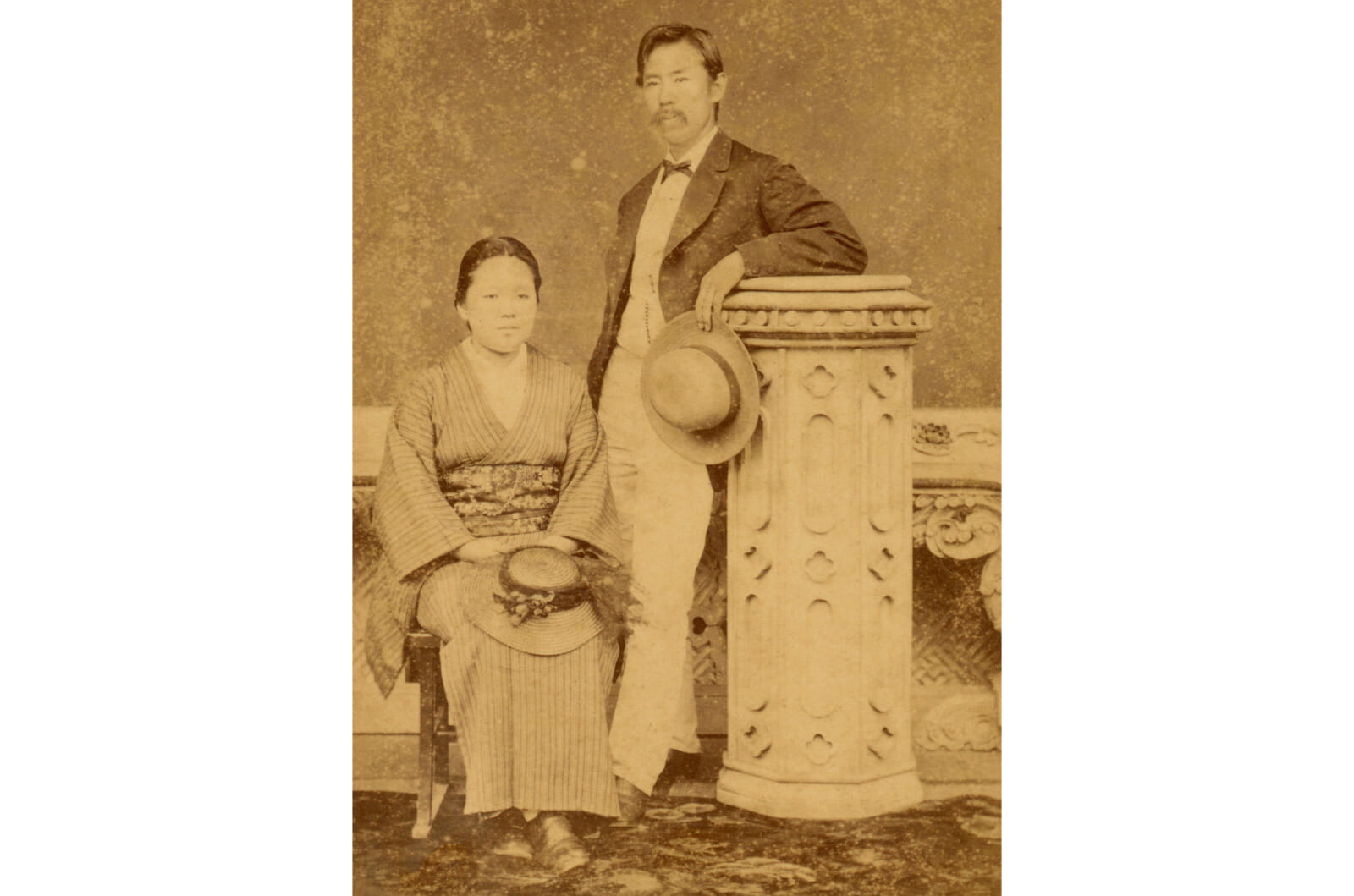
Niijima with her husband Joseph Hardy Neesima (1876) | Image: Wikimedia
A Woman for Every Era
In 1876, after being pardoned for her role in fighting imperial forces, Yae married educator and Protestant missionary Niijima Shimeta, also known as Niijima Jo, or Joseph Hardy Neesima. He was the founder of an English-language school that would eventually become Kyoto’s Doshisha University. Their marriage is why Yae is often known in historical sources as Niijima Yae.
Although she took her husband’s name, she was often accused of being a bad wife because she didn’t treat her husband like her master. Their marriage was apparently a partnership built on love and respect, and that rubbed people the wrong way in modern but still patriarchal Japan of the Meiji period (1868 – 1912).
Yae eventually converted to Protestantism, despite her previous fight to preserve traditional samurai culture and resist western influences. Rather than contradiction, her life reflects adaptation. During the age of samurai, Yamamoto Yae was the best samurai that she could be. In the modern era, Niijima Yae became a picture of progressive thought, creating a small school for girls and openly modeling a marriage that challenged traditional norms.
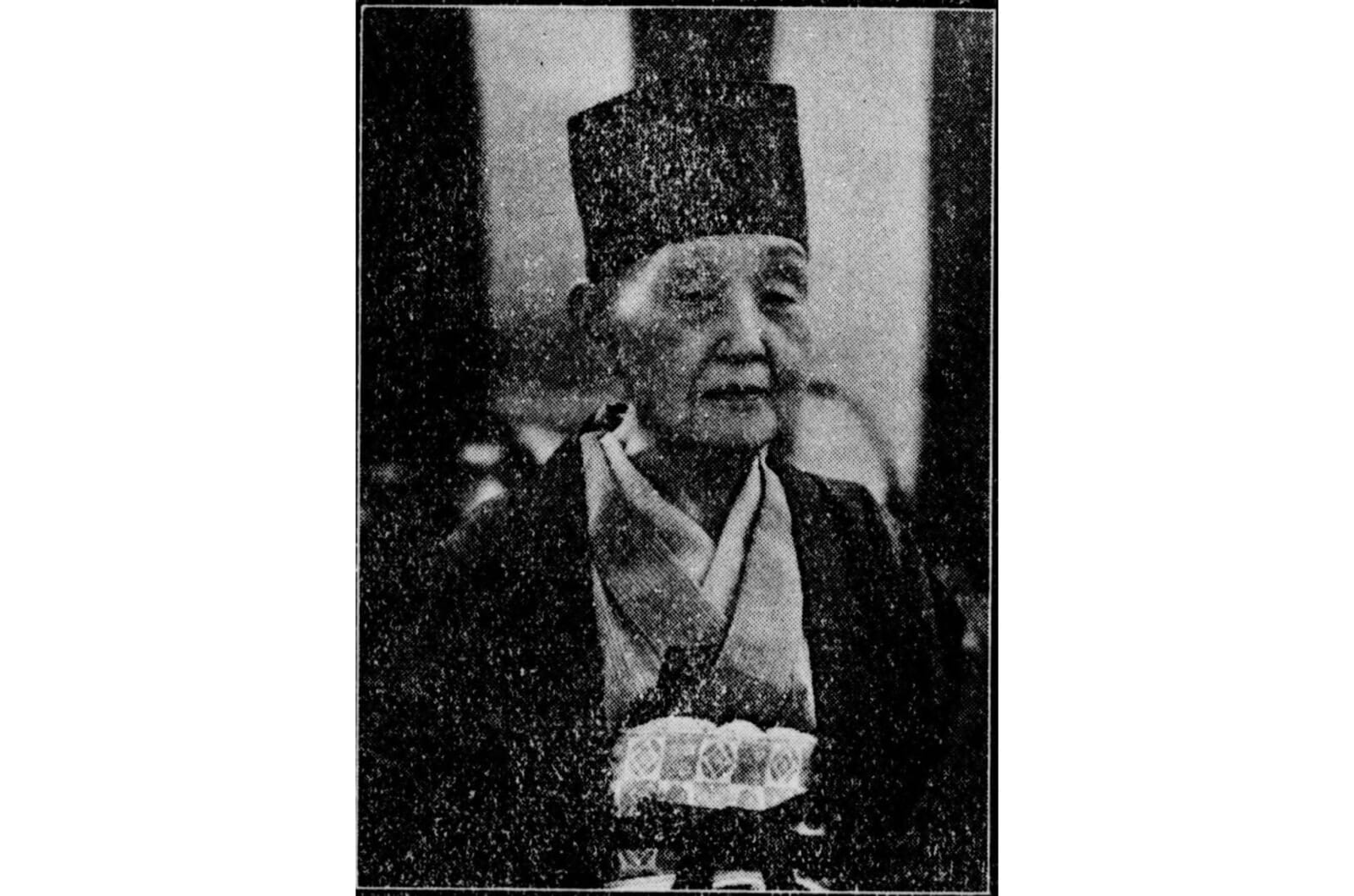
Portrait of Niijima later in life | Image: National Diet Collections
From Causing Bullet Wounds to Treating Them
Joseph Hardy Neesima died in 1890, a terrible blow that reportedly deepened Yae’s Christian faith, prompting her to join the Japanese Red Cross. And thus began the story of Niijima Yae: wartime nurse.
During the First Sino-Japanese War (1894 – 1895), she initially treated wounded soldiers in Hiroshima before later serving closer to combat zones. The charisma, leadership and dedication that made her the heroine of Tsuruga Castle proved invaluable in organizing medical care during wartime. In time, Yae led teams of dozens of caregivers and later served again during the Russo-Japanese War (1904 – 1905).
Yae approached nursing with a very samurai attitude: she observed, assessed, learned, and served with total commitment. She devised training protocols based on her extensive experiences, advocated for standardized nursing care and petitioned the government to take nurses more seriously.
She eventually became the first non-royal woman to be formally decorated by the government in modern Japanese history, earning the nickname of “Japan’s Florence Nightingale.” She died in 1932 at age 86.