On this day in Japan 50 years ago, Mitsuyasu Maeno, an actor who appeared in several Roman Porno films, arrived at Chofu Airport in the suburbs of Tokyo with two associates. Dressed in kamikaze attire, the then-29-year-old informed staff they were renting Piper PA-28 Cherokee planes for a film segment.
It was just a ruse. While his companions believed they were helping film a daring stunt, Maeno had a far deadlier purpose. He was actually on a murder-suicide mission. His target was Yoshio Kodama, a Japanese ultranationalist and prominent figure in the postwar rise of organized crime.
The actor flew solo in one plane while his two associates followed in another. They circled Tokyo for around an hour before Maeno informed them that he had a meeting in Setagaya. Instead, he circled low over Kodama’s house before steering directly toward it.
Just before impact, the actor reportedly radioed, “Tenno Heika Banzai” (“Long Live the Emperor”). The plane slammed into the second-floor veranda, killing Maeno instantly. A household servant was injured in the resulting blaze. Kodama, resting in another room after a stroke, survived.
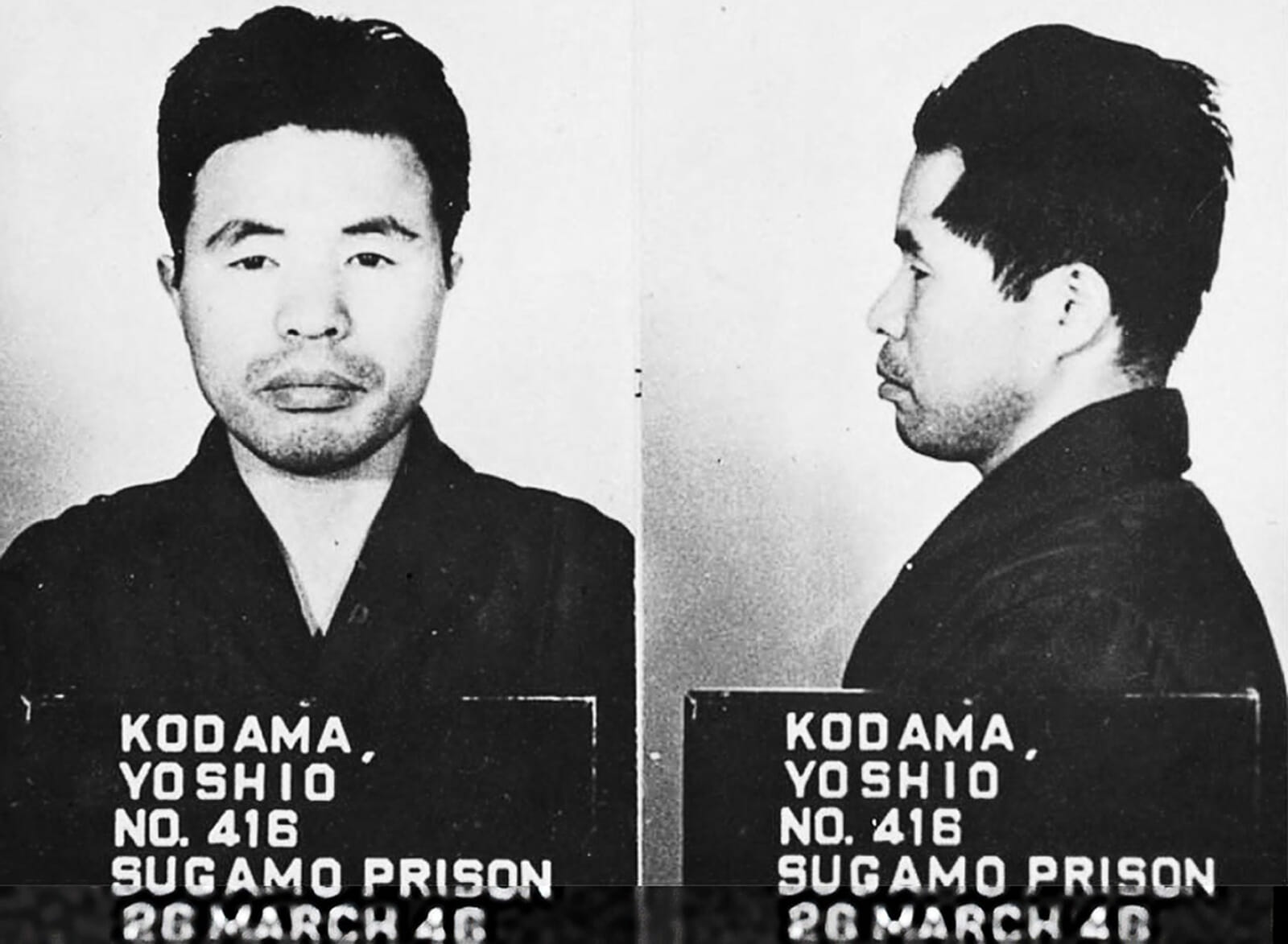
Mug shot of Kodama while he was held as a suspected war criminal in Sugamo Prison, 1946 | Wikimedia
The Lockheed Bribery Scandals
So, why did this young actor attempt to go out in what he likely saw as a blaze of glory by taking Kodama’s life and his own? Put simply, he felt betrayed. For years, Maeno admired Kodama, a man who’d cultivated an image as a defender of Japan’s traditional values.
That image collapsed in 1976, when Kodama became embroiled in a bribery scandal involving the American aerospace company Lockheed. The scandal exposed a global web of corporate bribery, with Lockheed paying over $22 million to foreign officials and power brokers to secure contracts, mainly for its L-1011 TriStar airliner.
The fallout spread across multiple countries, including Japan, West Germany, Italy and the Netherlands, toppling political reputations and implicating senior figures at the highest levels of government. In the US, the revelations prompted sweeping reforms, leading to the enactment of the Foreign Corrupt Practices Act (FCPA).
In Japan, it ensnared prominent politicians and business leaders, including Prime Minister Kakuei Tanaka, who was arrested in July 1976. Kodama was also indicted. Boasting extensive connections in politics and business, he acted as a middleman to influence policymakers and facilitate the sale of Lockheed aircraft to Japanese airlines.
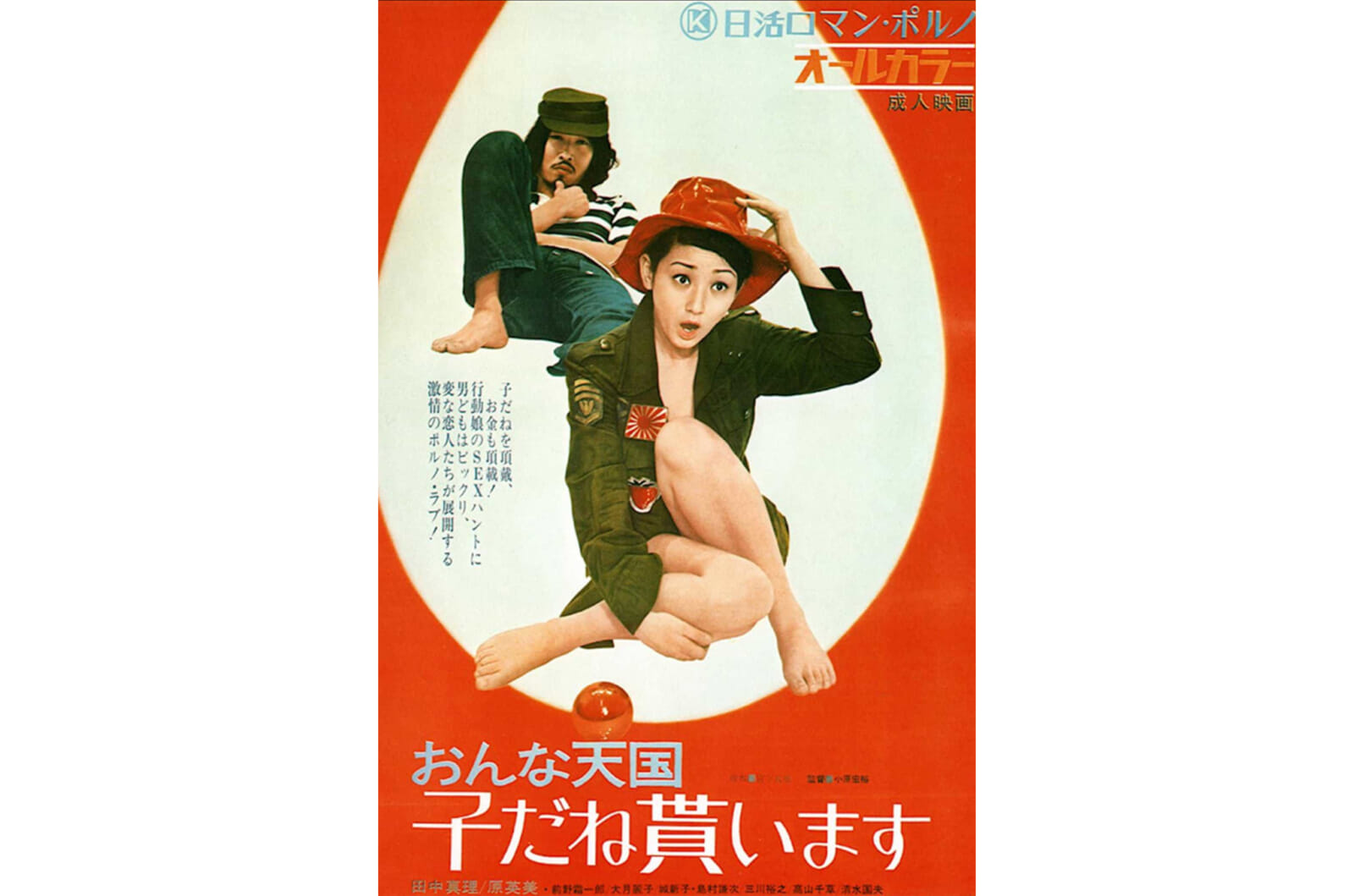
Poster for the 1972 film “Onna Tengoku: Kodane moraimasu” starring Maeno and Mari Tanaka
About Mitsuyasu Maeno
The scandal outraged parts of Japan’s ultranationalist circles, with some ultrarightists reportedly calling on Kodama to “commit ritual suicide for having taken money and thus betrayed his nationalistic principles.” This atmosphere of outrage and perceived betrayal likely influenced Maeno, who took matters into his own hands.
To understand why the young actor reacted so dramatically, it helps to look at his life before the attack. According to his father, Maeno was influenced by the right-wing philosophies of troubled literary genius Yukio Mishima, and subsequently started joining nationalist gatherings.
One such gathering took place at Tokyo’s Okura Hotel in 1971. During the meeting, Maeno heard “Song of the Race,” a composition by Kodama calling for an overthrow of the government and a restoration of Japan’s World War II imperial policies. He reportedly became captivated by Kodama’s vision and rhetoric.
At the time, Maeno was struggling to find work in mainstream movies and dramas, so instead he turned to softcore pornographic films, appearing in around 20 prior to his death. He was also facing personal difficulties. Twice divorced, he allegedly attempted to take his own life at a Niigata ski resort in February 1976.
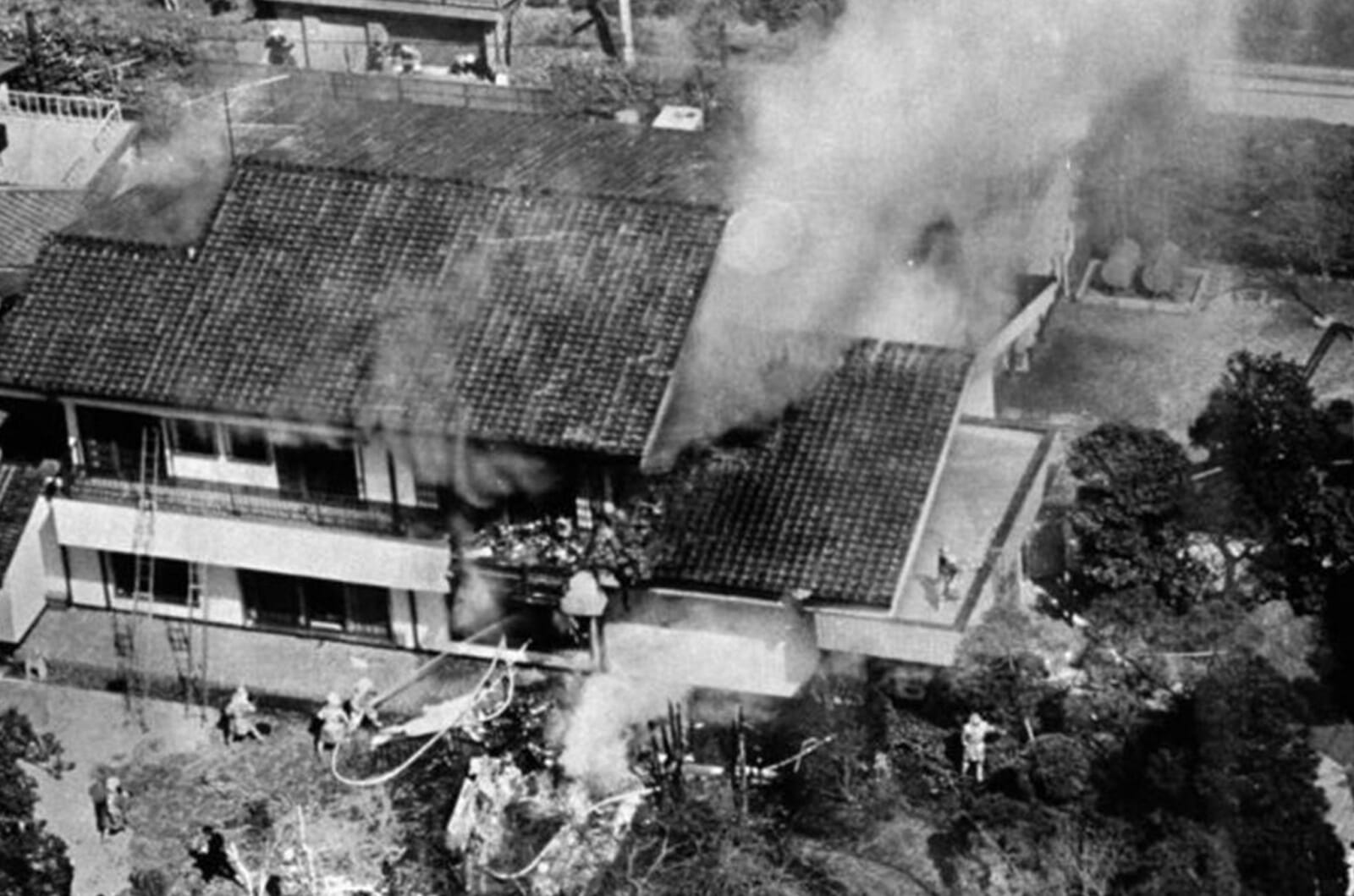
The damage to Kodama’s house after Maeno’s attack
Reaction to the Attack
Despite surviving that earlier suicide attempt, Maeno continued to struggle with personal and political turmoil. The following month, he carried out his final, fatal act. However, his attempt to take Kodama with him was unsuccessful. His intended target was carried to safety, wrapped in a blanket, while bodyguards rushed to put out the flames.
Reaction to the attack was mixed. Some ultranationalists expressed sympathy for Maeno, claiming he embodied the spirit of the samurai. Others, though, were less forgiving, condemning the act for reviving militarist symbolism and putting others at risk while achieving nothing.
Keiichi Ito, the director-general for training of the Japan Self-Defense Forces and a former kamikaze pilot, dismissed Maeno’s supposed heroism, stating that, “Maeno was performing an egotistical, grandstand play to win publicity, not unlike Mishima’s suicide. Both were showing off to the world.”
Kodama, meanwhile, was charged with tax evasion and violations of foreign exchange laws in relation to the Lockheed bribery scandals in 1976. The following year, he appeared in court looking fragile due to ongoing health issues. In January 1984, before the trial was completed, he died of a stroke in his sleep. He was 72.
More From This Series
- The Battle of Okinawa Ends
- Queen Arrives in Japan for First Asian Tour
- The JAL Mass Food Poisoning Incident