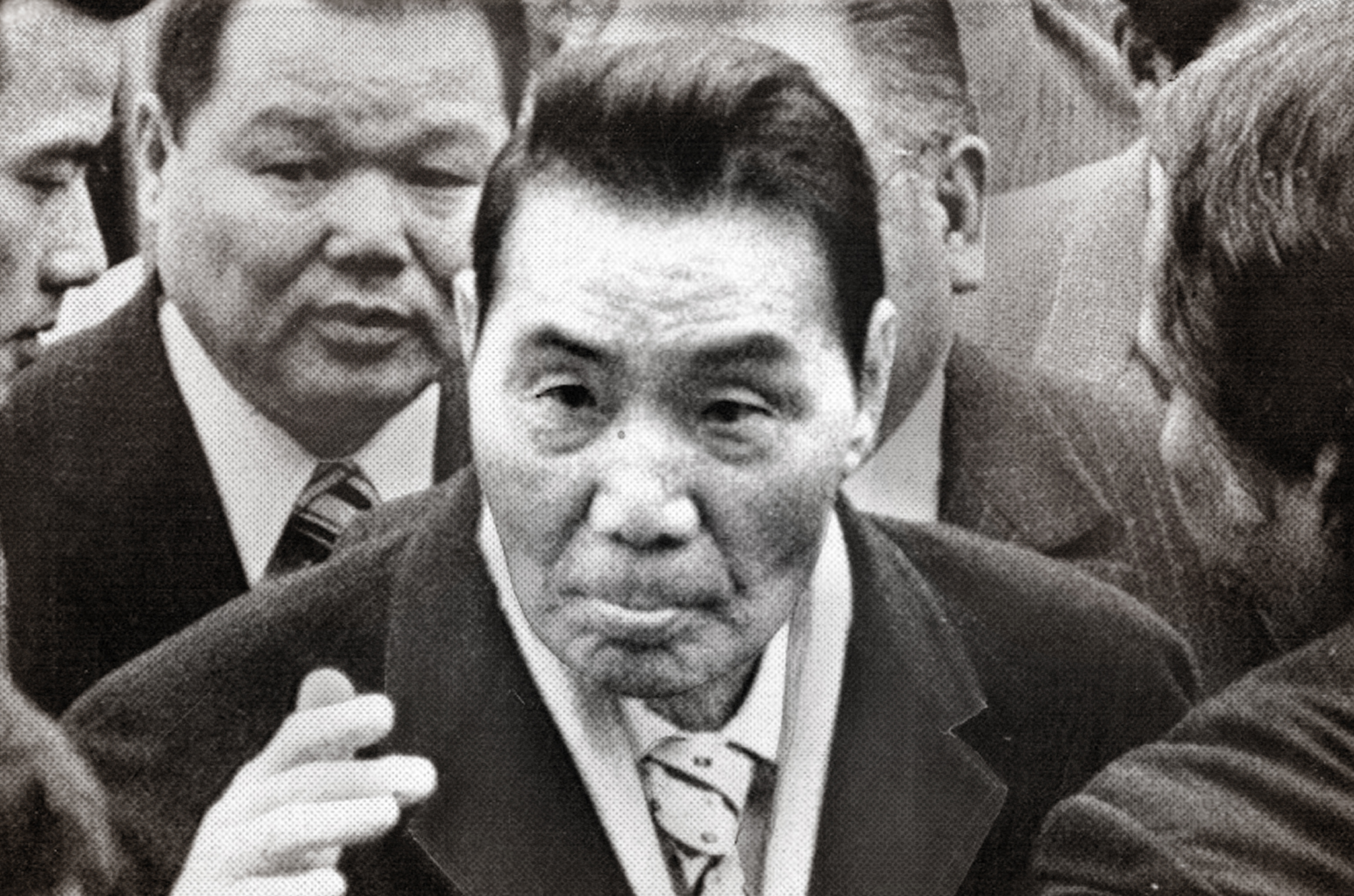
On this day in 1981, Kazuo Taoka died of a heart attack. Known in Japan as the “Godfather of Godfathers,” he was the third and most fearsome kumicho (clan boss) of the Yamaguchi-gumi, the country’s largest yakuza organization. He took the group from a family-run dockworker’s union to the largest criminal network Japan had ever seen, with, at one stage, more than 10,000 yakuza under his command. Here is his story.
The Establishment of the Yamaguchi-Gumi and the Rise of Kazuo Taoka
Taoka was born in Tokushima Prefecture in 1913 — just two years before Harukichi Yamaguchi founded the Yamaguchi-gumi, which was initially established as a labor dispatch service on the Kobe docks. The future leader of the organization had a difficult upbringing as his father passed away before he was born, and his mother died from exhaustion when he was a small child. Following her death, Taoka moved to Kobe to live with his aunt and uncle, who have been described as neglectful toward him.
In his teenage years, Taoka got to know Noboru Yamaguchi, who in 1925 succeeded his father as kumicho of the Yamaguchi-gumi, and became his protege. During this time, he garnered quite a reputation as a street fighter. His signature move was clawing his opponents’ eyes, which earned him the nickname “Kuma,” meaning “The Bear.”
In February 1937 — the year after he was officially initiated as a blood member of the Yamaguchi-gumi — Taoka was sentenced to eight years in prison for murder. He was released two years early in 1943 and was quickly welcomed back into the organization. Noboru Yamaguchi had died a year earlier, meaning the group needed a new leader. Taoka, who established a vigilante group targeting Korean and Taiwanese people and other minorities to “maintain order” after World War II, was seen as the perfect choice to replace him. He eventually took up the mantle in 1946 at the age of 33.
Expanding Operations
At that point, the country was in ruins, which presented Taoka with both challenges and opportunities. The organization he’d taken over had just 33 members, but he believed it had the potential to expand well beyond its base on the Kobe docks and become a major force in organized crime. For that to happen, he felt it was important to maintain the group’s unlawful activities while simultaneously investing in legitimate businesses like real estate and construction. In addition to earning lots of money, it made the organization look more respectable.
More than just a mob boss, Taoka was a savvy businessman who encouraged his subordinates to read financial newspapers and study the stock market. He also ventured into the entertainment industry, launching Kobe Geinosha (Kobe Performing Arts Promotion) in 1957. The company represented several prominent entertainers, including the legendary enka singer Misora Hibari.
Interestingly, four years before founding Kobe Geinosha, Taoka had been placed on a nationwide wanted list. He was accused of ordering an attack on actor and singer Koji Tsuruta after the star’s manager reportedly showed disrespect toward him. Taoka eventually turned himself in but was not indicted.
Taoka wielded immense power and had numerous influential associates, including Ichiro Kono, who served as Japan’s deputy prime minister, and Seigen Tanaka, a far-right businessman and politician known as the “Tiger of Tokyo.” In April 1963, Taoka and Tanaka co-founded the League for the Stamping Out of Drug Traffic. While the group publicly campaigned against narcotics, some in the media speculated that it was actually a smokescreen for the Yamaguchi-gumi’s expansion into Tokyo.
Six months later, Tanaka was shot by Haruo Kinoshita, a member of the Tokyo-based Tosei-kai syndicate.
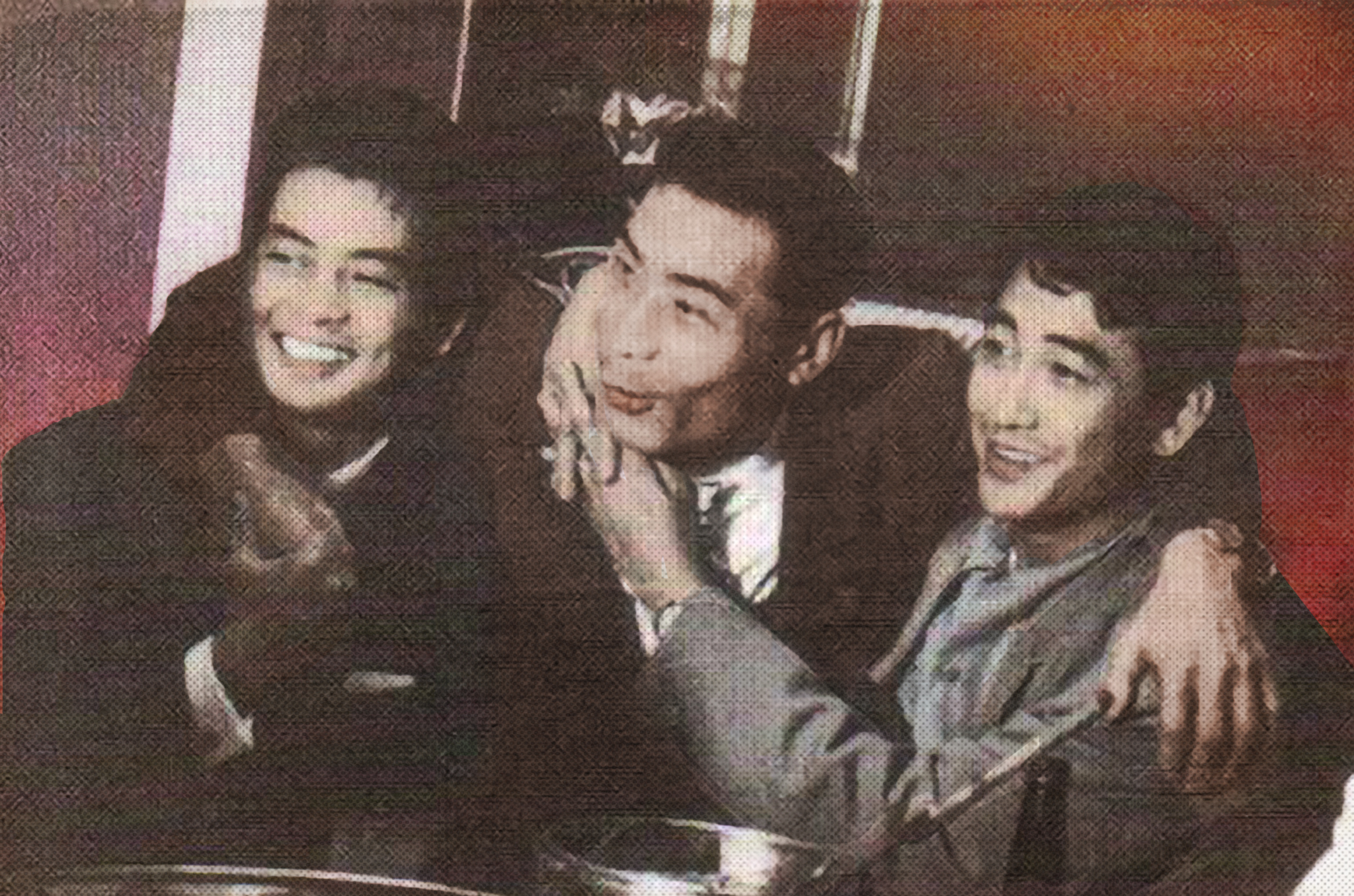
Taoka Kazuo, with Ono Mitsuru (left) and Tsuruta Koji (right) | Wikimedia, edits TW
Gang Rivalries and Alliances
The attack highlighted the growing friction between rival underworld factions. By that time, the Tosei-kai (now known as the Toa-kai) had become one of the most powerful gangs in Tokyo. For the Yamaguchi-gumi to gain influence in the capital, Taoka had to negotiate with Tosei-kai boss Hisayuki Machii, a Korean-Japanese figure with deep political and criminal connections. The shooting of Tanaka was reportedly linked to concerns within the Tosei-kai that Machii was becoming too closely aligned with Taoka, and that Tanaka’s actions were upsetting the balance of power in Kanto.
In the same year, ultranationalist powerbroker Yoshio Kodama attempted to unify Japan’s major yakuza syndicates under a single coalition. Taoka declined to join, determined to preserve the Yamaguchi-gumi’s independence. Still, he remained open to strategic partnerships. In 1973, he forged an alliance with the Inagawa-kai, easing long-standing tensions between the two groups over territory and resources.
Even as Taoka worked to maintain order within the underworld, he faced mounting legal pressure. Police crackdowns during the 1960s and 70s resulted in the arrests of many gang leaders. Taoka himself was indicted multiple times, including on blackmail charges, but avoided prison. Despite a gradual decline in yakuza membership nationwide, the Yamaguchi-gumi only grew stronger under his leadership. By the mid-1970s, the organization boasted more than 11,000 members, and Taoka, who was then in his 60s, still seemed invincible.
The Death of Kazuo Taoka
That air of invincibility was shattered on July 11, 1978, when Taoka attended a limbo dance exhibition at a nightclub in Kyoto. Kiyoshi Narumi, a member of the rival Matsuda-gumi, spotted him entering and decided to take his chance, firing his .38-caliber pistol. The first shot struck Taoka in the neck. The second hit another customer. It was a revenge attack for his previous boss, who was murdered after clashing with the Yamaguchi-gumi. Narumi escaped, but several weeks later, his body was discovered in the area of Mount Rokko in Kobe.
Taoka survived the incident, having been rushed to the hospital in his bulletproof black Cadillac. He continued to lead the Yamaguchi-gumi until his death on July 23, 1981. His longtime second-in-command (wakagashira), Kenichi Yamamoto, was widely expected to succeed him. However, Yamamoto died of liver disease just over six months later, plunging the organization into a leadership crisis.
During this uncertain period, Taoka’s widow, Fumiko, briefly acted as the de facto head of the group. In June 1984, in a succession ceremony, she presented a ceremonial dagger to Masahisa Takenaka, symbolically designating him as her late husband’s successor and the fourth kumicho of the Yamaguchi-gumi.
That decision, however, sparked a major internal rift. Hiroshi Yamamoto — another senior figure and a strong contender for the top position — broke away to form a rival group, the Ichiwa-kai. On January 26, 1985, Ichiwa-kai hitmen ambushed Takenaka at the home of his mistress. As he waited for the elevator, Takenaka and two of his top lieutenants were gunned down.
The assassination ignited the infamous Yama-Ichi War (1985–1989), a violent feud between the Yamaguchi-gumi and the Ichiwa-kai that resulted in more than 200 armed clashes and the deaths of at least 36 yakuza members.
More From This Series
- Izumi Sakai: The Voice of Japan’s Lost Decade
- Kenzo Tange: Japan’s Most Influential Architect
- Yukio Mishima: A Troubled Literary Genius
Updated On November 28, 2025