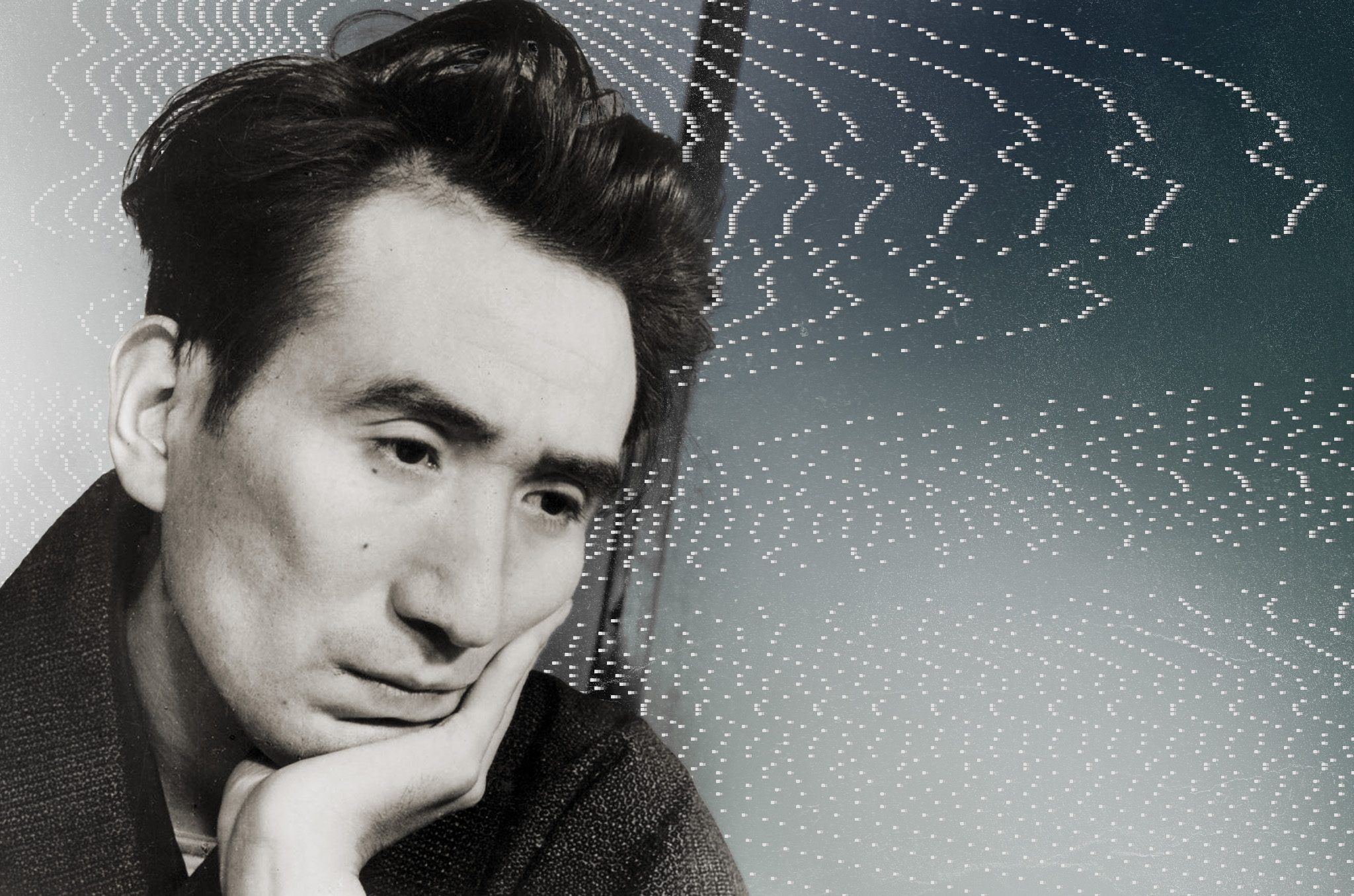
On this day in 1948, renowned Japanese author Osamu Dazai died by suicide, drowning in Tokyo’s rain-swollen Tamagawa Josui canal alongside his lover, Tomie Yamazaki. Their bodies were discovered six days later on what would have been Dazai’s 39th birthday. The double suicide marked a tragic end to one of the most influential and turbulent careers in modern Japanese literature.
Widely considered the most iconic writer of the Burai-ha (Decadent School) of postwar Japanese literature, he was most renowned for his novels Ningen Shikkaku (No Longer Human) and Shayo (The Setting Sun). The former is one of the best-selling works of literature in Japanese history and has remained a cultural touchstone for generations of readers.
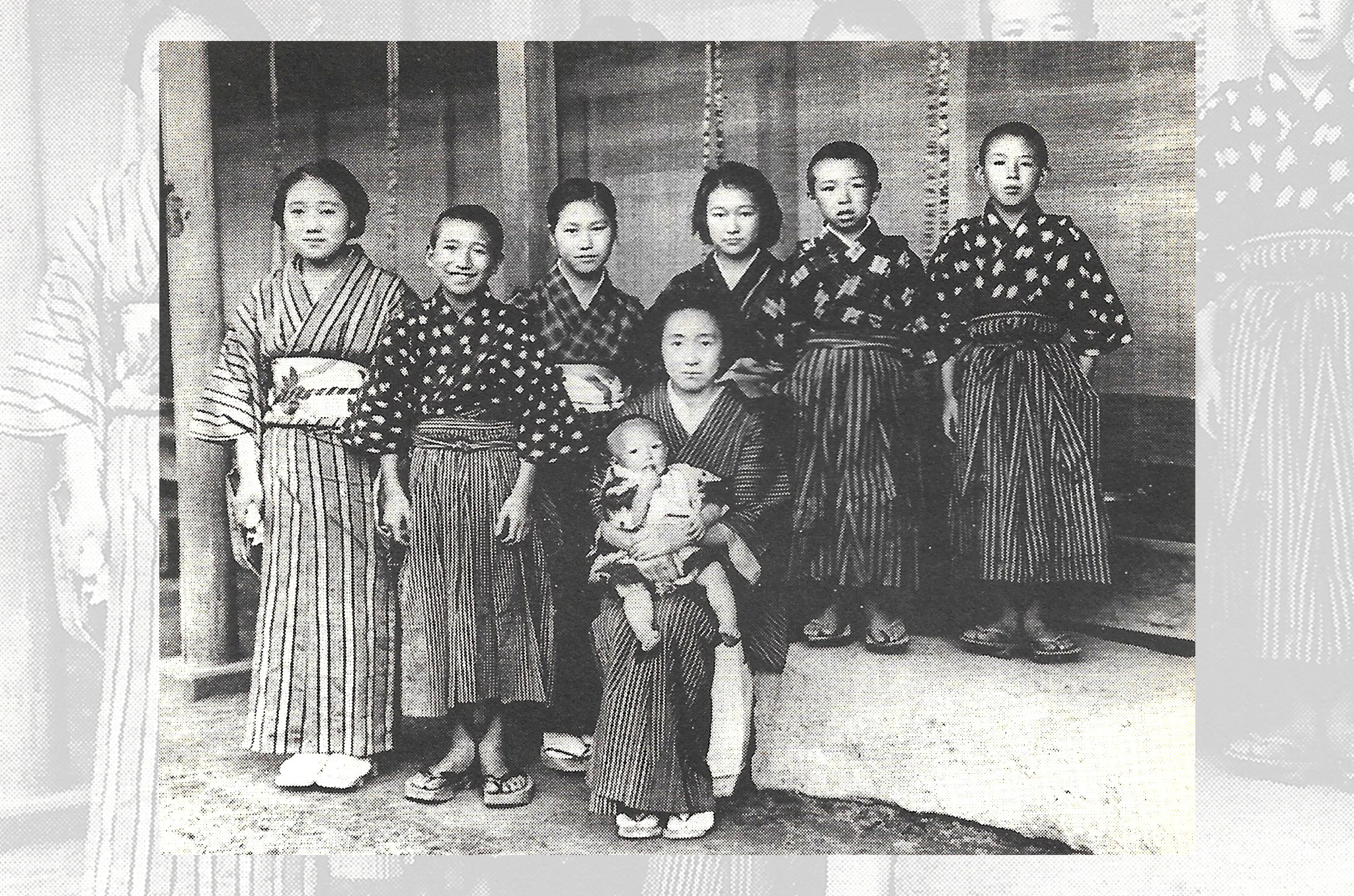
Dazai with his mother and siblings as a child (second on left) | Wikimedia
Osamu Dazai: The Early Years
Dazai — birth name Shuji Tsushima — was born into a wealthy landowning family in Aomori Prefecture on June 19, 1909. His father, Gen’emon Tsushima, was a politician who served in the House of Peers and spent much time away from home. Though his mother was physically present in the household, he spent little time with her due to her reported poor health.
“As a child I had absolutely no notion of what others, even members of my own family, might be suffering or what they were thinking,” wrote Dazai in the semi-autobiographical novel No Longer Human. “I was aware only of my own unspeakable fears and embarrassments. Before anyone realized it, I had become an accomplished clown, a child who never spoke a single truthful word.”
The 10th of 11 children (two siblings died in infancy), he was raised largely by servants and his aunt Kiye. In No Longer Human, the protagonist, Yozo, describes being sexually abused by household servants, calling it “the ugliest, vilest, crudest crime.” Whether this reflects Dazai’s own experience or serves as fictionalized trauma remains a matter of interpretation.
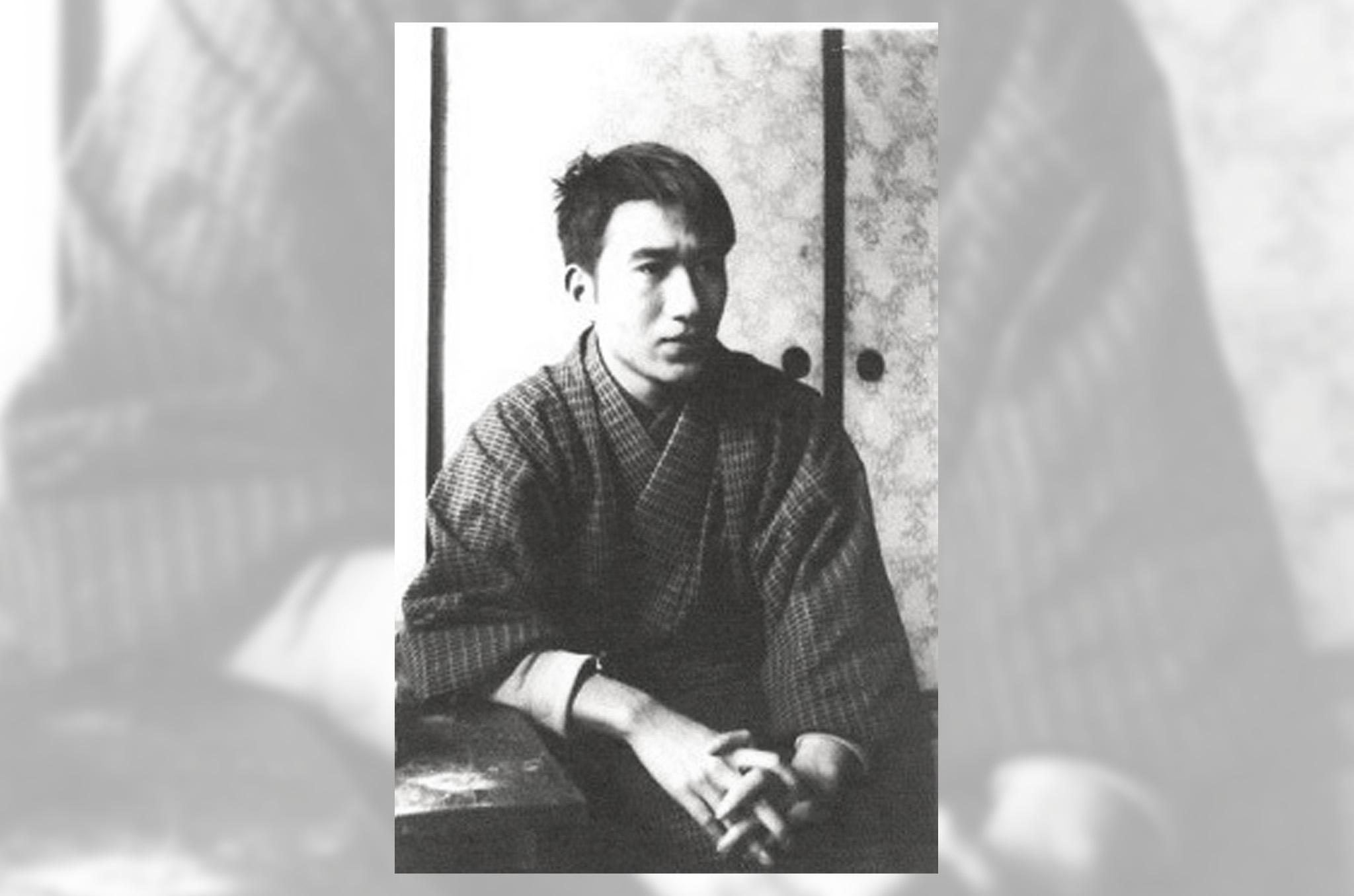
Portrait of Dazai taken in 1928 | Wikimedia
Literary Beginnings and the Influence of Ryunosuke Akutagawa
Dazai’s writing career began while he was a student, contributing stories and essays to school publications. He also published a magazine called Saibo Bungei (meaning “cell literature”) with friends. His literary idol was Ryunosuke Akutagawa, whom he regarded as the master of the short story. Akutagawa’s work frequently explored themes of alienation, anxiety and human desperation, many of which would later become central to Dazai’s own writing.
The suicide of Akutagawa in 1927 had a profound impact on Dazai, who was 18 at the time. Deeply affected by his literary idol’s death, he entered a turbulent period marked by academic neglect, heavy drinking, visits to prostitutes and drug experimentation. It also deepened a lifelong fascination with death that would shadow both his life and writing.
In December 1929, shortly before his examinations, Dazai made his first attempt to take his own life by taking sleeping pills. Ten months later, he tried to kill himself in the waters of a beach in Kamakura alongside Shimeko Tanabe, a 19-year-old bar hostess whom he had met only a week prior. Tanabe drowned, while Dazai was rescued by a passing fishing boat.
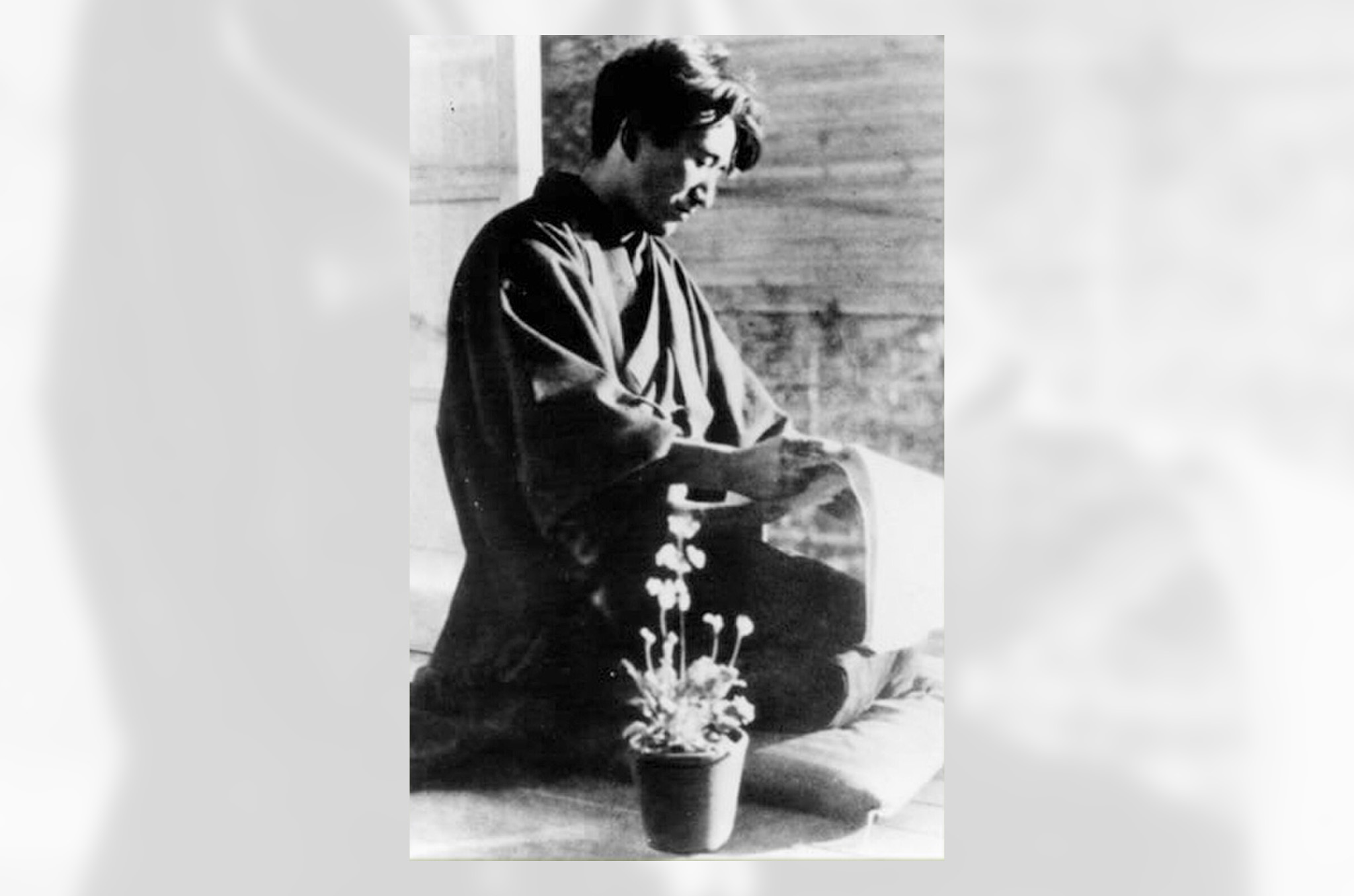
Image of Dazai at home | Wikimedia
Early Career and Personal Struggles
In the spring of 1933, Dazai again tried to kill himself, not long after the publication of the short story “Gyofukuki” (“Metamorphosis”), a dark, fairy tale-like narrative exploring themes of alienation and despair. Later that year, he published “Ressha” (“Train”), a semi-autobiographical story that marked one of his earliest appearances in Japan’s literary magazines under the pen name Osamu Dazai.
At the time, Dazai was studying French literature at Tokyo Imperial University. However, he rarely attended lectures and ultimately failed to graduate. He also failed an employment exam for a major Tokyo newspaper. After completing the short story collection Bannen (The Final Years), which he intended as a literary farewell, he attempted to hang himself in March 1935. Published the following year, the collection became his first book and featured “Doke no Hana,” a semi-autobiographical novella that remains among his best-known works. (The story was released in English for the first time in 2023, as the standalone book The Flowers of Buffoonery.)
Another suicide attempt followed in 1936 alongside his first wife, Hatsuyo Oyama, after the breakdown of their marriage amid reports of her infidelity. The pair took sleeping pills, but both survived. They divorced shortly afterward. He later remarried a middle school teacher named Michiko Ishihara, and the pair had their first daughter, Sonoko, in June 1941. The late 1930s and early 1940s are often regarded as the most stable period of his life.
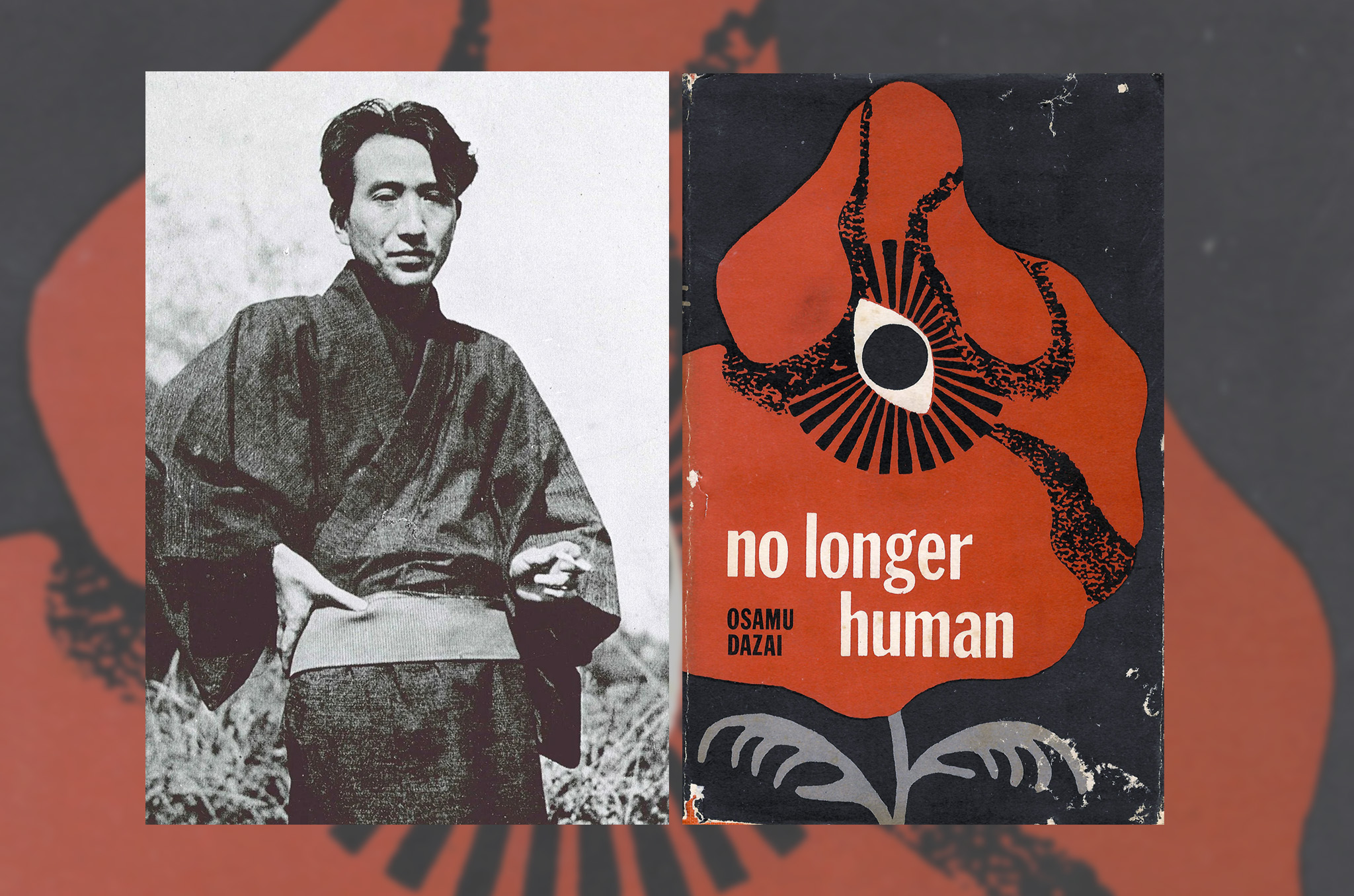
Dazai in 1947, with the English version of “No Longer Human” (1958) | Portrait: Wikimedia
Dazai’s Literary Peak
During this period, Dazai published some of his most celebrated works, including the novella Joseito (Schoolgirl), a stream-of-consciousness monologue narrated by a bourgeois schoolgirl living alone with her mother. He also released “Hashire Merosu” (“Run, Melos!”), a reworking of Friedrich Schiller’s ballad Die Bürgschaft, itself based on the ancient Greek legend of Damon and Pythias. The short story later became a widely read classic in Japanese schools.
Dazai’s most famous works, however, emerged in the postwar years. In 1947, he published “Viyon no Tsuma” (“Villon’s Wife”), about the wife of a self-destructive novelist, and The Setting Sun, a semi-autobiographical novel narrated by Kazuko, the daughter of a widowed aristocrat searching for purpose in postwar Japan. Kazuko was partly inspired by the diaries of writer Shizuko Ota, with whom Dazai had a daughter.
The following year, No Longer Human was released. Its opening line — “Mine has been a life of shame. I can’t even guess what it must be to live the life of a human being” — establishes the tone for a tragic, semi-autobiographical confession told through the notebooks of the protagonist as he descends into physical and psychological ruin.
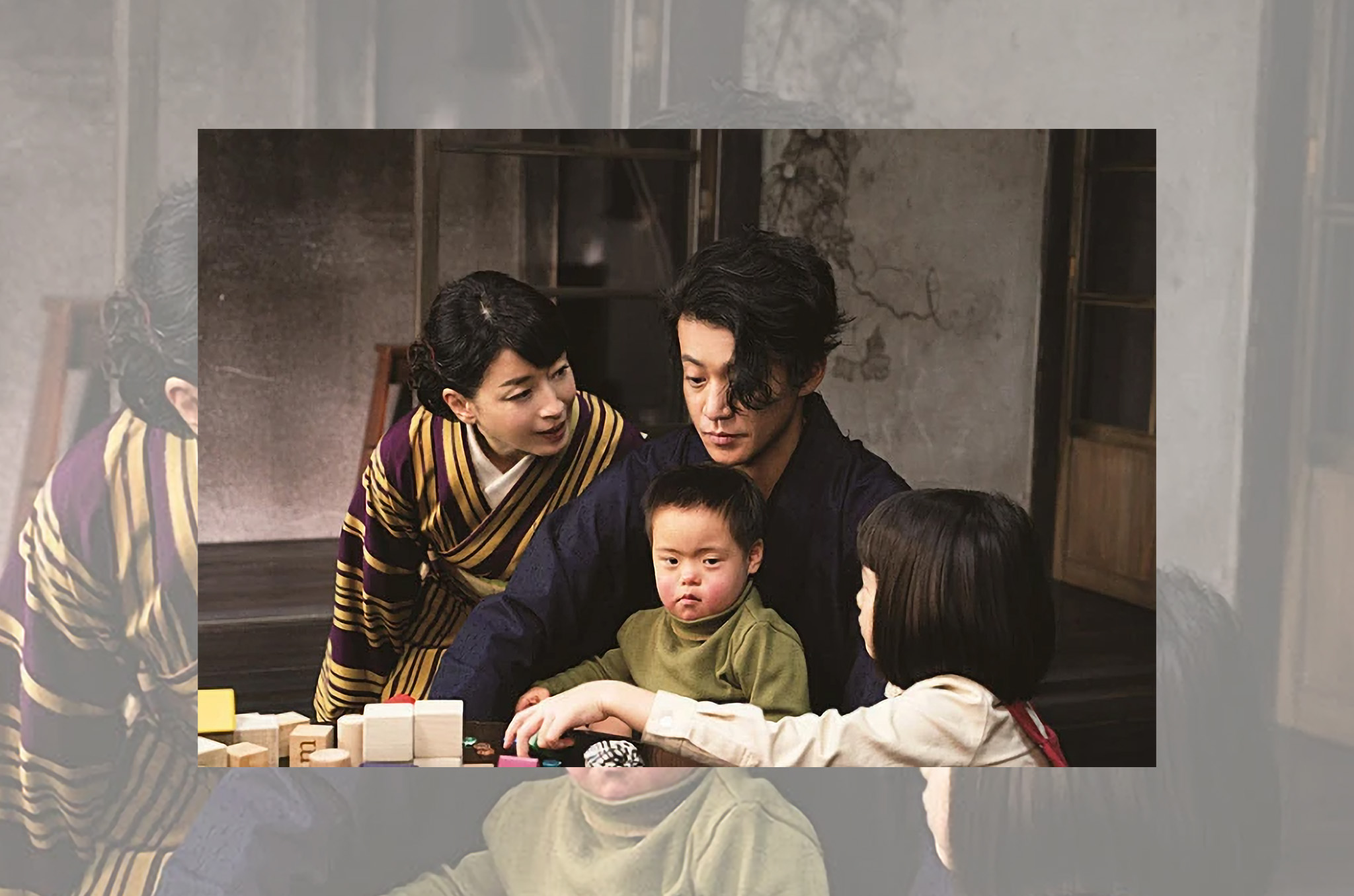
Still from “No Longer Human: Osamu Dazai and the Three Women” (2019)
Osamu Dazai’s Enduring Legacy
The novel was first serialized in the magazine Tenbo from June to August 1948 and proved to be Dazai’s final major work. Published shortly before his death alongside Tomie Yamazaki, it has often been read as a haunting farewell that blurs the line between autobiography and fiction. His acquaintance Keikichi Nakahata later remarked: “Dazai was asked to die, and he simply agreed, but just before his death, he suddenly felt an obsession with life.”
Nearly eight decades have passed since Dazai’s death, yet interest in his work is arguably higher than ever. Renewed attention has been fueled by social media communities such as BookTok and the hit manga and anime series Bungo Stray Dogs. Created by Kafka Asagiri, the series reimagines famous authors and poets as figures with supernatural abilities, and its portrayal of Osamu Dazai regularly tops fan popularity polls.
In 2019, director Mika Ninagawa released Ningen Shikkaku: Dazai Osamu to 3-nin no Onna (released internationally as No Longer Human), a film about his life starring Shun Oguri. His literary legacy is also commemorated through the Dazai Osamu Prize, first established in 1964 by publisher Chikuma Shobo. Together, these honors underscore the enduring influence of his writing on Japanese literature and popular culture.