In 2026, the world observed 70 years since the loss of Kenji Mizoguchi, one of the pillars of Japanese cinema alongside the likes of Akira Kurosawa and Yasujiro Ozu. During a career that spanned over 30 years, Mizoguchi tackled a wide range of subjects and themes, but repeatedly returned to the experiences and struggles of women in Japanese society.
It perhaps wouldn’t be wholly accurate to call him or his work “feminist,” but in a time when women were being systematically exploited, undervalued and forcefully pushed into more and more outdated gender roles, Mizoguchi stood up and, through his work, decried the patriarchy.
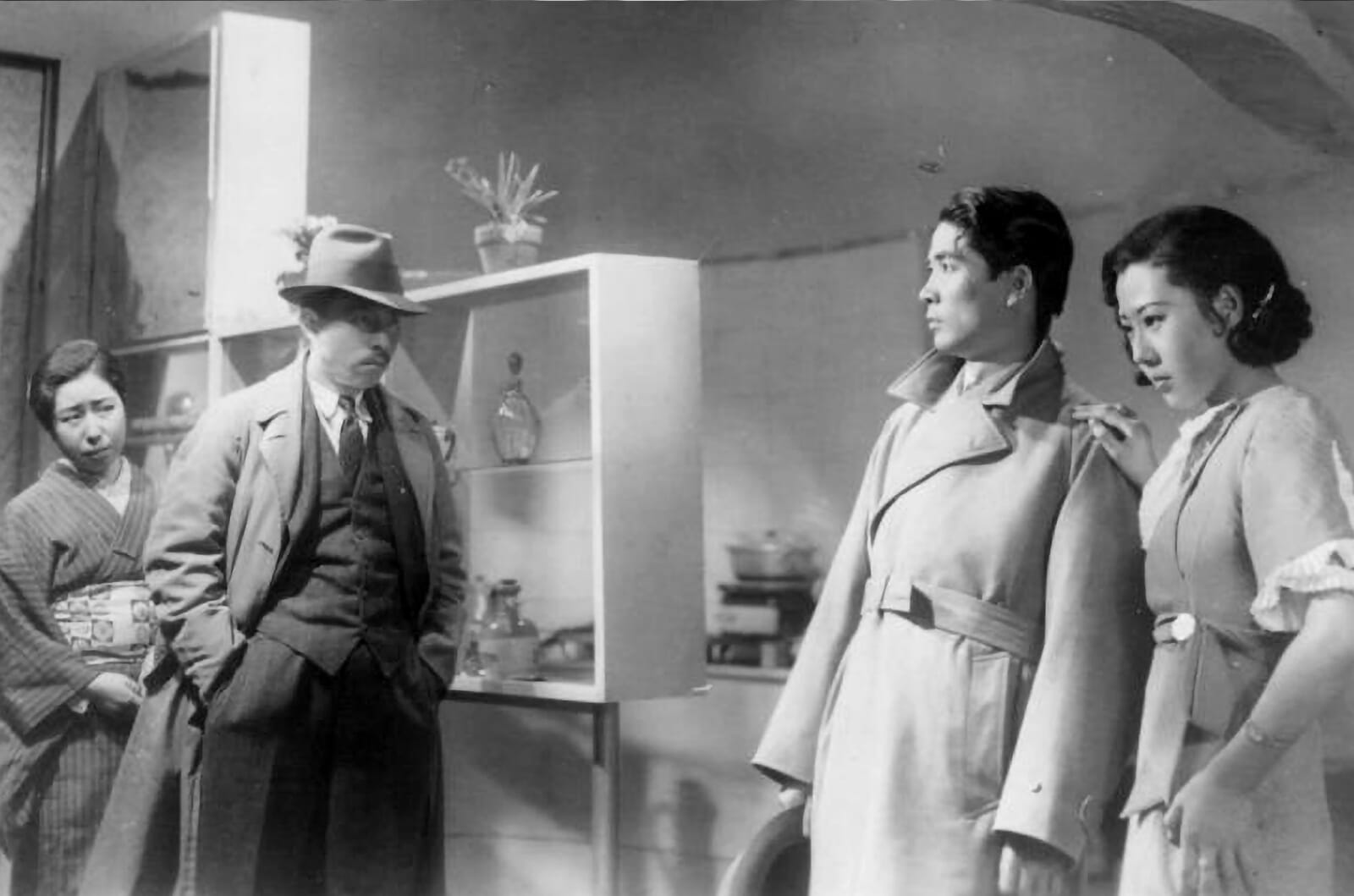
Still from “Osaka Elegy” (1936) | © Shochiku
The Road to the Elegy of Gion
He began directing during Japan’s silent-movie era, but the vast majority of his early work is now sadly lost. However, his surviving filmography and descriptions of his lost films paint a portrait of a young filmmaker developing his craft by experimenting with different genres and stories.
One of his earliest films was a 1923 adaptation of 813, an Arsène Lupin novel by Maurice Leblanc about the famous gentleman-thief. That same year, Mizoguchi directed Blood and Soul, a film greatly inspired by German expressionism and left-leaning politics. In 1926, he directed the melodrama A Paper Doll’s Whisper of Spring. Then later came his breakthrough films: Osaka Elegy and Sisters of Gion, both released in 1936.
Osaka Elegy is the story of a young telephone operator who becomes the mistress of her boss to help her family financially. Set to a jazzy soundtrack and featuring shots of neon-lit nightclubs, the film captures a fascinating snapshot of pre-war Japan when women possessed limited power but made up for it with weapons at their disposal, namely wit, sexuality and money.
The depiction of men in Osaka Elegy is decidedly more scathing. They are portrayed in the film as a parade of cruel, conniving, bumbling and useless cowards who occupy positions of power largely because the system has always allowed them to.
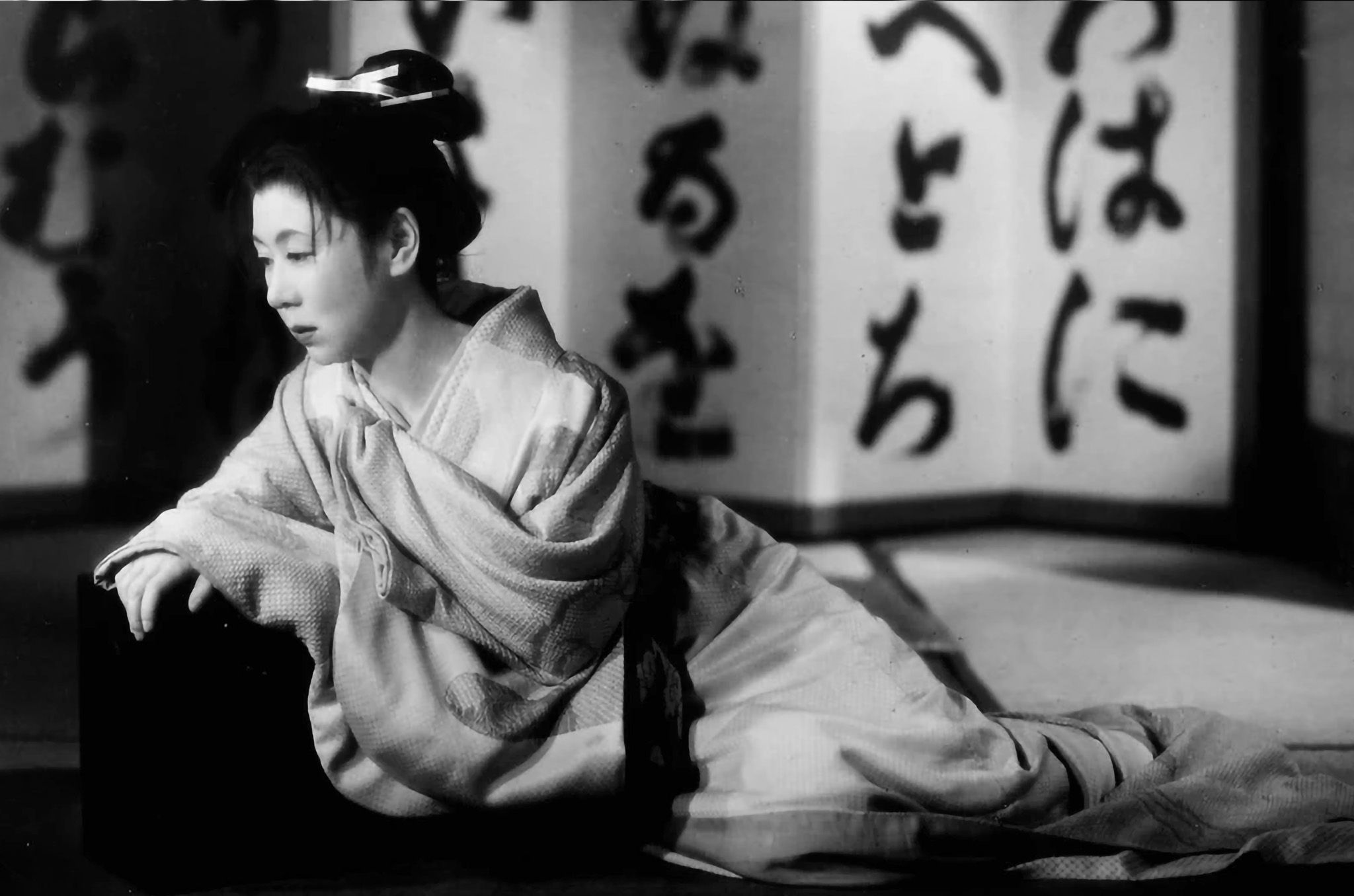
Sisters of Gion is a companion piece to Osaka Elegy, exploring similar topics, right down to the blend of Western and Japanese culture sweeping through Japan in the mid-1930s. However, because the movie deals directly with the world of Kyoto’s geisha district and the sex trade surrounding it, it sometimes feels like a softer blow when viewed after Osaka Elegy. Still, its traditional setting gives it a period piece feel, which, when combined with its high quality, makes it required viewing to fully understand Mizoguchi.
A History of a Patriarchal Society
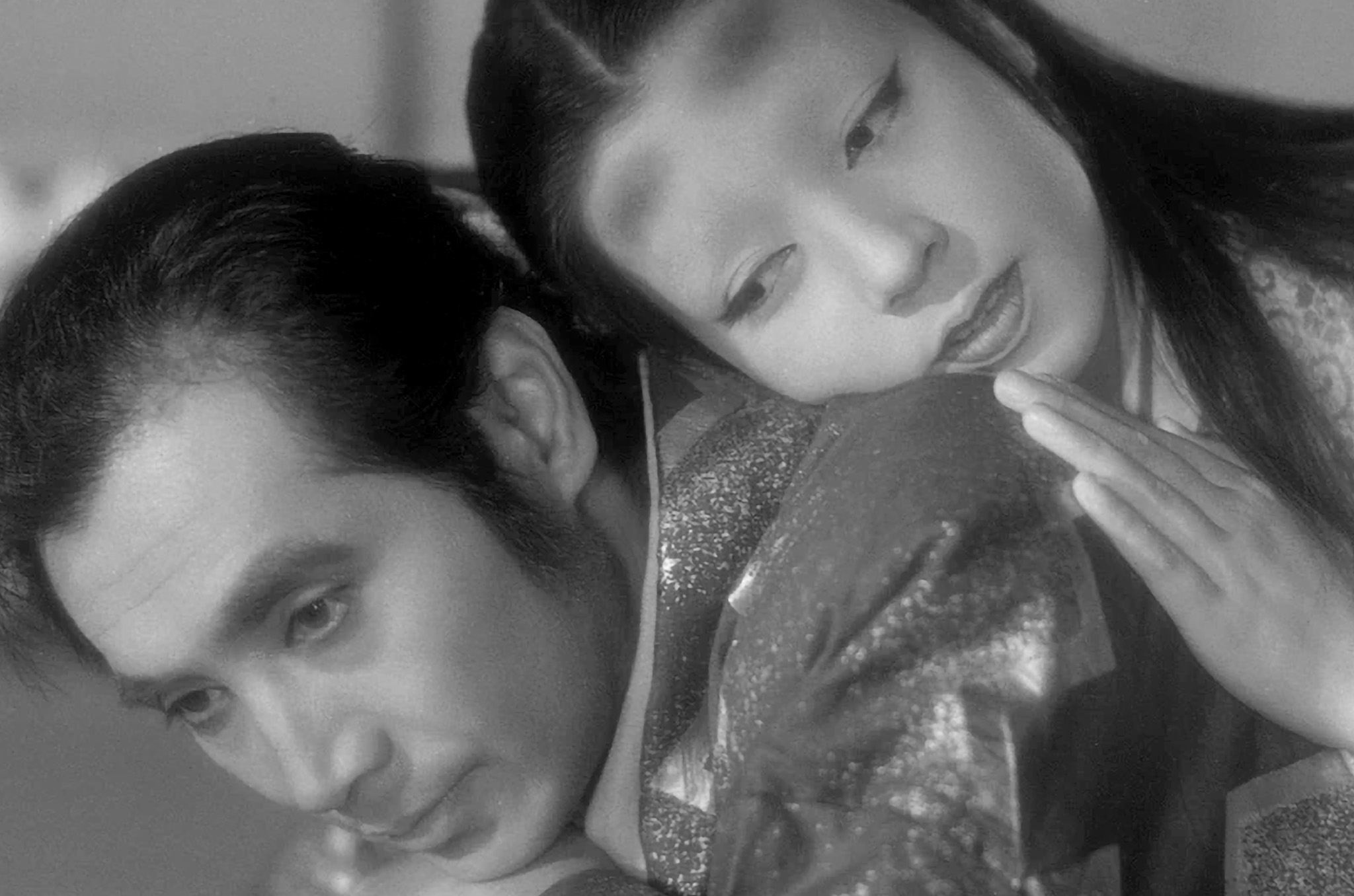
The period drama Ugetsu (1953) is often hailed as Mizoguchi’s greatest film. While it’s undoubtedly beautiful, featuring the director’s impeccable eye for framing and masterfully timed long shots, it desperately lacks the bite that came from his quiet anger at the mistreatment of women seen in some of his other movies.
It is set in the 16th century during the Warring States period when samurai fought each other for control of the country while the majority of the population just tried to survive. On paper, it would seem like an ideal setup for a takedown of the patriarchy, especially since it’s also a Japanese ghost story, many of which feature women who suffer because of men’s greed or societal inequality.
The hardships experienced by the female leads of Ugetsu — violence, displacement, poverty — are, however, more often than not part of a more general misery produced by war. The story itself, meanwhile, feels moralistic, which maybe shouldn’t be a surprise since it’s based on a book from 1776.
At the end of Ugetsu, a “fallen woman” regains her honor because of her husband’s mercy, while another woman dies to help her husband become a responsible person again. And it’s all treated like a relatively happy ending, reducing the two female leads to plot drivers rather than real characters. Fortunately, Mizoguchi made more than one movie set during the feudal period.
Sansho the Bailiff (1954), also widely regarded as one of his best, goes even further back, to the 11th century, to show that being a woman in Japan has long been a challenge. The film starts with forced prostitution, the separation of children from their parents and women being repeatedly treated as commodities before expanding its critique to issues of disability and women committing suicide to preserve their honor, a practice typically associated with men in Japan’s period dramas.
A historical movie dive into Mizoguchi’s filmography can then be rounded out with 1952’s The Life of Oharu, set in the Edo period, and dealing, among other things, with women as emotional punching bags and scapegoats for the inadequacies of men.
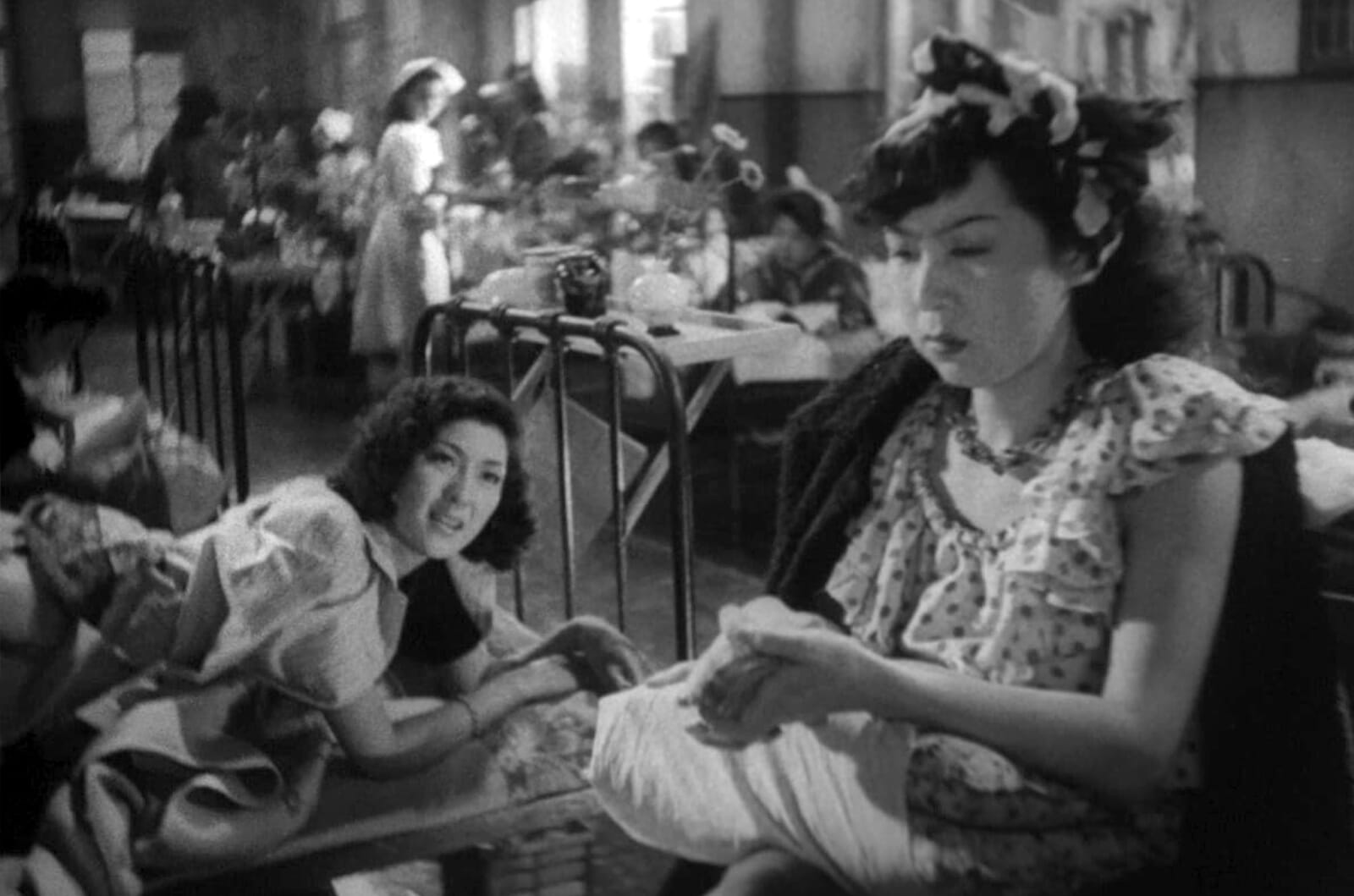
Still from “Women of the Night” (1948) | © Shochiku
Kenji Mizoguchi: At His Best in Times of Electricity
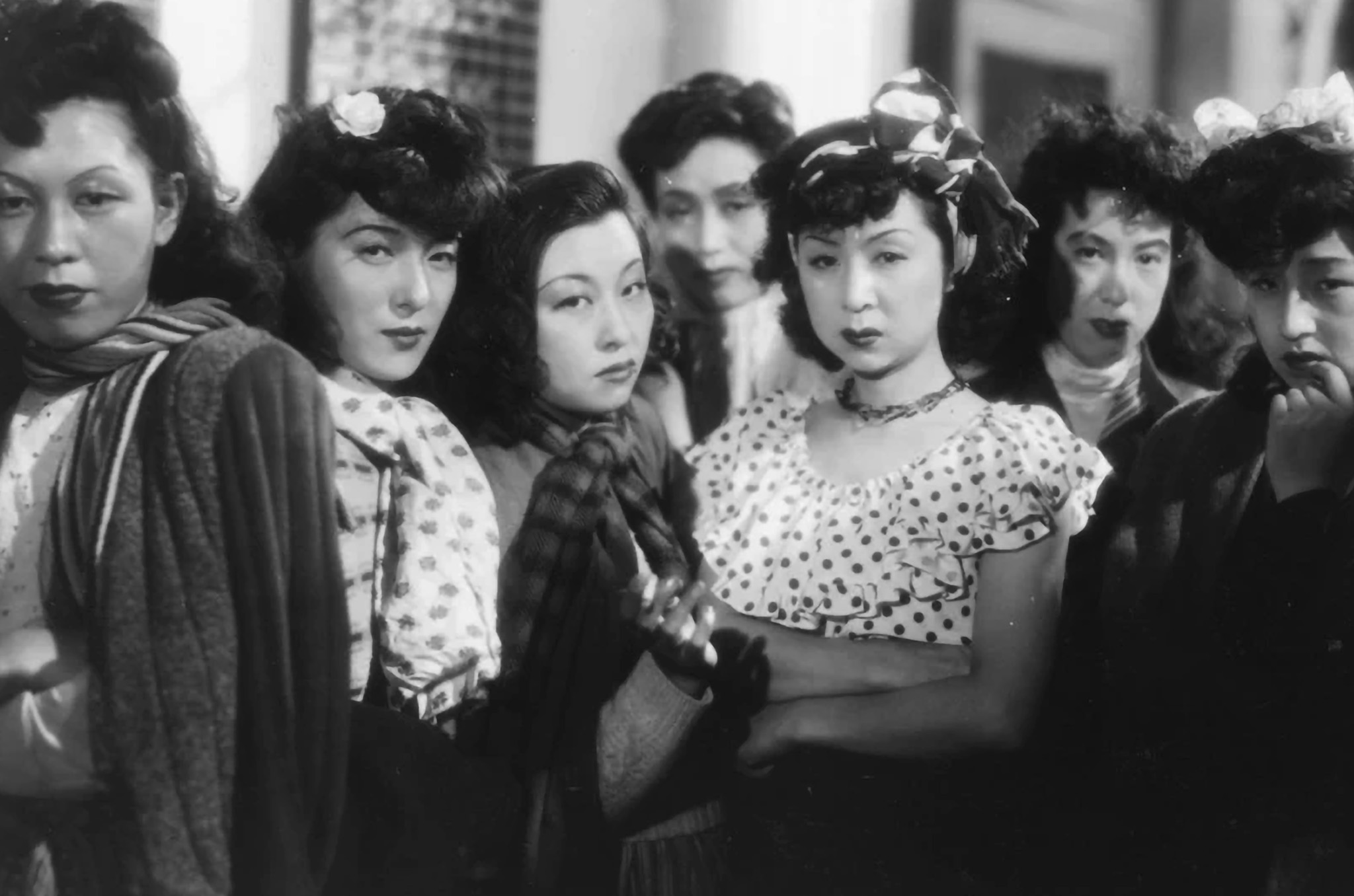
If Osaka Elegy is a good entryway to a specific style of Mizoguchi’s filmmaking — one focused on contemporary settings and more nuanced societal critiques — then Women of the Night (1948) might be that subgenre’s peak. It’s definitely one of Mizoguchi’s bleakest films.
Set in postwar Japan, it examines prostitution from almost every possible angle, creating a picture of sex work as a combination of poverty, hopelessness, displacement, men’s cruelty and indifference, as well as the failure of institutions. But it also features a fascinating appeal to sisterhood by having some of its most hard-hitting moments be, essentially, victim-on-victim violence, the result of women not looking out for each other.
Throughout this, however, the movie doesn’t take its eye off the real source of working women’s suffering. Men repeatedly exploit, deceive, rape, or abandon women, while anti-prostitution laws punish victims without addressing the conditions that pushed them into sex work in the first place.
The film is not without its flaws, like a message about female bodies having a sacred maternal purpose, but that part might have been included to appease Allied occupation forces who, at the time, controlled the narratives of Japanese cinema. Ultimately, though, the heroine’s response to the complicity of men in pushing women into sex work remains firmly at the heart of the movie.
Mizoguchi achieved new heights of Japanese cinema when he set his stories in the times in which he himself lived. That’s also how he ended his career, with Street of Shame (1956), once again taking on the topic of prostitution, but this time including more nuance about how hard it can be to escape it.
In Women of the Night, the biggest obstacles were often other women. In Street of Shame, the issue is more complex, a mix of economic circumstances and social prejudice that make independence difficult. In the end, prostitution becomes a symbol of Japanese women’s second-class status, making Street of Shame another jewel in the cinematic crown worn by one of the most gifted and versatile directors in Japan’s history.