If you’re looking for a supernatural Japanese creature that likes to suck human blood at night, Japan has you covered. If anything, it has a surplus when it comes to vampires. Swimming or flying, animal or plant — you get your pick of the litter.
Werewolves are a different story. Or rather, they’re barely a story in Japanese myths and legends. While there are some tales of creatures both human and animal, none really comes close to the simple formula of “man transforms into wolf.” Why is that?
Let’s find out.
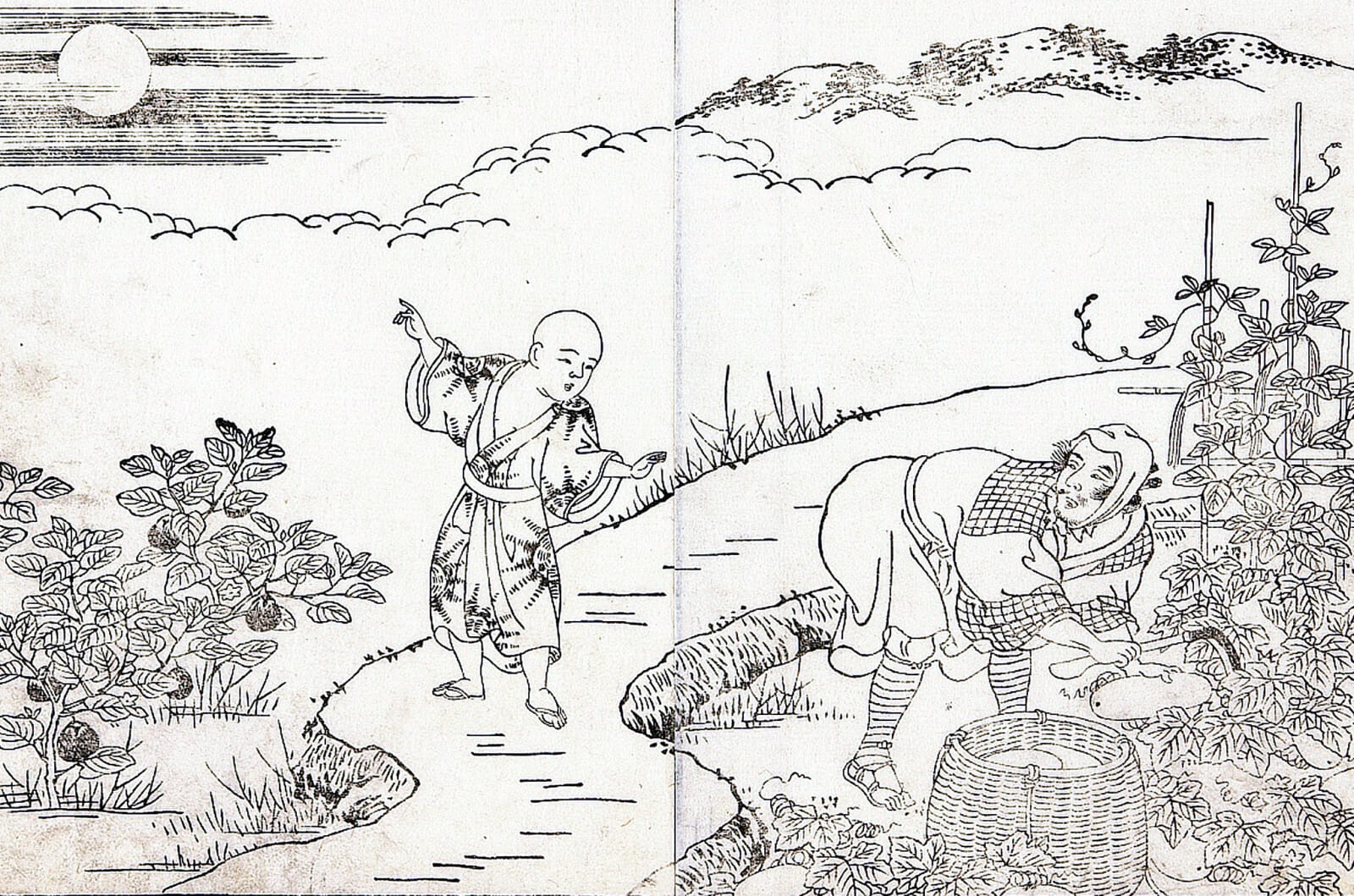
A farmer and his child, pointing to the full moon by Nishikawa Sukenobu (c. 1717)
Wolves Weren’t as Feared in Japan as in Europe
Wolves are terrifying animals. They’re incredibly strong, fast and much larger than people think, and this is before we even get to the sharp claws and teeth sculpted by evolution into perfect throat-rippers. They were sometimes revered in the West, like in the story of the she-wolf that nursed Romulus and Remus, but mainly, they were considered monsters.
European peasants feared wolves as predators that killed their livestock and sometimes their friends and family. When their imagination was forming a story of a human who lost their humanity, the wolf instantly popped into their heads as a symbol of evil and dread. Things unfolded differently in Japan.
Because of the influence of Buddhism, Japanese people have historically eaten little meat. Their main diet was made up of rice (if you were rich), other grains, vegetables, fruit, nuts, etc. And the fields that grew food for the Japanese population were constantly threatened by wild animals like deer and boars. Wolves often took care of that problem. Japanese farmers still considered wolves predators, but they also recognized that they, in many cases, owed their lives to them.
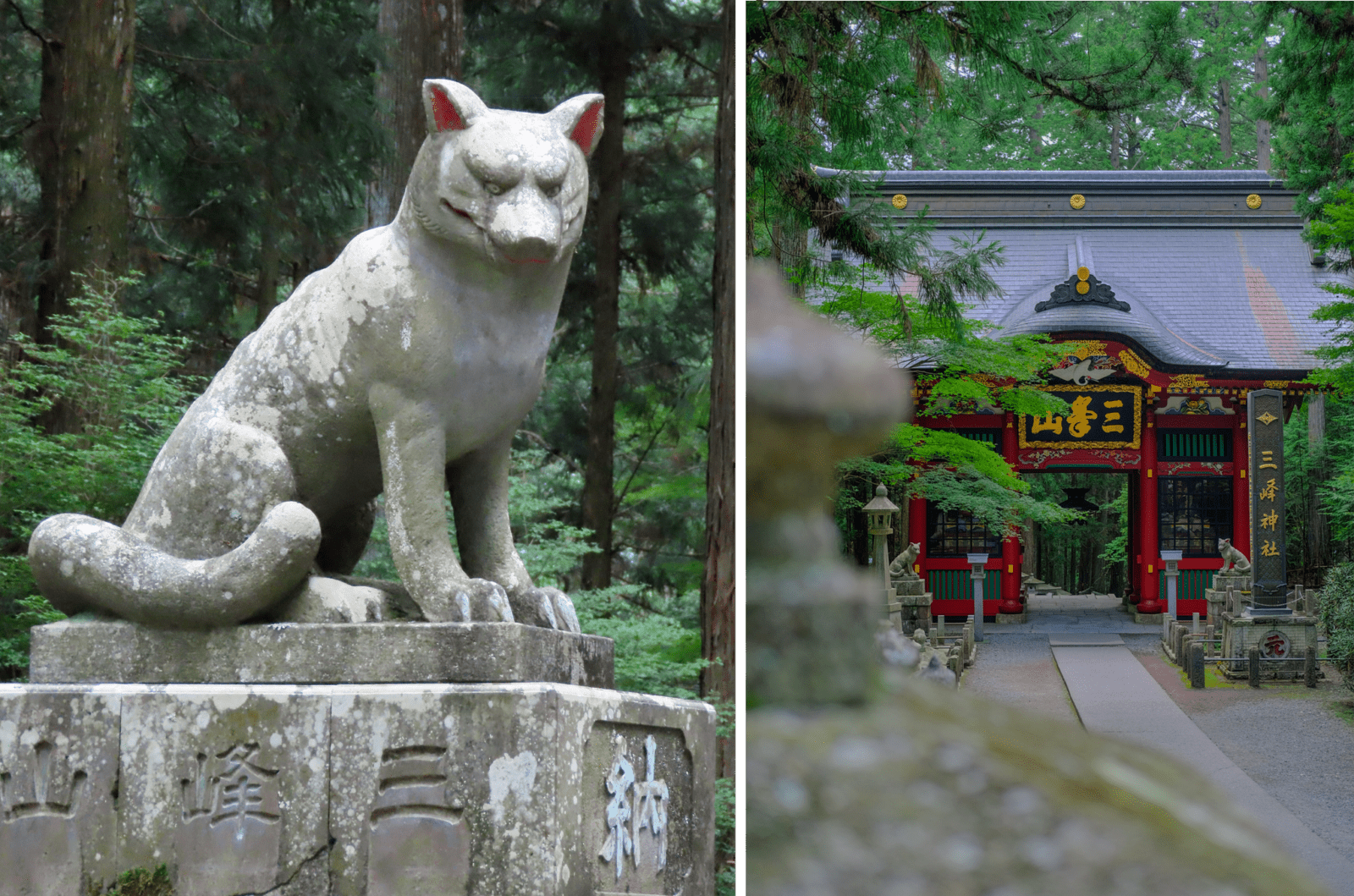
The guardian wolves at Mitsumine Shrine, Saitama Prefecture
Lupine Divinity Was a Thing — and Absence Only Fed It
Unfortunately, not everyone subscribed to the idea that wolves were, on the whole, good. In many parts of Japan, the animals were hunted down, with the first wolf bounties established at the beginning of the 18th century. Combined with a massive rabies outbreak and post-1868 government campaigns to eradicate wolves to appear safer and more modern, this sustained culling drove the Honshu wolf to extinction. For the Japanese, hearing stories about the animal without ever seeing one in the wild made the wolf seem more mysterious, reinforcing the wolf worship that had developed in parts of the country centuries before.
Mitsumine Shrine in Saitama Prefecture reveres Okuchi no Makami (Large-Mouthed True God), the sacred wolf that guided the folk hero Yamato Takeru through dangerous mountain terrain. Honoring that guidance and the animal’s courage and loyalty, the shrine elevated wolves to the status of divine messengers who can dispel misfortune and protect people from fire, theft and other disasters. Also, this might be coincidental, but the Japanese word for wolf is okami, which phonetically sounds like the term “great god.”
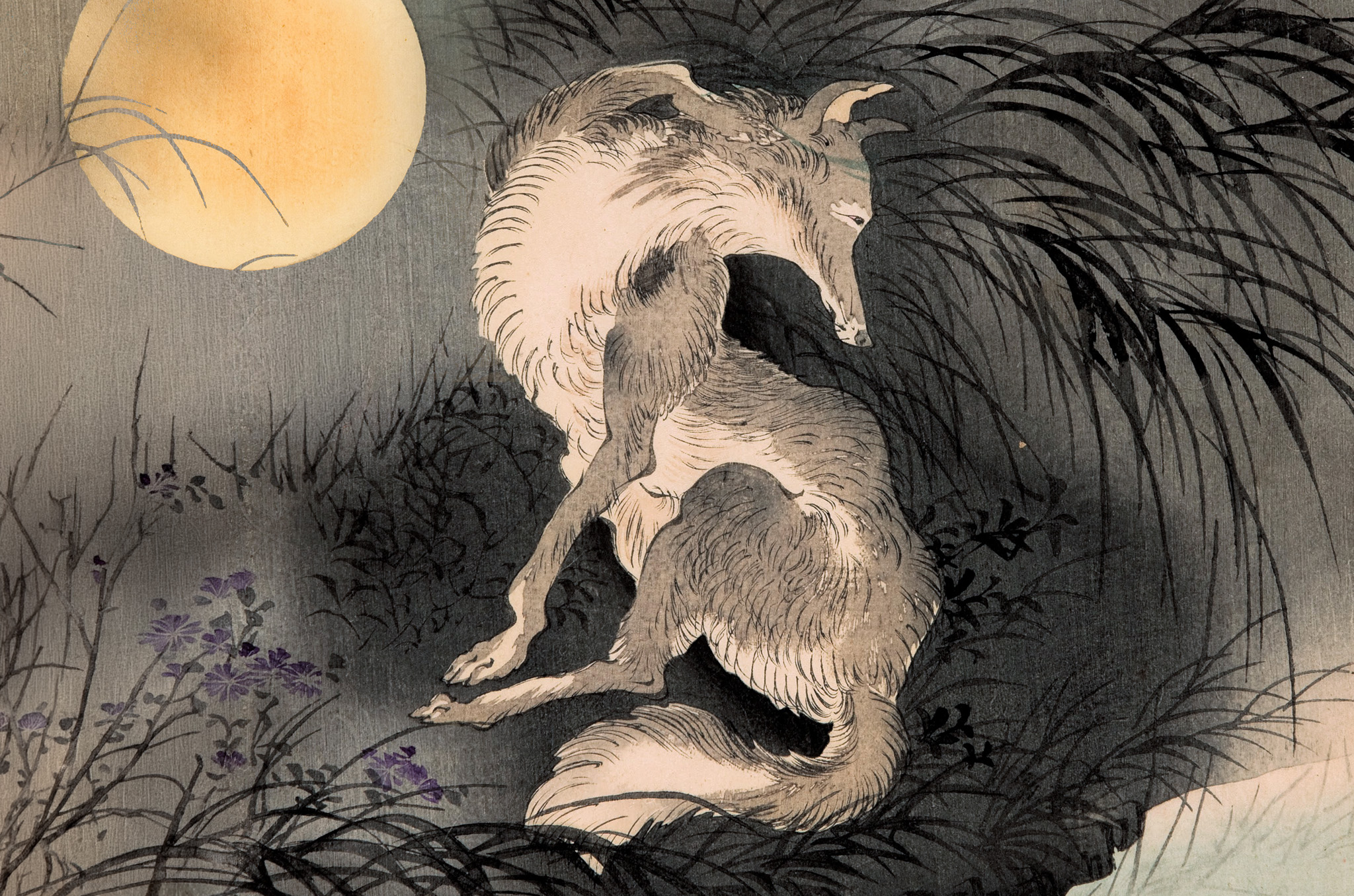
Perhaps this is why wolf talismans were a big thing in Saitama. One family supposedly kept a wolf skull for generations, lending it to people to fight off kitsunetsuki, or fox possession (sadly a once-popular explanation for mental illness). Initially, just the presence of the skull scared the fox spirits away. But eventually people started scraping powder from the skull and mixing it with boiling water to make an exorcism drink. This practice reportedly continued until 1965.
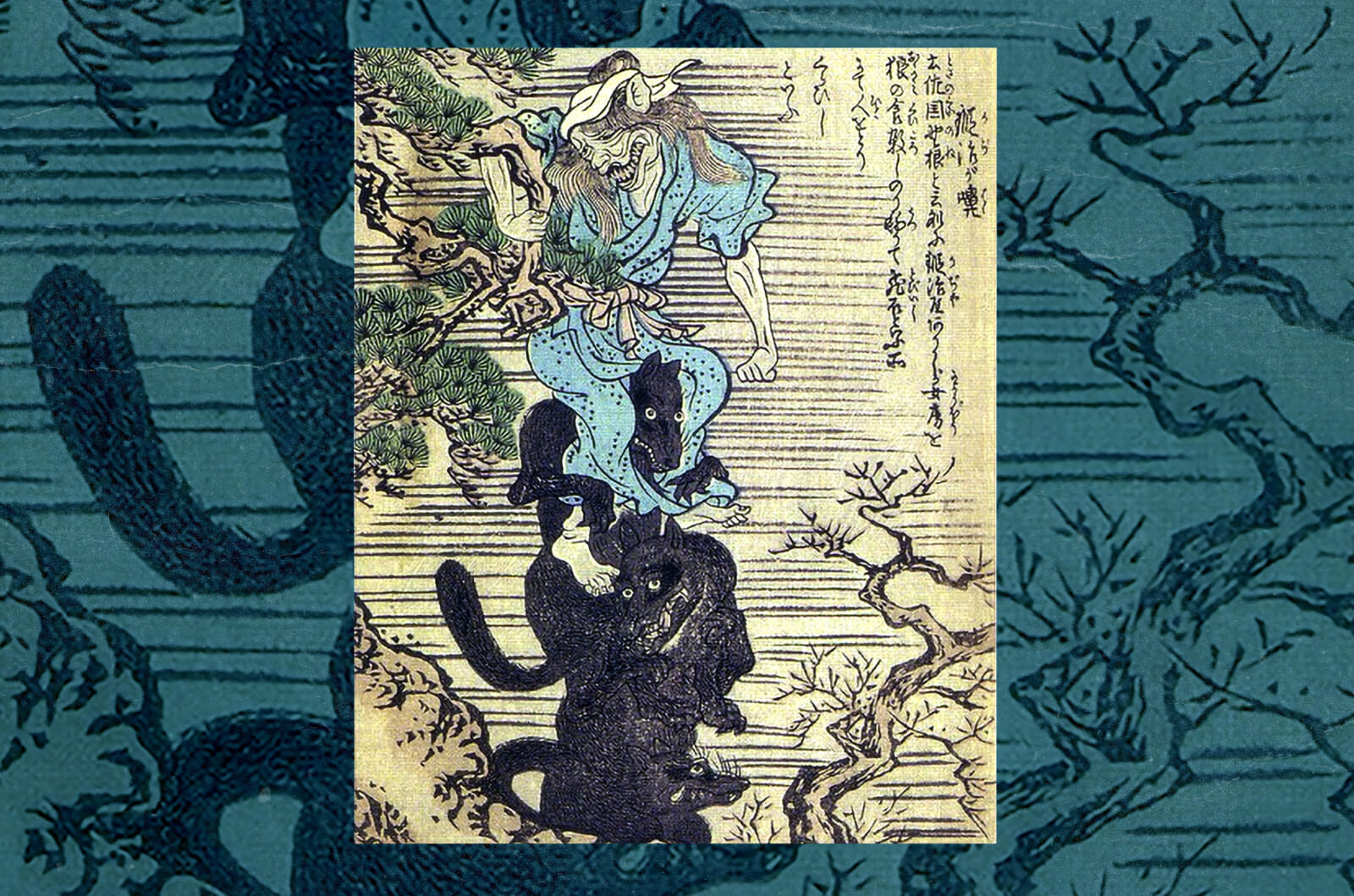
An illustration of senbiki okami in “The Blacksmith’s Wife,” from “One Hundred Tales” by Takehara Shunsui (1841)
Japanese Shapeshifting Often Works in Reverse
Consider senbiki okami. The term literally translates to “thousand wolves” but more accurately means “a lot of wolves.” It refers to the adversary in a very old Japanese legend that teaches people about the fearsome power of the wolf, not as an individual but as part of an organized pack.
Senbiki okami operates as a group of wolves with human intelligence led by a shapeshifter. In one version of the story from Kochi Prefecture, the pack tries to get at a pregnant woman and a courier hiding atop a tree by forming a living ladder of wolves. Not being able to reach the top, the wolves speak and summon the “blacksmith’s wife.” Soon, an enormous white wolf appears and climbs the lupine ladder but is ultimately injured by the courier and driven off together with the rest of the wolves.
This already has the makings of a classic European-style werewolf tale. Obviously, the courier would look for the nearest blacksmith and discover that his wife is sporting sword wounds, exposing her as the wolf leader of senbiki okami. And that is exactly what happens. The courier then kills her and discovers human skeletons beneath the floor. A more classic werewolf story there never was — except the “blacksmith’s wife” turns into a wolf corpse upon death. It turns out she wasn’t a human who could transform into an animal but an animal that transformed into a human.
This is fundamentally different from what the West recognizes as a werewolf.
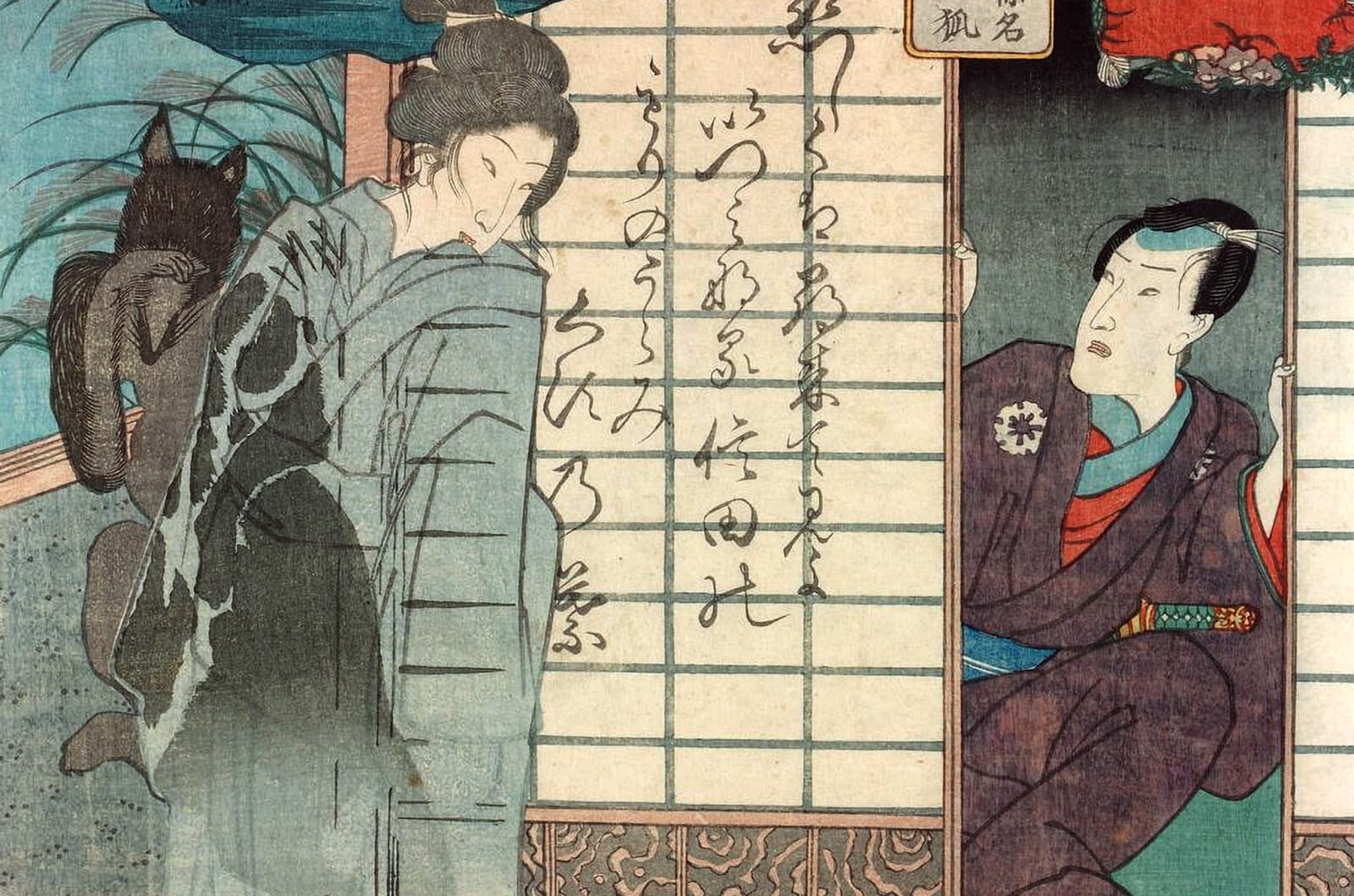
A man discovers his wife is actually a fox in human form, in “Tsumago: Abe no Yasuna and the Fox Kuzunoha” by Utagawa Kuniyoshi (1852)
Wolves and Humans Are Part of the Same World
European werewolf stories are, at their core, about a boundary being crossed: A human turns into an animal and becomes part of another world, which makes them a monster. Traditional Japanese culture simply did not think that way. Humans, animals, gods — even trees and mountains — were technically all connected since they were literally the birthed offspring of the Shinto goddess Izanami. Buddhism additionally taught people that humans may be reborn as animals, which helped cement nature’s place in Japanese society as something that’s part of the human experience. Nature was often mysterious and inscrutable, but it belonged to the same domain that humans shared with all of creation.
The senbiki okami is a good example of that because, while the blacksmith’s wolf wife was a killer, she wasn’t acting out of malice but out of hunger. Some versions of the story also say that she and the blacksmith had children, pointing to a basic compatibility between humans and animals. This absolutely doesn’t mean that Japanese people have always lived in harmony with nature. Far from it. But it shows that in the larger Japanese imagination, there wasn’t always a solid barrier separating our world from that of dogs, wolves or foxes. And without that barrier, you don’t get European-style werewolves.
This belief system still allows for animal transformations. If anything, it makes it easier to believe in them. And, indeed, Japan loves those stories. It just prefers animals turning into humans instead of the other way around because the Japanese find that more interesting — maybe because it’s more fun to explore the idea from our perspective. A bit human-centric, but that’s humans for you.