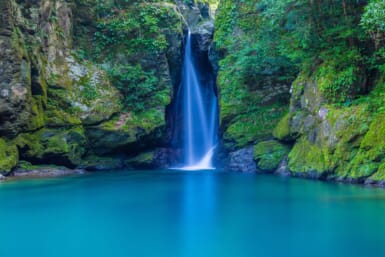
Crescent-shaped Kochi Prefecture is the largest of Shikoku’s four prefectures, covering most of the island’s southern half in rugged mountains that slope into the Pacific Ocean. With roughly 84% of its land covered in forest, Kochi is defined by an untamed natural character that has long shaped the people who live here.
Kochi Prefecture is perhaps best known as the birthplace of Sakamoto Ryoma, one of the most important figures in modern Japanese history. The legendary revolutionary played a key role in the overthrow of the Tokugawa shogunate in the late 19th century, and his influence is felt throughout the prefecture — most visibly in the towering bronze statue at Katsurahama Beach.
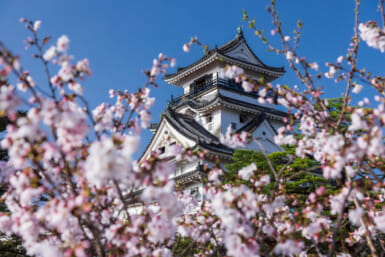
History-seekers will find plenty beyond Ryoma. Kochi Castle, one of only 12 original castle keeps still standing in Japan, was originally built in 1603, burned down in 1727, and fully rebuilt in 1749. It remains the only castle in Japan where the original keep, palace and main gate have all survived together.
Kochi is also a food lover’s paradise. The region’s signature dish is katsuo no tataki — lightly seared bonito seasoned with garlic, ginger and ponzu — best enjoyed at Hirome Market in Kochi City, a lively indoor food hall at the heart of local life. Kochi Prefecture is also Japan’s largest producer of yuzu, the aromatic citrus used widely in local cooking.