
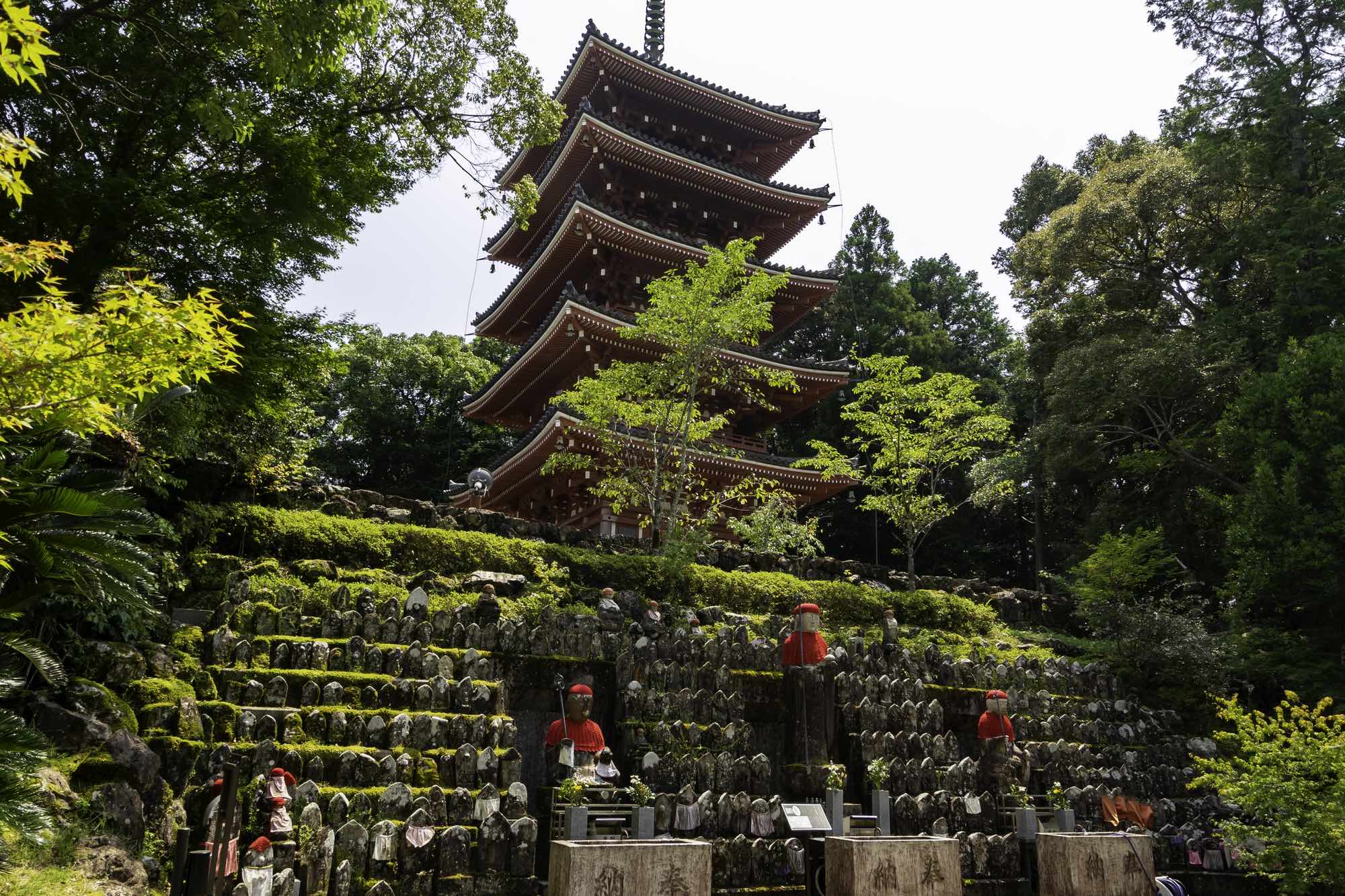
Chikurinji Temple Overview
Chikurinji Temple is one of Shikoku’s most revered religious sites, perched on the summit of Mount Godai in Kochi Prefecture. As the 31st temple on the famous 88-temple Shikoku Pilgrimage — a roughly 1,200-kilometer route that traces the footsteps of the Buddhist monk Kukai, also known as Kobo Daishi — Chikurinji holds deep spiritual significance for pilgrims and visitors alike.
Traditionally believed to have been founded in 724 CE by the monk Gyoki, who is said to have carved the temple’s principal image of Monju Bosatsu (the bodhisattva of wisdom) from a sacred tree on the mountain, the temple has been a site of worship for nearly 1,300 years. The complex includes a striking five-story pagoda, a main hall dating back to the Muromachi period and a treasure house that holds dozens of designated cultural properties.
One of the temple’s most beloved features is the Chikurinji Garden, a traditional moss and pond garden maintained in the style of the Muromachi period. Recognized as a Place of Scenic Beauty by the national government, the garden offers a tranquil retreat that draws visitors well beyond the pilgrim circuit.
Best Times To Visit Chikurinji Temple
Spring (late March to early April) is the most popular time to visit, when cherry blossoms frame the temple grounds in soft pink hues. Autumn (mid-November to early December) is equally spectacular, as the maple trees surrounding the forest paths turn vivid shades of red and orange.
Summer visits are rewarding for those who enjoy lush greenery and fewer crowds, though Kochi’s humidity can be intense. The mountain occasionally sees light snowfall in winter, lending the temple an ethereal quality.
For those completing the Shikoku Pilgrimage, the temple can be visited year-round as part of the route through Kochi.