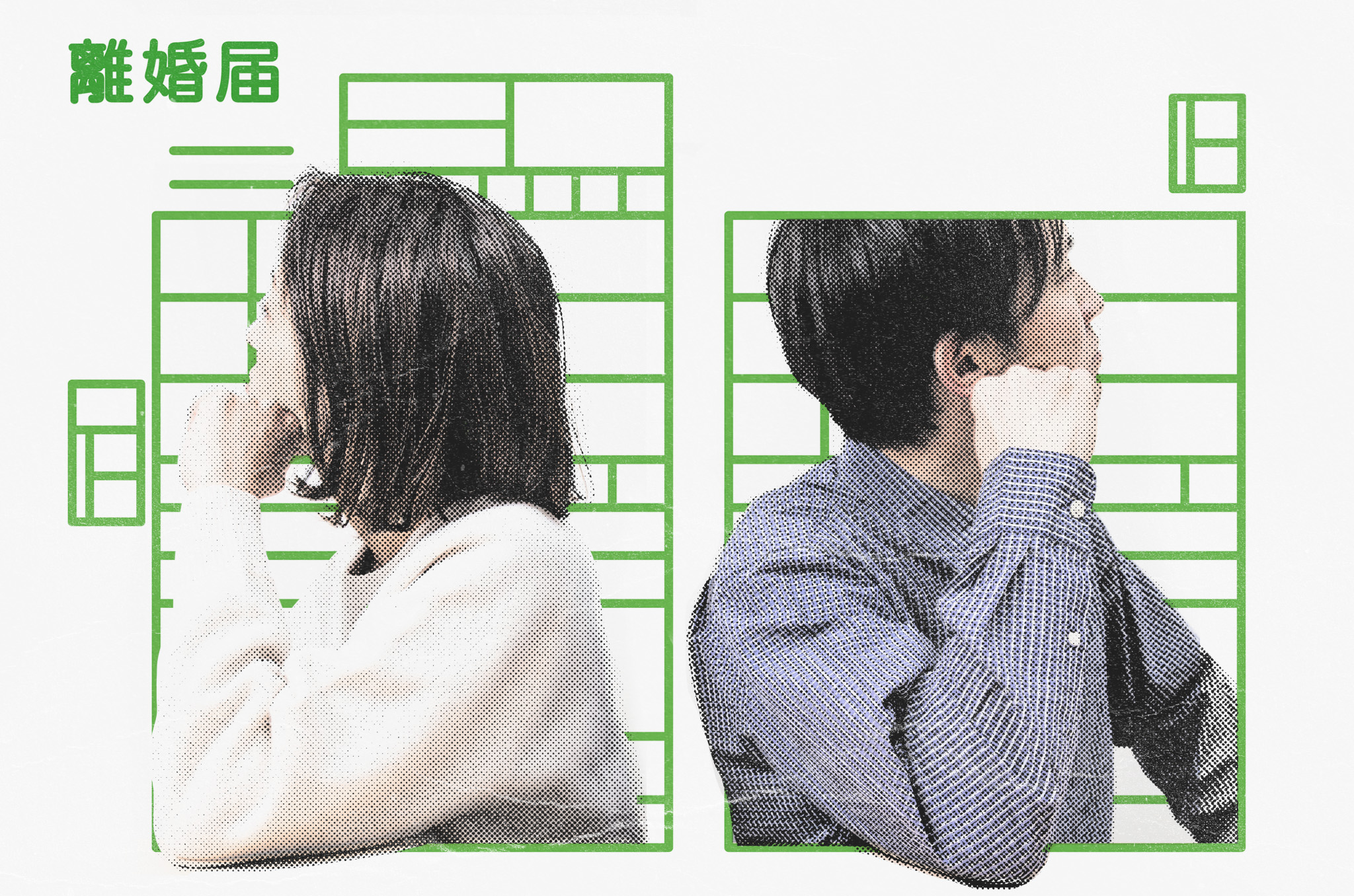
When a 50-year-old bar owner in Osaka came home one day last year, he discovered that his wife of more than 20 years had moved out. She had taken her belongings without explicitly telling him she wanted a divorce. Now, he told Kansai TV, the apartment feels empty, the laundry piles up and he eats dinner alone. Looking back on their marriage, he wonders whether he should have paid more attention to how she was feeling.
His experience comes amid renewed attention to jukunen rikon, Japan’s term for late-life divorce. According to government statistics reported by Kansai TV on October 13, couples married for at least 20 years now account for a record 24% of divorces, even as the total number has declined since its 2002 peak. Divorce counselor Atsuko Okano estimates that women initiate 70% to 80% of the late-life separations she encounters, a figure drawn from her own practice rather than national data.
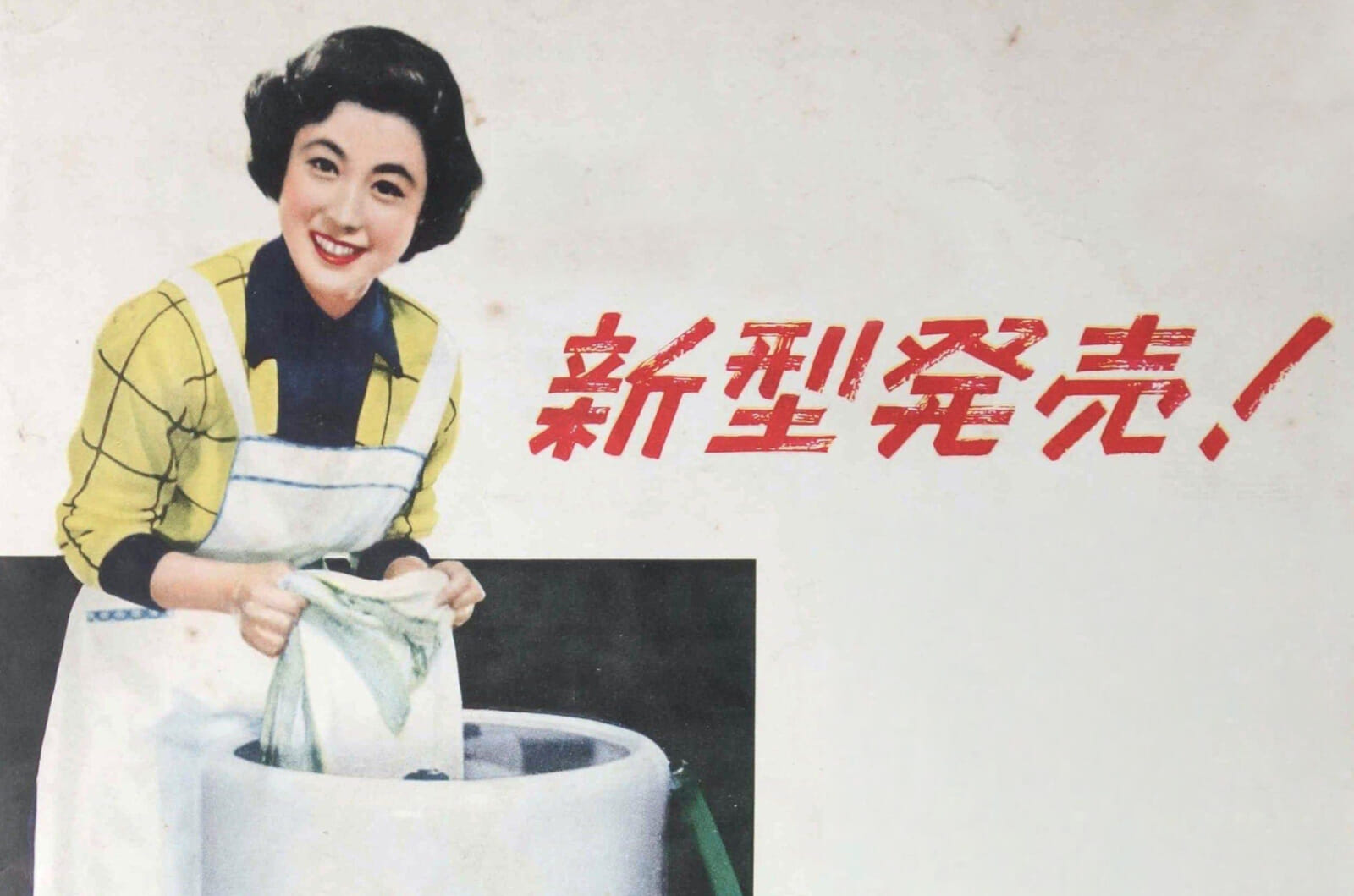
A 1960s advertisement for a washer, text reads “New model released!”
The Making of the Japanese Housewife
The sengyo shufu, or full-time housewife, is often treated as a fixture of traditional Japanese family life, although the household arrangement associated with her is largely a product of the country’s modern economy. In agricultural communities, women had long worked alongside their families, but the expansion of salaried employment, especially during the postwar economic boom, allowed more households to depend on a husband’s earnings.
By 1980, Japanese households with a working husband and stay-at-home wife outnumbered dual-income households by nearly two to one, according to government labor statistics. The husband devoted himself to his company, often working long hours and socializing with colleagues afterward, while his wife managed the household and raised the children. She might also be expected to care for his aging parents, an obligation with roots in Japan’s prewar ie family system, which placed particular responsibilities on women marrying into their husbands’ families.
The economic bubble burst, more married women entered paid employment and dual-income households eventually outnumbered single-earner ones, although much of the housework and caregiving remained women’s responsibility. For couples who spent decades following these routines, retirement could be a difficult adjustment. A husband who was once at the office for most of the day is suddenly home, often expecting the same domestic attention, while his wife finds herself reorganizing a daily life she had long been accustomed to managing on her own.
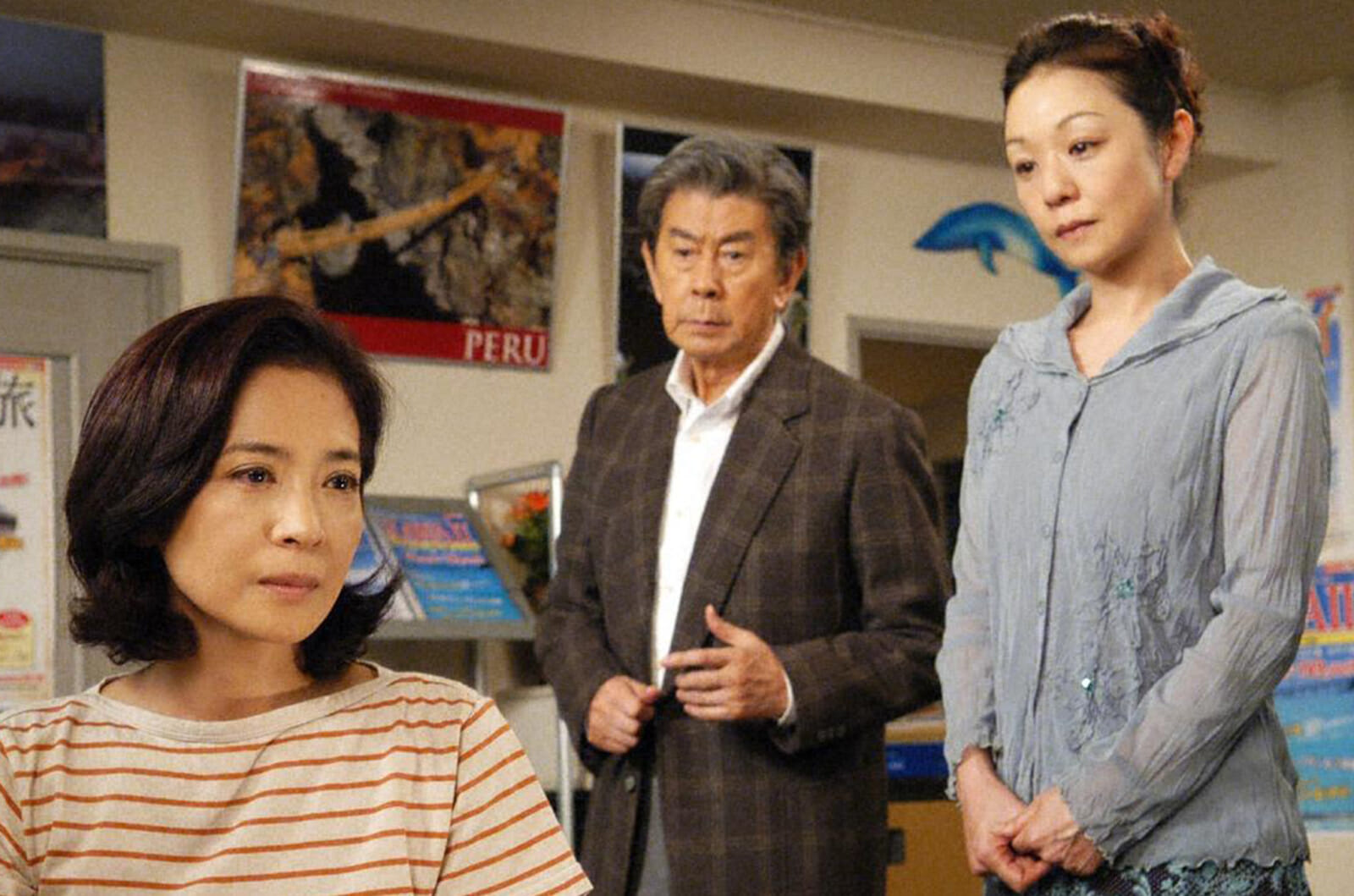
Still from the the 2005 TV Asahi drama Jukunen Rikon | © TV Asahi
Retired Husband Syndrome
A 2021 study of nearly 4,000 Japanese women found that their psychological distress increased modestly after their husbands retired. The phenomenon is sometimes called “retired husband syndrome,” though Japanese wives have come up with rather more colorful descriptions. Nure ochiba, or “wet fallen leaves,” describes husbands who follow their wives everywhere, clinging to them like damp leaves that cling to a broom no matter how much you sweep. Sodai gomi, literally “bulky garbage,” refers to husbands who spend their retirement taking up space around the house. The former was popularized by women’s advocate Keiko Higuchi, who recalled first hearing the comparison from a housewife in 1981.
The idea of wives leaving their husbands at retirement was already familiar enough to become prime-time entertainment. In the 2005 TV Asahi drama Jukunen Rikon, a newly retired salaryman buys his wife a ¥120,000 diamond ring and starts planning their holidays, only for her to announce, at his retirement dinner, that she wants a divorce. He overturns the dinner table. The series was a surprise hit, particularly among women over 40, and inspired a wave of magazine articles offering advice to husbands worried they might be next.

The Pension Reform Men Feared
In 2006, while conducting fieldwork in Japan, anthropologist Allison Alexy met a middle-aged man who became visibly nervous upon learning that she studied divorce. A pension reform was approaching, allowing divorced spouses to claim a share of employment-related pension benefits accumulated during marriage, and some men feared it would finally give financially dependent wives the means to leave.
“All the men I know are scared. We’re all scared,” he told her.
A 2026 Cabinet Office study has since found that the reform led to an increase in divorces, suggesting that the prospect of greater financial security had made it easier for some women to leave their marriages.

What the Numbers Don’t Explain
Japan’s changing divorce figures don’t tell us exactly why individual marriages end, or whether couples are becoming less willing to work through their differences. But as people live even longer and ideas about marriage continue to evolve, the prospect of spending several more decades together is becoming a question that some couples are willing to reconsider, even after 20 years or more.
Related Posts
- Japan Rewrites Parental Custody Rules After Divorce | News Roundup
- Employing the Elderly: Japan’s Retirees Who Want To Keep Working
Updated On October 15, 2026