For most travelers in Japan, Gunma Prefecture barely registers, functioning as little more than background scenery on the way to the hot springs of Kusatsu. Its capital, Maebashi — a city of almost 330,000 people roughly an hour and a half from Tokyo via shinkansen and regular train — keeps an even lower profile. Like many of Japan’s regional hubs, Maebashi’s downtown has spent the past few decades losing businesses, leaving covered shotengai shopping arcades that once drew crowds lined with rows of shuttered storefronts.
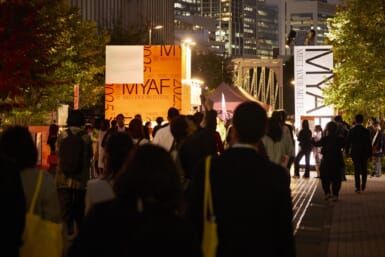
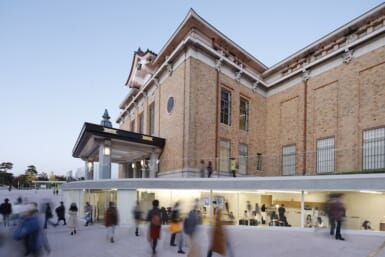
The inaugural Maebashi International Art Festival (also known as the Maebashi Biennale), running from September 19 to December 20, treats these forgotten spaces as its canvas. Instead of building temporary pavilions, the festival asks visitors to immerse themselves in the city’s evolving fabric: a former department store repurposed into the city’s art museum, a gold-clad building once packed with hostess bars, a Showa-era shopping arcade. Positioned just minutes apart on foot, these venues sit alongside the sleek boutique hotels, modern cafes and galleries that have recently opened in the area.
The festival takes its theme from “Mebuku” (“to sprout”), the civic revitalization slogan launched in 2016 by Jins eyewear founder and Maebashi native Hitoshi Tanaka. Over the past decade, Tanaka has poured considerable personal capital into restoring vitality to his hometown’s core. Program director Takenori Miyamoto, chief curator at Arts Maebashi and founder of the Yamagata Biennale, structured the festival lineup across art, architecture, fashion and gastronomy. The festival is set to run on a biennial cycle.
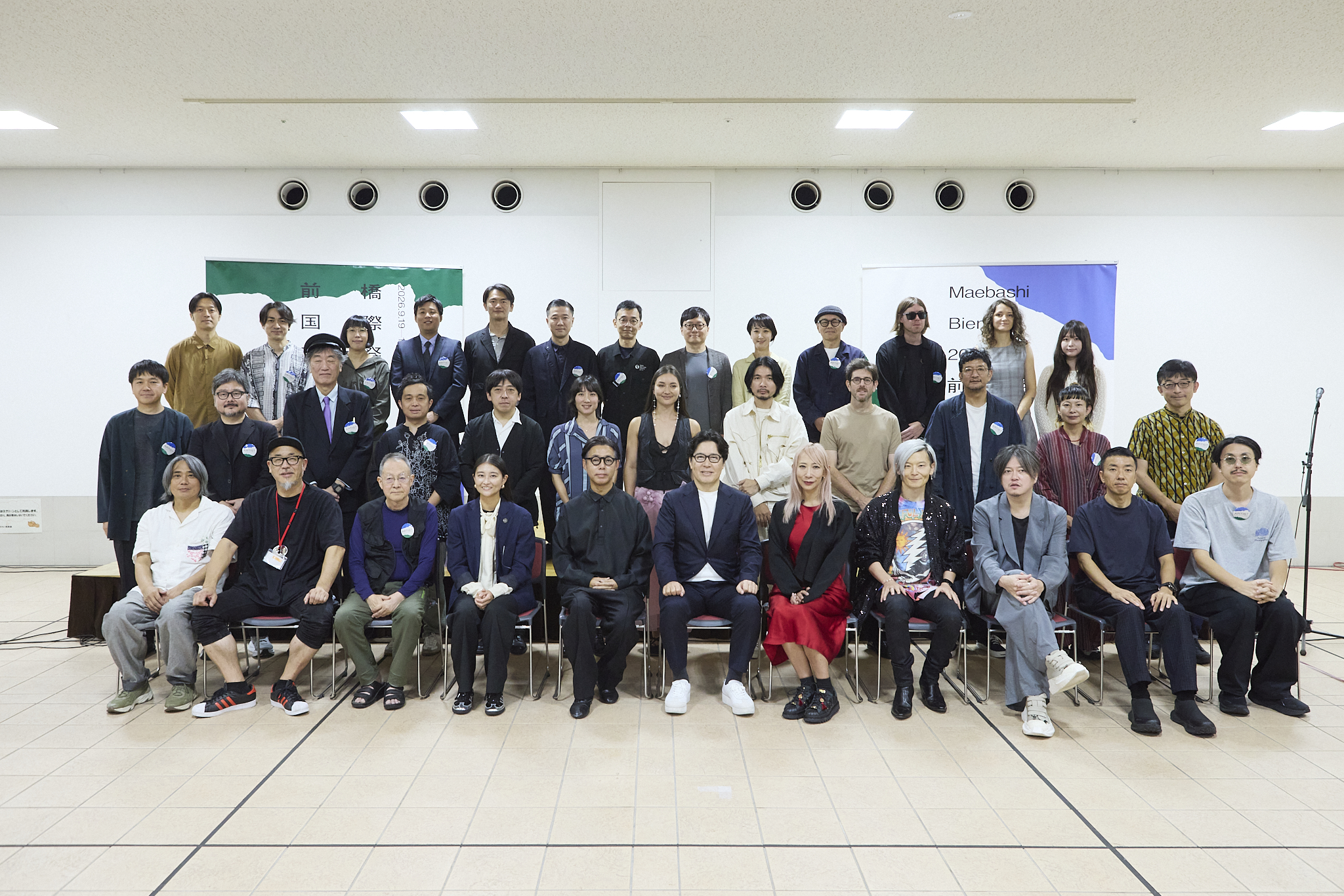
Photo: Tatsuki Nakata
“When I first got involved in Maebashi’s revitalization more than a decade ago, the city center was lined with shuttered shops, and there were few people on the streets,” Tanaka stated at the opening. “Back then, I never imagined this city would one day host an international art festival.”
For Tanaka, the festival is more than an end in itself — it’s a way to transform Maebashi into a destination where people actively choose to visit, settle and launch new ventures. “With Japan’s population shrinking, regional cities can no longer survive by competing against one another for domestic market share,” he noted. “Art has the power to cross borders and languages to reach people everywhere.”
Some of that transformation is already tangible. Over the last few years, buildings by architects Sou Fujimoto and Akihisa Hirata have risen downtown, accompanied by independent shops occupying long-abandoned storefronts. Crucially, the festival doesn’t try to sell a sanitized story of Maebashi’s urban revival, nor does it dwell on what the city has lost; rather, it spans both the brand-new structures and the corners that haven’t been redeveloped yet. Tanaka urged visitors in his opening remarks to take in “not only the artworks, but the city of Maebashi that exists between them.”
With that in mind, here are eight works you should see at the Maebashi Biennale 2026, listed roughly in the order you might come across them on a walking tour.
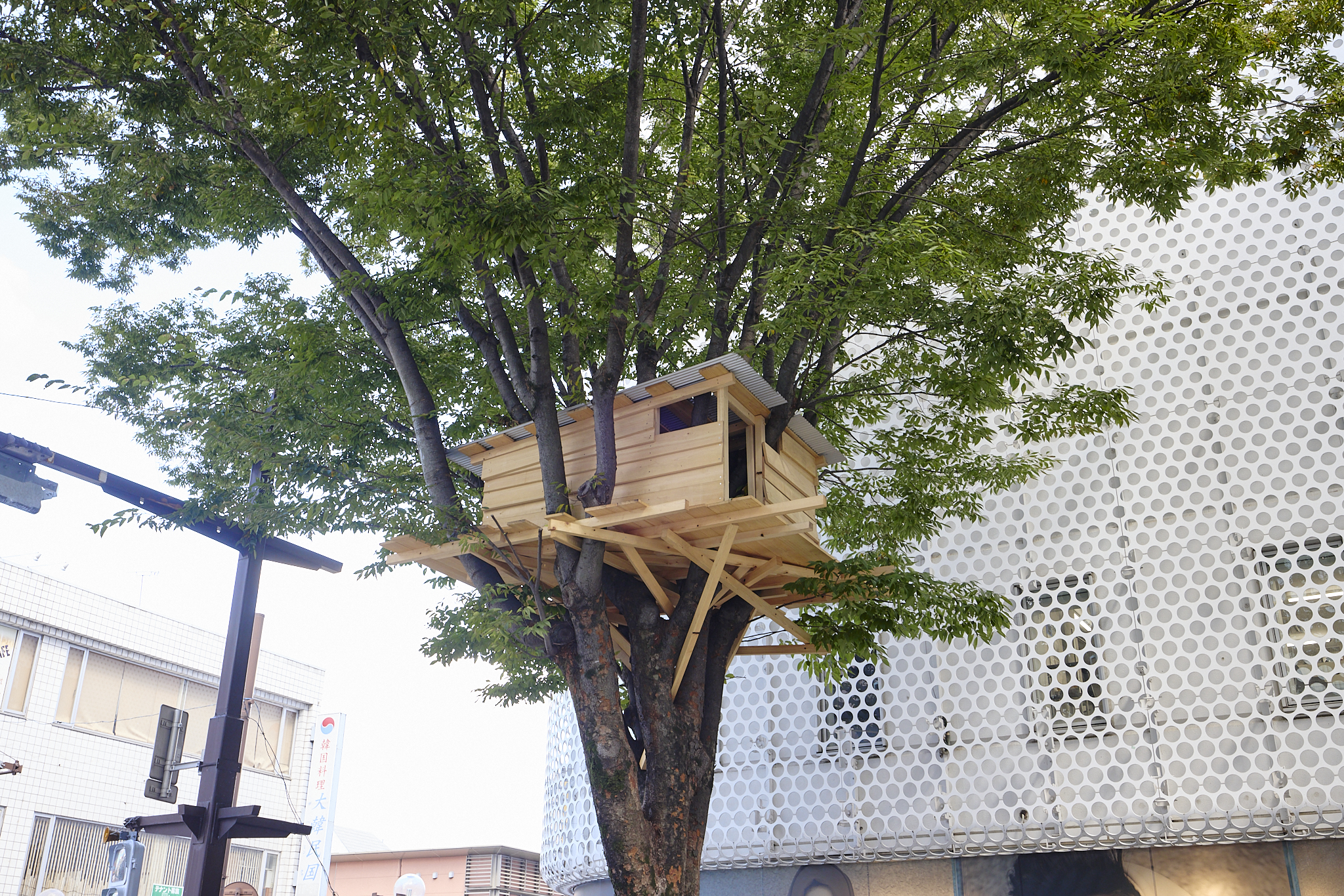
Photo: Tatsuki Nakata
1. Tadashi Kawamata, ‘Tree Hut Maebashi 2026’
Before walking into Arts Maebashi, one of the festival’s primary venues, look up into the trees outside. Tucked into the canopy of the museum’s front zelkova is a small wooden structure by Paris-based artist Tadashi Kawamata.
Kawamata, who represented Japan at the Venice Biennale in 1982, has spent four decades constructing architectural interventions out of timber and scrap wood. His ongoing Tree Hut series, launched in Norway in 2007, has seen around 200 structures — both temporary and permanent — built into urban environments worldwide.
Two additional treehouses, created collaboratively with local residents, occupy a public plaza outside the Towa Bank Head Office. Inside Arts Maebashi, you can see Kawamata’s original scale models and drawings.
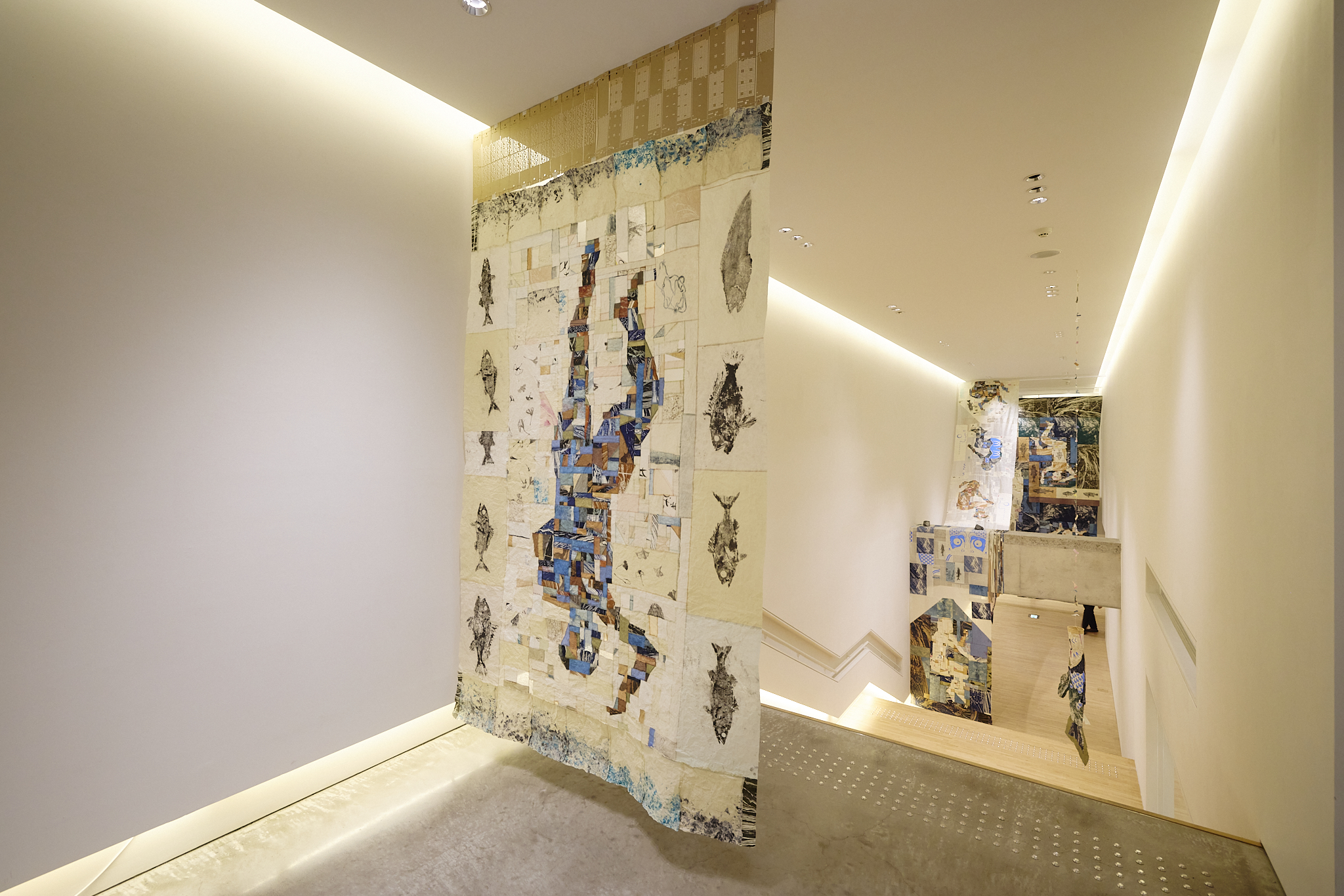
Photo: Tatsuki Nakata
2. Alexa Kumiko Hatanaka, ‘Hakanai’
As you descend the main staircase of Arts Maebashi, you come face-to-face with “Hakanai,” a site-specific installation by Toronto-born Japanese Canadian artist Alexa Kumiko Hatanaka. It consists of hundreds of hand-dyed, printed and stitched fragments of washi paper cut into silhouettes of fish and the artist’s own body. Suspended midair in the museum’s central atrium, they seem to float and fall simultaneously, stretching toward one another.
The fish motifs nod to several cultural references: koi nobori, the carp streamers flown during Japan’s Children’s Day to wish good health and success; gyotaku, the centuries-old technique of taking ink rubbings directly from freshly caught fish, in this case, local ayu (sweetfish) from Gunma’s rivers; and the legend of a carp that spent 100 years swimming up a waterfall.
With a title translating to “fleeting” or “ephemeral,” the installation reinterprets the traditionally celebratory koi nobori as emblems of crisis, pointing to how declining birthrates and global capitalism have pushed the art form, like many other slow crafts, to extinction.
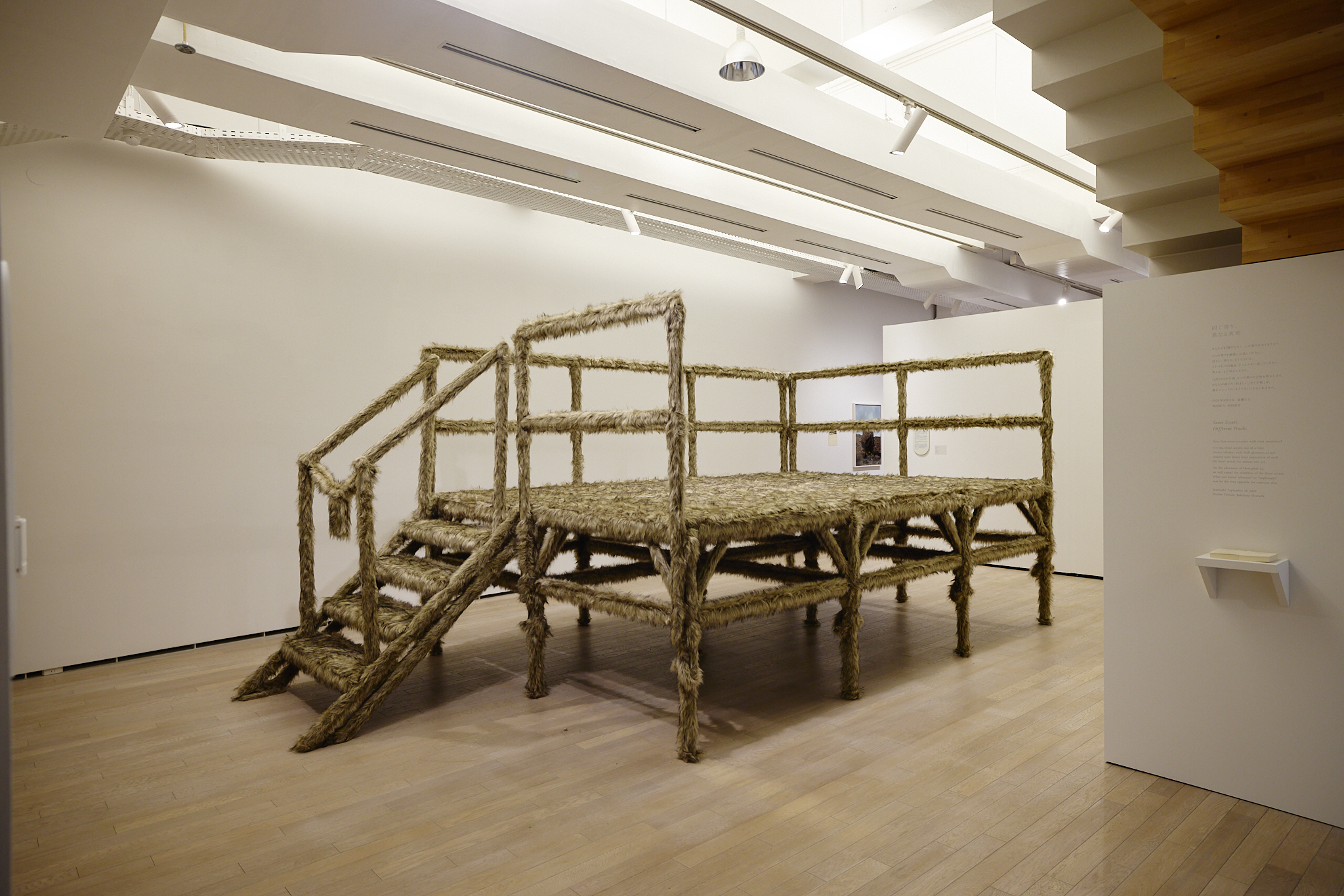
Photo: Tatsuki Nakata
3. Martin Margiela, ‘Podium’
A major focal point for international art and fashion audiences is the inclusion of Belgian artist and designer Martin Margiela. After building a legacy in fashion, Margiela exited the industry in 2008 to focus on creating visual art. His works are distributed across four sites in the festival, but the essential piece to see is “Podium,” making its Japan debut at Arts Maebashi.
True to its title, the work takes the form of a low stage or award platform, but its entire surface is densely wrapped in synthetic hair. By stripping the structure of its utility, Margiela transforms the platform into an unsettling object that straddles the line between sculpture, furniture and living organisms.
Organized by the gallery Rin Art Association, Margiela’s contribution spreads across Arts Maebashi and three secondary locations: the Rin Art Association’s branch in Maebashi Galleria, its stand-alone boutique in downtown Maebashi and its primary gallery space in the neighboring city of Takasaki.
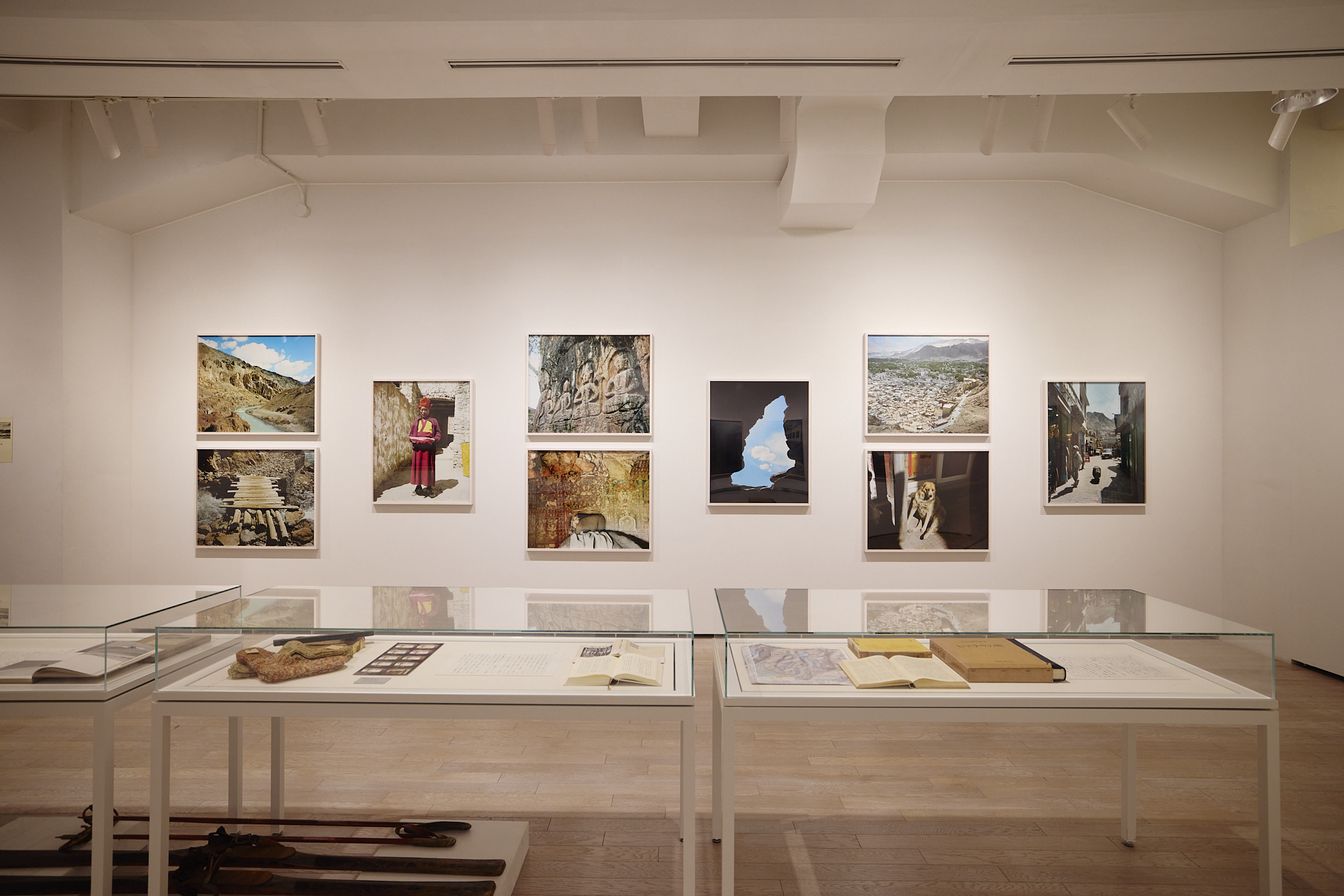
Photo: Tatsuki Nakata
4. Naoki Ishikawa, ‘A Journey to Denjiro’
Photographer and explorer Naoki Ishikawa — who in 2024 completed summiting all 14 of the world’s 8,000-meter peaks — presents a documentary exhibition built around two overlooked figures from Japan’s historical records.
He begins with Denjiro Hasegawa, who in the late 1920s became the first Japanese photographer to document the Himalayas. Next, he turns to Kunio Igaya, an early pioneer of Japanese skiing who lived for a time on Mount Akagi, the volcanic peak overlooking Maebashi. Igaya was known for hand-carving his own wooden skis and knitting his own performance socks when commercial gear was unavailable in Japan. (His son, Chiharu Igaya, went on to win Japan’s first Winter Olympic medal in 1956.)
Ishikawa displays rare artifacts, including Igaya’s hand-carved wooden skis, alongside his own stunning landscape photography from Kashmir, Nanga Parbat and Mount Akagi — connecting Maebashi’s geography to the most remote mountain ranges in the world.
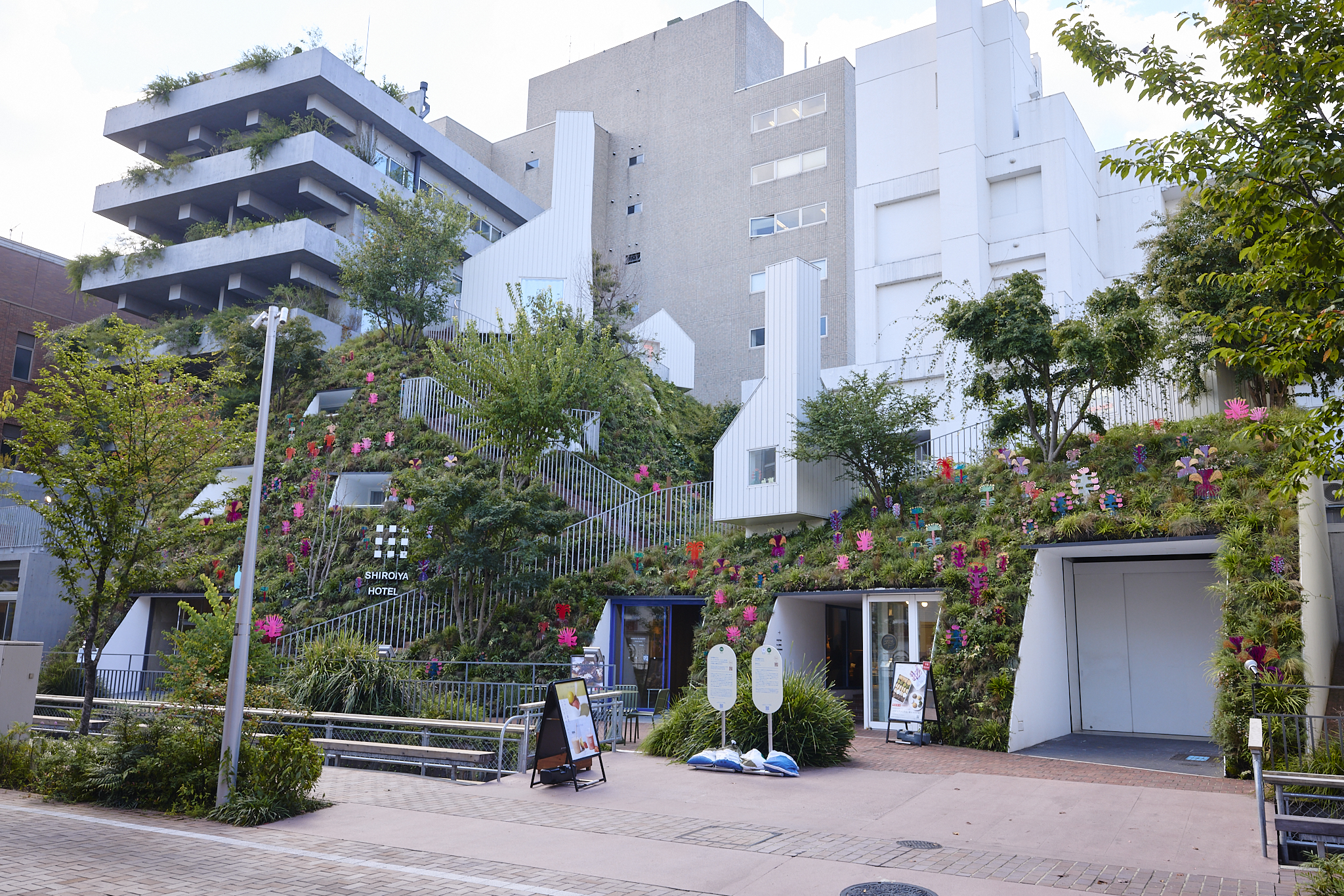
Photo: Tatsuki Nakata
5. Sou Fujimoto, Shiroiya Hotel
If one building embodies Maebashi’s reinvention, it is the Shiroiya Hotel. Founded in the Edo period as a traditional inn catering to visiting silk merchants, Shiroiya operated for three centuries, transitioning from a wooden structure to a modern concrete building in the 1970s. After the inn was forced to close in 2008, the site sat abandoned for years, until the Tanaka Hitoshi Foundation reshaped it into an ambitious art hotel designed by acclaimed architect Sou Fujimoto.
The hotel’s most iconic view faces Babakkawa-dori Street, where Fujimoto constructed the Green Tower — a grassy, turf-covered hill that step-slides down to mirror the natural river terraces carved long ago by the Tone River. Dotting the crest of the green mound are three stark white huts housing the hotel’s private saunas, standing out like minimalist cabins against the verdure.
For the inaugural biennale, painter and picture-book author Miroco Machiko (stylized as mirocomachiko) has taken over Fujimoto’s green hill with “Putting Down Roots in the Air,” covering the slope around the white huts in colorful plant forms painted with fluorescent pigments. Until January 12, the installation lights up after dark as part of the hotel’s annual winter illumination.
Read more about the Shiroiya Hotel project here.
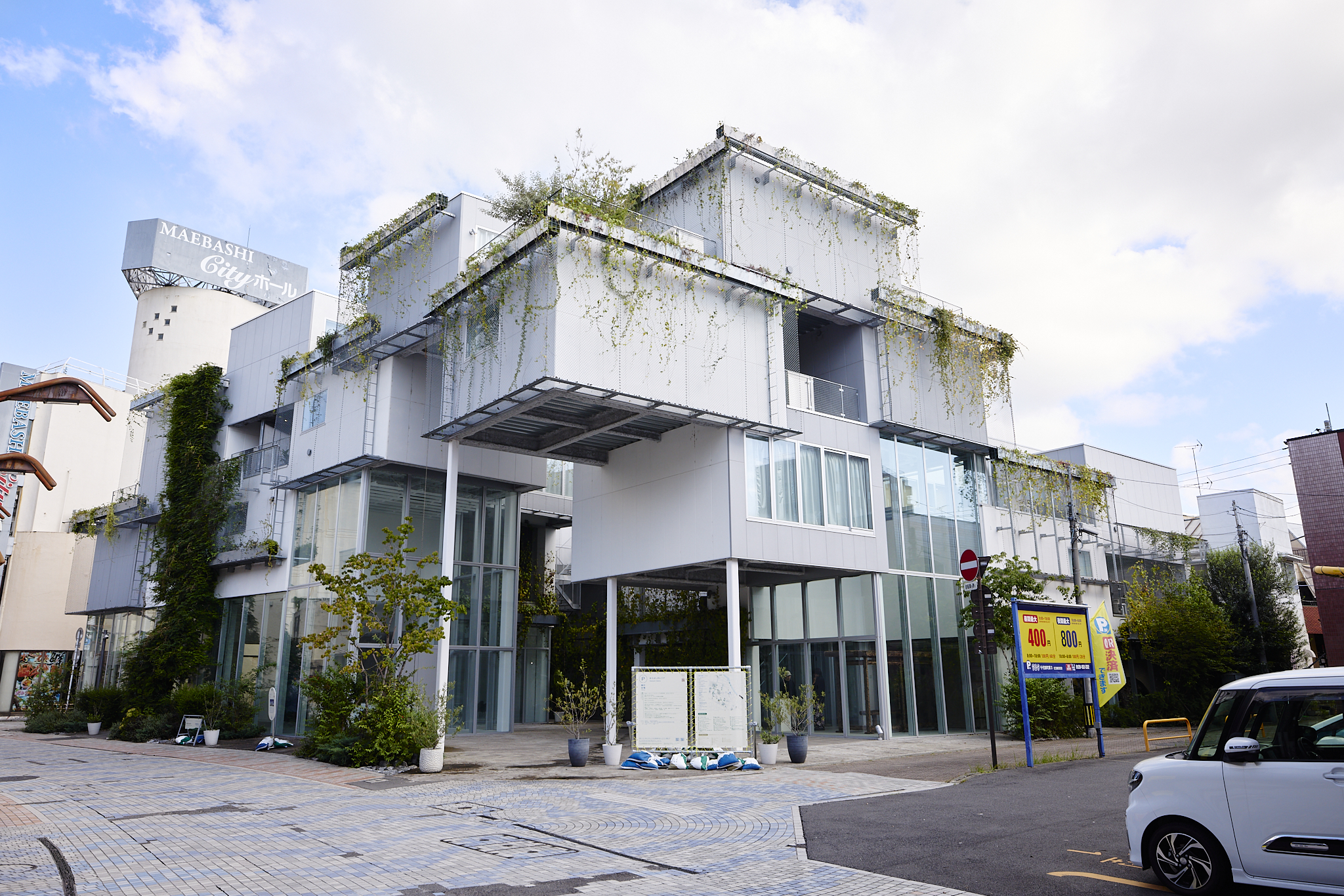
Photo: Tatsuki Nakata
6. Akihisa Hirata, Maebashi Galleria
Another architectural gem not to miss is the Maebashi Galleria, completed in 2023. Architect Akihisa Hirata — who designed the crystalline Harakado complex in Harajuku — stacked a crown of lushly planted box-like apartments over steel frames, overlooking an open-air ground floor gallery plaza.
The complex houses outposts of five prominent contemporary art galleries: Taka Ishii Gallery, Tomio Koyama Gallery, Rin Art Association, Maki Gallery and Art Office Shiobara. During the festival, these outposts and three additional galleries have joined forces inside Gallery 2 to present “Maebashi Art Ground,” a group showcase highlighting emerging artists. Simultaneously, Taka Ishii Gallery stages “Small Architectures: Light, Void, and the City” in Gallery 1, bringing together architectural drawings, scale models, photography and iconic modernist chairs.
On the ground level, gastronome Takefumi Hamada oversees “Food as Art?,” a pop-up kitchen where rotating chefs present experimental dining menus.
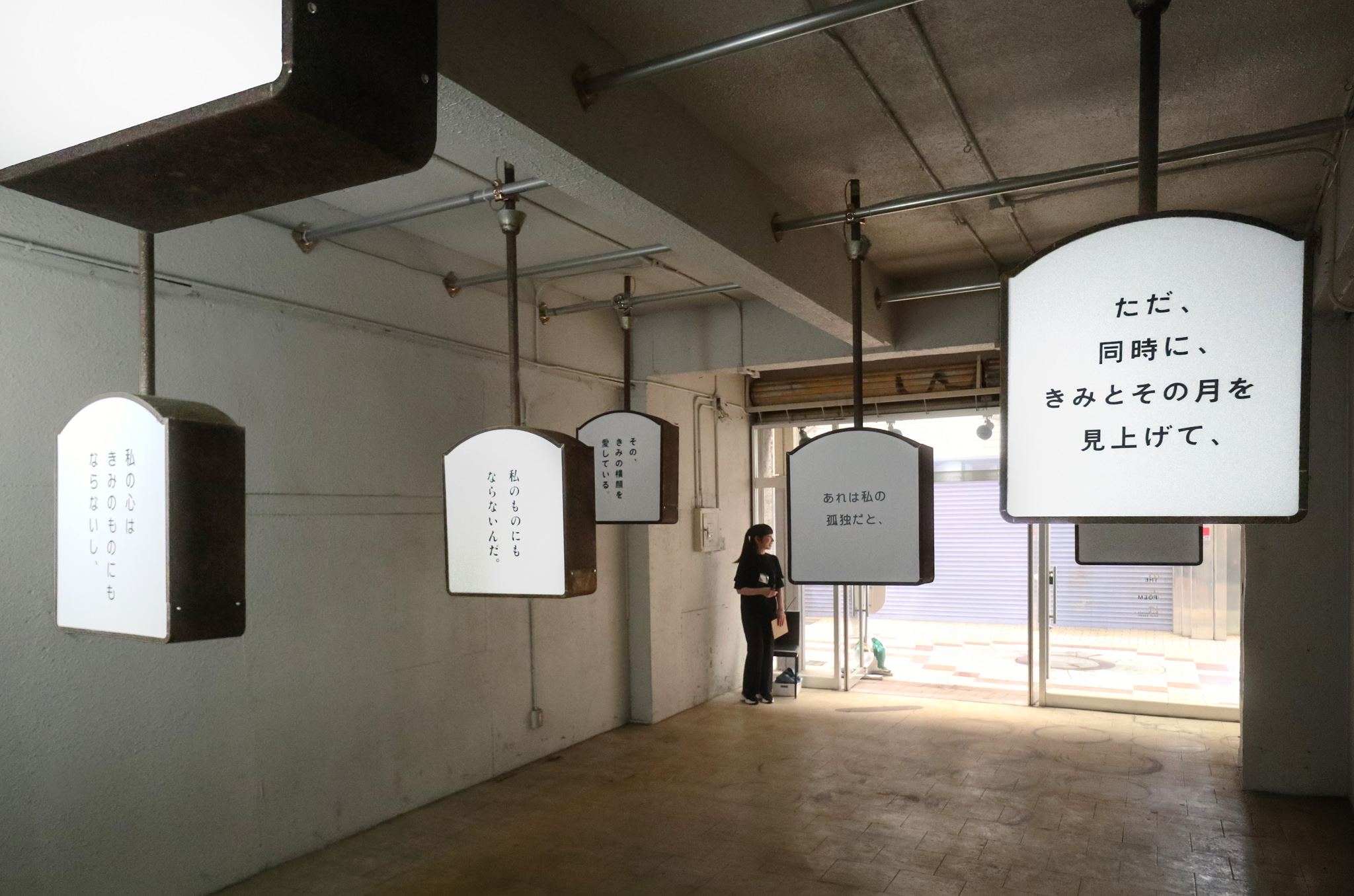
Photo: Victoria Bennett
7. Tahi Saihate and Shun Sasaki, ‘Lighting the Poem’
The Orion-dori Street shopping arcade stands in contrast to the aforementioned modern developments, retaining the nostalgic atmosphere of a Showa-era shotengai. For the installation “Lighting the Poem,” poet Tahi Saihate and graphic designer Shun Sasaki collected 18 illuminated signboards that once hung over the street and replaced their lettering with poetic phrases inspired by the constellation Orion.
The signs flicker and pulse at random in a vacant arcade building, rendered in a 1980s typeface digitized specifically for the project. Visitors can also catch a glimpse of the installation inside the corridors of Arts Maebashi, where one of the signboards is staged as a preview.
Best known for her collection The Tokyo Night Sky Is Always the Densest Shade of Blue, Saihate shares a deep connection to the city. In 2024, she was awarded the Hagiwara Sakutaro Prize — an honor named after Maebashi’s native master of modern verse.
8. Mika Ninagawa With EiM, ‘Only the Sky Wasn’t Watching’
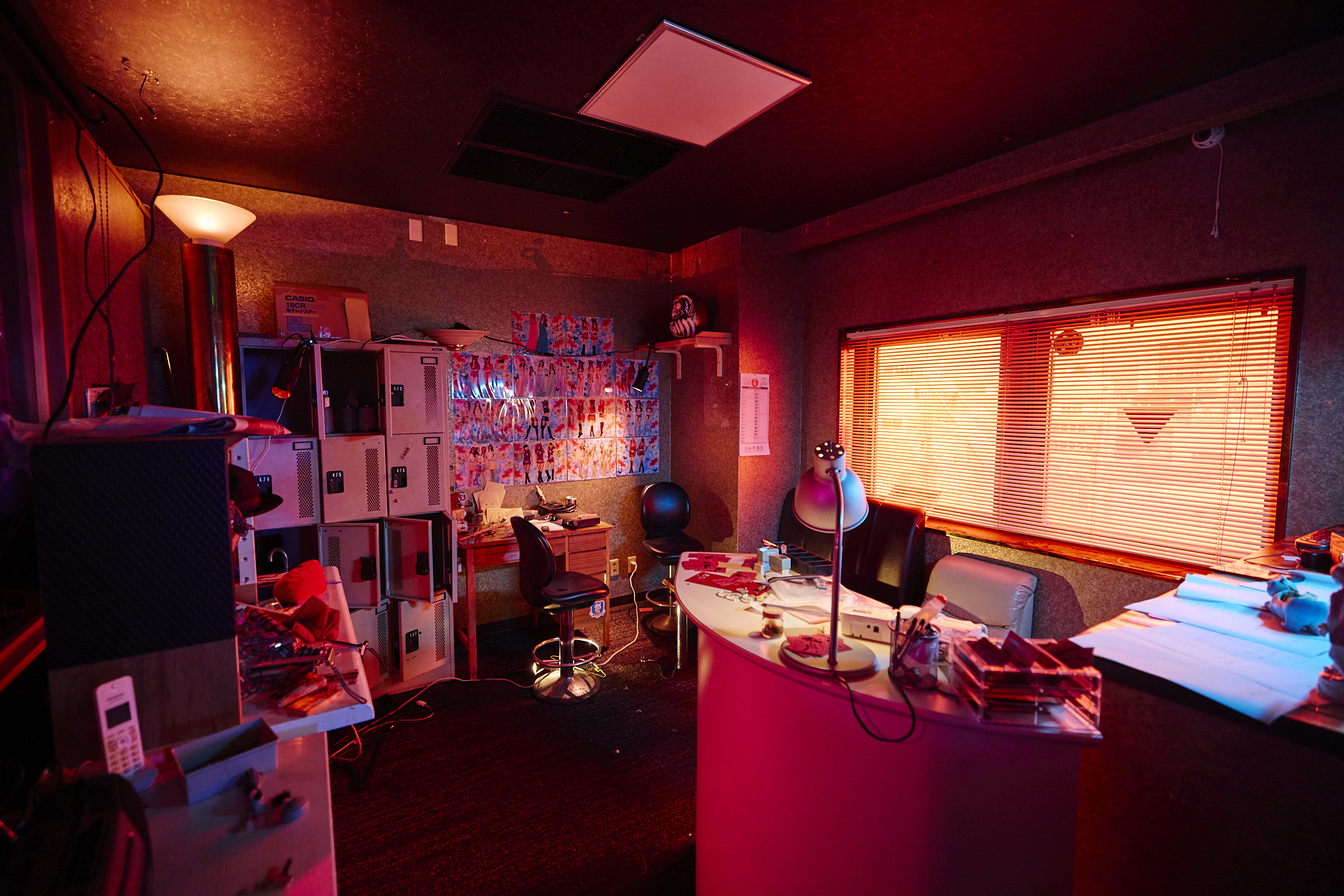
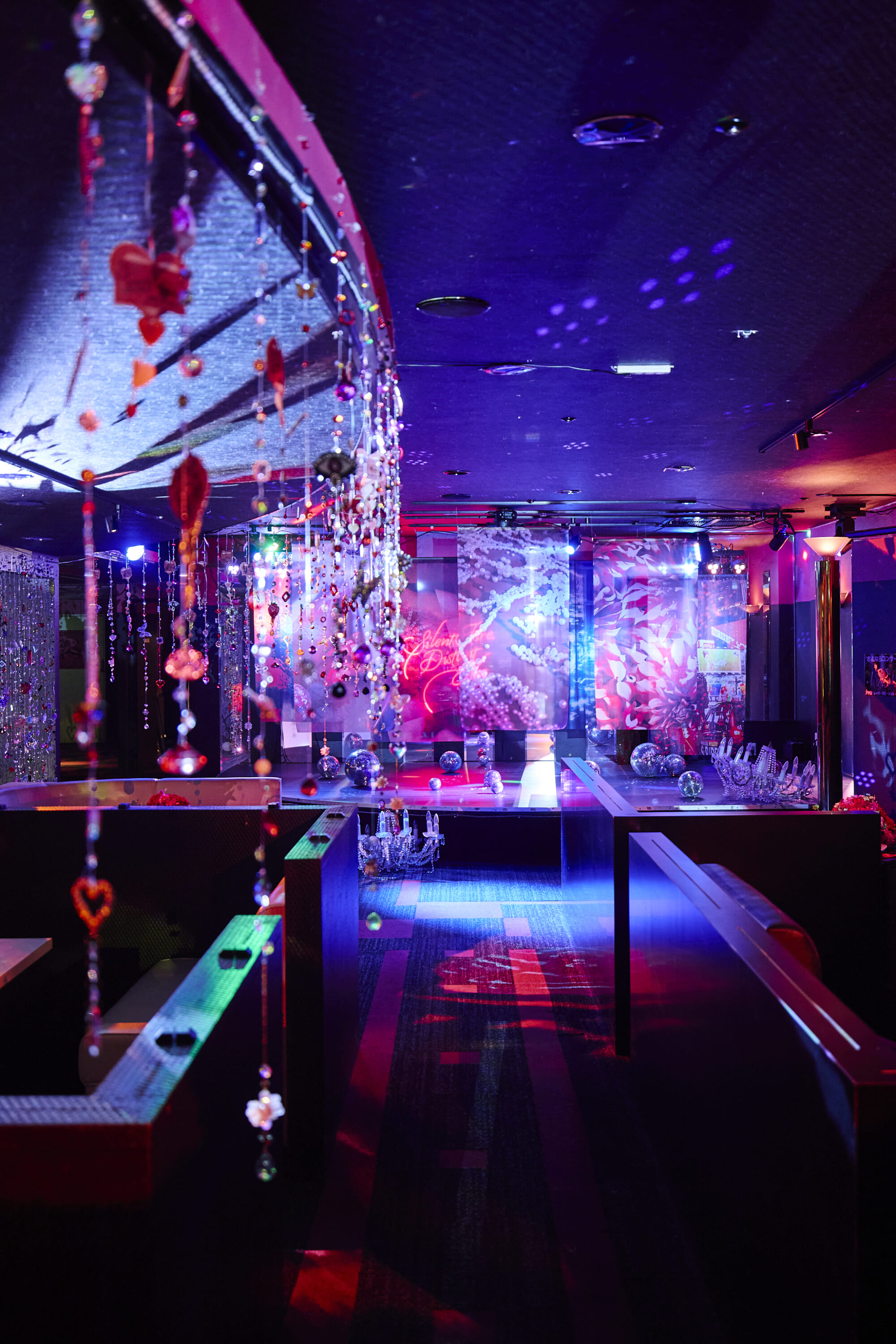
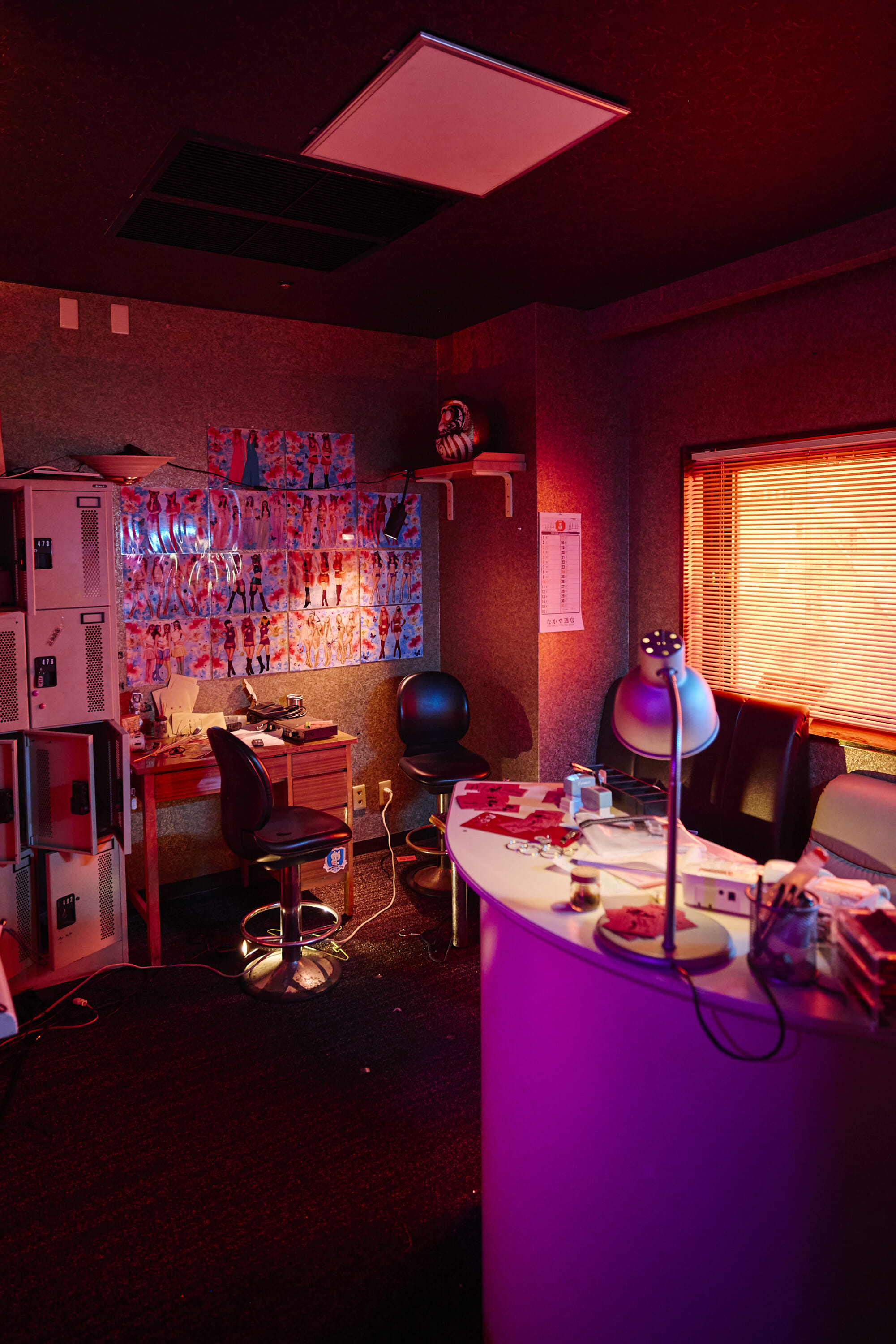
Near the end of Orion-dori stands the Howze Building, nicknamed the “Guchokipa Building” after the bronze rock-paper-scissors sculpture out front. With its distinctive metallic facade, the building was once a focal point of Maebashi’s nightlife district, packed with cabarets and hostess bars.
On the fourth floor, photographer and director Mika Ninagawa and her creative collective EiM, including data scientist Hiroaki Miyata, present the exhibition “Only the Sky Wasn’t Watching.” Inside an abandoned cabaret, mirrored surfaces and worn velvet furniture fuse with Ninagawa’s signature vivid florals, film projections and rich, jewel-toned lighting, forming the fictional club Scarlet Mirrors.
As visitors move through the space, they hear recorded monologues by imagined former workers — depending on where you stand, a receptionist or a hostess — speaking about the venue’s heyday.
The work culminates at a rear window frame where the street below disappears from view, leaving only the open sky above. The piece offers a poignant complement to the festival’s theme of rebirth, reflecting on the human presence and memories left behind as cities redevelop.