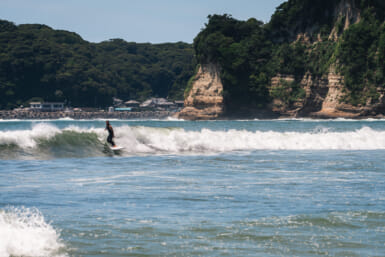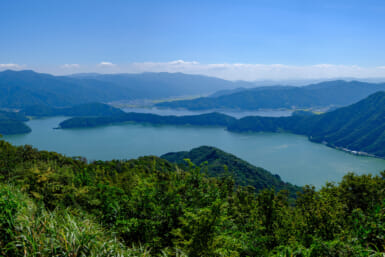


Roughly three-quarters of Japan is mountainous. Its peaks have supplied water to cities and rice fields, timber to build them and, for centuries, places to worship the gods believed to inhabit the landscape. Mountains appear everywhere from ukiyo-e prints and pilgrimage routes to the skylines of modern cities. Even from central Tokyo, Mount Fuji still appears on sufficiently clear winter mornings, floating improbably beyond the concrete.
Yet, Mountain Day is younger than Instagram. The holiday was written into law in 2014 and first observed on August 11, 2016, making it Japan’s newest national holiday. And unlike many entries on the Japanese calendar, the idea didn’t begin with the government. It began with people who simply loved mountains.
The Origins of Mountain Day
Mountain Day did not begin in Tokyo. Before there was any national push, individual prefectures had already created their own local mountain days. Yamanashi and Gifu, both mountainous regions, held informal observances years before the idea reached the Diet.
In 2010, that local activity turned into an organized campaign. Mountaineering associations — under what is now the Japan Mountaineering and Sports Climbing Association, the organization that oversees prefectural climbing federations and Japan’s Olympic and international climbing affiliations — formed a coalition specifically to push for a national holiday. A cross-party group of lawmakers picked up the cause in 2013.
On March 28, 2014, lawmakers submitted an amendment to Japan’s Public Holiday Law. It passed the House of Representatives the following month and the House of Councillors in May. The language they settled on was strikingly gentle. Mountain Day would exist, the law declared, to create an opportunity to become familiar with mountains and to “give thanks for their blessings.”
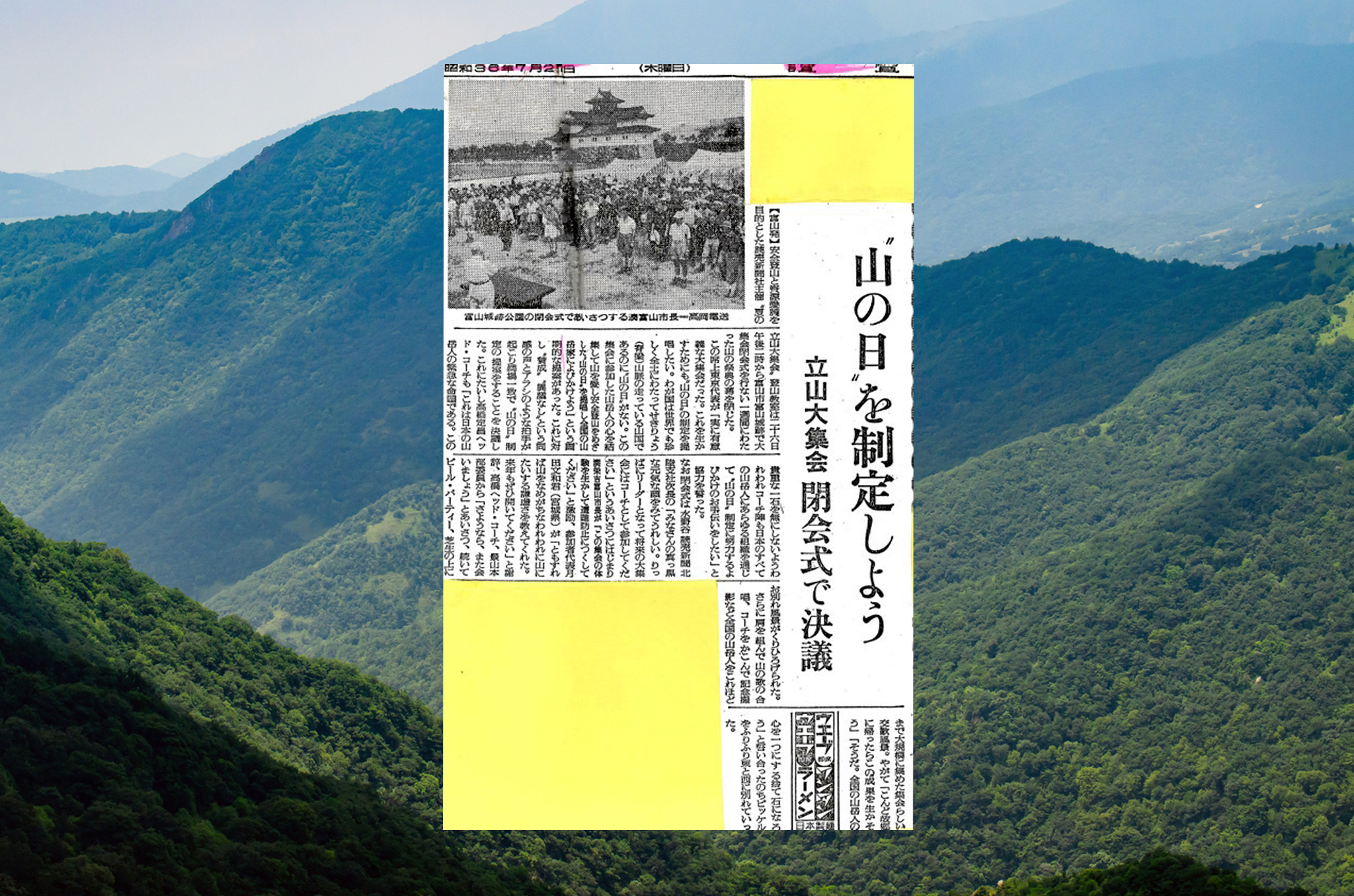
A 1961 article calls for the establishment of a “Mountain Day” | Yomiuri Shimbun via yamanohi.net
Why August 11 Was Chosen
The date has two contrasting explanations. The commonly cited one is visual: the kanji for eight (八) resembles a mountain peak, and 11 resembles two standing trees. A second, more mundane account is that Japan simply had no holidays in June or August, and organizers picked a date to fill the gap — the kanji symbolism came after.
Either way, the date wasn’t finalized without some care. August 12 was an earlier front-runner, since it falls closer to Obon. Organizers moved it back a day after noting that August 12 marks the anniversary of the 1985 Japan Airlines Flight 123 crash, still the deadliest single-aircraft disaster in aviation history, and didn’t want the new holiday’s date to overlap with it.
A Holiday for a Mountain Country
On August 11, 2016, the first national Mountain Day celebration took place in Kamikochi, beneath the peaks of the Northern Japanese Alps. By then, nearly six decades had passed since climbers at Tateyama first declared that Japan should have a day for its mountains, and six years after the coalition of mountaineering groups began its concentrated campaign.
Ten years later, Mountain Day can be easy to overlook. For many people, it simply merges into the summer holidays surrounding Obon. Trains fill, offices empty and August 11 becomes another red number on the calendar.
But the story behind that number is worth remembering. Mountain Day is a young holiday, but it formalizes a relationship with the mountains that has shaped Japan for centuries.